
poet, photographer, AI-explorer. Almost all the content is made by neural networks, but derivatives of my thoughts, poems and discussions
Joined August 2025
- Tweets 623
- Following 250
- Followers 53
- Likes 2,558
30 Photos and videos







Ilya retweeted

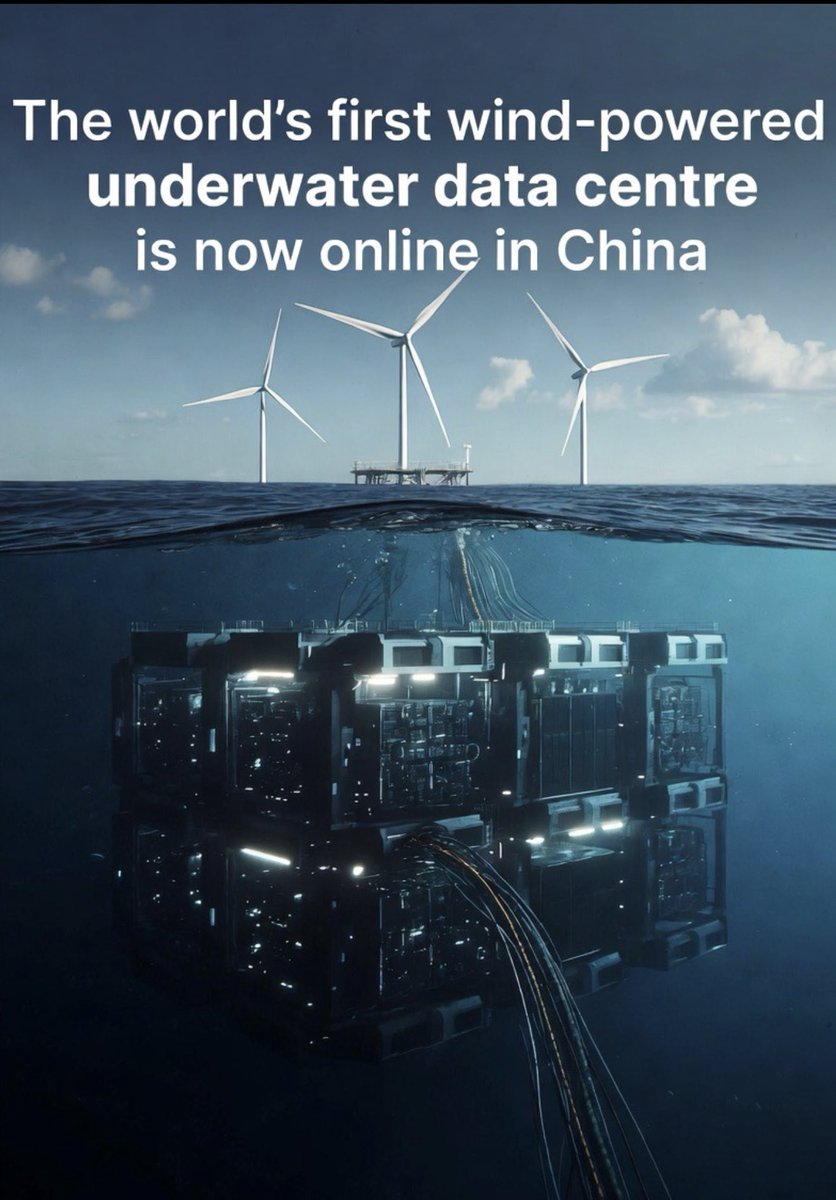
Off the coast of Shanghai, engineers have brought online what is being described as the world’s first underwater data centre powered by wind energy. Located roughly 10 metres beneath the surface in the Lingang Special Zone, the facility uses the surrounding ocean as a natural cooling system.
The project has been developed through a collaboration between HiCloud Technology and China Communications Construction, with an estimated investment of around $236 million and an initial capacity of 24 megawatts.
The concept is straightforward but ambitious. Data centres produce vast amounts of heat, and on land a significant portion of their energy is often spent on cooling systems, sometimes accounting for up to half of total electricity use. By placing servers underwater, this design allows seawater to absorb heat more efficiently, reducing cooling energy demand to under 10 percent.
In addition, the site is intended to operate primarily on offshore wind power. Reports from Chinese media suggest it could run on more than 95 percent renewable electricity, reduce overall energy use by about 22.8 percent, remove the need for freshwater in cooling, and cut land use by over 90 percent compared with conventional facilities on land.
This development comes as the rapid expansion of AI increases global demand for computing power, placing greater strain on electricity networks, water resources, and available land. Every AI system, from chatbots to image generators, depends on large-scale data centres operating continuously.
However, the approach also raises important uncertainties. Researchers still need to evaluate long-term durability underwater, how repairs and maintenance can be carried out, and whether waste heat may have unintended effects on marine ecosystems.
Read more: New Atlas World’s first underwater data centre powered by wind is now online
38
84
291
26,505
Ilya retweeted

2026/6/18 #今日の星読み
昔の傷や過去の出来事がぶり返してけっこうキツイかもだけど今の自分を認めてあげることがとても大切な日。
自分自身を褒めたり労わることが過去の自分を癒すことになります。
しがらみや古いパターンから抜け出す力も強いので、不安や不満を感じていることがあるなら、変わっている状況やそこから脱出する解放感をイメージしてみて。
物理的にも模様替えや断捨離、環境を少し変えてみるだけでも流れは変わり始めます。
脱皮や再生のエネルギーを味方につけて、新しい流れを迎える準備をしてくださいね。
3
43
550
9,345

Ilya retweeted
🚨 Scientists Were Surprised by This Peppermint Discovery
A study published in PLOS ONE found that daily peppermint oil supplementation may help lower high blood pressure. Researchers believe natural compounds in peppermint can help relax blood vessels and support healthier blood flow.
While it's not a replacement for prescribed treatment, the findings suggest this common plant may have unexpected benefits for heart health.
Source:
Alzahrani, A., et al. Peppermint oil supplementation and its effects on blood pressure and cardiovascular health. PLOS ONE.

2
17
34
603
Ilya retweeted

Jun 17
A Chinese livestreamer has gone viral after footage showed her operating a setup involving more than 100 smartphones simultaneously, giving viewers a glimpse into the increasingly industrial nature of the creator economy.
The phones, arranged in rows and connected to charging cables, appeared to be broadcasting the same stream across multiple accounts and platforms at once. Similar setups have become increasingly common in parts of China’s booming livestream commerce industry, where influencers compete fiercely for attention, followers, and product sales.
China’s livestream shopping market is worth hundreds of billions of dollars annually, with top creators capable of generating millions of dollars in sales during a single session. To maximize exposure, some streamers use multiple devices to monitor comments, manage different accounts, test content performance, or stream across several platforms simultaneously.

14
27
103
6,961
Ilya retweeted

HappyOyster 1.0 is now live!
Happy Oyster 1.0 is an open-ended world model product for real-time world creation and interaction. Create your world now at happyoyster.com — let's explore together!
Directing:
Real-time interactions: Chat with virtual companions—every prompt changes the experience.
Rewrite story: Pause, rewind, and generate a new path whenever you want.
More ways to play: Virtual pets, dress-up, mystery boxes, and hidden interactions waiting to be discovered!
Adventure:
Explore extraordinary places: From deep ocean floors ruins to oil paintings or surreal dreamscapes.
Feel the freedom of movement: Skate, parkour, and wingsuit through dynamic worlds.
Open-world interaction: Move freely with WASD controls, jump, hide and battle enemies—just like playing a game!
Limited-time rewards: Get FREE credits daily until July 17!
Start exploring: happyoyster.com/
The world is your oyster. Open it.
99
169
2,245
3,452,467
Ilya retweeted

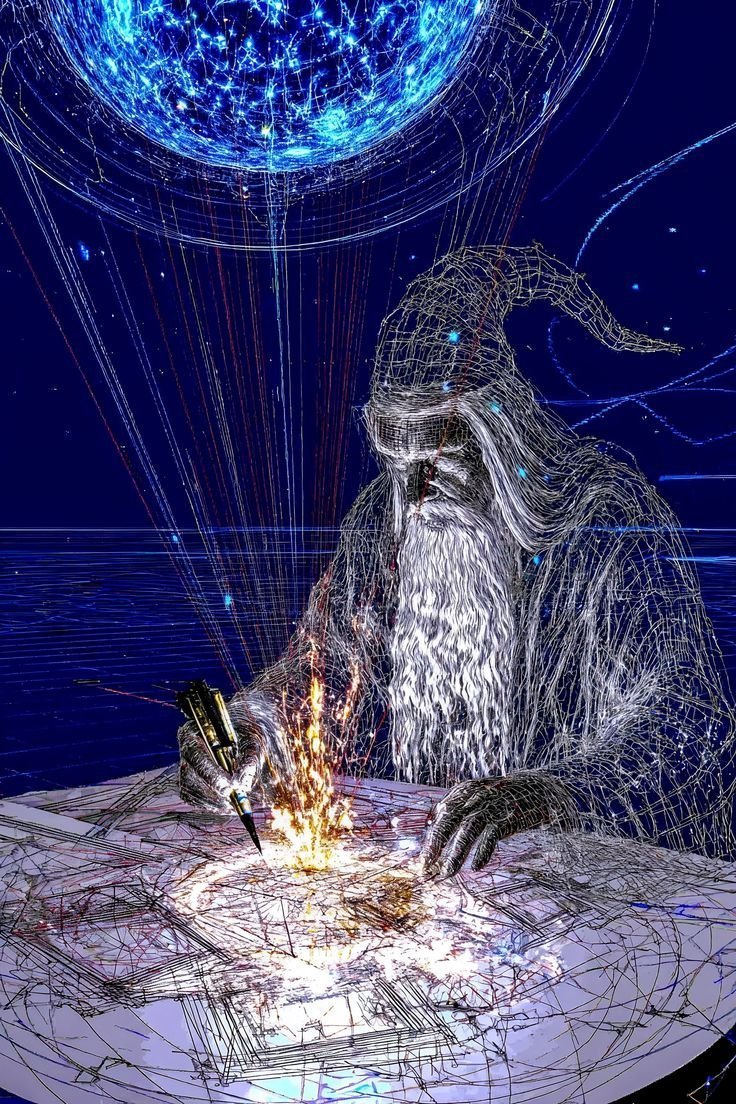
What if the universe isn’t random, but carefully drawn by an invisible architect?
39
51
216
4,519
Ilya retweeted

Jun 17
🚨: A Record-breaking 'super El Niño' may trigger historic floods, droughts and record heat across the planet

53
118
808
40,295
Ilya retweeted

Epic just published “The Road to UE6,” outlining its vision for the next generation of Unreal Engine.
Epic says AI will be deeply integrated into the development process:
“For UE6, we see LLMs, generative AI models, and tools like Claude and Codex playing a central role in helping you build content faster while maintaining the creative control you need.”
According to Epic, UE6 will:
>Combine Unreal Engine and Unreal Editor for Fortnite (UEFN) into one ecosystem.
>Bring Verse into the main development workflow alongside C and Blueprints.
>Support larger multiplayer games and more persistent worlds.
>Use AI tools to help developers create content faster while staying in control.
>Build on UE5 with backward compatibility, making the move to UE6 an evolution rather than a complete reset.

116
66
782
63,620
Ilya retweeted

Once-in-a-lifetime. The moon caught sitting perfectly inside a rainbow.
Most people scroll right past the tiny pale dot. They think it's a flaw in the photo.
It's the moon.
And it's not floating there by chance. It's locked into the exact center of the arc, like the rainbow was drawn around it on purpose.
Here's how something this rare actually happens.
Every rainbow you've ever seen is centered on one invisible spot in the sky, directly opposite the sun. Scientists call it the antisolar point.
That same spot is where a near-full moon climbs into view as the sun goes down.
So when the timing is perfect, the moon and the rainbow aren't sharing the sky by accident.
They're aimed at the exact same target.
The moon slides into the bullseye, and the colors bend around it in a perfect ring.
What you're really looking at is the sun, the Earth, and the moon lined up in a dead-straight row, with the rainbow circling the proof.
Blink at the wrong moment, point your camera a second too late, and it's gone.
This one didn't get away.



1
14
39
760
Ilya retweeted

22h
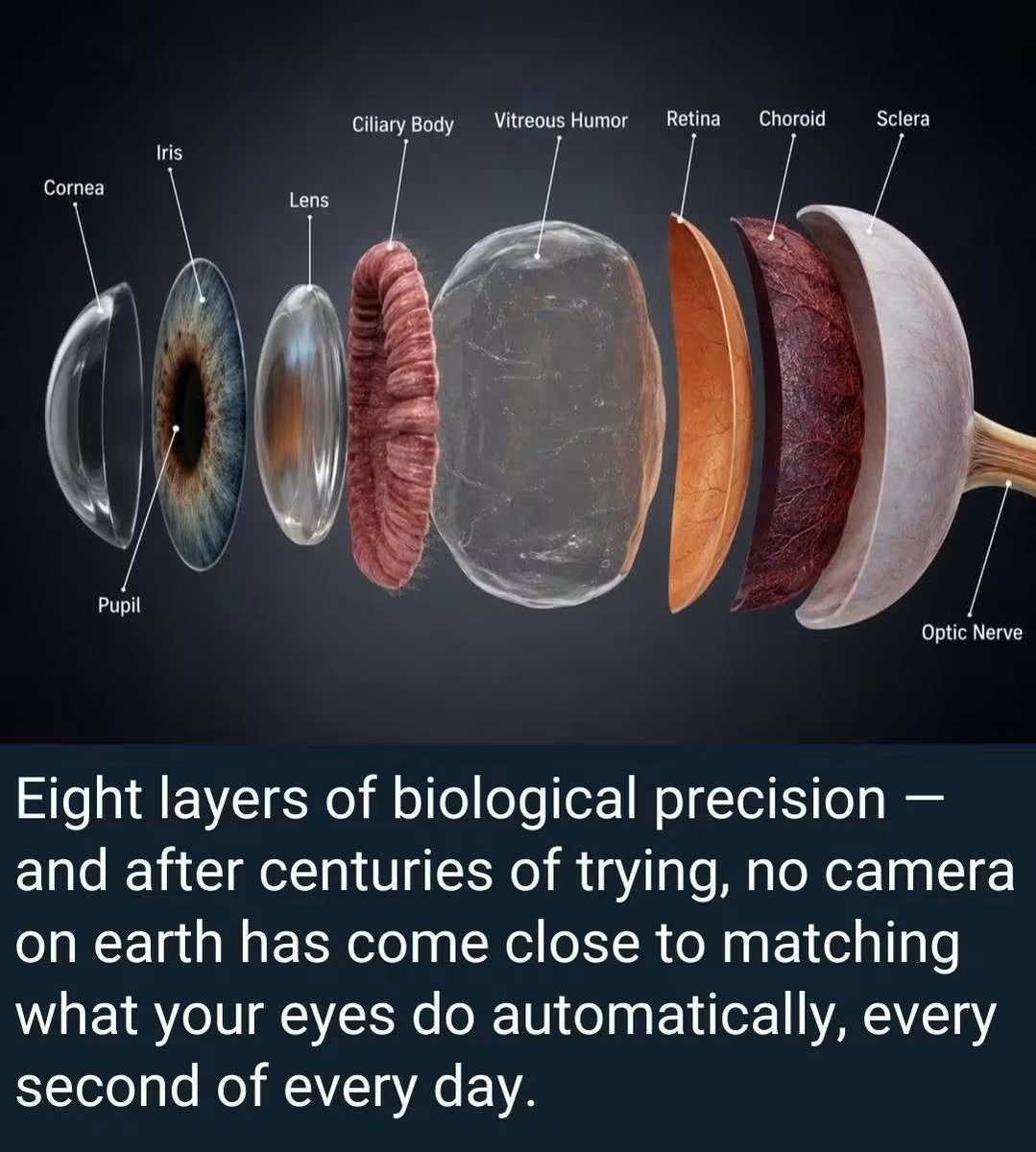
Your eye is not one organ — it is eight layers of biological precision stacked in perfect sequence.
Light enters through the cornea, narrows through the pupil, gets focused by the lens, adjusted by the ciliary body, travels through the jelly-like vitreous humor, and finally hits the retina — where millions of photoreceptor cells convert it into electrical signals that race through the optic nerve to your brain, which then assembles the image you "see" in a fraction of a second.
This happens continuously, automatically, in both eyes simultaneously, from the moment you wake up to the moment you fall asleep.
Engineers have spent decades and billions of dollars trying to build a camera that matches it. The human eye can handle 20 to 24 stops of dynamic range, adapt instantly from blinding sunlight to near-total darkness, detect motion at the edges of your vision, and distinguish an estimated 10 million colours — all while drawing less power than a dim LED bulb.
The most advanced imaging technology ever invented is sitting inside your skull right now, and you have never once had to charge it.
1
101
250
4,787
Ilya retweeted

Apr 7
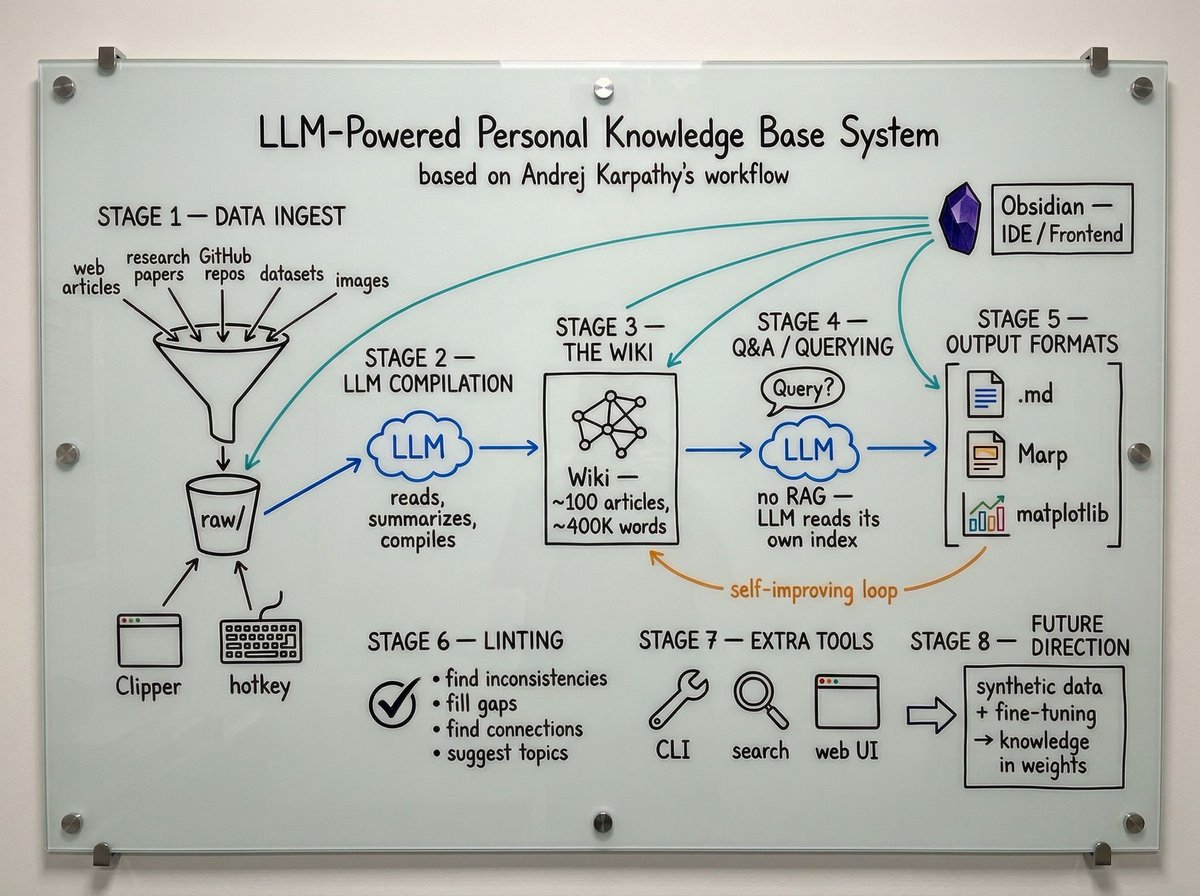
🚨 @karpathy literally ditched traditional RAG for an autonomous Obsidian file system.
Instead of writing code, he dumps raw AI research into a local folder and lets an LLM convert it into an interconnected markdown wiki.
He rarely edits the text manually.
By relying purely on dynamically updated index files, the system navigates the exact context it needs natively without relying on flawed vector embeddings.
Because the LLM fully understands the file structure, it executes advanced autonomous workflows:
→ Operates a custom vibe-coded local search engine
→ Renders complex charts and formatted markdown slides
→ Continuously compounds a 400,000-word knowledge base
The most fascinating mechanic is the self-healing loop.
He triggers background health checks where the LLM natively spots structural gaps, scrapes the internet for missing data, and cleans the articles perfectly.
This feels the absolute blueprint for managing complex technical data 🔥
btw, he also plans to fine-tune a local model directly on the wiki so the research is baked into the neural weights rather than relying on limited context windows 👀
48
184
922
61,036
Ilya retweeted

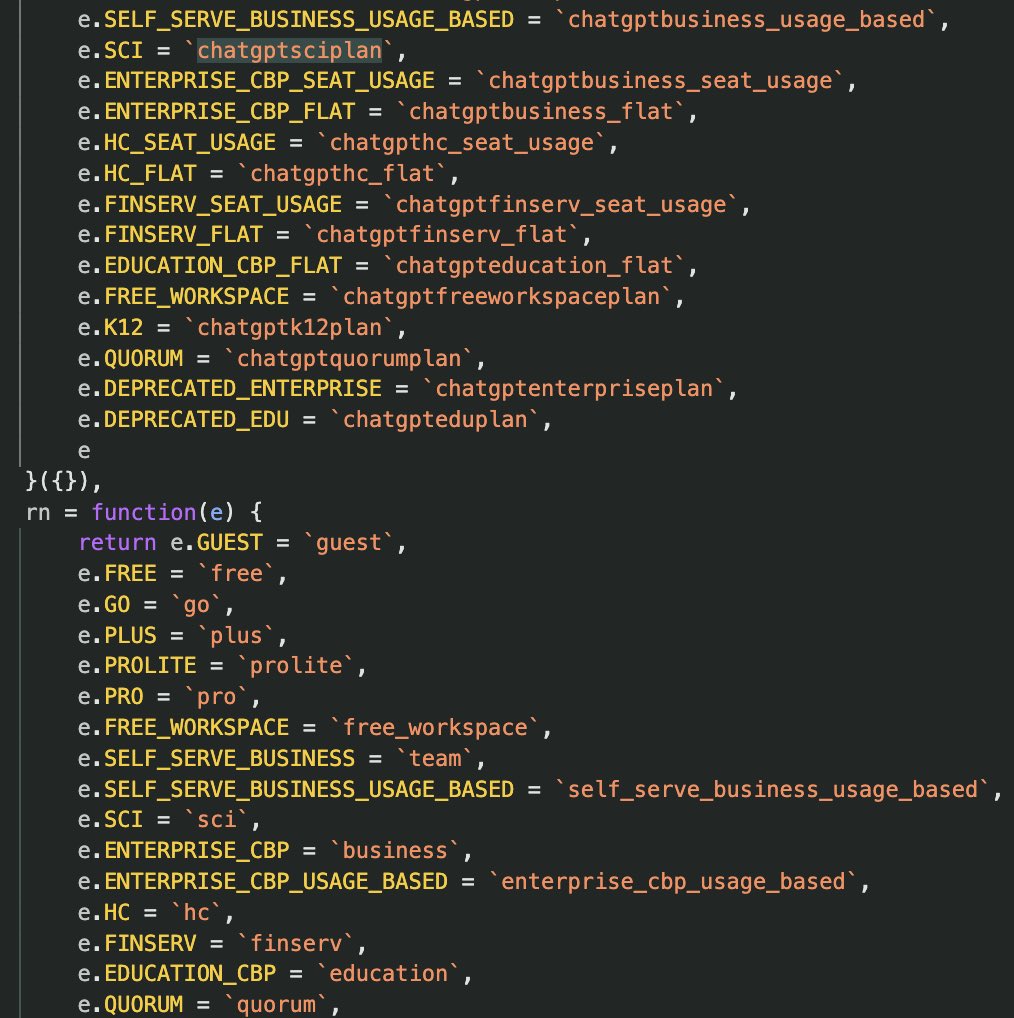
OPENAI 🔥: A new ChatGPT plan for Science is being developed, according to the latest additions on the web build.
> OpenAI has been announcing various projects related to "Accelerating scientific progress" over the past year, including an open form for institutions to "Get involved with OpenAI for Science"
> The addition of a dedicated "ChatGPT for Science" plan may enable a broad range of institutions to benefit from OpenAI's offering.
For science! 🤖

29
47
660
62,335
Ilya retweeted

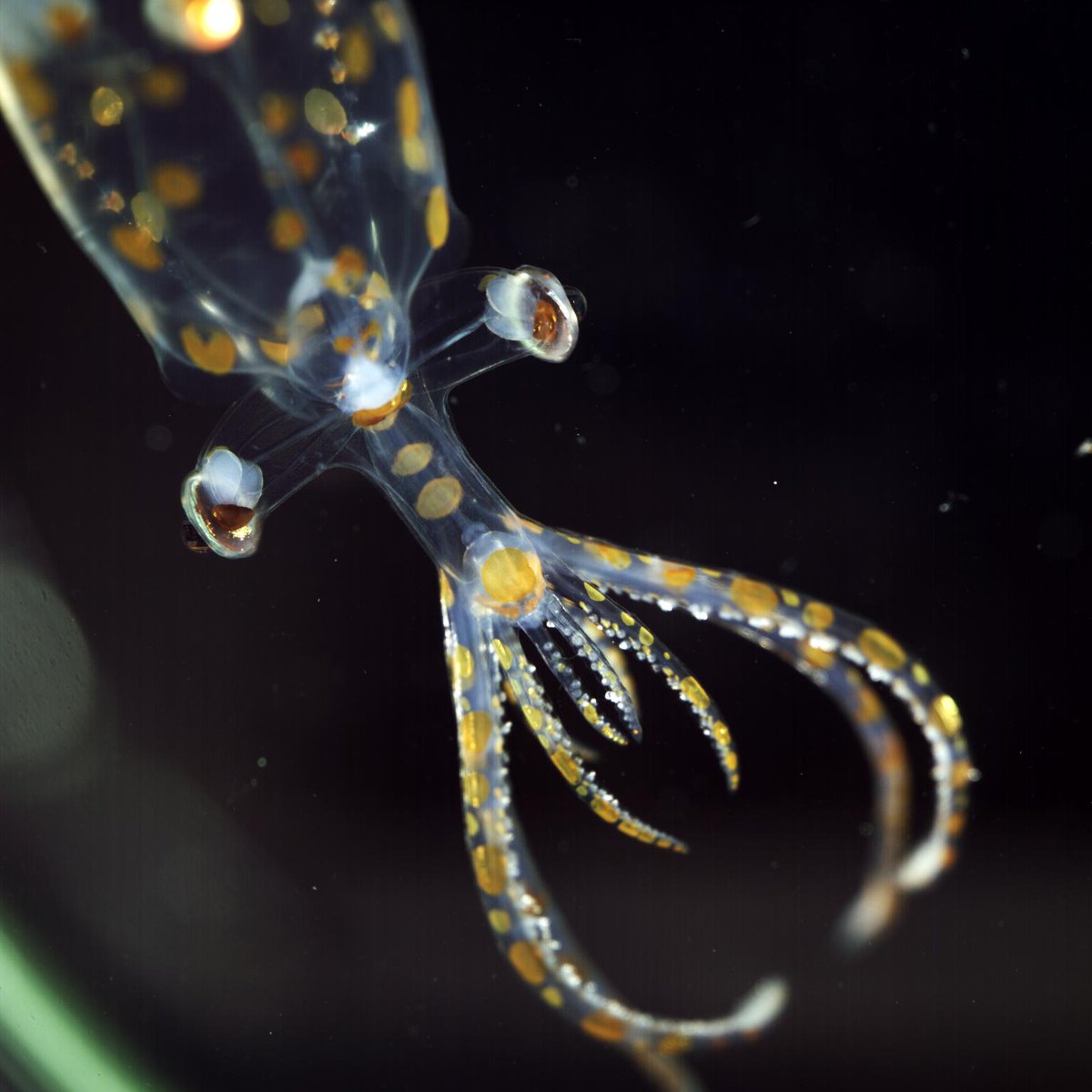
Scientists discover 31 new deep sea species, including glowing jellyfish and a glass squid
The creatures were found in the little-explored midwater zone of the South Atlantic Ocean off Brazil, one of Earth's largest and least understood ecosystems

32
143
973
71,225
Ilya retweeted

Jun 17
“I was an ordinary person who studied hard. There are no miracle people.”
- Richard Feynman, Fun to Imagine (1983)
39
194
1,244
58,493
Ilya retweeted

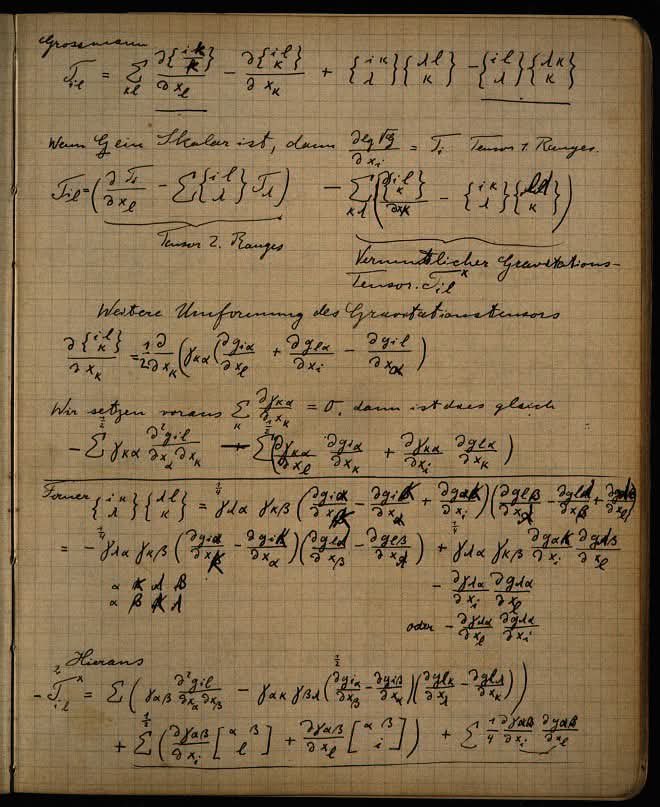
You are looking at a photo of Einstein’s actual notebook.
The Zurich Notebook captures the exact moment Albert Einstein began reimagining gravity not as a force, but as the literal warping of space and time.
In 1912, Albert Einstein returned to Zurich to tackle the greatest puzzle of his career: bridging the gap between relativity and gravity. Working with mathematician Marcel Grossmann, he filled the now-famous Zurich Notebook with dense handwriting and frantic calculations. This 96-page journal offers a raw, unedited glimpse into the mind of a genius at work. It reveals that the path to General Relativity was not a stroke of instant inspiration, but a messy, three-year struggle of trial and error where Einstein first explored the radical idea that space and time were not fixed, but curved.
Using the tools of Riemannian geometry, Einstein began describing gravity as the physical warping of the universe's fabric. While the notebook shows he had not yet mastered the math, he was already asking the revolutionary questions that would redefine physics in 1915. This transition from chaotic drafts to a theory that explains black holes and the cosmos highlights the deeply human side of science. It serves as a powerful reminder that even the most profound insights into our reality start with a pencil, a notebook, and the persistence to work through mistakes until they become breakthroughs.
source: University of Pittsburgh. (2012). A peek into Einstein's Zurich notebook. University of Pittsburgh.
8
51
158
3,041
Ilya retweeted

🚨: Anyone 2,000 light-years away with a big enough telescope on us tonight isn't seeing now. they're seeing Rome at its peak.
from where they sit, Jesus hasn't died yet.
323
493
5,572
620,633
RT @xiaopenghexpeng: Our flying car fleet has successfully completed test flights at XPENG Guangzhou base. This milestone follows batch tri…
6,701
Ilya retweeted

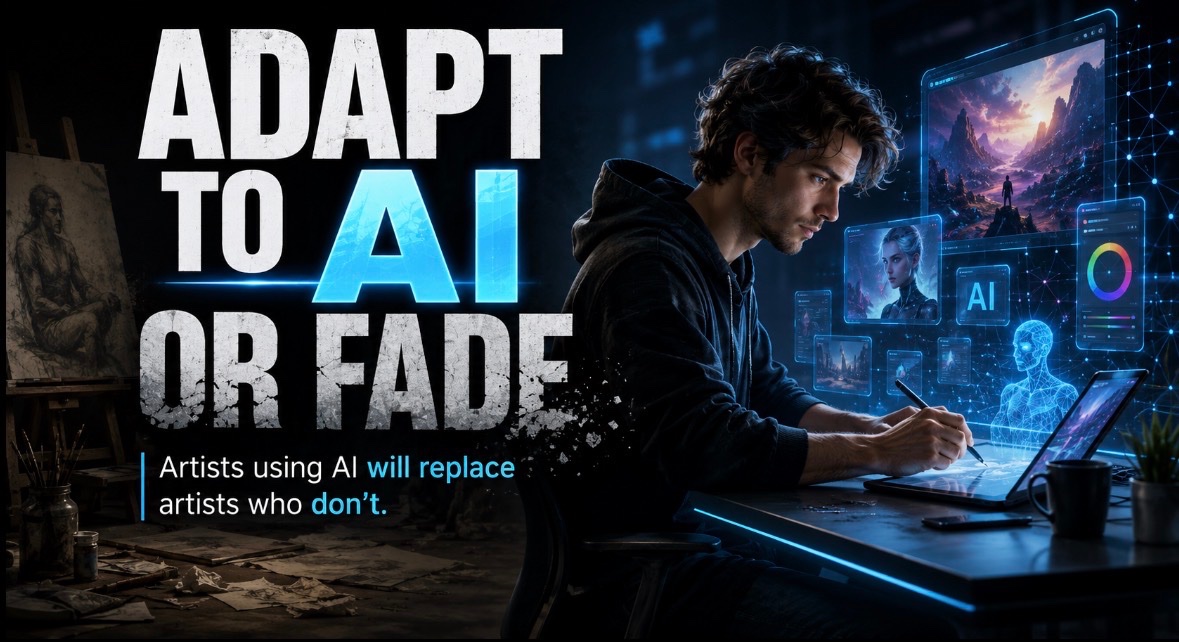
The brutal truth is that artists who refuse to adapt to AI will become irrelevant.
The market won’t care how “pure” your process was.
It will care who can create faster, experiment harder, and produce better work.
AI won’t kill artists.
Artists who use AI will replace artists who don’t.
33
8
49
1,707
Ilya retweeted
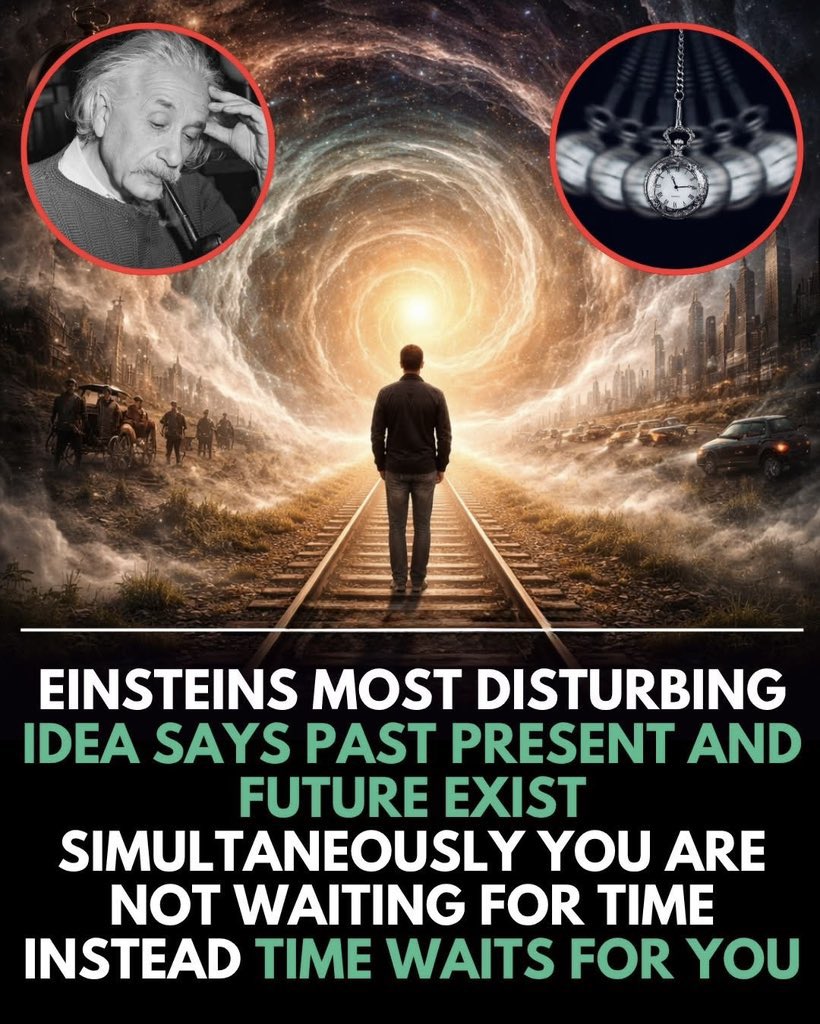
Albert Einstein's mathematical framework of relativity proved that space and time are mechanically fused into a singular, rigid geometric structure known as the "block universe."
In this exact architectural model, time does not actively "happen" or physically move forward. Instead, every single microscopic event—from the absolute beginning of the universe to its final absolute end—already exists simultaneously within this massive four-dimensional coordinate system.
This means your biological consciousness is simply traveling through a pre-existing structural framework. The past has never truly vanished, and the future is already completely constructed; your central nervous system is merely sequentially rendering the environmental data as you physically move along your specific geometric coordinate path.
24
50
144
4,420