
Retired Fire Chief. Still very interested in the Fire service 🇨🇦 Slava 🇺🇦
Joined February 2014
- Tweets 4,255
- Following 478
- Followers 1,412
- Likes 23,398
631 Photos and videos





Brad Patton retweeted

Jun 13
🇨🇦 Canada spent $10.2 billion on foreign aid in 2023-24.
That same year:
🍽️ 10 million Canadians couldn’t afford enough food
🏦 4.5 million Canadians lived below the poverty line
🏥 1 in 11 Canadians reported unmet healthcare needs
🏠 Chronic homelessness rose 9.4% in a single year
🍞 2.17 million food bank visits in one month — 712,000 of them children
Ottawa’s priority wasn’t you.
And Carney’s campaign promise?
“My government will not cut foreign aid.”
He said that in April 2025.
By November 2025 his budget cut $2.7 billion in foreign aid over four years.
So he lied to the world AND he lied to you.
$10.2 billion went overseas in one fiscal year.
Canada’s entire annual spend on the National School Food Program?
$1 billion.
We export generosity we haven’t earned.
We import the optics of a caring government.
And the bill goes to the family at the food bank.
Charity begins at home.
In Canada, it ends there too — on a waiting list.
🇨🇦 Repost if Canadians should come first.
🇨🇦💀 #CdnPoli #ForeignAid #CanadiansFirst #Carney
118
640
1,047
18,524

Jun 13
RT @OPP_WR: #WellingtonOPP - Multiple injuries & fatalities reported in collision in Mapleton Township.
Intersection at 4th Line and Welli…
12
Brad Patton retweeted

Jun 12
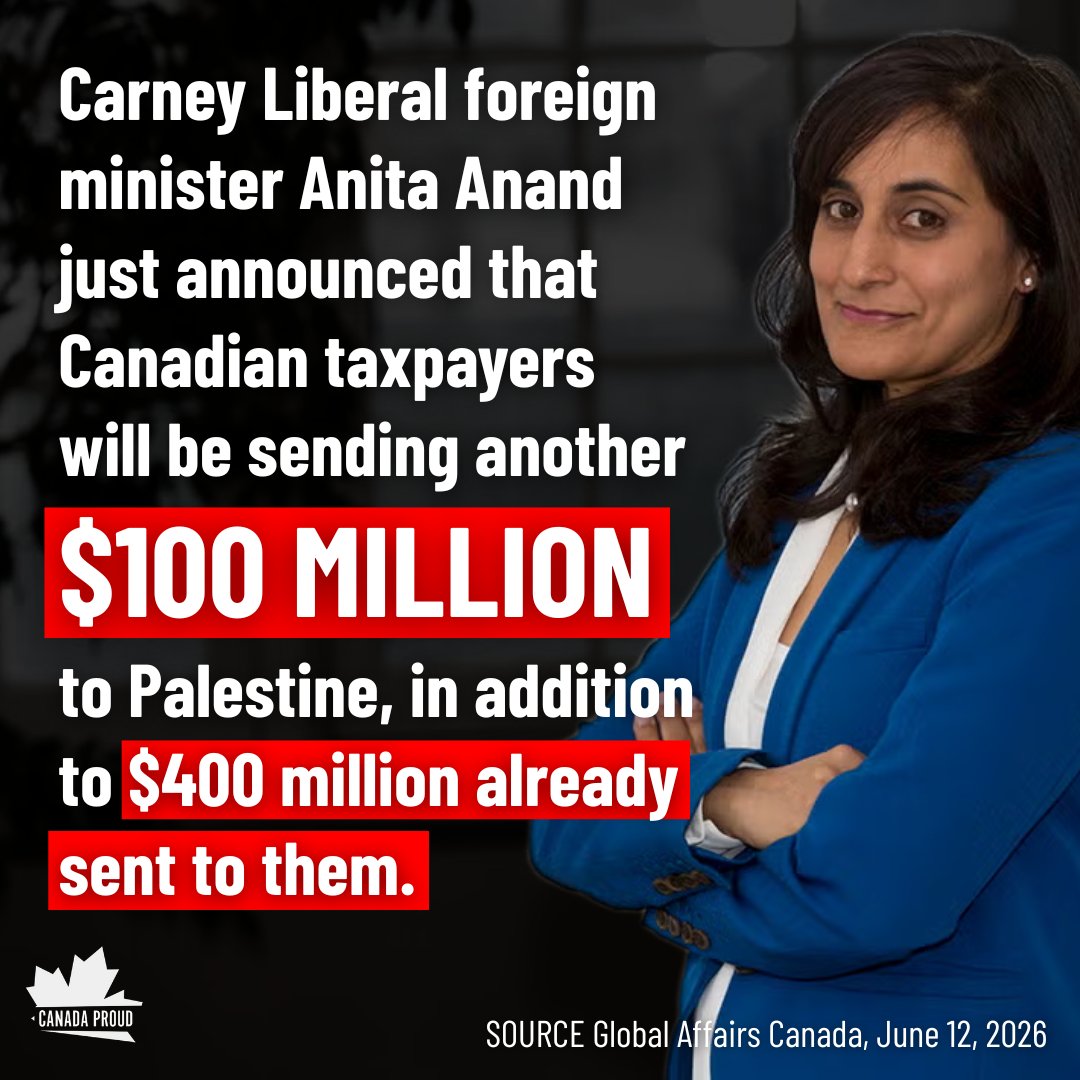
#BREAKING: Anita Anand just announced that she's sending another $100 MILLION of your money overseas.
The Liberals say the funding "comes as the humanitarian crisis in Gaza continues to intensify and conditions in the West Bank deteriorate amid Israeli settlement expansion and rising extremist settler violence."
Meanwhile, back in the Canada, the country the Liberals are supposed to be governing, the bucket of cash for Palestine comes amid a Carney Recession.
As Canadians become poorer, Mark Carney is sending your cash overseas.
When will Canadians have enough?
347
345
507
18,811
Brad Patton retweeted

Jun 11
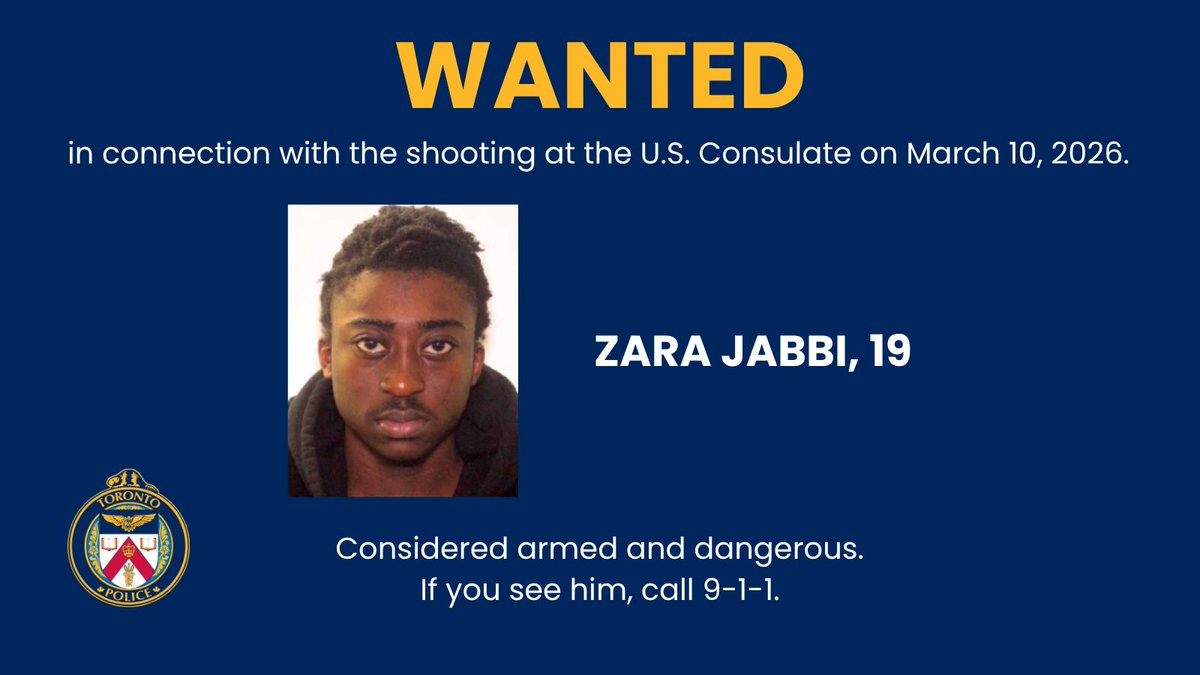
This is the cop killer 👇🏻👇🏻👇🏻
Jun 11

Zara Jabbi is considered armed and dangerous. If you see him call 9-1-1.
See our full statement: tps.ca/media-centre/news-rel…
71
243
695
18,957
Brad Patton retweeted

One Card. That’s it.
Starting July 2, Albertans can get a new driver’s licence or ID card that includes their healthcare number and proof of citizenship, all on one secure card at no additional cost.
No more flimsy paper cards. No more carrying multiple pieces of ID. Just a common-sense change that makes life easier.
1,084
470
4,744
677,758
Brad Patton retweeted

Jun 3
💥 RCMP JUST TORCHED THE LIBERAL GUN GRAB!
Brian Sauve (20,000 federal officers): Targeting licensed owners is statistically baseless, insanely expensive, and pulls cops off real crime.
As a retired cop I couldn’t agree more. Criminals use illegal guns. Not your PAL holders.
Liberals: Stop harassing law-abiding Canadians. Go after the gangs and smugglers.
Enough waste. Enforce real laws.
Agree? RT comment.
#cdnpoli #GunControl #RCMP
Jun 3

💥 BOOM: @Sauve_Brian, representing 20,000 federal RCMP officers, DROPS A BOMB 💣 on the Liberals gun grab, telling @PatKelly_MP going after licensed gun owners:
✅ isn't backed by ANY statistics
✅ is a "complicated/expensive" waste of $$
✅ will take police away from REAL crime
60
1,123
2,620
53,856
Brad Patton retweeted

🚨This should concern every single Canadian!🚨
Const. Kevin St. Louis of the Edmonton Police Service stated "Every individual that we’ve identified during this investigation is a temporary foreign worker or on a student visa & relatively new to Canada." share.google/loQyin45xuYk3Br…
149
1,515
3,348
66,232
Brad Patton retweeted

May 12
Majority of UCP voters support independence: poll
She says she is a federalist. She is not campaigning for Alberta to leave Canada — she's been clear about that. But she is also not turning around and attacking the people who are talking about it.
That is not an accident. One look at the numbers and you'll understand why Premier Danielle Smith is walking this line the way she is.
According to exclusive polling commissioned by Act For Alberta, and full disclosure, I am the point of contact for that third party advertiser, roughly 60% of United Conservative Party voters say they would vote to leave Canada.
Not think about it. Not flirt with it. They would vote to leave. That is not fringe. That is the base.
These are the people who built the party, who knocked on doors, who trusted conservative leadership to fight for Alberta.
And that brings us to disgraced former UCP premier Jason Kenney, Smith's predecessor.
Because he chose a very different path.
He calls separatists names. He mocks them as kooks and radicals and crazies, in vicious Trudeau-esque internet tirades.
He derided the very people who worked so hard to get him elected in the first place. People who gave him a chance to do it his way.
And what did that approach deliver? Nothing tangible. No meaningful reset with Ottawa. No shift in the relationship. No results that matched the promises.
So what happened? Those same voters started looking elsewhere.
Not because they suddenly changed who they were, not because they are no longer Conservatives, but because they felt ignored, dismissed, and taken for granted.
The old ways of strongly worded letters and lawsuits over jurisdiction have never worked. There are no pipelines, no control over immigration, no civil liberties the feds wouldn't crush if given a chance.
Smith is not making that mistake. She is reading the room, and when this many people are this frustrated, you do not lecture them. You do not insult them. You do not pretend they are a problem to be managed or berated.
You listen. You acknowledge where they are at, and you let the conversation happen.
This is bigger than separation. This is about trust. Trust that Alberta’s concerns are being taken seriously. Trust that political leaders are actually hearing the people who put them in power.
Smith holds her position. She says she believes Alberta is better off in Canada. But she is not trying to shut down the people who disagree.
She is not attacking her own base, because she understands something her predecessor did not.
You do not keep support by ridiculing the people who gave it to you. You respect them, let them speak, and you deal with reality as it is, not as you wish it would be.
REPORT by @SheilaGunnReid:
92
242
1,134
31,636
Brad Patton retweeted

We cannot sell our oil because it is not decarbonized.
But we can sell our airports to the countries buying them with oil money?
Saudi Arabia does not decarbonize its oil.
The UAE does not decarbonize its oil.
They are among the most likely buyers of Canadian airports if Carney proceeds with privatization.
They will use oil profits to buy Canadian infrastructure while Canada sits on its own oil waiting for a carbon capture condition that makes no economic sense.
We are applying a standard to ourselves that we do not apply to the countries buying our most valuable public assets.
It doesn't make any sense.
75
568
1,140
19,497
Brad Patton retweeted

May 9
🇳🇴🇮🇷 Norway's cashing in on the Iran war by reopening 3 North Sea gas fields that have been shut since 1998.
It's also approving exploration in 17 new offshore areas across the North Sea, Norwegian Sea, and Barents Sea.
Norway, which already supplies 30% of Europe's gas and 40% of what France burns, is betting that energy security wins over climate optics.
The contradiction is hard to ignore.
Oslo has acknowledged the climate crisis, their own officials describe fossil fuels as the main driver. Then they reopen 28-year-old fields and greenlight new exploration in the same breath.
But here's the thing: Europe had no real backup plan. The green transition was supposed to make this unnecessary. It didn't move fast enough.
So the continent is running back to whoever has the gas.
Norway is simply taking the call.
Source: France24_en
May 9

🇺🇸🇮🇷 How did Iran manage to attack 3 U.S. destroyers?
Iran's mosquito boats, small and nearly impossible to track, swarmed U.S. destroyers in the Strait of Hormuz.
The CIA had already flagged Iran's underground stockpiles of anti-ship missiles. The U.S. knew what was coming, so they let it happen.
While the destroyers sat in position, carrier fighter jets and cruise missiles were already coordinated and ready.
The moment Iran made their move, the U.S. had already traced them back to their source.
They absorbed the attack just long enough to lock onto the origin, then they hit back with everything.
It's a brutal calculation: take the hit, confirm the location, eliminate the threat permanently.
In one of the most contested waterways on earth, the U.S. turned Iran's asymmetric playbook against itself.
Source: AiTelly
104
584
3,181
335,465
Brad Patton retweeted

May 8
Amerika'da kaybolan 10 yaşındaki Peyton Saintignan'ı bulmak için destek olan Drone firması sayesinde polis termal görüntüleme özelliğine sahip drone'larla, küçük kızı orman zemininde kıvrılmış bir şekilde uyurken buldu.
117
1,686
22,508
3,794,572

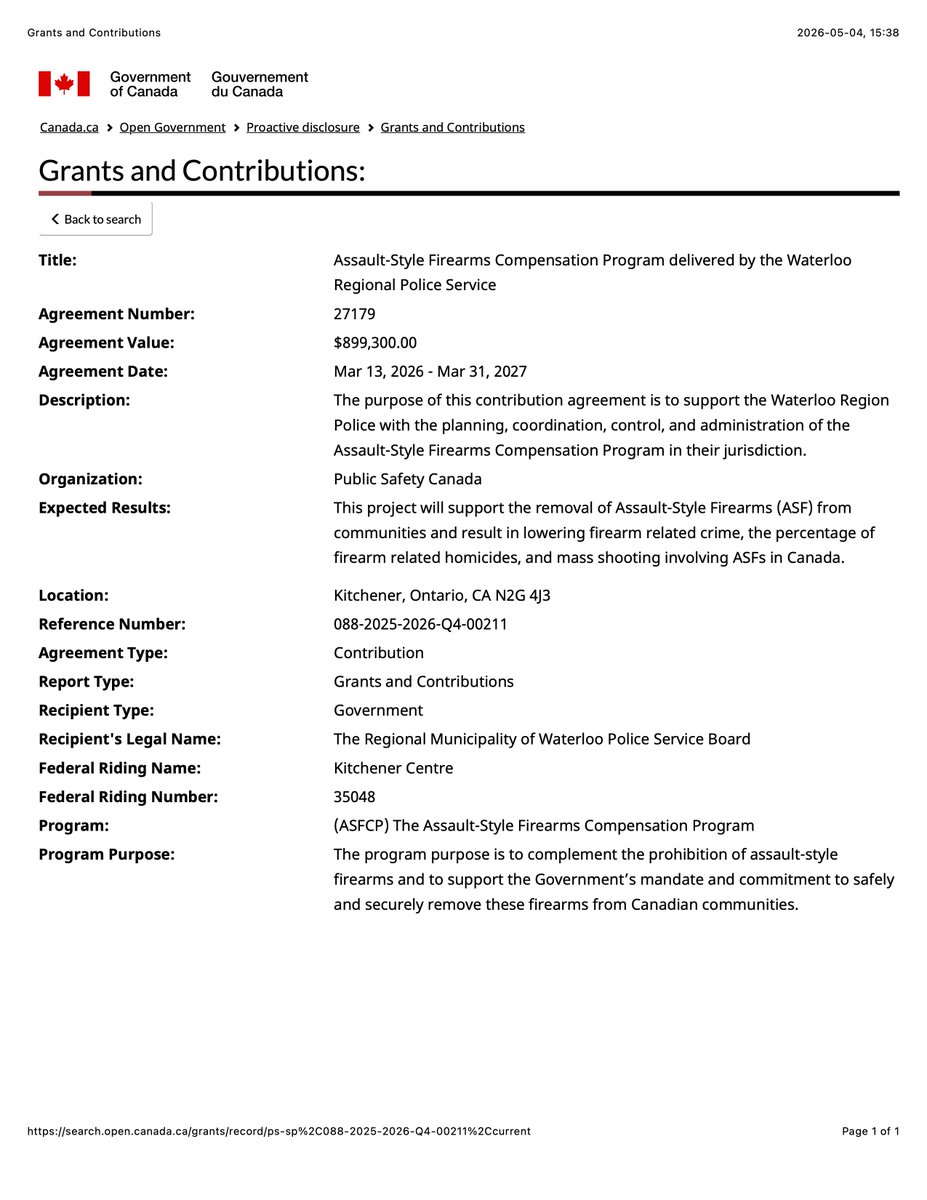
The Waterloo Regional Police, currently the only service in Ontario participating in firearm confiscation efforts, is set to receive $899,300 in funding. While other police services across the province have not adopted similar measures or identified clear public safety benefits, Waterloo remains the sole participant in the initiative. Politics and cash before public safety. @CanadasNFA
May 4

LIBERALS PUBLISH GRANT INFO — WATERLOO POLICE CONFISCATING GOODS FROM HONEST CITIZENS
Criminalize and Confiscate
- COST: $899,300 of taxpayer wealth
- FOR: Waterloo Police in Ontario to confiscate precious goods (firearms) from government-licensed owners
14
51
121
5,730
Brad Patton retweeted
May 4
The SK Government, with the SK Firearms Commissioners Office provide an update on their amendments to the SK Firearms Act.
TL/DR: they will be issuing appraisal certificates to affected gun owners so they can persue fair compensation and reject the offers from the ASFCP. This also stalls the program itself while they hash it out.
They will also be providing exemption certificates to affected owners to protect them from criminality out past the amnesty. This is huge. They get to keep their guns without fear of criminal charges.
The SK Chiefs of Police Assoc. fully supports this and thanks the SK government for doing this, and allowing them to focus on fighting crime instead of grabbing guns.
facebook.com/share/v/18e9LLs…
33
108
474
11,366
Brad Patton retweeted

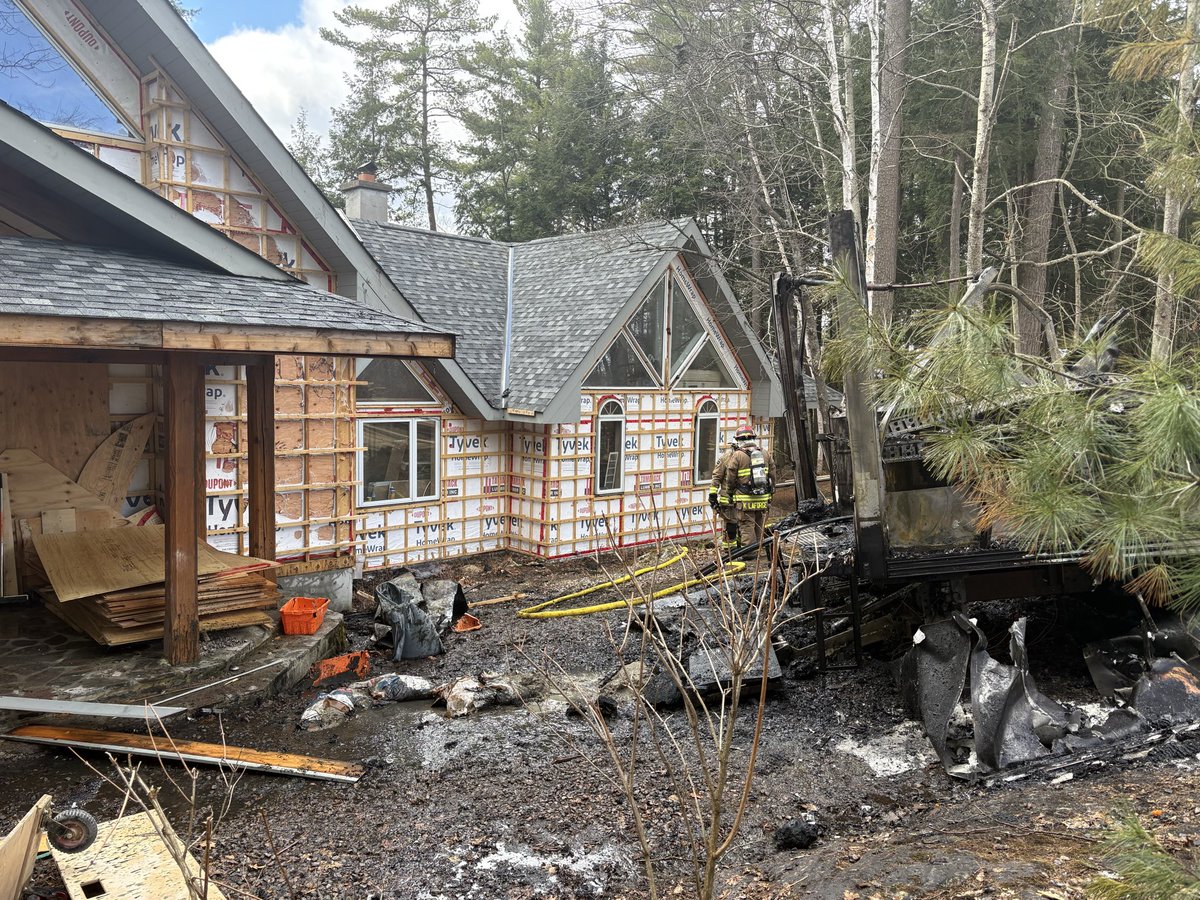
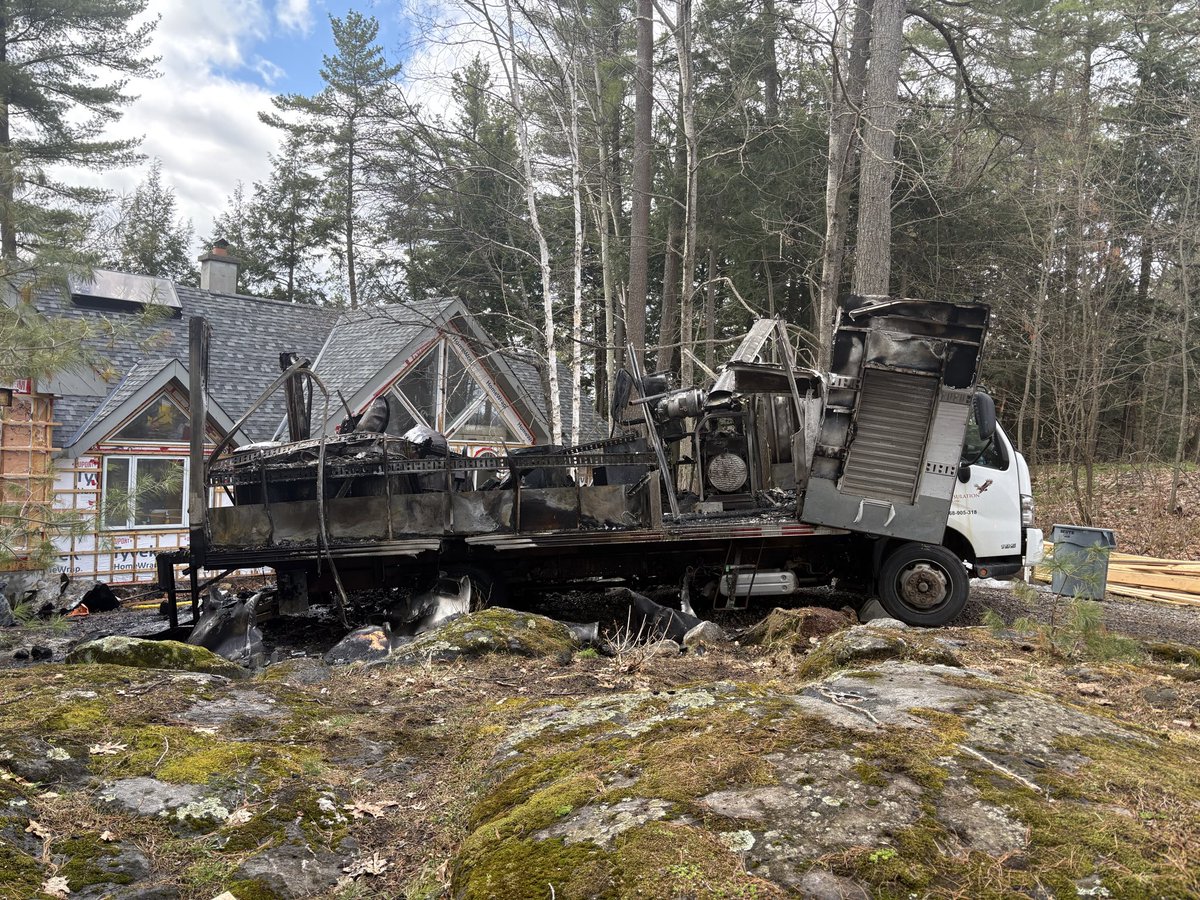
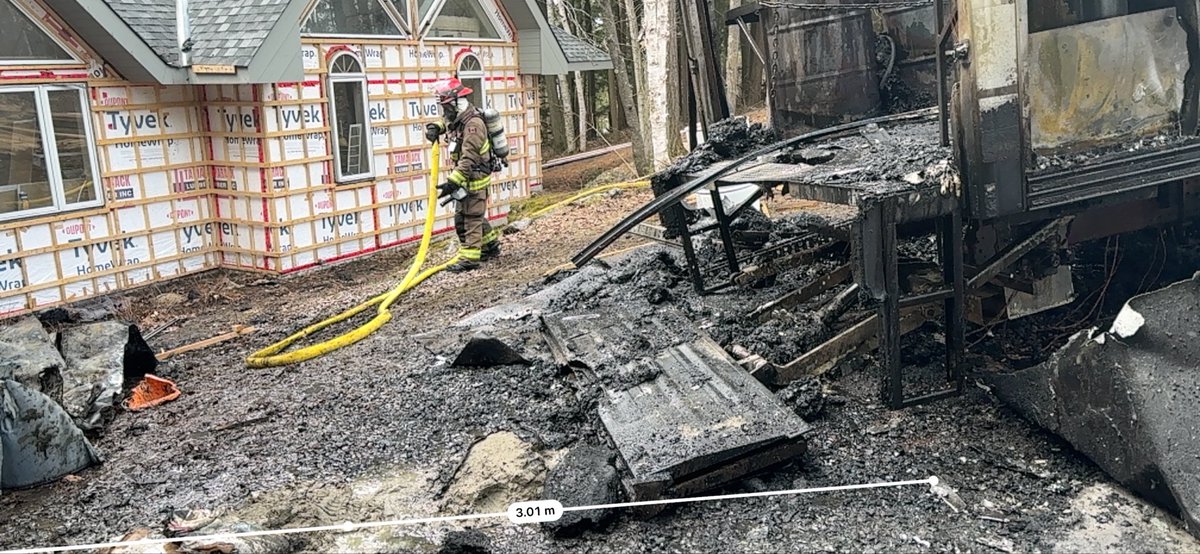
Huge shoutout to Seguin Fire Dept! 👏
Crews responded to a vehicle fire on Rosseau Lake Rd 3 today. While the truck was lost, quick action saved a 6,000 sq. ft. cottage! 🏠
Our Automatic Aid Agreement ensures the fastest response for our community. Grateful for this partnership.
3
13
824
Brad Patton retweeted

Apr 27
Nine years ago, @JustinTrudeau launched the Canadian Infrastructure Bank: It was "tasked with financially supporting revenue-generating infrastructure projects that are 'in the public interest' by catalyzing private investment."
In 2026, the "new" @liberal_party gov't have found the solution to what's been holding Canada back: the lack of a "Sovereign Wealth Fund" that'll invest in infrastructure projects alongside the private sector!
Norway has zero effective national debt; that's why it can benefit from a true SWF. Ottawa & the Provinces already owe $2.5 trillion in debt; borrowing more to "invest" is just another margin loan backed by our Grandchildren.
RT @globeandmail Carney to announce sovereign wealth fund to back major projects theglobeandmail.com/politics…
75
303
828
129,627
Brad Patton retweeted

Apr 26
Hypothetically…….. We are being taxed on money we never made.
Let that sink in.
If I bought my property outright for $160,000 in 2009
Now the county says it’s worth $446,000.
Did I sell it? No.
Did I make a profit? No.
Did I get a check for $446,000? No.
But my taxes jumped like I did.
That’s the problem.
This isn’t income.
This isn’t cash.
This is a number someone decided on paper and now I’m being billed for it.
If my stock portfolio doubles, I don’t pay taxes until I sell.
If my income doesn’t increase, I don’t magically owe more income tax.
So why does owning a home work differently?
Why am I being taxed on unrealized gains?
A house isn’t just an investment, it’s where people live. And this system means you can do everything right, pay off your home, and still get squeezed harder every year because of a number you never turned into money.
You don’t truly own something if you can be taxed out of it.
This isn’t about “services” or “inflation.” It’s about being charged for value you never received.
It’s time people start to notice.
1,397
7,295
21,901
593,499
Brad Patton retweeted

The biggest hypocrite in Canadian history
If he is so anti-USA then why :
1) his wife works for a USA company
2) he has a home in the USA
3) his children go to USA schools
4) his investments are 90% USA
5) he exported Brookfield to the USA
THOUGHTS ?
248
946
2,456
30,999
Brad Patton retweeted

Apr 14
Canadian military personnel left scrambling after cuts to out-of-country allowances ottawacitizen.com/public-ser…
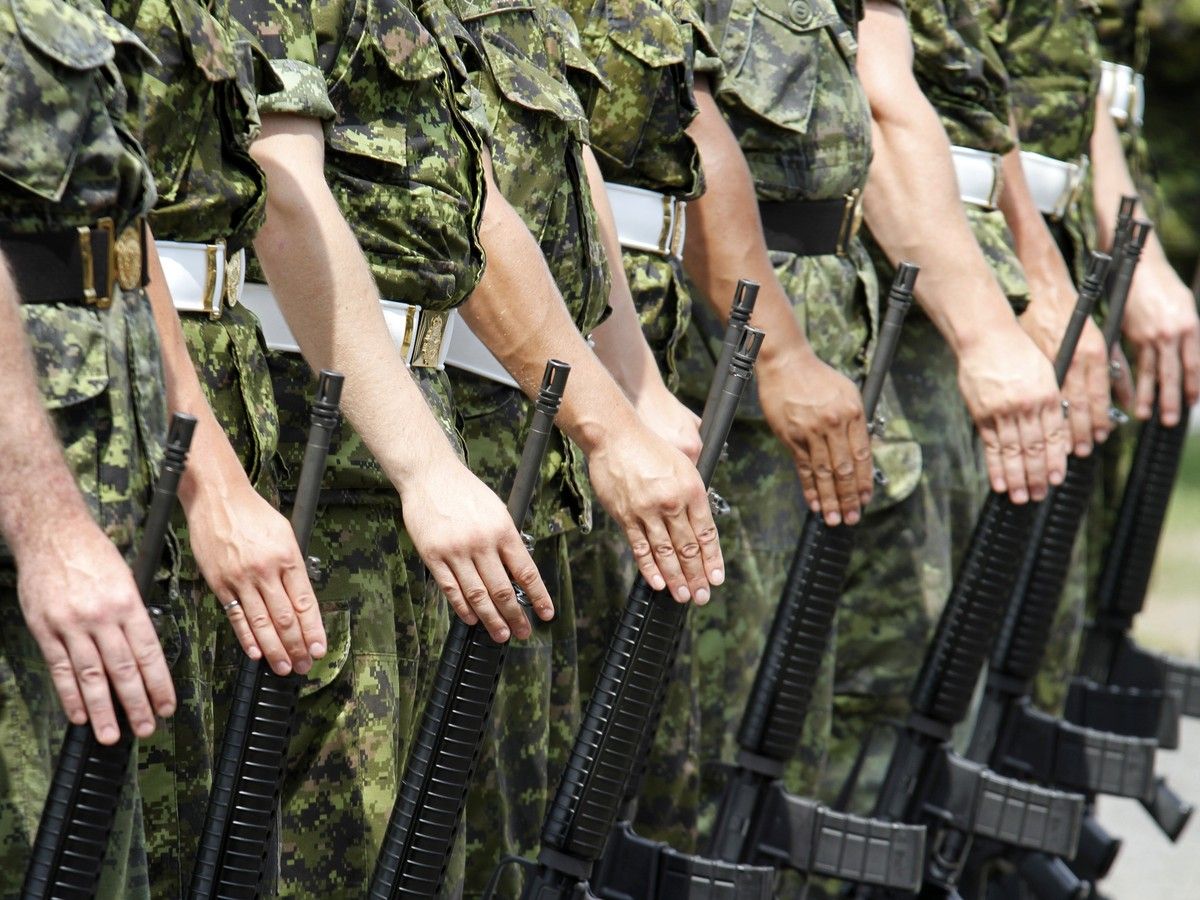
30
34
60
46,551
Brad Patton retweeted

Apr 14
‼️JUST IN: - An entire parking garage has been engulfed in flames in a massive EV fire
at Chinese automaker BYD’s Pingshan facility in Shenzhen, China
These cars are soon going to be in underground and condo parking garages in Canada and the UK.
506
2,667
7,509
295,106
Brad Patton retweeted

Apr 13
x.com/gilileoB/status/204357…
Mark Carney, Canada’s Prime Minister and leader of the Liberal Party, says:
“We cannot trust America.”
Meanwhile:
- His wife lives in the United States
- All four of his children live and study in the United States
- 91% of his investment portfolio is in the United States
- He owns a house in the United States
Yet he tells Canadians they can’t trust America.
Hypocrisy at its finest.
2,578
19,871
44,115
585,229