GLOBE connects students, teachers, scientists, and the public from around the world to better understand the Earth. @NASA @NSF @NOAA and U.S. State Dept.

Joined April 2009
4,807 Photos and videos
Pinned Tweet
#ICYMI: Watch the GLOBE Program's 31st Anniversary Broadcast here. Thanks to everyone who joined us live to celebrate this incredible milestone! šŸŒšŸ„³ youtu.be/IWmvBt18vYQ?si=jxds…
1
3
533
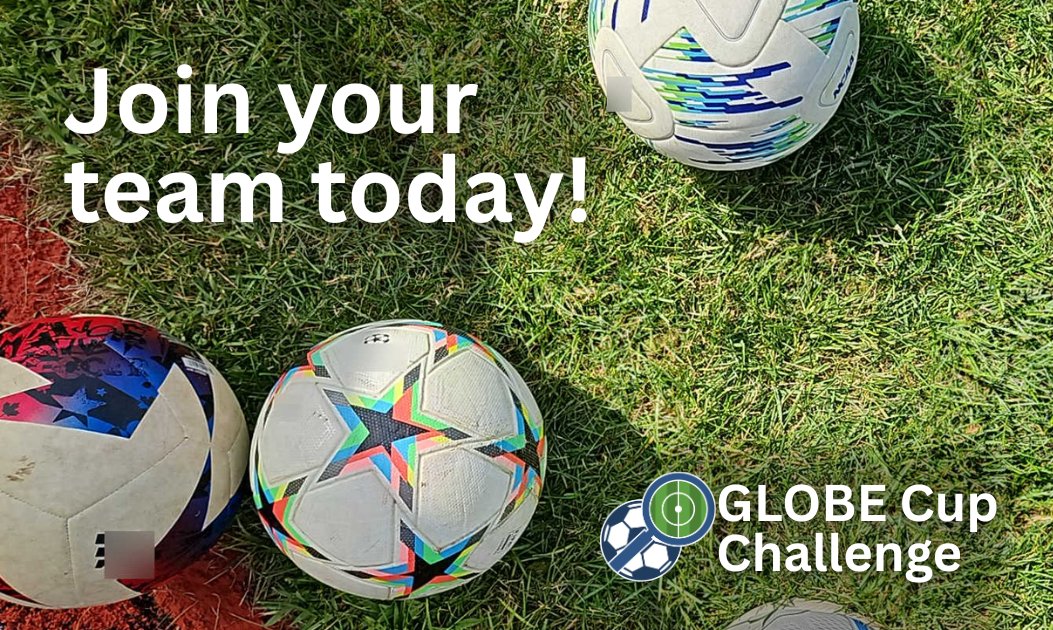
Are you ready to join your GLOBE Cup Challenge team? ⚽ Find your regional team: tinyurl.com/globe-cup-teams To join from the GLOBE Observer app, go to your settings and select ā€œFind a GLOBE Team.ā€ Search for your team’s name and hit join. To join from the GLOBE website, go to globe.gov/globe-community/gl… and select ā€œJoin a GLOBE Team.ā€ Open the filter, find and select your team, and click ā€œJoin Teamā€ in the upper right corner of the screen. Find additional tips and resources on making Land Cover observations and taking temperature measurements at globe.gov/do-globe/measureme…
38
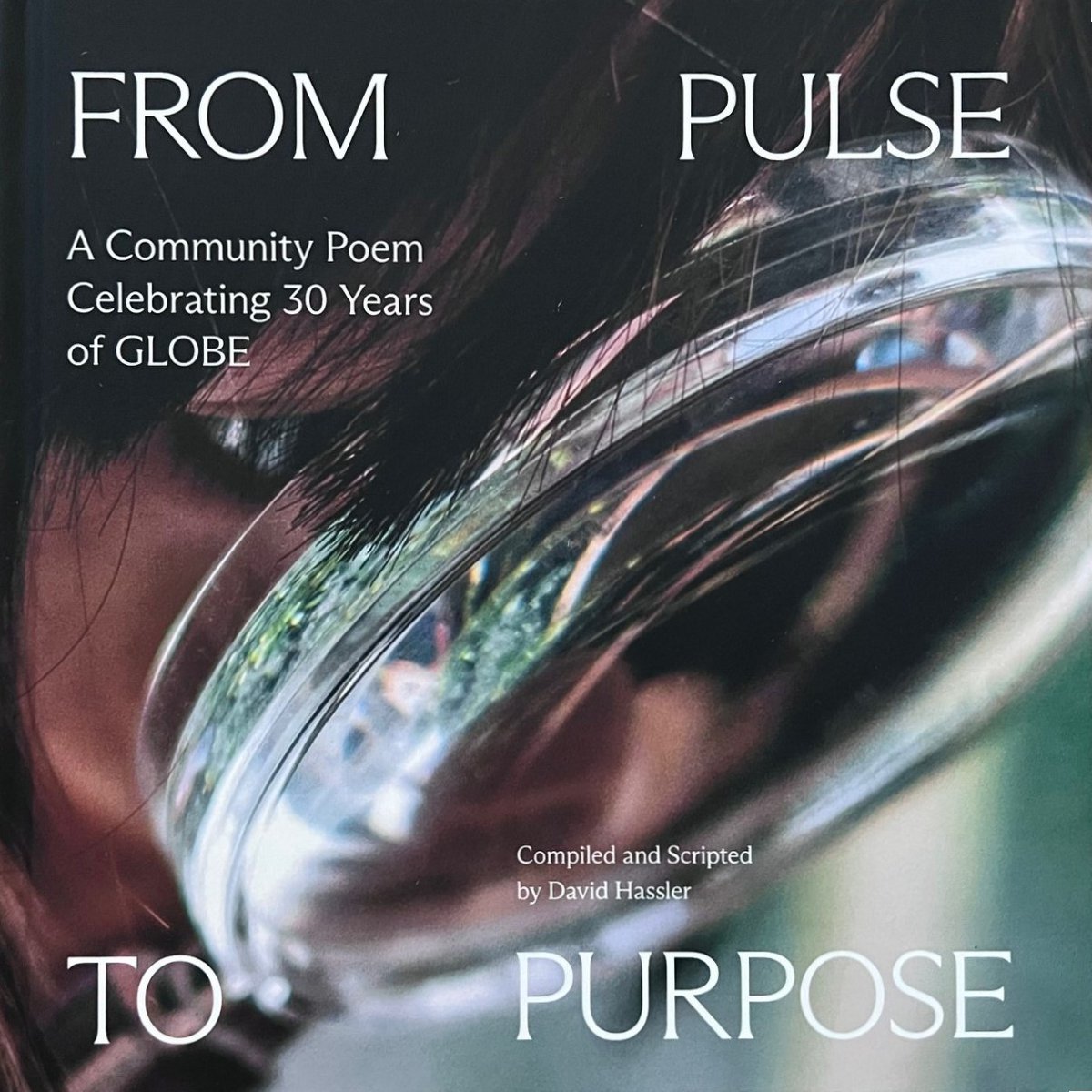
Do you like books, science, and poetry? The GLOBE Community Poem is now a visual, hardcover book that shares the joy of discovery and the power of science through poetry. The GLOBE Community Poem is now also available as a poster or greeting cards—and even as free downloadable PDFs—so you can experience it your way and share it widely. globe.gov/globe-community/gl…
43
Educators from the GLOBE Mission Earth project participated in a community of practice (CoP) led by NASA Langley Research Center to refine how students interact with NASA's land cover data from MODIS, Landsat, and Sentinel-2. The CoP focused on data collection, curriculum integration, student research, and validation to refine how students interact with NASA's land cover data. Learn more in this NASA article: science.nasa.gov/learning-re…
1
64
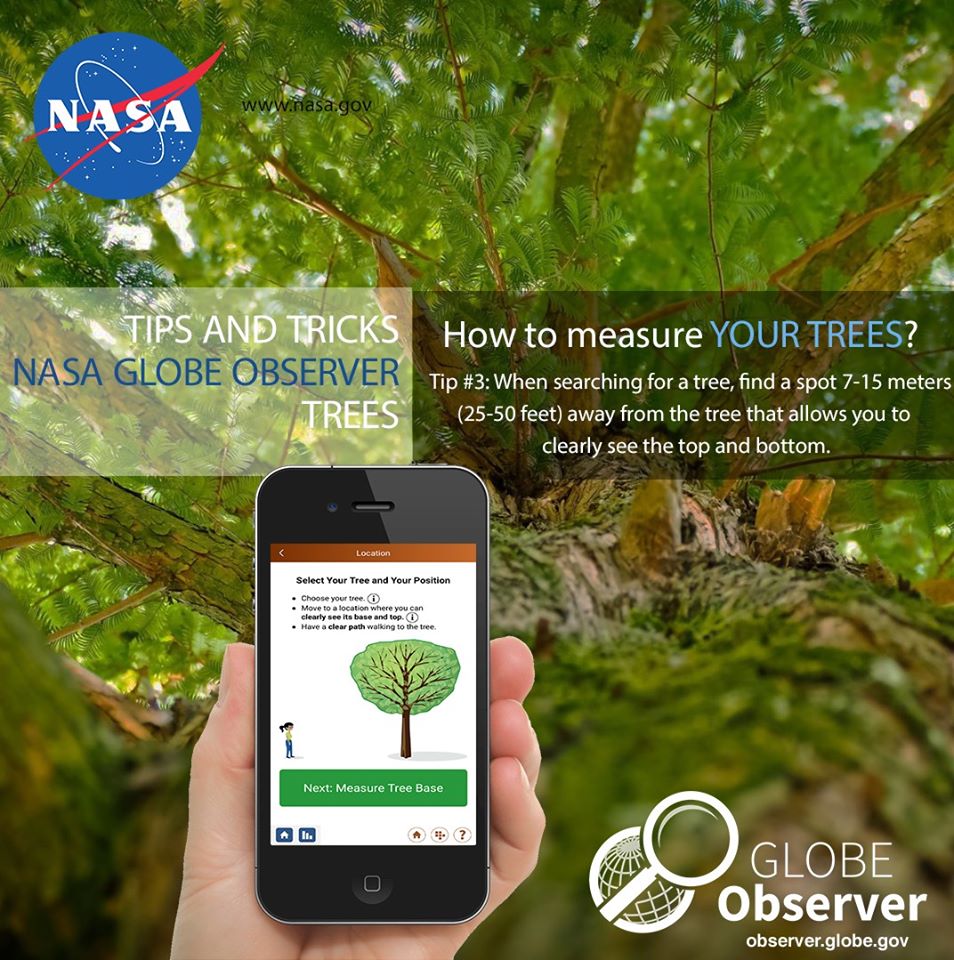
#QuickGLOBETip for making GLOBE Trees observations! How should you measure the tree you are observing? Tip #3: When searching for a tree, find a spot 7–15 meters (25–50 feet) away from the tree that allows you to clearly see the top and bottom. Explore this page for more tips and resources: observer.globe.gov/do-globe-…
3
3
207
The GLOBE Program retweeted
Calling all soccer fans! ⚽ During the #FIFAWorldCup, you can help @NASA gather science data by taking photos and temperature measurements at your local field, park, or wherever you play soccer. Get started: go.nasa.gov/4fzniu6
14
81
223
26,609
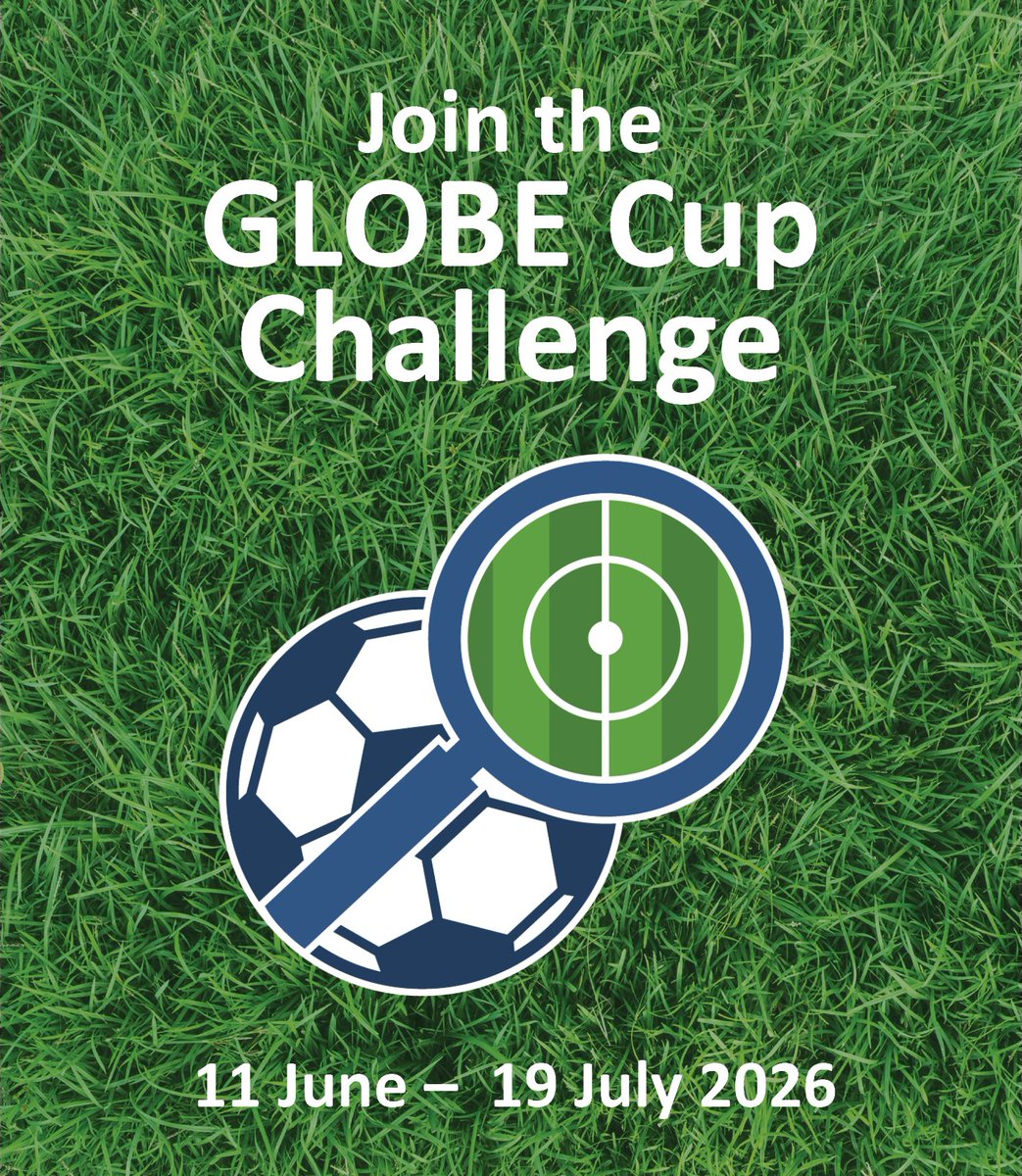
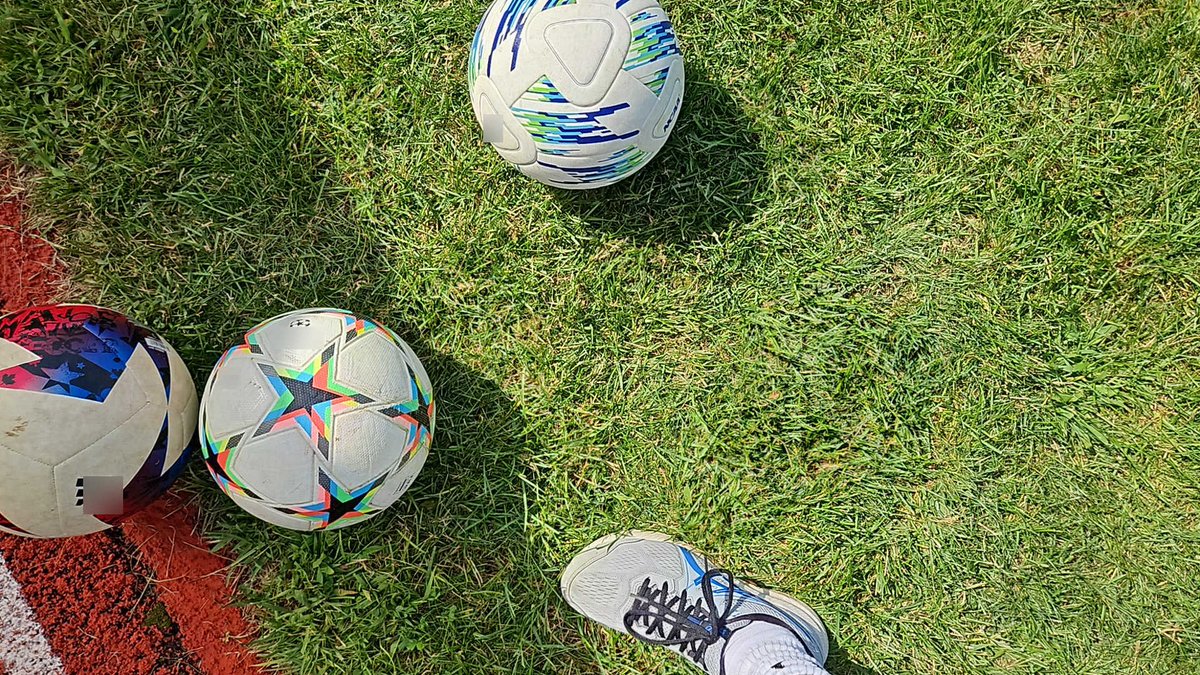
The GLOBE Cup Challenge has begun! When you are not busy cheering on your favorite team in the World Cup, join your regional GLOBE team and show us which region has the most soccer (football) fans! Help your team collect environmental data where the world plays soccer (football) by taking observations of air temperature, surface temperature, and/or land cover at your local soccer field, park, schoolyard, or anywhere people play. Learn more at globe.gov/do-globe/measureme…
1
1
44
Join us today at 12 pm ET (16:00 UTC) for the next GO Connect conversation. We’ll kick off the GLOBE Cup Challenge with scientists—and soccer fans—Dr. Eric Brown de Colstoun from NASA Goddard Space Flight Center and Dr. Kevin Czajkowski from the University of Toledo. We’ll explore the science of how the type of ground where people play soccer (football) influences the surrounding temperature! Learn more and register: observer.globe.gov/go-connec….
1
63
Have you registered for tomorrow’s GO Connect to kick off the GLOBE Cup Challenge? Join us at 12 pm ET (16:00 UTC) on the 11th of June to explore the science of how the type of ground where people play soccer (football) influences the surrounding temperature. The conversation will be led by scientists (and soccer fans) Dr. Eric Brown de Colstoun from NASA Goddard Space Flight Center and Dr. Kevin Czajkowski from the University of Toledo. Learn more and register at observer.globe.gov/go-connec….
1
58
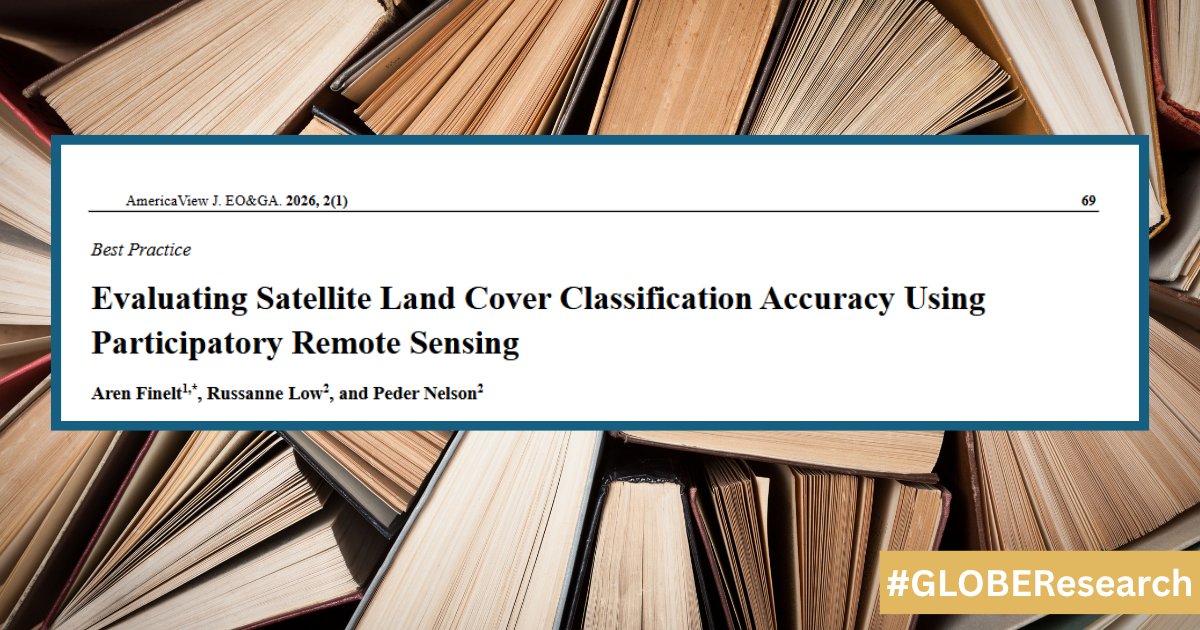
New #GLOBEResearch! šŸ“ƒTitle: Evaluating Satellite Land Cover Classification Accuracy Using Participatory Remote Sensing šŸ‘„Authors: Aren Finelt, Russanne Low, and Peder Nelson This study evaluated satellite remote sensing accuracy when classifying complex urban environments. By comparing datasets from satellite-derived land cover tools and ground-based citizen science observations—including the GLOBE Observer app in Hato Rey, Puerto Rico—they found that several satellite datasets frequently overgeneralized land cover as entirely urban, missing water features and vegetation. 🌐Read it here: journals.westga.edu/index.ph…
4
96
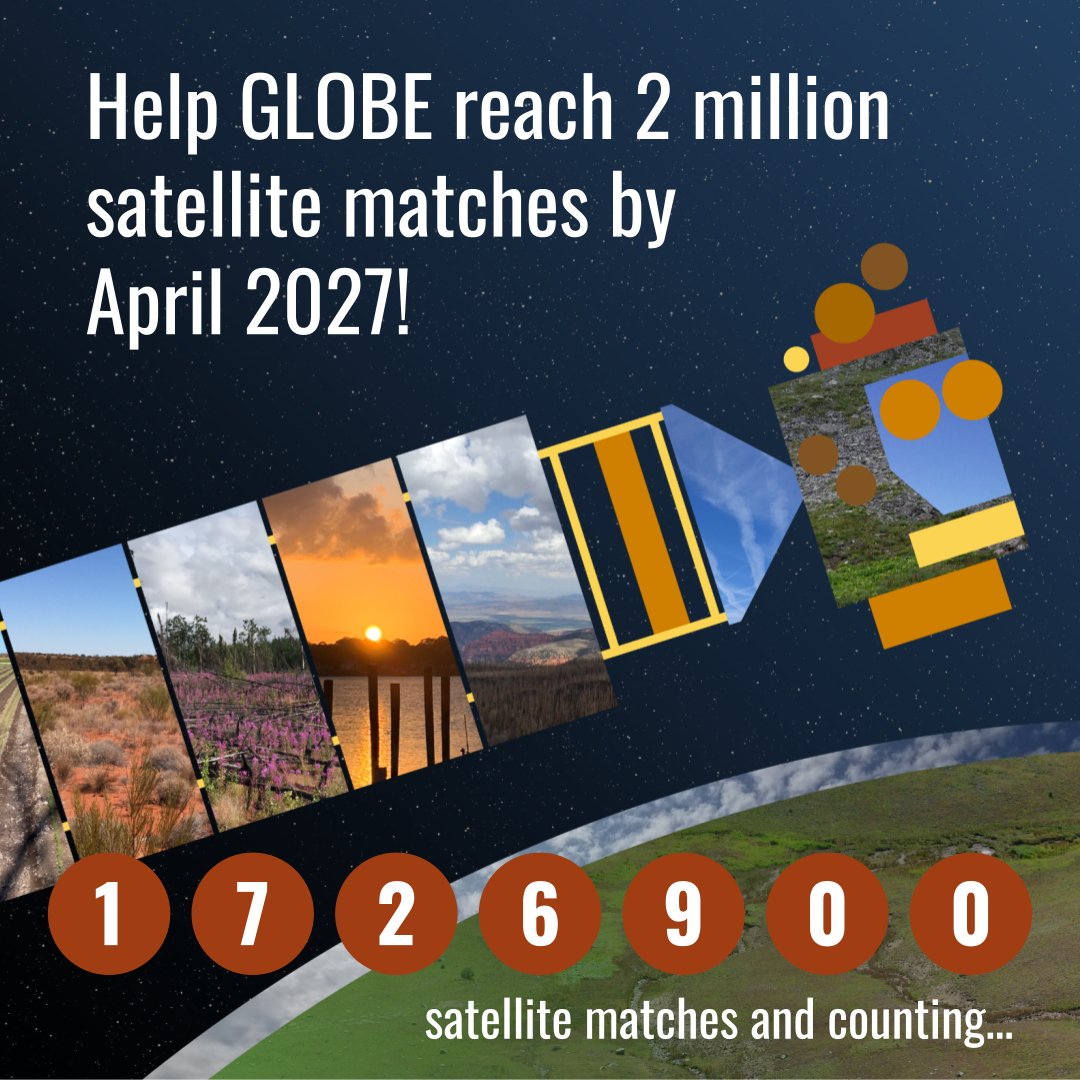
Help GLOBE reach 2 million satellite matches by April 2027! Submit your Cloud and Land Cover observations in the GLOBE Observer app. With every observation that aligns with satellite data, you will receive an email from NASA with matching satellite imagery so you can compare your view on the ground with what’s seen from space. With 1,726,900 satellite matches to date, we have only 273,100 to go! Get started at GLOBE Observer today: observer.globe.gov
58
The GLOBE Program retweeted
Jun 9
UPDATE: The Artemis III event will start at 11:30am ET (1530 UTC) on Tuesday, June 9!
Jun 7
Coming soon: one of history’s most complex missions Tune in on Tuesday, June 9, at 11am ET, to meet the astronauts flying aboard Artemis III, the mission that will test docking capabilities with commercial landers in low Earth orbit — an important step to crewed lunar landings.
473
2,424
12,626
1,946,221
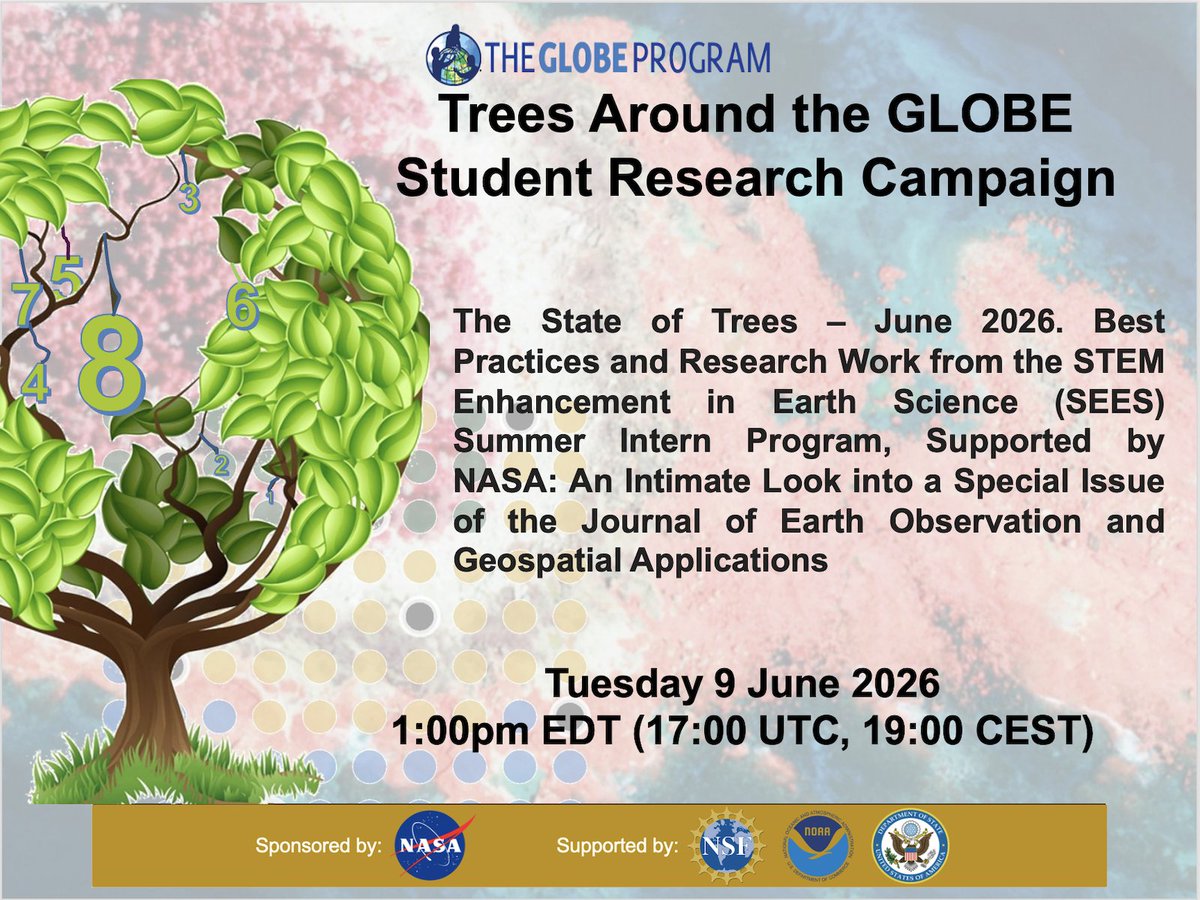
Join us today at 1:00 pm ET (17:00 UTC) for the latest Trees Around the GLOBE Campaign webinar, "The State of Trees - June 2026. Best Practices and Research Work from the STEM Enhancement in Earth Science (SEES) Summer Intern Program, Supported by NASA: An Intimate Look into a Special Issue of the Journal of Earth Observation and Geospatial Applications.ā€ Learn more at bit.ly/Trees94!
62
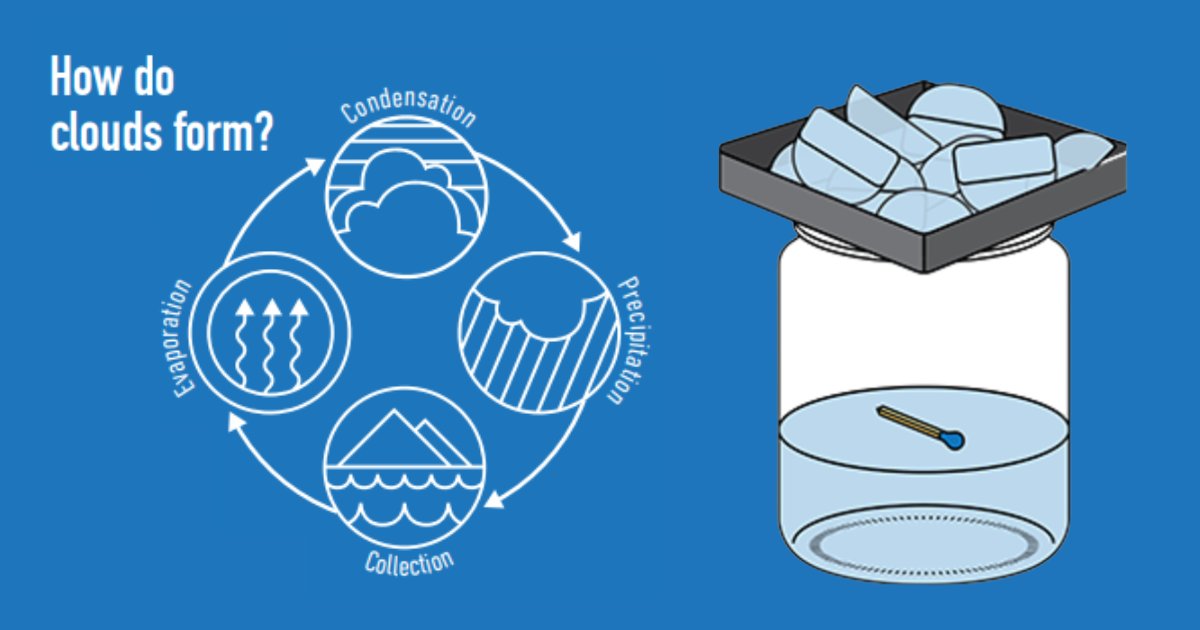
Can you capture a cloud in a jar? Why not try making one? Grab common household items and turn them into lasting experiences where you can explore, play, and build curiosity about science and the environment! Find fun science activities for all ages at observer.globe.gov/do-globe-…
1
53
The GLOBE Cup Challenge starts in 2 days! Show us which GLOBE region has the biggest soccer (football) fans during the World Cup by collecting environmental data where the world plays soccer (football). Join your regional team and take observations of air temperature, surface temperature, and/or land cover at your local soccer field, park, schoolyard, or anywhere people play. Find your team and learn how to join the challenge at globe.gov/do-globe/measureme…
47
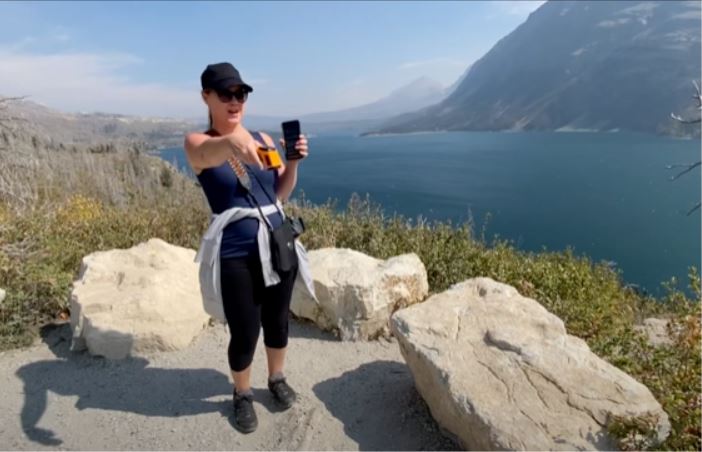
Is it hotter on the road or the sidewalk? Is the park cooler than the lake shore? Take a quick surface temperature measurement and share your findings on the GLOBE Observer app. Your data can help scientists understand the impact urbanization has on the Earth’s surface temperature and how the surface temperature changes the dynamics of the Earth’s atmosphere. Learn about the urban heat island effect at globe.gov/web/surface-temper…
62
You’ve got BINGO! Have fun this summer by doing GLOBE with this Summer Bingo card created by the @US_GLOBE. Explore the world using GLOBE activities and measurements with family, friends, and GLOBE learners! Download your card at globe.gov/documents/10157/0/… Be sure to comment ā€œBingo!ā€ below when it’s complete.
52
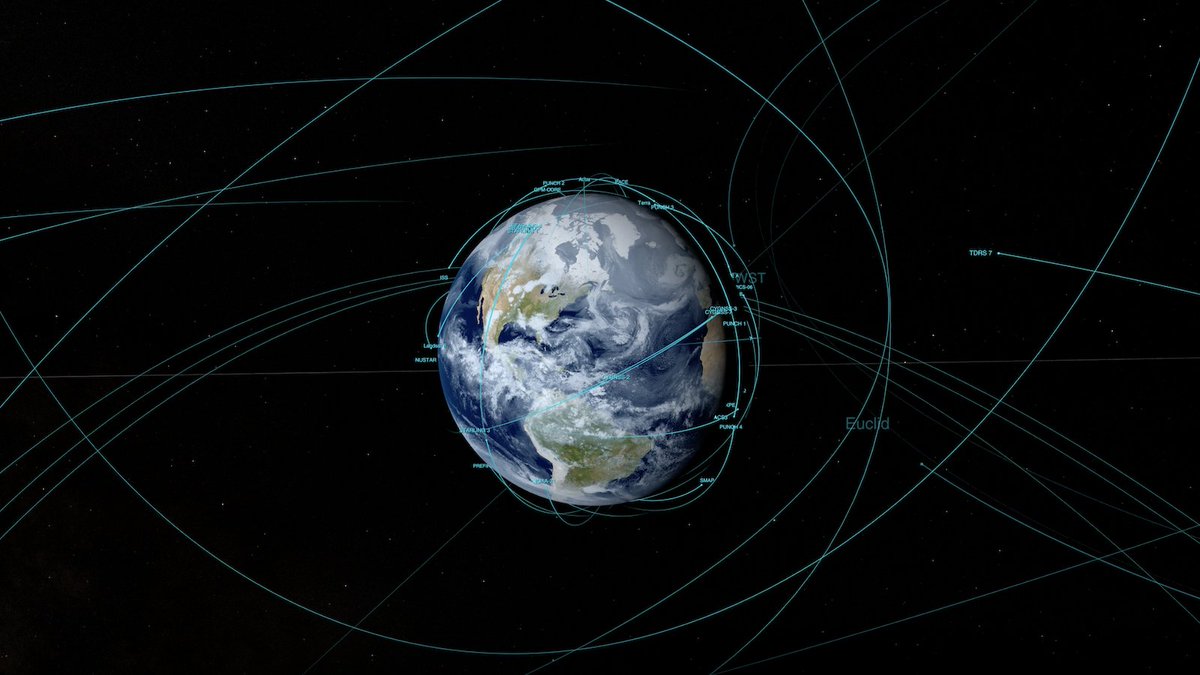
Want to check out some really cool visualizations of @NASA's fleet of active satellites? Visit svs.gsfc.nasa.gov/5571 to see NASA-managed missions and NASA-ESA joint missions studying our planet and beyond!
67
Kick off the GLOBE Cup Challenge with scientists (and soccer fans) Dr. Eric Brown de Colstoun from NASA Goddard Space Flight Center and Dr. Kevin Czajkowski from the University of Toledo at the next GO Connect webinar. Join us on the 11th of June at 12 pm ET (16:00 UTC) to explore the science of how the type of ground where people play soccer (football) influences the surrounding temperature. Learn more and register at observer.globe.gov/go-connec…
87
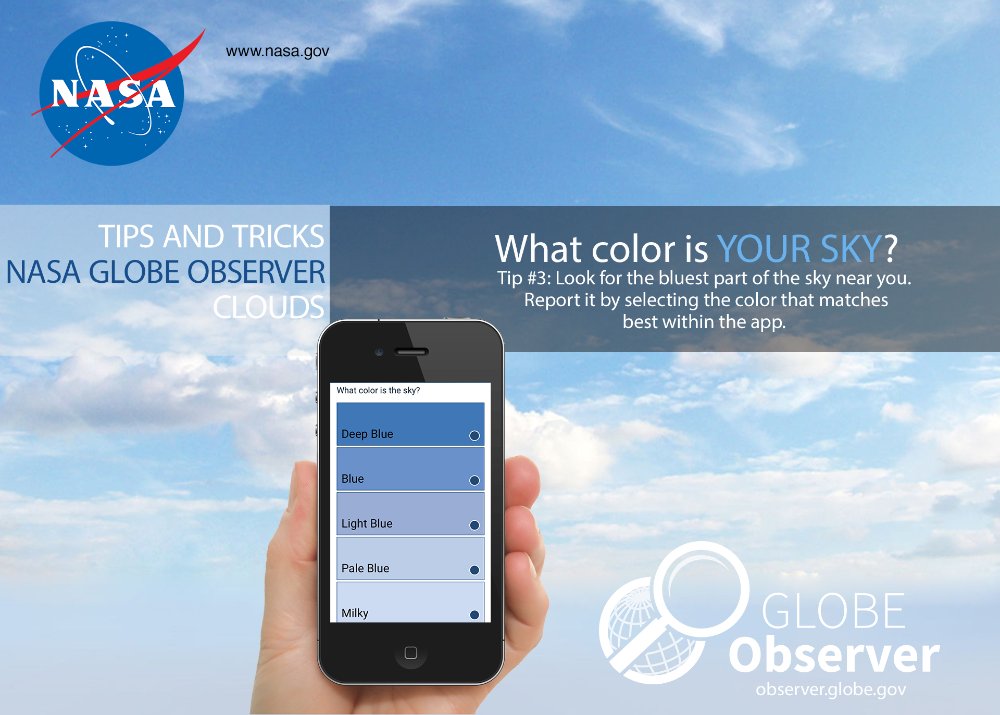
#QuickGLOBETip for making a GLOBE Clouds observation! What color is your sky? Tip #3: Look for the bluest part of the sky near you. Report it by selecting the color that matches best within the app. Explore this page for more tips and resources: observer.globe.gov/do-globe-…
1
44
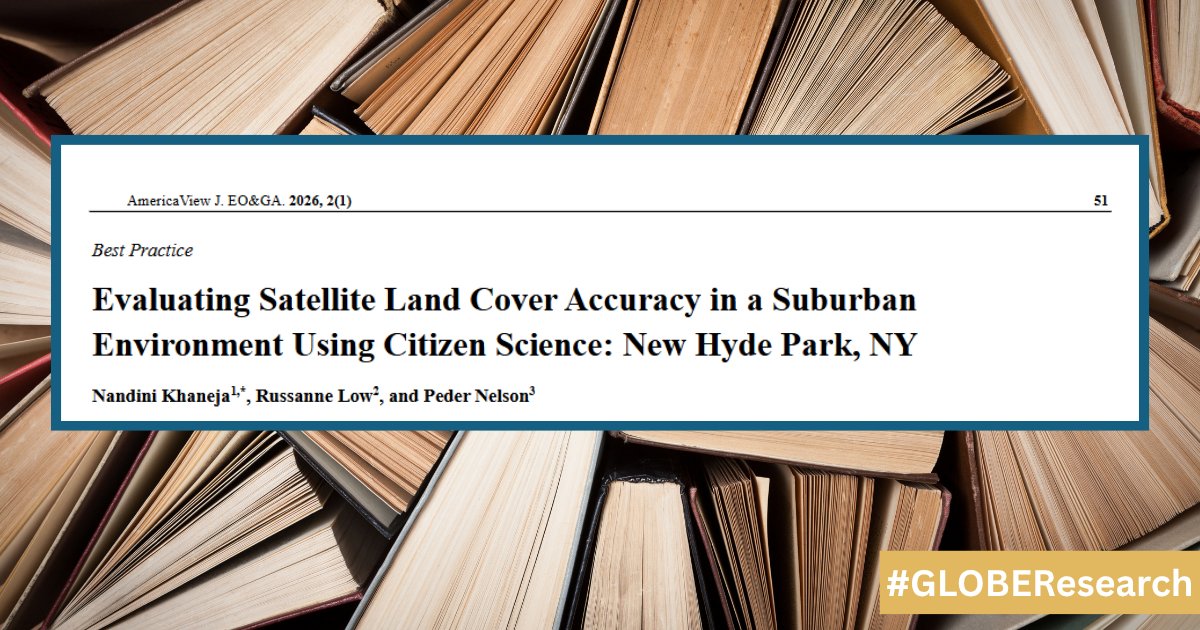
New #GLOBEResearch! šŸ“ƒTitle: Evaluating Satellite Land Cover Accuracy in a Suburban Environment Using Citizen Science: New Hyde Park, NY šŸ‘„Authors: Nandini Khaneja, Peder Vernon Nelson, and Russanne Low This study compared datasets from satellite-derived land cover tools and ground-based citizen science observations including the GLOBE Observer app in New Hyde Park, New York. Findings indicated that field documentation and community knowledge improve land cover assessment in suburban regions to account for frequent over-generalization of developed land cover and underrepresentation of tree canopy made by satellite observations. 🌐Read it here: journals.westga.edu/index.ph…
93