
Joined April 2025
- Tweets 2,747
- Following 111
- Followers 125
- Likes 107
99 Photos and videos



Jun 15
This didn’t age well.

65
Jun 9
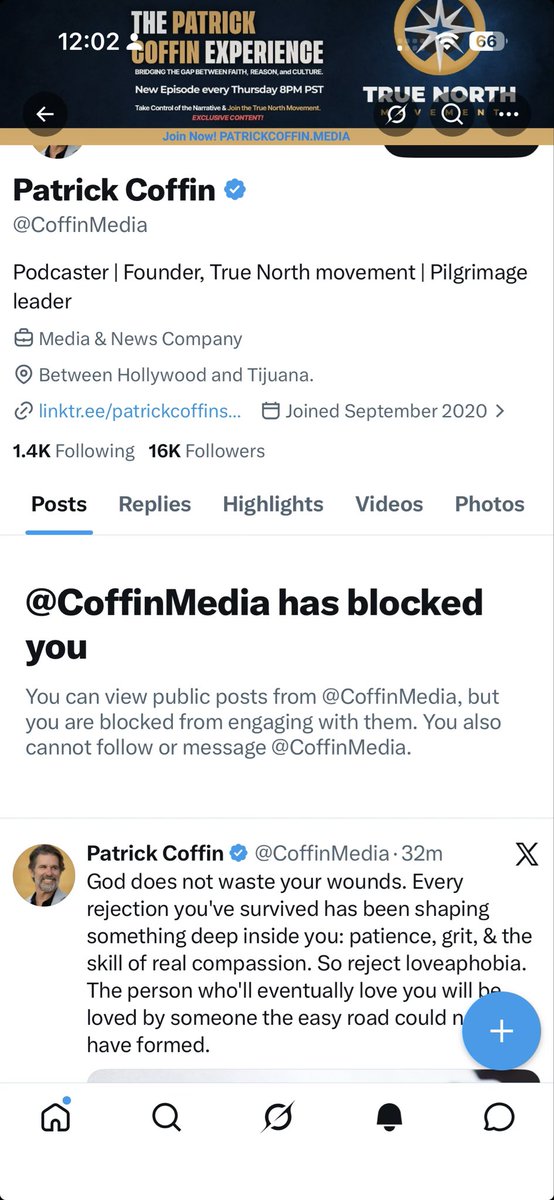
Patrick Coffin is not only a moonbat, he’s a coward! He gives a lame response to my calling out his calumny about the USS Liberty incident, then blocks me.
2
1
4
131
Jun 8
For theological reasons, as a Catholic I don’t believe Mormonism is a Christian religion. But it is NOT the business of the Pentagon to make that call.
Jun 8

As of two days ago, the Pentagon recognizes every Christian faith in America as Christian
Except one
That’s not okay, and it needs to change—now
Pass it on if you agree
2
4
112
Jun 6
Now, I have many serious issues with Tim and Stephanie Gordon. But on this matter, they are absolutely right. We need to defend the rights of special needs children and protect them. Those who call these children a drain on society are themselves a drain on society. x.com/timotheeology/status/2…
1
1
3
144
Jun 6
Those say crap like this are the real drains on society.

May God have mercy on our souls. The devil has tapped in and whispered in our ears
“abortion is ok if…”
1
2
138
Jun 4
Okay, ask why Massie had no problem taking money from a Jewish Zionist billionaire, @timotheeology
1
1
73
Jun 3
But I thought we Christians can live in peace with Islamists. I mean that’s what the pope said.
Jun 3

Pray for Pope Leo’s safety
2
3
99
May 31
If Gordon is consistent, he would urge the husbands of @RealCandaceO and @CarriePrejean1 to order them off social media.
1
1
140
May 28
Fr. Gerald Murray on Pope Leo's 1st Encyclical | Prayerful Posse youtu.be/hxoyCG2tGxE?si=gYHb… via @YouTube
@FrStephenImb, where is Fr. Murray wrong? How is he, Arroyo, and Royal pope haters for making these observations?
1
135
May 26
As Eugene Sledge said, war is brutish and a terrible waste. I don’t think any intelligent person of goodwill would disagree. But what never gets addressed by the Church hierarchy, in all their hand wringing, is the very evil that makes war necessary.
1
2
46
May 20
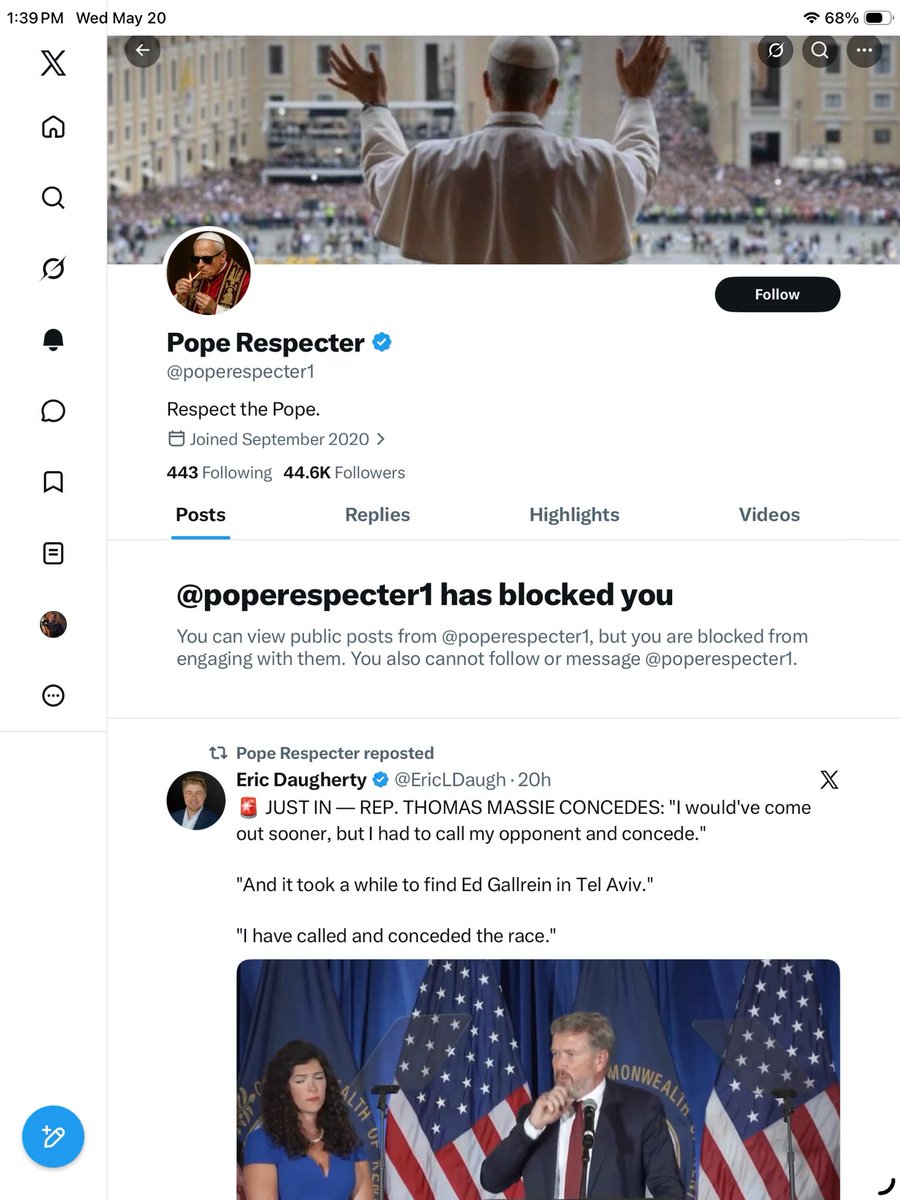
Got blocked by a Jew hating popesplainer who is too much of a coward to put his own name to his idiotic posts. Makes my day!
2
86
May 20
Demanding nine unelected judges with life time appointments to do anything is a bigger waste of time than trying to pull teeth with tweezers. But @FrStephenImb is out there berating pro-lifers to do exactly that. This reinforces my belief many pro-lifers are their own worst enemy.

How about we abolish all abortions by demanding the SCOTUS immediately recognize 14th amendment constitutional rights from conception
2
97
May 17
I’m no fan of Taylor Marshall. In fact, I call him Taylor Grift. But he got this one right. I think he took down this video shortly after Prevost was elected. And that by itself says something. But the internet is forever.
1
109
May 14
This is how esteemed moral theologian Fr Heribert Jone dealt with the morality of the use of nuclear weapons. If one looks at the actual circumstances within which Truman made the decision to drop the atomic bombs on Japan through the lens of what Fr Jone says, Truman’s decision fits perfectly within that framework.
The fourth condition required for positing an action that has an evil effect that there be a sufficient reason, i.e., a proportionate resulting good, to
permit the evil effect. The morality of using either the atomic or hydrogen bomb as a weapon of war is therefore, not a question of principle, which remains unchangeable, but a question of fact, and the fact questioned is whether there can be a military objective so vital to an enemy, the destruction of which would be a sufficient reason to permit the death of a vast number of civilians who at most contribute only remotely and indirectly to the war effort. We think this proportion can exist 1) because
today’s concept of “total war” has greatly restricted the meaning of the term “non-combatant”; 2) because in modern warfare the conscription of industry, as well as manpower, greatly extends the
effort on the home front; and 3) because it is difficult to set limits to the defense action of a people whose physical and even spiritual existence is threatened
by a godless tyranny. Therefore, while use of atomic weapons must be greatly restricted to the destruction of military objectives, nevertheless, it may be justified without doing violence to the
principle of a twofold effect. (Moral Theology #219
pp. 143-44 1961 Edition)”
1
125
May 14
It’s sad watching Ed Feser turn into a willful ignoramus.

158
May 7
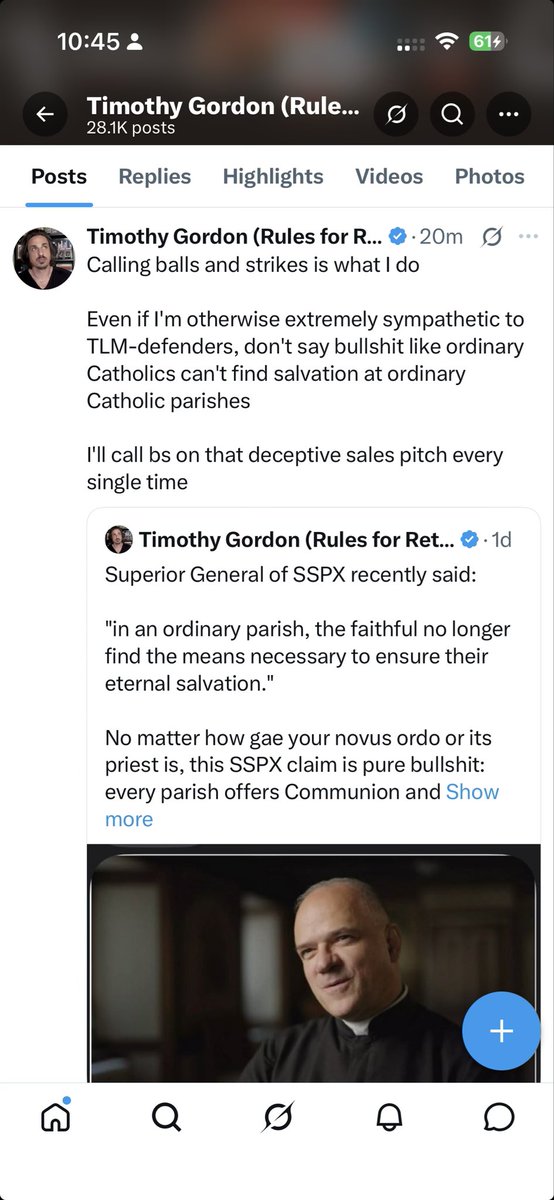
Yeah, right Tim. You call balls and strikes. If you actually believed the pseudo patriarchy bullshit you peddle, you’d be telling Carrie Prejean and Candace Owens to STFU, get off the internet, get their asses in the kitchen and fix their husbands a sammich!
1
1
5
202
May 7
This Catholic doesn’t feel the same way this lying self-hating Jew in a Catholic skin suit does. Every penny we give to Israel comes back to America because they have to spend it on American made military gear. Israel often makes technological improvements on these weapons system and shares those improvements with us. They share intelligence with us. We gain much from that investment. OTOH, American Catholics donate more to the universal Church than anyone else and get shit on in return by the Vatican.
1
1
5
102