18 Photos and videos
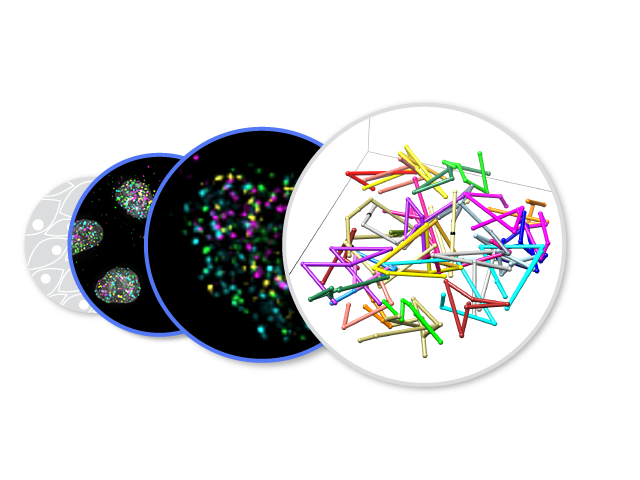


george church retweeted

7h
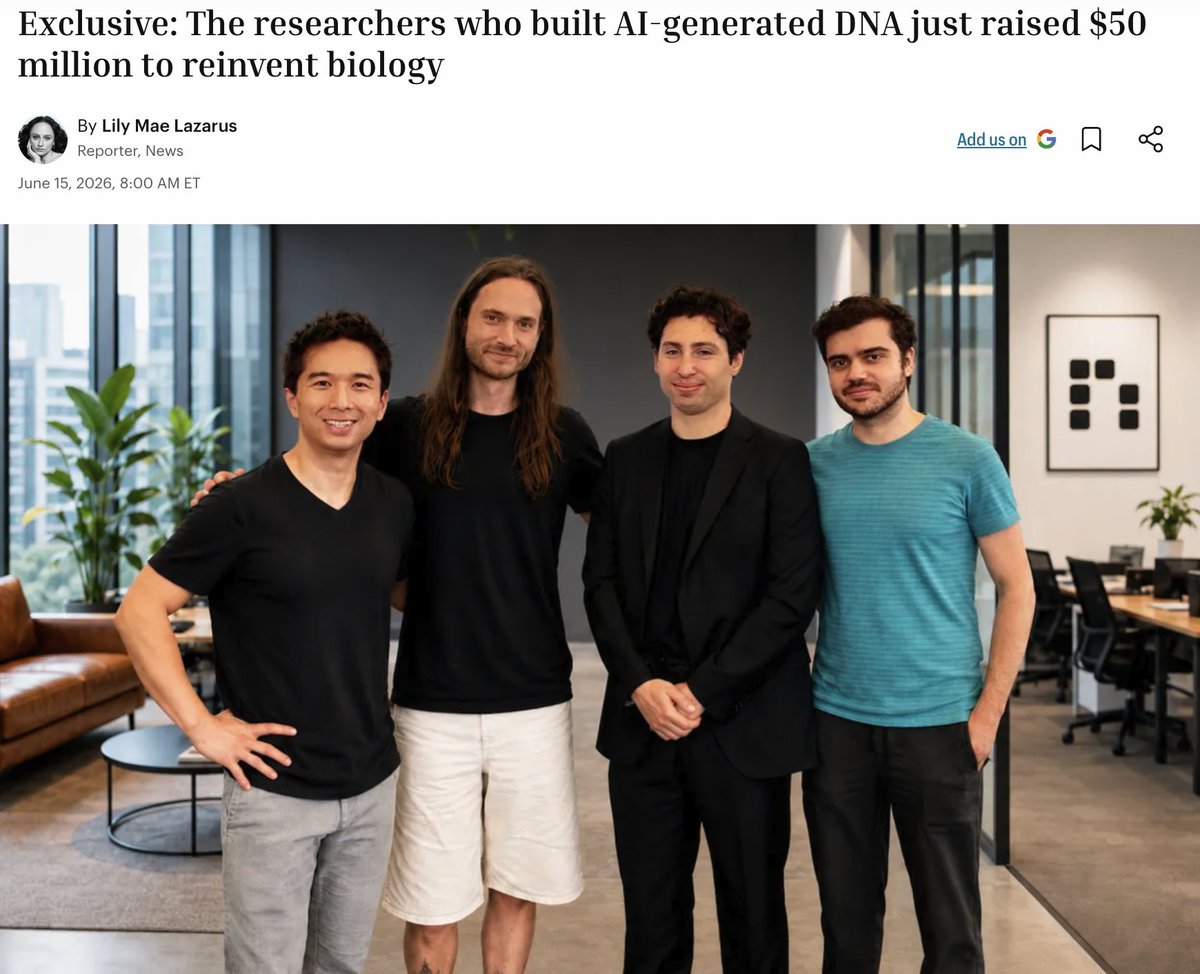
Together with my co-founders Michael @MichaelPoli6, Stefano @Massastrello and Armin @athmsx, I am excited to announce @RadicalNumerics is emerging from stealth with a $50M seed round to build general biological intelligence.
We’re also sharing an early preview of our new model Omnii, the most powerful genome language model to date.
Omnii preview link:
radicalnumerics.ai/blog/radi…
At Radical Numerics, our mission is to master the code of life, and to drive the frontier of biological AI for both design and defense.
This is our dual mandate, which comes from something our own team helped make possible.
Our founding team trained Evo and Evo 2, the largest biological AI models (40B params) trained on DNA sequences. Trillions of tokens across all of life, from microbes to mammals. It’s fully open source, and created the field now known as generative genomics.
Last year, scientists used Evo to generate the world’s first complete genome from scratch using AI. Turns out it was a bacteriophage—a type of virus. It functioned in the real world, and in this case it was harmless. But for us, it was a clear turning point.
It showed that AI is no longer just analyzing biology. It is on the cusp of generating functional lifeforms. Eventually, AI will have the power to design and control life itself.
That should make all of us incredibly excited, and incredibly uneasy. (Anyone can design DNA with a new function, and have it synthesized and delivered, like something from Amazon Prime).
The same technology that will help us cure cancer is the very technology that might create the next global pandemic, or worse, allow the creation of bioweapons that can wipe out populations.
We believe these forces are inseparable. If you work on the frontier of biology, you have to build technology to safeguard it from its misuse. Existing biosecurity tools are sorely losing the arms race, relying on outdated “have I seen this exact thing before?” style algorithms.
We founded Radical Numerics to turn the tide.
And we can’t do that by training on textbooks and natural language. We must understand the language of biology from the raw physical data itself, to reason across every molecule and modality, from DNA to proteins.
The next frontier for AI goes far beyond chatbots or video generators to models that can understand and engineer life.
Today, we’re previewing Omnii, which is already far surpassing Evo 2, and will continue improving as we scale and add new modalities (training now).
1. For human health, Omnii can read and write whole genomes (more on writing later). It’s state of the art (SOTA) on detecting causal variants for disease, and can rank Alzheimer's mutations zero-shot. We’re partnering with a diagnostics company to use Omnii for early cancer detection (pancreatic and multi-cancer).
2. For defense, Omnii is SOTA at detecting AI-generated pathogens. We benchmarked existing detection tools, and they simply can’t detect the AI-generated ones (“deepfake viruses”). We’re partnering with a US national lab to pilot Omnii for detecting the next pandemic, both natural and AI-generated.
We have a data center full of Blackwells in construction now to build the most powerful biological AI models ever. This mission takes a new kind of AI lab that can actually scale on physical, biological data: new alignment research (mid/post training), scaling long context, building out mech interp teams to dissect what these models learn, new architectures and systems designs, all from the ground up.
Our team is made up of AI researchers and scientists from top labs and institutions (e.g. Stanford, MIT, Google DeepMind), but more importantly, we all share the belief that this is the most important challenge of our lifetime. If you feel similarly, we are hiring. We aim to bring the brightest minds in AI and science together to save lives.
Thanks to our partners on this journey, led by Emergence Capital @emergencecap, with Obvious Ventures @obviousvc, Triatomic @TriatomicCap
, and Patrick Collison @patrickc. Our advisors include Eric Horvitz @erichorvitz, CSO of Microsoft, Chris Re @HazyResearch of Stanford, George Church @geochurch of Harvard, and Andrew Weber @AndyWeberNCB, former Assistant Secretary of Defense for Nuclear, Chemical and Biological Defense Programs.
Fortune article: fortune.com/2026/06/15/exclu…
Jobs: radicalnumerics.ai/join-us
56
213
492
416,922
george church retweeted

Entropy is random. Its effects on aging are not.
Aging destabilizes the regulatory networks in blood stem cells🩸 But not every part breaks equally.
The hallmarks of blood stem cell aging trace to one thing: fragile TF programs collapse with age, while stable ones expand.
🧵1/8
3
18
35
6,904

Jun 4
biorxiv.org/content/10.1101/…
A Framework for Autonomous AI-Driven Drug Discovery
Douglas W. Selinger, Timothy R. Wall, Eleni Stylianou, Ehab M. Khalil, Jedidiah Gaetz, Oren Levy
@plexresearch
2
38
140
15,158
May 19
2
13
49
6,000
george church retweeted

May 5
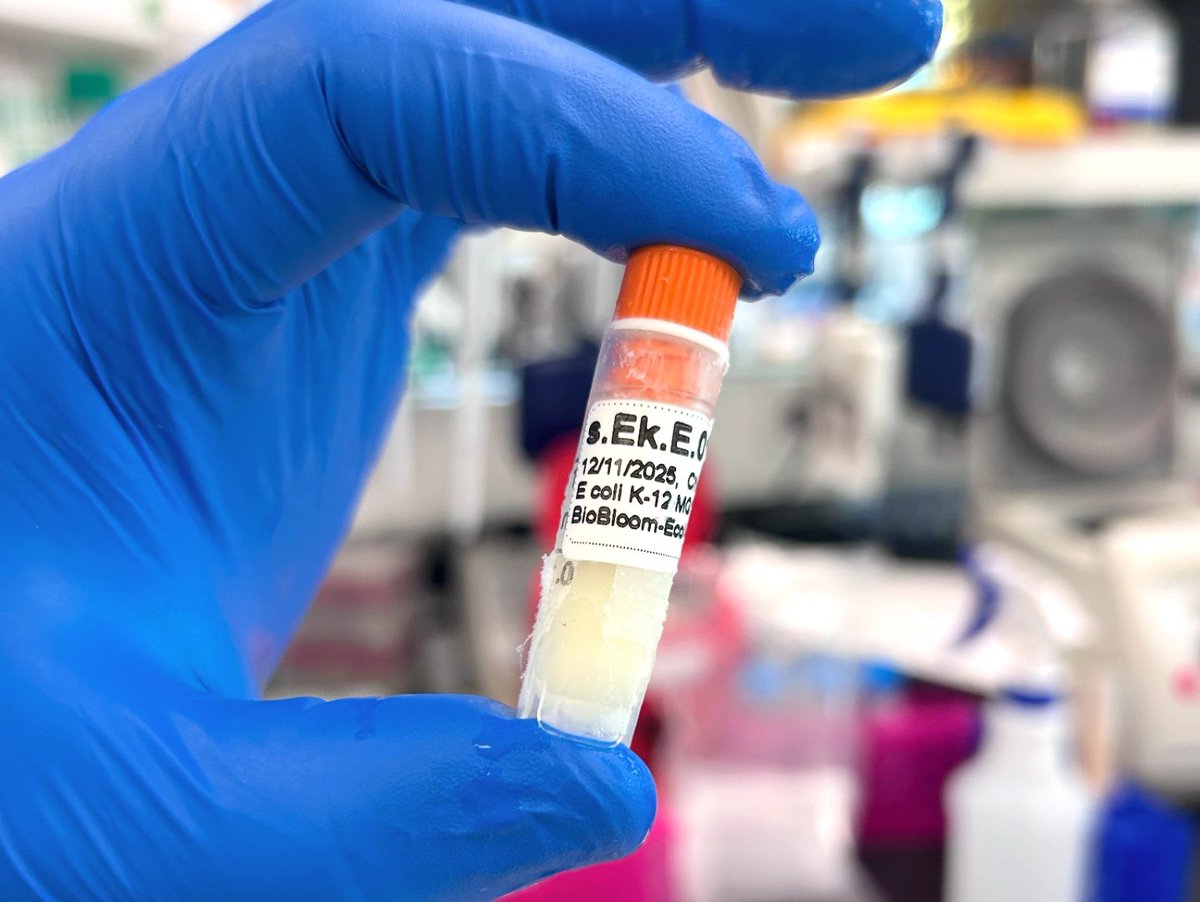
This tube is a library of bacteria with every single-base-pair genome mutation, all DNA-barcoded.🧪Growth barcode sequencing = data on millions of mutations.
📄 Report: biorxiv.org/content/10.64898…
Retweet if you want more data, and read on if you want to use the library! 🧵
6
40
140
37,697
Apr 24
I co-founded @RejuvenateBio & have enjoyed the science from day one. Cardiac disease reversal in dogs. 3 years of safety data. Zero safety signals.
They’ve opened a unique opportunity for the biotech community to invest & secure equity at this early stage. $250 to $100K . Everyone can back this: wefunder.com/rejuvenatebio
9
26
199
28,134
george church retweeted

Mar 26
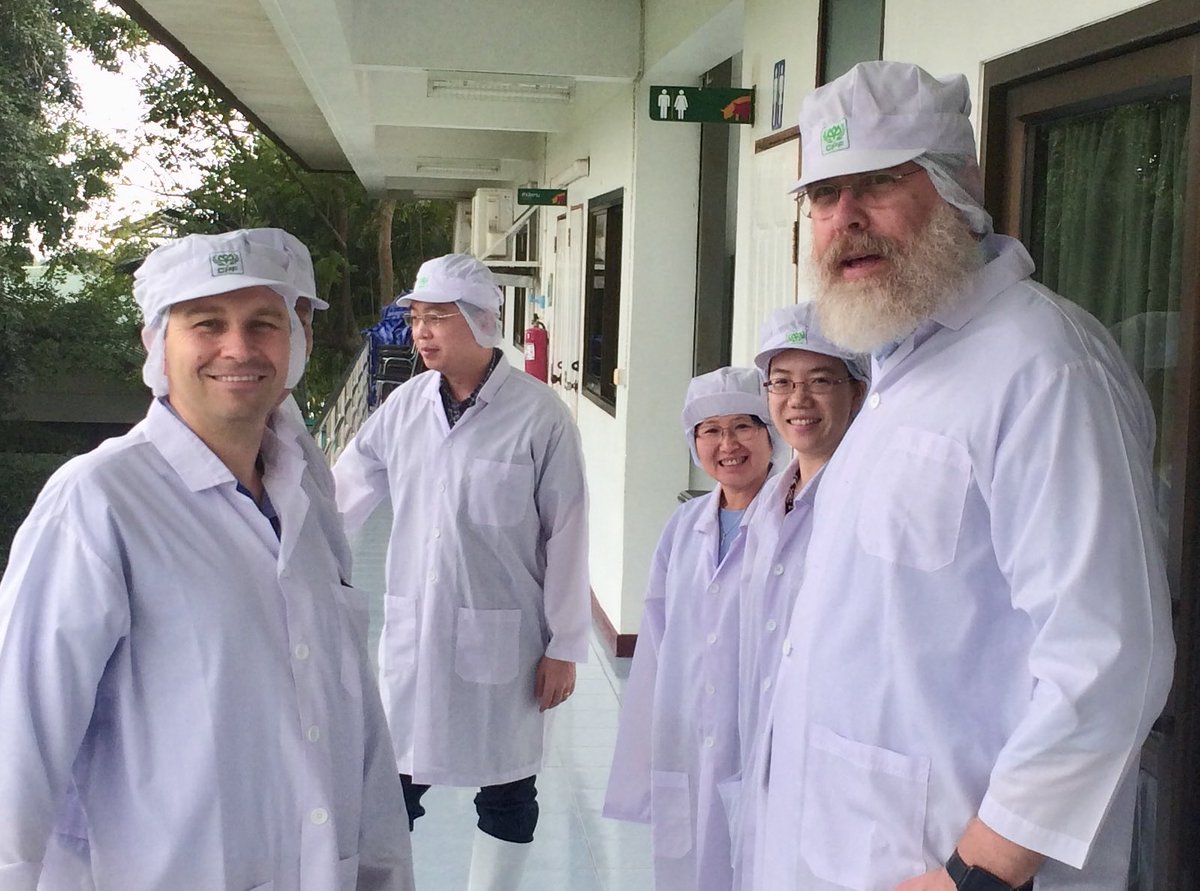
The best advice I ever got was from my colleague George Church
In 2008, I asked him what’s his secret?
He said: Do the research YOU want to do and don’t listen to what anyone else says!
Have never looked back
Thank you, @geochurch 🙏
33
60
1,010
70,571
george church retweeted

Excited to share our latest paper on the future of AI in biology 🚀🧬
Machine learning has transformed fields like language through large-scale statistical modelling, yet we are still far from predicting human biology.
In our new work with @geochurch we argue that decoding the human genome and modelling gene interactions across space and time should be the ultimate goal for building predictive models of human biology and disease.
We need computational models that replicate cellular transitions across human life stages (from development to ageing) from the genetic sequence and its dynamic regulation.
Developing models with temporal and spatial resolution is ambitious, but we argue it is theoretically feasible and a long-term vision for understanding the language of life that could reshape biomedical research.
preprints.org/manuscript/202…
5
43
157
15,437
george church retweeted

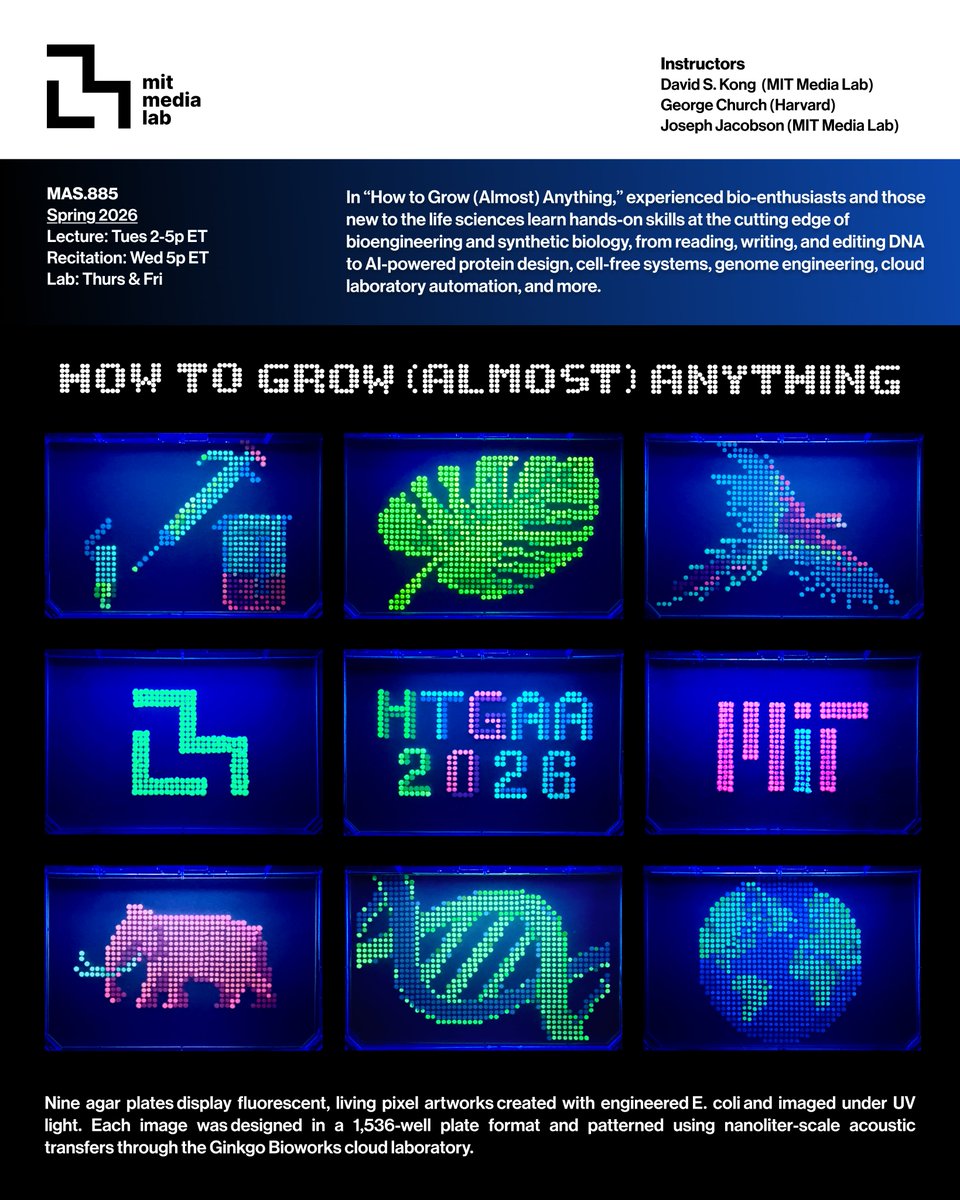
I’m excited to announce that the application for the 2026 edition of our @medialab and global synthetic biology course “How to Grow (Almost) Anything” is now open! Application link in thread 👇
14
55
244
34,666
26 Nov 2025
12
37
184
41,493
25 Nov 2025
8
34
233
80,818
24 Nov 2025
7
36
222
50,684
george church retweeted

10 Nov 2025
Today, we're announcing @episteme, a new type of R&D company that recruits exceptional scientists to pursue high-impact ideas.
Science isn’t bottlenecked by the availability of talent, but by places where they can do their best work.
Scientific progress has driven human flourishing: extending lifespans, lifting billions from poverty, and expanding our understanding of the universe.
But history is littered with transformational ideas that were overlooked in their time. That problem is still acute today: too much promising talent remains uncultivated, and remarkable ideas die in the lab or are filtered out by misaligned incentives.
Today, scientists face suboptimal paths for translating their research into impact: academia is famously risk-averse and incentivizes publications and winning grants vs. translational research. Industry is too often focused on short‑term incentives. And startups lack the substantial capital, expertise, and complex infrastructure needed to deliver long-term scientific progress.
On top of that, recent funding cuts in the US mean the overall supply of ideas is decreasing. Put together, the global scientific production system is operating at a fraction of its capacity.
How Episteme operates is different: we identify great scientists who can meaningfully benefit humanity, but who aren’t supported efficiently within traditional institutions today. Researcher by researcher, we work with them to determine the bespoke resources, operational support, and environmental conditions to execute on their research. We bring them together in-house, and provide those resources to ensure that their breakthroughs are deployed for real-world impact.
We’ve already assembled an amazing team of operators, ranging from the Gates Foundation, DeepMind, ARPAs, DoE – just to name a few – and researchers who are pursuing important problems across physics, biology, computing, and energy. Our team has spoken to hundreds of researchers across disciplines and geographies to understand the limitations they’re facing and what can be done better, and designed Episteme for them.
We’re backed by individuals like @sama, Masayoshi Son, and other long-term partners who share our mission of enabling ambitious science for tangible human impact.
About me: I started working as a researcher 9 years ago, on problems ranging from AI-driven drug discovery to developing brain-machine interfaces. It was that experience that led me to realize that so many scientists with great potential to change the world don’t have access to opportunities equal to their capacities.
@sama and I believe that much better science should happen for humanity, and that a new engine is needed to support that. We decided to cofound Episteme together, and I am incredibly grateful for Sam’s unwavering support as a thought partner and founding investor.
Our conviction is that by supporting the right people with the right incentives, we're set to generate breakthrough discoveries to benefit humanity. We cannot rely on the course of history to shape scientific progress; we need to proactively shape the system by supporting the most talented people with the right resources and incentives.
261
320
2,689
1,707,686
george church retweeted

3 Nov 2025
Very excited to announce Manifold's partnership with Roche to deliver the next generation of brain shuttled therapeutics for CNS diseases, using Manifold unique capabilties in AI massively scaled in vivo measurment of drug molecules.
This deal is the culmination of over 6 years of effort building a technology to generate the data at a scale needed for AI model training, but to have that data be what has been the ultimate bottleneck for drug development and discovery: in vivo.
We all know that AI requires massive data to enable the immense leaps in progress we have seen. The challenge with biology is most of the data is in vitro, or cells in a dish. A lot of groups are making excellent progress here, applying AI to very large datasets in vitro, and I hope that these results lead to better drugs.
But the challenge is the humans are not cells in a dish. We've cured many diseases in petri dishes, only for those drugs to have unexpected results when put into the patients. Living systems are so complex that they are hard to reduce, despite how hard we try.
This is what makes the Manifold approach so different, instead of simplifying the system down to a petri dish to generate the data we need for AI, we test millions of molecules in living systems so we can generate the relevant data we need for drug discovery.
We believe that this is the true unlock for AI in drug discovery. We are generating massive datasets of millions of potential drugs to hundreds of targets and asking the question of where do these molecules go, directly in animals. This allows us to build AI models of drug delivery, and eventually drug function.
Delivery to the brain and this collaboration with Roche is just the start. We are rapidly scaling this approach to other tissues, and ultimately using it to understand drug affect on all organs in the body.
If you are excited about AI, drug development, and totally novel data of drug function in animals, please reach out. We are hiring across many roles and always interested in collaboration with groups in AI and drug development as well!
endpoints.news/roche-manifol…
5
15
80
13,277

We’re excited to share a new multi-year collaboration with @TakedaPharma, building on the success of our first engagement. Under the agreement, Nabla will receive double-digit millions in upfront and research payments and is eligible for success-based payments exceeding $1 billion.
The partnership deploys Nabla’s AI-driven JAM platform across Takeda’s early-stage programs to include de novo design of antibodies in parallel for multiple targets, multispecifics, challenging targets, and other custom therapeutics.
Read more below
7
20
118
107,034
george church retweeted
30 Sep 2025
Excited to announce mBER, our fully open AI tool for de novo design of epitope-specific antibodies. To validate, we ran the largest de novo antibody experiment to date: >1M designs tested against 145 targets, measuring >100M interactions. We found specific binders for nearly half the targets, with up to 40% hit rates. Thread below:
14
132
608
71,724
george church retweeted

29 Sep 2025
We're stil writing the @ManifoldBio story, but @ElliotHershberg just dropped a fantastic piece capturing the journey so far on his blog Century of Biology.
3
18
87
13,569
19 Sep 2025
1
9
17
9,502