
Joined June 2021
- Tweets 6,669
- Following 297
- Followers 425
- Likes 14,324
637 Photos and videos















I used to suspect Core of negligence and sloppiness, then of being corrupted.
But now it's absolutely clear.
What we're dealing with here is a thoroughly planned attempt to capture BTC:
bloating the blockchain ->
weeding out plebs' nodes ->
taking full control of the network.

CAPTURE
An investigation across four articles into how informal power over Bitcoin Core was assembled, exercised, and defended.
Article Three: The Merge
citadel21.com/the-merge
7
WhoIsJohnGalt? retweeted

⚠️ CAPTURE (Part III)
Just read it and am thoroughly sickened by the misconduct of the usual suspects. It’s undeniable that Bitcoin Core is captured.
We either do something about it or surrender perfect money to corruption.
CAPTURE
An investigation across four articles into how informal power over Bitcoin Core was assembled, exercised, and defended.
Article Three: The Merge
citadel21.com/the-merge
1
28
126
4,025
WhoIsJohnGalt? retweeted

Jun 13
Friendly reminder:
₿itties before titties.

11
9
59
1,506

WhoIsJohnGalt? retweeted

Jun 11
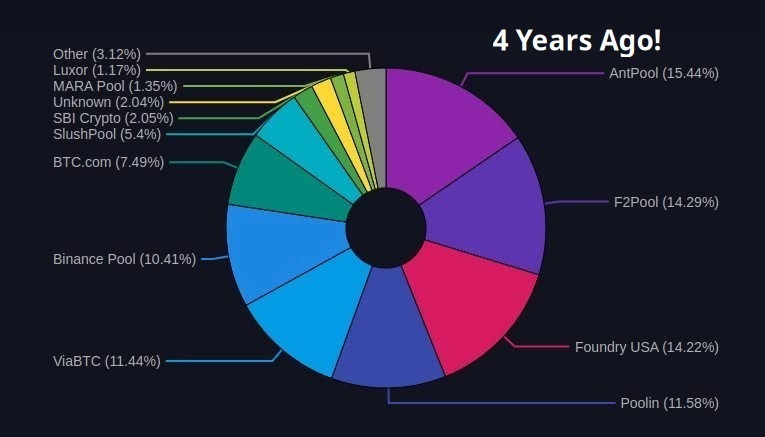
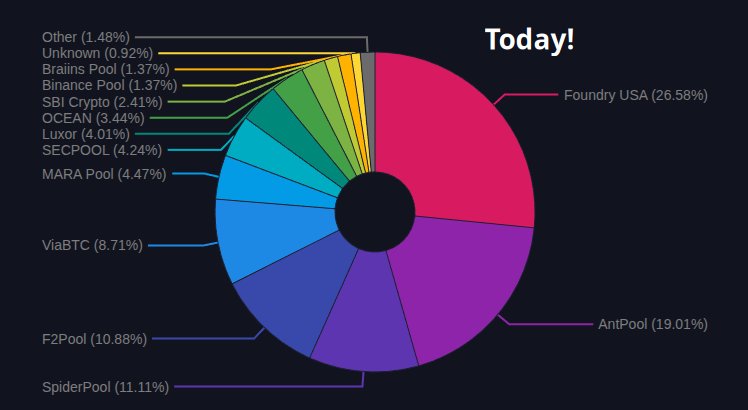
Seriously alarming

25
43
254
30,893
WhoIsJohnGalt? retweeted

Jun 10
I suspect the Bitcoin bear market doesn’t end until the blatant facilitating of spam ends.
Right now the DNA of Bitcoin is under attack.
Bitcoin is money.
56
103
556
12,647
WhoIsJohnGalt? retweeted

It began where it should have, with node runners. It is gaining momentum with miners. Now it needs formal opposition with clearly laid out rationale rather than lazy smears, or it's time for businesses to demonstrate their ability to adapt along with the network.
1
21
102
997

Jun 11
A healthy miner example.
No agenda, pure math.
Jun 10

I don't know what that is. I'm just following what the nodes want
1
24

I think I’ve finally read and heard enough of the BIP-110 pro/con arguments and I just don’t find those against it very compelling at all given what it does. And I don’t think apathy is an appropriate response to the issue either. Bitcoin lives because node runners always choose
28
41
261
16,378
WhoIsJohnGalt? retweeted

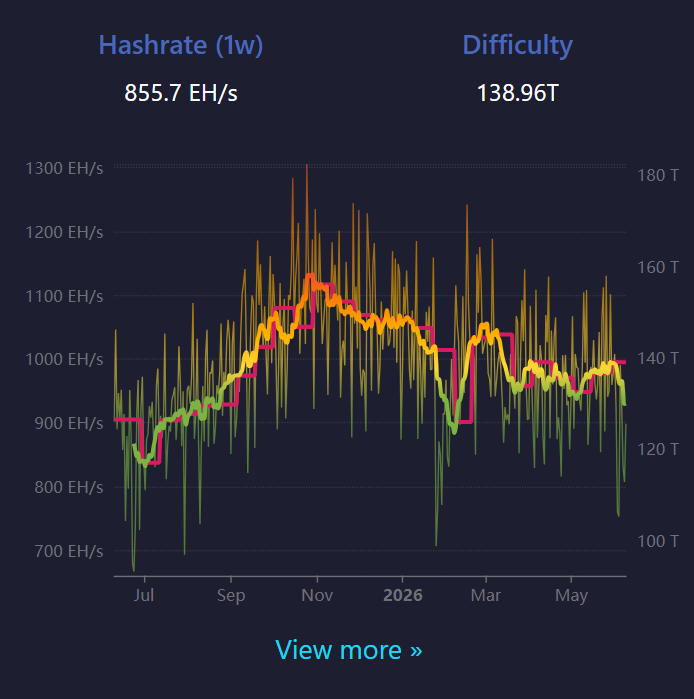
Since the peak of #Bitcoin's network hashrate in late October 2025, global hashrate has dropped 28%.
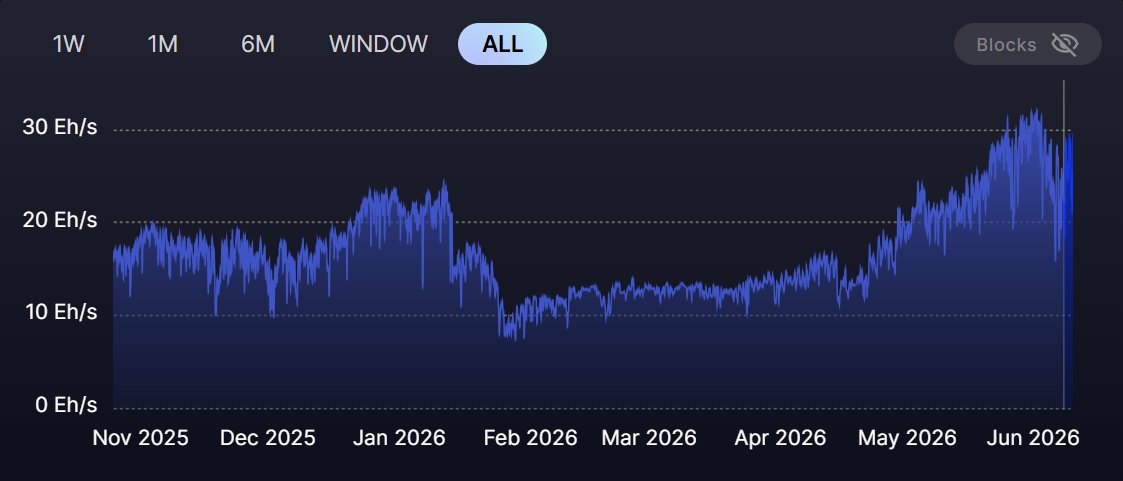
In that same time, @ocean_mining's hashrate has increased by 75%.
While fiat oriented miners are shutting down, Bitcoin oriented miners are stepping up.
You love to see it.
3
30
161
2,077

Western governments have engineered the greatest anti-natal program in human history, and most people are completely unaware of the causes or consequences.
Birth rates across Europe, East Asia, and North America have collapsed below replacement levels. Governments systematically destroyed the economic foundations that make family formation possible.
You cannot afford children when the state inflates away your purchasing power, taxes your income at confiscatory rates, then forces you to fund the retirements of previous generations through Social Security ponzi schemes. A middle-class American couple faces effective marginal tax rates exceeding 50% when you include federal income tax, state tax, payroll taxes, property taxes, and sales taxes. Meanwhile, monetary debasement ensures that housing costs consume 40% of median income versus 15% in 1970.
The regulatory state makes every aspect of child-rearing exponentially more expensive. Occupational licensing cartels inflate childcare costs. Zoning laws prevent affordable family housing. Department of Education mandates drive up school costs while destroying quality. FDA approval processes make basic medicines cost 10x their market price. Each regulation serves entrenched interests while pricing out young families.
Economic policy shapes demographics. When governments prioritize immediate consumption over capital formation, present voters over future families, and welfare recipients over productive workers, birth rate collapse becomes inevitable. The state subsidizes the childless while penalizing parents through the tax code and monetary policy.
Politicians promise family tax credits and paid leave programs to solve the crisis they created. They offer you breadcrumbs from your own stolen wealth while maintaining the very policies that make children unaffordable. The solution requires abolishing the systems that broke family formation, not expanding them.

93
333
1,090
80,016
Paper asset fraud is the first goto instrument of the fiat world to manipulate its price.
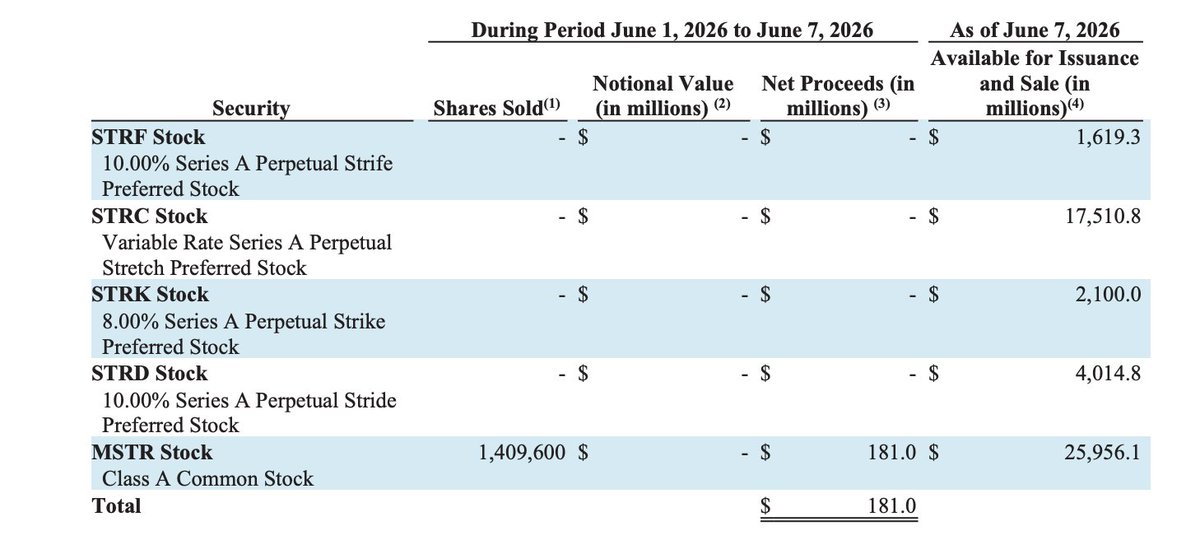
Sad to see Saylor taking such an active part in this scum.

Congratulations to $MSTR shareholders on getting diluted. You now own fewer BTC per share than you did last week. The preferred shareholders thank you for your sacrifice!
2
17
WhoIsJohnGalt? retweeted
You cannot simply ignore a soft fork once it has some reasonable level of adoption.
"OK - can you define 'reasonable' please?"
That's the thing - it's different for different people.
A simple hodler can wait out a lot of network instability with unclear consensus rules for as long as they can hold off spending or accepting any BTC.
A mining pool or exchange has far less tolerance for any such chaos.
Therefore it's *reasonable* for some within Bitcoin who dislike BIP110 to believe they can simply ignore it. The people you see doing this are developers and people employed by spam companies in the space who have diversified into the various scams you see utilizing Bitcoin's blockchain.
That stands to reason as network disruption doesn't actually affect anything they do, and they can publicly oppose BIP110 as it would only undermine what they're currently getting away with.
However for exchanges and miners it's different.
A fork that is going to be enforced by a client that's finding a few blocks a week with an upwards trend comes with the very real threat of wiping out any blocks you mine or any payments you send/receive as a business.
You can oppose it vocally if you wish but the consequences for actually attempting to ignore it are immediately real once the fork activates. You now have to hope it dies fast before everyone else doing what you're doing abandons your bluff.
It is possible to be ambivalent with regard to any particular consensus rule in Bitcoin - it is also possible to vocally and passionately disagree with one of them - however it is not practical to act as though they aren't enforced meaningfully when they are.
The last group of people who tried - with very large numbers to boot - to conduct a mass-protest against a consensus rule (the block size limit) did so with Bitcoin Cash.
Despite the passion and numbers big blockers had, Bitcoin Cash was a spectacular failure.
The people against BIP110 have nothing like the numbers or passion to pull of a protest against any consensus rule so I find it reasonable to assume that their screeching and complaining about incoming rules that limit OP_RETURN sizes and witness stuffing will amount to something of far less significance than Bitcoin Cash ever did.
13
42
237
6,702
WhoIsJohnGalt? retweeted

Jun 6
Bitcoin is “easy” only after you’ve mentally downloaded cryptography, monetary history, central banking, self-custody, Austrian economics, game theory, energy markets, and 80% drawdowns.
Then people ask why adoption is slow.
Brother, the asset has the ultimate entrance exam.
24
26
270
9,098
WhoIsJohnGalt? retweeted

My opening statement from this debate:
---------------------
BIP110 is a simple statement: "we reject Core 30’s proposed addition of data storage to bitcoin."
Bitcoin is money. That is the starting point. If we lose sight of that, we lose the plot.
The block size war was one of the defining moments in bitcoin history because it forced bitcoiners to answer a basic question: who is bitcoin for? Is it for large companies, exchanges, miners, and professional infrastructure providers? Or is it for ordinary people: pleb merchants, individual savers, and node runners, who need to verify the system for themselves?
In 2017, bitcoiners answered correctly. We rejected the bigblock roadmap because it put bitcoin on a slippery slope: whenever blocks fill up, make them bigger; when they fill up again, make them bigger again. That path leads directly to centralization. It prices out ordinary node runners, turns validation into a professional activity, and recreates the trusted intermediaries bitcoin was designed to eliminate.
But the bigblockers got one thing right: bitcoin must work as a payment system. Their mistake was thinking bigger blocks were the way to get there. The real path is conservative base-layer validation, combined with trustless off-chain protocols like lightning. That is how bitcoin can scale commerce while preserving decentralization.
The current conflict over data spam is part two of the block size war. Once again, the question is whether we prioritize node runners and people using bitcoin as money, or whether we allow other interests to consume scarce block space and raise the technical, economic, legal, and moral cost of running bitcoin.
The worst centralization pressure here is not merely that spam makes nodes more expensive (which it does). It is that arbitrary data storage creates the possibility of deeply harmful illegal material, including CSAM, being embedded in the chain. If that happens, fully validating archival node operators could be placed in the position of storing and distributing material they find morally abhorrent. Even if the legal analysis varies by jurisdiction, the social consequence is obvious: most decent people will not voluntarily run infrastructure that forces them into that position. Node running would become limited to large institutions with legal departments, specialized infrastructure, or people with no moral objection to hosting such material. That is an extreme centralization pressure, and it attacks bitcoin’s security model directly.
So the answer should be the same as it was in 2017: the protocol must protect node runners first. Pleb merchants, especially in poorer parts of the world, must be able to run nodes and conduct business without trusted intermediaries. If they cannot, bitcoin will become dominated by large corporations, custodians, and professional infrastructure providers.
That is why protocol changes should be rare and careful (unlike the removal of the opreturn filter). Unless a change is necessary to make bitcoin more useful as money, or to defend bitcoin against a serious threat, the default should be caution.
But caution is not ossification.
Bitcoin is not a museum piece. It is a living system in a hostile environment. If we pretend the current ruleset is perfect forever, bitcoin loses the ability to adapt to new attacks, incentives, and failure modes. Ossification only makes sense if the protocol is already perfect. It is not.
BIP110 addresses a real vulnerability: the possibility that the developers of the dominant node implementation adopt an ideology that turns against the user community they are supposed to serve. When the people maintaining the main implementation make it harder to run a node, harder to use bitcoin as money, and easier to treat bitcoin as generic data storage, node runners have a responsibility to respond.
This problem is made worse by a small number of influential developers who appear to have an effective pocket veto over consensus changes. They can support changes that create harmful unintended consequences, and then block or stall the fixes. That is an unhealthy level of centralization in the development process.
Core v30 was a breaking point. Before it, there was a delicate balance between consensus and policy: consensus was permissive enough to allow future upgrades, while policy was restrictive enough to discourage abuse. Now we are told that policy does not matter, that spam transactions should be treated like real payments, and that node runners should simply accept the consequences.
That argument is not serious. Core still maintains many policy limits. Nobody actually believes every possible transaction must be relayed and mined on equal terms. The question is not whether policy matters. The question is whose interests policy serves.
BIP110 is therefore a vote of no confidence in the current leadership of Bitcoin Core. Mistakes happen. But refusing to admit a mistake, refusing to fix the damage, and blocking others from fixing it is far more dangerous than the original mistake itself.
One side effect of that pocket veto is the bikeshedding treadmill. Leadership quietly opposes a fix, but instead of saying what would actually earn support, the discussion becomes endless nitpicking: this opcode, that activation path, this implementation detail. At some point, “review” stops being review and becomes a strategy for delay.
Ultimately, the node network does not need permission from Core leadership to defend bitcoin. Especially not when Core itself introduced or normalized the harmful behavior in question. BIP110 is on track to activate with or without their blessing.
And BIP110 is not merely defensive. I am very bullish on its activation because it breaks the consensus logjam, among other things.
Bitcoin needs other improvements if it is going to destroy the fiat standard. We need better payment systems. We need better custody tools. We need mechanisms like covenants, vaults, and more powerful trust-minimized point-of-sale systems. But the current process makes every consensus change feel impossible, because if any mistake is made, we are told we must live with it forever.
That is not conservatism. That is paralysis.
BIP110 shows that bitcoin can fix mistakes. It shows that unintended consequences from prior upgrades do not have to become permanent vulnerabilities. It shows that node runners can still act when the dominant implementation fails them.
So yes, I strongly support BIP110.
It reestablishes payments as the primary use case of the bitcoin blockchain.
It reasserts that bitcoin is money, not arbitrary data storage.
It protects node runners from being pressured into storing or distributing morally abhorrent material.
It reminds everyone that node runners - not developers, not corporations, and not miners - are ultimately in control of bitcoin.
And it proves that bitcoin can adapt. Not recklessly, not casually, but when necessary: to defend its decentralization, its usefulness, and its purpose.
Bitcoin survives because node runners enforce the rules. BIP110 is node runners enforcing the rules.
Thank you.
Jun 6

BIP 110 debate between @cguida6 on the side of BIP 110 and @SuperTestnet on the side against BIP 110.
youtu.be/qz-VdXUK8hY
26
89
321
29,633
WhoIsJohnGalt? retweeted

Jun 7
Exactly what the financial-industrial complex is doing with Bitcoin right now.
They want to custody your Bitcoin while encouraging you to lever up and borrow against it, so they can margin-call you when they scoop it up on the cheap.
They want BlackRock, Strategy, Coinbase, or a Cantor-connected Bitcoin treasury company to hold your Bitcoin.
They want your Bitcoin wrapped in Michael Saylor, Brandon Lutnick, Adam Back, David Bailey, Jack Mallers, Steve Witkoff, Eric Trump, or Donald Trump Jr. instead of held in your own self-custody.
Understand the difference between owning Bitcoin and owning a financial product built around Bitcoin.
One moves you closer to sovereignty.
The other moves Bitcoin closer to the financial-industrial complex.
Your choice.

A 1973 Wikileaks cable shows primary dealers explicitly planned to use gold futures volatility to "diminish initial demand for physical holding and negate long-term hoarding by US citizens."
@chrismartenson reads it in black and white.
39
201
969
78,101
WhoIsJohnGalt? retweeted

When Core v30 unilaterally increased the OP_RETURN data size limit from the original 80 bytes to around 100,000 bytes without consensus, the purpose was to make it easier for spam data and pornographic images to be inserted into blocks. That is why we choose Bitcoin Knots.
4
9
49
1,193
Once I understood exactly the problem that Bitcoin solves, it's much easier to live through drawdowns.
If BTC goes to zero(it won't), I will have to grind till I die.
Which is my supposed role in the fiat game anyway.

Bitcoin is the only asset that can lose 50% of its value in 6 months and the people who hold it are not only unphased but excited for the future
34
WhoIsJohnGalt? retweeted

CPI is just a metric to boil frogs.
It’s literally crowd control…
The real inflation rate is tied to the rate of monetary expansion (~7-8% annually)
If society knew that, we’d have riots
Even still, more people are becoming aware of this because energy bills, groceries, restaurants, gas and all of the important things that people buy have skyrocketed
The dollar has actually lost ~50% of its buying power since 2019
You can work as hard as you want and AI can give us as many productivity gains as you can think of, but all of that will never outrun the money printer
The money printer sets your hours no matter how productive society is
Bitcoin does and will fix this
With a fixed supply and nowhere to dilute the money, everyone sees those productivity gains in the form of lower prices
Deflation is only bad for a system designed to debase its participants
Deflation is the natural state of a free market. We deserve prices falling as we get better at doing stuff
10
29
180
3,157
WhoIsJohnGalt? retweeted

Jun 6
Nah...
We don't need suitcoiners, like Saylor.
We don't need shitcoiners, like Lopp or Bailey.
We don't need spammers like island boi Back or Thiel.
We don't need influencers like Zucco or Pledditor.
We don't need banking cartel minions like Fink.
We don't need captured devs, paid by Brink or Chaincode labs.
6
23
121
1,428