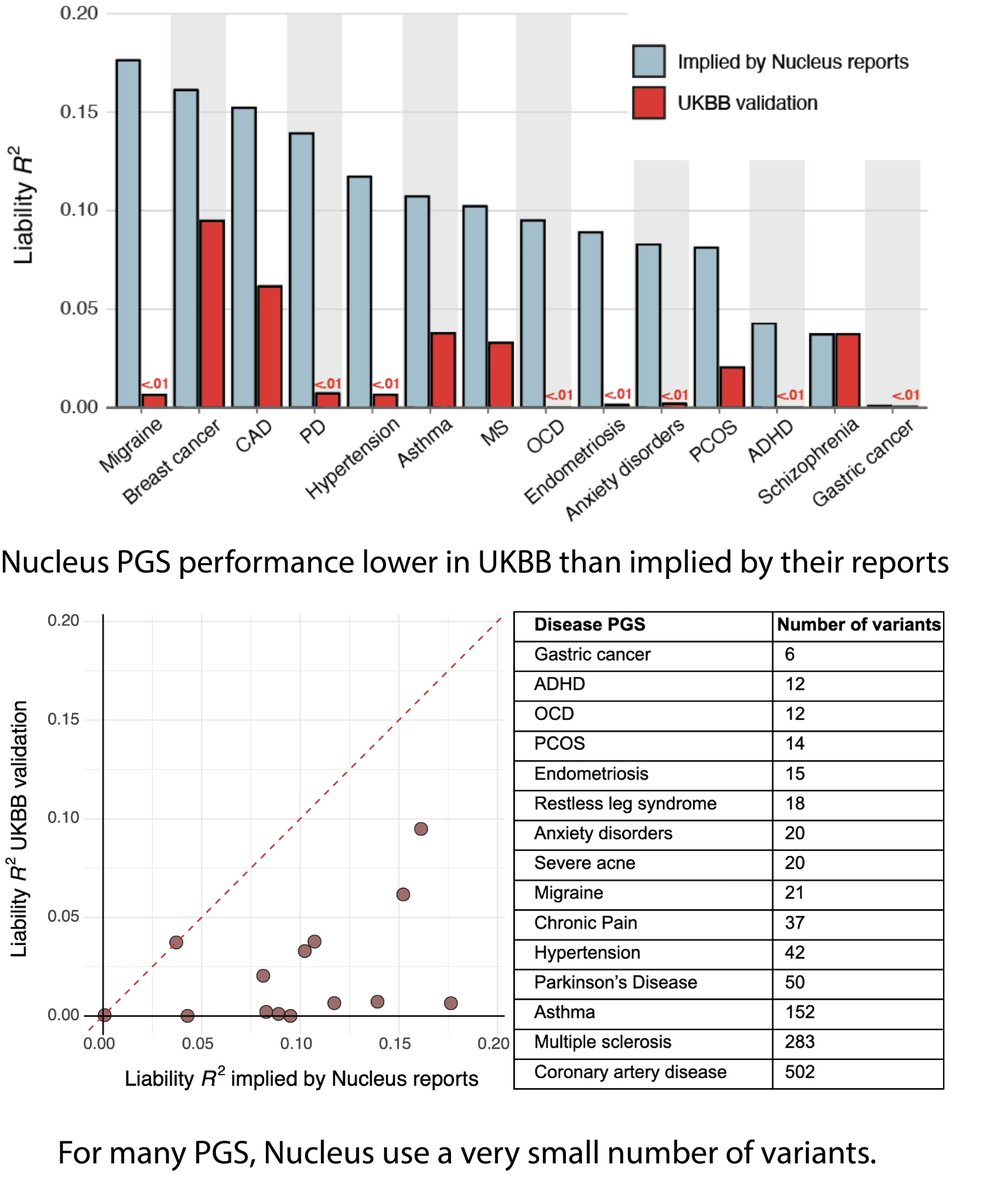
A few thoughts on Herasight, the new embryo selection company. First, the post below and the white paper imply that competitors like Nucleus have been marketing and selling grossly erroneous risk estimates. This is shocking if true! 🧵
At @herasight, we wanted to compare our genetic predictors (PGS) to those from @nucleusgenomics. However, in many cases, we couldn’t reconcile plausible performance of their PGSs with customer risk reports we saw — this may have misled customers about their disease risks.
It is depressing, but all too predictable, how swiftly we’ve gone from the Social Science Genetic Association Consortium offering reassurances about the uses of behavioural polygenic scores to one of their lead authors marketing embryo selection for IQ
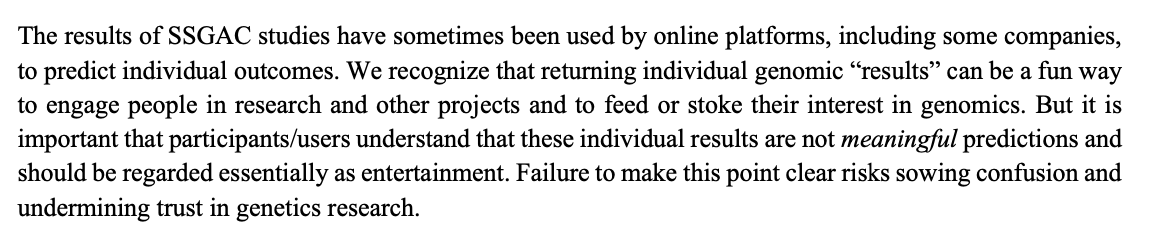
ALT Text from FAQ from Okbay et al 20222:
https://www.nature.com/articles/s41588-022-01016-z
a similar same statement is made in an FAQ in 2025: https://www.biorxiv.org/content/10.1101/2025.05.14.653986v1.supplementary-material
Text reads:
"The results of SSGAC studies have sometimes been used by online platforms, including some companies, to predict individual outcomes. We recognize that returning individual genomic “results” can be a fun way to engage people in research and other projects and to feed or stoke their interest in genomics. But it is important that participants/users understand that these individual results are not meaningful predictions and should be regarded essentially as entertainment. Failure to make this point clear risks sowing confusion and undermining trust in genetics research"
Herasight, named after the goddess who threw her disabled child off a mountain, seems focused on public outreach using embryo selection for IQ to win over far rightwing pseuds & techbros
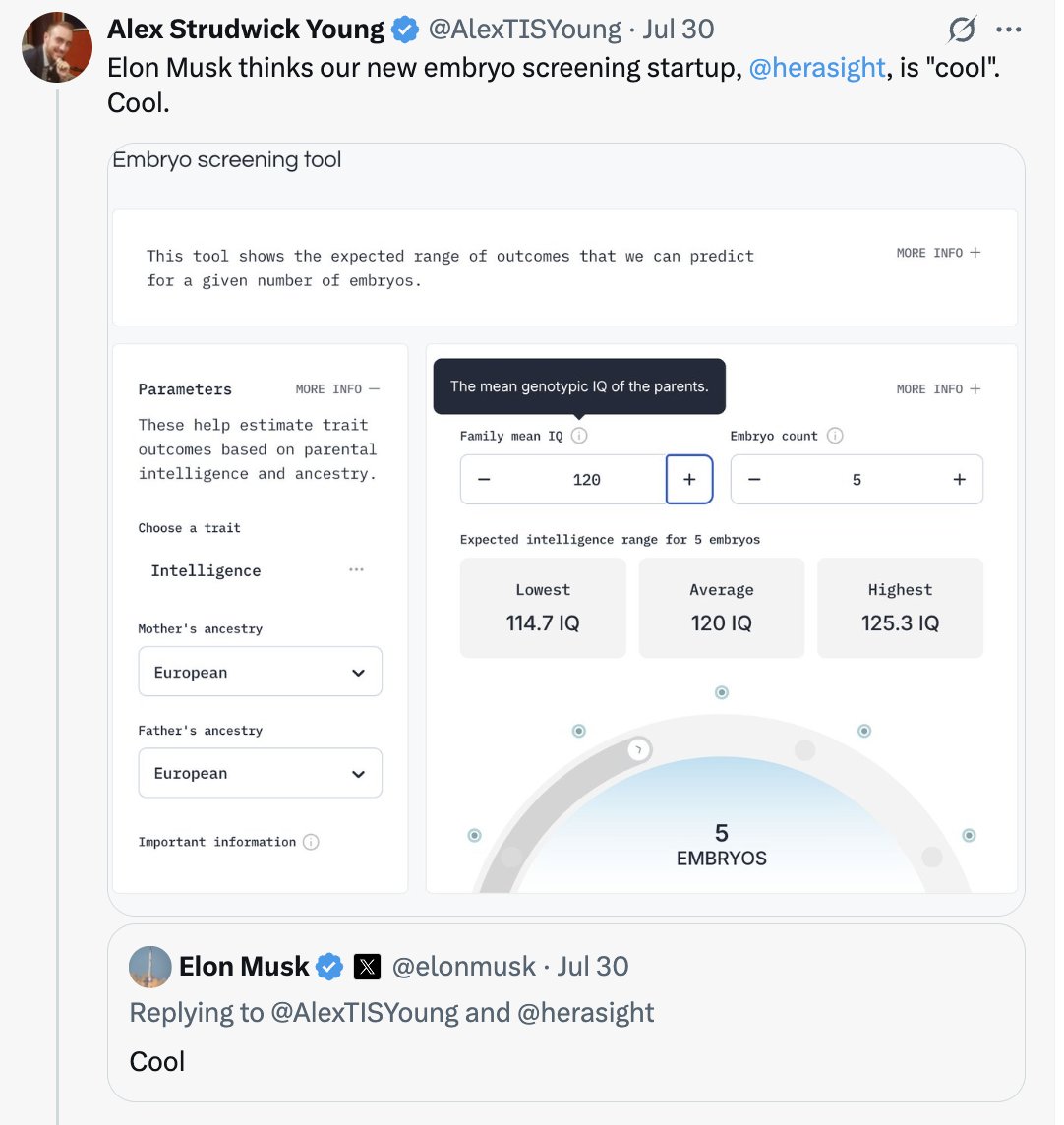
ALT A tweet "Elon Musk thinks our new embryo screening startup,
@herasight, is "cool". Cool." with a picture included of a web widget to select an embryo for IQ.
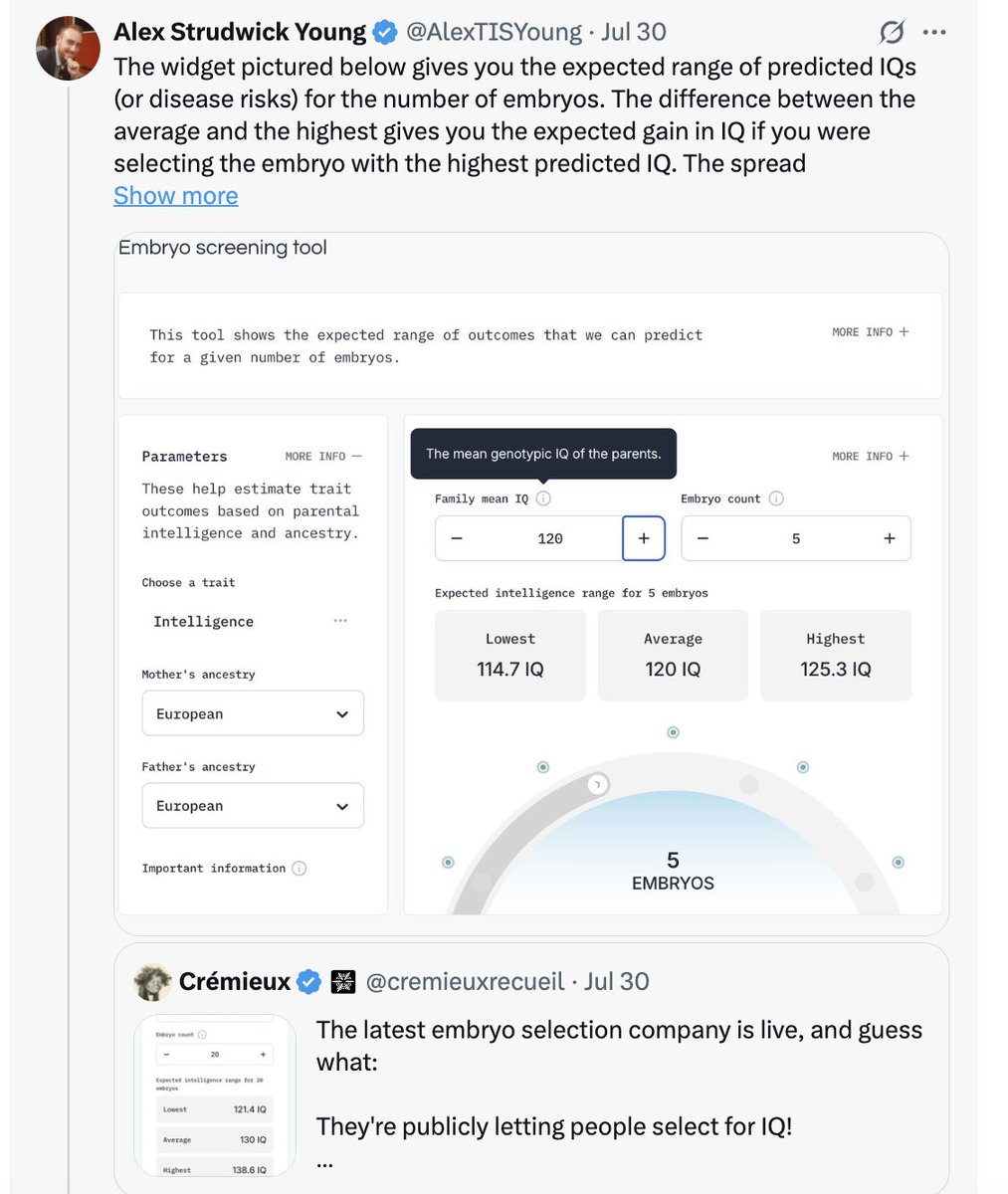
ALT A quote tweet of Cremieux a pseudo who "tweets about race & genetics"
see here for more background on Cremieux/Lasker: https://www.theguardian.com/us-news/2025/mar/03/natal-conference-austin-texas-eugenics
Text reads:
The widget pictured below gives you the expected range of predicted IQs (or disease risks) for the number of embryos. The difference between the average and the highest gives you the expected gain in IQ if you were selecting the embryo with the highest predicted IQ.
These embryo-selection startups are clearly feeding into an alt-right ecosystem that revels in techno-futurism much as such movements have in the past. GWAS participants & parents navigating IVF deserve better than being used as tools to attract the attention of edge lords.
#PrivateEquity is everywhere. Let's start here: Shell, Exxon, Chevron, Unocal don't own gas stations. They are "Sometimes [owned] by private equity firms and they can raise prices very liberally because -- simply because -- they can" abc7.com/california-gas-pric… 🧵
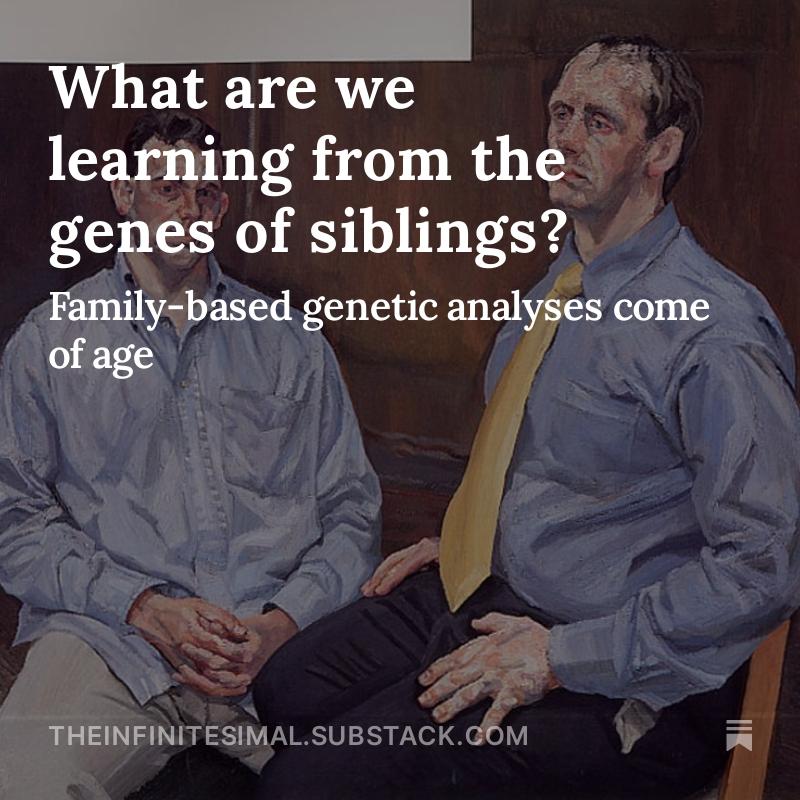
I wrote a bit about the two very interesting studies of siblings/families from last week. Tan et al. family GWAS (medrxiv.org/content/10.1101/…) and Sidorenko et al. sibling heritability estimates (nature.com/articles/s41588-0…). A few surprising findings summarized here: 🧵
Looking for examples for class of STRUCTURE-style bar plot of hunter gather, early farmer, and steppe ancestry proportions for Europeans. Arranged temporally to shows various turn overs. Looking for something broad in temporal scope but simple enough to talk undergrads through.
Two new chapters from my free online book in human genetics out this weekend!
These complete Part 3 of the book, on human population structure and history:
3.3: Inferring human prehistory from genetic data [this thread]
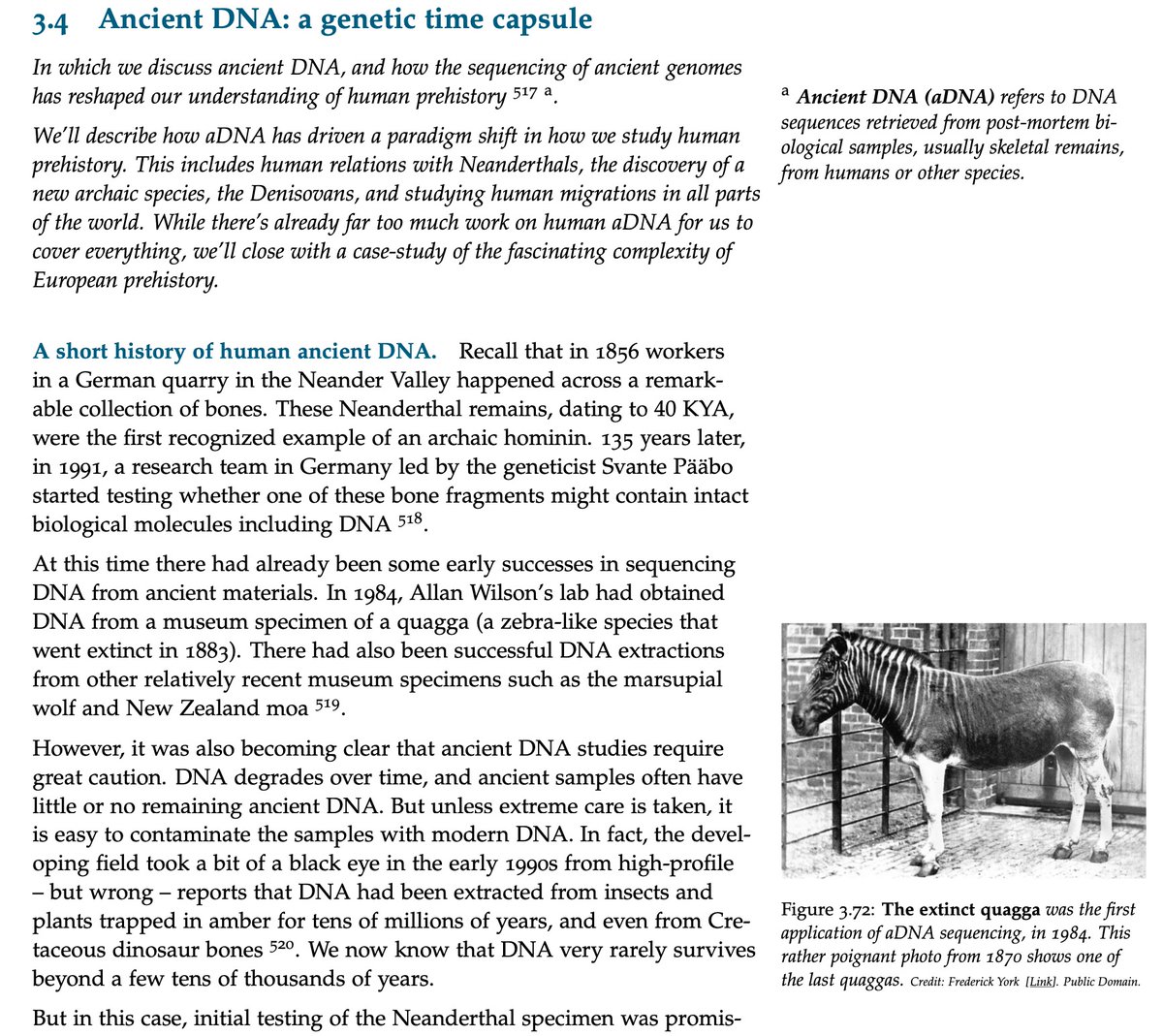
3.4: Ancient DNA [next thread]
web.stanford.edu/group/pritc…
Excited to share this new preprint with @spence_jeffrey_ and @DocEdge85 in which we developed a method to infer demographic history and mutation rates from millions of genomes, and applied it to gnomAD v4 data. Read on for a brief thread!
biorxiv.org/content/10.1101/…
Really interesting new paper from Akbari et al. identifying a lot more selection in ancient DNA than previous approaches. I think it gets at three core challenges for this type of analysis where our understanding is still limited. 🧵
My lab read this paper biorxiv.org/content/10.1101/… for journal club, and had some thoughts on the strong claims made about the number of signals of selection found. 1/
Finally, the authors rely heavily on LDscore regression throughout the paper to rule our concerns about confounding (including in their PGS analysis). But LDscore results were shown to be very misleading in previous analyses of polygenic selection elifesciences.org/articles/3… 25/