
AI Prompt Engineer
Joined May 2019
- Tweets 14,210
- Following 141
- Followers 221
- Likes 12,737
495 Photos and videos

AI and Writing retweeted

🚨BREAKING: AMD just made it possible to run a 235 billion parameter model on a desktop the size of a lunchbox.
three days ago at AMD's developer event, lisa su walked on stage holding a mini PC in one hand and ran Qwen3 235B live.
no cloud, data center or rented GPU.
WHAT JUST HAPPENED:
the chip is the AMD Ryzen AI Max 395, codename "Strix Halo"
it is the first x86 chip where the CPU and GPU share the same memory pool
up to 128GB of unified LPDDR5X memory
on linux, up to 110GB of that is allocatable to the GPU
that one design choice is what changes everything
THE BENCHMARK:
on DeepSeek R1 inference, this chip beat an nvidia RTX 5080 by more than 3x
the 5080 has 16GB of VRAM
the 5080 cannot fit the model
the AMD chip can
this is a memory bottleneck story, not a raw compute story
THE TWO WAYS TO BUY IT:
→ AMD's first-party Ryzen AI Halo desktop
$3,999
official dev box, full AMD support, day-one ROCm
→ GMKtec EVO-X2 mini PC
$1,499 to $2,400 depending on config
same exact chip
the lunchbox lisa held on stage
same chip
different price tags and software ecosystems
THE IMPORTANT CAVEAT:
Qwen3 235B is a Mixture-of-Experts model
235 billion total parameters
only 22 billion active per inference pass
that is why it runs at ~11 tokens per second on this hardware
you are moving active weights, not the full model
THE NPU CAVEAT MOST SKIP:
the chip ships with a 50 TOPS XDNA 2 NPU
it does NOT accelerate LLM inference
ollama, llama.cpp, LM Studio all route LLMs to the GPU
if you are buying this for local LLM use, the NPU spec is marketing
the GPU is doing the work
THE BIGGER PICTURE:
nvidia spent a decade convincing the industry that frontier AI required their hardware
apple proved unified memory works on M-series silicon
AMD just brought that architecture to x86 at consumer prices
this is the first time you can run a frontier-class model on hardware you own outright
local AI on this chip is owned intelligence
the question is no longer "can I run this locally"
it is "do I want to keep paying $440 a month when I do not have to"
P.S. the community already flagged that the $1,499 box was not the one lisa held on stage. the one she held costs $3,999. same chip, different vendor.
4
28
4,105
AI and Writing retweeted
How to actually build your first full app with claude code google cloud from scratch:

1
5
14
1,713
AI and Writing retweeted

Jun 14
Rules of creativity are changing. Future belongs to those who can communicate ideas effectively with AI systems.
18
7
81
4,092
AI and Writing retweeted

Jun 12
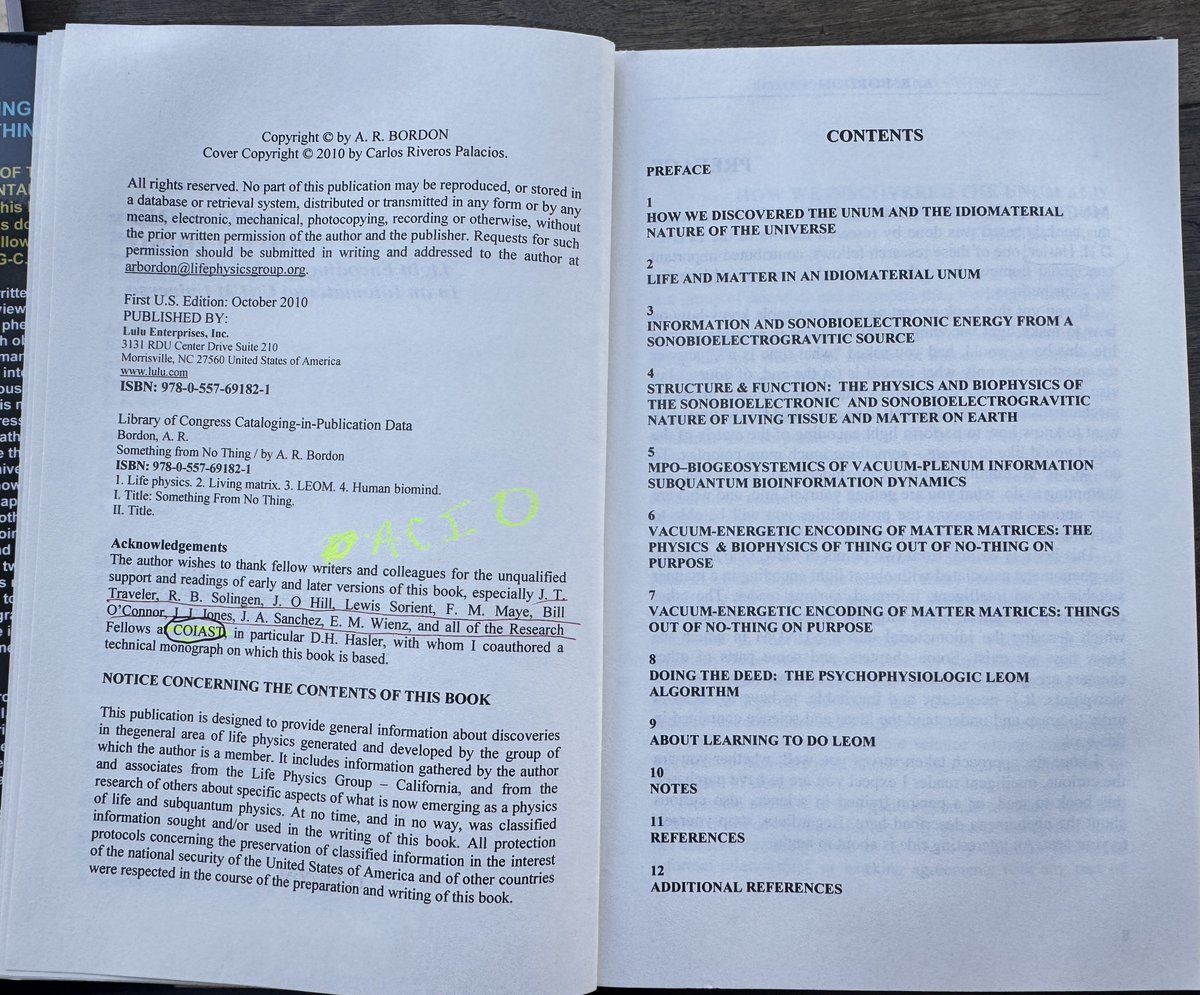
Does anybody out there know anything about this guy and who he really might be? (He uses a pseudonym) and…what is COIAST?
1
1
1
106
AI and Writing retweeted

Jun 11
Pixar spent 200 million dollars on Inside Out 2.
A Latvian director spent 3.4 million dollars on a movie about a cat.
The cat won the Oscar.
Best Animated Feature. 97th Academy Awards. Flow beat Inside Out 2, The Wild Robot, Memoir of a Snail, and Wallace and Gromit. It also won the Golden Globe, a Cesar, two Annecy Cristals, and more than 60 other awards.
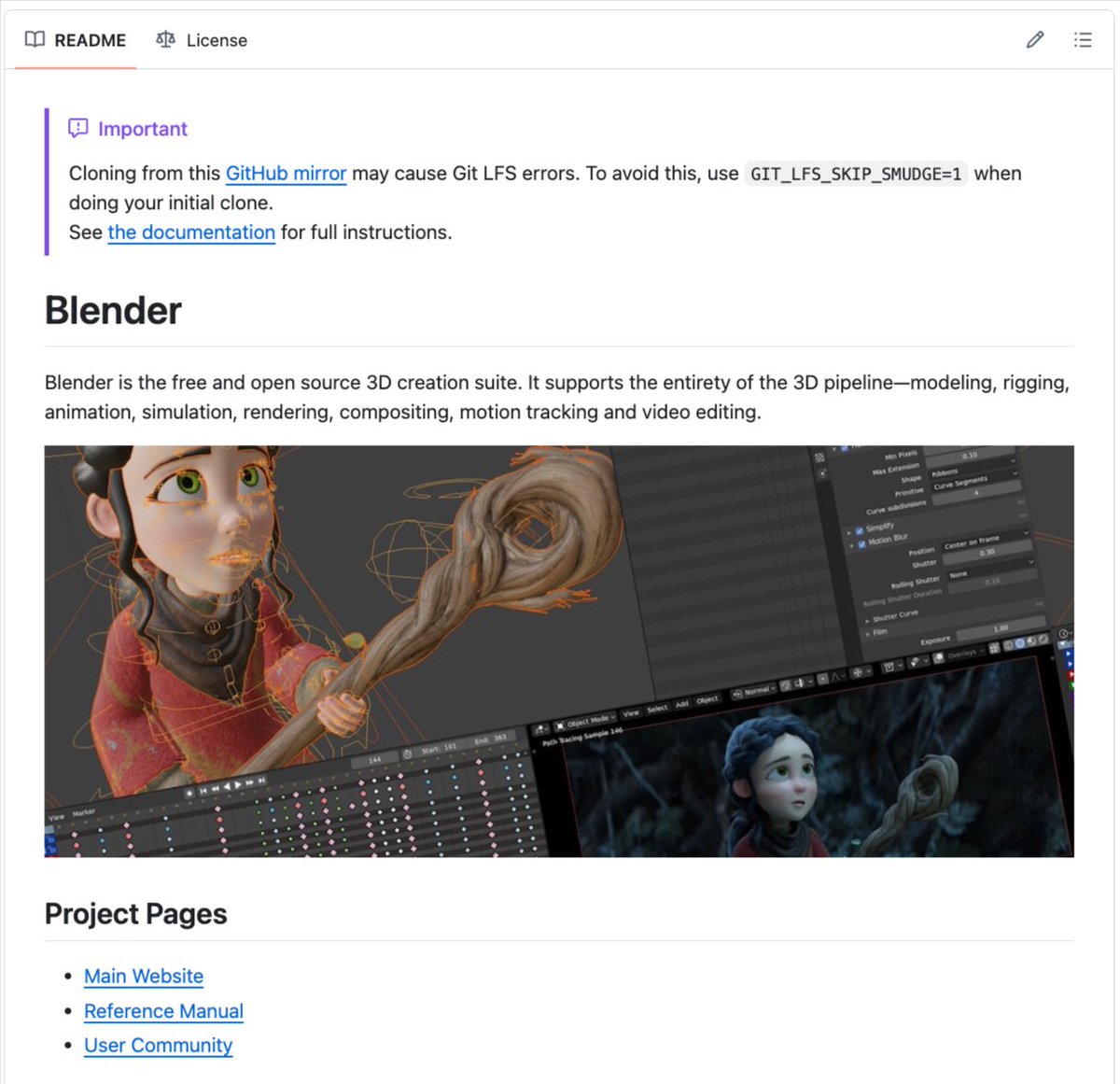
The entire film was made in Blender. Free software. Zero dollar license.
No Maya. No Houdini. No Cinema 4D. No render farm.
The director is Gints Zilbalodis, a Latvian filmmaker born in 1994. He says he is not great at drawing, so he designs scenes directly in 3D and uses previz as his storyboard. He moves the camera through his world like a live-action filmmaker walking through a set.
No dialogue in the entire film. A black cat navigates a flooded world with a capybara, a labrador, a lemur, and a secretary bird. No script. No voice actors. The visuals tell the story.
Five and a half years of work. A team of 15 to 20 people total, with only three to five working at any given time.
Here is what the industry pays.
Maya: 1,945 dollars a year per seat. Houdini Indie: 299 dollars a year. Cinema 4D: 719 dollars a year. A studio with 50 Maya seats pays 97,250 dollars annually for licenses alone.
Blender: zero. For one artist or five hundred.
Zilbalodis rendered Flow with EEVEE, the real-time renderer, the one designed for game-engine speed and viewport previews. Not the slower offline path tracer. He won an Oscar with it.
Disney has thousands of animators. Pixar has thousands of animators. Their films cost 100 to 200 million dollars each. They use Maya, Houdini, RenderMan, and proprietary tools that cost millions in license fees alone.
A Latvian director and a team that fit in one room made an Oscar-winning film for 3.4 million dollars using software that costs nothing.
The film has grossed more than 36 million dollars worldwide.
Maya at 1,945 dollars a year did not win the Oscar. Cinema 4D at 719 dollars a year did not win the Oscar.
Blender at zero dollars a year won the Oscar.
GPL licensed. Free forever.
The Oscar was never about the budget. It was about the art.
The art was made with free software.
(Link in the comments)
8
9
40
7,468
AI and Writing retweeted
Jun 10
I don’t think people understand how big this is yet.
Game dev is moving from “learn 12 tools before you can test an idea” to “make the thing playable while the idea is still fresh.”
That shift is massive.
4
1
15
872
AI and Writing retweeted

Jun 9
15 years after they found it, they cleaned it and repositioned it up onto this nearby wall, and allowed the public access. But very few know where it was found, or that there are more of them.

3
13
281
AI and Writing retweeted
Jun 9
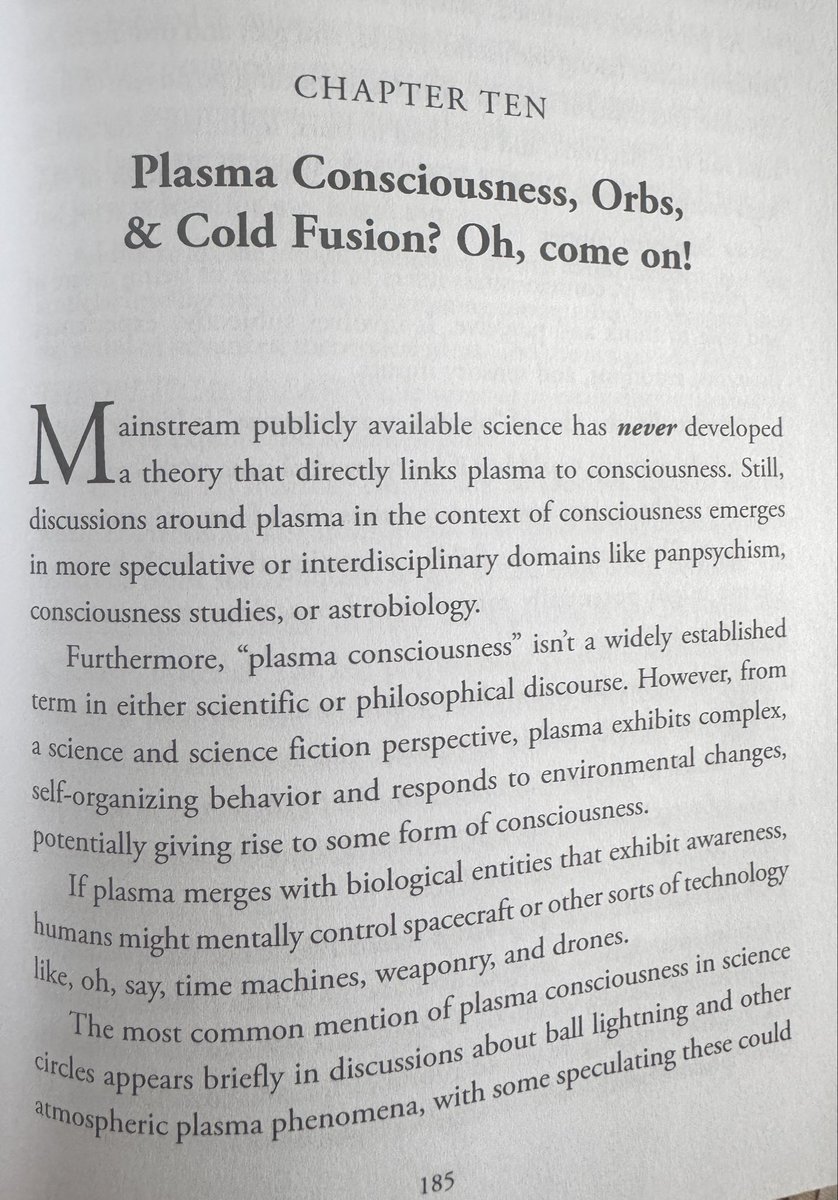
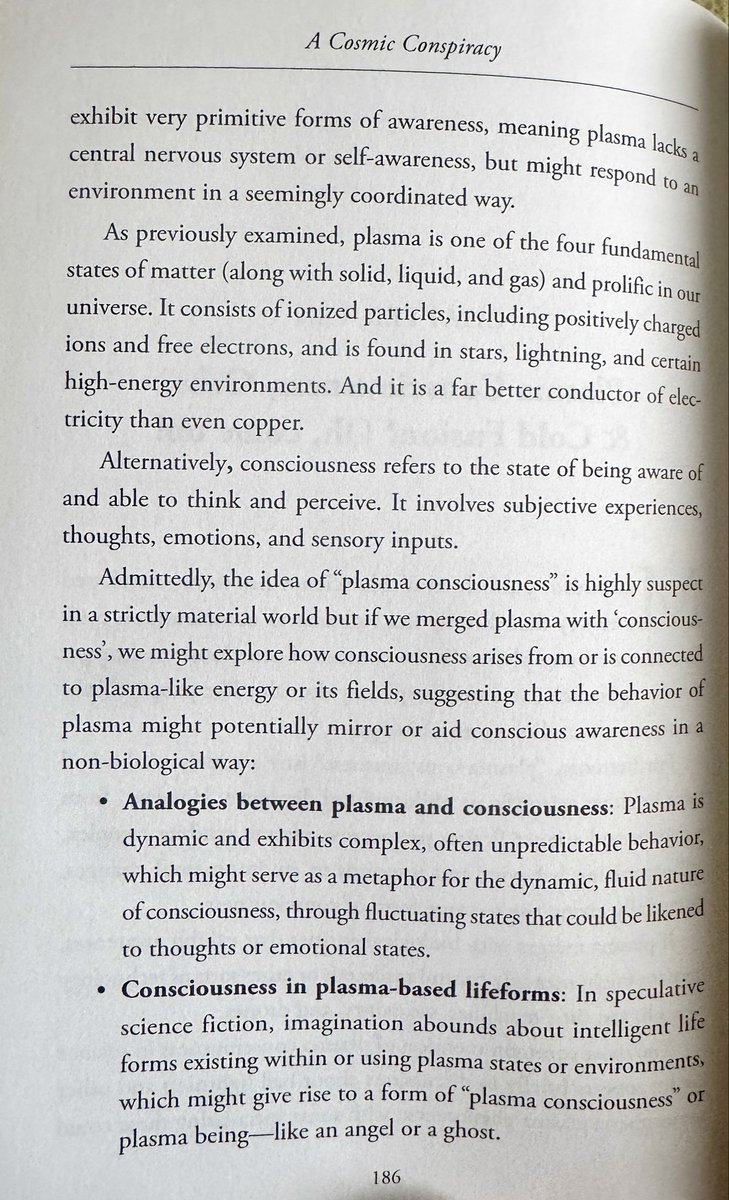
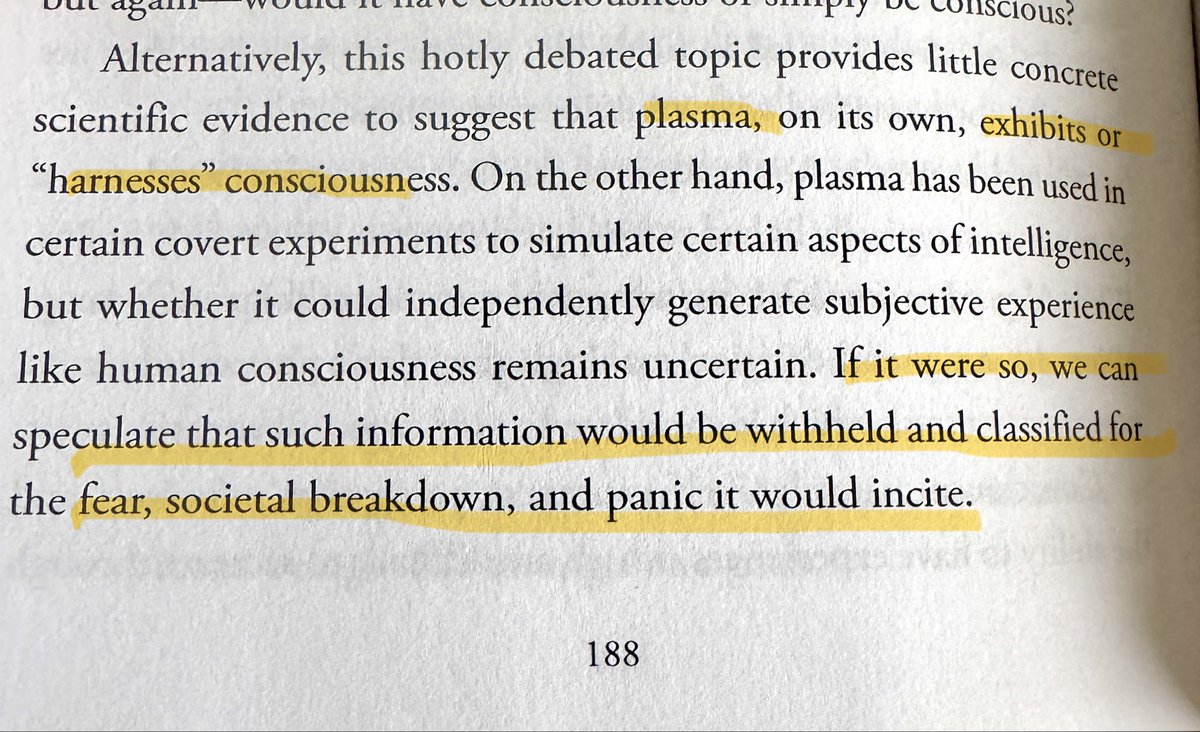
@Cortex_Zero since my works are suddenly harder to find I’ll ride your proverbial coattails for this one (sentient plasma): bacrisp.com

2
6
87

AI and Writing retweeted

Okay this is genuinely insane.
SpaceX just unveiled a satellite whose only job is to run AI. Not internet. Not GPS. Just compute, floating in orbit.
It's called AI1, and the reason behind it breaks your brain.
AI data centers on Earth are hitting a wall, not a chip wall, a physics wall.
They need staggering amounts of power and water just to stay cool, and we're running out of grid and land to build them.
So Musk's answer is: stop building them on Earth.
In orbit, the sun never sets. Free power, 24/7. No water for cooling, you just radiate heat into the vacuum of space. The two things choking AI on the ground barely exist up there.
And here's the wild part: Musk says it's easier to build than a Starlink satellite. Strip out the complex antennas and it's "a lot of solar cells, a radiator, and some laser links."
One AI1 carries the compute of an Nvidia GB300 rack, the same hardware data centers fight over down here.
AI1 is just the first one. The plan is a constellation of up to a million of them.
And the timing isn't an accident, SpaceX goes public this week at a ~$1.75 trillion target. This isn't a rocket company anymore. It's positioning itself as the power grid for AI, in space.
The race for AI compute just left the planet. Literally.
@SpaceX
1,101
2,920
17,706
4,738,316
AI and Writing retweeted

Jun 5
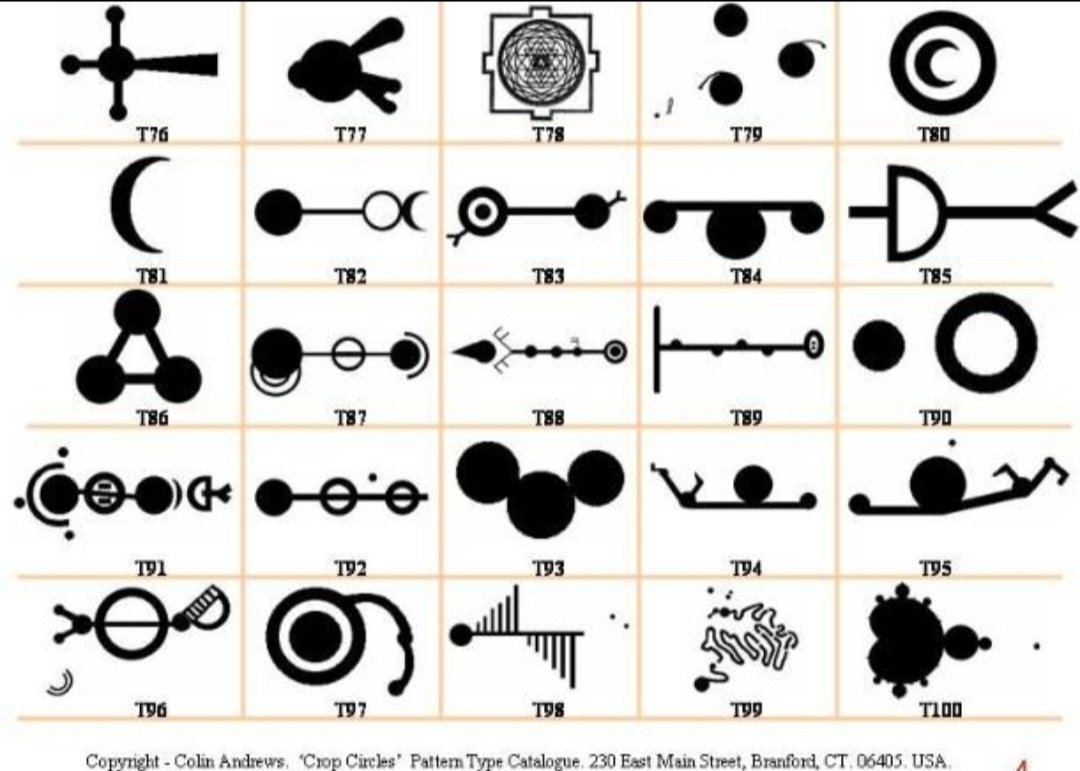
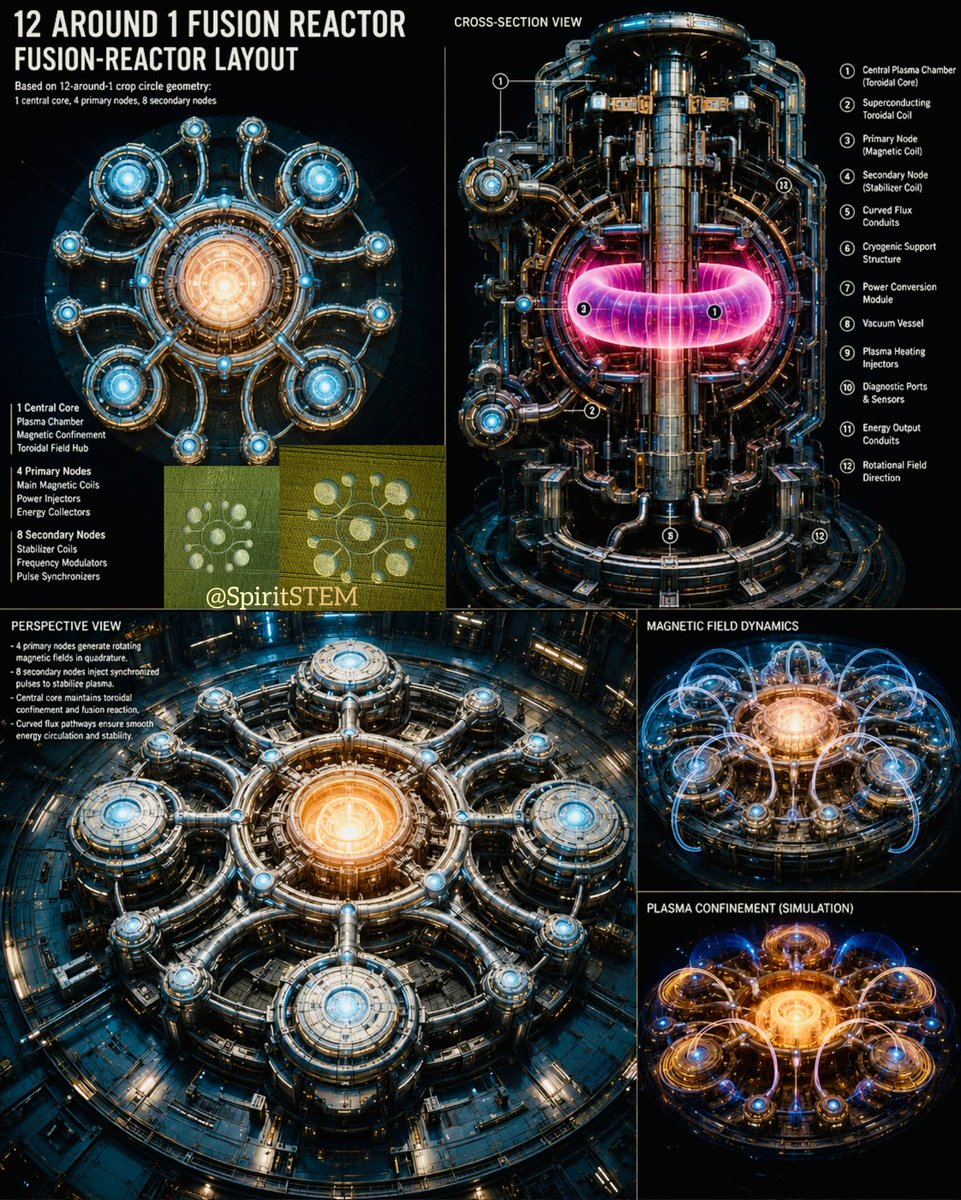
Crop circles 🌾🌀 are geometric blueprints deeply connected to energy
The recent 12-around-1 formation is the inspo for a more harmonious nuclear fusion reactor
By distributing plasma control across multi synchronized nodes -- it creates a coordinated field ˗ˋˏ◎ˎˊ˗
7
16
71
4,494
AI and Writing retweeted

🚨 Scientists just built a refrigerator with NO compressor and NO refrigerant gas.
Just electricity.
Using a multilayer ceramic capacitor, researchers created a solid-state cooling system that changes temperature when an electric field is applied.
The result:
• ~3–4.5 K cooling swings
• works across room temperature
• survives >10 MILLION cycles
• no moving parts
• projected 70–90% Carnot efficiency
This is electrocaloric cooling and it may become one of the biggest threats to conventional refrigeration in decades.
Older materials only worked ABOVE room temperature and needed a brutal 42-day annealing process.
This new PST–PMW material:
• cools down to ~230 K
• avoids the expensive anneal
• handles massive electric fields
• maintains strong entropy transitions
The physics is beautiful.
An electric field reorganizes the material’s internal dipole structure, reshaping entropy inside the lattice and producing a real temperature drop.
Not “cold generation.”
Controlled entropy engineering.
If this scales:
• silent refrigerators
• ultra-efficient chip cooling
• vibration-free scientific systems
• wearable thermal control
• next-gen EV cooling
We may be watching refrigeration evolve from mechanical compression…
to programmable matter.
Follow me if you want the future of physics before it hits mainstream.
39
210
749
25,601
AI and Writing retweeted

Jun 7
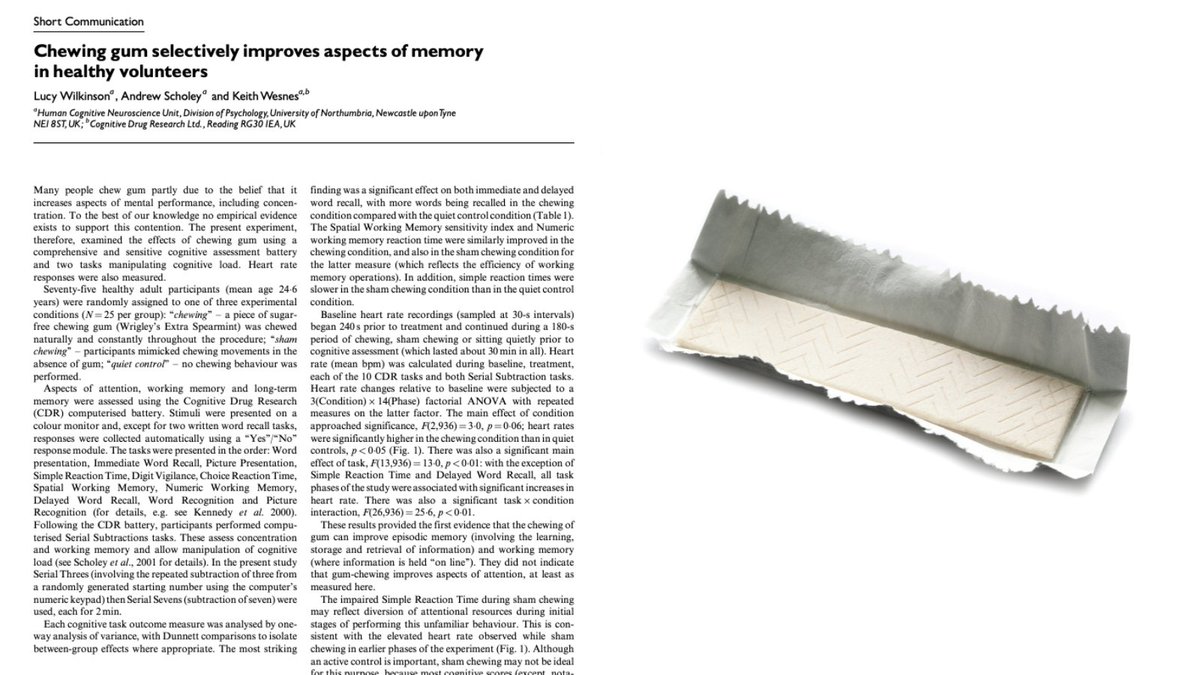
A British psychologist spent her PhD years proving that something as stupidly simple as chewing gum can change how the human brain stores information, and the reason it works is stranger than it sounds.
Her name is Lucy Wilkinson.
She was a PhD student at Northumbria University in Newcastle when she designed the experiment that would put chewing gum into the cognitive science literature for the first time in any serious way.
The paper was published in 2002 in the journal Appetite, and it was one of those rare studies that sounded like a joke when you read the abstract and turned out to hold up the moment you read the data.
The experiment was deceptively simple.
Wilkinson and her supervisors recruited 75 healthy young adults, and divided them into three groups to take a 20-minute battery of memory and attention tests.
The first group was chewing gum the whole session.
The second group moved their jaws as if they were chewing but had no gum in their mouth at all.
The third group sat still, and did nothing with their jaws.
Then everyone took the same tests, which included immediate word recall, delayed word recall, working memory for numbers and spatial memory tasks.
The part nobody had expected were the results.
Gum chewers were significantly better than the no-gum control group on both immediate and delayed word recall. Same words, same test, same brain on the other side of the desk, and the group with a piece of gum in their mouth just remembered more of them.
The weirdest part of the finding was what happened to the second group, the one that was mimicking the chewing motion without any gum in their mouths. They did not gain the same benefit. Just moving the jaw was not enough. But it was something about actually chewing a piece of gum that was causing the effect.
That detail was what made the paper interesting rather than dismissible, because it meant the explanation couldn’t just be that jaw movement keeps people alert. Something deeper was afoot that the field would spend the next 20 years trying to untangle.
The follow-up experiment that explained the most likely mechanism was done by John Aggleton’s team from Cardiff University two years later. One set of participants was asked to chew gum while learning a list of words and then chew gum later on 24 hours later while trying to remember the same words. A second group was asked to chew gum only during learning.
A third group chewed gum just during recall. A fourth group did not eat any.
The group that chewed gum at learning and recall did the best by a wide margin. Those who chewed at only one or the other stage did about as well as the no-gum group.
What the result showed was that chewing gum wasn’t just improving memory in some general way. It was behaving as what psychologists refer to as a context cue.
Your brain does not store memories as isolated bits of facts floating in a void. It saves them with the full context around it . The room you were in , the sounds around you , the mood you were in , even the physical state of your body when you encoded them . When you try to remember something later, your brain goes to those context cues to find the file.
If the context at recall is the same as the context at learning, the memory will come back faster and cleaner. If the context is different the file is more difficult to reach.
One small but reliable physical state that the brain was using as one of those context tags turned out to be chewing gum. The regular motion of the jaws, the flavour of the tongue, the steady low level of mouth activity were being filed away with the words being learned. The brain was quicker at pulling up the file when it was in the same physical state at recall.
And there was a second mechanism built into that. Other studies have looked at blood flow to the brain while chewing and found it to increase about 25 percent. One such study was done in 2001 by Sasaki in Japan.
Other investigators have reported faster times on cognitive processing and improvement on sustained attention tasks while chewing gum. Chewing appears to push the brain into a somewhat more aroused state, making it better able to hold onto information over a task that takes minutes rather than seconds.
The next part is the real part of the story.
Wilkinson’s finding of an improvement in immediate recall was not reproduced in two independent efforts to replicate this in 2004 and 2005. Other studies replicated the context-dependent effect, but claimed that the simple alertness boost was only real under certain conditions, such as when the task was long and demanding, rather than short and easy.
The best evidence from two decades of research is that chewing gum has a measurable effect on cognition, but the effect is conditional and is most reliably observed in tasks requiring sustained attention, working memory under load, and recall benefitting from matching the encoding state to the retrieval state.
What all the critics agree on is the deeper finding under the original headline. Your brain is not a neat filing cabinet, where information is stored separate from the body that took it in. Your physical state at the time you learn is part of the memory itself, so anything you can recreate at the time of recall can give you a small edge in getting the file back.
That is why students who study in the same room that they will take the exam in, often do better. That is why you remember your dreams better if you wake up in the same position you fell asleep in. Which is why a smell can pluck a memory out of decades-old storage faster than any conscious effort can. The index contains the body.
Chewing gum is just the cheapest, weirdest, most available form of that mechanism ever tested by anyone.
Next time you have something difficult to remember, try the experiment yourself. Chew a particular flavour of gum as you study. Before you sit down to review what you learned, have another chew of the same flavour. The gum is not doing the job. The gum is acting as a thread for your brain to follow back to where the information was stored.
The most powerful memory tool you own is not your willpower or your intelligence.
It is the physical state of your body the moment you decide to pay attention.
19
147
615
30,857
AI and Writing retweeted

Jun 6
Dr Hal Puthoff Presentation on UFOs, AATIP and Disclosure
#ufotwitter
Introduction & Backstory (Government Involvement):
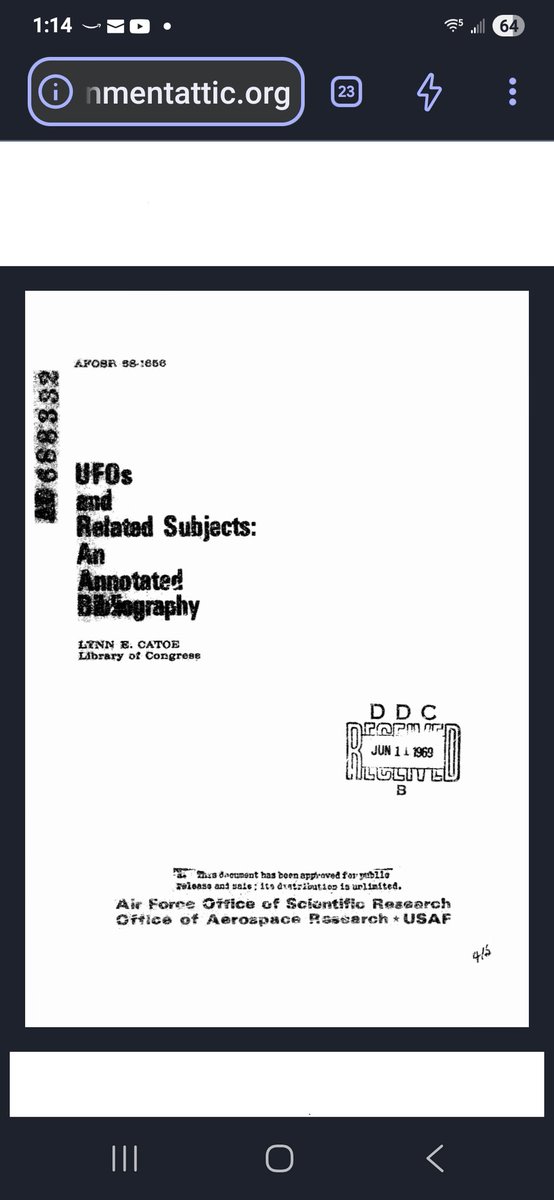
Puthoff starts with his personal connection to the topic (friendship with the host, shared interest in unusual phenomena like remote viewing). He outlines the official U.S. UFO/UAP history: Project Sign (1947–48), Project Grudge, and Project Blue Book (ended 1969 after the Condon Report concluded nothing of interest). However, a key 1969 memo by General Bolender noted that reports affecting national security would continue via standard channels—meaning programs persisted secretly.
Public denials continued until the December 16, 2017, New York Times story revealed the Advanced Aerospace Threat Identification Program (AATIP) (nickname for the broader Advanced Aerospace Weapon System Applications Program - AAWSAP), funded around 2008–2010s via Senate Majority Leader Harry Reid and others. This was a "game changer" because credible figures (pilots, officials) began speaking publicly.
AATIP/AAWSAP Focus & Threats:
Primary concerns: Unknown craft (possibly off-world or adversarial) and especially future threats if rivals (e.g., Russia/China) reverse-engineered breakthrough tech from UAP observations or materials.
Soviet/Russian programs were also extensive (a thick report from ~1991 detailed their efforts).
Notable Cases (e.g., Nimitz "Tic Tac"):
Detailed discussion of the 2004 Nimitz carrier group encounters off San Diego: Objects descending rapidly from high altitude, hovering, then accelerating extremely (e.g., "Tic Tac"-shaped, white, smooth, ~46 ft, no wings/appendages, low observability). FLIR (forward-looking infrared) captured it; radar struggles noted. Similar incidents recurred (e.g., 2015 USS Roosevelt). Pilot Cmdr. David Fravor's accounts are highlighted. Assessments: advanced performance, propulsion, no known equivalents.
Scientific/Technical Work (38 Papers):
Bigelow Aerospace (BAASS) was the main contractor. Puthoff's role as subcontractor: Commissioned ~38 unclassified "Defense Intelligence Reference Documents" (DIRDs) from global experts on future (2050) aerospace tech. Topics included warp drive, traversable wormholes, metamaterials, spacetime metric engineering, invisibility/cloaking, human effects, etc.—framed as forward-looking but clearly aimed at understanding UAP capabilities. These were hosted on a secure server and proved very popular internally.
Related to mentioned metamaterials, invisibility and reactionless propulsion Russian Siberian Scientific branch has patents on mentioned technological areas.
Metamaterials Example:
Analysis of an anonymously provided sample (multi-layered bismuth/magnesium, allegedly from a crash retrieval). Unusual properties; later linked to potential terahertz waveguides in emerging metamaterials research. Chain of custody questionable, but intriguing.
Overall Themes
UAP are real, exhibit extraordinary capabilities explainable (in principle) by advanced physics/engineering.
Government interest is ongoing, driven by national security.
Shift from secrecy to public/scientific engagement is key for progress.
Optimistic view: This could lead to major tech breakthroughs and humanity's "emergence."
Who is Dr. Harold (Hal) Puthoff
He is a physicist who has spent decades working at the intersection of mainstream science, government-funded anomalies research, and alternative propulsion concepts.
Here is a breakdown of the primary hypotheses he advances regarding unconventional aerial mechanics:
1. Polarizable Vacuum (PV) Representation of General Relativity
Rather than using the standard geometric interpretation of General Relativity (where mass curves spacetime), Puthoff utilizes an alternative engineering framework known as the Polarizable Vacuum (PV) model.
The Core Concept: The vacuum of space is treated as a dielectric medium with a variable refractive index.
Altering Spacetime Metrics: By locally modifying the vacuum polarization—effectively changing the value of around a craft—the local speed of light, gravitational constants, and inertial mass change relative to a distant observer.
The Result: If you can increase the vacuum polarization locally, the effective metric changes in a way that mimics a warp drive or a gravitational field reduction, allowing for high acceleration without the craft or its occupants experiencing extreme g-forces.
2. Zero-Point Energy (ZPE) Extraction and Engineering
Puthoff's career is heavily tied to the study of the quantum vacuum, specifically Zero-Point Energy—the lowest possible energy state that a quantum mechanical physical system may have.
Vacuum Fluctuations: According to quantum field theory, empty space is filled with electromagnetic zero-point fluctuations.
The Casimir Effect Connection: Puthoff points to the Casimir Effect (where two uncharged plates placed close together experience an attractive force due to the exclusion of certain vacuum wavelengths) as proof that ZPE can be harnessed to generate physical forces.
Propulsion Hypothesis: He suggests that an advanced technology might find a way to manipulate or "asymmetrically shield" these vacuum fluctuations. By creating a gradient in the zero-point energy density across a craft, it could theoretically be pushed through space by the vacuum itself, eliminating the need for traditional onboard chemical propellants.
3. Metric Engineering and Spacetime Metric Manipulation
In papers associated with AATIP's Defense Intelligence Reference Documents (DIRDs)—specifically one he co-authored titled "Advanced Space Propulsion Based on Vacuum (Spacetime Metric) Engineering"—Puthoff discusses practical implementations of these theories.
Mass/Inertia Reduction: The model suggests that the inertia of a body is a reaction force caused by interacting with the zero-point vacuum fields (a concept tied to the Haisch-Rueda-Puthoff hypothesis). If you can alter the local vacuum field, you lower the object's inertia.
Signature Reduction: This framework is often invoked to explain common UAP characteristics, such as sudden, right-angle turns at supersonic speeds without creating sonic booms. If local inertia is reduced to near zero, the kinetic energy involved in a sharp turn drops drastically, and the craft doesn't interact with the surrounding atmosphere in a conventional fluid-dynamics manner.
Puthoff's approach is essentially focused on "engineering the vacuum"—treating empty space not as nothingness, but as a dense, highly energetic medium that can be polarized, warped, or tapped to bypass standard aerodynamic and rocket-propulsion constraints.
5
22
62
5,997
AI and Writing retweeted

5 Feb 2024
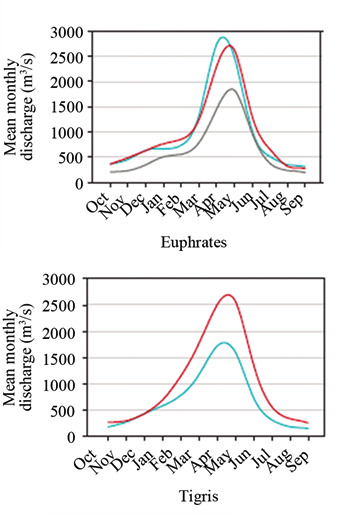
#MythologyMonday Beard post 2: The reason why Mesopotamian sun god Utu/Shamash was depicted as a golden bull (Sun in Taurus) with flowing lapis lazuli (flowing water) beard, is because Tigris and Euphrates water levels peak in Taurus, Apr/May...
oldeuropeanculture.blogspot.…

4
33
4,578
AI and Writing retweeted

Jun 5
A Sumerian Bearded Bull's Head from Mesopotamia, dating approximately to 2600–2450 BCE.

6
142
891
17,873
AI and Writing retweeted
🚨 SCIENTISTS JUST ACHIEVED 27.23% EFFICIENCY IN PEROVSKITE SOLAR CELLS USING A 5-MINUTE SOAK-COATING METHOD.
Researchers have developed a rapid, scalable way to deposit self-assembled monolayers (SAMs) critical hole-selective contacts by simply soaking the substrate in a specially engineered solution for under five minutes.
By designing a new unsymmetric SAM molecule and using an ethanol-based solvent with a small amount of water, they achieved dense, uniform coverage that dramatically improves charge extraction while preventing molecular aggregation.
The result: perovskite solar cells with a certified 27.23% power conversion efficiency, plus successful scaling to large-area devices, mini-modules, and flexible architectures.
Why this matters:
• Traditional SAM deposition methods are slow and difficult to scale
• This soak-coating approach is fast, simple, and works on flexible substrates
• Both the coating solution and the treated substrates can be reused, improving resource efficiency
The deeper implication:
Perovskite solar cells are getting closer to commercial reality. Methods like this that combine record-level performance with true scalability and lower material waste could be key to moving the technology from the lab to mass production.
What do you think will perovskite solar cells reach commercial rooftop and utility-scale deployment within the next 5 years, or will stability and manufacturing challenges still slow things down?
Follow for more frontier solar energy and materials science.
6
13
88
5,140
AI and Writing retweeted
Jun 5
The Library of Alexandria created the first catalog of all human knowledge 2,300 years ago, and a team of fewer than 20 people just finished the modern version and made it free for the entire planet.
It is called OpenAlex. The name is not an accident.
The ancient library had the Pinakes, a catalog mapping every scroll, every author, every subject. When the library fell, the map of what humanity knew fell with it.
For the last two decades, that map existed again, but it was locked up.
Elsevier owns Scopus. Clarivate owns Web of Science. If your university could not afford the subscription, you could not see the structure of science itself. Entire countries were priced out of knowing what research existed.
OpenAlex indexes 474 million scholarly works. Every author disambiguated. Every citation traced. Every institution and funder connected. It updates with roughly 50,000 new works every day.
The whole thing is CC0. Not just free to search. Free to download, copy, sell, and build on. The API allows 100,000 requests a day without an account.
The ancient library burned and the catalog was lost for two millennia.
The new one cannot burn. Anyone can hold a copy.
openalex.org
70
755
2,203
137,422