We found that a high genetic generalized epilepsy PRS (PRS-GGE) increased risk for genetic generalized epilepsy (GGE) (hazard ratio [HR] 1.73 per PRS-GGE standard deviation) across lifetime and within 10 years after an unspecified seizure event. 3/6
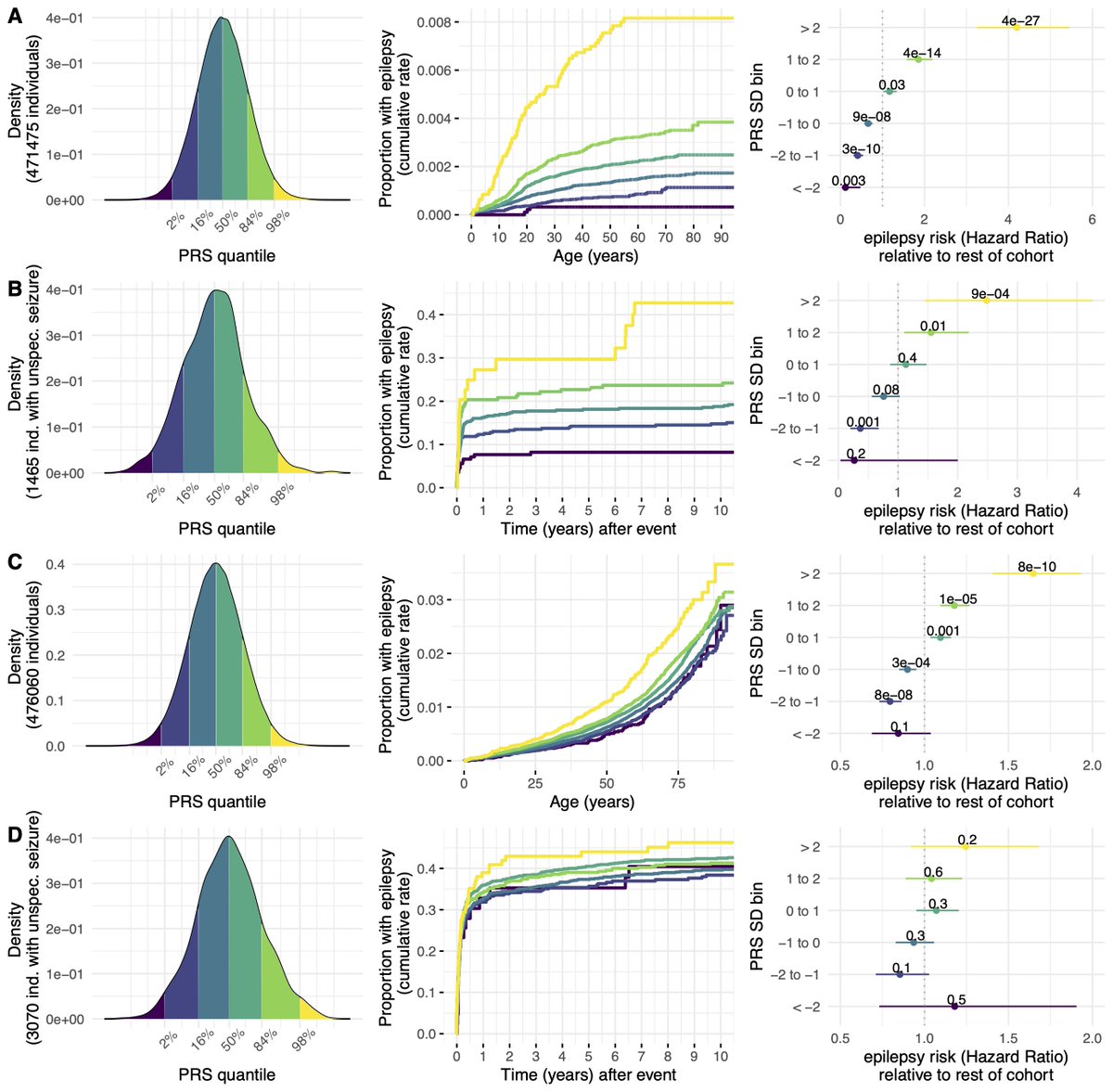
ALT Fig. 3: In each panel, on the left are density curves that display how samples are partitioned into six bins of PRS standard deviations. Survival curves in the middle give the cumulative epilepsy incidence (y-axis) across time (x-axis [years]) stratified for epilepsy PRS bins. The rightmost forest plots show epilepsy risk of each epilepsy PRS bin compared with the rest of the cohort. (A) GGE (n = 924) across lifetime, (B) GGE (n = 266) after an unspecified seizure, (C) NAFE (n = 5509) across lifetime, (D) NAFE (n = 1290) after an unspecified seizure. In (A, B), we investigate PRS-GGE, in (C, D), PRS-NAFE.
Great opening talks by @MI_Sedlmayr and Andreas Seidler of the common conference of 5 German scientific societies incl. #gmds#TMF2024 "Gesundheit gemeinsam"/"health together".
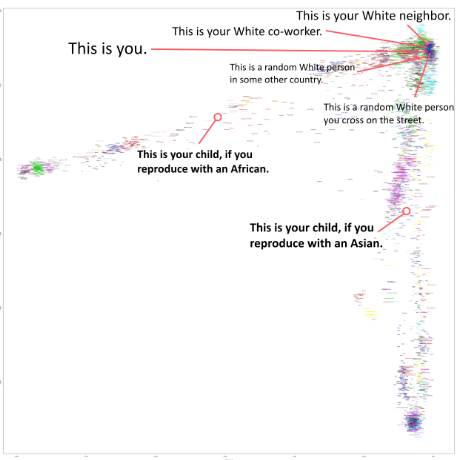
Most people don't realize that interbreeding with other races means that strangers on the street from your own race are more related to you than your own child. Amplify this, @elonmusk and spread the knowledge!
📣 We are seeking a part-time, 20 hrs/week, UI/UX developer/SWE consultant (or paid affiliate) in the Genomics 2 Proteins portal (g2p.broadinstitute.org/) project. The required skills are React.js and Google Cloud services. Contact me @ <sumaiya@broadinstitute> if interested!
I very much enjoyed writing this @NatureNV piece on the RNU4-2 story. Please read on if you want to learn more about how a non-coding variant was discovered to be one of the most frequent causes for developmental diseases. (thx M. Rissom for sketch)
nature.com/articles/d41586-0…
Epilepsy diagnosis is often challenging. The most widely-used diagnostic tool -EEG- performs quite variably. Here, we investigated how common genetic factors (polygenic risk scores, [PRSs]) influence epilepsy risk in electronic health records of > 700k Finns and Estonians. 2/6
We found that a high genetic generalized epilepsy PRS (PRS-GGE) increased risk for genetic generalized epilepsy (GGE) (hazard ratio [HR] 1.73 per PRS-GGE standard deviation) across lifetime and within 10 years after an unspecified seizure event. 3/6
ALT Fig. 3: In each panel, on the left are density curves that display how samples are partitioned into six bins of PRS standard deviations. Survival curves in the middle give the cumulative epilepsy incidence (y-axis) across time (x-axis [years]) stratified for epilepsy PRS bins. The rightmost forest plots show epilepsy risk of each epilepsy PRS bin compared with the rest of the cohort. (A) GGE (n = 924) across lifetime, (B) GGE (n = 266) after an unspecified seizure, (C) NAFE (n = 5509) across lifetime, (D) NAFE (n = 1290) after an unspecified seizure. In (A, B), we investigate PRS-GGE, in (C, D), PRS-NAFE.
Hi all, very glad to announce our paper on “Polygenic risk scores as a marker for epilepsy risk across lifetime and after unspecified seizure events” is now out nature.com/articles/s41467-0… in @NatureComms.
summary in German here: x.com/HPI_DE/status/18182263…
twitter summary below. 1/6
Polygene Risikoscores können helfen, die Veranlagung für eine Erkrankung besser einzuschätzen. Dr. @HHeyne vom HPI untersuchte die Gendaten von 5.000 Individuen, um mehr Erkenntnisse über epilepsie-spezifische Polygene Risikoscores zu erlangen.
👉Mehr: hpi.de/news/jahrgaenge/2024/…
I'm making an open offer to any compbio grad students/postdocs who are aiming for faculty positions. If you have strong impactful research but no glam pubs & need someone to advocate for you, please get in touch. I promise u, I & a bunch of other faculty will strongly support u.
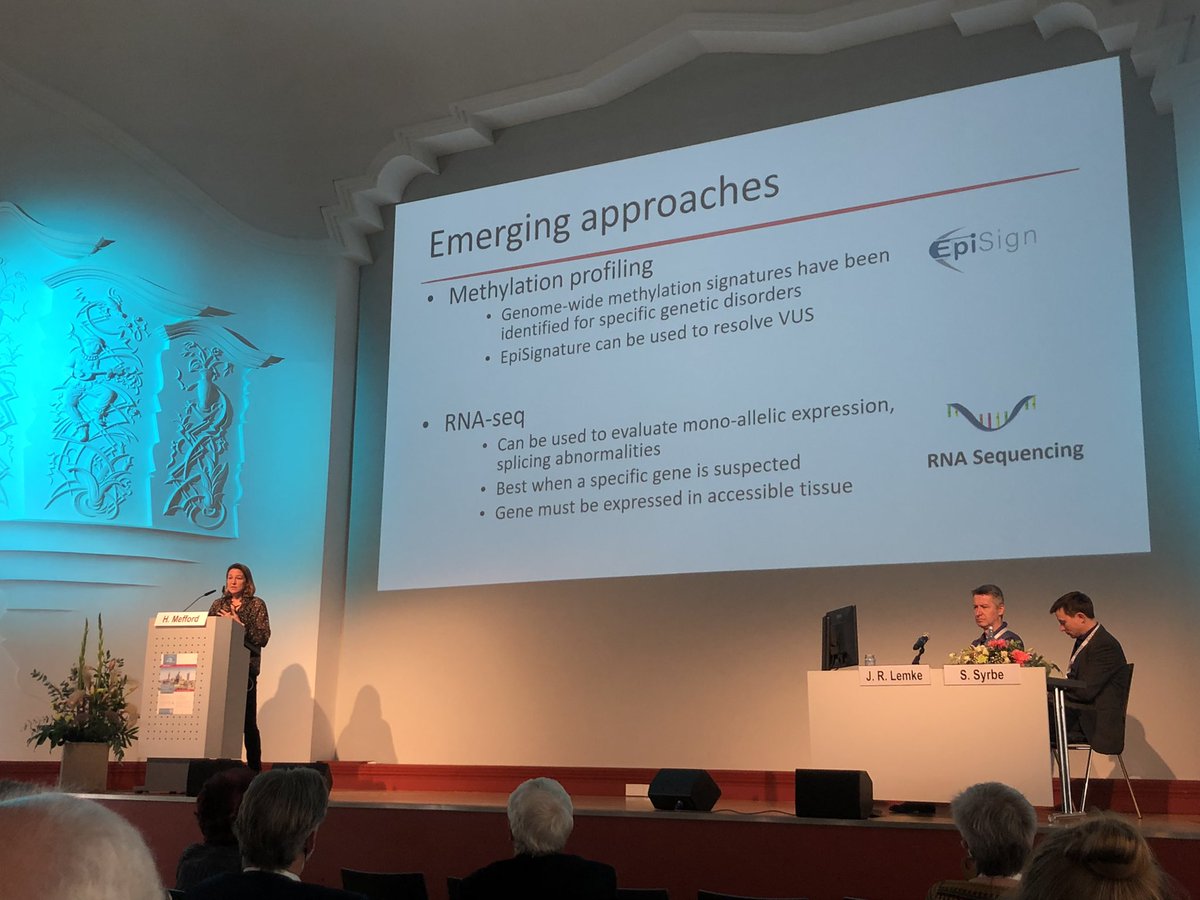
If you’re in Berlin (or tuning in online) for the #ESHG24 meeting, come out to the late breaking session this Monday (6/3) to hear about #DNAmethylation in the #DEEs 🧠
I’ll describe how we used DNA methylation analysis to solve genetically unresolved cases 🧬
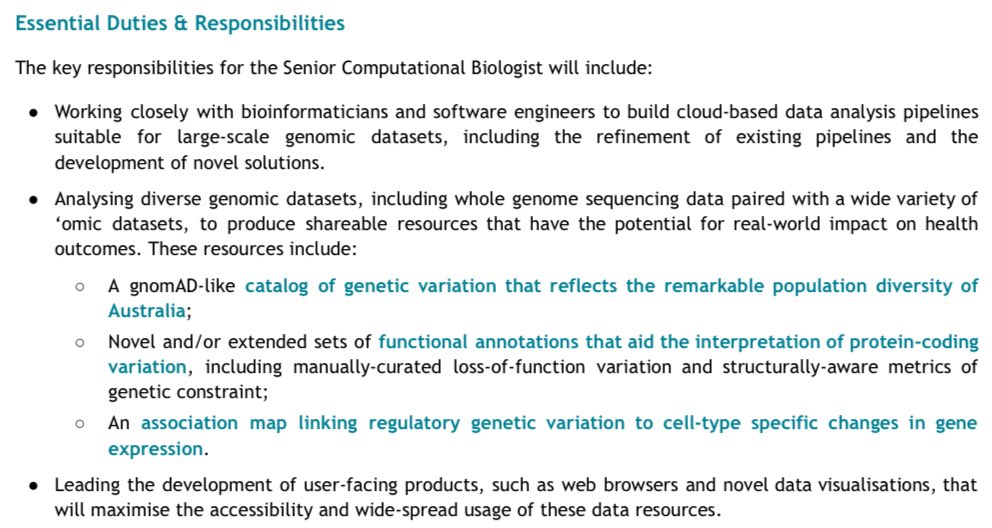
Reminder for #eshg2024 attendees: my team is looking for senior computational biologists, based in Australia or New Zealand, to work on a variety of cool projects. More details here: populationgenomics.org.au/ca… DM me if you’d like to chat in Berlin!
Amelie Fritz on sex differences in many human diseases -> disentangling phenotypic and environmental components
-> compare phenotypic and genetic correlations, —> mostly shared genetic architecture betw. sexes but more differences in environmental effc.
#eshg2924
interesting talk by Sara Ometto -> extracting latent phenotypes from cardiac MRIs incl. time component. integrating with GWAS overlaps with loci affecting also atrial fibrillation, T2D etc
#eshg2024