1,727 Photos and videos
Hal Snarr retweeted

Jun 13
As someone who’s been singing the National Anthem at rodeo events for over 20 years, I’ll just say….
There’s a way it was intended to be sung, without your own spin. This was 💯the way! Bravo!
1,643
8,390
77,218
1,620,530

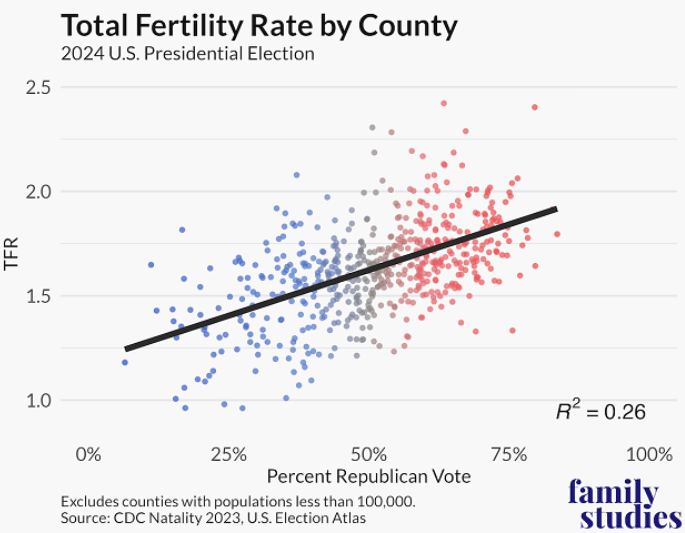
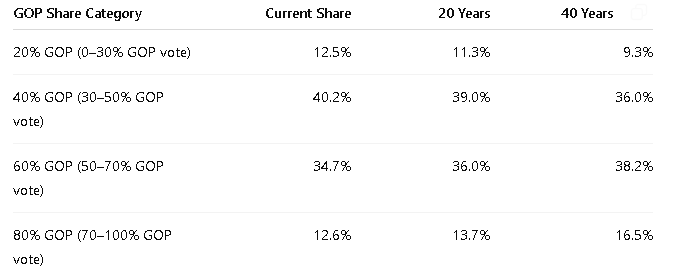
Fertility rates falling faster in @TheDemocrats-leaning counties than in @GOP-leaning counties have political consequences. Ceteris paribus, a larger share of the next generation will be born in red counties, which would skew the composition of the electorate toward the GOP.
21
Hal Snarr retweeted

Ayn Rand: "The moral code which is implicit in capitalism has never been formulated explicitly. The basic premise of that code is that man, is an end in himself, not a means to the ends of others. That man must exist for his own sake, neither sacrificing himself to others nor others sacrificing themselves to himself.
This is the moral premise in which the United States of America was based.
The principle of man's right to his own life, to his own liberty, to the pursuit of his own happiness."
41
279
1,155
32,856
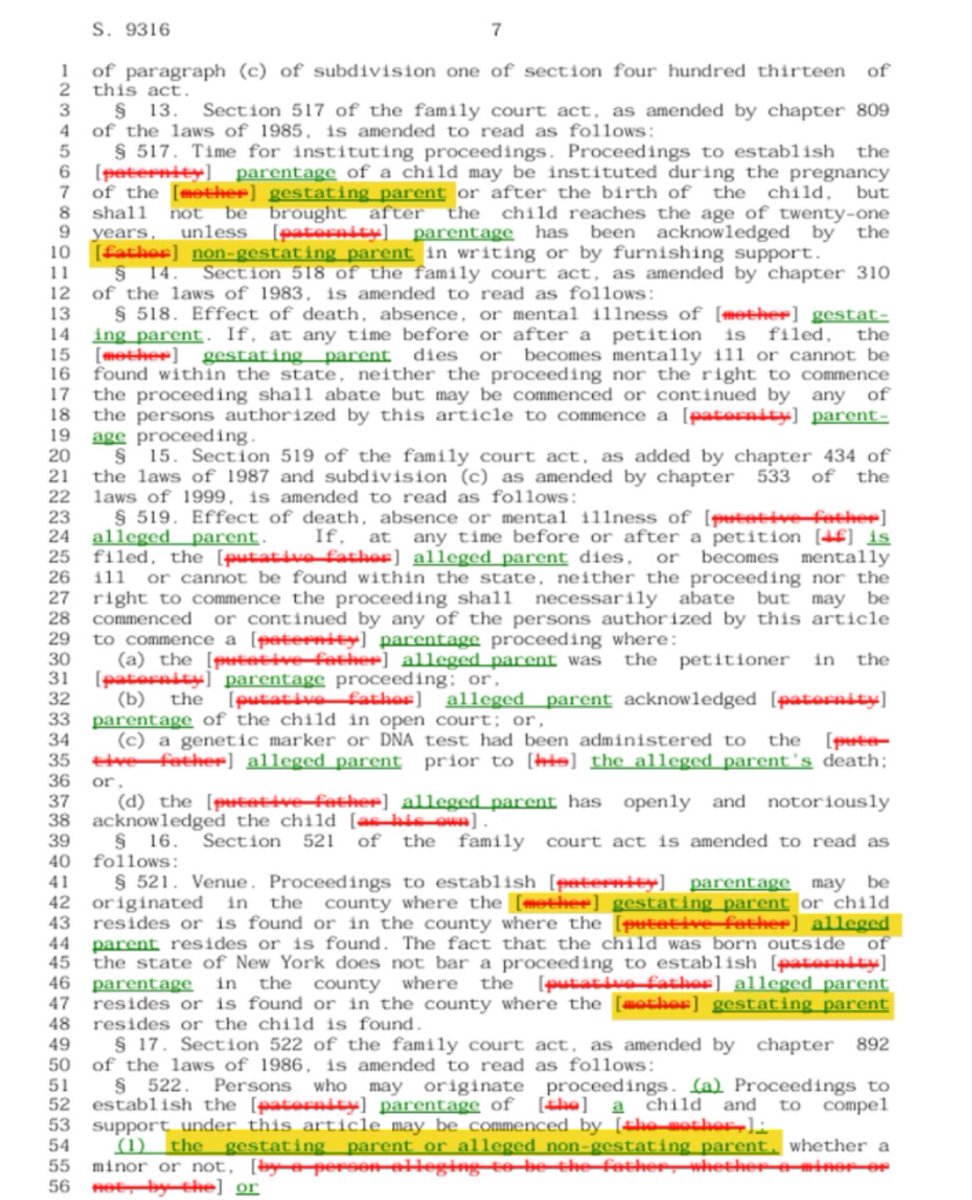
This is why I cannot vote for Democrats in NC even if they are better on the issues. When they head to DC, they’ll caucus with crazy NY and Cali Democrats who run the show.
These are real proposed amendments to New York law—New York Senate Bill S. 9316 (2025-2026 session).
2
22
Hal Snarr retweeted

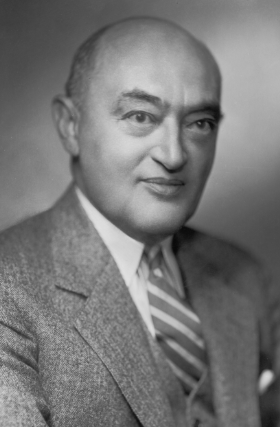
Austrian economist Joseph Schumpeter described how entrepreneurial capitalism drives economic progress by dismantling old business models, industries and technologies and replacing them with new, more productive ones. Schumpeter labelled the process Creative Destruction.
To Schumpeter, the true value of free market competition was not so much about price, but about the realignment of whole industries. And while unrestrained competition and innovation inevitable produces temporary displacements such as bankruptcies and unemployment, Schumpeter cautioned that attempting to cushion or prevent this destruction through government intervention is deeply counterproductive. State subsidies for uncompetitive or dying industries or other regulatory protections only stifle the incentives for future innovators, locking the economy into structural stagnation.
Schumpeter pointed out how economic progress requires a tolerance for the disruptions that are integral parts of capitalism. The free market is the only economic framework capable of fostering this relentless cycle of renewal, transforming short-term disruption into long-term human prosperity.
4
29
59
4,198
Hal Snarr retweeted

May 30
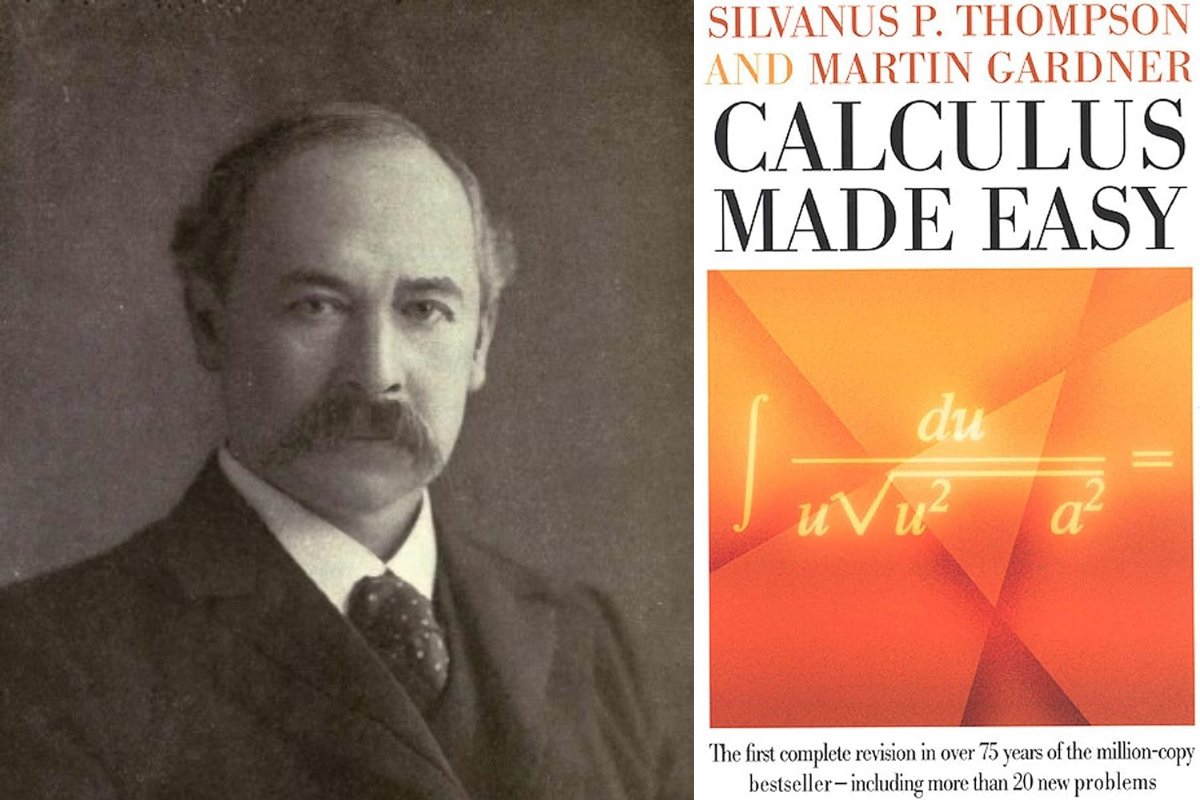
An English engineer wrote a calculus book in 1910 opening with the line "what one fool can do, another can," and proved that almost everything making math feel impossible was put there on purpose by people who wanted it to stay exclusive.
His name was Silvanus P. Thompson.
He was a physicist, an engineer, a Fellow of the Royal Society, and a professor at the City and Guilds Technical College in London.
He had spent his entire career teaching calculus to working-class engineering students who needed the math to actually do their jobs, and he had watched generation after generation of bright kids walk out of math classrooms convinced they were stupid.
He knew they were not stupid. He knew exactly what was wrong, and he was about to say it in print in a way that would get him quietly hated by every academic mathematician in Britain.
In 1910 he published Calculus Made Easy. He published it anonymously at first, listing the author only as F.R.S., which stood for Fellow of the Royal Society. He did not want his name attached to it until he saw how the establishment was going to respond. Because the prologue of the book was not a polite introduction. It was an accusation.
He wrote that calculus was not actually hard. He wrote that the people writing the standard textbooks were what he called "clever fools" who deliberately took the easiest parts of the subject and presented them in the most complicated way possible, because doing so made them look more impressive.
He wrote that they "seldom take the trouble to show you how easy the easy calculations are" and instead "seem to desire to impress you with their tremendous cleverness by going about it in the most difficult way."
Then he opened the first chapter by telling readers something nobody had been willing to admit out loud. The reason calculus felt impossible was not because calculus was impossible. It was because the symbols had been chosen to feel impossible. The notation looked like ancient ritual on purpose. The Greek letters, the formal epsilon-delta definitions, the abstract limit proofs that opened every standard textbook, were not how Newton and Leibniz had originally thought about the subject. They were a 19th century renovation of the field done by professional mathematicians who wanted calculus to feel like a closed shop.
Thompson refused to use any of it.
He went back to the way Leibniz had thought about it 250 years earlier. The letter d in front of a variable, he told his readers, just meant "a little bit of." That was the whole secret. dx meant "a little bit of x." dy meant "a little bit of y." dy/dx meant "a little bit of y divided by a little bit of x," which is just how steep the curve is going at that exact moment. Integration was the opposite. It just meant adding up all the little bits.
That is calculus. That is the entire subject. Everything else is technique, and the technique only works once you understand what you are doing.
A 12-year-old can follow that explanation. A 12-year-old cannot follow the opening chapter of a typical university calculus textbook. The gap between those two facts is the entire reason most adults walk around believing they are bad at math.
The book became one of the bestselling math books in history. Over a million copies. Still in print 115 years later. Still recommended by physicists, engineers, and self-taught learners as the only calculus book they actually finished. Martin Gardner revised it in 1998 and the foundation of the book did not need to change because Thompson had built it on Leibniz, not on the academic conventions that have come and gone since.
The deeper point Thompson was making is the part that should haunt anyone reading this in 2026.
Difficulty is often a marketing strategy. It is not always a property of the subject. When a discipline is taught in a way that feels impossible, the difficulty is doing a job for someone. It is keeping the field small. It is protecting the salaries and the status of the people already inside it. It is filtering out the kinds of people who would otherwise show up and crowd the room.
This happens in math. It happens in law. It happens in medicine. It happens in finance, in machine learning, in philosophy, in software. Every field has a layer of jargon and notation and ritual sitting on top of a core idea that is usually much simpler than the people inside the field want to admit. The jargon is not there to communicate. It is there to gatekeep.
The way you recognize a real teacher is that they keep stripping the ritual off. The way you recognize someone protecting their priesthood is that they keep piling it on.
Thompson finished his prologue with five words that are the entire spirit of his project. "What one fool can do, another can." He meant it as both a joke and a threat.
If a working-class engineering student in 1910 with no Greek and no Latin and no university privileges could learn calculus from a 200-page paperback, then so could anyone the establishment had been excluding for the previous 200 years.
Most subjects you have given up on were never as hard as the people teaching them needed you to believe. You were not stupid. The course was designed to make you feel that way.
What one fool can do, another can.
84
980
4,038
174,241
Hal Snarr retweeted

Glenn Beck: "Where do you stand on the WEF?"
RFK Jr: "We shouldn't be paying any attention to it. It's a billionaires boys club that’s arranging for the world to shift wealth upward, and to clamp down totalitarian controls on everybody else".
"It's astonishing to me that these people go to Davos in their private jets, and they're able to tell these world leaders how to govern us in ways that eradicate our constitutional and civil rights."
"COVID we shifted $4 trillion of wealth upward. We closed all of the little guys. They were all colluding with each other to censor guys like me complaining about it."
62
1,913
6,457
93,097
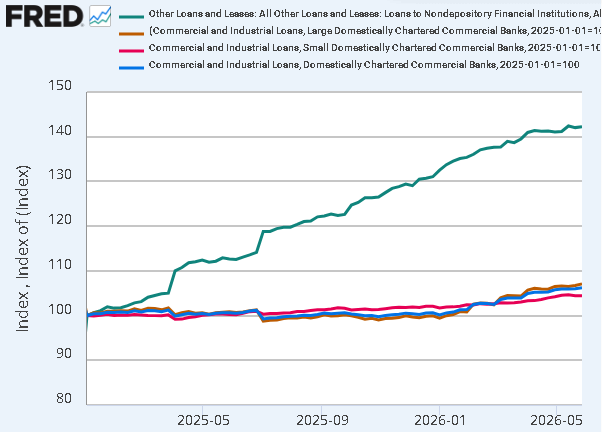
Reports show Trump’s accounts made 1000s of trades in 2026, including in firms affected by federal policy. Presidents are largely exempt from key conflict-of-interest statutes. His team says the trades were handled by independent managers and automated systems. Scale? Timing?
1
36
Hal Snarr retweeted

May 17
The Bible completely changed for Tim Allen.
He’s been reading the entire Old Testament — in Aramaic, French, Latin, and Greek, page by page. The story that wrecked him the most was the Book of Job. When Job asks God why he’s suffering, God essentially replies: “You weren’t here when I created the world. You don’t understand why the waves stop at the shore or why the stars move… so why are you questioning me?”
It left him humbled and in awe.
In a world obsessed with quick answers, certainty, and self-importance, the Book of Job stands as a profound philosophical reminder of humility. It teaches us that true wisdom begins with acknowledging how little we actually know and how vast the mystery of existence truly is. There’s something deeply honest about the raw exchange between human suffering and divine perspective.
What part of the Bible (or any ancient text) has surprised or moved you the most?
320
1,716
13,316
609,623
Hal Snarr retweeted

May 14
Ricky Gervais on 60 Minutes Makes a Crystal-Clear Case for Free Speech
He put it perfectly: the great thing about freedom of speech is that I can say what I want, and you can say you're offended, and I get to decide whether I care or not.
Because let's be honest, there's nothing you can say that someone, somewhere won't find offensive.
That's why blasphemy laws are so absurd, they're basically trying to protect an all-powerful deity from having its feelings hurt.
At the end of the day, we should be free to criticise any idea.
Just because you're offended doesn't automatically mean you're right.
Spot on, Ricky. Free speech isn't about never upsetting anyone, it's about the right to speak anyway.
39
743
4,099
138,983