Unison Scot & Scot Labour. Activist. Ex Trading Standards professional. Broadsword calling Danny Boy. Tweets personal, if you don't like then just scroll on...
Joined August 2009
- Tweets 11,569
- Following 1,454
- Followers 1,072
- Likes 35,114
472 Photos and videos










LizAnne Handibode retweeted

Jun 13
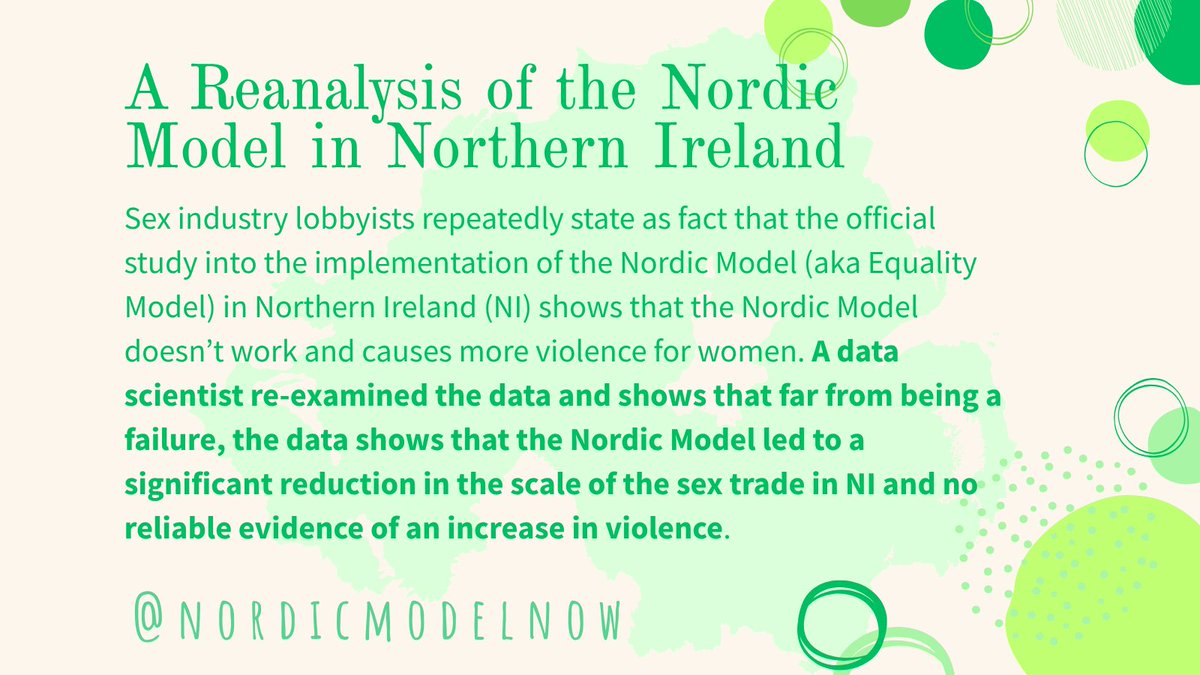
Sex industry lobbyists repeatedly state as fact that the official study into the implementation of the Nordic Model (aka Equality Model) in Northern Ireland (NI) shows that the Nordic Model doesn’t work and causes more violence for women. A data scientist re-examined the data and shows that far from being a failure, the data shows that the Nordic Model led to a significant reduction in the scale of the sex trade in NI and no reliable evidence of an increase in violence.
Read the report. Link in next tweet.
2
38
84
2,490
LizAnne Handibode retweeted

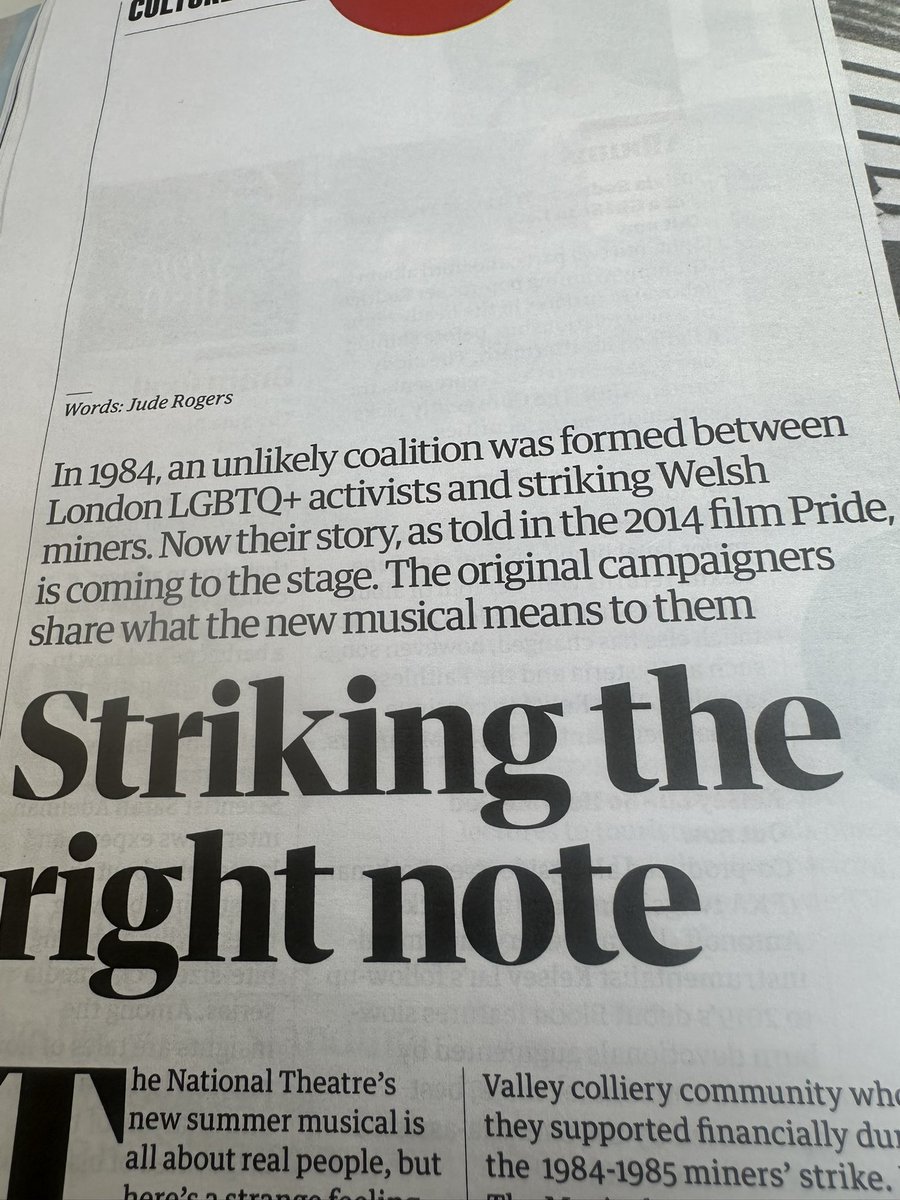
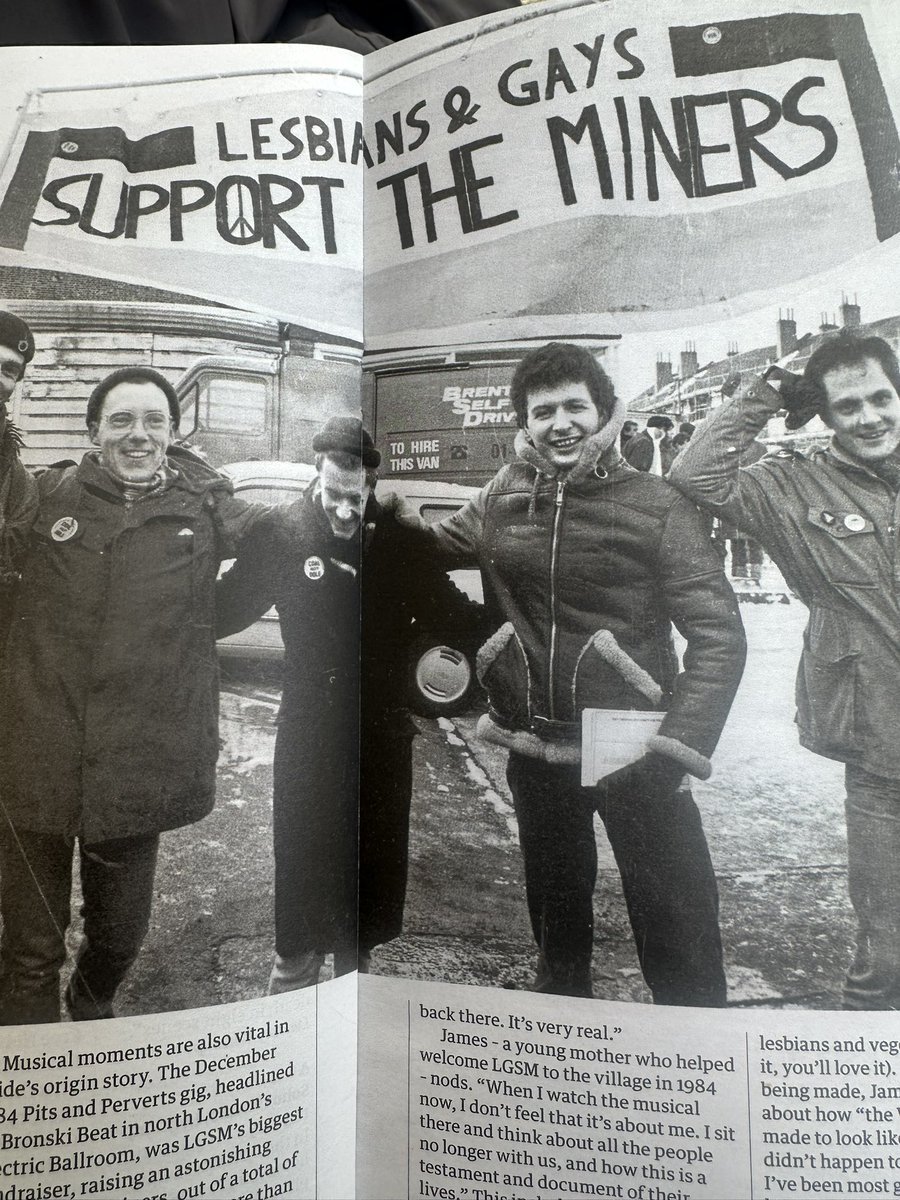
It’s the rewriting of history I find so shocking. The T and the Q were no where near the L and the G in 1984.
12
60
272
3,568

LizAnne Handibode retweeted

Jun 11
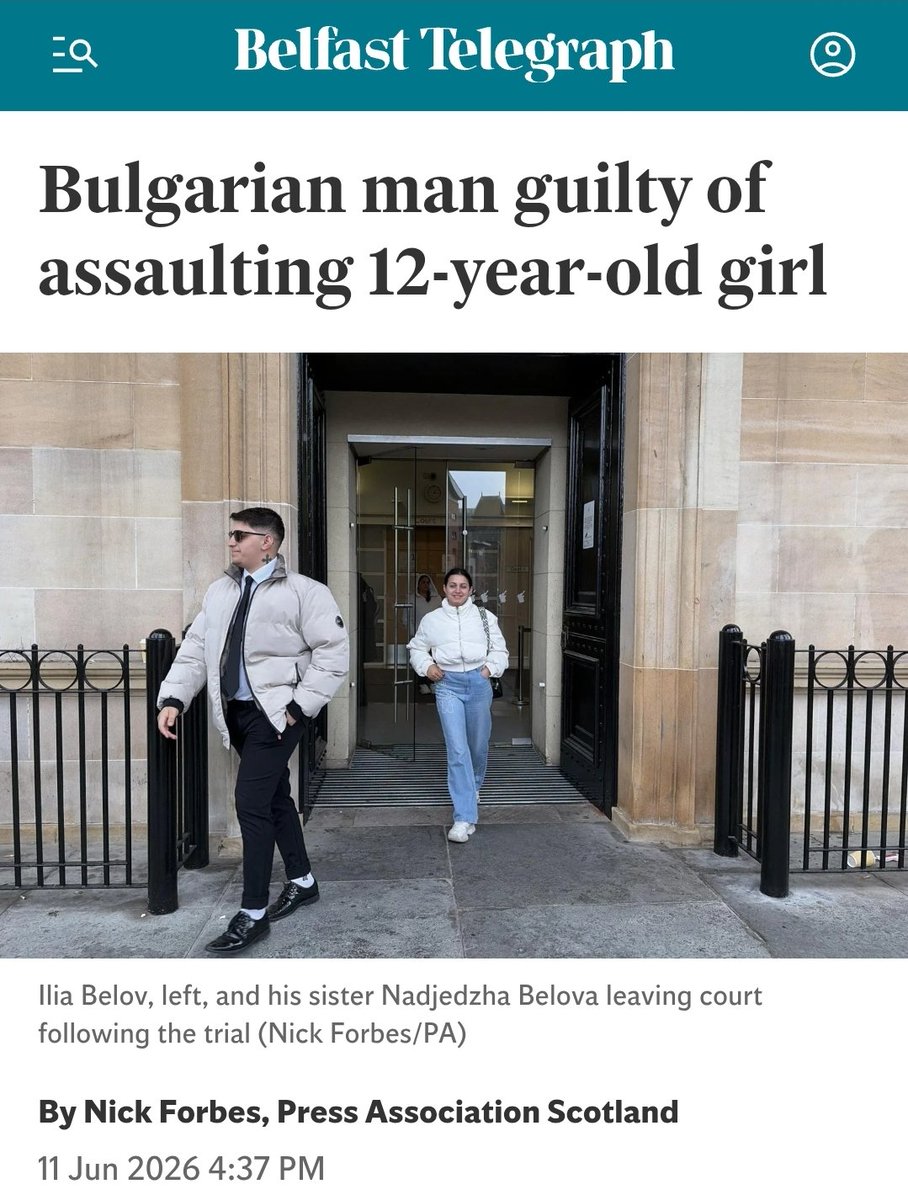
Well there it is, remember the people who took his side over the terrified child he assaulted. I do.
belfasttelegraph.co.uk/news/…
120
877
4,252
58,161
LizAnne Handibode retweeted

Jun 12
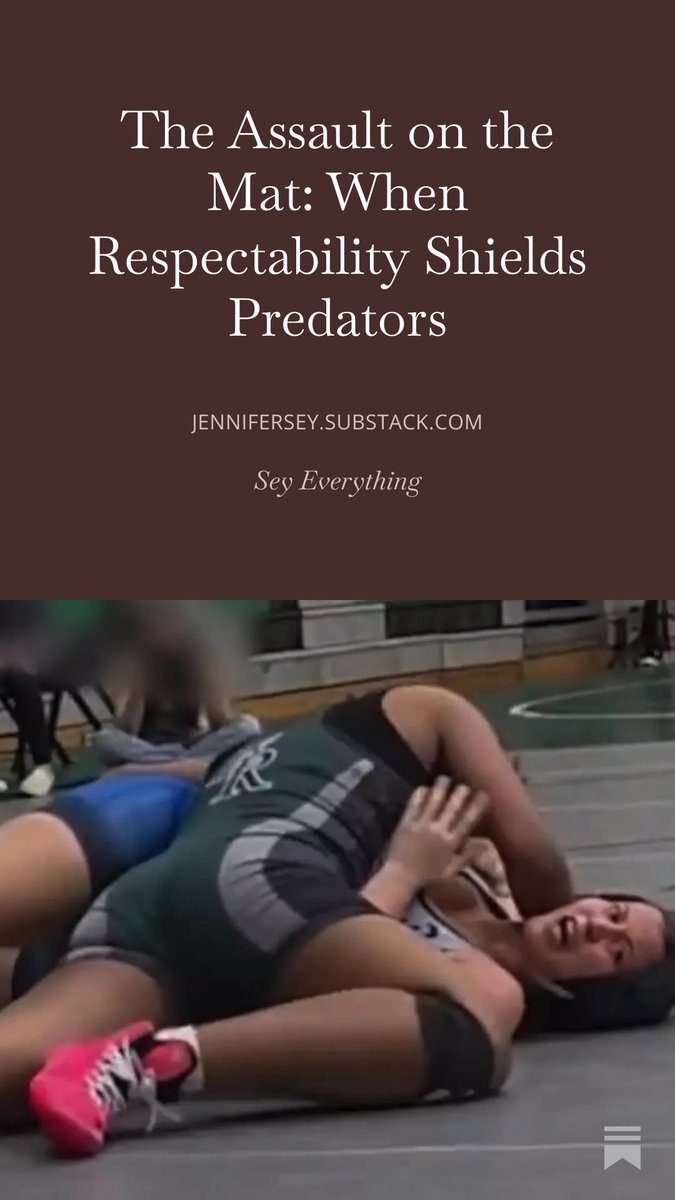
To use a leftie term, I’m feeling especially triggered by the response to what happened to Kallie Keeler. All the anon accounts screeching that it's a normal part of wrestling, just an "oil check" (an illegal move by the way, that this was not), that she's too wimpy and weak to be a wrestler if she can't handle it.
Bullshit.
She was assaulted. A man stuck his fingers inside her vagina and held them there.
This incident echoes dark patterns that I have witnessed and even been caught in the midst of for decades.
Bad men will hide behind shields of respectability while abusing girls and women in plain sight.
As a former gymnast and whistleblower, I see the parallels to Larry Nassar immediately. Nassar hid behind the respectability of his medical degree and his role as USA Gymnastics team doctor. After he abused young female athletes for 30 years, finally women came forward in droves to report the assaults. Those victims were attacked for months until there were too many to ignore.
My coach hid behind his "coach" title, while claiming to keep athletes safe as a spotter, then molesting in plain view. Athletes were shamed into silence.
Predators will exploit any opening to find, abuse and assault their victims.
241
2,262
8,627
92,428
LizAnne Handibode retweeted

Jun 12
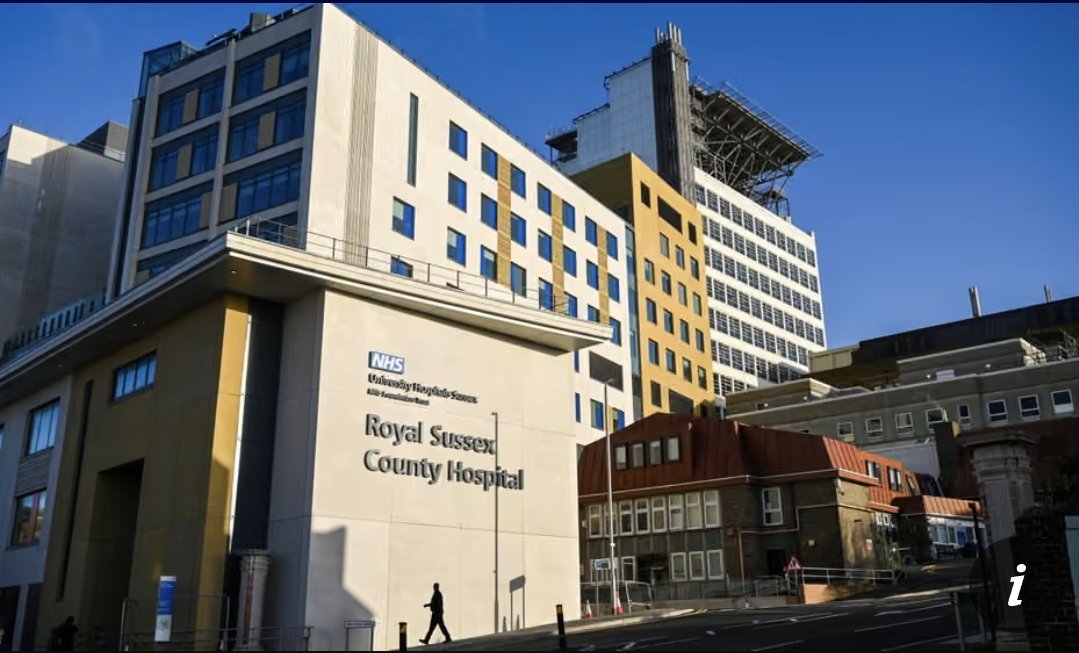
HE WARNED THEM IN 2014. POLICE ARRIVED IN 2023.
If you came in as an emergency at the Royal Sussex County Hospital in Brighton and you waited, or you were turned away, or someone you love did not get the care they needed in time, this is why.
The on-call surgeons were treating private patients instead.
A consultant neurosurgeon named James Akinwunmi saw it happening. He also saw colleagues fraudulently billing the NHS for pay they had no right to. He reported all of it.
Rather than act on his concerns, managers launched a disciplinary process against him.
False complaints were submitted to police alleging he had threatened colleagues.
Police took no further action. The trust never told him that.
They then accused him of unauthorised absence during an approved sabbatical and dismissed him in October 2014.
He took them to an employment tribunal. He won.
The Employment Appeal Tribunal upheld the unfair dismissal finding in 2017.
Then in December 2023, with a live police investigation already running at the hospital, the then-CEO of @UHSussex sent staff an email urging them to have the courage to raise concerns.
Akinwunmi told @guardian the email was laughable. He said whistleblowers including himself had done exactly what the email was encouraging and they were sacked for it.
Operation Bramber, launched by @sussex_police in June 2023, is now a criminal investigation covering over 200 cases of alleged surgical negligence at the same hospital.
More than 90 are being treated as possible manslaughter. The force had to request extra Home Office resources just to cope with the scale of it.
The Care Quality Commission separately downgraded @UHSussex from Outstanding to Requires Improvement. Inspectors found safety concerns had become normalised.
Sources: @guardian @BBCNews @MirrorOnline
@sharmilaxx
20
514
818
15,686
LizAnne Handibode retweeted

Jun 11
This really worries me
A month ago in Wales I suffered a ruptured aneurysm in my abdomen. I lost over 2 units of blood
But the Welsh ambulance service refused to send an ambulance. I was still breathing so apparently didn't need one
I spent 7 hours lying on the ground in a car park. Every time I moved I threw up from the pain. The owners of the car park called 999 6x
One of the people there was a fireman. He couldn't believe that 999 treated each call as a separate incident and couldn't see the details or link to previous calls. He was frustrated because they could see I was seriously ill but you can't see internal bleeding and so there was no way to persuade 999 that it actually was an emergency
Eventually my husband arrived by taxi, journey of more than 3 hours from our home
He gave me my pain meds (the car park people were worried about liability and I was too ill to get them myself). This meant I was able to crawl into the car and he drove me to A&E
He got me into a wheelchair. We waited 75 minutes to see a doctor. I was shivering, heaped with blankets and threw up all over the floor
As soon as a doctor looked at me I was taken straight to resus. The next day I was transfered by blue light ambulance to another hospital, had a blood transfusion and spent 5 days on the high dependency unit
If my husband hadn't been able to come and look after me I have no idea how I would have survived. As it was I nearly didn't
I would not have been able to get myself to hospital nor would I have been able to log into some digital triage system
This scheme seems to assume if you're seriously ill you'll arrive by ambulance and if not you're well enough to navigate a digital portal
My experience suggests that's a dangerous assumption
A week later, back home in England I had another ruptured aneurysm. This time an ambulance came in 2 hours and again I was taken straight to resus
It wasn't the same because I had a recent diagnosis of a ruptured aneurysm so we could tell 999 I was almost certainly bleeding internally. But I was too ill to get myself down the stairs and out to the car. We still needed that ambulance and I still wouldn't have been able to fiddle around with an ipad
Proper triage REQUIRES an actual doctor to look at the patient. It takes a matter of minutes to differentiate between a life threatening emergency and not a life threatening emergency. That's not minutes to get a diagnosis but to know that the person is stable or not stable and if not that needs immediate attention
Seriously ill people can't do it themselves. It doesn't matter how smart or articulate they are normally. Or how tough. Expecting people to manage their own emergency care isn't what a modern health service should do
telegraph.co.uk/news/2026/06…
829
4,527
15,847
674,201
LizAnne Handibode retweeted

Jun 10
This is the biggest sex trafficking operation in modern Scottish history, and it is happening in plain sight. 1/2
18
101
261
15,729
LizAnne Handibode retweeted

Jun 9
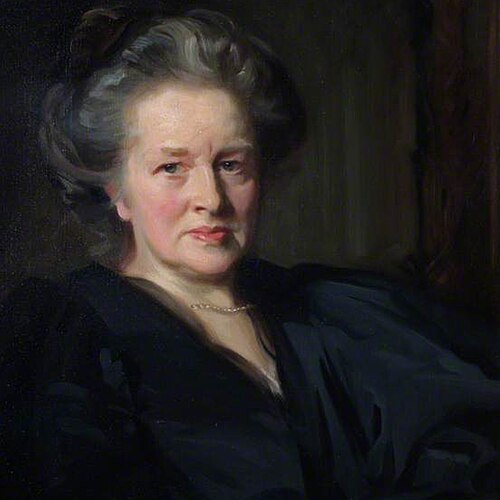
Woman of the Day Elizabeth Garrett Anderson, born OTD in 1836 in Whitechapel. First woman to qualify in Britain as a physician and surgeon, co-founder of the first hospital staffed by women, first woman Dean of a medical school, first woman elected to a school board, first woman Mayor. How did this remarkable woman manage to achieve all of that in her 81 years?
She was inspired by her meeting in 1859 with Bristol-born Elizabeth Blackwell who became the first woman doctor in the US some ten years earlier. The following year, 23 year old Elizabeth confided in her 13 year old sister Millie her friend, Emily Davies, as they were brushing their hair by the fireside at home.
Emily pointed out, “Women can get nowhere unless they are as well educated as men. I shall open the universities.” “Yes,” said Elizabeth, “we need education but we need an income too and we can't earn that without training and a profession. I shall start women in medicine. But what shall we do with Millie?” Emily knew exactly what was needed: “After these things are done, we must see about getting the vote. You are younger than we are, Millie, so you must attend to that."
Elizabeth’s first hurdle was to overcome the opposition of her parents. Her father believed “the whole idea was so disgusting that he could not entertain it for a moment”. That wasn’t uncommon. Victorian beliefs about women’s physical, mental, and emotional natures led to men — well, you know how expert they are on all matters pertaining to women — arguing that menstruation and education were incompatible.
She applied to the medical school at Middlesex Hospital. No women allowed, so she enrolled as a nursing student instead and employed a tutor privately to study anatomy and physiology three evenings a week. When she sat in on some medical classes, male students complained. In fact they raised a petition against her, so she was obliged to leave but did so with an honours certificate in chemistry and materia medica.
Next, Elizabeth tried applying to other medical schools. They turned her down, all of them, so armed with her certificate in anatomy and physiology, she applied to the Society of Apothecaries. Its charter meant it could not legally exclude her on account of her sex and so on 28 September 1865, she sat the exam in the Apothecaries Hall with 51 men. She was one of just three who passed. Top marks too. This meant she could lawfully practise medicine, so how did the SA celebrate this success? It immediately changed its rules to prevent other women from using the same loophole.
Elizabeth couldn’t persuade any hospital to offer her a post despite her excellent academic record so she opened her own practice in London. It took off when cholera broke out and people panicked. Well, even a mere woman was better than nothing. By then, she had opened St Mary's Dispensary for Women and Children, and in the first year, treated 3,000 new patients in 9,300 outpatient visits.
Learning that the Sorbonne was considering admitting women as medical students, Elizabeth studied French until she was fluent and finally obtained her much prized medical degree in 1870, at the age of 40.
In the same year, a letter was published in The Lancet representative of the views of many male medical practitioners, particularly specialists in gynaecology and obstetrics: that women lacked “the coolness and strength of nerves” required of a doctor, and “the constitutional variations of the female system, at the best are uncertain and not to be relied upon”.
Those pesky periods again, sapping our brains.
The British Medical Register refused to recognise Elizabeth’s degree.
Still unable to find a hospital post, Elizabeth did the only sensible thing she could do. In 1871, she opened the New Hospital for Women. It staffed entirely by women and Elizabeth Blackwell came on staff as a professor of gynecology. It was hugely popular and enjoyed an excellent reputation for patient outcomes.
In 1873, she became the first woman to be admitted to the British Medical Association. It immediately voted to bar any other women members and held that position for nearly twenty years.
Ever heard of Patriarchy Chicken? Welcome to Patriarchy Snakes and Ladders.
When one of the Edinburgh Seven, Sophia Jex-Blake, opened the London School of Medicine for Women in 1874, Elizabeth taught there and in a 1877 meeting in support of the school, said that there was "nothing injurious to the health, the morals, or the manners of women in a medical education, and that the results were likely to prove beneficial to the female sex and to the nation". The two women didn’t always see eye to eye but in 1883, Elizabeth was elected as Dean of the LSMW. She continued to lobby strenuously for women to enter the medical profession.
The British Medical Register eventually capitulated in 1877 and agreed to register women as medical practitioners. The BMA capitulated in 1893 because its members “needed no convincing of the justness of her demands…she had already by her professional and public life done this very thoroughly", and overwhelmingly voted in favour.
Six years after she retired in 1902, she became the first woman mayor in Britain, Mayor of Aldeburgh.
Elizabeth Garrett Anderson died in 1917 at 81, having kept her promise to Emily and to her sister, Millie. Millicent Garrett Fawcett.
"Women can less easily afford to be second-rate, their professional work will be more closely scrutinised; mistakes will ruin them more quickly than they will men.”
18
193
516
10,206
LizAnne Handibode retweeted

Jun 6
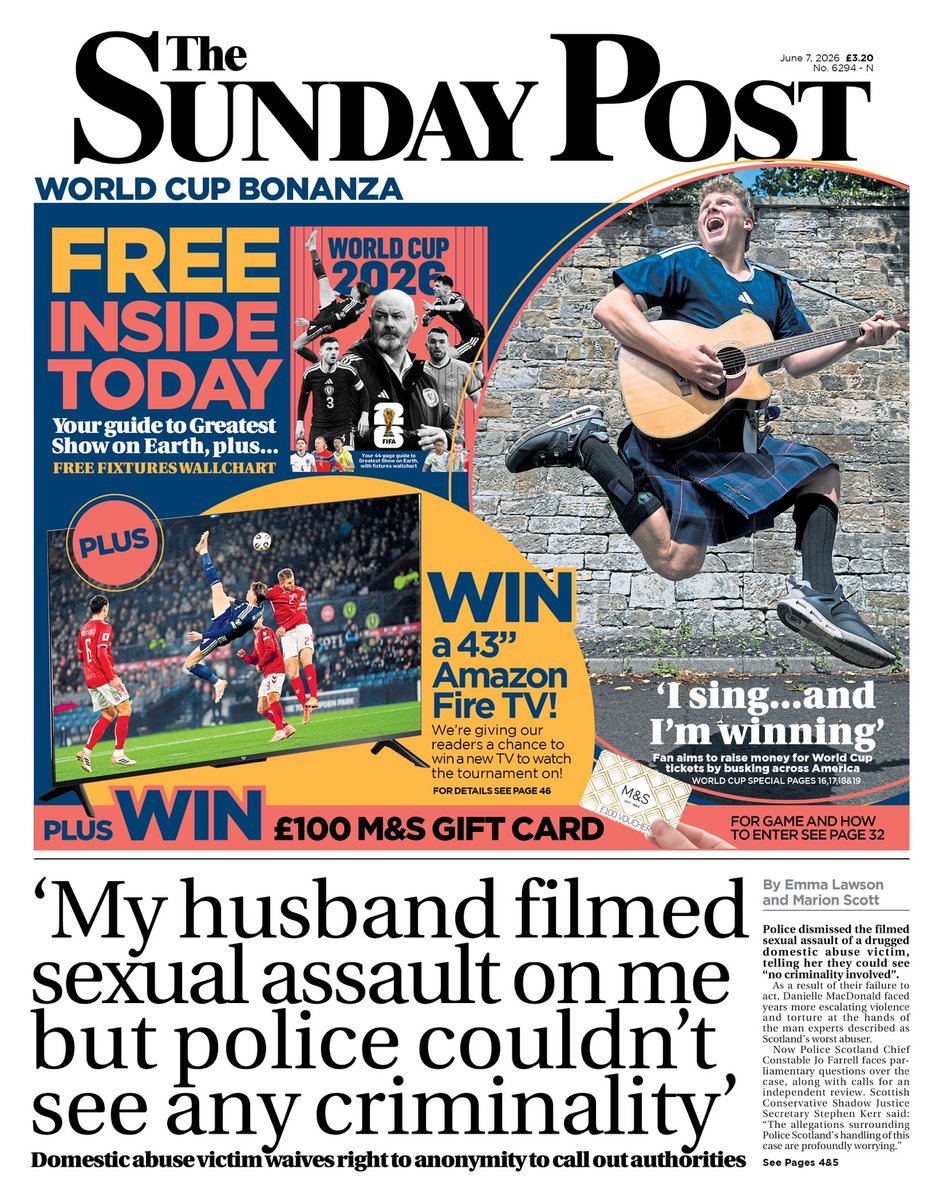
Domestic abuse victim gives police filmed evidence of her evil husband drugging and raping her and they refuse to act saying they can see no evidence of criminality leaving Dannielle MacDonald to face years more torture. MSP Stephen Kerr to call chief constable to account.
24
384
867
23,240
LizAnne Handibode retweeted

Jun 4
Everywhere I go in Malawi, toilets are segregated by sex. Safe toilets for girls is a key element of safeguarding and helps keep girls in school. But don’t take my word for it. Single sex spaces for women and girls are a key component of development policy. assets.publishing.service.go…
5
65
335
4,125
LizAnne Handibode retweeted
Jun 4
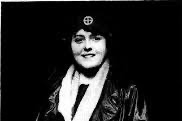
Woman of the Day WW1 ambulance driver Sadie Bonnell, born OTD in 1888 in Kew, Surrey, one of the first women to be awarded the Military Medal for “gallantry and conspicuous devotion to duty” for collecting wounded soldiers from a dressing station near the Western Front under heavy fire, close to a poison gas dump.
When war broke out in 1914, Sadie joined the First Aid Nursing Yeomanry founded in 1907 as an all-women mounted volunteer Corps and trained as ‘the connecting link between the fighting units and the hospitals.”
Members of FANY had to qualify in first aid, horsemanship, veterinary work, signalling and camp cookery. They were ready to go, but the War Office really wasn’t ready to accept the help of women. They preferred them to sit at home and knit. “No petticoats here.”
Ever tried stopping a woman when her mind is made up? Some applied to the Belgian and French armies and were accepted. Sadie joined the Canadian Army Service Corps as an ambulance driver and was posted to Normandy.
During the night of 18-19 May 1915, based in a large camp on the road to Arques in Normandy, she collected wounded men from a dressing station near Saint-Omer whilst under heavy German bombardment for five hours. The enemy's shells had set a nearby ammunition dump on fire and narrowly missed a poison gas dump nearby.
The men wounded in the bloodbath of the trenches were carried or escorted to the advanced dressing stations and from there, to field hospitals or Channel ports. Transported over poor roads and jolting railways, many died in agony en route but it was the only chance of survival they had.
Sadie returned again and again with Evelyn Brown, a Canadian volunteer, until every single one of the wounded had been collected.
She was awarded the Military Medal, one of the first women to achieve that honour, and was decorated by General Sir Herbert Plumer, commander of the British Second Army. The citation read: ‘For gallantry and conspicuous devotion to duty, when an ammunition dump had been set on fire by enemy bombs and the only available ambulance for the removal of wounded had been destroyed…she arrived with three ambulances and, despite the danger arising from various explosions, succeeded in removing all the wounded. Her conduct throughout was splendid.’
She showed great courage again during the East End Air Raid in 1916, driving an ambulance during some of the first air raids London experienced, and from 1919, she worked in hospitals as a volunteer. She was noted for her love of fast cars and only gave up driving when she turned 95.
Sadie died aged 105 on 2 September 1993.
The First Aid Nursing Yeomanry was later used as one of the two cover stories for the incredibly brave women who joined the Special Operations Executive during WW2.
“It wasn’t courage. I was there to do something useful. There was a job we had to get done.”
19
102
301
3,942
LizAnne Handibode retweeted

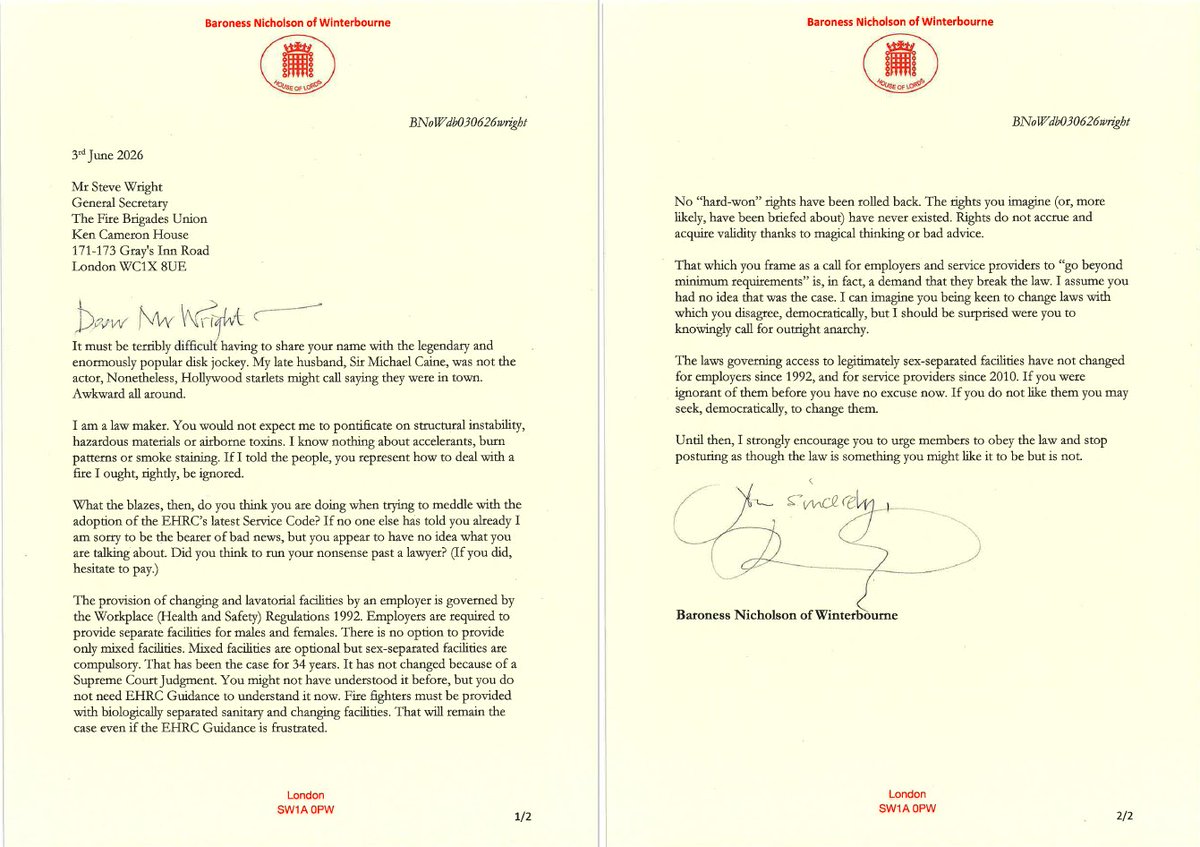
A big Trades Union seems ignorant on Employment Law
236
832
2,889
140,699
LizAnne Handibode retweeted

A magnificent letter from a magnificent woman.
“ Dear Mr Wright,
It must be terribly difficult having to share your name with the legendary and enormously popular disk jockey. My late husband, Sir Michael Caine, was not the actor, Nonetheless, Hollywood starlets might call saying they were in town.
Awkward all around.
I am a law maker. You would not expect me to pontificate on structural instability, hazardous materials or airborne toxins. I know nothing about accelerants, burn patterns or smoke staining. If I told the people, you represent how to deal with a fire I ought, rightly, be ignored.
What the blazes, then, do you think you are doing when trying to meddle with the adoption of the EHRC's latest Service Code? If no one else has told you already I am sorry to be the bearer of bad news, but you appear to have no idea what you are talking about. Did you think to run your nonsense past a lawyer? (If you did,hesitate to pay.)
The provision of changing and lavatorial facilities by an employer is governed by the Workplace (Health and Safety) Regulations 1992. Employers are required to provide separate facilities for males and females. There is no option to provide only mixed facilities. Mixed facilities are optional but sex-separated facilities are compulsory. That has been the case for 34 years. It has not changed because of a Supreme Court Judgment. You might not have understood it before, but you do not need EHRC Guidance to understand it now. Fire fighters must be provided with biologically separated sanitary and changing facilities. That will remain the case even if the EHRC Guidance is frustrated.
No "hard-won" rights have been rolled back. The rights you imagine (or, more likely, have been briefed about) have never existed. Rights do not accrue and acquire validity thanks to magical thinking or bad advice.
That which you frame as a call for employers and service providers to "go beyond minimum requirements" is, in fact, a demand that they break the law. I assume you had no idea that was the case. I can imagine you being keen to change laws with which you disagree, democratically, but I should be surprised were you to knowingly call for outright anarchy.
The laws governing access to legitimately sex-separated facilities have not changed for employers since 1992, and for service providers since 2010. If you were ignorant of them before you have no excuse now. If you do not like them you may seek, democratically, to change them.
Until then, I strongly encourage you to urge members to obey the law and stop posturing as though the law is something you might like it to be but is not.
Yours sincerely
Baroness Nicholson of Winterbourne
London
SW1A OPW”

50
560
2,122
56,716
LizAnne Handibode retweeted

May 28
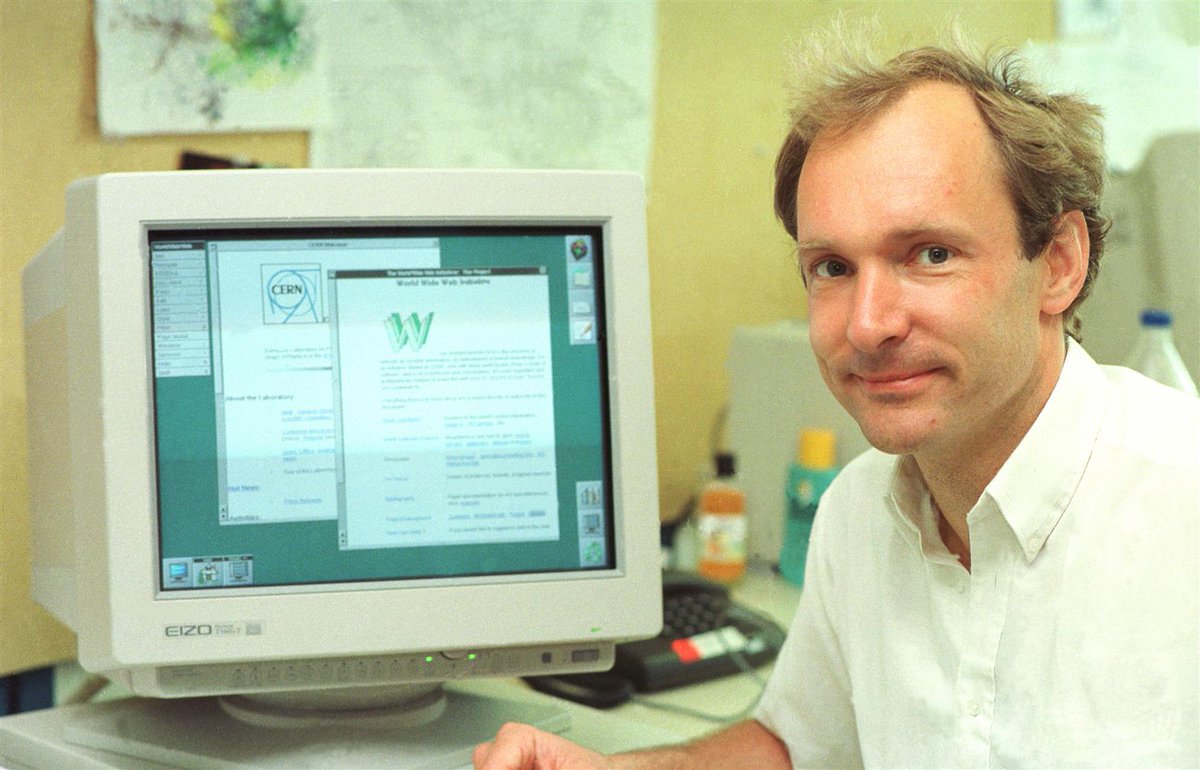
A British scientist invented the single most valuable piece of technology in human history, then signed a document that legally guaranteed he would never make a cent from it, and he did it on purpose while every university around him was racing to patent everything they could.
His name is Tim Berners-Lee, and the invention was the World Wide Web (WWW).
Not the internet, which already existed as a way to connect computers, but the actual web of pages and links you are using to read this right now. HTML. HTTP. The URL. He built all three while working at CERN, a physics lab in Switzerland, between 1989 and 1991.
He wrote the first browser on a NeXT computer and stuck a label on it that said "DO NOT POWER IT DOWN" because if anyone unplugged it, the entire web would vanish.
Here is the part that should stop you cold.
CERN owned the invention. Under the rules of the time, the lab could have licensed it, charged a fee for every installation, and collected a royalty on every server that ever came online.
His colleague Robert Cailliau confirmed they actively discussed exactly this, because in the early 1990s patenting university inventions and squeezing money out of them was the standard move.
They could have charged for every search. Every upload. Every page load on Earth, forever.
Berners-Lee fought to give it away instead.
He pushed CERN to release the source code into the public domain with no patent and no fee of any kind. On April 30, 1993, two CERN directors signed a half-page document that relinquished all intellectual property rights to the World Wide Web. A few signatures on a single sheet of paper.
That was the moment nobody came to own the thing that now connects more than five billion people.
His reasoning was not sentimental. It was mechanical.
He understood something most inventors never grasp. The value of the web was not in the code. It was in the network. And a network only grows if everyone can join without asking permission.
The second you charge a toll, people route around you, and you end up with a hundred tiny incompatible webs instead of one universal one. He said it plainly years later.
If he had demanded fees, there would be no World Wide Web. There would be lots of small webs, and none of them would have mattered.
So the thing that made the web worth trillions is the exact same thing that guaranteed he would never personally capture any of it. Openness was not a sacrifice he made against the invention's success. Openness was the success. The free part was the product.
People who made far less consequential things became billionaires off the platform he built. He watched it happen and kept running a nonprofit standards body out of an office at MIT, setting the rules that keep the web working for everyone, paid like a normal professor.
When an interviewer once asked him why he never cashed in, he refused the premise of the question. He said that framing only makes sense if you measure a person's worth by their net worth. People are what they have done and what they stand for, not what sits in their bank account.
The man who could have owned a piece of every click ever made chose to own none of it, because he understood that the only way to give the world something this big was to make sure he could never take it back.
The most valuable thing ever built belongs to everyone, and that was the entire point.
67
652
1,735
66,500
LizAnne Handibode retweeted

May 30
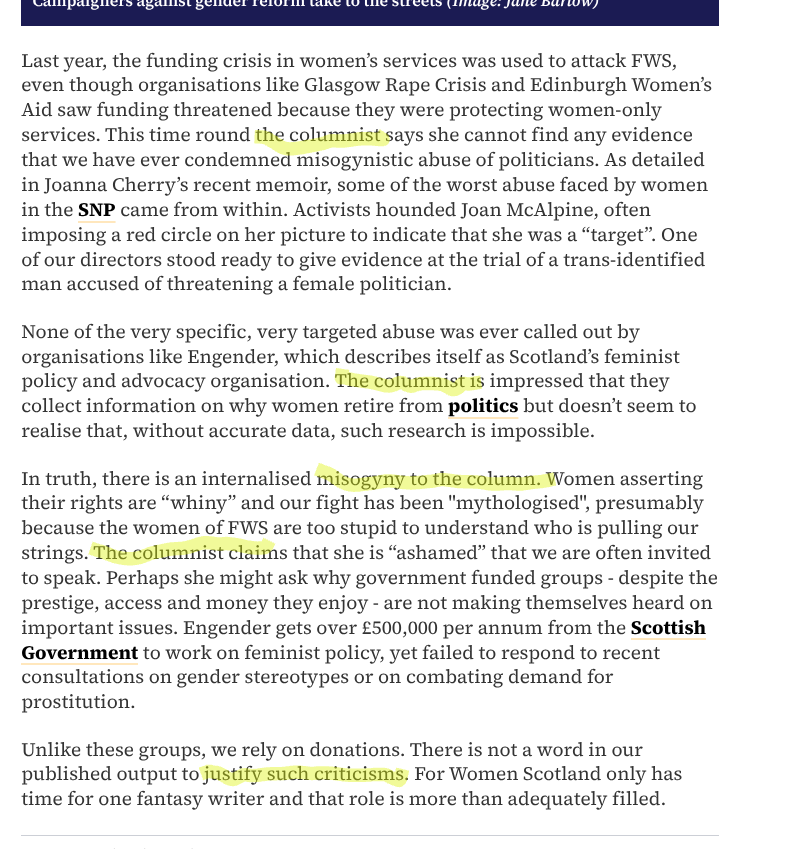
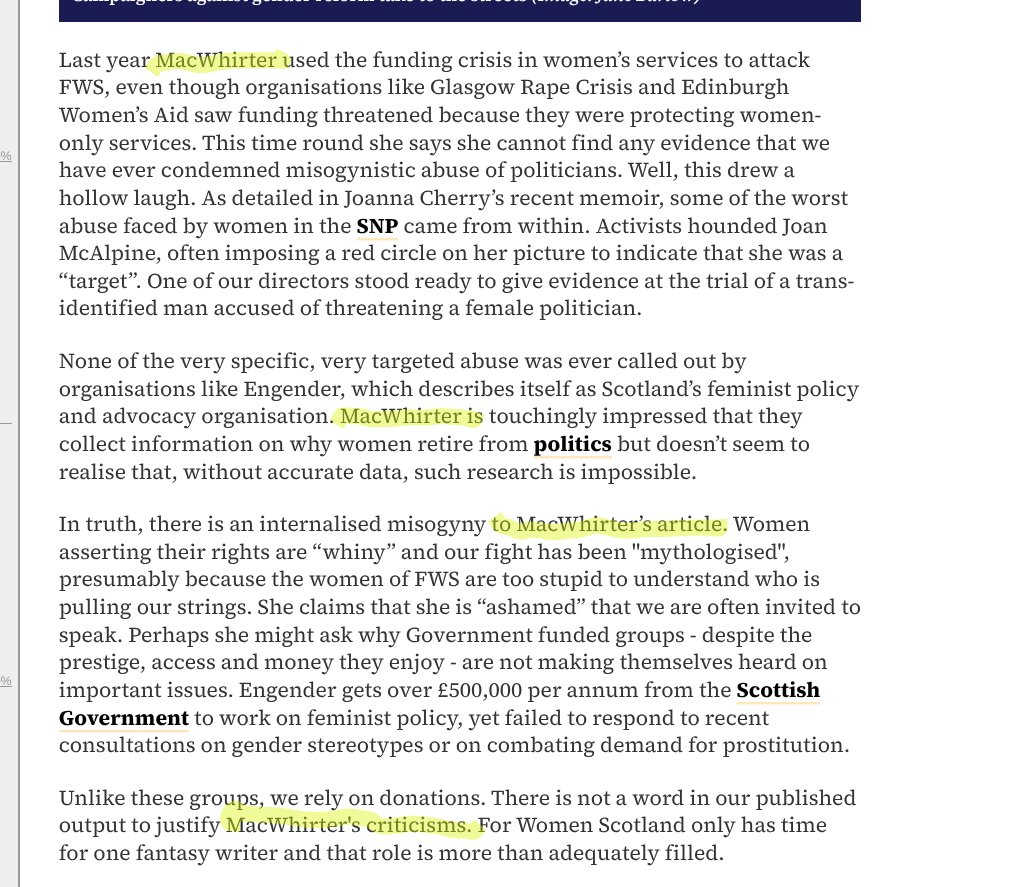
Interesting - all reference to MacWhirter has been removed and replaced with "the columnist". Is she not happy to stand by what she wrote about us? We are named in her piece.
heraldscotland.com/politics/…
23
205
672
55,143
LizAnne Handibode retweeted

May 29
The Eq Act doesn’t force women to offer identity validation to men who wish they were women: that would be a diminution of women’s rights
8
74
290
10,960
LizAnne Handibode retweeted
May 30
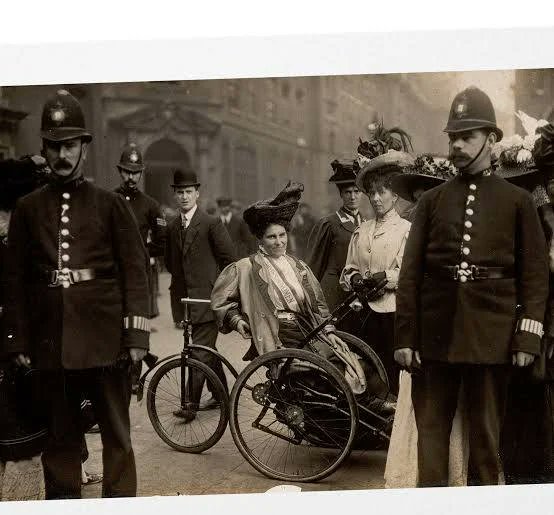
There is no Woman of the Day today but if there was, suffragette and social worker May Billinghurst, born OTD in 1875 in Lewisham, would be a contender for using a modified tricycle painted in suffragette colours (she was crippled by polio) and recruiting more women while she wheeled herself round the exercise yard at HM Prison Holloway.
She had contracted polio as a child and used a tricycle wheelchair for most of her life. As a young woman, she took up social work assisting women at a workhouse in Greenwich, taught Sunday school, and volunteered for a temperance charity — then very much a women’s rights issue.
"My heart ached and I thought surely if women were consulted in the management of the state, happier and better conditions must exist for hard-working sweated lives such as these... It was gradually unfolded to me that the unequal laws which made women appear interior to men were the main cause of these evils. I found that the man-made laws of marriage, parentage and divorce placed women in every way in a condition of slavery - and were as harmful to men by giving them power to be tyrants."
Inspired by Millicent Fawcett and Emmeline Pankhurst, May was drawn early to militant tactics and joined the Women’s Social and Political Union in 1907. She started the Greenwich branch in 1910.
“I wondered how the public could ever be made to think about it. In the midst of the hopelessness of it all, Christabel Pankhurst sounded the war note of militancy and was imprisoned for her boldness, and the subject of votes for women was on every tongue."
When Prime Minister HH Asquith went back on his word by focussing on another bill rather than the promised Conciliation bill that would have granted women the vote, May took full part in the WSPU demonstration outside the House of Commons in November 1910, known as Black Friday.
“At first, the police threw me out of the machine onto the ground in a very brutal manner. Secondly, when on the machine again, they tried to push me along with my arms twisted behind me in a very painful position, with one of my fingers bent right back, which caused me great agony. Thirdly, they took me down a side road and left me in the middle of a hooligan crowd, first taking all the valves out of the wheels and pocketing them, so that I could not move the machine, and left me to the crowd of roughs, who, luckily, proved my friends.”
She knew how it would look: a helpless woman with obvious disability being treated quite callously, thus underlining the the brutal tactics of the police when dealing with women. In fairness, she gave no quarter. She was known to ram the police with her tricycle at a fast rate of knots to stop them arresting her sister suffragettes.
May was able to get closer to the House of Commons on in November 1911. This time, police had second thoughts about attacking her tricycle with its 'Votes for Women' banner and she was carried “shoulder high by four policemen in her little tricycle or wheel-cart that she propels with her arms. Amid immense cheering from the crowd she followed the rest into the police station."
During the window smashing campaign of March 1912, May hid a supply of stones under the rug covering her knees and smashed a window herself. She was sentenced to one month’s hard labour at HMP Holloway. She never did the hard labour. Holloway simply didn’t know what to do with her. May, on the other hand, made good use of her time there, recruiting other women prisoners on the exercise yard to join her in the fight for women’s suffrage.
Alice Ker, another imprisoned suffragette, said in a letter to her daughter: “Miss Billinghurst is here with her tricycle. She has irons on each leg, and can only walk with crutches, her tricycle works with handles. She drives it round the yard at exercise time. It is painted in the colours, with a placard, Votes for Women, on the back of it.”
Arrested again in December 1912, this time for damaging postboxes, May represented herself in court, and once again used the opportunity to promote the cause of votes for women, telling the all-male jury:
“This is a women’s war in which we hold human life dear and property cheap, and if one has to be sacrificed for the other, then we say let property be destroyed and human life be preserved. We are not hooligans seeking to destroy but we mean to wake the public mind from its apathy.”
She was sentenced to eight months imprisonment and forcefed.
“The government may further maim my crippled body by the torture of forcible feeding, as they are torturing weak women in prison today. They may even kill me in the process, for I am not strong, but they cannot take away my freedom of spirit or my determination to fight this good fight to the end.”
May was released early when her health declined but returned immediately to the fray. In May 1914, she chained herself to the gates of Buckingham Palace. The police responded by destroying her tricycle.
This indomitable woman died in 1953 at the age of 78, with full voting rights, her work done.
19
94
285
5,812
LizAnne Handibode retweeted

May 29
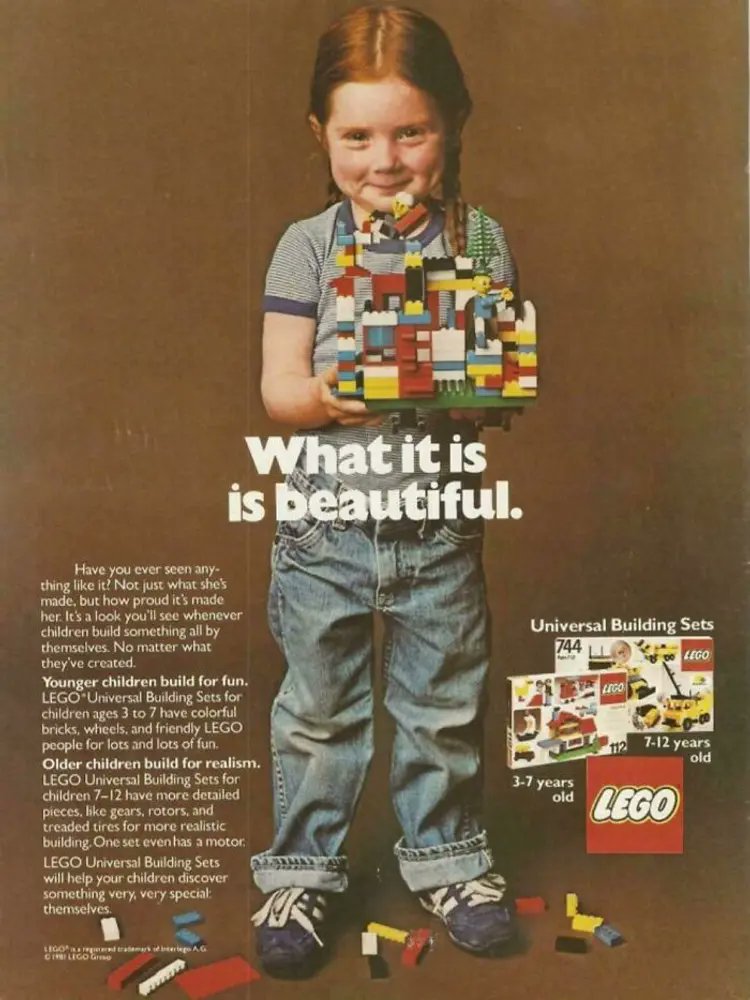
Una niña pelirroja con vaqueros, una construcción de LEGO en las manos y una sonrisa que no está posando para nadie. Esa imagen lleva más de cuarenta años siendo uno de los anuncios más citados de la historia de la publicidad.
Se llamaba Rachel Giordano. Tenía unos siete años cuando la fotografiaron para la campaña de 1981. El titular decía simplemente: What it is is beautiful. Lo que es, es hermoso. Sin mencionar si era niña o niño. Sin color rosa. Sin instrucciones sobre qué debía construir.
Lo que muchos recuerdan como un gesto revolucionario de LEGO en realidad era la continuación de algo que la empresa danesa llevaba haciendo desde los años 50: vender sus piezas como un juguete universal. Los sets se llamaban Universal Building Sets. La creatividad era el producto, no el género del comprador.
Lo interesante llegó después.
En los años siguientes, LEGO fue derivando hacia una segmentación por géneros cada vez más marcada. En 2012 lanzó LEGO Friends, una línea diseñada específicamente para niñas, con colores pastel, figuras femeninas estilizadas y sets de cafeterías, salones de belleza y boutiques. Las críticas fueron inmediatas.
Fue entonces cuando alguien rastreó a Rachel Giordano, la niña del anuncio de 1981. La encontraron: tenía 37 años y era médico. En una entrevista con Adweek en 2014 fue directa: en 1981 los LEGO eran universales y la creatividad del niño producía el mensaje. En 2014, era el juguete el que le decía al niño quién debía ser.
LEGO escuchó, al menos en parte. En 2021, en el 40 aniversario del anuncio original, la empresa lo recreó para el Día Internacional de la Mujer bajo el nombre Future Builders y se comprometió públicamente a eliminar los estereotipos de género de sus productos y campañas.
El anuncio de 1981 no era radical para su época. Se volvió radical cuando la industria fue en dirección contraria.
32
1,130
5,398
242,566

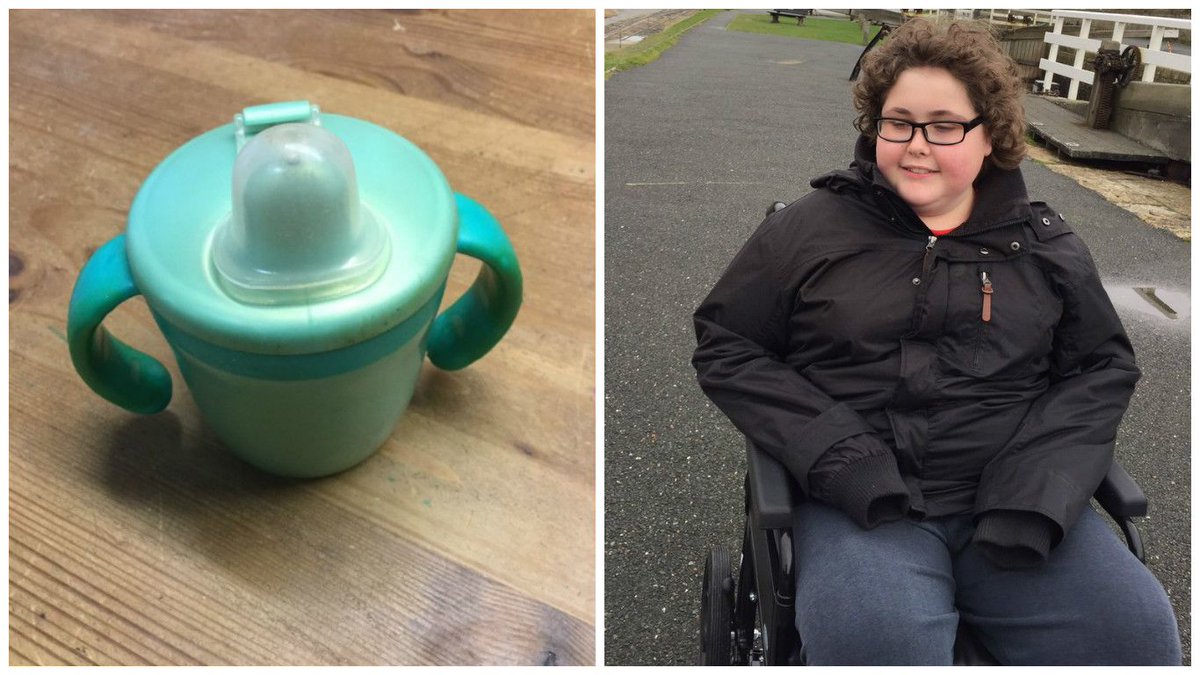
In 2016, Marc Carter from Devon, England, made a heartfelt plea for help when his autistic son Ben's favorite blue Tommee Tippee cup began falling apart.
Ben had been drinking exclusively from that same cup since he was around 2 years old.
Because of his strong attachment to it, switching to another cup was extremely difficult and had previously caused serious distress and dehydration concerns.
Marc shared Ben's story online, hoping to find replacement cups. What happened next was extraordinary.
The appeal went viral under the hashtag CupForBen, and people from around the world searched their homes, attics, and cupboards for matching cups.
Dozens were sent to the Carter family by strangers who wanted to help.
Then the original manufacturer, Tommee Tippee, stepped in. Although the cup had been out of production for years, the company searched through its archives, located the original mold, and arranged a special production run of 500 new cups just for Ben.
69
656
9,633
258,027