
At SkyPro Home Solutions we finish each and every project of ours with great craftsmanship and integrity that sets us apart from our competitors.
Joined June 2023
- Tweets 287
- Following 11
- Followers 20
- Likes 5
239 Photos and videos










Snow: falls
Ice: exists
You: 😩
Us: 😎🛻❄️
We’re out here clearing snow & ice so you don’t have to break your back or your shovel.
🚗 Driveways
🚶 Walkways
🧊 Ice removal
📞 Book fast—spots go quick:
(609) 509-4606
SkyPro Home Solutions — your winter problem solvers. #snow
13
#snowshoveling #snowremoval #Snowstorm2026 #shoveling #WorkLife
Give us a call New Jersey residents!
☎️ (609)-509-4606
67
Give us a call New Jersey residents! We know your Shoveling snow is a young man’s game…
…and a chiropractor’s favorite hobby.
So for both of our sakes give us a call.
☎️ (609)-509-4606
90

6 Jun 2025
⚡🚽 Electricians vs Plumbers — WHO’S REALLY THE KING OF THE TRADES? 💥⚒️
Tag your crew and settle this once and for all!
👇 Drop a ⚡ if you’re Team Electrician
👇 Drop a 💧 if you’re Team Plumber
#TradeWars #ElectricianVsPlumber #BlueCollarBeef #ConstructionLife #SkyProBuilt #TikTokTrades #xtrades
56
9 Mar 2025
Over confidence from Raya. WTH was he thinking? Absolutely his fault. #arsenal #arsvsmanutd #ManchesterUnited #PremierLeague
92
18 Jan 2025
Here are 5 amazing facts about women in construction:
1.Women Are Rapidly Joining the Field
Women now make up nearly 14% of the construction workforce in the U.S., a significant rise compared to past decades. This growth is transforming the industry and breaking stereotypes.
2.Higher Job Satisfaction
Studies show that women in construction often report high levels of job satisfaction, citing opportunities for growth, creativity, and tangible results as key factors.
3.Excellent Safety Records
Research indicates that teams with women on-site tend to have better safety records. Women’s attention to detail and adherence to protocols contribute to a safer workplace.
4.Leadership Representation is Growing
Women are increasingly taking on leadership roles in construction, from project managers to CEOs, inspiring the next generation to break barriers in this male-dominated industry.
5.Diverse Skill Contributions
Women in construction bring fresh perspectives, innovative problem-solving, and enhanced collaboration, improving productivity and fostering an inclusive workplace culture.
The growing presence of women is reshaping the industry and showing the world that construction is for everyone! #constructionworker #womeninmalefields #WomenEmpowerment
97
25 Dec 2024
Step Back in Time: Apprenticeships from the '70s to 2000s!
Ever wondered how apprenticeships transformed over the decades? Let's take a journey through time:
- 1970s: The era of hands-on learning where apprentices in trades like carpentry and plumbing could earn while they learned, often directly from seasoned masters. #BackToTheRoots
- 1980s: Apprenticeships faced challenges as industries shifted, but they remained a vital pathway for many into skilled trades. The focus began to shift towards formal education alongside practical experience. #TradeEvolution
- 1990s: Modern Apprenticeships were introduced in the UK, providing structured training programs with clear qualifications. This period saw a revival in interest due to economic changes. #ModernApprenticeship
- 2000s: The digital age brought new apprenticeships in tech fields. Apprenticeships expanded beyond traditional trades to include sectors like IT, finance, and healthcare. #DigitalShift
What's your take on the evolution of apprenticeships? Did you or someone you know start their career through an apprenticeship? Share your stories below!
👷♂️🔧📈 #ApprenticeshipHistory #CareerJourney #SkillUp
99
21 Dec 2024
Innovative Drywall Finishes to Elevate Interior Design
Drywall is often viewed as a blank canvas—a neutral surface ready for paint, wallpaper, or other decorative treatments. However, innovative drywall finishes can transform this basic material into a stunning design element that enhances any space. Let’s explore some cutting-edge drywall finishes and how they can elevate interior design.
1. Venetian Plaster Finish
Venetian plaster offers a luxurious, polished look that mimics the appearance of marble or stone. Applied over drywall, it creates depth and texture while adding a touch of elegance. This finish works particularly well in modern, minimalist, or Mediterranean-style homes.
2. Faux Concrete Finish
Industrial-style interiors are on-trend, and faux concrete finishes on drywall are a cost-effective way to achieve this look. Specialized techniques and compounds can replicate the raw, unfinished aesthetic of concrete without the weight or expense.
3. Textured Drywall Finishes
From knockdown and orange peel to more intricate patterns, textured drywall finishes add dimension to walls. These are especially useful for hiding imperfections while creating visual interest.
4. Metallic Drywall Coatings
Metallic finishes give drywall a sophisticated and contemporary appeal. Available in various shades like gold, silver, and bronze, these coatings reflect light and create a dynamic atmosphere, perfect for accent walls in living rooms or bedrooms.
5. 3D Wall Panels
Incorporating 3D wall panels over drywall offers a dramatic and artistic element to a space. These panels come in various patterns, from geometric shapes to organic designs, and are ideal for feature walls.
6. Clay or Lime-Based Finishes
Eco-friendly and natural, clay or lime-based finishes provide a soft, earthy texture to drywall. These finishes are breathable and sustainable, making them ideal for health-conscious homeowners or those seeking a rustic aesthetic.
7. Custom Painted Murals
Drywall can become the foundation for custom artwork. A mural painted directly onto the surface turns a plain wall into a centerpiece, adding personality and creativity to any room.
8. High-Gloss Lacquered Walls
For a bold and ultra-modern look, high-gloss lacquered finishes on drywall reflect light and create a mirror-like effect. This option works well in spaces that aim for a sleek and luxurious vibe.
9. Acoustic Drywall with Designer Finishes
Combining function and aesthetics, acoustic drywall can be enhanced with designer finishes. This is ideal for home theaters or offices where sound absorption and style are both priorities.
Conclusion
With so many innovative drywall finishes available, your walls no longer need to be flat and uninspired. Whether you’re aiming for a bold statement or subtle sophistication, these options allow you to tailor your walls to match your vision. #drywall #drywallnation
#constructionworker #constructionlife
110
16 Dec 2024
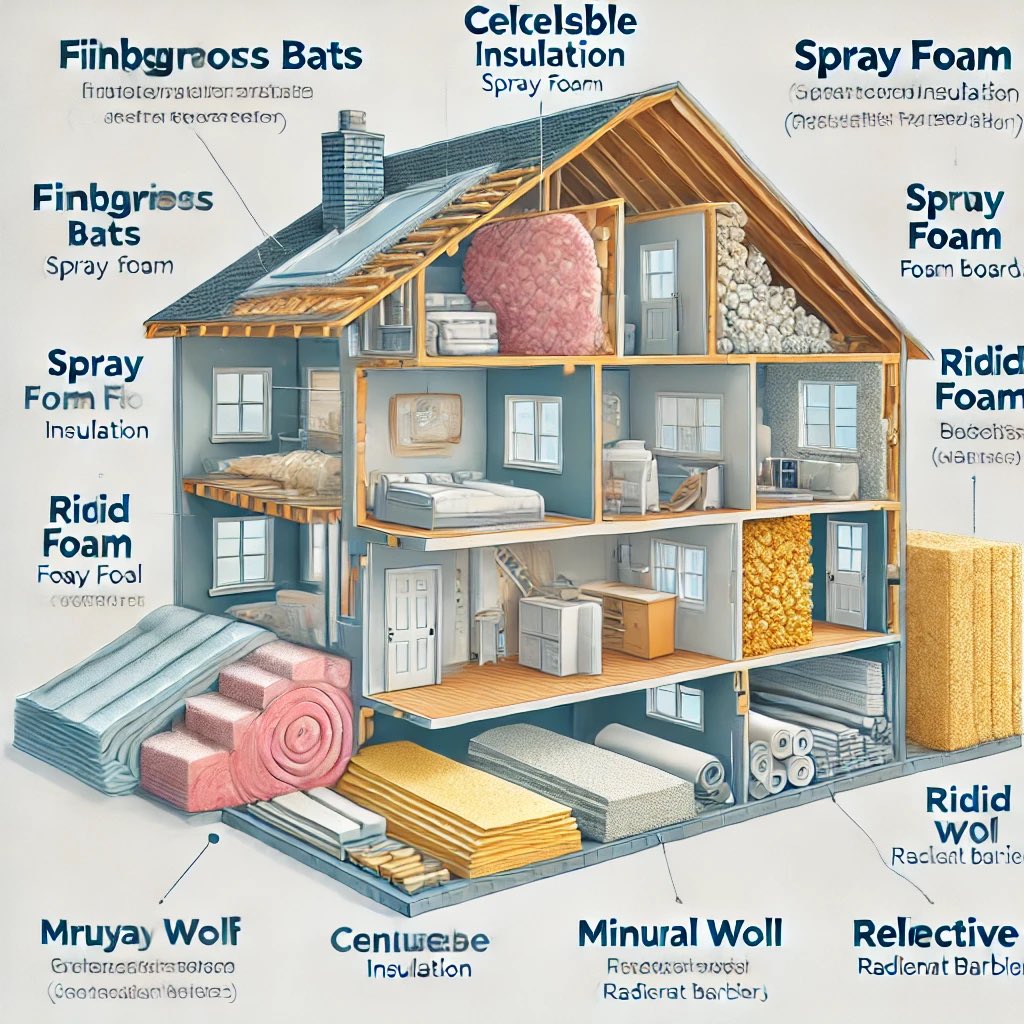
Different Types of House Insulation
Proper insulation is crucial for maintaining energy efficiency, comfort, and lower utility bills in a home. Here are the most common types of house insulation, along with their benefits and ideal applications:
1. Fiberglass Insulation
•Description: Made from fine glass fibers, available in batts, rolls, or loose-fill.
•Best For: Walls, attics, and floors.
•Pros:
•Affordable and widely available.
•Easy to install for DIY projects.
•Cons:
•Can irritate skin and lungs during installation.
•Requires precise installation to avoid gaps.
2. Spray Foam Insulation
•Description: Expands upon application, filling cracks and gaps. Available as open-cell or closed-cell foam.
•Best For: Hard-to-reach areas, basements, attics, and sealing air leaks.
•Pros:
•High R-value (thermal resistance).
•Excellent for air sealing and moisture resistance.
•Cons:
•Expensive.
•Requires professional installation.
3. Cellulose Insulation
•Description: Made from recycled paper products treated with fire-retardant chemicals, available as loose-fill or spray-applied.
•Best For: Attics and walls.
•Pros:
•Eco-friendly and affordable.
•Fills gaps well when blown in.
•Cons:
•Can settle over time, reducing effectiveness.
•May absorb moisture.
4. Rigid Foam Insulation
•Description: Foam boards made from polystyrene, polyisocyanurate, or polyurethane.
•Best For: Exterior walls, basements, and roofs.
•Pros:
•High R-value in a thin layer.
•Moisture-resistant and durable.
•Cons:
•More expensive than traditional insulation.
•Can be difficult to install in tight spaces.
5. Mineral Wool (Rockwool or Slag Wool)
•Description: Made from natural stone or industrial byproducts, available as batts or loose-fill.
•Best For: Walls, ceilings, and floors.
•Pros:
•Fire-resistant and excellent soundproofing.
•Resistant to mold and pests.
•Cons:
•Heavier and more expensive than fiberglass.
6. Reflective or Radiant Barrier Insulation
•Description: Made of reflective materials like aluminum foil, designed to block heat transfer.
•Best For: Attics in hot climates.
•Pros:
•Reduces heat gain effectively in warm regions.
•Thin and lightweight.
•Cons:
•Less effective in cold climates.
•Limited R-value compared to other insulations.
7. Natural Fiber Insulation
•Description: Made from renewable materials like cotton, wool, or hemp.
•Best For: Walls, ceilings, and floors in eco-conscious homes.
•Pros:
•Eco-friendly and sustainable.
•Non-toxic and safe to handle.
•Cons:
•More expensive than synthetic materials.
•Limited availability in some areas.
8. Foam Board with Vapor Barrier
•Description: Combines rigid foam with a built-in vapor barrier.
•Best For: Basements, crawl spaces, and foundations.
•Pros:
•Prevents moisture issues.
•Easy to install with adhesive or fasteners.
•Cons:
•Can be more costly than other types.
Choosing the Right Insulation
The best insulation depends on factors such as:
•Climate: Hot or cold climates require different insulation strategies.
•Location: Different parts of a home (attic, walls, basement) may need specific types.
•Budget: Costs vary widely among insulation types.
Proper insulation ensures energy efficiency and comfort, making it a vital consideration for any home project.
57
16 Dec 2024
Are Long Hours Good or Bad for Business?
The concept of working long hours has often been associated with dedication and productivity. However, its impact on businesses is complex, with both advantages and disadvantages depending on the circumstances and how it’s managed.
The Pros of Long Hours for Business
1.Increased Output During Peak Periods: Long hours can help meet tight deadlines or manage surges in demand.
2.Shows Commitment: Employees willing to put in extra time demonstrate dedication, which can be valuable for building client trust or achieving goals.
3.Short-Term Gains: For businesses handling critical projects, extended hours might be necessary to stay competitive.
The Cons of Long Hours for Business
1.Decreased Productivity Over Time: Fatigue leads to mistakes and slower work, diminishing the quality of output.
2.Burnout and Turnover: Overworking employees can result in stress, health issues, and high turnover rates, increasing hiring and training costs.
3.Negative Workplace Culture: A culture of excessive hours may discourage work-life balance, leading to dissatisfaction.
4.Legal and Financial Risks: Violating labor laws regarding overtime can lead to fines and lawsuits.
A Balanced Approach
Rather than relying on long hours, businesses should focus on efficiency, time management, and employee well-being. Investing in tools, training, and proper planning can often achieve better results than extended workdays.
Conclusion
Long hours may be effective for short-term needs, but consistently overworking employees is usually harmful to business in the long run. Sustainable success comes from balancing hard work with efficiency and fostering a healthy workplace environment. #Construction #constructionworker #WorkLifeBalance #work
56
15 Dec 2024
Work Ethic and Hard Work: The Cornerstones of Success 👷♂️🦺
In an ever-evolving world, where opportunities are as vast as the challenges, two timeless principles remain crucial for achieving success: work ethic and hard work. These values transcend industries, cultures, and generations, serving as the foundation for personal and professional growth.
What is Work Ethic?
Work ethic refers to a set of moral principles that guide a person’s dedication to their responsibilities. It encompasses traits like reliability, discipline, professionalism, and integrity. A strong work ethic is not just about fulfilling duties—it’s about doing so consistently and to the best of one’s ability, regardless of recognition or reward.
The Power of Hard Work
Hard work is the application of consistent effort and determination to achieve goals. It’s the willingness to go above and beyond, to persevere through challenges, and to commit oneself fully to a task. Hard work often distinguishes those who merely dream of success from those who achieve it.
The Relationship Between Work Ethic and Hard Work
While hard work focuses on the effort, work ethic ensures that the effort is directed wisely and ethically. Together, they form a powerful synergy:
1.Work Ethic Provides Direction: A strong work ethic ensures that hard work is purposeful, ethical, and aligned with values.
2.Hard Work Fuels Achievement: No matter how strong a work ethic, success requires the consistent application of effort.
The Benefits of Embracing Work Ethic and Hard Work
1.Career Advancement: Employers value individuals who exhibit dedication and reliability. Hard work and a strong work ethic often lead to promotions, raises, and new opportunities.
2.Personal Growth: Hard work teaches resilience, while a strong work ethic fosters responsibility. Together, they help individuals grow into their best selves.
3.Reputation: Those known for their work ethic and effort earn respect and trust from peers, mentors, and clients.
4.Sense of Accomplishment: Few things are more rewarding than knowing you gave your all and achieved your goals through honest effort.
Building a Strong Work Ethic
Developing a strong work ethic is a lifelong journey. Here are some practical steps:
•Set Clear Goals: Define what you want to achieve and break it into actionable steps.
•Practice Discipline: Stick to your commitments, even when motivation wanes.
•Be Reliable: Follow through on promises and meet deadlines consistently.
•Value Quality: Strive for excellence in every task, no matter how small.
•Stay Honest: Integrity builds trust and strengthens your work ethic.
The Role of Hard Work in a Changing World
In today’s fast-paced environment, the demand for innovative and efficient solutions has increased. Yet, hard work remains as crucial as ever. Success in modern times often requires learning new skills, adapting to changes, and balancing multiple responsibilities—all of which demand effort and persistence.
Conclusion
Work ethic and hard work are more than just habits; they are a mindset. Together, they empower individuals to rise above challenges and seize opportunities. Whether you are building a career, pursuing personal goals, or striving to make an impact, embracing these principles will pave the way for long-lasting success.
In the words of Thomas Edison, “There is no substitute for hard work.” By cultivating a strong work ethic and committing to hard work, you not only shape your destiny but inspire others to do the same. #constructionworker #constructionlife #WorkLifeBalance #CareerGrowth #CareerGoals
36
8 Dec 2024
So we started posting on X and other social medias a year ago.
Followers gained on instagram: 154,000
Followers gained on Facebook: 30,000
Followers gained on X: 16
Hardest to reach followers on X. Dissatisfied. #followers #socialmedia
19
8 Dec 2024
Today’s topic:
Women in Construction: Breaking Barriers and Building Futures
The construction industry, long dominated by men, is seeing a growing number of women making significant contributions. From the job site to the boardroom, women are proving their value in various roles, including trades, management, design, and engineering. Their increasing participation is reshaping the industry, challenging stereotypes, and inspiring future generations.
The Growing Presence of Women
In recent years, the number of women in construction has steadily risen. According to industry statistics, women now make up about 14% of the construction workforce, with many taking on leadership and technical roles. While the percentage is still small compared to other industries, their impact is substantial.
Roles Women Play in Construction
Women in construction hold diverse roles, such as:
•Trades: Carpenters, electricians, plumbers, and heavy equipment operators.
•Project Management: Supervising job sites, managing budgets, and ensuring timelines are met.
•Design and Engineering: Shaping innovative structures through architectural and engineering expertise.
•Leadership: Serving as executives and decision-makers in construction firms.
Challenges Faced by Women in Construction
Despite progress, women face several challenges, including:
1.Gender Bias: Overcoming stereotypes and proving their skills in a male-dominated field.
2.Workplace Safety: Ensuring equipment and PPE are appropriately designed for women.
3.Work-Life Balance: Managing demanding schedules while balancing personal responsibilities.
Why Diversity Matters
Diversity in construction leads to improved innovation, creativity, and problem-solving. Studies show that companies with diverse teams are more productive and achieve better project outcomes. Women bring unique perspectives and approaches that enhance collaboration and efficiency.
Encouraging Women to Join the Industry
Efforts to support women in construction include:
•Mentorship Programs: Connecting experienced professionals with newcomers.
•Training and Apprenticeships: Providing women with access to technical skills and certifications.
•Industry Advocacy: Organizations like National Association of Women in Construction (NAWIC) promote opportunities and awareness.
A Promising Future
As more women enter the field, they are paving the way for others to follow. By fostering inclusion and addressing challenges, the construction industry is becoming a space where everyone, regardless of gender, can thrive and build a brighter future. #womeninmalefields #womeninmaledominatedfields
37
5 Dec 2024
Innovation 🪄in Construction🚧 : Implementing New Ideas💡and Unique Solutions 🟰 as a Construction worker👷♀️ 👷♂️
The construction industry is a constantly evolving field where creative problem-solving and innovation are critical for success. As a construction worker, your ability to implement new ideas, adapt unique solutions to challenges, and embrace innovation can significantly impact the efficiency, sustainability, and quality of your projects. Here’s how you can drive progress and stand out in the industry.
1. Embrace Technology on the Jobsite
Adopting Cutting-Edge Tools
Using modern tools and technology can streamline construction processes. For instance:
•Laser measuring tools ensure accuracy in layouts.
•Drones help with site inspections and project monitoring.
•Construction apps aid in managing schedules, tracking materials, and enhancing communication.
Building Information Modeling (BIM)
BIM isn’t just for architects—it’s an invaluable tool for construction workers. By using BIM, you can access detailed 3D models of the project, making it easier to understand the structure, avoid mistakes, and improve productivity on-site.
2. Solve Problems with Unique Approaches
Every project presents unique challenges, from unexpected weather conditions to supply chain delays. Here’s how you can adapt:
On-the-Fly Problem Solving
•Recycling Materials: If faced with a material shortage, repurpose leftover materials like concrete, wood, or steel to keep the project moving.
•Smart Scheduling: Use flexible workflows to adapt to sudden weather changes or equipment breakdowns, minimizing downtime.
Collaborative Brainstorming
Collaborate with your team to find creative solutions. Construction thrives on teamwork, and sometimes the best ideas come from listening to diverse perspectives.
3. Innovate with Sustainable Practices
As a construction worker, you can lead by example by incorporating eco-friendly techniques:
•Reusing and Recycling: Instead of discarding old materials, find ways to integrate them into the new project.
•Efficient Resource Management: Use tools like water-conserving concrete mixers and solar-powered equipment to reduce environmental impact.
•Energy-Efficient Structures: Advocate for features like better insulation, green roofs, or energy-efficient windows during builds.
4. Learn and Apply New Skills
Innovation starts with education. Continuously upgrading your skills allows you to implement new ideas effectively:
•Train in Robotics or Automation: Mastering automated machinery can make you indispensable on large-scale projects.
•Explore 3D Printing: Learn how to use 3D printing technology to construct small components or even entire structures.
•Master Digital Tools: Familiarize yourself with construction-specific apps and software to enhance your productivity.
5. Think Big, Start Small
Small innovations can have a big impact. Here are a few small-scale ideas that could transform your work:
•Tool Modifications: Modify your tools to make them more efficient for specific tasks. For example, creating customized extensions for a drill to work in hard-to-reach spaces.
•On-Site Innovations: If a project lacks scaffolding, design and construct a safe, temporary alternative using available materials.
6. Foster Communication and Collaboration
Innovation thrives in environments where everyone feels heard. Share your ideas with project managers or suggest improvements during team meetings.
Innovation in construction isn’t just about big technological leaps—it’s about being open to new ideas and solving everyday challenges creatively. Whether you’re experimenting with materials, using advanced tools, or thinking outside the box to tackle problems, your efforts can help revolutionize the way projects are completed. #constructionworker #ProblemSolving
86
3 Dec 2024
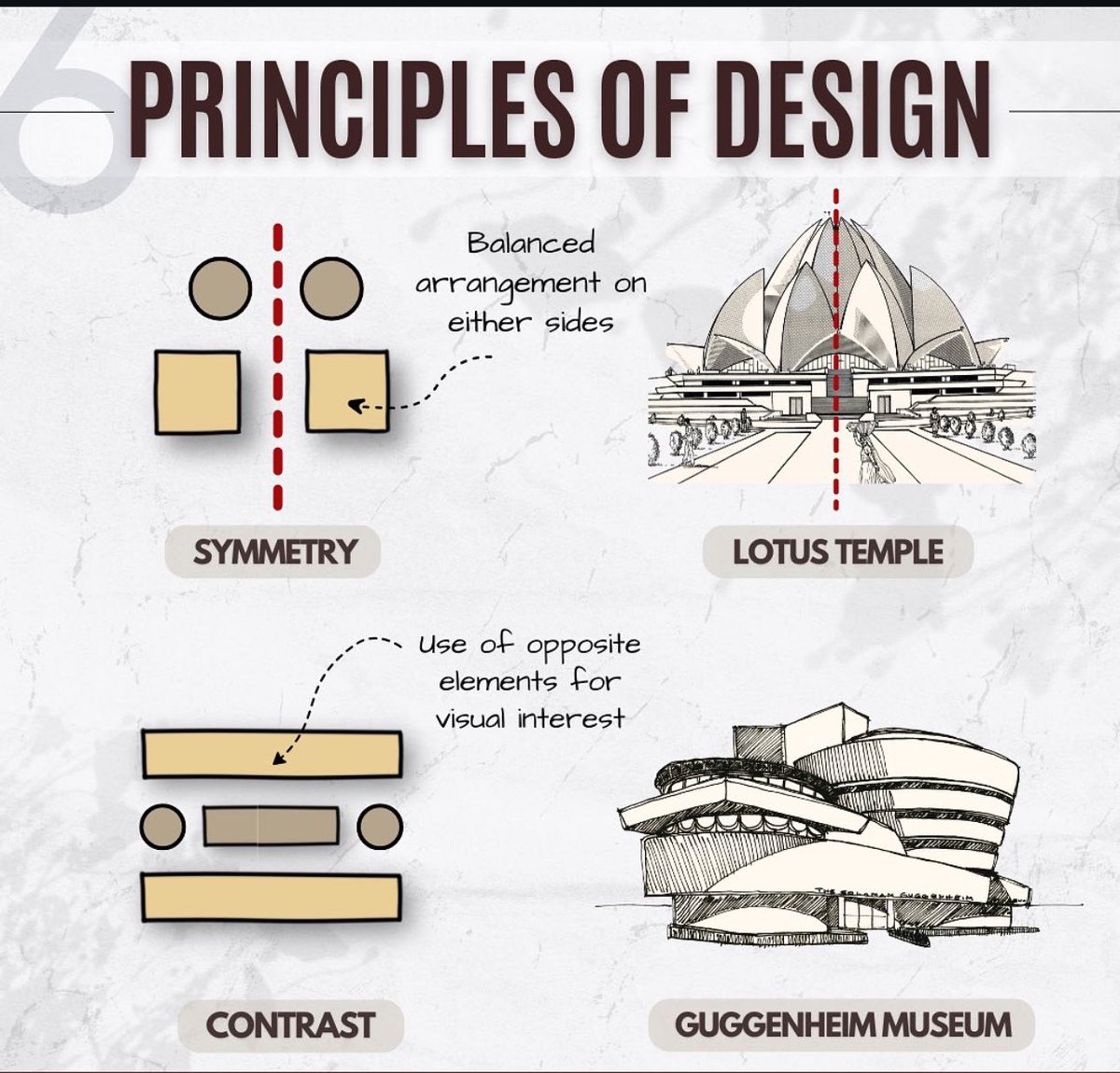
The principles of design are fundamental guidelines that help create visually appealing and functional designs, whether in construction, graphic design, or other creative fields. Here’s a breakdown of the key principles:
1.Balance
•Definition: Distributing elements evenly to create stability.
•Types:
•Symmetrical: Equal distribution on both sides.
•Asymmetrical: Unequal but visually balanced.
•Radial: Arranged around a central point.
2.Contrast
•Definition: Highlighting differences between elements to create visual interest.
•Examples: Light vs. dark, smooth vs. rough textures, or modern vs. traditional styles.
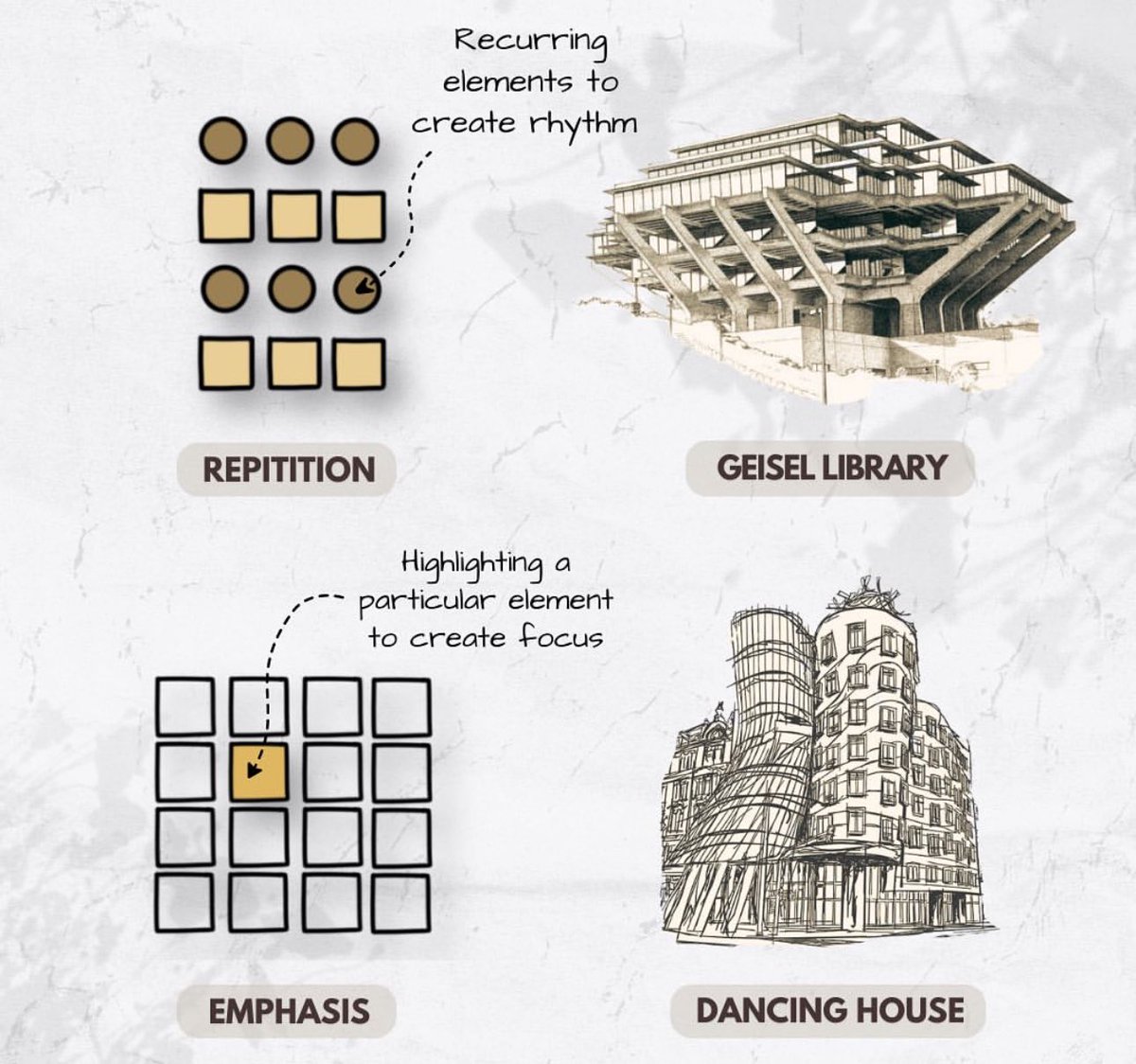
3.Emphasis
•Definition: Drawing attention to a focal point to guide the viewer’s eye.
•Techniques: Use color, size, or placement to make an element stand out.
4.Movement
•Definition: Leading the viewer’s eye through a design in a purposeful way.
•Achieved through lines, curves, or a logical flow of elements.
5.Pattern and Repetition
•Definition: Reusing elements to create rhythm or consistency.
•Examples: Repeating tiles, textures, or motifs in a room or structure.
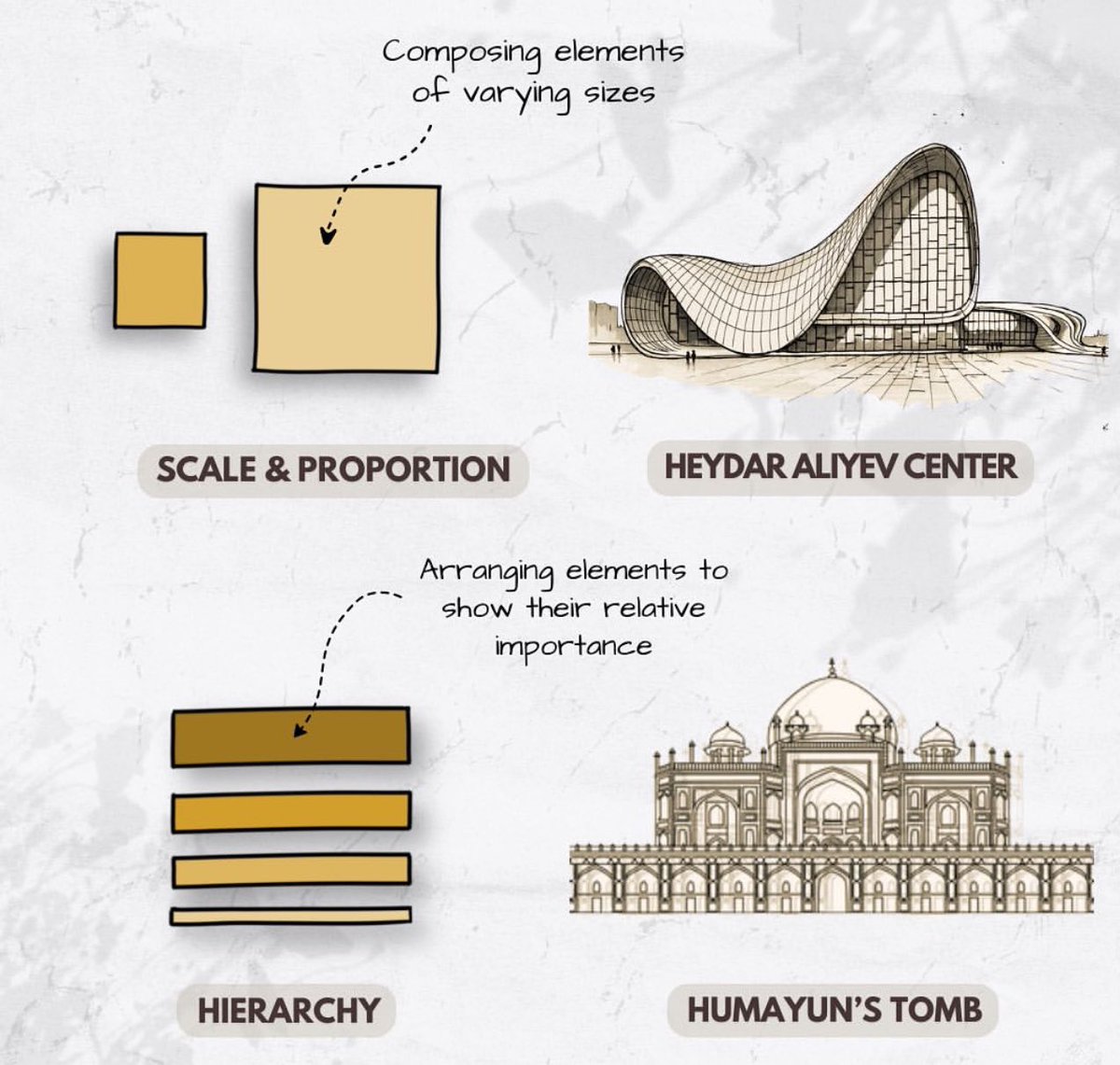
6.Proportion and Scale
•Definition: Ensuring elements are the right size in relation to each other and the whole design.
•Key in creating harmony and functionality.
7.Unity and Harmony
•Definition: Ensuring all elements feel connected and cohesive.
•Achieved through consistent themes, colors, or materials.
8.Rhythm
•Definition: Creating a sense of motion through repetition or variation of elements.
•Examples: Alternating light fixtures or patterns in flooring.
#Construction #design #principlesofdesign #LearningAdventure #constructionlife #Architectuur #architecture
25
3 Dec 2024
31
1 Dec 2024
An important person 🧍 at a job site is typically someone responsible for overseeing operations , ensuring safety, and maintaining project efficiency. This could include roles like a site supervisor, foreman, or project manager.
Key Responsibilities:
•💪Leadership: Direct the team, delegate tasks, and ensure everyone stays on track.
•⛑️Safety Oversight: Enforce safety protocols, conduct inspections, and address hazards.
•🧑🤝🧑Coordination: Manage schedules, materials, and equipment to avoid delays.
•Problem-Solving: Address issues quickly, from technical challenges to worker concerns.
•📶Communication: Act as a link between workers, contractors, and clients, ensuring clarity.
Their role is vital in maintaining productivity, ensuring quality, and keeping the job site running smoothly.
Do’s
1.Lead by Example: Follow safety protocols and maintain professionalism.
2.Communicate Clearly: Ensure everyone understands tasks, timelines, and safety procedures.
3.Prioritize Safety: Conduct regular safety checks and address hazards immediately.
4.Be Approachable: Encourage workers to voice concerns or ask questions.
5.Plan Ahead: Coordinate schedules, materials, and equipment to avoid delays.
Don’ts
1.Ignore Safety Rules: Skipping safety measures sets a bad example and risks lives.
2.Micromanage: Trust the team to perform their roles without constant interference.
3.Overlook Feedback: Dismissing worker input can harm morale and project outcomes.
4.Neglect Documentation: Always record incidents, changes, or delays for accountability.
5.Cut Corners: Prioritizing speed over quality can lead to costly mistakes. #supervisor #LeadershipDevelopment #CareerAdvice #constructionindustry


37
30 Nov 2024
Do’s and Don’t of a Competent person at worksite: ⬇️
Do’s ➡️
1.Lead by Example: Follow safety protocols and maintain professionalism.
2.Communicate Clearly: Ensure everyone understands tasks, timelines, and safety procedures.
3.Prioritize Safety: Conduct regular safety checks and address hazards immediately.
4.Be Approachable: Encourage workers to voice concerns or ask questions.
5.Plan Ahead: Coordinate schedules, materials, and equipment to avoid delays.
Don’ts ➡️
1.Ignore Safety Rules: Skipping safety measures sets a bad example and risks lives.
2.Micromanage: Trust the team to perform their roles without constant interference.
3.Overlook Feedback: Dismissing worker input can harm morale and project outcomes.
4.Neglect Documentation: Always record incidents, changes, or delays for accountability.
5.Cut Corners: Prioritizing speed over quality can lead to costly mistakes. #constructionworker #Tips #constructionlife
28
29 Nov 2024
The Evolution of the Plumbing Trade: From Ancient Times to Modern Innovation
1. Early Plumbing Materials and Methods
•Ancient Times: The first plumbing systems date back to 4000 BCE, with the Egyptians using copper pipes and the Romans developing aqueducts and lead pipes for water supply and sewage.
•Medieval Period: Plumbing stalled in Europe during the Dark Ages, with chamber pots and open sewage systems dominating until the Renaissance.
•1800s: Cast iron, clay, and lead pipes became standard for urban water and sewer systems, though lead’s toxicity wasn’t yet understood.
2. Modern Plumbing Materials
•Early 1900s: Galvanized steel pipes replaced lead but were prone to corrosion.
•Mid-1900s: Copper pipes became the gold standard due to durability and safety.
•Late 1900s-Present: Plastics like PVC, CPVC, and PEX revolutionized plumbing with their affordability, ease of installation, and resistance to corrosion.
3. Important Plumbing Events
•1775: The first flushing toilet was patented by Alexander Cummings.
•1850s: Indoor plumbing became more common in wealthy homes, with the invention of pressurized water systems.
•1940s: Plumbing codes were standardized in the U.S., ensuring safety and efficiency.
•1980s: PEX piping was introduced, simplifying complex plumbing layouts.
4. Amazing Plumbing Facts
•The word “plumbing” comes from the Latin “plumbum,” meaning lead.
•The average American household uses around 300 gallons of water daily.
•The first recorded indoor plumbing dates back to 2500 BCE in the Indus Valley Civilization.
5. Key Innovations Shaping the Future
•Smart Plumbing: Leak detection systems, water-saving fixtures, and app-controlled systems are becoming mainstream.
•Eco-Friendly Materials: Sustainable practices are driving innovations in water recycling and biodegradable materials.
Plumbing has come a long way from clay pipes to smart systems, evolving to meet the needs of modern living while addressing challenges like water conservation and sustainability.
37
28 Nov 2024
Drywall History 📜
The transformation of drywall over the years reflects advancements in construction technology, environmental awareness, and evolving building codes. Here’s a look at how drywall has changed over time:
1. Early Beginnings (1910s-1940s):
•Invention: Drywall, originally known as “Sackett Board,” was invented in 1916 by the U.S. Gypsum Company. It consisted of layers of gypsum and paper.
•Adoption: It gained popularity during World War II when labor shortages required faster and less expensive building methods compared to traditional lath-and-plaster walls.
•Standardization: Early versions were less durable and offered limited fire resistance.
2. Post-War Expansion (1950s-1970s):
•Residential Boom: The housing boom after WWII saw drywall become a standard material for interior walls and ceilings due to its affordability and ease of use.
•Material Improvements: Advances in manufacturing increased durability and reduced costs. Boards became standardized in size and thickness.
•Fire-Resistant Drywall: In the 1950s, Type X fire-resistant drywall was introduced, incorporating glass fibers into the gypsum core to improve fire safety.
3. Energy Efficiency and Innovations (1980s-2000s):
•Moisture-Resistant Drywall: Greenboard and other moisture-resistant panels became common in bathrooms and kitchens.
•Soundproofing: Sound-dampening drywall was developed for better acoustic performance in residential and commercial spaces.
•Lightweight Drywall: By the late 1990s, manufacturers introduced lightweight drywall, which made installation easier and reduced strain on workers.
•Recycling: Increasing environmental awareness led to more efforts in recycling gypsum and paper waste during production.
4. Modern Era (2010s-Present):
•Eco-Friendly Materials: The development of drywall with reduced volatile organic compounds (VOCs) and recycled content became a focus for green building practices.
•Enhanced Durability: Impact-resistant and mold-resistant drywall has become standard in areas requiring higher durability and moisture protection.
•Smart Drywall: Recent innovations include integrated thermal insulation and even panels capable of supporting smart home features like built-in sensors.
•Large-Scale Sheets: Larger sheets and pre-finished drywall have become more common, reducing the need for joint taping and sanding.
5. The Future of Drywall:
•3D-Printed Drywall: Emerging technologies like 3D printing could allow for customized, on-demand wall panels.
•Sustainability Focus: Research continues into creating drywall alternatives using bio-based materials, such as hemp or mycelium, to further reduce environmental impact.
•Integrated Building Systems: Drywall may evolve into a more functional element, integrating electrical systems, lighting, or sound systems directly into the panels.
Over the decades, drywall has evolved from a basic, time-saving construction material to a versatile and sustainable solution for modern building needs.
Please Like and Follow if you enjoyed the read/video! #drywallnation #HistoryMatters #constructionmaterials
#constructionhumor #learnhere #newjersey #NewYorkCity
1
1
48