
The Home of Zero-knowledge | Events | Podcast
Joined November 2023
- Tweets 5,526
- Following 1,141
- Followers 40,138
- Likes 8,421
2,519 Photos and videos






Pinned Tweet

Mar 23
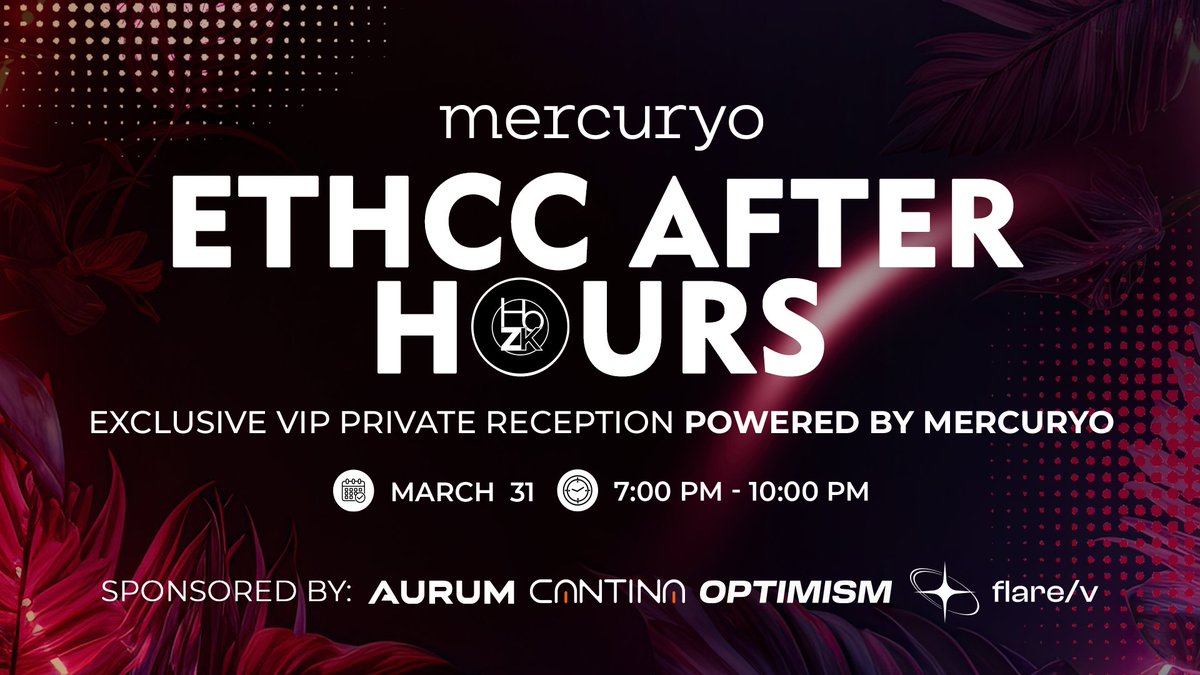
HoZK is heading to Cannes for @EthCC 🇫🇷
Together with @Mercuryo_io, we are hosting a curated VIP Private Reception on the Riviera, with support from @Optimism, @aurum_ecosystem and @cantinaxyz.
Access is strictly by approval and invitation only. Capacity is extremely limited.
See you in Cannes.
🎟️ luma.com/6heg47kl
7
3
25
1,080
Apr 15
Most blockchain tickets are just networking wrapped in FOMO.
@consensus2026 in Miami is different — it's where the conversations that actually move the space forward happen.
HoZK will be there. And if you're heading to Miami, use our discount code to grab your ticket 👇
go.coindesk.com/4qQrkAa
4
13
404
Mar 16
Deepfakes are becoming indistinguishable from reality.
Congrats to @brevis_zk on launching Brevis Vera, verifiable media authenticity is emerging as one of the most important infrastructure layers in the age of AI.
Mar 9

Introducing Brevis Vera, Proving What's Real in the Age of AI
Deepfakes are getting better. Detectors can't keep up. So we built something different: let media prove where it came from and what happened to it. 🧵
7
18
749
Feb 5
JUST IN: Leading theoretical computer scientist and quantum computing expert, Professor Scott Aaronson, has joined the @StarkWareLtd Scientific Advisory Board.
Scott will help accelerate @Starknet efforts in making Bitcoin quantum-ready.
15
2
45
17,537
Feb 5
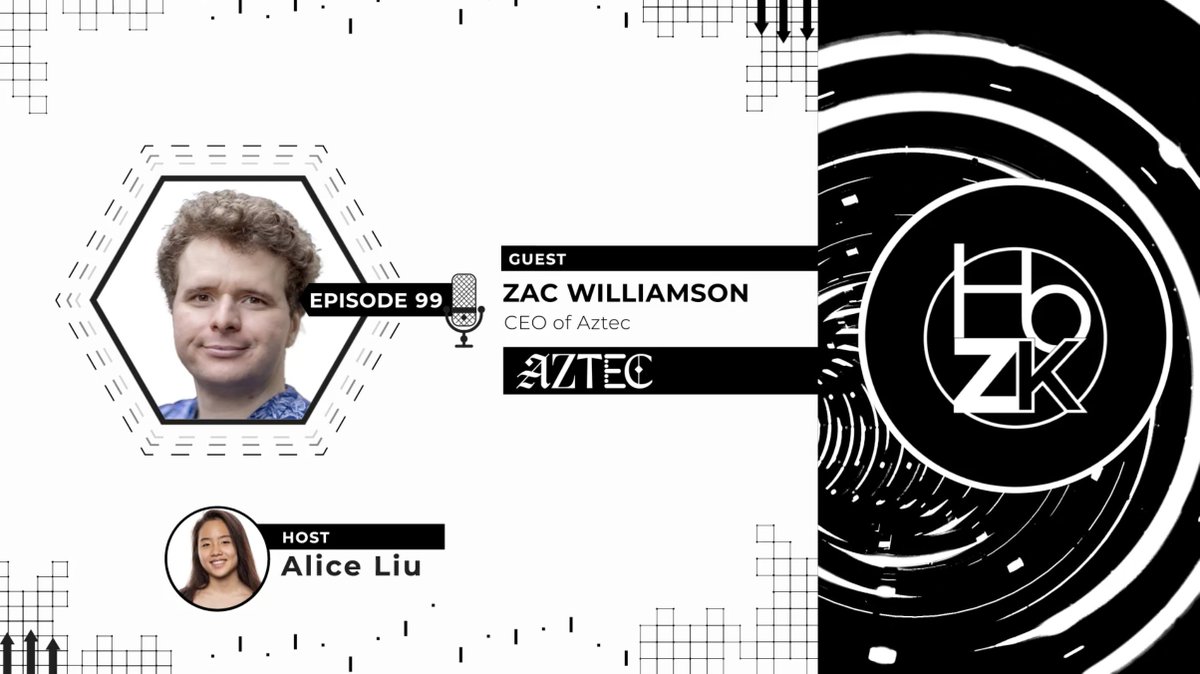
House of Zk Radio #99: Zac Williamson, CEO of Aztec - out now on Spotify & YouTube 🔳
In this previously unaired episode from 2025, we sit down with @Zac_Aztec CEO @Zac_Aztec to discuss the origins of Aztec and why privacy is the hardest problem in ZK.
Topics covered include client-side proving constraints, why privacy requires rethinking blockchain architecture, trade-offs between zkVMs and DSLs (including Aztec’s @NoirLang), and where TEEs and FHE fit as partial tools rather than end-to-end privacy solutions.
Spotify: open.spotify.com/episode/6JF…
YouTube: youtube.com/watch?v=61Ihn2mk…
3
16
830
Jan 28
JUST IN: @goatnetwork's GOAT BitVM2 Testnet (V3) is live - their final public testnet before mainnet.
2
7
130
192,763
Jan 27
JUST IN: @citrea_xyz Mainnet is now live, enabling a suite of DeFi applications on the Bitcoin Network.
3
54
112,288
Jan 19
“If you’re not technical, all you need to know is this: GOAT Network is built to earn yield in BTC, with clear risk levels.” - Dr. Redouane Elkamhi, Economic Lead at @goatnetwork
In Episode #88, the @UofT Professor of Finance breaks down:
• What “earning yield on BTC” actually means (BTC-denominated returns, not reward points).
• Why risk disclosure matters more than APY marketing: different risk profiles should map to different expected returns.
• The minimum questions to ask any “Bitcoin L2” before deploying capital: decentralization, enforcement/exit path, and how it anchors back to Bitcoin.
• Why GOAT Network’s design targets incentive alignment with Bitcoin’s long-term security model (activity that ultimately pays for L1 security).
If you’re evaluating Bitcoin yield products, this episode is the baseline: understand the risk tier you’re choosing, the return you’re being paid for it, and whether the system is actually built to be enforceable on Bitcoin: hozk.io/radio#88-dr-redouane…
4
3
22
1,335
House of ZK retweeted

Jan 19
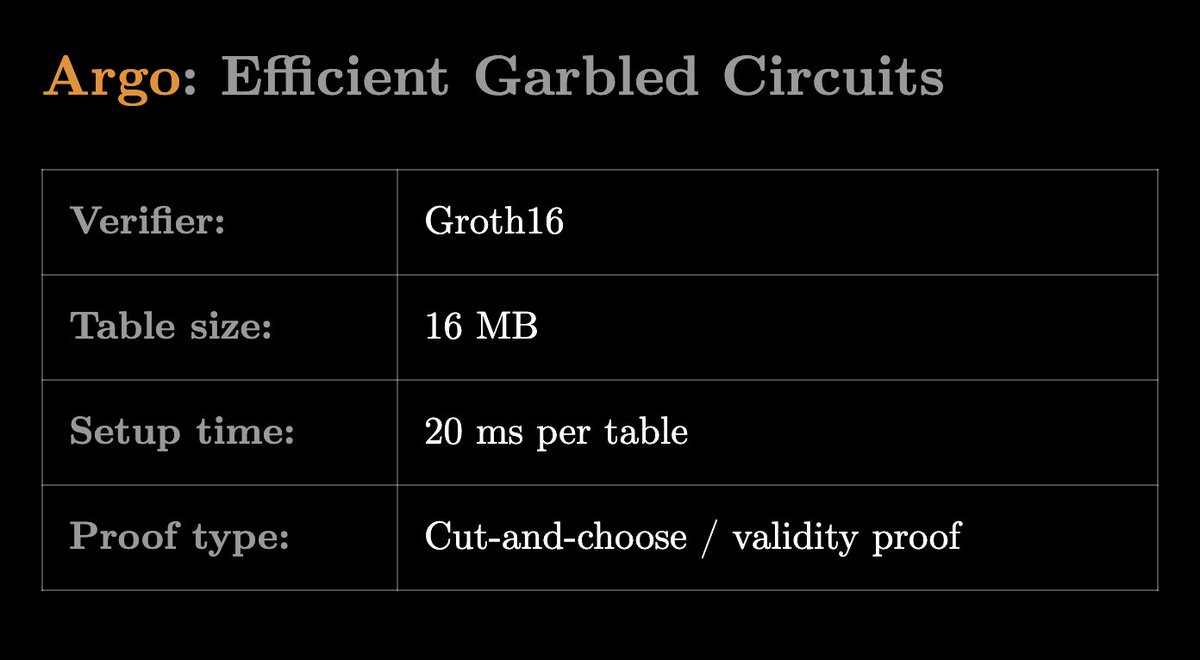
Today, the creators of BitVM, including @robin_linus, @liameagen, and @therealyingtong, launch { 𝙞𝙙𝙚𝙖𝙡 }.
We're using cryptography to advance privacy and scalability on Bitcoin.
Our first contribution is Argo, a garbling scheme enabling 2000× efficiency gains.
28
43
176
55,274
Jan 19
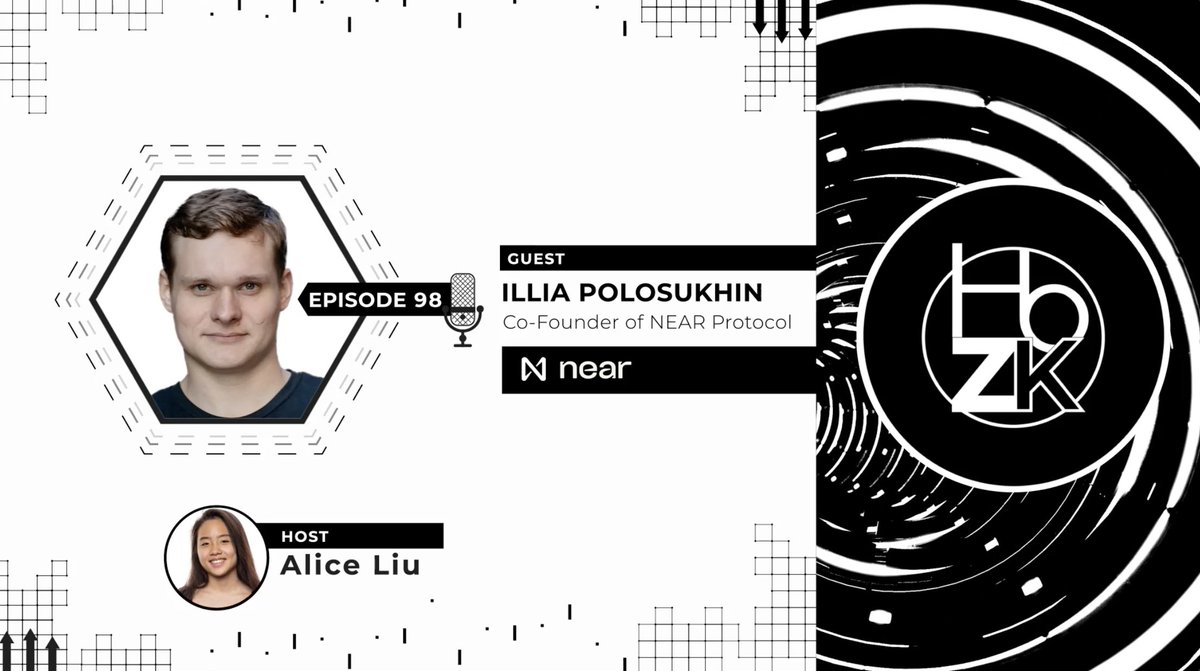
House of ZK Radio #98: Illia Polosukhin, Co-founder of NEAR Protocol - out now on Spotify & YouTube 🔲
In this episode we sit down with @ilblackdragon, co-founder of @NEARProtocol, to trace NEAR’s origin as an AI-first startup and how scaling global micropayments led to building a new L1.
We cover NEAR’s developer stack (Wasm, Rust, TypeScript, Python), the emerging “AI blockchain” thesis, where zero-knowledge proofs fit (privacy, local proving, verifiable computation), and why TEEs plus ZK may converge into practical hybrid systems.
Illia also shares NEAR’s work on offchain computation via TEEs, formal verification priorities, and the roadmap toward agent-driven, cross-chain execution.
Spotify: open.spotify.com/episode/6Mv…
YouTube: youtube.com/watch?v=_Nd9IKtt…
3
8
457
House of ZK retweeted

Jan 13
House of ZK highlights recent progress on Alpen in their latest report.

2
5
31
3,641

A common framing of Bitcoin today is that it’s a savings technology. Digital gold. Something you hold, not something you use.
I think that framing is incomplete and ultimately wrong.
Bitcoin isn’t meant to sit alongside fiat as a savings vehicle. It’s meant to replace fiat as a monetary base. And a monetary base that cannot be used cannot function as money.
For Bitcoin to operate as money, it has to be usable at scale. That implies execution, settlement abstraction, faster interactions, and cost-efficient transactions. Bitcoin L1 is not designed for that, and shouldn’t be. Its role is finality and neutrality.
This is why Bitcoin needs L2's.
Once you accept that Bitcoin needs L2s to be usable as money, you stop asking whether alts are competing with Bitcoin and start asking whether they are serving Bitcoin.
If acceptance of alts is even possible in the Bitcoin-first community, it won’t come from alternative monetary assets. It will only come from systems that keep Bitcoin as the unit of account/native asset, while extending its usability (crcucially, without weakening its guarantees). I.e. introducing auxiliary tokens ONLY where Bitcoin alone cannot perform the required coordination or incentive functions around things like expressiveness and yield.
Any non-BTC asset that has any chance of gaining legitimacy within this community will do so only by filling those gaps in a way that BTC itself cannot.
1
2
24
2,129
House of ZK retweeted
23 Dec 2025
1
2
35
69,767
Jan 6
“Bitcoin is this really great asset, but it’s a little bit like gold or houses. It’s mostly sitting there.” - @EliBenSasson, CEO of @StarkWareLtd
In episode #87, Eli made a crucially important point about how Bitcoin is drifting into a “static collateral” role: a strong store-of-value that mostly sits idle, and when holders want utility (borrow/lend, deploy capital, build an economy), the common path today is to hand control to intermediaries or move into systems that don’t preserve Bitcoin’s core guarantees.
That creates a failure mode where Bitcoin’s value concentrates under centralized custody and its “usable” layer lives elsewhere, weakening self-custody, decentralization, and censorship resistance - defeating the entire point of Bitcoin's existence.
His proposed fix is building Bitcoin-native (or maximally Bitcoin-aligned) scalability and programmability so users can use BTC without exiting Bitcoin’s security model and values. Concretely, he says mainstream “Bitcoin as usable money” requires three things:
1. Scalability (transaction throughput far beyond L1)
2. UX/accessibility (usable by non-experts without brittle key-management overhead)
3. Expressibility (smart-contract-like functionality for lending/borrowing and broader economic activity), ideally via Bitcoin L2s that are tightly integrated with Bitcoin rather than “BTC on another chain".
Watch the full episode with Eli Ben-Sasson on the future of Bitcoin-scaling at hozk.io/radio#87-eli-ben-sas…
1
2
16
500
The biggest problem in crypto is Bitcoin gradually becoming an asset held by central custodians - where most “functionality” lives off-chain inside centralized platforms.
That’s why I (and @HouseofZK) am dialling in hard on the ZK-powered, onchain Bitcoin economy.
Right now, this space is criminally under-followed and under-explained. That has to change.
19
5
49
47,199
House of ZK retweeted

30 Dec 2025
“Should the centralized sequencer go offline, you have a mass exit. A single actor can lead to the whole community evaporating.” - @drakefjustin, Researcher at @ethereumfndn
We agree with this failure mode, which is why we've prioritized designing around it. GOAT Network sequencing has been built as a stake-backed, multi-operator subsystem with Bitcoin-enforced penalties (e.g. slashing for equivocation) rather than a single trusted sequencer.
While sequencer participation is currently whitelisted for early stability, the endgame is a transition to an open operator market where anyone meeting the PoS/technical requirements can join - so a single party cannot become a censorship or uptime choke point.
29 Dec 2025

ZK Bitcoin vs. Ethereum
Two heavyweights faced off in 2025’s biggest BTC-ETH debate on @HouseofZK.
👉 @drakefjustin → ZK or not, Bitcoin’s tech will never catch Ethereum
👉 @lightcoin → The world wants BTC, not ETH—feature parity is a footnote
x.com/HouseofZK/status/18874…
87
37
131
4,817