
Directed by @davidmatsumoto. We train others in #emotionalintelligence, reading people, #bodylanguage, and nonverbal behavior. @APA Approved CE Provider.
Joined February 2009
- Tweets 7,309
- Following 1,227
- Followers 4,610
- Likes 2,314
986 Photos and videos













Humintell retweeted
Meditation isn’t about sitting still for hours. As Dr. Richard Davidson explains, just one or two minutes of awareness is enough. Listen to the full conversation: at.apa.org/qf1
1
11
25
2,264

Apr 14
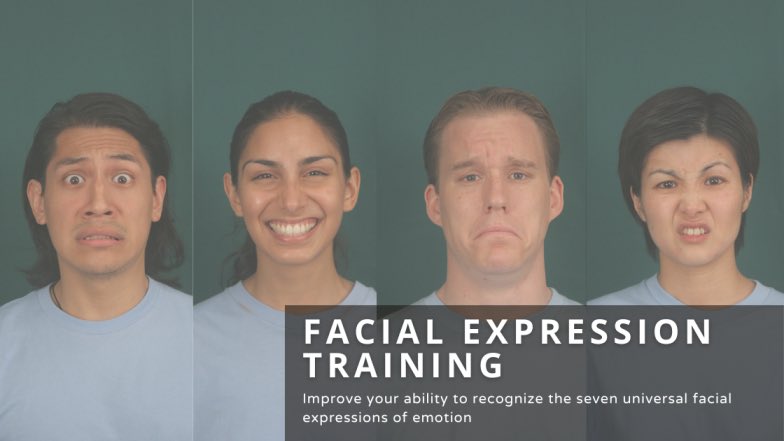
Our best-selling course is 70% off for 2 days only.
Scientifically proven to improve your ability to see concealed or repressed signs of emotion in the people whom you interview.
Learn more: humintell.com/product/mix-en…
1
47
Humintell retweeted

Apr 8
Stoic Arguments Change More Minds Than Emotional Pleas | Neuroscience News
Summary: That heartfelt, tear-filled post about climate change might help you find your “tribe,” but it’s likely turning everyone else off. New research reveals a deep-seated skepticism toward emotional political expression online.
Across six experiments with 6,400 participants, researchers found that viewers—regardless of their own political leanings—rated emotional expressions of fear or sadness as less authentic and less appropriate than neutral, stoic ones. Even when people agreed with the message, they viewed the emotion as a manipulative ploy, essentially accusing the speaker of “crying crocodile tears.”
Key Facts
- The Sincerity Gap: Participants questioned the sincerity of emotions expressed in news reports, texts, and TikToks. Emotional posts were consistently rated as less authentic than factual ones.
- The Visual Penalty: Skepticism was highest when a person’s face was visible (like a sad face on TikTok) compared to just reading emotional text.
- Agreement Doesn’t Save You: Even if a viewer agreed that climate change is a crisis, they still found an emotional advocate less persuasive than a calm one.
- Localized Backlash: The “eye-roll” factor is directed at the person expressing the emotion, not the issue itself. Participants didn’t care less about climate change; they just liked the speaker less.
- Catharsis vs. Influence: While emotional posting is great for community-building and personal catharsis, it fails as a tool for political persuasion.
---
If you’ve poured your heart out on social media about a political issue, it might have felt cathartic — but it likely wasn’t persuasive, new Cornell University research finds.
Americans are skeptical of emotional comments they see in their news and social media feeds, political scientist Talbot Andrews reports in “Emotions on Our Screens.”
Over six experiments, involving nearly 6,400 participants, viewers questioned the sincerity of fear or sadness people expressed about climate change in simulated news reports, text messages, and TikTok posts. Such comments were rated as less authentic and appropriate than more neutral ones — even when the observer agreed politically with the speaker.
“Making people emotional is a great way to motivate them to care about an issue. But expressing your own emotions is not necessarily going to change others’ minds about that issue,” said Andrews, an assistant professor of government.
With today’s media environment exposing people to emotional expression more than ever, Andrews spoke with the Cornell Chronicle about the findings. Selected excerpts are below.
Skepticism persists across platforms
“We thought people might see emotions as more authentic in news articles, where journalists act as gatekeepers, compared to social media, where people have editorial control before sharing anything. Surprisingly, we didn’t find many differences. Skepticism was stronger when viewers saw a sad face, rather than just text, in simulated TikTok screenshots. People thought that seemed especially inappropriate.”
Political agreement doesn’t eliminate skepticism
“People are skeptical when they disagree with social media posts at all, but the effect of emotional expression is pretty similar either way. We saw the same pattern in an experiment featuring posts from a climate skeptic. People tended to see the emotion as manipulative. Like, ‘I think you’re crying crocodile tears to make me feel bad about this, and I see through that ploy.’”
Emotional posts don’t reduce concern, just raise eyebrows
“[Backlash toward emotional posts] seems localized to the person who’s being emotional. It’s more that people will be skeptical of your sincerity in posting, but participants were no less worried about climate change because they saw someone get emotional about it. Study participants didn’t punish emotional content, just viewed it as less appropriate and authentic than more stoic expressions.”
Expressing emotion can help, even if it doesn’t persuade
“Emotional expression can serve an important role, helping people find a community that cares about their issue. Even if it doesn’t achieve any influential goal — like persuading others or building social media clout — expressing emotions often makes people feel better. The takeaway is not that people should keep their feelings to themselves, but that such expression won’t always be taken at face value.”
Read more:
neurosciencenews.com/social-…

2
8
24
5,379
Humintell retweeted

Feb 6
By analyzing 175 couples, researchers have identified the primary psychological pathway linking emotional intelligence to relationship satisfaction. The findings point to the critical role of extrinsic emotion regulation, specifically the act of valuing. dlvr.it/TQpCzP
3
10
1,348
Mar 21
Our annual Spring Sale is live!
Save 50% off with code SPRING50 at checkout.
Shop now: humintell.com/products-3/
Hurry, sale ends March 24.
1
1
101
Mar 18
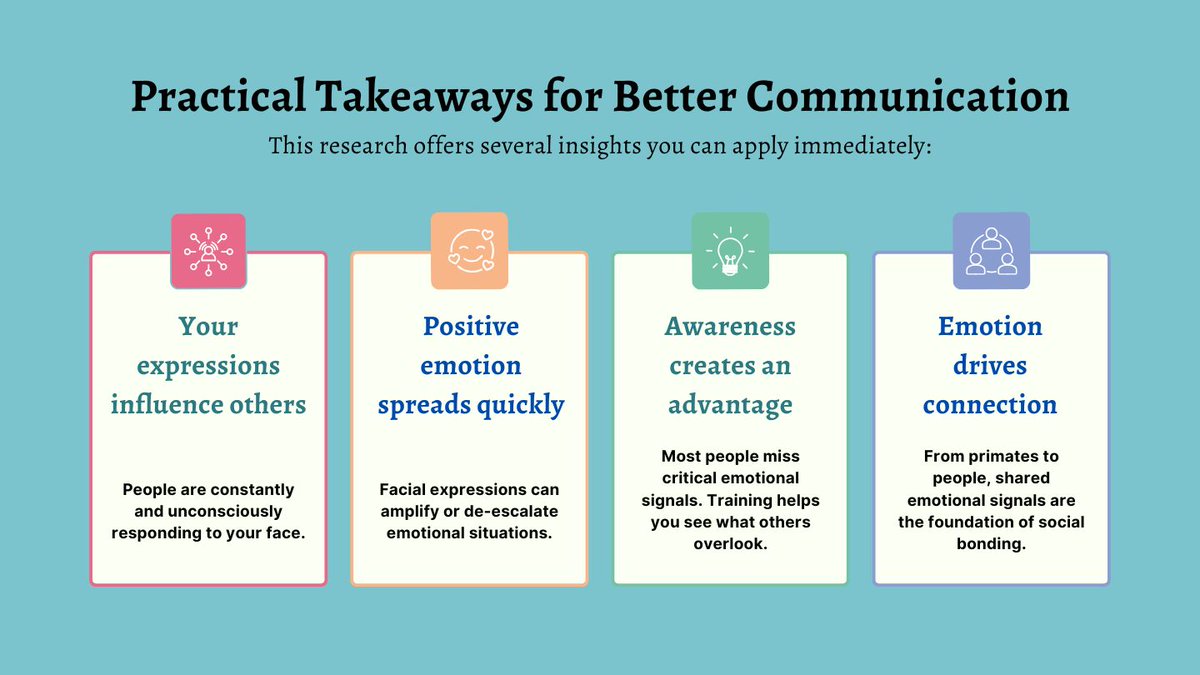
A recent study highlighted reveals something fascinating:
Humans don’t just recognize emotional expressions in non-human primates—we mirror them.
And we do it automatically.
Learn more: humintell.com/2026/02/humans…
51
Feb 17
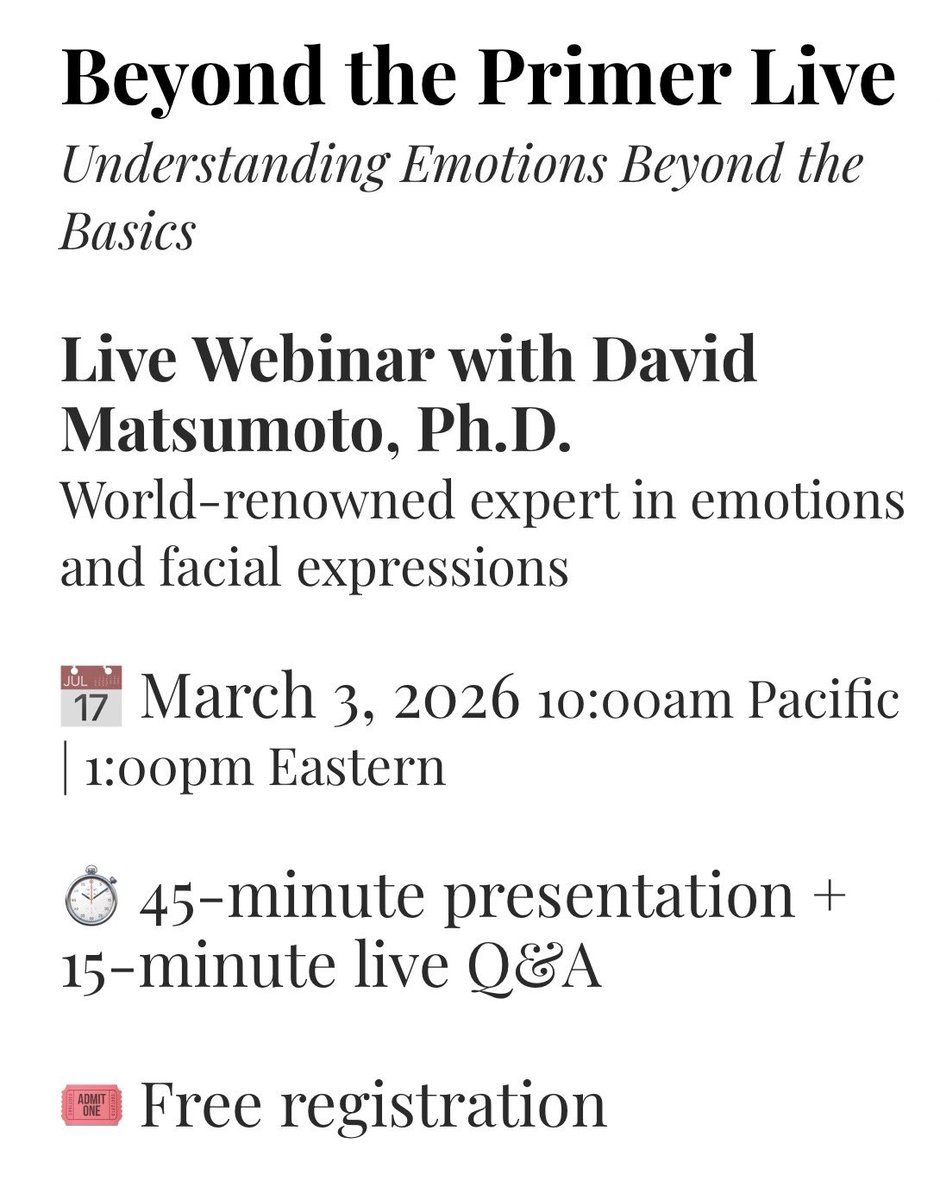
Beyond the Primer Live
A FREE webinar on 3/3 with @davidmatsumoto!
Learn:
-Why emotions exist
-What emotions do
-What’s special about the face
Sign up here: mailchi.mp/humintell/beyond-…
208
Humintell retweeted

Jan 30
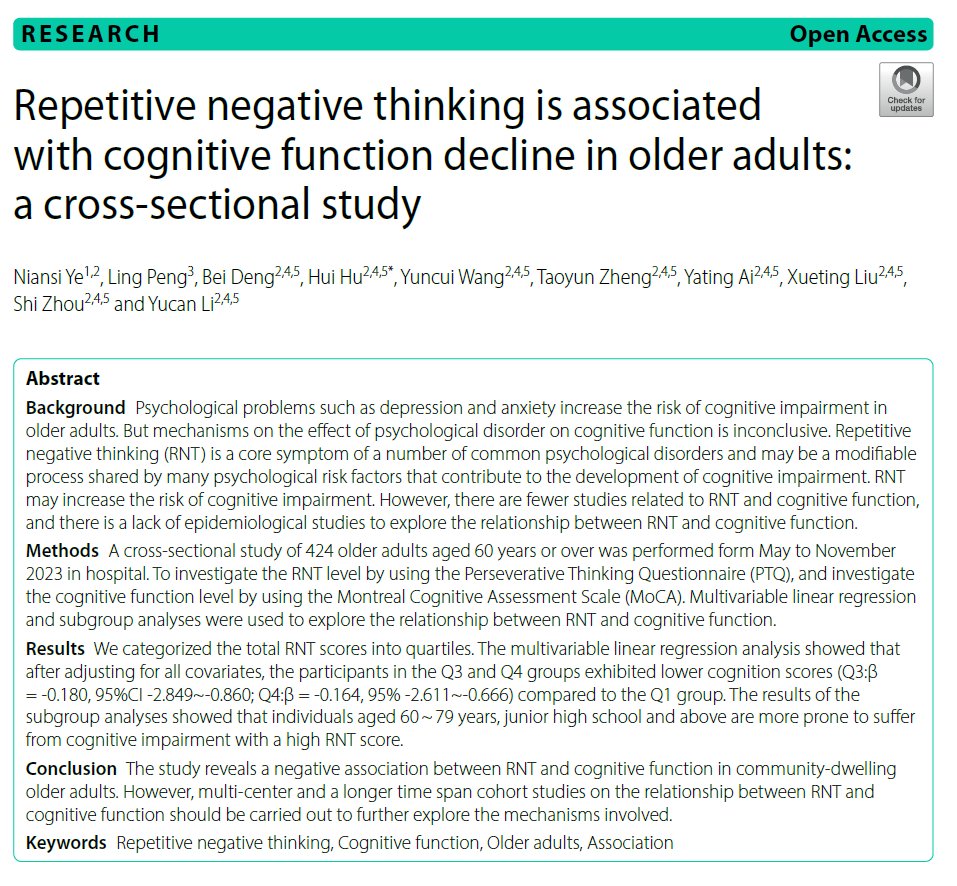
Repetitive negative thinking is associated with cognitive decline.
Repetition rewires the brain.
182
3,126
20,298
2,215,760
Humintell retweeted

27 Dec 2025
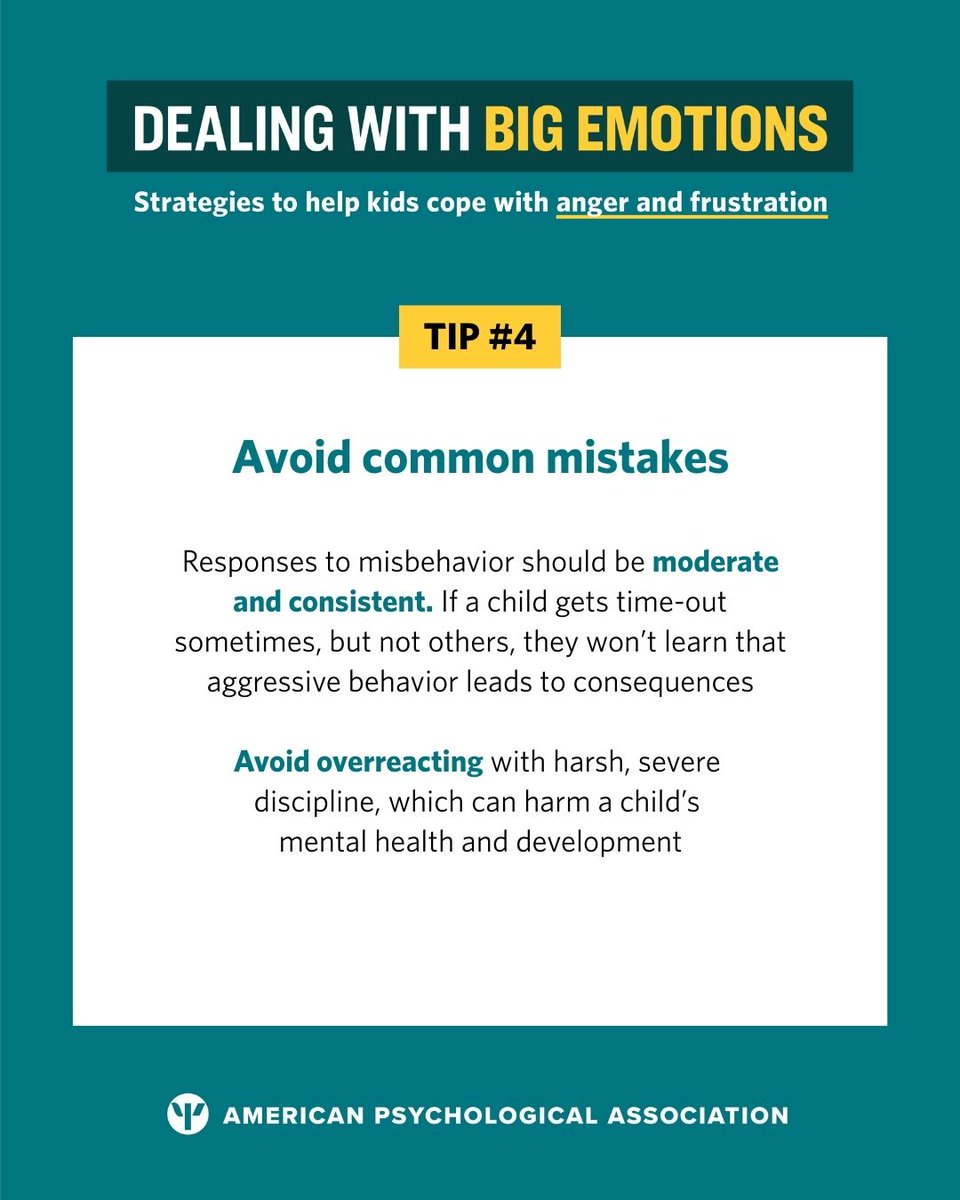
Big emotions need steady guidance, not harsh discipline. Consistency helps kids learn what to expect and how to cope.
Learn more: at.apa.org/ed3b30
2
10
33
2,844
Humintell retweeted

A new study, published in @FrontPsychiatry, offers compelling evidence that elevated blood pressure may actually mute our ability to express certain emotions on the face.
Read more plus my commentary: humintell.com/2026/01/resear…
1
2
109
Humintell retweeted

New Research: Music's context-dependent influence on oxytocin, social bonding, and emotion regulation: a systematic review frontiersin.org/articles/10.… #FrontiersIn #Cognition
1
5
284
Humintell retweeted

31 Dec 2025
Emotionally intelligent people are less likely to trust impulsively. But they’re also less likely to distrust prematurely. Here's what we can learn from their example that can improve our relationships. psychologytoday.com/us/blog/…
3
10
38
4,333
18 Dec 2025
👏🏼👏🏼👏🏼
18 Dec 2025

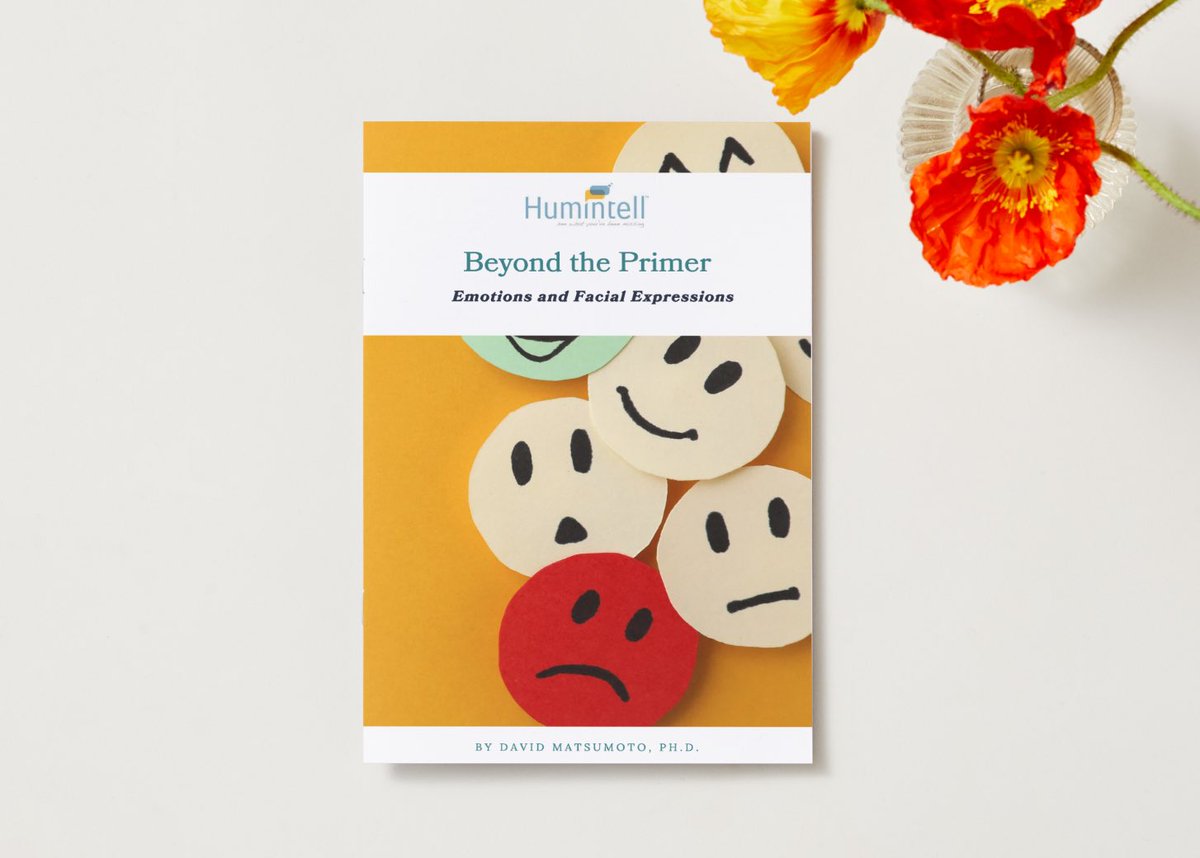
Pre-Order my newest book Beyond the Primer!
A collection of blogs written over the past six years on the science underlying the nature of emotions and facial expressions.
20% off free shipping for a limited time only: humintell.com/product/beyond…
1
79
Humintell retweeted

17 Dec 2025
The goal of emotional regulation isn't to reduce the size of emotions, nor is to to stop feeling emotions altogether.
The goal is to absorb mild emotional shocks without them becoming outsized emotional reactions that reek havoc on physical, mental, and social wellbeing
1
19
79
1,532
13 Dec 2025
According to new findings highlighted in @sciam, spending on experiences—such as concerts, trips, meals, or classes—creates deeper feelings of connection, belonging, and well-being than spending on material goods.
Learn more: humintell.com/2025/12/why-ex…
1
3
99
29 Nov 2025
Today’s #BlackFriday Drop
Save 75% off our Detecting Deception Advanced Package 📦
$99 for Today Only: humintell.com/product/detect…
1
1
96
28 Nov 2025
1 DAY ONLY: Our Best-Selling Package is 80% Off.
10 hours of learning to help improve your reading people skills.
Learn more: humintell.com/product/compre…
#BlackFriday
1
1
60
Humintell retweeted
26 Nov 2025
Being grateful is more than saying “thank you.”
Kids start to grasp that difference early on—and their sense of gratitude deepens as they get older, from appreciating concrete gifts to understanding the meaning behind them.
Hear the full conversation: at.apa.org/fa96d8
1
15
29
1,805
13 Nov 2025
Early Black Friday sale is starting early JUST FOR YOU!
*Save an ADDITIONAL 40% OFF already reduced prices*
Plus Claim your FREE GIFT with any purchase!
Use code BLACK at checkout.
SHOP NOW: humintell.com/blackfriday202…
64