
International experts on cannabis that provides accurate information to guide decisions. Increased use of cannabis risks serious medical & social consequences.
Joined April 2021
- Tweets 1,287
- Following 489
- Followers 557
- Likes 273
212 Photos and videos




Pinned Tweet

Cannabis-induced psychosis represents a significant and growing public health concern that requires urgent attention from clinicians, researchers, and policymakers.
media.sciltp.com/articles/25…
2
12
24
4,117
🏥 Should marijuana be treated like medicine?
A growing body of research has raised important questions about state medical marijuana programs, including whether many approved conditions are supported by strong scientific evidence and whether current regulations adequately protect patients.
Key questions include:
🔬 Are medical claims backed by rigorous clinical trials?
📋 Are products standardized, tested, and dosed like other medicines?
⚠️ Are patients fully informed about potential risks, including dependence, cognitive impairment, and mental health effects?
🏛️ Should medical cannabis programs be reassessed to better align with evidence-based medicine?
As medical marijuana programs continue to expand, policymakers and healthcare professionals face an important challenge: ensuring patient care is guided by science, not marketing or politics.
Read more: iasic1.org/reassessing-state…
#MedicalCannabis #Cannabis #EvidenceBasedMedicine #PublicHealth #PatientSafety #HealthPolicy #MentalHealth #CannabisAwareness #ScienceMatters #Healthcare #BrainHealth
5
🚨 New research suggests women experiencing menopause symptoms may be more likely to use cannabis—but is it helping or making things worse?
A large U.S. study found cannabis use was significantly associated with:
⚠️ Mood swings and irritability
⚠️ Anxiety and depression
⚠️ Sleep difficulties
⚠️ Sexual health concerns
⚠️ Hot flashes and other vasomotor symptoms
Researchers note that many women may be using cannabis to self-medicate untreated menopause symptoms, highlighting the need for better treatment options and more research on cannabis's long-term effects during midlife.
Read more: iasic1.org/menopause-symptom…
#Cannabis #WomensHealth #Menopause #MentalHealth #CannabisAwareness #THC #PublicHealth #BrainHealth #HealthResearch #EvidenceBased #MidlifeHealth
24
💊 If it isn't tested, it isn't medicine.
Whether it's a prescription drug, cannabis product, supplement, or any substance marketed for health benefits, consumers deserve to know exactly what's in it—and whether it's safe, effective, and accurately labeled.
Without rigorous testing, there's no way to verify:
🔬 Potency
🧪 Purity
⚠️ Contaminants and toxins
📋 Consistency from batch to batch
❤️ Real health effects and risks
Evidence-based medicine depends on transparent, reliable testing—not assumptions, marketing claims, or anecdotes. Quality testing protects patients and builds trust.
Read more: iasic1.org/if-it-isnt-tested…
#Cannabis #MedicalCannabis #PatientSafety #EvidenceBasedMedicine #PublicHealth #HealthResearch #ConsumerSafety #DrugTesting #CannabisAwareness #ScienceMatters
2
7
110
🎥 Is the public getting the full story about marijuana?
In this thought-provoking presentation, journalist and author Alex Berenson examines the evidence surrounding modern cannabis, mental health, psychosis, addiction, and public perceptions of risk. He challenges many of the assumptions that have shaped the marijuana legalization debate and argues for a closer look at emerging research.
Watch here: youtu.be/Nj-i3qmZC-A?si=IXuo…
What do you think? Are we having an honest conversation about the risks of high-potency cannabis?
#Cannabis #Marijuana #MentalHealth #Psychosis #BrainHealth #PublicHealth #CannabisAwareness #THC #AddictionScience #EvidenceBased #DrugPolicy #AlexBerenson
6
5
230
⚠️ A high-profile murder trial raised important questions about cannabis and psychosis.
In the trial of Eddie Ray Routh, the man convicted of killing American Sniper author Chris Kyle and Chad Littlefield, a forensic psychologist testified that Routh suffered from a paranoid disorder worsened by alcohol and marijuana use, describing it as "cannabis-induced psychosis." The jury ultimately rejected an insanity defense and convicted him of capital murder.
While most cannabis users will never experience psychosis, research shows that heavy use—especially high-THC products and use among vulnerable individuals—can increase the risk of psychotic symptoms and serious mental health consequences.
Read more: mprnews.org/story/2015/02/24…
#Cannabis #Psychosis #MentalHealth #CannabisAwareness #THC #PublicHealth #AddictionScience #BrainHealth #Prevention #EvidenceBased
2
2
7
255
🚨 New research highlights the risks of combining alcohol and cannabis.
Studies show co-use is linked to:
⚠️ Greater impairment and reduced performance
⚠️ Higher and more frequent substance use
⚠️ Increased risk of impaired driving
⚠️ More social, behavioral, and mental health consequences
⚠️ Worse clinical outcomes overall
Researchers emphasize the need for more longitudinal studies and better interventions to reduce co-use and its harms.
Read the review: pmc.ncbi.nlm.nih.gov/article…
#Cannabis #Alcohol #SubstanceUse #PublicHealth #MentalHealth #AddictionScience #Prevention #HealthResearch #ImpairedDriving #EvidenceBased
2
4
105
🚨 New Research Alert: Cannabis Retailers Frequently Violating State Marketing Rules
A 2025 audit of 161 cannabis retailers across 5 U.S. cities found widespread noncompliance with state regulations designed to protect consumers and youth.
🔎 Key findings:
• Nearly 1 in 4 retailers (24%) displayed youth-oriented packaging or marketing.
• 66% made prohibited health-related claims about cannabis products.
• 94% of retailers in states restricting discounts were still promoting discounts.
• Required pregnancy warning signs were present in only 65% of stores.
• Age verification practices varied widely, with some retailers failing to check ID altogether.
The study concluded that significant gaps remain in compliance with cannabis retail regulations, reinforcing the need for stronger oversight, enforcement, and public health protections.
As cannabis commercialization expands, families deserve honest information, responsible marketing practices, and safeguards that put public health ahead of profits.
📖 Study: Cannabis retailers’ marketing practices and compliance with state regulations: a 2025 point-of-sale audit in 5 U.S. cities
sciencedirect.com/science/ar…
#PublicHealth #CannabisResearch #YouthPrevention #THCFacts
1
1
42
FORT LAUDERDALE, Fla. — As medical marijuana becomes more widely legalized, veterinarians are seeing an unintended consequence affecting pets.
Animal poison control centers are reporting a nearly 300% increase in marijuana-related calls over the last several years.
For Hannah Branson, a pet emergency started with chocolate.
“The first thing I see when we walk in is just foil everywhere, all over the floor,” Branson said.
Branson had recently adopted Falcore, a small terrier-Chihuahua mix.
“I glance over at the dining room table and the bowl is completely empty so my heart sank,” she said.
She said she had no idea her new puppy would be able to climb onto the table and help himself to a bowl full of chocolate Easter candy.
“The bowl was pretty full. It was a Costco-size bag, so quite a decent amount, for sure,” Branson said when asked about how much chocolate Falcore ate.
local10.com/news/local/2026/…
1
3
77
New peer-reviewed research in the Journal of Perinatology raises serious concerns about cannabinoid exposure and birth defects.
The study examined U.S. atrial septal defect rates, a congenital heart defect, and found that cannabinoid exposure and cannabinoid-related interactions were associated with increased ASD prevalence. The authors concluded that cannabinoid and cannabinoid-ethnicity interactions met epidemiological causal criteria.
This is another reminder: THC is not harmless, especially when it comes to pregnancy, babies, and future generations.
Families deserve prevention-focused policy, honest education, and protection from the commercialization of intoxicating THC products.
Read the study: nature.com/articles/s41372-0…
#THC #Pregnancy #BirthDefects #PublicHealth #Prevention
2
38
New research highlights what many families are experiencing firsthand: parents report that youth cannabis use can worsen—or even trigger—serious mental health challenges in some young people. Parents described emotional and financial strain, difficulty finding informed treatment, and a lack of public awareness about cannabis-related mental health risks.
The study calls for better public health education, stronger clinician training, improved family support services, and greater oversight of high-potency cannabis products.
Read the study: pubmed.ncbi.nlm.nih.gov/3993…
#CannabisAwareness #MentalHealth #YouthMentalHealth #Parenting #PublicHealth #CannabisResearch #Prevention #FamilySupport #BrainHealth #YouthWellness #EvidenceBased
1
4
8
119
A new study of 2,155 college students found that cannabis use, non-prescribed stimulant use, and combining alcohol with stimulants were associated with higher levels of depressive symptoms. Adverse childhood experiences were also a significant predictor of depression.
Notably, researchers highlighted findings from Texas A&M showing that recent alcohol use alone was not associated with depression, while recent cannabis use alone was. Somewhat surprisingly, cannabis plus alcohol use was not associated with depression, even though cannabis-only use was.
As colleges face growing mental health challenges, these findings underscore the need for prevention efforts that address substance use, mental health, and the lasting impact of childhood trauma.
Read the study: link.springer.com/article/10…
#MentalHealth #CollegeStudents #Cannabis #Prevention #PublicHealth
2
8
197
New research shows a dramatic rise in cannabis use among U.S. parents. In 2024, about 1 in 12 parents reported using cannabis on most days of the month—up from 1 in 39 in 2012.
Daily cannabis use among parents is now 4 times more common than daily alcohol use, and cannabis use disorder rates continue to rise.
Researchers estimate that 5.9 million children now live with a parent who uses cannabis regularly, highlighting the urgent need for more research on how cannabis use may affect parenting and child development.
sciencedirect.com/science/ar…
#CannabisUse #Parenting #PublicHealth #ChildDevelopment #SubstanceUse #CannabisResearch #FamilyHealth #Prevention #MentalHealth #EvidenceBased #YouthWellBeing
10
110
New national data: About 6% of U.S. cannabis users reported past-year Cannabinoid Hyperemesis Syndrome (CHS). Higher risk was linked to high-THC concentrates, edibles, riskier cannabis use patterns, and alcohol use.
CHS awareness can save lives.
sciencedirect.com/science/ar…
#CHS #CannabisAwareness #PublicHealth #THC #YouthHealth
4
425
As medical professionals, we are deeply concerned by the growing number of teens struggling with the mental, emotional, and physical effects of today’s high-potency marijuana products. Adolescence is a critical time for brain development, and research continues to link youth cannabis use with increased risks for anxiety, depression, psychosis, impaired learning, and addiction. Parents, educators, and communities need honest conversations grounded in science—not marketing.
This Tennessee story highlights why awareness and prevention matter.
timesnews.net/news/374355/te…
#YouthMentalHealth #CannabisAwareness #TeenHealth #PublicHealth #MarijuanaAwareness #PreventionMatters
1
50
New research found that individuals with cannabis use disorder had a nearly 4x greater risk of developing lung and/or bronchus cancer compared to those without cannabis use disorder. Increased risks were also found for small cell carcinoma, adenocarcinoma, and squamous cell carcinoma.
As marijuana use rises, so do concerns about the long-term health effects of heavy THC use.
Study: sciencedirect.com/science/ar…
#CannabisResearch #LungCancer #THCFacts #PublicHealth #MarijuanaAwareness
2
6
105
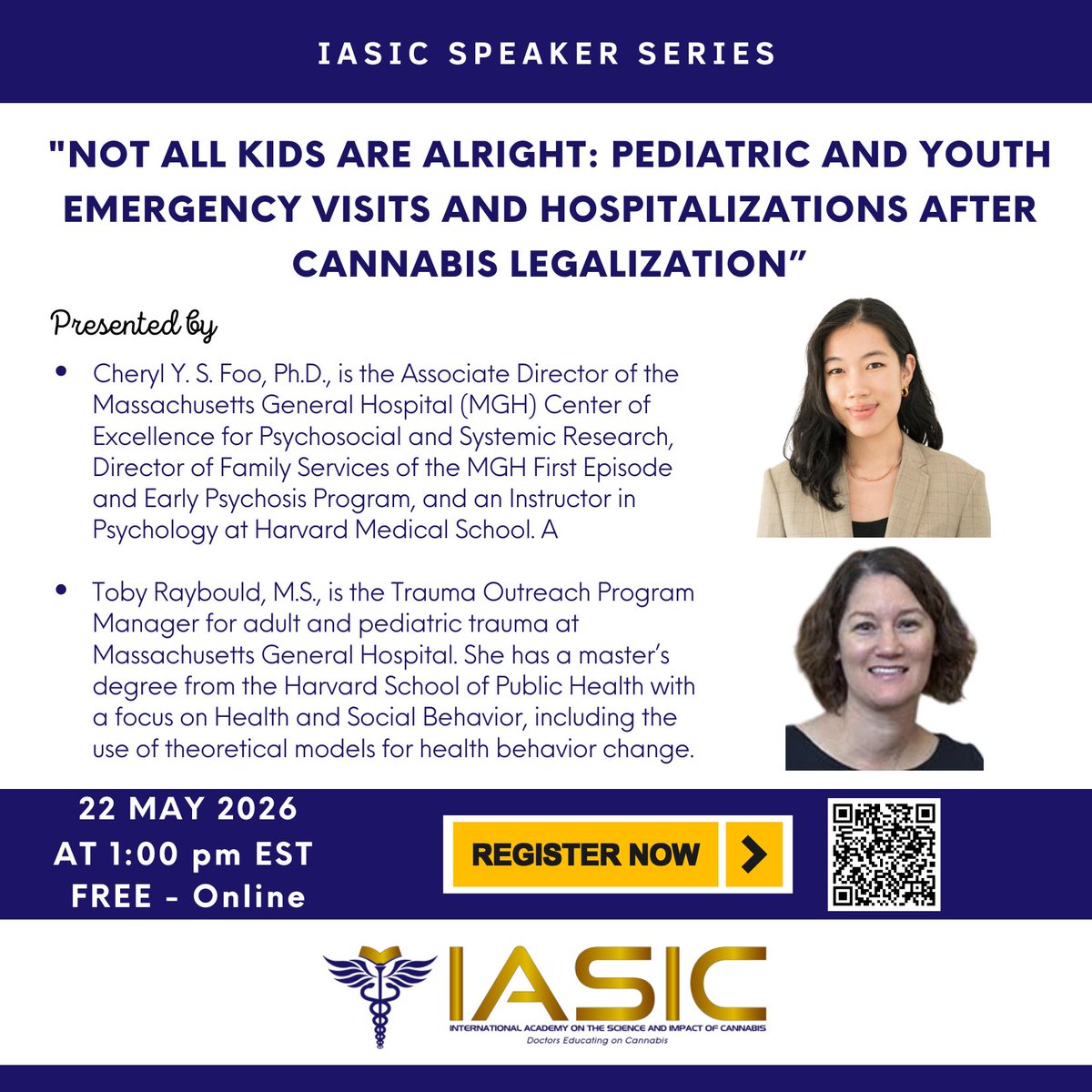
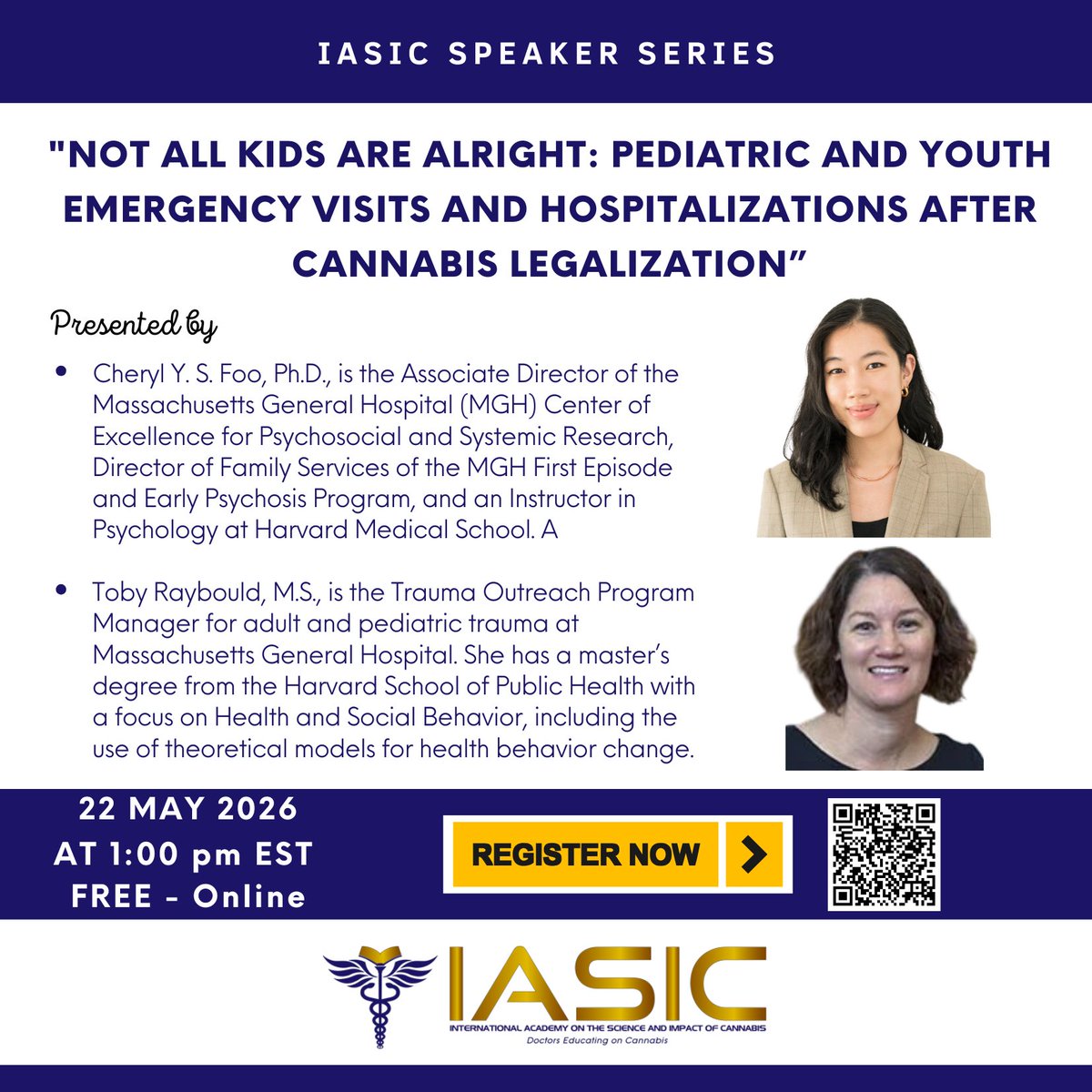
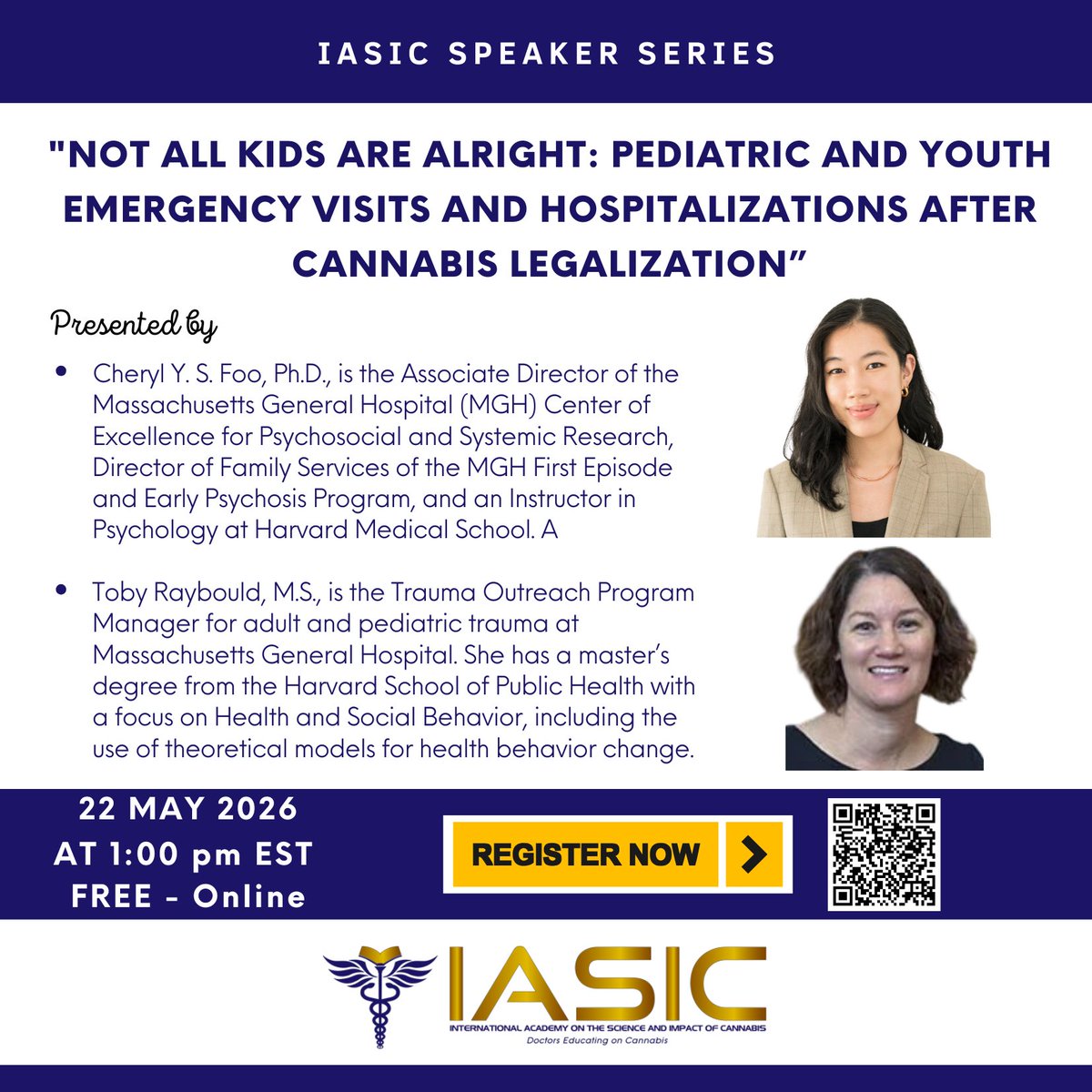
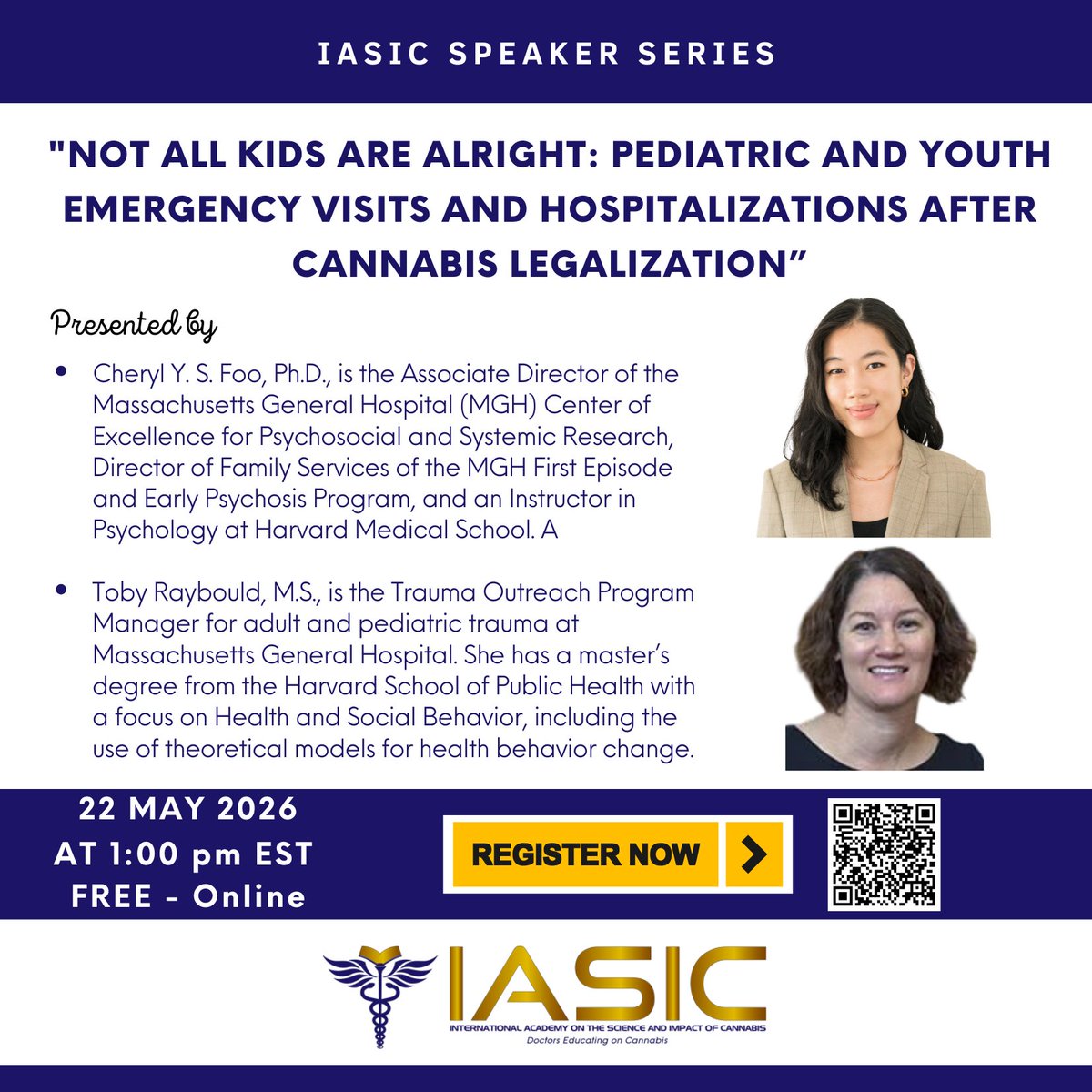
📢 IASIC Speaker Series is pleased to invite you to join us for an insightful webinar.
🖥️ Not All Kids Are Alright: Pediatric and Youth Emergency Visits and Hospitalizations after Cannabis Legalization
💬Featuring groundbreaking research from Cheryl Y. S. Foo, Ph.D., and Toby Raybould, M.S. This session will explore the evolving landscape of youth health in the era of cannabis legalization and the public health implications for families, clinicians, and policymakers.
🗓 May 22 | 1 PM EST : Register: us02web.zoom.us/webinar/regi…
#PublicHealth #YouthHealth #CannabisPolicy #Prevention #MentalHealth
1
612
Not all alcohol cannabis use days are the same. 🍻🌿
A study of 255 young adults found 4 distinct patterns of same-day use: alcohol-focused, cannabis-focused, heavy use, and early-day use. The biggest risk? Heavy use days—these were most strongly linked to same-day harms.
Motives also mattered, with use often tied to social settings, fun, or simply being offered substances.
👉 Takeaway: Understanding how and when people combine substances is key to reducing harm—not just whether they do.
Read more: jsad.com/doi/abs/10.15288/js…
#SubstanceUse #PublicHealth #CollegeStudents #AlcoholResearch #CannabisResearch #MentalHealth #HealthResearch
1
41
🚨 New research highlights serious risks of mixing cannabis edibles and alcohol.
A controlled study found that using both together leads to greater driving impairment and higher intoxication than either substance alone.
⚠️ In fact, cannabis alcohol at just 0.05% BAC impaired driving as much—or more—than alcohol alone at 0.08% BAC (the legal limit in the U.S.).
Even more concerning: standard field sobriety tests often failed to detect this impairment.
👉 Bottom line: Mixing edibles and alcohol can significantly increase crash risk—and current roadside tests may miss it.
Learn more here:jamanetwork.com/journals/jam…
#PublicSafety #ImpairedDriving #CannabisAwareness #AlcoholAwareness #RoadSafety #BrainHealth #DrivingSafety #SubstanceUse #Prevention #HealthResearch
2
5
200

A new study published in Nature Mental Health found that combining cannabis and tobacco can nearly TRIPLE the risk of developing psychosis in people already considered vulnerable. Researchers tracked more than 1,000 adolescents and young adults and found that those heavily using cannabis alongside tobacco were far more likely to develop serious mental illnesses like schizophrenia.
Researchers also found that smoking cannabis and tobacco together increases the body’s absorption of THC — intensifying its effects on the brain.
Read more:
neurosciencenews.com/cannabi…
#MentalHealth #Psychosis #CannabisAwareness #THC
2
9
539