
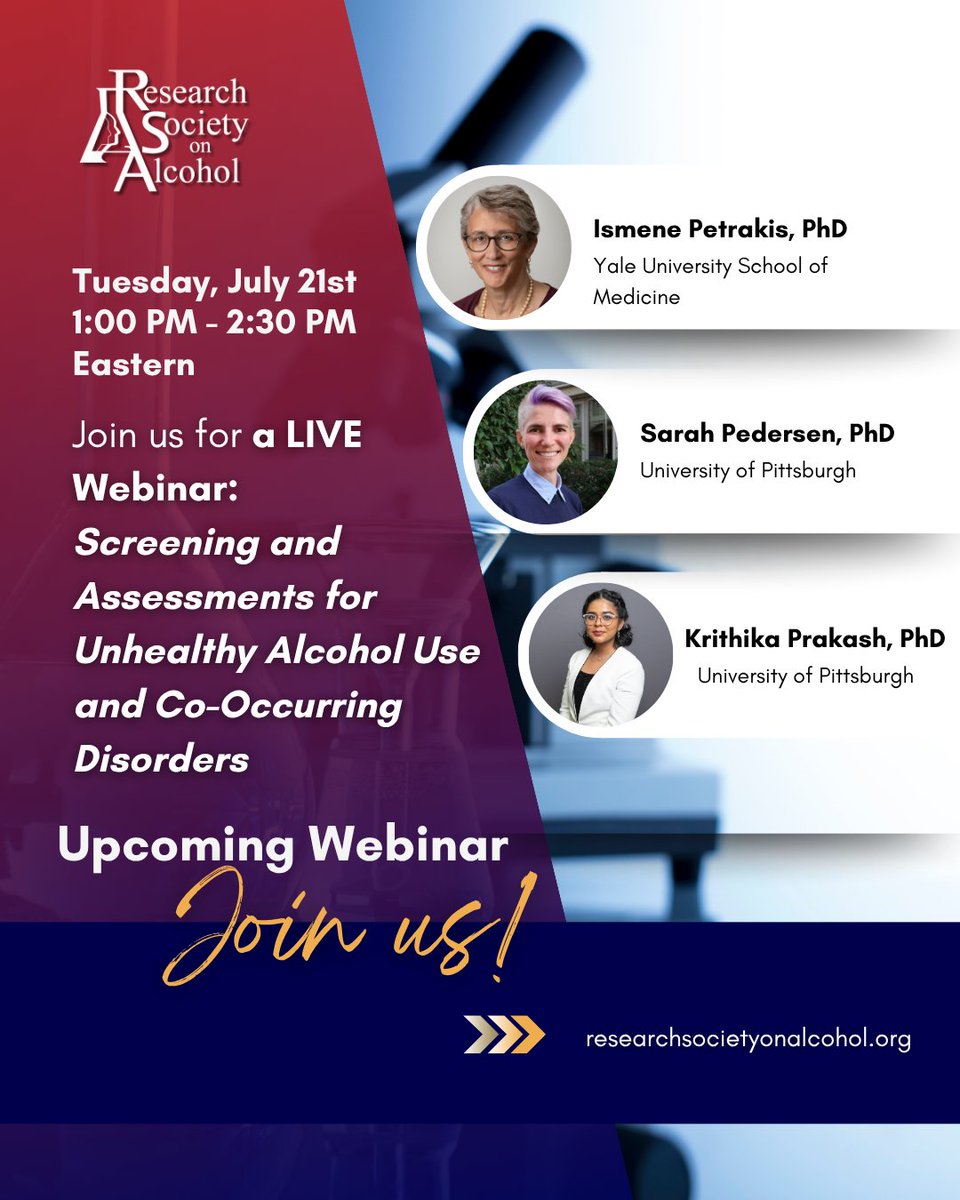
📅 Save the Date!
Join RSA on July 21, 1:00–2:30 PM ET for a live webinar:
Screening and Assessments for Unhealthy Alcohol Use and Co-Occurring Disorders
Registration coming soon.
#AlcoholResearch #RSA #AddictionScience
20

🎥 Is the public getting the full story about marijuana?
In this thought-provoking presentation, journalist and author Alex Berenson examines the evidence surrounding modern cannabis, mental health, psychosis, addiction, and public perceptions of risk. He challenges many of the assumptions that have shaped the marijuana legalization debate and argues for a closer look at emerging research.
Watch here: youtu.be/Nj-i3qmZC-A?si=IXuo…
What do you think? Are we having an honest conversation about the risks of high-potency cannabis?
#Cannabis #Marijuana #MentalHealth #Psychosis #BrainHealth #PublicHealth #CannabisAwareness #THC #AddictionScience #EvidenceBased #DrugPolicy #AlexBerenson
6
5
230
⚠️ A high-profile murder trial raised important questions about cannabis and psychosis.
In the trial of Eddie Ray Routh, the man convicted of killing American Sniper author Chris Kyle and Chad Littlefield, a forensic psychologist testified that Routh suffered from a paranoid disorder worsened by alcohol and marijuana use, describing it as "cannabis-induced psychosis." The jury ultimately rejected an insanity defense and convicted him of capital murder.
While most cannabis users will never experience psychosis, research shows that heavy use—especially high-THC products and use among vulnerable individuals—can increase the risk of psychotic symptoms and serious mental health consequences.
Read more: mprnews.org/story/2015/02/24…
#Cannabis #Psychosis #MentalHealth #CannabisAwareness #THC #PublicHealth #AddictionScience #BrainHealth #Prevention #EvidenceBased
2
2
7
255
🚨 New research highlights the risks of combining alcohol and cannabis.
Studies show co-use is linked to:
⚠️ Greater impairment and reduced performance
⚠️ Higher and more frequent substance use
⚠️ Increased risk of impaired driving
⚠️ More social, behavioral, and mental health consequences
⚠️ Worse clinical outcomes overall
Researchers emphasize the need for more longitudinal studies and better interventions to reduce co-use and its harms.
Read the review: pmc.ncbi.nlm.nih.gov/article…
#Cannabis #Alcohol #SubstanceUse #PublicHealth #MentalHealth #AddictionScience #Prevention #HealthResearch #ImpairedDriving #EvidenceBased
2
4
105

Key predictors of returning to drinking after #alcoholAssociatedHepatitis include:
🏥Frequent drinking days
🏫 Lower education
These findings, published in @ACERjournal, highlight the importance of targeted follow-up care. #AddictionScience #Hepatology vist.ly/56hx8
4
132

May 31
અફીણનો નશો કરનારાઓને કેમ નથી દેખાતી પોતાની બરબાદી? જાણો કેવી રીતે મગજ કરે છે નુકસાન
#OpiumAddiction #DrugAwareness #BrainHealth #MentalHealth #AddictionScience #Anosognosia #Dopamine
zeenews.india.com/gujarati/l…
96

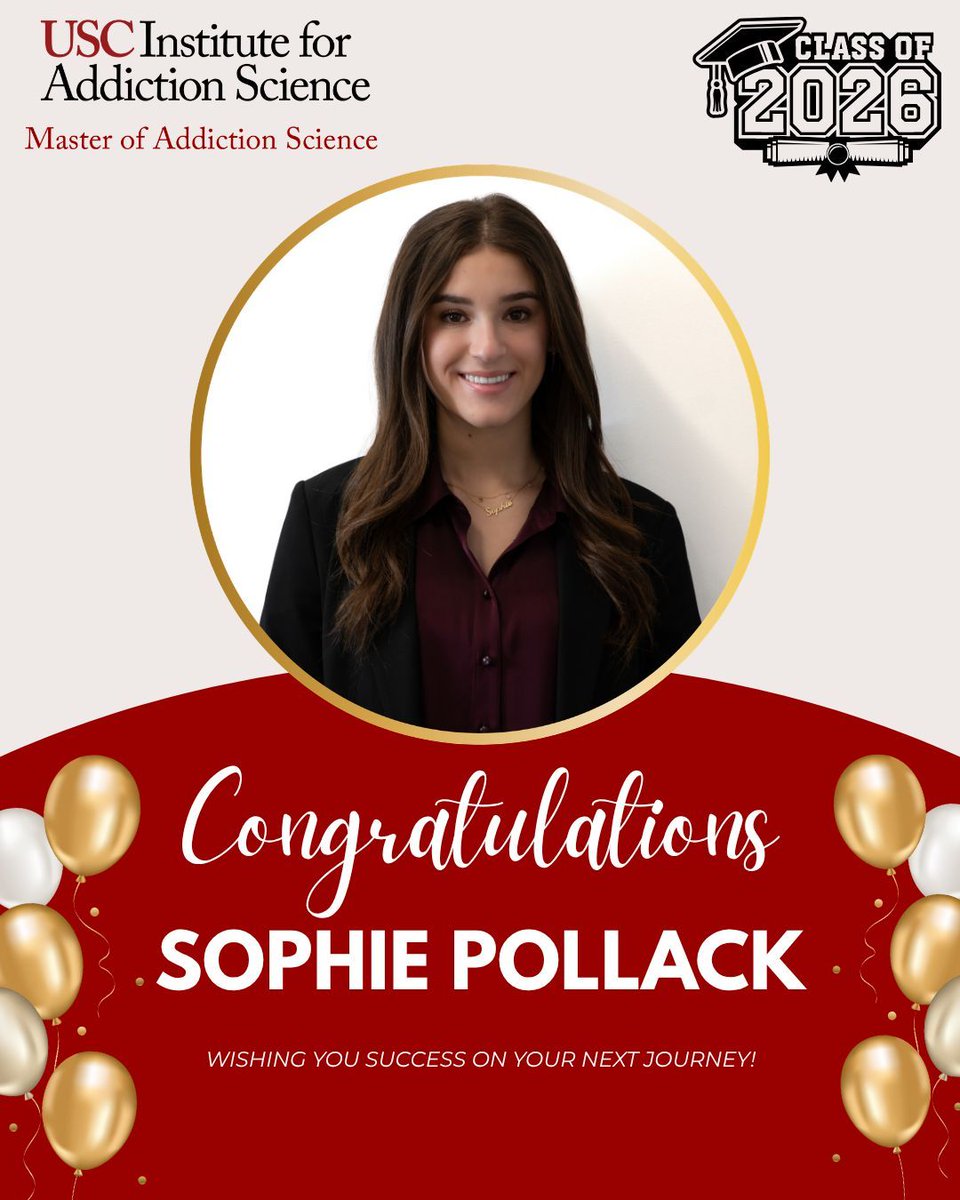
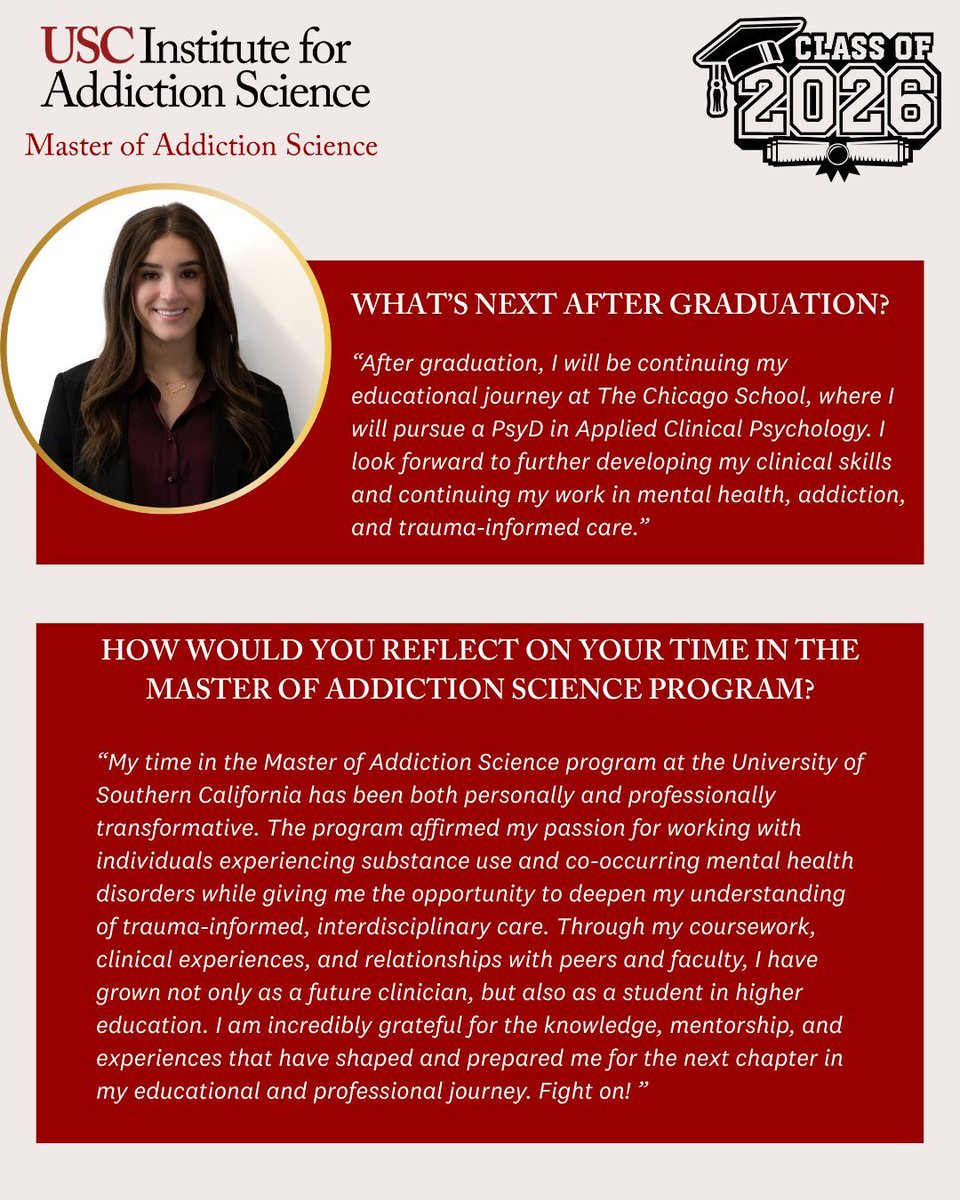
We would like to take the time to acknowledge another graduate from our 2026 Masters of Addiction Science Program.
Congratulations to Sophie Pollack on her upcoming graduation from the Institute for Addiction Science's Master of Addiction Science Program! 🎓✨
We are so proud of everything you've accomplished and so excited for the next chapter, Sophie will be heading to The Chicago School to pursue her PsyD in Applied Clinical Psychology! Wishing you all the best as you continue to grow into the incredible clinician we know you're becoming. The field of psychology is lucky to have you! 🧠💙
#Graduation #USC #AddictionScience #PsyD #ChicagoSchool #FuturePsychologist
1
2
111
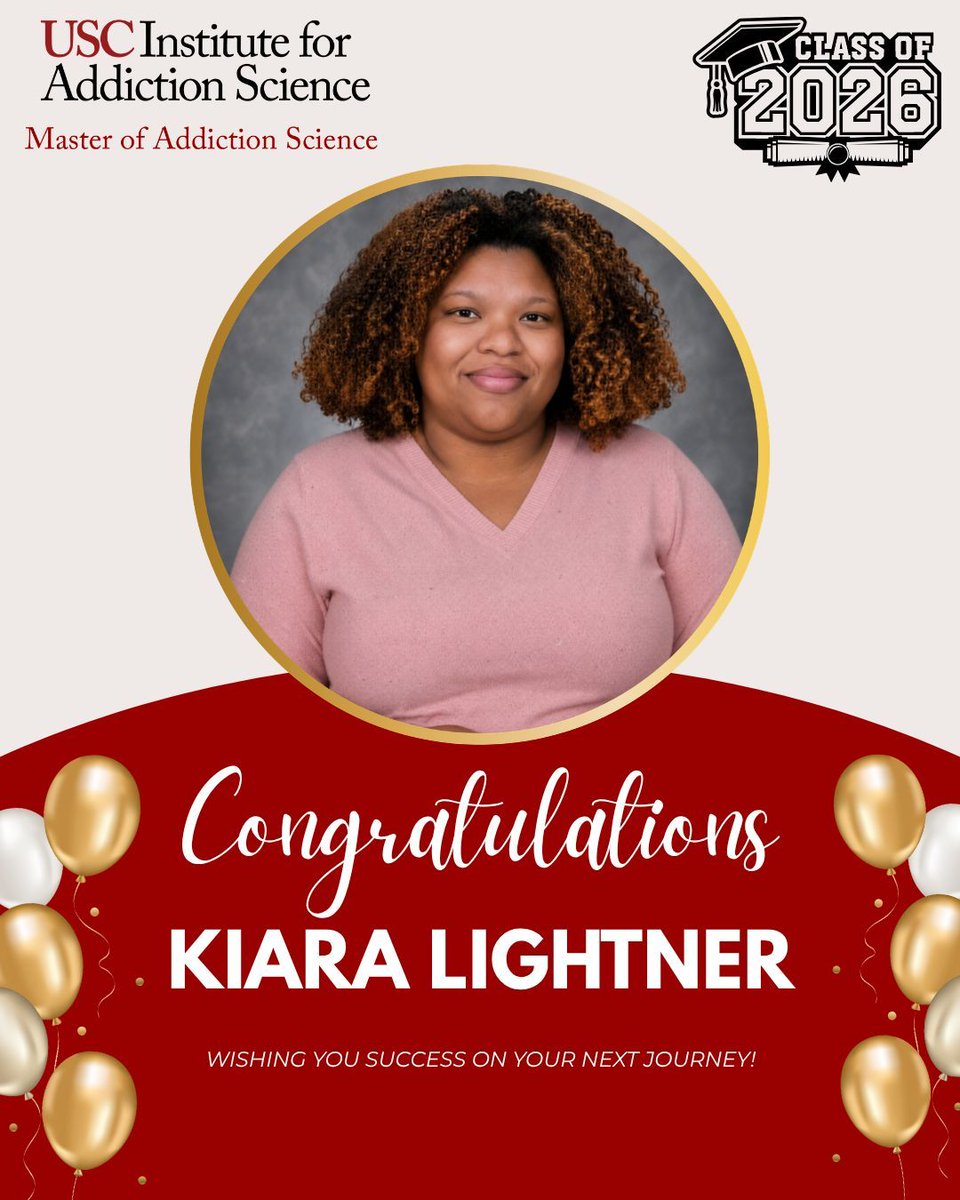
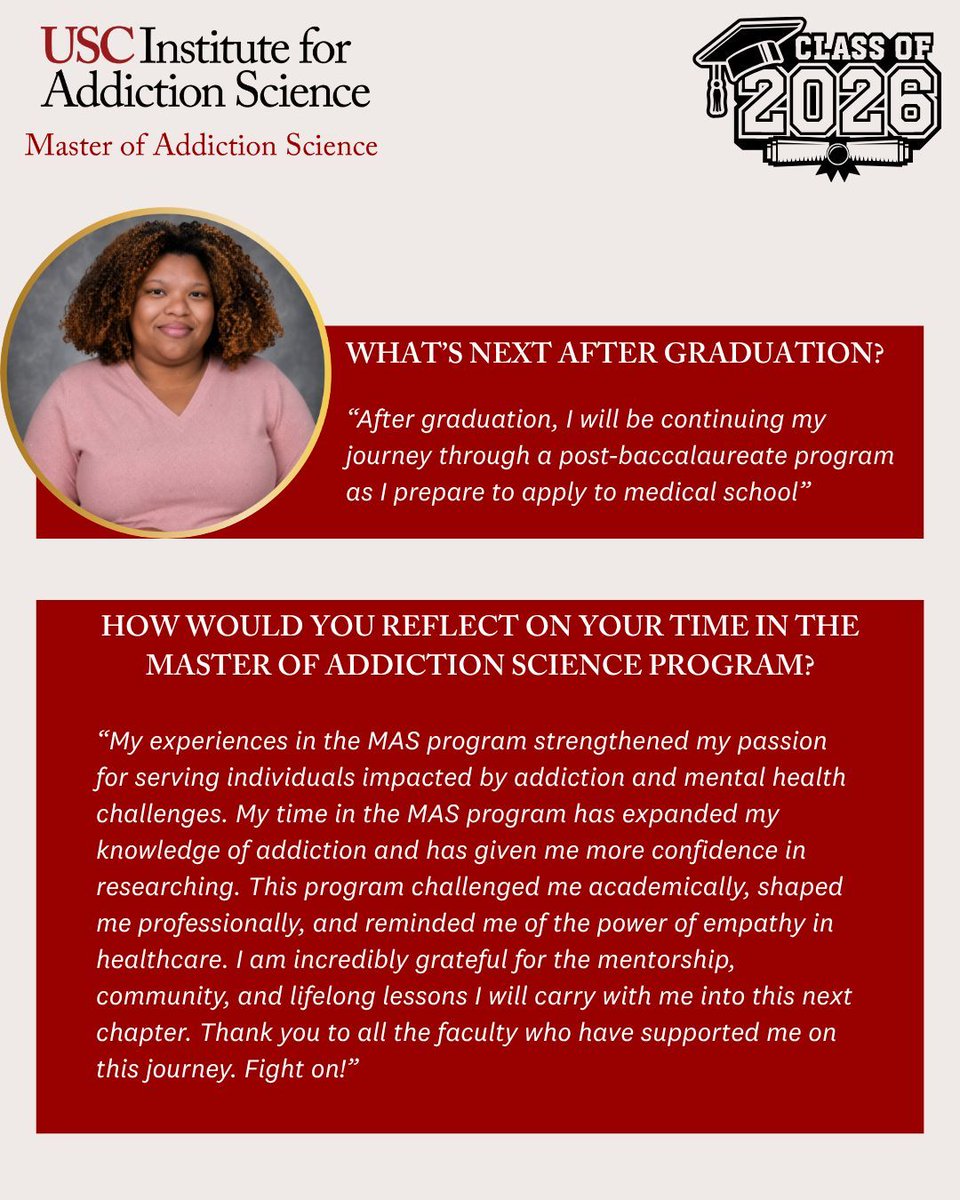
It's graduation season and we are honored to have another graduating class from our Master's of Addiction Science Program!
We would like to take the time to congratulate Kiara Lightner on her upcoming graduation from our Institute for Addiction Science's Master of Addiction Science Program! 🎓✨
Your dedication and hard work are truly inspiring. Wishing you all the best as you continue your post-baccalaureate journey and take the next steps toward medical school — the field of medicine is lucky to have someone so passionate and driven headed its way. We can't wait to see everything you accomplish! 🩺💙
#Graduation #USC #AddictionScience
2
79
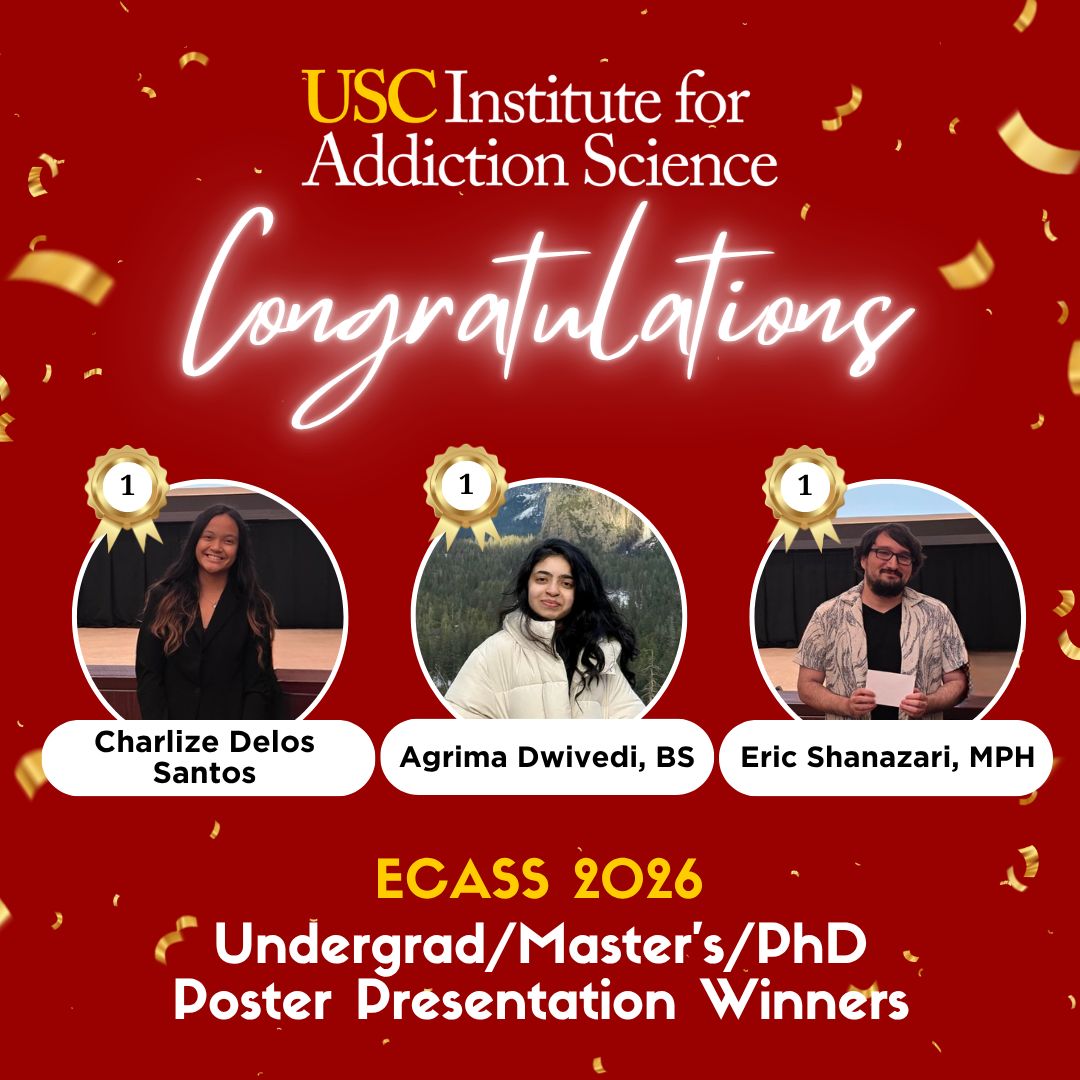
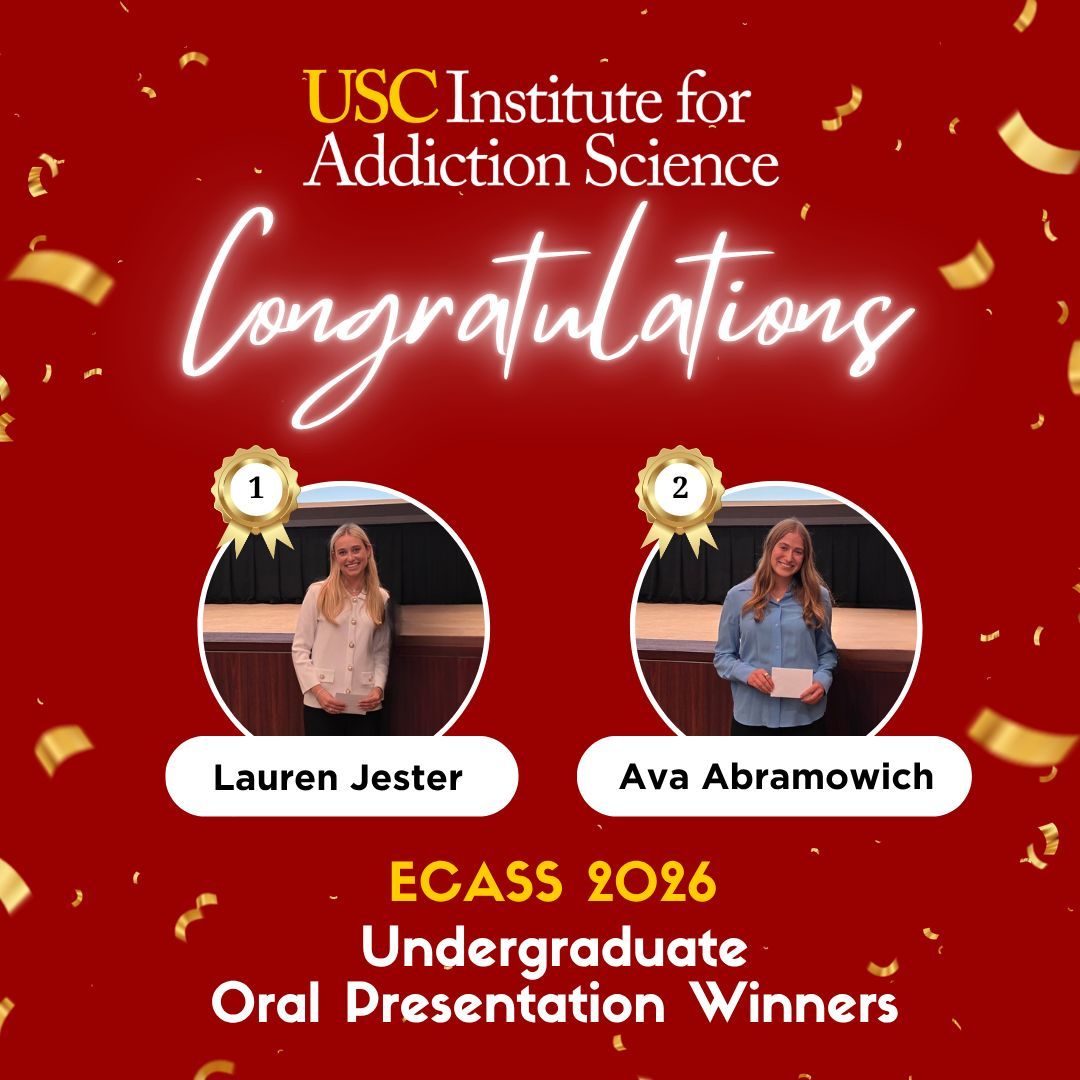
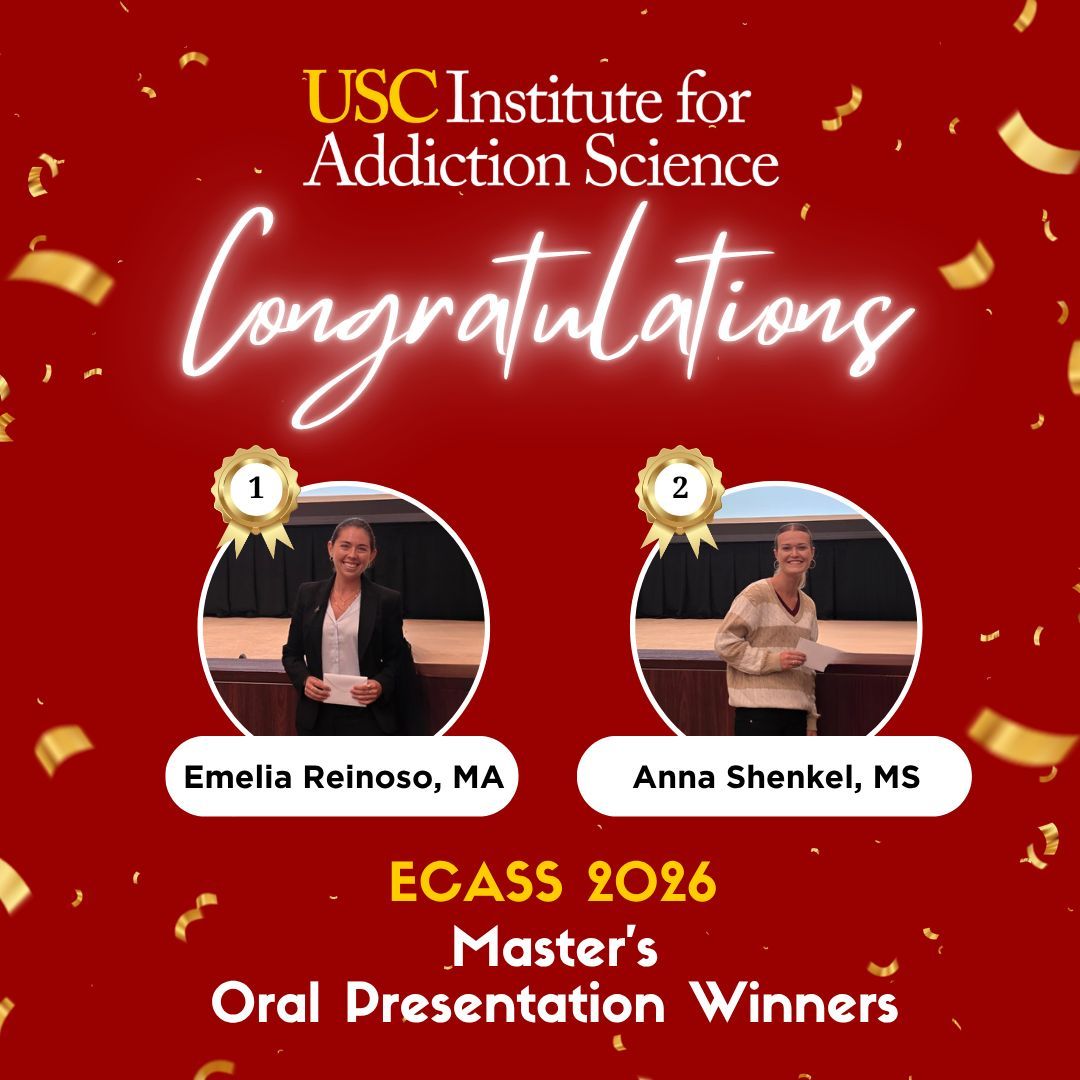
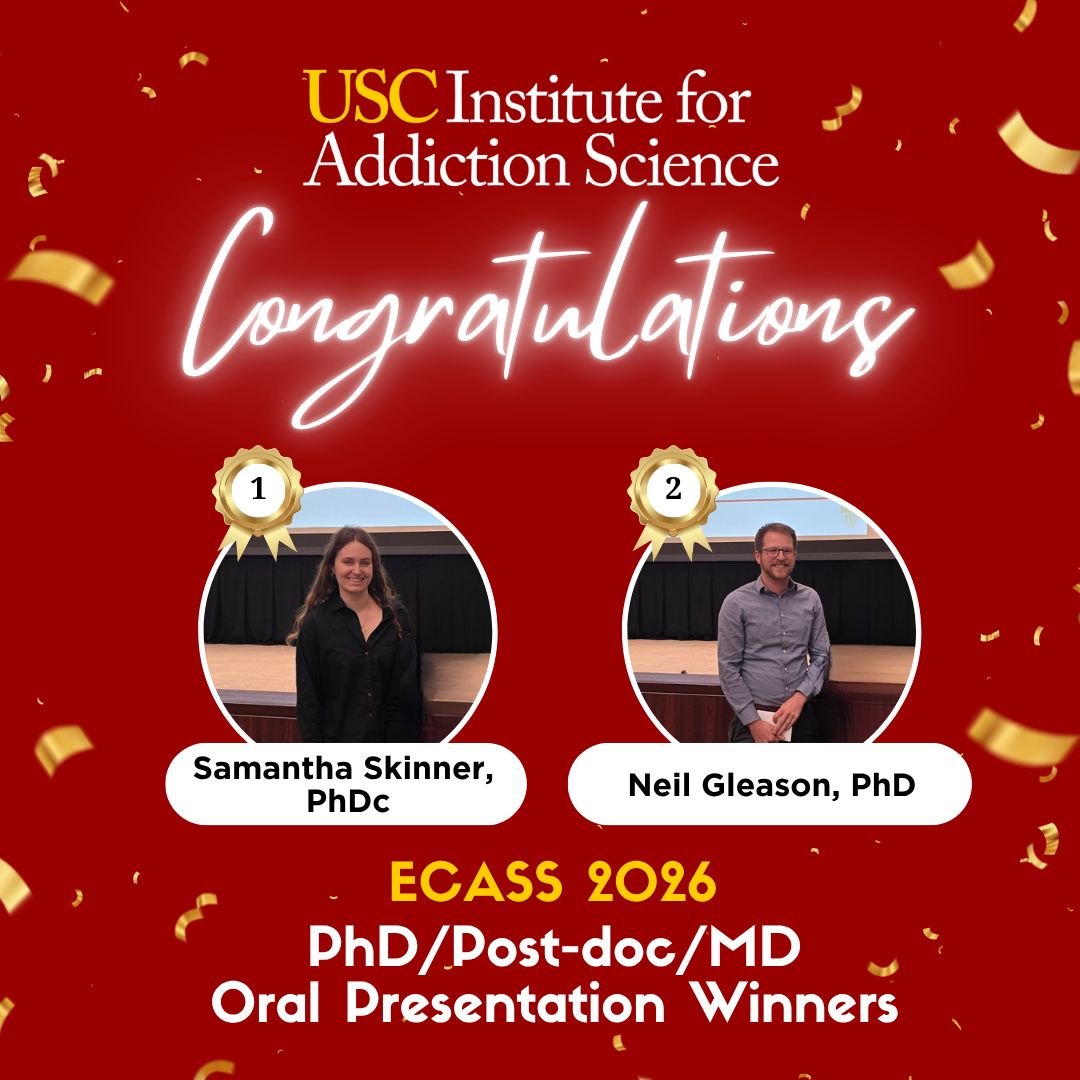
Congratulations to all of the winners of the Early Career Addiction Science Showcase!
We are so proud to recognize the outstanding researchers who rose to the top with their exceptional work.
Your dedication to advancing addiction science is an inspiration to the entire community. The quality of research on display was a true testament to the bright future of this field.
Thank you to our judges for their time and thoughtfulness, and to all 28 presenters — every single one of you made this showcase something to be proud of.
#AddictionScience #EarlyCareer #Research #Congratulations #Showcase #AddictionResearch #PublicHealth
1
3
54

May 1
30 mg morphine works. 6 weeks later, the same dose barely touches the pain.
That is opioid tolerance. It is the engine of addiction.
A new gene therapy in mice prevents it from developing at all.
neurogenesisproject.com/blog…
#AddictionScience
2
34

Apr 29
Excited to be heading to #CPA2026 (APA Division 50) tomorrow.
If you’ll be there, I’d love to hear what you’re presenting or most looking forward to. Always appreciate connecting with others in addiction science/clinical work.
See you there?
#AddictionScience @apadivision50
4
110

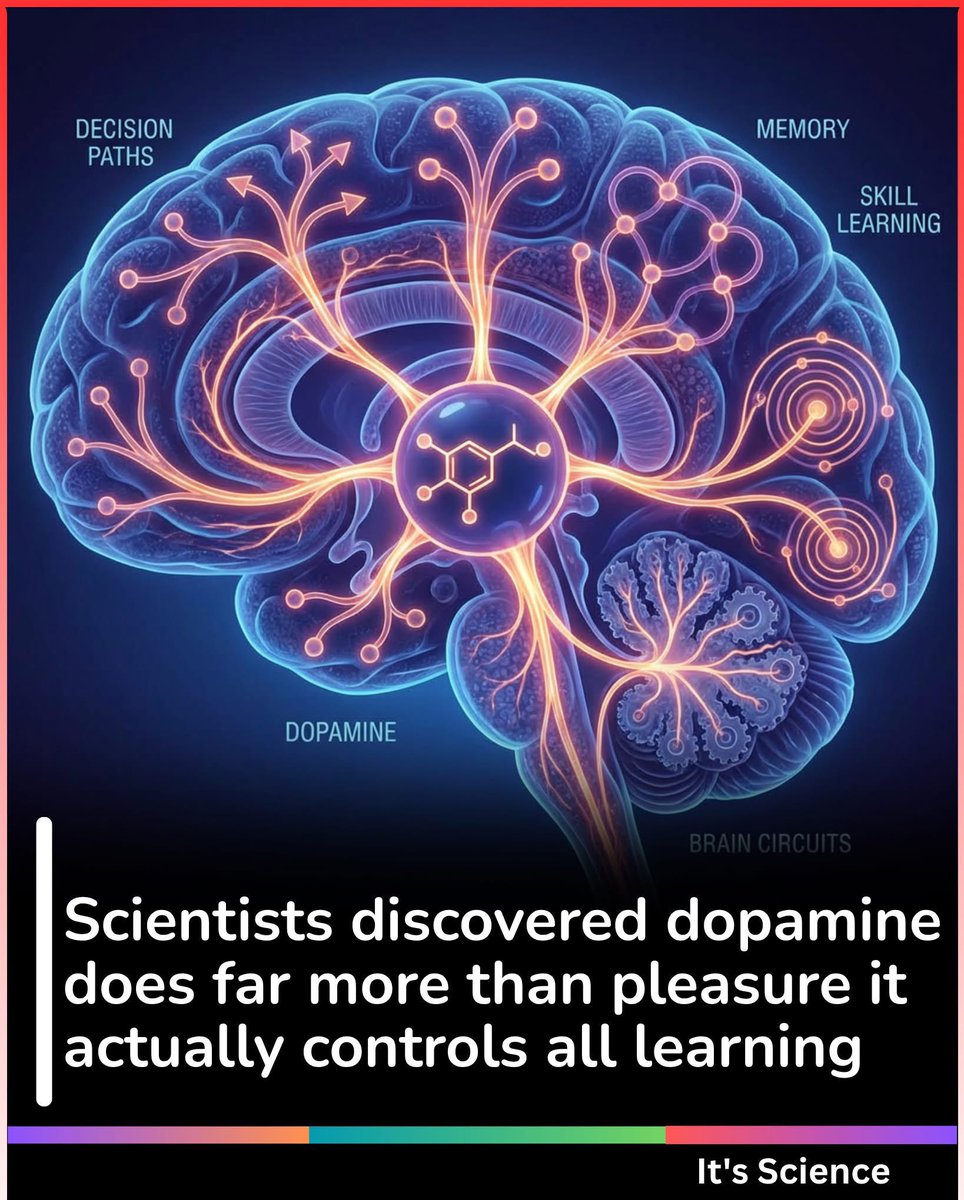
🚨 Forget “Dopamine = Pleasure” — Scientists just confirmed it does FAR more: Dopamine is the brain’s master learning signal that controls how we learn EVERYTHING! 🧠✨ (2026 update)
The popular myth that dopamine is just the “pleasure chemical” is wildly oversimplified & outdated.
Decades of research — highlighted in major 2025 reviews from the Howard Hughes Medical Institute’s Janelia Research Campus & related work in Neuron — show that dopamine primarily acts as a prediction error signal. It tells your brain the difference between what you expected & what actually happened, constantly updating your behavior, beliefs, decisions & skills.
•When something is better than expected → dopamine bursts → “Great! Update your model & do more of this.”
•When something is worse than expected → dopamine dips
→ “Not good. Change your approach.”
This mechanism drives reward learning, but also language acquisition, motor skills, social cognition, decision-making & essentially all forms of learning throughout life.
Why it matters:
•Addiction: Floods the system with artificial “positive surprises,” trapping people in escalating cycles.
•Parkinson’s: Loss of dopamine neurons impairs not just movement but learning flexibility.
•Schizophrenia: Aberrant dopamine signaling may create false prediction errors, leading to delusions & hallucinations.
Understanding dopamine as a learning optimizer (not just a feel-good molecule) is opening revolutionary new approaches to treating addiction, psychosis, learning disorders & more.
•“Dopamine Is Not Pleasure — It’s a Prediction Error Signal” (clear breakdown of the science):
youtube.com/watch?v=dopamine…
•“How Dopamine Controls Learning, Not Just Reward – Janelia Research Insights”
•“The Real Role of Dopamine in the Brain: Beyond Pleasure” (2025–2026 neuroscience updates)
The prediction error framework remains foundational, with ongoing refinements (including action prediction errors and circuit-specific teaching signals) expanding our understanding. This is established neuroscience with profound implications for mental health & learning.
Drop a 🔥 if this changes how you think about dopamine!
Have you ever thought of dopamine as your brain’s learning coach rather than just a pleasure hit? Share your thoughts below 👇
Tag a friend who loves brain science, is battling addiction, or wants to optimize learning — this will blow their mind!
#Dopamine #PredictionError #Neuroscience #BrainLearning #AddictionScience #DopamineMyth #JaneliaResearch #Neurotransmitter #Science2026
Sources
Key references & recent work:
•Landmark discussions from HHMI Janelia Research Campus on dopamine’s role in learning & prediction errors (including 2023–2025 publications on policy learning and teaching signals):
janelia.org/publication/meso…
•“Dopamine, Prediction Error and Beyond” (review, foundational context):
pmc.ncbi.nlm.nih.gov/article…
•Recent 2025 work on dopamine as teaching signals & expanding beyond classic reward prediction error:
nature.com/articles/s41392-0… (Cell/Signaling perspective)
pubmed.ncbi.nlm.nih.gov/3977… (2025 review on prediction errors)
Additional strong overviews:
•BrainFacts.org on discovering dopamine’s role in reward prediction error:
brainfacts.org/brain-anatomy…
•Wolfram Schultz’s foundational work on dopamine reward prediction error coding.
Dopamine’s role as a prediction error / teaching signal is well-established across decades of research, with 2025 studies refining & expanding the model (e.g., action prediction errors, circuit-specific effects). The “pleasure only” view has long been debunked in scientific circles.
This is for informational/educational purposes only — not medical advice. Consult qualified neuroscientists or physicians for any health concerns related to dopamine, addiction, Parkinson’s, or psychiatric conditions. Neuroscience research continues to evolve rapidly!
5
11
1,057

A major VA study links GLP-1 drugs (like Ozempic) to lower addiction rates and overdose risk.
Assoc. Prof/ Carolina Haass-Koffler praised the study design, calling the findings “exciting.”
Read more 👉 ow.ly/Ki7W50YAUGM
#GLP1 #AddictionScience #MedTwitter #HealthNews
2
130
New research in Addiction highlights a critical gap in smoking cessation:
Among adults trying to quit tobacco, those who also use cannabis had significantly lower quit rates (33% vs. 59%).
Interestingly, how often they used cannabis didn’t predict success—but co-use itself did.
👉 Takeaway: treating tobacco use alone isn’t enough. Integrating cannabis use into cessation strategies could substantially improve outcomes.
🔗onlinelibrary.wiley.com/doi/…
#PublicHealth #AddictionScience #TobaccoCessation
2
3
155

Mar 2
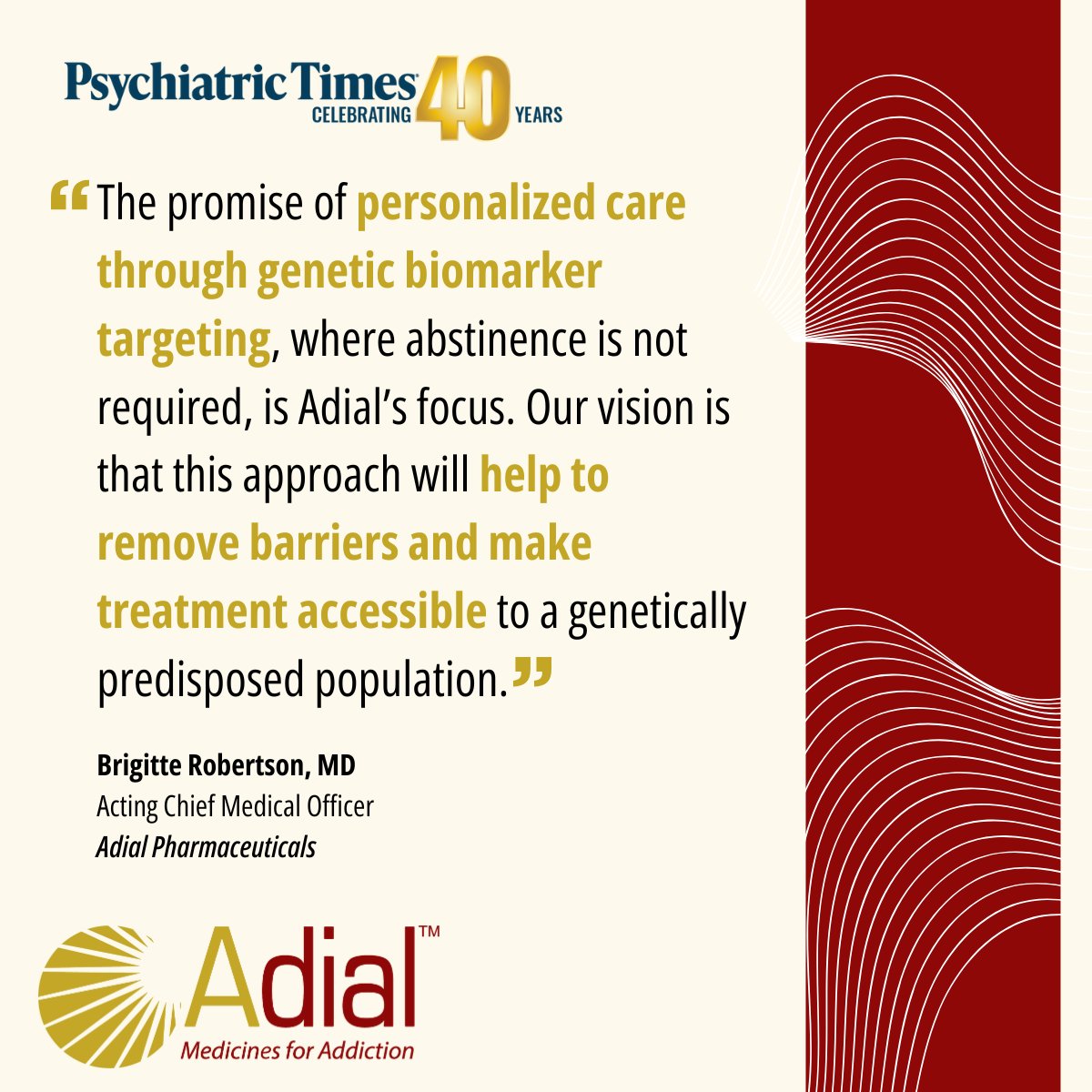
Precision medicine in addiction care is emerging.
.@AdialPharma Acting CMO Dr. Brigitte Robertson explains to @PsychTimes how AD04 plus genetic biomarkers might guide patient selection and treatment planning in #AUD.
Learn more:
bit.ly/43wwdpC
#AddictionScience #PrecisionMedicine $ADIL
1
2
113
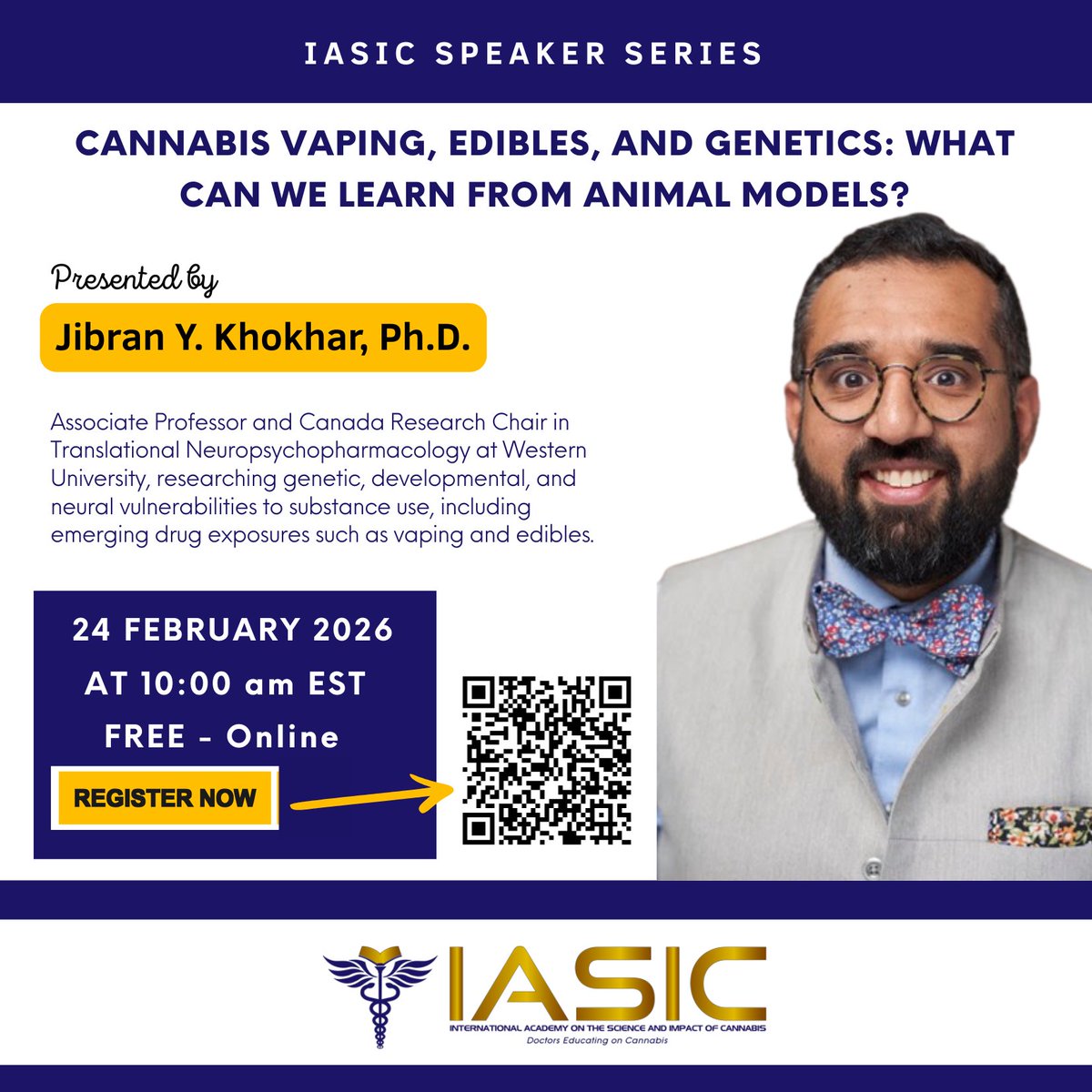
🔊🥼 The IASIC Speaker Series continues! Join us for a timely webinar with Dr. Khokhar, a leading researcher in translational neuropsychopharmacology:
“Cannabis Vaping, Edibles, and Genetics: What Can We Learn from Animal Models”
🧬🧠 Using innovative animal-model research, Dr. Khokhar explores how emerging routes of cannabis use—like vaping and edibles—interact with genetics and brain development to shape substance-use risk. This work offers critical insight into the behavioral, neural, and pharmacokinetic mechanisms behind today’s rapidly evolving cannabis landscape.
🔗 Register here: us02web.zoom.us/webinar/regi…
#Neuropsychopharmacology #AddictionScience #TranslationalScience #ResearchWebinar #IASIC
4
11
593
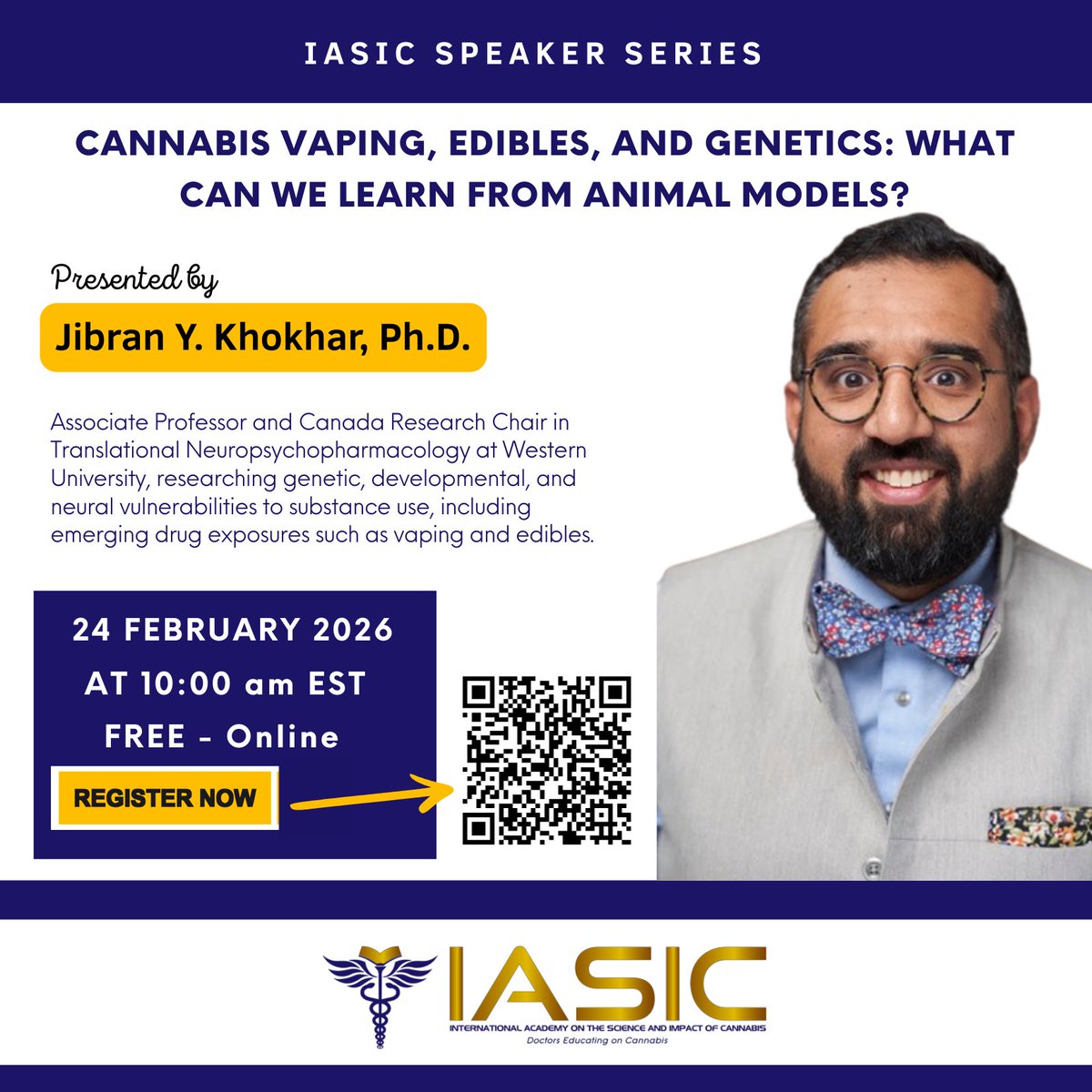
🔊🥼 The IASIC Speaker Series continues! Join us for a timely webinar with Dr. Khokhar, a leading researcher in translational neuropsychopharmacology:
“Cannabis Vaping, Edibles, and Genetics: What Can We Learn from Animal Models”
🧬🧠 Using innovative animal-model research, Dr. Khokhar explores how emerging routes of cannabis use—like vaping and edibles—interact with genetics and brain development to shape substance-use risk. This work offers critical insight into the behavioral, neural, and pharmacokinetic mechanisms behind today’s rapidly evolving cannabis landscape.
🔗 Register here: us02web.zoom.us/webinar/regi…
#Neuropsychopharmacology #AddictionScience #TranslationalScience #ResearchWebinar #IASIC
2
52

The 90% success rate claims are lying to you, but the REAL numbers are better news than you think. 🧠
Break down the science vs. marketing discover if this path is right for YOU.
Watch now: 📷youtu.be/JDt5GMsLGK4
#QuitSmoking #Hypnosis #AddictionScience

2
119
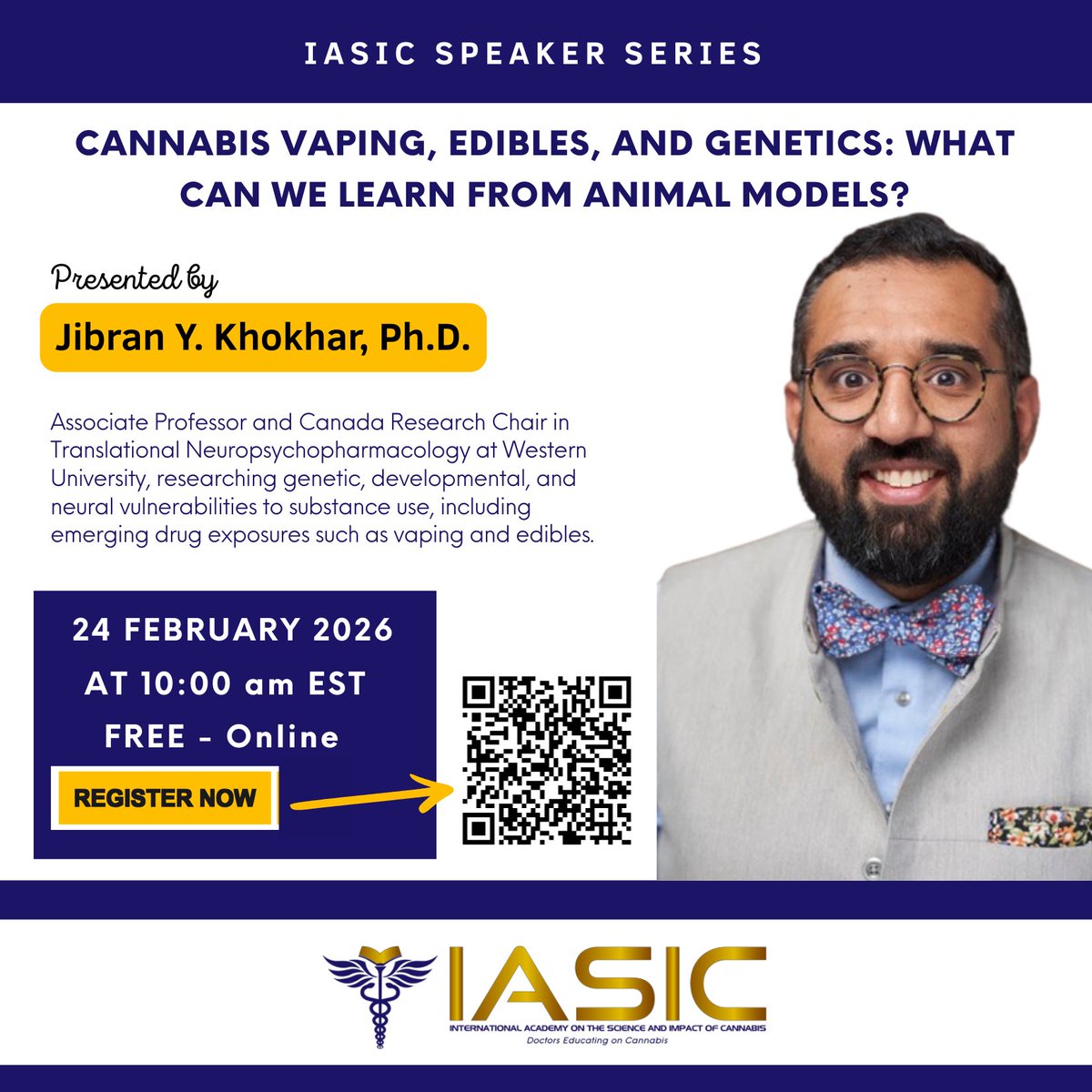
🔊🥼 The IASIC Speaker Series continues! Join us for a timely webinar with Dr. Khokhar, a leading researcher in translational neuropsychopharmacology:
“Cannabis Vaping, Edibles, and Genetics: What Can We Learn from Animal Models”
🧬🧠 Using innovative animal-model research, Dr. Khokhar explores how emerging routes of cannabis use—like vaping and edibles—interact with genetics and brain development to shape substance-use risk. This work offers critical insight into the behavioral, neural, and pharmacokinetic mechanisms behind today’s rapidly evolving cannabis landscape.
🔗 Register here: us02web.zoom.us/webinar/regi…
#Neuropsychopharmacology #AddictionScience #TranslationalScience #ResearchWebinar #IASIC
4
9
379
It's not too late to join our Distinguished Speaker Series this Wednesday 2/11!
Dr. Clifasefi is joining us from University of Washington-Harborview Medical Center, where she is an Associate Professor and Co Director of Harm Reduction Research and Treatment Center. Dr. Clifasefi will lead us through a discussion of "Development and Evaluation of Individual and Community-Level Harm Reduction Programs and Interventions Designed For and With People Who Have Lived Experience of Homelessness and Substance Use Problems."
📅 Date: February 11th, 2026
📍 Location: Soto Street Building, Room 103 E/F
🔗 Register now at through link in bio
#Addictionscience #USCIAS#Keckschoolofmedicine #Speaker
4
3
140