



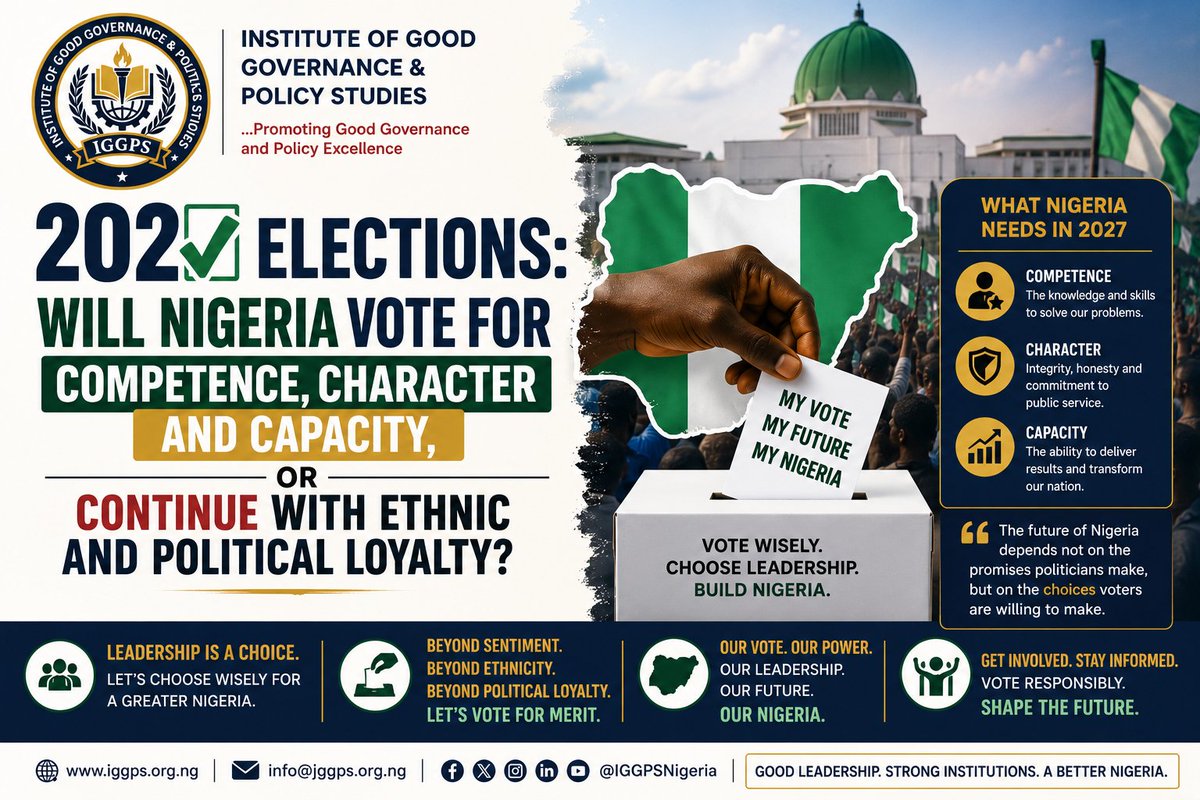
2027 Elections: Will Nigeria Vote for Competence, Character and Capacity, or Continue with Ethnic and Political Loyalty?
As Nigeria gradually approaches the 2027 general elections, a fundamental question is beginning to dominate political discussions across the nation: What factors will ultimately determine the choices of Nigerian voters?
Will Nigerians prioritize competence, character, and capacity in selecting their leaders, or will electoral decisions once again be shaped largely by ethnic affiliations, political loyalties, religious sentiments, and regional considerations?
The answer to this question may significantly influence not only the outcome of the 2027 elections but also the future trajectory of Nigeria's democratic development.
Democracy thrives when citizens make informed decisions based on the ability of candidates to solve societal problems and advance national development. However, in many developing democracies, electoral choices are often influenced by identity-based politics rather than objective assessments of leadership quality.
Nigeria has not been immune to this challenge.
Since the return to democratic governance in 1999, elections have frequently reflected the influence of ethnic, regional, religious, and party loyalties. While these factors are natural components of a diverse society, they become problematic when they overshadow competence, integrity, vision, and leadership performance.
The consequences of such voting patterns are evident in the nation's persistent developmental challenges.
Despite abundant natural resources, a youthful population, and enormous economic potential, Nigeria continues to struggle with insecurity, unemployment, inflation, inadequate infrastructure, poverty, corruption, and governance inefficiencies. These challenges raise important questions about the criteria citizens use when selecting those entrusted with public leadership.
The 2027 elections present a unique opportunity for national reflection.
Citizens must begin to ask difficult but necessary questions. What qualities should define leadership in a modern democracy? Should political offices be occupied by individuals based primarily on their ethnic identity, political connections, or financial influence? Or should leadership be entrusted to those with proven competence, sound judgment, integrity, and the capacity to deliver measurable results?
Competence remains one of the most critical attributes of effective leadership. Modern governance requires the ability to understand complex economic, security, technological, and social challenges. Leaders must possess the knowledge, skills, and experience necessary to formulate and implement policies that improve the lives of citizens.
Character is equally important.
Public office is fundamentally a position of trust. Citizens entrust leaders with resources, authority, and responsibilities that affect millions of lives. Integrity, honesty, accountability, humility, and commitment to public service are therefore indispensable qualities in democratic leadership. A leader may possess technical expertise, but without character, governance can easily become self-serving rather than people-centered.
Capacity represents the ability to translate vision into action.
Many political leaders make ambitious promises during campaigns, but leadership effectiveness is ultimately measured by results. Capacity involves strategic thinking, decision-making ability, team-building skills, policy implementation, and the resilience required to navigate complex national challenges.
Unfortunately, elections are not always decided based on these qualities.
Identity politics continues to exert considerable influence on voter behavior. Candidates are often evaluated through the lens of ethnicity, religion, region, or political allegiance rather than competence and performance. This tendency can weaken democratic accountability because leaders may feel more obligated to satisfy sectional interests than to pursue national development objectives.
The challenge before Nigeria is not diversity itself. Diversity is one of the nation's greatest strengths. The real challenge lies in allowing identity considerations to supersede merit and national interest.
A mature democracy does not require citizens to abandon their identities. Rather, it requires them to place competence and the common good above narrow loyalties when making electoral choices.
The role of Nigerian youth is particularly important in this regard.
As the largest demographic group in the country, young people possess the numerical strength to influence electoral outcomes significantly. Their political decisions can shape the future of governance for decades to come. However, this influence can only be meaningful if accompanied by informed voting, civic responsibility, and active participation in democratic processes.
Political parties also have a responsibility to strengthen democracy by promoting merit-based candidate selection. Internal party democracy, transparent primaries, and issue-based campaigns can help shift political discourse away from identity politics toward policy-driven leadership evaluation.
The media, civil society organizations, academic institutions, and policy advocacy groups must equally contribute by educating citizens on the importance of evaluating candidates based on competence, character, track records, and policy alternatives.
As 2027 approaches, Nigerians face a defining choice.
The election should not merely be a contest of personalities or political parties. It should be a national assessment of who possesses the vision, competence, integrity, and capacity to address the country's pressing challenges and unlock its enormous potential.
History demonstrates that nations progress when leadership is entrusted to capable individuals committed to public service and national development. Conversely, societies often struggle when leadership selection is driven primarily by sentiments rather than substance.
The future of Nigeria will depend not only on those seeking office but also on the choices made by voters.
Ultimately, democracy delivers its greatest benefits when citizens reward competence, demand accountability, and prioritize national interest above sectional considerations.
As the nation prepares for another electoral cycle, Nigerians must reflect carefully on a simple but profound question:
Will 2027 be another election of loyalty, or will it become an election of leadership quality?
The answer may determine the direction of Nigeria for generations to come.
"The strength of a democracy is revealed not by the promises politicians make, but by the standards citizens use to choose their leaders."
— Institute of Good Governance and Policy Studies (IGGPS)
17
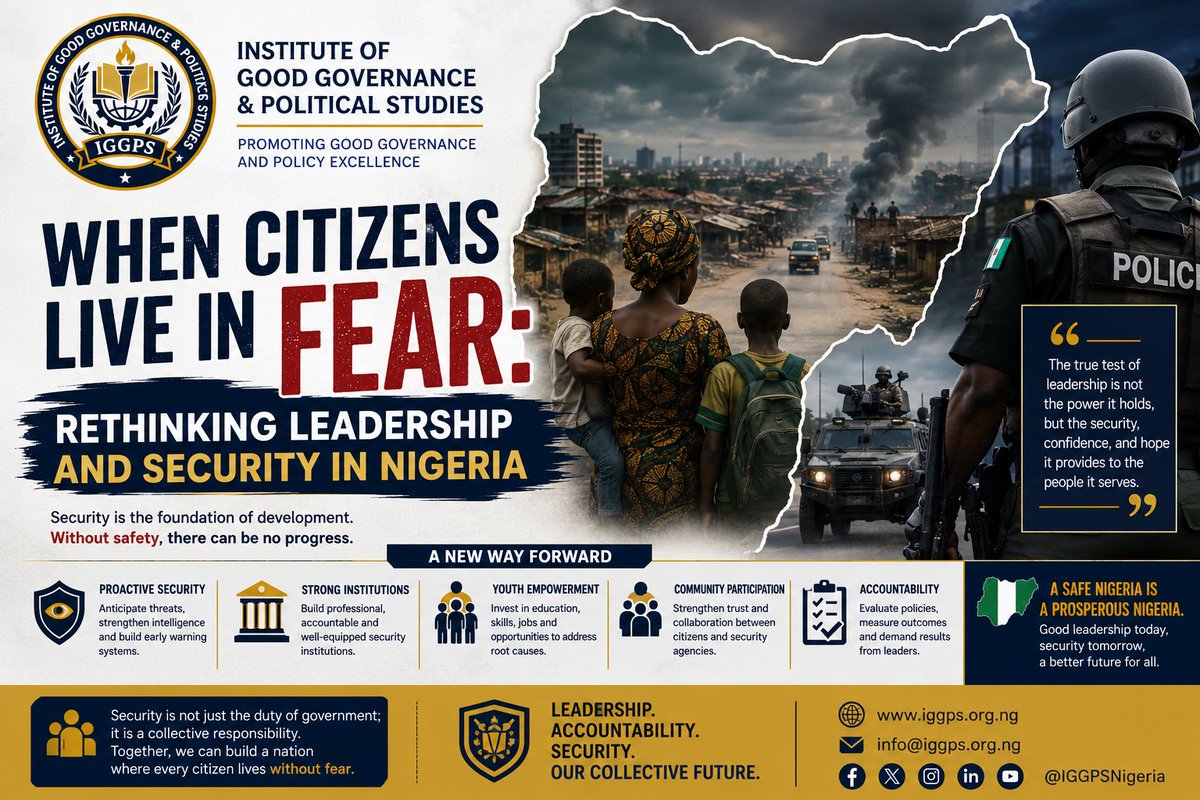
When Citizens Live in Fear: Rethinking Leadership and Security in Nigeria
Security is the foundation upon which every prosperous nation is built. Without safety, economic growth stagnates, education suffers, investments decline, and social cohesion weakens. The primary responsibility of any government is the protection of lives and property. Yet, across many parts of Nigeria today, millions of citizens continue to live under the shadow of fear.
From terrorism and banditry to kidnapping, armed robbery, communal conflicts, cybercrime, and other forms of insecurity, the challenges confronting Nigeria have become increasingly complex. Communities that once enjoyed relative peace now face uncertainty, while businesses, farmers, students, and ordinary citizens struggle to carry out their daily activities without concern for their safety.
This troubling reality raises an important national question: What role does leadership play in addressing insecurity, and how can Nigeria rethink its approach to security governance?
The answer begins with understanding that security is not merely a military or law enforcement issue. It is fundamentally a leadership issue.
Effective leadership creates the conditions necessary for peace, stability, and national development. Strong leaders anticipate threats, formulate clear policies, strengthen institutions, allocate resources efficiently, and inspire public confidence. Conversely, weak leadership often creates environments where insecurity flourishes.
Nigeria's security challenges are deeply connected to broader governance concerns. Poverty, unemployment, inequality, corruption, weak institutions, and inadequate public services create conditions that can fuel crime, extremism, and social unrest. Therefore, any meaningful discussion about security must extend beyond weapons and military operations to include governance reforms and socio-economic development.
One of the most significant consequences of insecurity is its impact on economic growth. Investors are naturally attracted to stable environments where businesses can operate without fear. When insecurity becomes widespread, investment declines, businesses relocate, and employment opportunities diminish. Rural communities, which are critical to agricultural production, often suffer the most as farmers abandon their lands due to fear of attacks and kidnappings.
Education has also become a casualty of insecurity. The kidnapping of students and attacks on educational institutions have disrupted learning in several regions. When children cannot safely attend school, the nation risks creating a generation deprived of opportunities and human capital development.
Beyond economic and educational consequences lies the psychological impact of insecurity. A society where citizens constantly fear for their lives cannot fully realize its developmental potential. Fear weakens trust in institutions, reduces civic participation, and creates a sense of hopelessness among citizens.
Addressing these challenges requires a new way of thinking about security leadership.
First, security must be proactive rather than reactive. Government institutions should focus on intelligence gathering, early warning systems, community engagement, and preventive measures rather than responding only after crises occur.
Second, there is a need to strengthen institutions. Sustainable security cannot depend solely on individuals. Professional, accountable, and well-equipped security agencies are essential for maintaining public safety and enforcing the rule of law.
Third, youth empowerment must become a central component of national security strategy. Millions of unemployed and underemployed young people represent both a challenge and an opportunity. By investing in education, entrepreneurship, vocational training, and job creation, government can address some of the root causes of insecurity.
Fourth, community participation is essential. Security is most effective when citizens and security agencies work together through mutual trust and cooperation. Community-based intelligence and local partnerships can significantly improve crime prevention and response mechanisms.
Fifth, leadership accountability must be strengthened. Citizens have a right to demand results from those entrusted with public office. Security policies should be regularly evaluated based on measurable outcomes rather than political rhetoric.
Importantly, Nigeria must recognize that national security extends beyond physical safety. Food security, economic security, environmental security, cybersecurity, and social stability are all interconnected aspects of modern security governance. A nation cannot be truly secure when large segments of its population lack access to basic opportunities and essential services.
As Nigeria continues its democratic journey, leaders at all levels must understand that security is not merely a government function it is the cornerstone of national development. Citizens cannot thrive where fear dominates daily life. Economic progress cannot flourish where insecurity discourages investment. Democracy itself becomes vulnerable when citizens lose confidence in the ability of institutions to protect them.
The future of Nigeria depends on leadership that recognizes security as a comprehensive governance challenge requiring vision, competence, accountability, and collaboration. The nation must move beyond temporary solutions and embrace long-term strategies that address both the symptoms and root causes of insecurity.
Ultimately, the measure of effective leadership is not the promises it makes but the safety, stability, and opportunities it creates for its citizens. A nation succeeds when its people can pursue their dreams without fear.
The time has come for Nigeria to rethink leadership and security not as separate issues, but as inseparable pillars of national progress.
"The true test of leadership is not the power it holds, but the security, confidence, and hope it provides to the people it serves."
— Institute of Good Governance and Policy Studies (IGGPS)
32
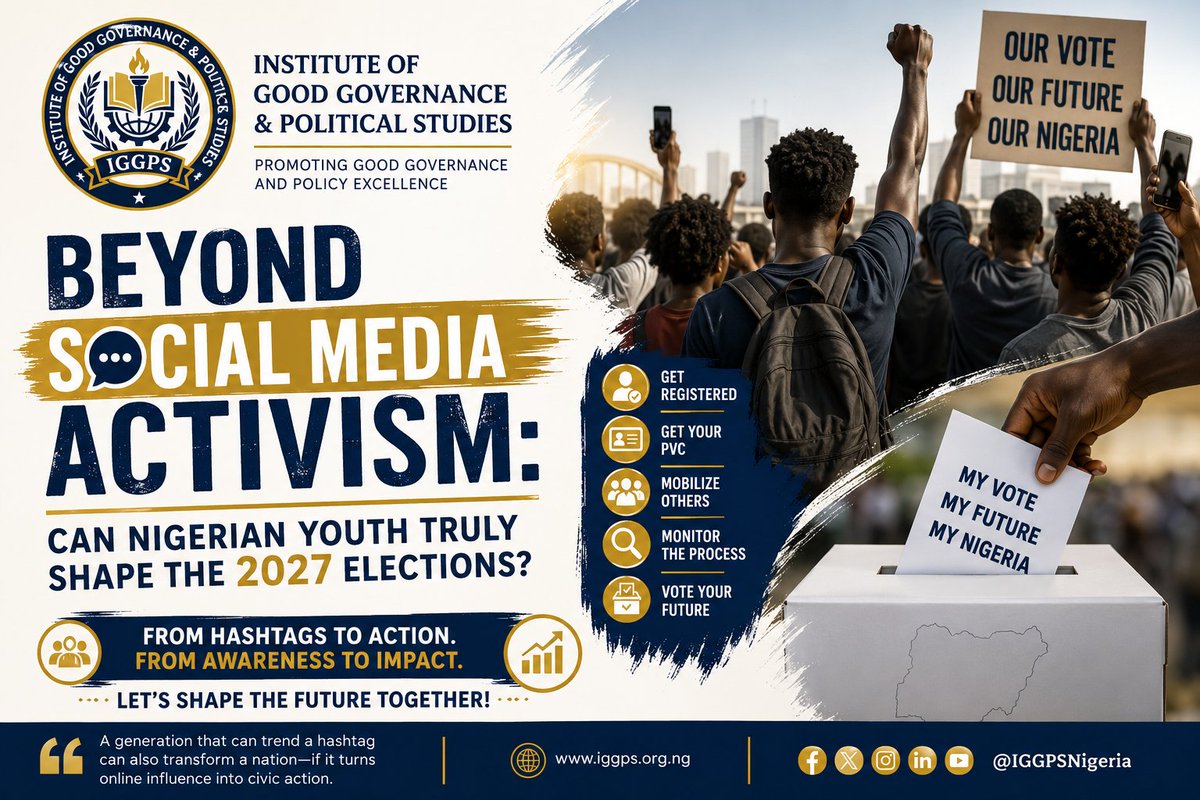
Beyond Social Media Activism: Can Nigerian Youth Truly Shape the 2027 Elections?
Over the past decade, Nigerian youths have emerged as one of the most influential voices in the nation's political landscape. Through social media platforms such as X (formerly Twitter), Facebook, Instagram, TikTok, and YouTube, young Nigerians have demonstrated an unprecedented ability to shape public discourse, mobilize support for causes, and hold leaders accountable.
From the #EndSARS movement to the highly energized political participation witnessed during the 2023 general elections, the youth demographic has shown that it possesses the passion, numbers, and technological tools necessary to influence national conversations. Yet as Nigeria moves closer to the 2027 elections, a critical question remains: Can Nigerian youths move beyond social media activism to become a decisive force in shaping electoral outcomes and democratic governance?
The answer depends largely on whether young Nigerians are willing to transform online influence into real-world political engagement.
There is no doubt that social media has revolutionized political participation in Nigeria. It has broken traditional barriers to information dissemination and given ordinary citizens direct access to political debates and national conversations. Young people can now challenge public officials, scrutinize government policies, and mobilize support for political causes without relying solely on traditional media outlets.
This digital revolution has created a more politically aware generation. Millions of Nigerian youths are now informed about governance issues, economic policies, electoral processes, and leadership performance. Political discussions that were once confined to elite circles have become part of everyday conversations among students, entrepreneurs, professionals, and young voters.
However, while social media activism has succeeded in raising awareness, awareness alone does not win elections.
The reality is that elections are determined not by hashtags, likes, reposts, or online trends, but by voter registration, voter turnout, grassroots mobilization, political organization, and active participation in democratic processes. Political influence is ultimately measured at polling units, not on social media timelines.
One of the greatest lessons from previous elections is that digital popularity does not always translate into electoral victory. A candidate may dominate online conversations while another quietly builds strong grassroots structures capable of delivering votes across communities. Political success requires both digital engagement and physical mobilization.
For Nigerian youths to truly shape the 2027 elections, they must begin to view politics as more than an online activity. They must actively participate in voter registration exercises, obtain their Permanent Voter Cards (PVCs), engage in civic education campaigns, monitor electoral processes, and encourage voter turnout within their communities.
Furthermore, young people must move beyond supporting candidates to becoming candidates themselves. Democracy flourishes when citizens are not merely spectators but active participants in governance. Nigeria's youth population represents more than 60 percent of the country's demographic structure. Such numerical strength should naturally translate into significant political influence if effectively organized.
Another critical challenge is political apathy. Despite their population advantage, many young Nigerians remain disengaged from formal political processes. Some have lost faith in the electoral system, while others believe that their votes do not matter. This perception poses a significant threat to democratic development because political disengagement creates opportunities for less representative interests to dominate the political space.
The future of youth political influence will depend on their ability to build sustainable structures beyond election seasons. This includes participation in political parties, civil society organizations, community leadership initiatives, policy advocacy groups, and governance monitoring platforms. Sustainable change requires continuous engagement rather than occasional bursts of online activism.
Equally important is the need for issue-based politics. Nigerian youths must resist attempts to divide them along ethnic, religious, and regional lines. The challenges facing the nation unemployment, insecurity, inflation, education deficits, and economic instability cut across all demographics. Therefore, political decisions should be guided by competence, character, vision, and policy alternatives rather than identity politics.
The 2027 elections present a historic opportunity for Nigeria's youth to redefine their role in the democratic process. The question is no longer whether young Nigerians have a voice. They clearly do. The real question is whether they can convert that voice into votes, leadership, policy influence, and long-term democratic transformation.
Social media remains a powerful tool for political engagement, but it should be viewed as the starting point rather than the destination. True political power lies in organization, participation, accountability, and sustained civic engagement.
As the countdown to 2027 begins, Nigerian youths stand at a crossroads. They can remain digital commentators on the sidelines of history, or they can become active architects of Nigeria's democratic future.
The choice they make may well determine not only the outcome of the 2027 elections but also the future direction of the Nigerian nation.
Editorial Quote of the Day
"A generation that can trend a hashtag can also transform a nation—if it turns online influence into civic action."
— Institute of Good Governance and Policy Studies (IGGPS)
68
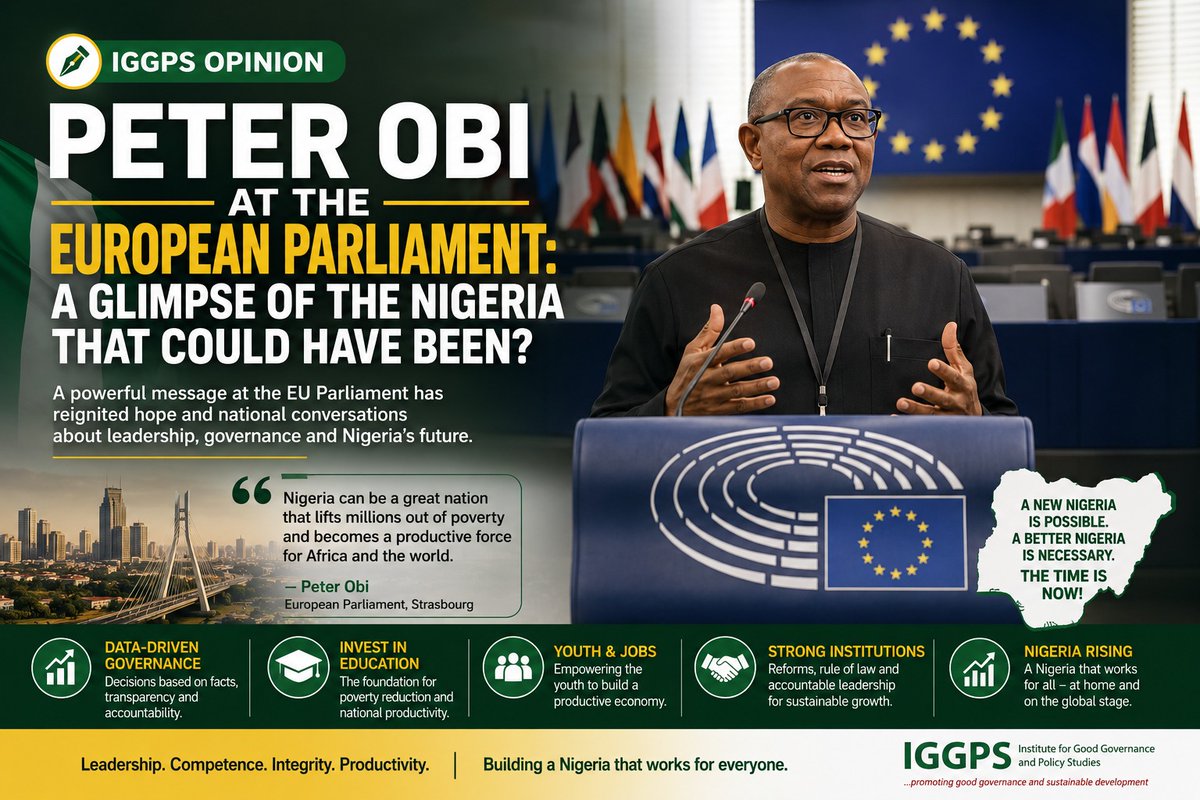
PETER OBI AT THE EUROPEAN PARLIAMENT: A GLIMPSE OF THE NIGERIA THAT COULD HAVE BEEN?
An IGGPS Opinion
The recent video of Peter Obi's engagement at the European Parliament in Strasbourg, France, which has generated widespread discussions across social media platforms, particularly X (formerly Twitter), has once again reignited the national conversation about leadership, governance, and Nigeria's future.
Whether one supports Peter Obi politically or not, his presentation before members of the European Parliament reflected a leadership style that many Nigerians believe has been largely absent from the nation's political landscape. His emphasis on data-driven governance, investment in education, productivity, poverty reduction, and institutional reforms resonated with many observers who continue to seek practical solutions to Nigeria's persistent challenges.
The significance of the video lies not merely in the applause or reception he received abroad, but in the questions, it raises at home. What would Nigeria look like under a leadership model that prioritizes competence over patronage, productivity over politics, and measurable outcomes over endless promises?
Peter Obi's remarks at the European Parliament highlighted a fundamental truth: Nigeria possesses enormous human and natural resources but remains constrained by poor governance, weak institutions, and the inability to convert potential into prosperity. His argument that Nigeria's development is essential not only for Africa but also for global economic stability reflects a growing recognition of Nigeria's strategic importance in the twenty-first century.
Had Peter Obi emerged as President, many of his supporters believe Nigeria might have witnessed a stronger emphasis on fiscal discipline, prudent management of public resources, investment in education, healthcare, and support for small and medium-scale enterprises. His record as former Governor of Anambra State is often cited by admirers as evidence of a governance philosophy centered on accountability, infrastructure development, and savings for future generations.
However, it is equally important to acknowledge that leadership alone cannot solve Nigeria's complex problems. The nation's challenges are deeply rooted in structural weaknesses, institutional decay, political interests, insecurity, corruption, and policy inconsistencies accumulated over decades. Even the most visionary leader would have faced significant obstacles in implementing transformational reforms.
Nevertheless, leadership remains the most critical factor in national development. Nations rise and fall largely on the quality of their leadership. Countries that have successfully transformed their economies from Singapore to Rwanda and from South Korea to Botswana did so through visionary leadership combined with strong institutions and citizen participation.
The European Parliament appearance has therefore become more than a political event; it has evolved into a symbol of the aspirations of millions of Nigerians who desire a nation governed by competence, transparency, merit, and long-term planning.
At IGGPS, we believe the central lesson from the discussions surrounding Peter Obi's presentation is not about personalities or political parties. Rather, it is about the urgent need for Nigeria to embrace a new governance culture where leaders are evaluated by their ideas, performance, integrity, and commitment to national development.
Nigeria's future will not be secured by political rhetoric, ethnic sentiments, or partisan loyalties. It will be secured by visionary leadership, accountable institutions, productive citizens, and a collective commitment to national progress.
Whether Peter Obi eventually becomes President or not, the issues he highlighted before the European Parliament remain valid and demand urgent attention. The real challenge before Nigeria is not merely choosing leaders but building a system that consistently produces competent leaders capable of transforming potential into prosperity.
As the nation looks toward the future, the conversation should move beyond personalities and focus on the kind of Nigeria we want to build one where leadership serves the people, institutions outlive individuals, and development becomes a measurable reality rather than a recurring campaign promise.
Editorial Quote of the Day
"A nation's greatest resource is not its oil, minerals, or population it is the quality of leadership that transforms those resources into prosperity for its people."
IGGPS Editorial Board
75
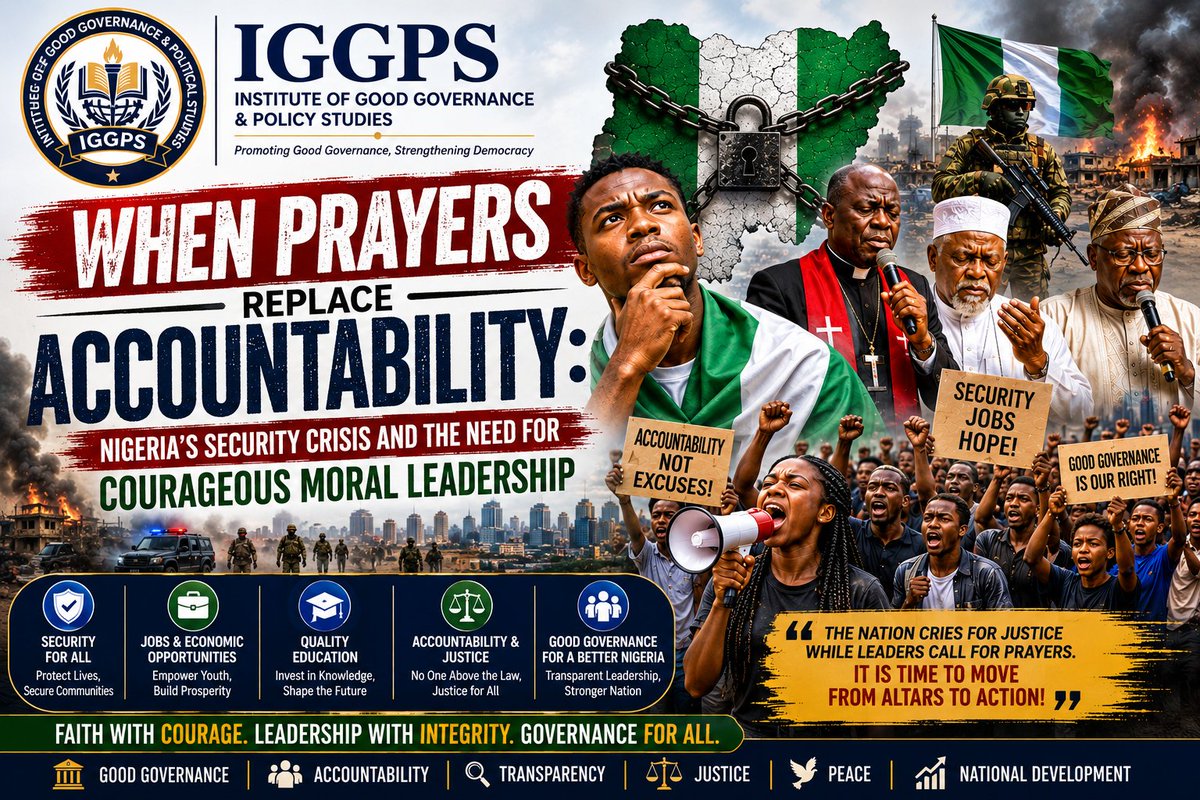
When Prayers Replace Accountability: Nigeria's Security Crisis and the Need for Courageous Moral Leadership.
Nigeria stands at a critical crossroads. Across the country, citizens continue to grapple with insecurity, economic hardship, unemployment, kidnapping, terrorism, banditry, communal conflicts, and growing public frustration. While government officials frequently assure Nigerians that efforts are being made to address these challenges, the realities experienced by ordinary citizens often paint a different picture.
One of the most concerning aspects of the national conversation is the response of many religious leaders to these persistent crises. In moments of national tragedy, insecurity, and governance failures, calls for prayers often dominate public discourse. While prayer remains an important aspect of faith and spiritual life, many Nigerians particularly the youth are increasingly questioning whether prayers alone can solve problems rooted in policy failures, poor governance, corruption, and weak institutions.
Religious institutions occupy a unique position in Nigerian society. Churches and mosques collectively command the attention of millions of citizens every week. Their leaders are among the most influential voices in the country, capable of shaping public opinion, inspiring civic participation, and promoting ethical leadership. Yet, many observers argue that this enormous influence is not being fully utilized to promote accountability and good governance.
The growing frustration among Nigerian youths reflects a deeper concern about the future of the nation. Young people are demanding jobs, security, quality education, economic opportunities, and a government that responds to their needs. They are increasingly seeking practical solutions to societal problems rather than symbolic gestures. While they appreciate spiritual guidance, they also expect moral leaders to advocate for justice, transparency, and responsible governance.
Historically, religious leaders have played transformative roles in societies across the world. They have stood against oppression, challenged corruption, defended human rights, and advocated for social reforms. Their influence has often extended beyond spiritual matters into the promotion of ethical governance and social justice. Nigeria's current circumstances require similar courage and commitment.
Good governance within religious institutions themselves can serve as a powerful example for the nation. Religious organizations that demonstrate transparency, accountability, inclusiveness, financial integrity, and responsible leadership can inspire confidence among citizens and set standards for public institutions. By practicing what they preach, religious bodies can strengthen their moral authority and credibility.
Furthermore, religious leaders can contribute significantly to national development by promoting civic education, encouraging citizens to participate actively in democratic processes, condemning corruption irrespective of political affiliations, and demanding accountability from elected officials. Such actions would not undermine faith; rather, they would reinforce the moral principles that many religious traditions uphold.
The challenge facing Nigeria today is not merely a security crisis. It is also a crisis of leadership, accountability, and institutional effectiveness. Solving these problems requires more than prayers. It requires courageous leadership, effective policies, strong institutions, and citizens who are willing to demand better governance.
As Nigeria moves toward future elections and political transitions, the nation needs moral voices that are prepared to speak truth to power. Religious leaders, as custodians of moral values, have an important role to play in shaping a culture of accountability and responsible leadership.
The future envisioned by Nigeria's youths is one where faith and governance work together to promote justice, security, prosperity, and national unity. Achieving this vision will require religious institutions to move beyond calls for prayer alone and embrace their broader responsibility as advocates for good governance, social justice, and national transformation.
For Nigeria to overcome its current challenges, every institution must rise to its responsibility. Government must govern effectively, citizens must participate actively, and religious leaders must exercise the moral courage necessary to hold leaders accountable. Only then can the nation begin to build a future worthy of its immense potential. IGGP
3
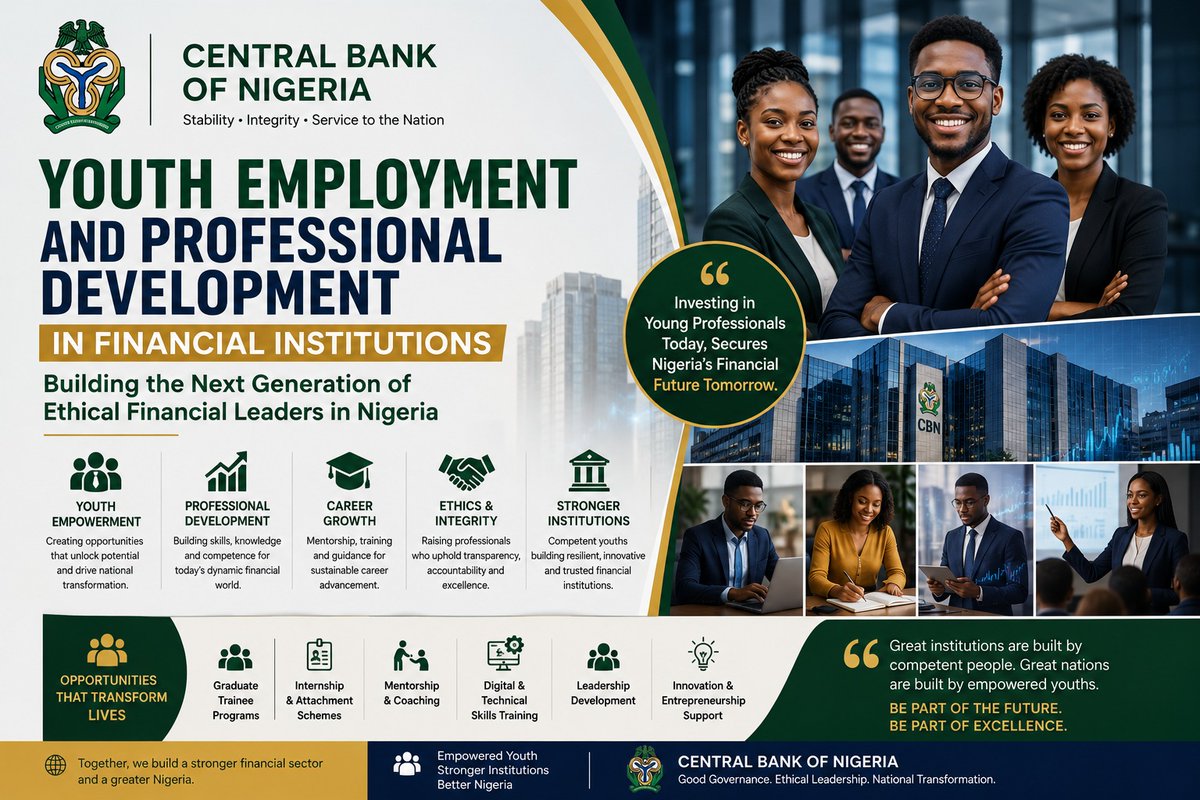
Youth Employment and Professional Development in Financial Institutions: Building the Next Generation of Ethical Financial Leaders in Nigeria
Youth employment and professional development remain among the most critical pillars of national growth, economic stability, and sustainable institutional development in Nigeria. As Africa’s largest economy continues to evolve within an increasingly competitive global financial environment, the need to empower young professionals with the right opportunities, ethical orientation, digital skills, and leadership capacity has become more urgent than ever.
The financial sector occupies a strategic position in this national responsibility. Institutions such as the Central Bank of Nigeria (CBN), commercial banks, fintech companies, insurance firms, development finance institutions, and regulatory agencies are not only custodians of financial stability but also major drivers of employment, innovation, professional development, and economic transformation.
The Institute of Good Governance and Political Studies (IGGPS) believes that youth inclusion, transparent employment systems, and continuous professional development are essential foundations for responsible governance, institutional excellence, and long-term national progress.
The Importance of Youth Employment in Nigeria’s Financial Sector
Nigeria possesses one of the largest youth populations in the world. Every year, thousands of graduates emerge from universities, polytechnics, and professional institutions seeking meaningful employment opportunities capable of improving their lives and contributing to national development.
However, despite the enormous potential of Nigerian youths, unemployment and underemployment remain significant national challenges. Many young professionals struggle to secure opportunities within strategic sectors due to:
•Limited job openings
•Lack of employability skills
•Weak professional mentorship
•Poor access to industry networks
•Inadequate practical training
•Perceived recruitment inequalities
•Limited exposure to modern financial technologies
These challenges have created growing concerns regarding economic inclusion, youth empowerment, and sustainable workforce development.
The financial sector therefore has a major responsibility not only to create employment opportunities but also to intentionally invest in the development of the next generation of ethical financial leaders.
Why Financial Institutions Matter
Financial institutions remain among the most influential sectors in national development because they directly affect:
•Economic growth
•Investment confidence
•Business financing
•Entrepreneurship
•Digital innovation
•Financial inclusion
•National productivity
•Monetary stability
Institutions such as the CBN, commercial banks, and fintech organizations require highly skilled professionals capable of managing:
•Digital banking systems
•Cybersecurity operations
•Financial data analysis
•Risk management
•Regulatory compliance
•Artificial Intelligence (AI)
•Financial technology innovation
•Consumer protection systems
•Corporate governance structures
As the financial ecosystem becomes increasingly digital and globally connected, the demand for competent, innovative, and ethically grounded young professionals continues to grow.
The Need for Professional Development
Employment alone is not enough. Sustainable institutional growth requires continuous professional development.
Professional development helps young employees:
•Improve technical competence
•Build leadership capacity
•Strengthen ethical standards
•Adapt to technological changes
•Enhance innovation and productivity
•Develop communication and managerial skills
•Understand governance and compliance systems
In modern financial institutions, continuous learning has become essential because the industry is rapidly evolving through:
•Artificial Intelligence
•Fintech innovations
•Blockchain technology
•Cybersecurity threats
•Digital financial services
•Data governance
•Global financial regulations
Without proper professional development systems, institutions risk falling behind global standards and weakening their competitiveness.
Ethical Leadership and Institutional Integrity
One of the most important aspects of youth development within financial institutions is ethical orientation.
Nigeria’s financial sector, like many sectors globally, continues to face challenges relating to:
•Fraud
•Insider abuse
•Cybercrime
•Ethical misconduct
•Financial corruption
•Weak accountability systems
This is why young professionals entering financial institutions must not only possess technical competence but also strong ethical values, integrity, discipline, accountability, and professionalism.
Institutions that invest in ethical leadership development are more likely to build:
•Public trust
•Investor confidence
•Operational efficiency
•Institutional credibility
•Sustainable growth
Transparent Employment Systems and Equal Opportunity
The credibility of youth employment initiatives depends largely on transparency and fairness within recruitment systems.
Young Nigerians are more motivated when they believe opportunities are based on:
•Merit
•Competence
•Qualification
•Professionalism
•Equal opportunity
Transparent recruitment systems encourage healthy competition, reward excellence, and help institutions attract the best talents capable of driving innovation and institutional transformation.
Financial institutions must therefore continue strengthening:
•Merit-based recruitment systems
•Graduate trainee programs
•Internship opportunities
•Leadership mentorship initiatives
•Diversity and inclusion policies
•Youth capacity development programs
The Role of IGGPS
The Institute of Good Governance and Political Studies (IGGPS) strongly advocates for:
•Youth empowerment
•Ethical leadership development
•Transparent employment systems
•Professional excellence
•Financial governance education
•Institutional accountability
•Merit-based opportunities
•Leadership mentorship
•Governance and compliance training
IGGPS believes Nigeria’s future depends greatly on empowering young professionals with the right opportunities, ethical orientation, and leadership capacity needed to strengthen institutions and national development.
The Institute further encourages financial institutions to prioritize policies and programs that promote:
•Youth employability
•Professional certification
•Leadership training
•Digital skills development
•Governance education
•Workplace ethics
•Entrepreneurship support
Building the Future of Nigeria’s Financial Institutions
The future of Nigeria’s economy depends largely on the quality of professionals managing its financial systems.
A strong financial sector requires:
•Competent professionals
•Ethical leadership
•Innovative thinkers
•Transparent institutions
•Technology-driven expertise
•Responsible governance
Young Nigerians must therefore be intentionally prepared to become the next generation of financial leaders capable of driving sustainable economic growth and institutional excellence.
Conclusion
Youth employment and professional development remain essential components of national transformation, institutional sustainability, and economic progress.
Nigeria cannot build globally competitive financial institutions without investing in the competence, ethics, leadership, and professional growth of its young population.
As advocates of responsible governance and institutional excellence, IGGPS remains committed to promoting policies, conversations, and initiatives that empower young professionals, strengthen ethical leadership, encourage transparent employment systems, and advance sustainable national development.
The future of Nigeria’s financial institutions depends not only on economic policies but also on the quality, integrity, and preparedness of the young professionals entrusted with leadership tomorrow.
Editorial Quote of the Day
“A nation secures its future when it empowers its youths with opportunity, professionalism, integrity, and the courage to lead responsibly.”
3
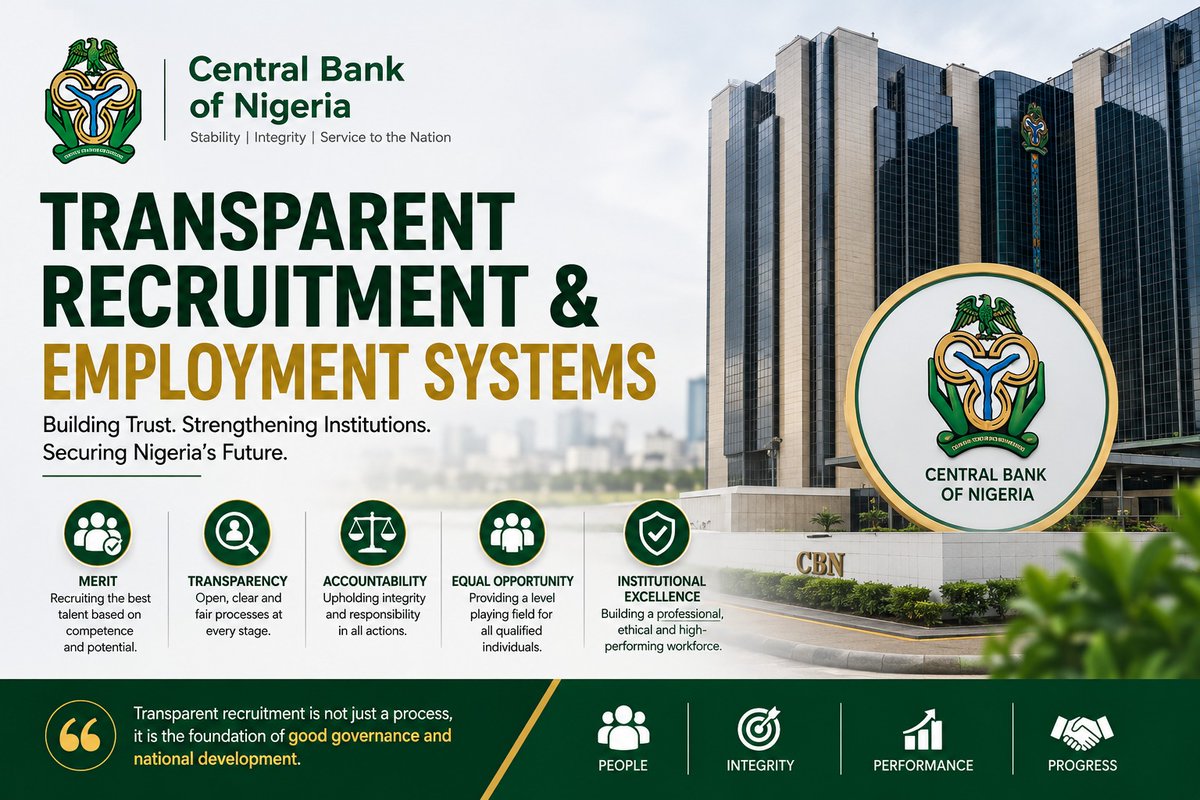
Transparent Recruitment and Employment Systems in Nigeria: Lessons from the Central Bank of Nigeria (CBN)
The quality of recruitment and employment systems within any institution largely determines the strength, credibility, efficiency, and sustainability of that institution. Across the world, successful organizations are built on merit, professionalism, competence, integrity, and transparent leadership systems.
In Nigeria, one of the institutions that has consistently remained central to national economic stability and financial governance is the Central Bank of Nigeria (CBN).
As the apex financial institution responsible for monetary policy, banking regulation, financial stability, and economic oversight, the CBN occupies a highly strategic position within Nigeria’s governance and economic framework. Consequently, the standards guiding recruitment, appointments, promotions, and institutional accountability within the CBN have significant implications for national development, public confidence, and economic credibility.
The Institute of Good Governance and Political Studies (IGGPS) believes that transparent recruitment and employment systems are fundamental pillars of good governance, institutional excellence, and sustainable national progress.
Recruitment and Institutional Credibility
Recruitment is not merely about filling vacant positions; it is about selecting competent, ethical, innovative, and visionary individuals capable of strengthening institutions and delivering quality service to citizens.
Institutions such as the CBN require highly skilled professionals in areas including:
•Economics
•Banking and finance
•Cybersecurity
•Data analytics
•Financial technology
•Public policy
•Risk management
•Digital governance
•Accounting
•Regulatory compliance
Given the strategic nature of these responsibilities, recruitment systems must be transparent, competitive, fair, and merit-driven.
Where recruitment systems become compromised by favoritism, political interference, nepotism, or internal influence, institutions risk weakening operational efficiency, public trust, and long-term institutional stability.
Why Transparent Recruitment Matters in the CBN
As one of Nigeria’s most respected financial institutions, the CBN serves as an important example of why transparent employment systems are necessary for national progress.
Transparent recruitment systems help to:
•Attract the best talents
•Promote professionalism
•Improve institutional efficiency
•Encourage innovation
•Strengthen public confidence
•Reduce corruption risks
•Improve accountability
•Promote equal opportunity
•Enhance economic governance
In modern economies, strong institutions are built by competent professionals selected through credible and merit-based systems.
Public Concerns and Governance Expectations
Over the years, public conversations in Nigeria have occasionally raised concerns regarding employment accessibility, equal opportunity, transparency, and fairness within some public institutions and financial agencies.
Many young Nigerians believe that opportunities in highly competitive institutions are sometimes influenced by:
•Connections
•Internal recommendations
•Political influence
•Social networks
•Elite privilege
Whether fully accurate or partially perceived, such public perceptions can affect institutional trust and national confidence.
This is why institutions must continuously strengthen transparent recruitment mechanisms that demonstrate fairness, accountability, professionalism, and equal opportunity for qualified Nigerians.
The Need for Merit-Based Employment Systems
Merit-based recruitment remains one of the strongest foundations for institutional excellence.
When institutions prioritize competence and integrity:
•Productivity improves
•Innovation increases
•Corruption reduces
•Leadership quality strengthens
•Public confidence grows
•Economic performance improves
For strategic institutions like the CBN, the consequences of weak recruitment systems can extend beyond the organization itself and impact:
•Monetary stability
•Banking confidence
•Investor trust
•Financial security
•National economic growth
Therefore, recruitment governance should be treated as a matter of national importance.
Digital Transformation and New Governance Demands
The modern financial sector is evolving rapidly due to:
•Artificial Intelligence (AI)
•Digital banking
•Cybersecurity challenges
•Financial technology innovation
•Data governance
•Blockchain systems
•Online financial services
As Nigeria’s financial ecosystem continues to modernize, institutions like the CBN must increasingly recruit highly competent professionals capable of managing emerging digital risks and opportunities.
This further emphasizes the importance of transparent, technology-driven, competency-based recruitment systems.
The Position of IGGPS
The Institute of Good Governance and Political Studies (IGGPS) strongly advocates for:
•Transparent recruitment systems
•Ethical employment practices
•Merit-based appointments
•Equal opportunity employment
•Institutional accountability
•Professional governance standards
•Leadership integrity
•Anti-nepotism policies
•Competency-based promotion systems
IGGPS believes Nigeria’s institutions can become globally competitive when recruitment processes prioritize excellence, professionalism, transparency, and fairness above personal influence or favoritism.
A National Call for Institutional Reform
Nigeria’s future depends largely on the strength of its institutions.
Strong institutions are built when:
•Integrity is rewarded
•Competence is prioritized
•Transparency is protected
•Accountability is enforced
•Young talents are given equal opportunities
The CBN, as a leading national institution, represents an important example of why ethical recruitment systems remain essential to institutional credibility and national development.
If Nigeria must compete effectively in the global economy, public institutions and financial agencies must continue to strengthen governance systems that encourage professionalism, innovation, fairness, and institutional trust.
Conclusion
Transparent recruitment and employment systems remain critical to building efficient institutions, strengthening governance, improving public trust, and promoting sustainable national development.
Nigeria cannot build world-class institutions on opaque systems, favoritism, or weak accountability structures.
The nation must intentionally promote merit-based employment practices capable of empowering competent professionals and strengthening institutional excellence.
As advocates of responsible leadership and ethical governance, IGGPS remains committed to promoting conversations, policies, and reforms that encourage transparency, professionalism, accountability, and sustainable national transformation.
Editorial Quote of the Day
“Institutions become stronger when opportunities are driven by merit, integrity, and competence rather than influence, favoritism, or personal connections.”
14
BUILDING A NEW NIGERIA THROUGH GOOD GOVERNANCE
Nigeria stands at a defining moment in history.
Across our institutions, leadership structures, educational systems, businesses, and communities, the demand for ethical leadership, accountability, transparency, and responsible governance has never been greater.
The future of our nation cannot be built by complaints alone.
It must be built intentionally by responsible citizens who believe in integrity, service, justice, patriotism, competence, and national development.
This is why the Institute of Good Governance and Political Studies (IGGPS) is inviting visionary Nigerians to become part of a growing movement dedicated to national transformation and institutional excellence.
✅ Are you passionate about a New Nigeria?
✅ Do you believe in ethical leadership and accountability?
✅ Do you desire stronger institutions and responsible governance?
✅ Are you willing to contribute your knowledge, leadership, and experience toward nation building?
Then this is your opportunity to JOIN IGGPS.
At IGGPS, we are committed to:
Promoting Good Governance
Leadership Development
Democratic Accountability
Civic Education & Policy Engagement
Youth & Women Empowerment
Institutional Reforms
Professional Excellence
National & International Collaboration
Through:
🎓 Leadership Trainings
🎤 Conferences & Public Lectures
📚 Research & Policy Studies
🏛️ Governance Advocacy Programs
🤝 Professional Networking
🌍 National Development Initiatives
IGGPS continues to champion responsible leadership and sustainable national progress.
📌 Membership Categories:
* Student Membership
* Associate Membership
* Professional Membership
* Fellowship Membership
* Corporate Membership
* Honorary Fellowship
The Nigeria we desire begins with responsible citizens.
🔥 This is the time to rise.
🔥 This is the time to lead.
🔥 This is the time to contribute to the future of Nigeria.
JOIN THE MOVEMENT TODAY.
🌐 Website: iggps.com.ng
📧 Email: info@iggps.com.ng
iggps.com.ng/registration-fo…
INSTITUTE OF GOOD GOVERNANCE AND POLITICAL STUDIES (IGGPS)
“Good Governance Begins with Responsible Citizens.”
#IGGPS
#GoodGovernance
#NewNigeria
#Leadership
#EthicalLeadership
#NationBuilding
#ResponsibleLeadership
#Nigeria
#Governance
#YouthLeadership
#Transparency
#Accountability
#PublicPolicy
#InstitutionalExcellence
#Democracy
#LeadershipDevelopment
#CivicEngagement
#NationalTransformation
#AfricaRising
#ProfessionalDevelopment
1
1
6
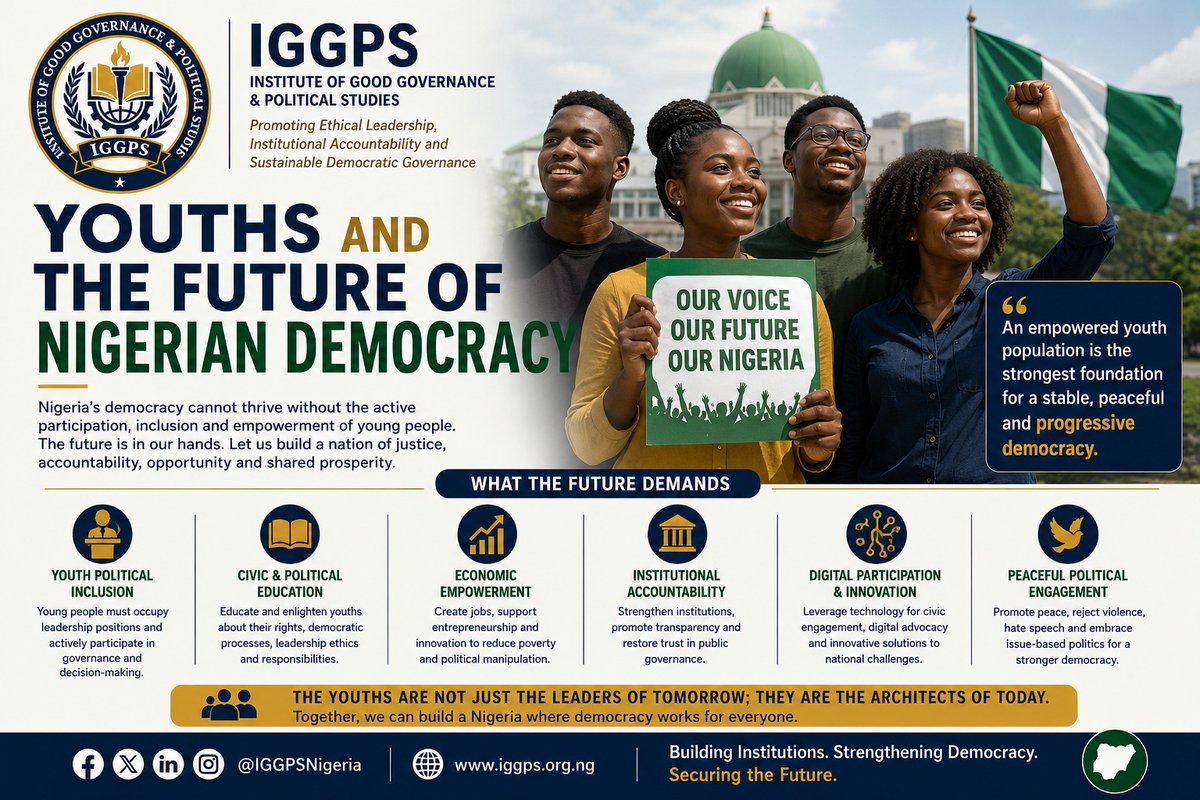
YOUTHS AND THE FUTURE OF NIGERIAN DEMOCRACY
Nigeria stands at a defining moment in its democratic journey, and at the center of this transformation lies one powerful force the Nigerian youth. With over 70 percent of the country’s population under the age of 35, the future of Nigeria’s democracy will largely depend on how effectively young people are empowered, engaged, and integrated into governance and nation-building.
For decades, Nigerian youths have been described as the “leaders of tomorrow.” However, the realities of today demand that they become active stakeholders in shaping the present. Democracy can no longer thrive when the largest segment of the population remains politically marginalized, economically frustrated, and institutionally neglected.
The emergence of youth-driven political consciousness in recent years has shown that Nigerian youths are no longer passive observers. From electoral participation to digital advocacy, policy engagement, entrepreneurship, civic education, and social mobilization, young Nigerians are increasingly demanding accountability, transparency, and responsive leadership.
The #EndSARS movement, despite its challenges, revealed the strength, resilience, and democratic awareness of Nigerian youths. It demonstrated that young citizens are not only interested in governance but are willing to defend justice, human rights, and democratic values. The movement also exposed the urgent need for institutions to listen to the voices of young people rather than suppress them.
Democracy survives where citizens actively participate, and youths remain the engine room of political participation. Unfortunately, several challenges continue to hinder their full involvement in Nigeria’s democratic process. These include unemployment, poverty, political intimidation, lack of access to leadership opportunities, electoral violence, poor civic education, corruption, and weak institutional trust.
Many young Nigerians possess the vision, innovation, and energy needed to transform the nation, yet the political system often creates barriers that discourage their participation. High costs of political nomination forms, godfatherism, ethnicity-based politics, and institutional favoritism continue to limit youth inclusion in leadership and decision-making processes.
At the Institute of Good Governance and Policy Studies (IGGPS), we strongly believe that sustainable democracy can only be achieved when young people are intentionally empowered through good governance, quality education, economic opportunities, and institutional inclusion.
The future of Nigerian democracy requires:
1. Youth Political Inclusion
Young people must not only vote during elections but also occupy strategic leadership positions in governance, policymaking, and public administration. Democracy grows stronger when leadership reflects the demographic realities of the nation.
2. Civic and Political Education
There is a growing need to educate youths about constitutional rights, electoral processes, leadership ethics, and democratic responsibilities. A politically informed youth population strengthens democratic accountability.
3. Economic Empowerment
A hungry and unemployed population cannot effectively defend democracy. Job creation, entrepreneurship support, skills acquisition, and innovation funding are critical to reducing political manipulation and social unrest.
4. Institutional Accountability
Public institutions must operate transparently and responsibly to rebuild public trust among young citizens. When institutions fail, youths lose confidence in democracy itself.
5. Digital Participation and Innovation
Technology has become a powerful democratic tool. Nigerian youths are leading conversations through social media, digital activism, policy discussions, and civic-tech innovations that promote accountability and public engagement.
6. Peaceful Political Engagement
Young people must reject violence, political thuggery, hate speech, and electoral manipulation. The future of democracy depends on peaceful participation and issue-based politics rather than division and conflict.
Nigeria’s democratic future cannot be secured without investing in its youths. Nations that empower their young people create stronger institutions, stronger economies, and more stable democracies.
The responsibility, however, does not lie with the government alone. Educational institutions, civil society organizations, religious bodies, private sector leaders, and families all have important roles to play in mentoring and preparing young Nigerians for ethical leadership and responsible citizenship.
The time has come for Nigeria to move beyond symbolic youth representation and embrace genuine youth-driven governance. Young people must no longer be used merely as campaign tools during elections while being excluded from decision-making afterward.
The future belongs to a generation that is informed, innovative, courageous, and committed to national development. Nigerian youths possess the capacity to redefine governance, strengthen democratic institutions, and build a nation founded on justice, accountability, inclusion, and progress.
Democracy is not sustained by politicians alone; it is sustained by active citizens. And among those citizens, the youth remain the greatest hope for the survival and advancement of Nigerian democracy.
As Nigeria continues its democratic journey, one truth remains clear: empowering youths today is the surest investment in the future of Nigerian democracy.
Published by the Institute of Good Governance and Policy Studies (IGGPS) — Promoting Ethical Leadership, Institutional Accountability, and Sustainable Democratic Governance in Nigeria.
#IGGPS #GoodGovernance #Nigeria2027 #Leadership #Governance #Democracy #PoliticalStudies #YouthParticipation #NationalDevelopment #Accountability #PublicPolicy #DemocraticDevelopment #LeadershipMatters #Nigeria
1
1
11
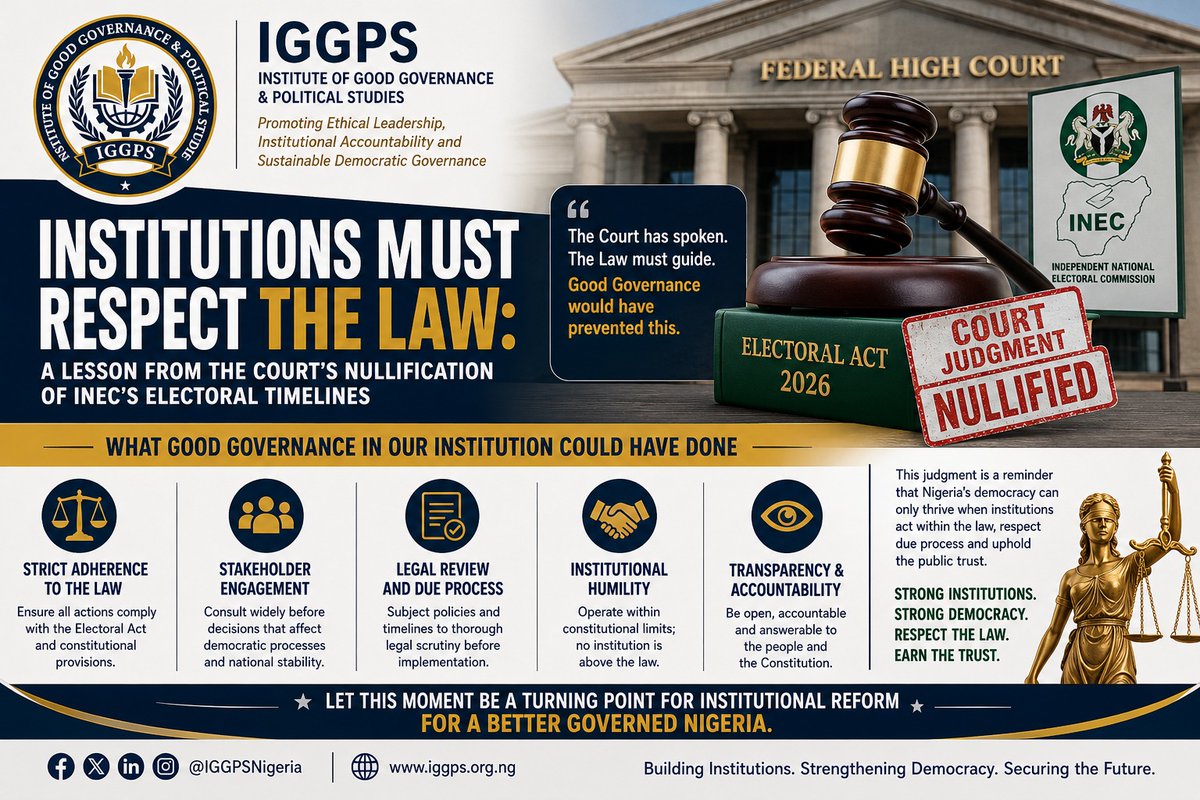
INSTITUTIONS MUST RESPECT THE LAW: A LESSON FROM THE COURT’S NULLIFICATION OF INEC’S ELECTORAL TIMELINES
The recent judgment delivered by the Federal High Court in Abuja, which nullified parts of the Independent National Electoral Commission (INEC)’s revised timetable for the 2027 general elections, has once again brought national attention to the importance of constitutional order, institutional discipline, and respect for due process in Nigeria’s democratic system.
The court ruled that INEC exceeded its powers by introducing timelines that were inconsistent with provisions already guaranteed under the Electoral Act 2026. According to the judgment, the Commission lacked the authority to shorten or alter statutory periods relating to party primaries, submission of candidates’ particulars, replacement of candidates, publication of final candidate lists, and campaign schedules.
This judgment is not merely about election dates or political parties. It is a deeper reflection of a recurring governance challenge in Nigeria, the tendency of institutions to act beyond the boundaries of the law, often without adequate consultation, transparency, or accountability.
At the Institute of Good Governance and Policy Studies (IGGPS), we believe this moment should serve as a national lesson on what good governance within public institutions could have prevented.
Good governance in institutions would have ensured:
•Strict adherence to the Electoral Act before any timetable was released.
•Comprehensive legal review and stakeholder engagement before implementation.
•Institutional humility to operate within constitutional limits.
•Transparency and collaboration between regulatory bodies and political stakeholders.
•Prevention of avoidable legal disputes that create uncertainty in the democratic process.
The court’s intervention demonstrates that no institution, regardless of its constitutional status, is above the law. Democracy can only thrive where institutions respect legal frameworks, act professionally, and remain accountable to the people and the Constitution.
A well-governed institution does not wait for judicial correction before doing the right thing. It proactively ensures that every policy, guideline, and administrative action aligns with the law and public interest. This is the essence of institutional integrity.
The implications of this development extend beyond INEC. Every government agency, ministry, commission, and public institution in Nigeria must understand that sustainable governance is built on legality, consultation, and respect for due process not unilateral decisions.
Nigeria’s democratic future depends not only on elections but on the strength, discipline, and credibility of the institutions that manage them. When institutions operate outside the law, public trust weakens. But when institutions embrace accountability and lawful conduct, democracy grows stronger.
As Nigeria prepares for the 2027 general elections, this judgment should become a wake-up call for all public institutions to embrace the principles of good governance, policy responsibility, and constitutional compliance.
The future of Nigeria’s democracy will not only be determined by politicians but also by the integrity of the institutions entrusted with safeguarding the nation’s democratic process.
Published by the Institute of Good Governance and Policy Studies (IGGPS) — Promoting Ethical Leadership, Institutional Accountability, and Sustainable Democratic Governance in Nigeria.
#IGGPS #GoodGovernance #Nigeria2027 #Leadership #Governance #Democracy #PoliticalStudies #YouthParticipation #NationalDevelopment #Accountability #PublicPolicy #DemocraticDevelopment #LeadershipMatters #Nigeria
1
1
11
Good Governance Beyond Politics: Building a Nation Through Accountability, Service and Responsible Leadership
In many developing democracies, governance is often viewed only through the lens of politics and elections. Public attention usually rises during campaign seasons, political rallies, party defections, and election periods, while the true essence of governance is frequently overlooked. However, governance goes far beyond political competition, party affiliations, or electoral victories.
The Institute of Good Governance and Policy Studies (IGGPS) believes that good governance is not merely about who occupies political office, but about how leadership is used to improve the lives of citizens, strengthen institutions, promote justice, and create sustainable national development.
A nation can conduct elections successfully and still experience poor governance if public institutions fail to deliver accountability, transparency, security, economic growth, quality education, healthcare, and equal opportunities for citizens.
Good governance is therefore not a political slogan; it is the foundation of national progress.
Understanding Good Governance
Good governance refers to the responsible management of public resources and institutions in a manner that promotes fairness, accountability, transparency, inclusiveness, and sustainable development.
It involves:
•Respect for the rule of law
•Transparent leadership
•Effective public service delivery
•Citizen participation
•Accountability in government
•Protection of human rights
•Responsible economic management
•Institutional integrity
True governance is measured not by political promises but by practical impact on the lives of the people.
Governance Must Continue Beyond Elections
One of the major challenges facing many democratic societies is the tendency to focus heavily on politics while paying less attention to governance itself.
Elections are important, but elections alone do not build roads, create jobs, improve healthcare, strengthen education, or guarantee national security.
Democracy becomes meaningful only when elected leaders translate political mandates into responsible governance and development.
Citizens must therefore begin to evaluate leadership beyond:
•Political party loyalty
•Ethnic sentiments
•Religious divisions
•Emotional political propaganda
The real questions should be:
•Are public institutions functioning effectively?
•Are citizens benefiting from government policies?
•Is leadership transparent and accountable?
•Are national resources properly managed?
•Is the government protecting lives and property?
•Are youths and women included in decision-making?
Governance should be centered on national progress, not political drama.
The Role of Leadership in Good Governance
Leadership remains one of the most critical pillars of good governance. Responsible leadership requires vision, integrity, competence, discipline, and commitment to public service.
Leaders must understand that public office is a responsibility, not an opportunity for personal enrichment or political dominance.
Good leaders:
•Serve with integrity
•Listen to the people
•Promote unity
•Respect democratic institutions
•Encourage inclusive governance
•Make policies that benefit society
•Accept accountability
A country can only rise when leadership places national interest above personal ambition.
Citizens Also Have Responsibilities
Good governance is not the responsibility of government alone. Citizens also play important roles in sustaining democracy and accountability.
Citizens contribute to good governance by:
•Obeying laws
•Participating in civic activities
•Demanding accountability
•Rejecting corruption
•Voting responsibly
•Promoting peace and unity
•Protecting public property
•Engaging constructively in national discussions
Democracy grows stronger when citizens actively participate in nation-building rather than remaining silent observers.
Youth Participation Beyond SocialMedia
Nigeria possesses one of the largest youth populations in Africa. Young people are energetic, innovative, and highly influential in shaping public opinion. However, governance participation must go beyond online criticism and social media activism.
Young Nigerians must become active contributors to governance through:
•Policy engagement
•Community development
•Civic education
•Leadership development
•Entrepreneurship
•Public advocacy
•Peacebuilding initiatives
The future of governance belongs to youths who prepare themselves to lead responsibly and ethically.
The Importance of Strong Institutions
Nations develop faster when institutions are stronger than individuals. Strong institutions ensure continuity, fairness, stability, and accountability regardless of changes in political leadership.
For good governance to thrive, institutions responsible for:
•Justice
•Security
•Education
•Electoral processes
•Public finance
•Anti-corruption
•Policy implementation
must operate independently, transparently, and professionally.
Institutional strength is one of the greatest signs of democratic maturity.
Fighting Corruption Through Accountability
Corruption remains one of the biggest obstacles to national development. It weakens institutions, discourages investment, increases poverty, and reduces public trust in leadership.
Good governance requires:
•Transparent public spending
•Ethical leadership
•Effective oversight
•Open government systems
•Strong anti-corruption mechanisms
Accountability should never be selective. Every public office holder must remain accountable to the people and the law.
National Unity and Inclusive Governance
A stable society is built on inclusion, fairness, and equal opportunities. Governance must reflect the interests of all citizens regardless of tribe, religion, gender, political affiliation, or social status.
Inclusive governance promotes:
•National peace
•Social stability
•Economic growth
•Political trust
•Democratic participation
Division and exclusion weaken democracy, while unity strengthens national development.
IGGPS Position on Good Governance
The Institute of Good Governance and Policy Studies (IGGPS) strongly advocates for:
•Transparent leadership
•Electoral integrity
•Responsible public administration
•Civic responsibility
•Policy-driven governance
•Democratic accountability
•Peaceful political participation
•Institutional development
IGGPS believes that sustainable national progress can only be achieved when governance is driven by integrity, competence, service, and accountability rather than political manipulation and selfish interests.
Conclusion
Good governance goes beyond politics, campaigns, and elections. It is about building institutions that work, creating opportunities for citizens, protecting democratic values, and ensuring that leadership serves the people responsibly.
Nigeria’s future will not be determined only by political victories but by the quality of governance that follows those victories.
As the nation continues its democratic journey toward 2027 and beyond, Nigerians must collectively promote accountability, peace, transparency, and responsible leadership.
The time has come to move beyond politics and focus on governance that truly transforms lives and strengthens the nation.
Editorial Quote of the Day
“Politics may win power, but only good governance can win the trust and future of the people.”
Institute of Good Governance and Policy Studies (IGGPS)
#IGGPS #GoodGovernance #Nigeria2027 #Leadership #Governance #Democracy #PoliticalStudies #YouthParticipation #NationalDevelopment #Accountability #PublicPolicy #DemocraticDevelopment #LeadershipMatters #Nigeria

1
1
10
Electoral Violence Prevention and Peaceful Campaigns: Safeguarding Nigeria’s Democracy Ahead of 2027
As Nigeria gradually moves toward the 2027 general elections, the responsibility of protecting the nation’s democracy must not rest on government institutions alone. Political leaders, citizens, youth groups, civil society organizations, traditional rulers, religious leaders, and the media all have a vital role to play in ensuring that the electoral process remains peaceful, credible, and violence-free.
The Institute of Good Governance and Policy Studies (IGGPS) believes that elections should never become a battlefield where lives are lost, properties destroyed, and communities divided. Elections are meant to be a democratic exercise where citizens peacefully choose leaders who will shape the future of the nation.
Unfortunately, Nigeria’s political history has repeatedly witnessed incidents of electoral violence, political intimidation, hate speech, voter suppression, and post-election conflicts that weaken public trust in democracy.
As preparations for 2027 begin to intensify across the country, this is the time for Nigerians to collectively embrace peaceful political participation and reject every form of violence capable of threatening national unity.
Understanding Electoral Violence
Electoral violence refers to any act of intimidation, harassment, destruction, physical attack, or threat carried out before, during, or after elections in order to influence electoral outcomes or suppress political participation.
This violence may occur through:
•Physical attacks on opponents or supporters
•Destruction of campaign materials
•Hate speech and inciting statements
•Political thuggery
•Voter intimidation
•Manipulation of electoral processes
•Ethnic or religious provocation
•Online misinformation and digital harassment
Electoral violence does not only damage lives and properties; it also damages the integrity of democratic institutions and discourages citizens from participating in governance.
The Danger of Political Tension
One of the major threats to democratic stability is the increasing level of political tension that often begins years before elections. The rise of aggressive political rhetoric, propaganda, divisive campaigns, and misinformation can create hostility among citizens and increase the possibility of violence.
When politics becomes centered on hatred instead of ideas, democracy suffers.
Nigeria’s democracy can only grow stronger when political parties focus on:
•Policies rather than personal attacks
•National development instead of division
•Issue-based debates instead of emotional manipulation
•Unity instead of political hostility
The future of Nigeria must never be sacrificed for political ambition.
The Role of Political Leaders
Political leaders and party stakeholders carry enormous responsibility during election periods. Their words, actions, and behavior greatly influence supporters and the political atmosphere across the country.
IGGPS strongly urges political actors to:
•Avoid inflammatory speeches
•Publicly condemn violence
•Promote tolerance among supporters
•Respect electoral laws and institutions
•Accept peaceful democratic competition
•Prioritize national peace above personal ambition
True leadership is measured not by the ability to win elections through tension, but by the ability to preserve peace, stability, and democratic values.
The Responsibility of Nigerian Youths
Young people remain the most active participants during election periods, yet they are often the most exploited victims of political violence. Many youths are manipulated into political thuggery, online harassment, violent protests, and acts capable of destabilizing communities.
IGGPS encourages Nigerian youths to reject every attempt to use them as instruments of violence.
The energy, intelligence, and creativity of Nigerian youths should instead be directed toward:
•Civic engagement
•Election observation
•Community peacebuilding
•Voter education
•Policy advocacy
•Democratic participation
The future belongs to youths who build nations, not those who destroy them.
The Importance of Peaceful Campaigns
Peaceful campaigns are essential for free and fair elections. Campaign periods should provide opportunities for candidates and political parties to present their ideas, developmental plans, and policy directions to the people.
Political campaigns should not become platforms for:
•Hate speech
•Character assassination
•Ethnic division
•Religious manipulation
•Violent mobilization
Healthy democratic competition strengthens democracy, while violent competition weakens national unity.
IGGPS believes that issue-based campaigns will help Nigerians make informed decisions based on competence, vision, integrity, and leadership capacity rather than fear or manipulation.
The Role of the Media and Social Media
In today’s digital age, social media has become one of the most influential tools during elections. While it offers opportunities for civic engagement and public enlightenment, it can also spread fake news, incitement, propaganda, and political tension when abused.
Media organizations, bloggers, influencers, and online users must promote responsible communication by:
•Verifying information before sharing
•Avoiding inflammatory content
•Promoting peaceful dialogue
•Encouraging fact-based political discussions
•Rejecting misinformation and hate campaigns
Words have the power to build peace or destroy peace.
Building a Violence-Free Electoral System
For Nigeria to experience peaceful elections in 2027 and beyond, all stakeholders must work together to strengthen democratic institutions and public confidence.
Key measures include:
•Continuous voter education
•Strong enforcement of electoral laws
•Improved election security
•Transparent electoral processes
•Civic awareness campaigns
•Community dialogue initiatives
•Peace accords among political parties
•Youth empowerment and inclusion
Democracy thrives where peace, justice, and participation exist together.
IGGPS Position on the 2027 Elections
The Institute of Good Governance and Policy Studies (IGGPS) firmly advocates for:
•Peaceful political participation
•Electoral integrity
•Responsible leadership
•Democratic accountability
•National unity
•Inclusive governance
IGGPS calls on all Nigerians to remember that elections are temporary, but the nation remains permanent. No political ambition is greater than the peace and stability of Nigeria.
As the nation prepares for another democratic transition, Nigerians must rise above political division and embrace a culture of peace, tolerance, and responsible citizenship.
A peaceful election is not only the responsibility of government institutions it is the collective responsibility of every Nigerian citizen.
Conclusion
Nigeria’s democratic future depends largely on the choices made before, during, and after elections. The path toward national development cannot be built on violence, intimidation, hatred, or division.
The 2027 elections should become a turning point where Nigerians demonstrate political maturity, democratic responsibility, and commitment to peaceful coexistence.
The time has come for citizens, political parties, institutions, and stakeholders to unite in protecting democracy through peaceful campaigns and violence-free elections.
Nigeria deserves elections driven by ideas, integrity, competence, and peace.
Editorial Quote of the Day
“Democracy grows stronger when elections are guided by peace, truth, and responsible leadership rather than violence and division.”
Institute of Good Governance and Policy Studies (IGGPS)
#IGGPS #GoodGovernance #Nigeria2027 #Leadership #Governance #Democracy #PoliticalStudies #YouthParticipation #NationalDevelopment #Accountability #PublicPolicy #DemocraticDevelopment #LeadershipMatters #Nigeria

1
2
6
IGGPS retweeted

May 21
Open Apology Letter to the Obidient Movement
My Dear Obidient Family, I come before you today with a heavy heart, deep humility, and no excuses. Some time ago, in a moment of frustration and immaturity, I wrote and released a resignation letter as Director of Mobilization. In that letter, I allowed deep frustration & personal emotions to cloud my judgment. I made statements that subtly and unnecessarily dragged Peter Obi, a man I still respect for his vision, integrity, and sacrifice for this nation. That was wrong. It was childish, and beneath the standard I should have upheld, especially as someone who once held a leadership position in this movement.
I take full responsibility. No one forced me to write it. No one edited it. It came from me, and it was a mistake. I deleted the letter afterwards, but I know deletion does not erase the damage, the disappointment, or the loss of trust many of you felt. I understand why some of you no longer respect me the way you once did. You had every right to feel let down.
To Peter Obi himself (fondly called PO): Sir, I am sincerely sorry. My words were not a true reflection of the values of sacrifice, accountability, and constructive criticism that you preach. I failed in that moment. To every single Obidient, the ones who stayed grinding, the ones who defended the vision even when it was tough, the ones who felt betrayed by my actions, I am deeply sorry. You are the real heroes of this movement. Many of you are young people full of hope and fire for a better Nigeria. You didn’t deserve to see internal cracks turned into public drama. I let you down.
I am not writing this because I want something or a position in the movement as I’m enjoying private life. I am writing it because it is the right thing to do. Leadership is not only about when the road is sweet and smooth; it is also about owning up when you mess up. I own this fully. I am committed to rebuilding trust through consistent actions, not just words. But I also know trust is not demanded, it is earned back slowly, if at all. Thank you for reading this.
Whether you accept my apology or not, I respect your feelings and your right to hold me accountable. The love I have for a better Nigeria has not changed. You all know me. My respect for the Obidient spirit remains. I am sorry truly.
With humility and hope for forgiveness,
Your brother in this struggle,
Morris Monye.
Oya come let’s hug. 😊
6,545
7,116
24,157
1,369,531
TRIBAL POLITICS: THE GREATEST THREAT TO NIGERIA’S 2027 DEMOCRACY AND THE NEW NIGERIA OUR GENERATION DESIRES
Nigeria stands once again at a critical point in its democratic journey as political conversations ahead of the 2027 general elections continue to reveal a dangerous rise in tribal sentiments, ethnic division, regional supremacy narratives, and political bigotry.
At a time when the nation should be focusing on competence, visionary leadership, economic recovery, institutional reforms, youth empowerment, security, innovation, and national development, many political actors and supporters have unfortunately continued to weaponize ethnicity as a tool for political manipulation and public division.
This growing trend is deeply dangerous to the future of democracy, national unity, and the emergence of the Good Governance system that millions of Nigerians especially the younger generation genuinely yearn for.
Nigeria cannot move forward if elections continue to be reduced to tribal contests rather than leadership evaluations.
The future of this country cannot be built on hate, division, ethnic superiority, political intolerance, or blind loyalty to tribe over competence. A nation divided against itself can never fully maximize its potential.
One of the greatest setbacks of tribal politics is that it weakens accountability. When citizens support leaders solely because they come from the same ethnic background, bad governance becomes tolerated, corruption becomes defended, incompetence becomes normalized, and national progress becomes sacrificed on the altar of tribal loyalty.
The consequences are already visible:
•Weak institutions
•Poor leadership recruitment
•Rising insecurity
•Distrust among citizens
•Political violence
•Electoral manipulation
•Economic instability
•National disunity
•Declining patriotism among youths
If this dangerous political culture continues unchecked into the 2027 elections, Nigeria risks deepening political polarization and weakening the democratic future that this generation hopes to build.
At the Institute of Good Governance and Political Studies (IGGPS), we strongly believe that the Nigeria of our dreams can only emerge when citizens begin to prioritize:
Competence over tribe
Character over ethnicity
Vision over religion
Capacity over political propaganda
National interest over sectional sentiments
The New Nigeria that citizens desire cannot be achieved through tribal bitterness but through unity, justice, merit, patriotism, accountability, and responsible democratic participation.
The younger generation must refuse to inherit the politics of hate and division. We must build a political culture where leaders are elected based on ideas, integrity, performance, and solutions not because of ethnic affiliations.
Nigeria belongs to all Nigerians.
No tribe is superior to another.
No region can develop in isolation.
No democracy survives where division becomes stronger than unity.
As 2027 approaches, Nigerians must begin to ask critical questions:
•Who has the competence to lead?
•Who has the vision for national transformation?
•Who can strengthen institutions?
•Who can unite the country?
•Who can protect lives and grow the economy?
•Who can truly deliver Good Governance?
The future of Nigeria must never be sacrificed because of tribal emotions.
History will remember this generation either as the people who allowed division to destroy democracy or the generation that rose above ethnicity to build a united, progressive, and prosperous nation.
At IGGPS, we remain committed to promoting political education, democratic values, ethical leadership, national unity, institutional development, and Good Governance for a better Nigeria.
Nigeria must rise above tribal politics if we truly desire national transformation.
Caption:
“A divided nation cannot build a united future. Nigeria’s progress in 2027 must be driven by competence, character, and Good Governance not tribal politics.” IGGPS
Editorial Quote of the Day:
“Whenever tribe becomes more important than truth, competence, and national interest, democracy begins to lose its true meaning.” IGGPS
#IGGPS #GoodGovernance #Nigeria2027 #Leadership #Governance #Democracy #PoliticalStudies #YouthParticipation #NationalDevelopment #Accountability #PublicPolicy #DemocraticDevelopment #LeadershipMatters #Nigeria
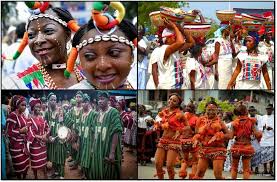
1
1
7
WHEN SCHOOLS BECOME BATTLEFIELDS: A NATIONAL TRAGEDY AND THE FAILURE OF GOVERNANCE
“A nation that cannot protect its children in the classroom is gradually surrendering its future to fear.”
Nigeria has once again been thrown into mourning following the horrifying abduction of students and teachers in Oriire Local Government Area of Oyo State and the brutal killing of a mathematics teacher, Michael Oyedokun, whose reported beheading has shocked the conscience of the nation. Armed bandits reportedly invaded multiple schools, abducting pupils, students, and educators in what has become another painful reminder of the worsening insecurity threatening Nigeria’s educational system and national stability.
The incident has generated outrage across the country, with many Nigerian’s questioning how schools places meant for learning, safety, and human development, have now become soft targets for terrorists, kidnappers, and criminal networks. Reports indicate that the attack affected Community Grammar School, Baptist Nursery and Primary School, and L.A. Primary School within the Ahoro-Esiele/Yawota axis of Ogbomoso.
While government officials at both state and federal levels have condemned the attack and promised rescue operations, arrests, and investigations, many citizens believe these responses came only after tragedy had already occurred. Governor Seyi Makinde confirmed the death of the teacher and stated that both kinetic and non-kinetic approaches were being deployed, while President Bola Ahmed Tinubu reportedly ordered a technology-driven rescue operation.
However, beyond public statements and condemnations lies a deeper question: Could this tragedy have been prevented?
The answer, sadly, points to the persistent failure of governance structures in critical areas of national security, intelligence gathering, rural policing, educational protection, and emergency response systems.
A truly Good Governance-driven administration would not wait for innocent citizens to become victims before acting. Good governance is proactive, not reactive. It prioritizes prevention over damage control.
A responsible government committed to the protection of lives and national development would have:
•Established advanced security surveillance around vulnerable rural schools.
•Strengthened intelligence gathering and rapid response systems in high-risk communities.
•Invested heavily in community policing and local security collaboration.
•Implemented effective Safe School protection policies across all states.
•Conducted continuous security risk assessments in rural educational zones.
•Equipped schools with emergency communication systems and security infrastructure.
•Ensured visible security presence around communities with previous kidnapping threats.
•Developed stronger synergy between federal, state, local, and traditional security structures.
The painful reality remains that many Nigerian communities continue to live in fear because insecurity is often addressed with temporary reactions rather than sustainable solutions.
Education cannot thrive where fear dominates the classroom.
Teachers cannot effectively educate when they become targets of violence.
Students cannot focus on learning when parents fear they may never return home safely.
This tragedy also exposes a dangerous national pattern: insecurity is gradually normalizing itself in the public consciousness. Each new attack shocks the nation temporarily before the country moves on without addressing the root causes. This cycle must end.
At the Institute of Good Governance and Political Studies (IGGPS), we strongly maintain that governance is not measured merely by political speeches, ceremonial appearances, or policy announcements. Governance is measured by the government’s ability to guarantee security, justice, peace, human dignity, and protection of lives.
The protection of educational institutions must become a national emergency priority.
Nigeria must urgently rethink its security architecture, especially in protecting schools, teachers, children, and vulnerable rural communities. The future of any nation that cannot secure its educational environment remains uncertain.
As a nation, we must rise beyond sympathy and embrace decisive reforms, accountability, strategic leadership, and proactive governance.
The blood of innocent citizens must never become ordinary headlines.
History will judge every society by how well it protected its children, its educators, and its future.
“When classrooms become crime scenes, governance has failed its most sacred duty. Nigeria must rise beyond condolences and build a nation where every child can learn without fear.” — IGGPS
Editorial Quote of the Day:
“Good governance is not proven during celebrations, but during moments of crisis when leaders must protect the lives, dignity, and future of the people.”
#IGGPS #GoodGovernance #Nigeria2027 #Leadership #Governance #Democracy #PoliticalStudies #YouthParticipation #NationalDevelopment #Accountability #PublicPolicy #DemocraticDevelopment #LeadershipMatters #NigerianNavy
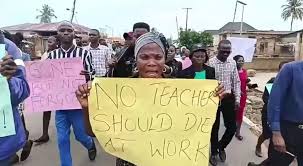

47
The Future of Good Governance in Nigeria Ahead of 2027: Why It Matters
As Nigeria gradually moves toward the 2027 general elections, national conversations surrounding governance, leadership, economic reforms, democratic accountability, insecurity, youth participation, and institutional credibility continue to intensify across political, social, and economic spaces.
At the center of these discussions lies one critical question:
What is the future of good governance in Nigeria?
This question matters deeply because the quality of governance will largely determine:
•Nigeria’s democratic stability,
•economic prosperity,
•national unity,
•institutional strength,
•youth opportunities,
•and long-term development trajectory.
For a country with Africa’s largest population and one of the continent’s biggest economies, the stakes surrounding governance in Nigeria remain extraordinarily high.
Understanding Good Governance
Good governance refers to the responsible management of public affairs and institutions in ways that promote:
•accountability,
•transparency,
•rule of law,
•citizen participation,
•equity,
•institutional efficiency,
•and sustainable development.
A nation experiences good governance when:
•leaders are accountable,
•institutions function effectively,
•citizens trust public systems,
•policies are implemented fairly,
•and public resources are utilized responsibly.
At IGGPS, we believe that good governance is not merely a political slogan; it is the foundation for national stability, economic growth, social justice, and democratic sustainability.
Why the 2027 Elections Matter for Governance
The 2027 elections are increasingly being viewed as more than a routine political transition.
For many Nigerians, the elections may become:
•a referendum on leadership performance,
•a test of democratic maturity,
•and an opportunity to redefine governance expectations in Nigeria.
Several major developments make the 2027 political cycle particularly important.
1. Growing Public Frustration Over Economic Hardship
Economic realities continue to dominate national discourse.
Many Nigerians are currently facing:
•rising inflation,
•high unemployment,
•increasing poverty,
•food insecurity,
•currency instability,
•and declining purchasing power.
These conditions have intensified public demand for:
•competent economic management,
•policy transparency,
•fiscal discipline,
•and people-oriented governance.
Citizens increasingly expect political leaders to provide practical solutions capable of improving living standards and restoring economic confidence.
2. Rising Youth Political Consciousness
One of the most significant developments in recent years is the growing political awareness among Nigerian youths.
Young Nigerians are becoming more active in:
•political discussions,
•governance advocacy,
•civic engagement,
•voter mobilization,
•and democratic participation.
Social media platforms have transformed political communication, making governance issues more accessible to citizens.
This growing political consciousness has created:
•stronger demands for accountability,
•greater scrutiny of public institutions,
•and increased interest in issue-based politics.
At IGGPS, we consider this a positive democratic development because active citizenship strengthens democratic governance.
3. Increasing Demand for Accountability
Public trust in governance institutions has weakened over the years due to:
•corruption,
•weak service delivery,
•insecurity,
•and perceived lack of accountability.
As 2027 approaches, Nigerians are increasingly demanding:
•transparency in public spending,
•credible elections,
•institutional independence,
•anti-corruption reforms,
•and responsible leadership.
This reflects a broader national desire for governance systems that prioritize public interest over political survival.
4. Opposition Politics and Democratic Competition
The emergence of coalition politics and growing opposition movements ahead of 2027 reflects the evolving nature of Nigeria’s democracy.
Strong democratic systems require:
•competitive political participation,
•viable opposition platforms,
•policy debates,
•and institutional checks and balances.
Political developments surrounding:
•opposition realignments,
•coalition negotiations,
•and governance reform narratives
demonstrate that Nigerians increasingly desire alternatives capable of strengthening democratic accountability.
However, political competition must remain:
•peaceful,
•issue-based,
•and nationally responsible.
5. Governance and National Security
Insecurity remains one of Nigeria’s most pressing governance challenges.
Issues involving:
•terrorism,
•banditry,
•kidnapping,
•communal conflicts,
•and economic crimes
continue to affect national stability and investor confidence.
The future of good governance in Nigeria will therefore depend heavily on:
•security sector reforms,
•intelligence coordination,
•community engagement,
•and institutional effectiveness.
Citizens expect governance systems capable of protecting lives, property, and democratic stability.
6. The Risk of Personality Politics
While political personalities continue to shape Nigeria’s political environment, sustainable democracy requires institutions that are stronger than individuals.
At IGGPS, we believe that:
•political movements must prioritize institutional reforms,
•governance systems must outlive political personalities,
•and democratic progress must be built on strong institutions rather than temporary political popularity.
The future of Nigeria’s governance cannot depend solely on individuals; it must depend on:
•constitutional stability,
•institutional credibility,
•rule of law,
•and democratic continuity.
7. The Role of Citizens in Good Governance
Good governance is not the responsibility of government alone.
Citizens also have critical responsibilities, including:
•participating in elections,
•demanding accountability,
•rejecting corruption,
•respecting democratic processes,
•and promoting national unity.
A politically informed population contributes significantly toward:
•democratic sustainability,
•policy accountability,
•and institutional development.
Why This Conversation Matters
The conversation about good governance ahead of 2027 matters because Nigeria stands at a critical national crossroads.
The country’s future will largely depend on whether political actors, institutions, and citizens collectively embrace:
•responsible leadership,
•democratic accountability,
•economic inclusion,
•institutional reforms,
•and national development priorities.
The 2027 elections therefore represent not only a political contest, but also an opportunity for national reflection on:
•leadership quality,
•governance standards,
•and democratic direction.
IGGPS Position
The Institute of Good Governance and Political Studies (IGGPS) maintains that sustainable national development can only be achieved through:
•accountable leadership,
•transparent institutions,
•active citizenship,
•democratic participation,
•policy-driven governance,
•and ethical public administration.
As Nigeria prepares for 2027, all political stakeholders must prioritize:
•peace,
•democratic stability,
•issue-based politics,
•national unity,
•youth inclusion,
•and institutional strengthening.
Nigeria’s democratic future must be built not on division or political hostility, but on responsible governance, national dialogue, and collective commitment to sustainable development.
Conclusion
The future of good governance in Nigeria ahead of 2027 matters because governance ultimately determines:
•economic opportunity,
•social stability,
•democratic credibility,
•national security,
•and the quality of life for millions of citizens.
The decisions made by leaders, institutions, political actors, and citizens in the coming years will shape not only the outcome of elections, but the future direction of Nigeria itself.
At IGGPS, we believe the path toward sustainable national transformation lies in:
responsible leadership,
strong institutions,
democratic accountability,
and active citizen participation.
Institute of Good Governance and Political Studies (IGGPS)
Promoting Leadership Excellence, Democratic Values, Policy Development and National Transformation.
#IGGPS
#GoodGovernance
#Nigeria2027
#Leadership
#Governance
#Democracy
#PoliticalStudies
#YouthParticipation
#NationalDevelopment
#Accountability
#PublicPolicy
#DemocraticDevelopment
#LeadershipMatters
#Nigeria


1
10
Critical Analysis of Peter Obi’s Political Journey from Labour Party to ADC and His Emergence as Sole Presidential Candidate of NDC Ahead of the 2027 Election
As Nigeria gradually approaches the 2027 general election cycle, the nation’s political landscape is witnessing significant realignments capable of reshaping democratic participation, opposition politics, governance expectations, and institutional accountability.
One of the most prominent developments remains the political journey of Peter Obi from the Labour Party to coalition politics involving the ADC and eventually his emergence as the sole presidential candidate of the Nigeria Democratic Congress (NDC).
At IGGPS, we believe this development represents more than an ordinary political transition. It reflects the deepening search by Nigerians, particularly youths and reform-minded citizens for credible governance alternatives capable of addressing the country’s persistent socio-economic and institutional challenges.
The Labour Party Movement and the Rise of Reform Politics
Peter Obi’s emergence during the 2023 presidential election under the Labour Party platform introduced a new dimension to Nigeria’s democratic environment.
For the first time in recent political history, large numbers of young Nigerians became actively involved in:
•political discussions,
•voter mobilization,
•civic participation,
•and governance advocacy.
The “Obidient Movement” evolved beyond party politics into a broader social and democratic consciousness movement demanding:
•transparency,
•prudent leadership,
•institutional accountability,
•economic productivity,
•and governance reforms.
At IGGPS, we consider this shift important for democratic growth because issue-based political engagement strengthens civic awareness and encourages greater citizen participation in governance processes.
Crisis Within the Labour Party and the Shift Toward Coalition Politics
Despite the momentum generated after the 2023 elections, the Labour Party experienced internal crises involving:
•leadership disputes,
•factional divisions,
•organizational instability,
•and legal disagreements.
These developments exposed the structural weaknesses that often affect emerging political movements in Nigeria.
Peter Obi’s movement into broader coalition politics under the ADC was widely interpreted as an attempt to:
•strengthen opposition unity,
•consolidate reform oriented political forces,
•and create a stronger institutional platform capable of competing nationally.
However, coalition politics in Nigeria has historically been challenged by:
•conflicting political ambitions,
•regional interests,
•ideological inconsistencies,
•and weak internal democratic culture.
The eventual transition toward the NDC platform further demonstrates the instability and fluidity that currently characterizes Nigeria’s opposition politics.
Peter Obi’s Emergence as Sole Presidential Candidate of NDC
Reports surrounding Peter Obi’s emergence as the sole presidential candidate of the NDC ahead of the 2027 elections have generated widespread national attention.
Supporters view the development as:
•a consolidation of reform politics,
•a strategic opposition move,
•and an opportunity to build a more focused political alternative.
Critics, however, continue to raise concerns regarding:
•party institutional strength,
•coalition sustainability,
•and the risks associated with personality centered political movements.
At IGGPS, we believe the real significance of this development lies not merely in electoral calculations, but in what it reveals about the evolving expectations of Nigerian citizens.
Increasingly, many Nigerians are demanding:
•accountable leadership,
•policy-driven governance,
•economic reforms,
•institutional efficiency,
•and youth-inclusive democracy.
Implications for Good Governance
Positive Democratic Impact
From a governance perspective, Peter Obi’s political movement has contributed positively in several ways:
1. Increased Youth Political Participation
The movement has inspired greater political awareness among young Nigerians, many of whom were previously disengaged from democratic processes.
2. Shift Toward Issue-Based Politics
Public political conversations have increasingly focused on:
•economic management,
•governance performance,
•public accountability,
•education,
•industrialization,
•and institutional reforms.
3. Stronger Democratic Competition
Competitive opposition politics strengthens democracy by:
•improving accountability,
•encouraging policy debates,
•and increasing governmental responsiveness.
4. Civic Consciousness and Governance Advocacy
The political movement has encouraged citizens to pay closer attention to:
•public policy,
•electoral processes,
•leadership conduct,
•and democratic institutions.
Areas of Concern
At the same time, IGGPS believes several important concerns must also be critically examined.
A. Personality-Driven Politics
Strong democracies are built on institutions, not individuals alone.
Political movements that rely excessively on personal popularity without building durable institutional structures may struggle with long-term sustainability.
B. Opposition Fragmentation
Frequent political defections and unstable coalitions may weaken public confidence in opposition credibility and democratic consistency.
C. Governance Expectations
Public expectations surrounding reform candidates are often extremely high. Sustainable governance transformation requires:
•institutional reforms,
•legislative cooperation,
•policy continuity,
•and long-term national planning.
D. Political Polarization
Nigeria must avoid excessive political hostility capable of undermining national unity and democratic stability.
The Broader Governance Lesson for Nigeria
At IGGPS, we believe the most important lesson from the current political developments is that Nigerians are increasingly demanding:
•competent governance,
•transparency,
•economic inclusion,
•youth empowerment,
•institutional reform,
•and responsible leadership.
This reflects a gradual transition from traditional patronage politics toward a more policy-conscious democratic culture.
Regardless of political affiliation, all political actors must recognize that sustainable democratic development requires:
•strong institutions,
•respect for democratic principles,
•electoral credibility,
•rule of law,
•and inclusive governance.
IGGPS Position
The Institute of Good Governance and Political Studies (IGGPS) maintains that:
•democracy thrives where citizens remain politically informed,
•governance improves where leaders are held accountable,
•and national development becomes sustainable where institutions are stronger than personalities.
As Nigeria prepares for the 2027 elections, political actors, institutions, and citizens must collectively prioritize:
•peaceful democratic engagement,
•issue-based politics,
•national unity,
•youth inclusion,
•institutional strengthening,
•and good governance practices.
Nigeria’s future will ultimately depend not only on political personalities, but on the country’s ability to build transparent institutions, responsible leadership systems, and a democratic culture rooted in accountability and national development.
Institute of Good Governance and Political Studies (IGGPS)
Promoting Leadership Excellence, Democratic Values, Policy Development and National Transformation.
#IGGPS
#GoodGovernance
#PoliticalStudies
#PeterObi
#Nigeria2027
#Democracy
#Leadership
#Governance
#PublicPolicy
#YouthParticipation
#NationalDevelopment
#PoliticalReform
#Accountability
#DemocraticDevelopment

1
2
64