
Lifelong HUMINTer, U.S. Army FAO 🇩🇪 & 🇨🇳, military attaché and Info Warrior. Counter-disinformation. Prof of Intelligence Studies. Politically centrist.
Joined February 2013
- Tweets 44,626
- Following 4,200
- Followers 42,960
- Likes 30,093
2,510 Photos and videos





Pinned Tweet

I have a master's degree in Asian Studies/Chinese. I learned Mandarin Chinese, lived with Chinese people, was certified by the U.S. Army as a Foreign Area Officer (FAO) for China, served as a military attaché, and traveled to China several times. In other words, I know a thing or two about China and the Chinese.
At the moment, China may be supporting Russia in its war on Ukraine, but make no mistake about Beijing's long-term intentions: If Russia collapses and dissolves (which is not impossible to imagine), the Chinese will very quickly seek to re-acquire the territories the Qing dynasty was forced to surrender to Tsarist Russia. You can absolutely count on that happening.
Back in the 1950s and 1960s, in the days of Stalin, Krushchev, and Mao Zedong, the Soviet Union was far more powerful than agrarian China. Back then, Soviets were clearly the "outer spoon" in that "bromance."
But today? The tables have turned; China is an economic and industrial powerhouse, and it is Russia that has become backward and weakened. Every Chinese school child is taught about the "Century of Humiliation" and the period of "Unequal Treaties."
Unlike Americans and many Westerners, most of whom think about the future in terms of fiscal quarters, the Chinese think in terms of years and decades.
Believe me when I tell you: The Russians KNOW all this. And it scares the 💩 out of them.
29 Dec 2024

This clip with millions of hits in China calls for China to take over Siberia, Lake Baikal, Sakhalin and other parts of Russia after it loses in Ukraine then falls apart.
743
2,050
8,239
1,012,802
Dr. Fred Hoffman, Lieutenant Colonel (ret.) retweeted

Jun 12
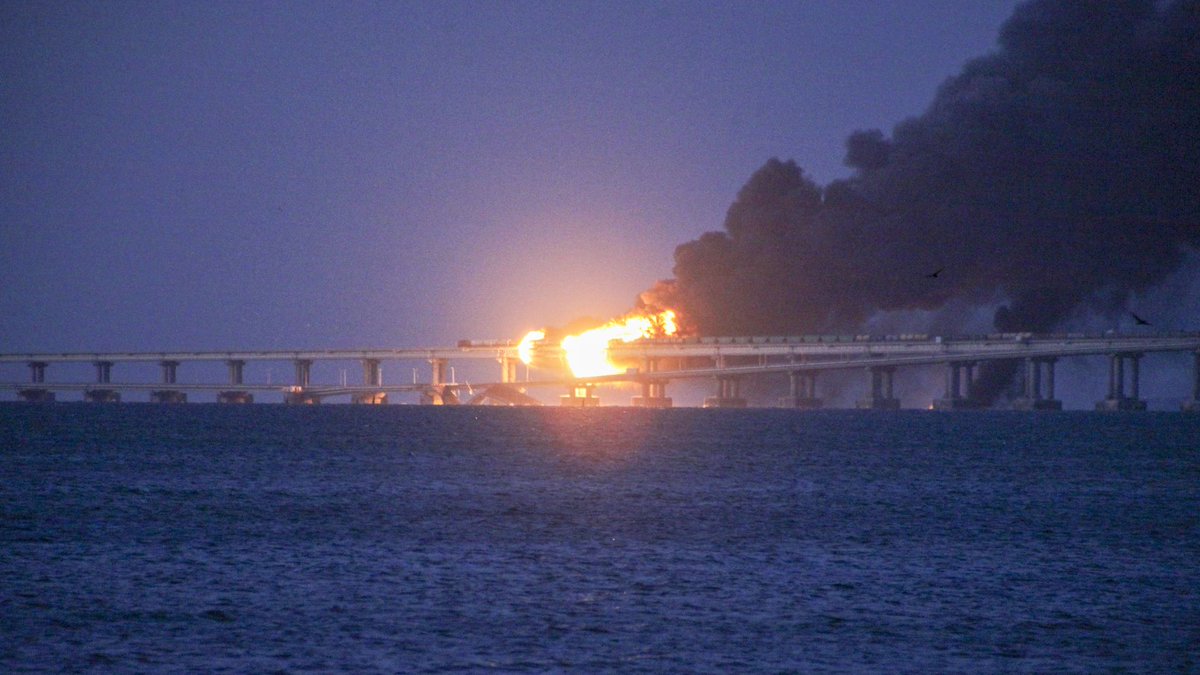
The Ukrainian military is attempting to turn the Crimean Peninsula into the "island" of Crimea, and this is extremely important for the entire war.
How did we get here?
The Crimean Peninsula is connected to the mainland via two routes: the first is Crimea-Kherson (Ukraine) in the north of the peninsula, where three bridges serve this purpose: Chongar, Henichesk, and Armiansk. The second is Crimea-Krasnodar (Russia), via the Kerch Bridge.
Crimea was essential to the 2022 invasion because attacks on Ukraine’s southern front were launched from there. The invasion toward Kherson, Zaporizhzhia, and later toward Mykolaiv and Odesa originated in Crimea.
The stabilized fronts in Kherson and Zaporizhzhia were maintained in the first months of the invasion solely because of Crimea, through which the supply lines ran, where the military bases were located, and from where some of the Russian airstrikes on this flank were launched. In 2022, the Kerch Bridge was targeted by the Ukrainians. That strike knocked down a section of the bridge, destroyed the railway lines, and damaged its structure. To this day, the Kerch Bridge has not been used as a serious military logistics route.
Fast-forward to 2026, and we arrive in May of this year when Ukraine began targeting the logistics lines connecting Russia and Crimea via the "land bridge" of Mariupol-Berdiansk-Melitopol. These lines sustain and keep the southern front alive.
What is happening now?
For more than a year, Crimea has been the target of Ukrainian “mid-strike” attacks that are part of a shaping, modeling, and groundwork operation. Russian bases, radars, air defense systems, and naval bases have all been simply obliterated during this period.
The two operations—the one against the Mariupol-Crimea lines and the one against Crimea itself—have led to a dire situation on the peninsula. The population is on fuel rationing. Military bases are no longer defended. The naval fleet was forced as early as 2023 to flee to Novorossiysk.
It must be understood that if Crimea becomes militarily (and civilian) unsustainable, the Russian southern front faces a danger unlike any seen before in this war. Crimea REMAINS essential to this front. So the Ukrainians have gotten to work and:
This week they struck multiple times at the three access routes from the mainland to the peninsula: the Chongar, Henichesk, and Armiansk bridges. Crimea is close to complete isolation (it will never be entirely so).
The only operational military route is the one in Armiansk, because the bridge crosses the old canal that used to bring water from the Kahovka reservoir (destroyed by the Russians in 2023) to Crimea.
Crimea is on the verge of becoming a new disaster for the “second army of the world.” This year, the Ukrainians will certainly do everything in their power to isolate the Russian army there, weaken the southern front, and thus try to turn the tide of the war (because yes, Crimea could be one of the keys to an unexpectedly favorable outcome for Ukraine).
What might follow?
These operations will continue and intensify during these summer months, because Ukraine has the necessary resources: equipment (FP-2 attack drones and Behemoth—we’ll be hearing a lot about this new “Shahed-type” drone, but Ukrainian-made, with a dual payload), identification technology, acquisition, AI-guided strikes, and the necessary financial resources.
In Crimea, this year, the fate of this war MAY be “decided,” at least in part. To give you an idea, the isolation and blockade of Crimea could open the possibility (in a best-case scenario) of liberating the Kherson region (on the left bank of the Dnieper) and liberating Melitopol, the collapse of the Zaporizhzhia front, the liberation of the Zaporizhzhia Nuclear Power Plant, the liberation of Berdiansk, and forcing the Russians to redeploy units from the eastern front, opening up opportunities for Ukraine there as well.
Slava Ukraini!
33
360
1,605
35,818
Dr. Fred Hoffman, Lieutenant Colonel (ret.) retweeted

Jun 13
You have to be a complete idiot to believe that these two cultures can coexist.
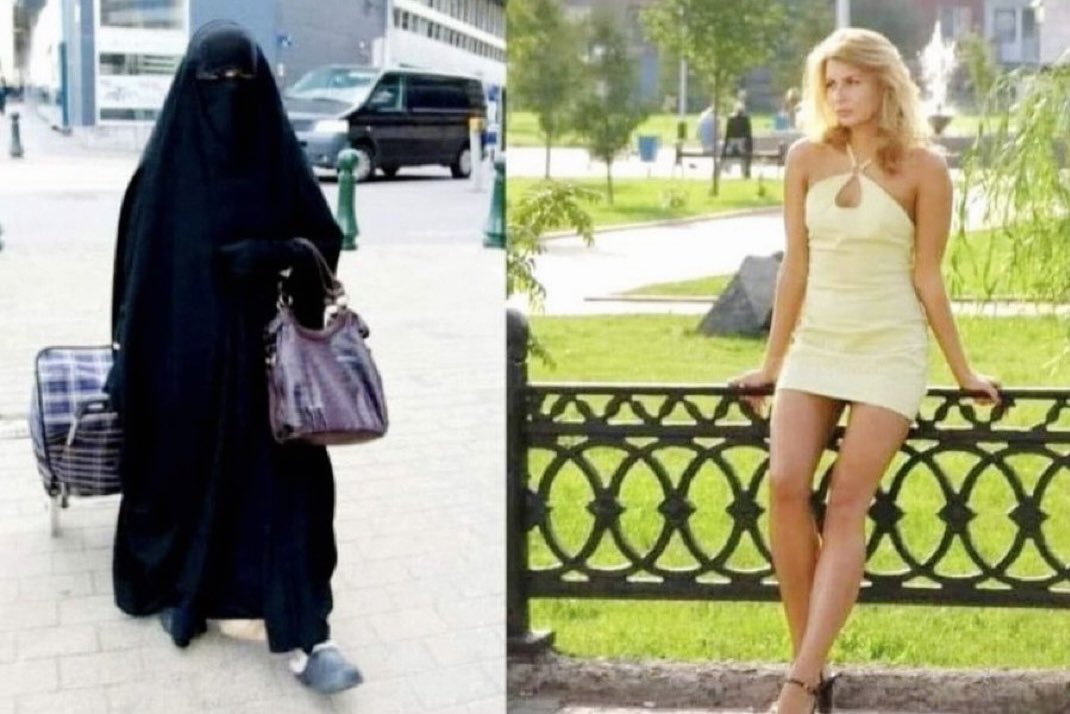
616
13,697
74,715
490,004
Dr. Fred Hoffman, Lieutenant Colonel (ret.) retweeted

Jun 12
The two massive Russian industrial facilities currently burning around 1000km from Ukraine were both built over 60 years ago. Tolyatti in 1950's and Nizhnekamskneftekhim in 1960's.
Decades of producing revenue for the Mad Czars of Moscow to wage war, now all coming to an end.
75
1,029
4,713
34,689
Dr. Fred Hoffman, Lieutenant Colonel (ret.) retweeted

Today Ronald Reagan would say, “Mr Putin, get the hell out of Ukraine.”
He set the example for a strong “Peace through Strength” policy guided by strong values.

📢 "Mr. Gorbachev, tear down this wall!"
[On this day, 39 years ago, 1987]
670
1,333
6,323
157,097
Dr. Fred Hoffman, Lieutenant Colonel (ret.) retweeted

Jun 11
This needs to be said loud and clear.
Israel is not attacking Lebanon. They are targeting Hezbollah. An Iranian funded terror proxy that has struck Israel 2,000 times since the April ceasefire.
Israel has every right to defend itself. Don’t fall for the Iranian regime’s distraction.
7,606
4,877
23,901
1,377,676
Dr. Fred Hoffman, Lieutenant Colonel (ret.) retweeted

Jun 11
The Iranian regime can't take yes for an answer. President Trump has given them ample opportunities to accede to our demands, but they remain determined to retain their position as the region's most destabilizing force. That status quo is unacceptable.
253
250
1,486
84,082
The other day, I was interviewed by Philip Ward and Mike Ruzzi of Erie News Now on the subject of negotiations with Iran.
erienewsnow.com/watch/video/…
7
420
Yes, Russia has a lot to be proud of. But invading Ukraine and terrorizing Ukrainian citizens with ballistic missiles and drone strikes certainly does not number among Russia's "achievements."
Remember: Germany had been the land of Goethe, Schiller, Beethoven...and then came the Nazis.
It you are truly proud of Russia, and want Russia to be respected again in the world, do what you can to restore Russia's reputation and status. Of course, that may be a wee bit difficult to do in a repressive autocracy that does not tolerate any dissent.
Jun 11

Good morning, my little Russophobes ☀️🇷🇺
Before your daily prediction of Russia’s imminent collapse, here’s a reminder:
🇷🇺 First satellite in space
🇷🇺 First human in space
🇷🇺 First spacewalk
🇷🇺 The only country to successfully land spacecraft on Venus
🇷🇺 Largest country on Earth
🇷🇺 Largest nuclear-powered icebreaker fleet
🇷🇺 Most chess grandmasters
🇷🇺 20% of the world’s trees
🇷🇺 Largest wheat exporter
🇷🇺 World’s largest natural gas reserves
🇷🇺 World’s largest diamond producer
🇷🇺 Home to Lake Baikal, containing 20% of the planet’s unfrozen fresh water
🇷🇺 A currency that refused to collapse despite the “economic ruin” headlines
Strange accomplishments for a country that’s supposedly on its last legs.

9
3
38
1,231
Be in it to win it. Nothing else enables you to achieve your objectives.
Jun 11

Keith Kellogg, former Trump advisor:
"Having a protracted war is not the American way of fighting."
"We have to go back to the way we did in World War II and World War I and finish the job, destroy them."
Kellogg said the U.S. is currently "playing their game, not our game."
"lets play OUR game"
4
2
13
1,094
Dr. Fred Hoffman, Lieutenant Colonel (ret.) retweeted

US just smashed a major Iranian Revolutionary Guard command center near Tehran with 49 Tomahawk missiles.
One of their “strongest” hubs… gone in minutes 😂
The “invincible” regime looks very fragile. Talk is cheap.
120
241
1,496
61,880
Here's the kind of "deal" the Trump administration needs to offer Iran:
The Allies agreed that Nazi Germany and Japan had to surrender unconditionally. This must also be the terms of the "deal" for Iran.
When treating cancer, it must be ELIMINATED for the treatment to be considered a success.
Jun 10

When Trump defines victory as a deal he gives Iran all the leverage, because they can deny him victory by denying him a deal. He does not need a deal! Finish the target list, open the strait and declare victory!
11
4
28
1,175

🇷🇺🇨🇦 Russia has threatened Canada with an “appropriate response” for supporting Ukraine
Moscow accused Ottawa of being a “warmonger” for continuing to provide military assistance to Kyiv and vowed to add Canadian defense-related facilities to its military planning.
It's always fascinating to hear lectures about peace from a country that launched the largest war in Europe since World War II.
In the Kremlin's worldview, invading your neighbor is normal. Helping the victim defend itself is the real provocation.
725
2,014
6,305
238,979
The Trump administration would be wise to heed Dr. Nazarian's words: The fanatical mullahs now ruling Iran must be thoroughly and completely defeated. Compromise with them is pointless, for all the reasons she mentions, and the results of a compromise will not last beyond this administration.

The Islamist regime will never give up. They will keep coming for America because it is their mission on earth to destroy us. Please don’t apply American values on these monsters. You expect the devil to keep its word?
4
4
14
651
Dr. Fred Hoffman, Lieutenant Colonel (ret.) retweeted

Jun 9
Russia purposely claims World War II began in 1941 so they can cover up how they were Hitler's ally in 1939 when Poland was invaded
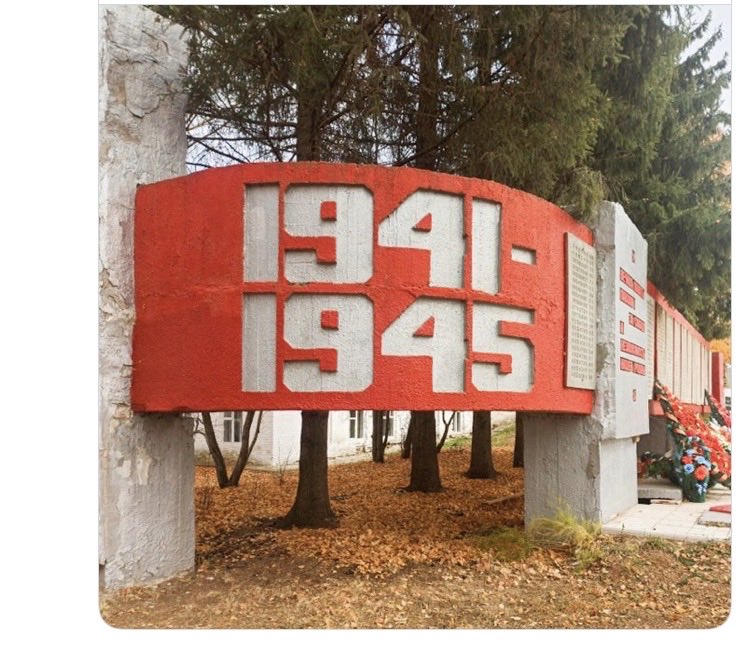
817
2,493
12,960
234,493
Dr. Fred Hoffman, Lieutenant Colonel (ret.) retweeted
Jun 10
Iran's regime is fractured and tired - but they're betting they can outlast us. We need to prove them wrong. The American people, the Iranian people, and the world are depending on us.
204
511
2,840
72,192
Dr. Fred Hoffman, Lieutenant Colonel (ret.) retweeted

Jun 8
Despite having hundreds of mosques in New York, mass street “prayers” are becoming a staple of life in the Big Apple.
And it’s not prayers, my friends, but assertion. They are claiming turf, like hyenas pissing to mark territory.
8,587
37,394
125,021
1,376,974
Dr. Fred Hoffman, Lieutenant Colonel (ret.) retweeted
We can’t be neutral when it comes to Russia and Ukraine. This is an evil vs good war, and we should stand with the democracy, the victim of an invasion and not the invader. People say they’re pro-Ukraine, but actions speak louder than words.
599
1,546
8,065
150,729
Sure, white women in Russia are safe -- until they go down to the Kremlin and hold up a blank piece of paper (to protest the war in Ukraine), in which case the police immediately appear and arrest them.

If these white women were in Sweden, France, Italy, the UK, or Germany, they’d be assaulted by migrants.
In Moscow, white women are safe. They can dance freely in the streets, walk anywhere regardless of the hour, & wear what they wish.
In Putin’s Russia, white women are safe.
4
9
39
1,616
Interesting, if true.
Jun 7

Ukraine‘s president Zelenskyy in an interview with Skynews disclosed that Russian oligarch Roman Abramovich came to Kyiv, Ukraine. This secret meeting took place recently and Zelenskyy made clear that Ukraine is not going to surrender any parts of Ukraine, including Donbas. Zelenskyy said that the only compromise he is willing to take is an unconditional ceasefire.
This are interesting news. Abramovich would have never come to Kyiv if this wasn’t sanctioned by Putin. In other words, Putin blinked.
3
2
30
1,877
The war ends when someone in Russia decides they've had enough of Vladimir Putin -- and not before.

🚨STRATÉGIQUE & HISTORIQUE
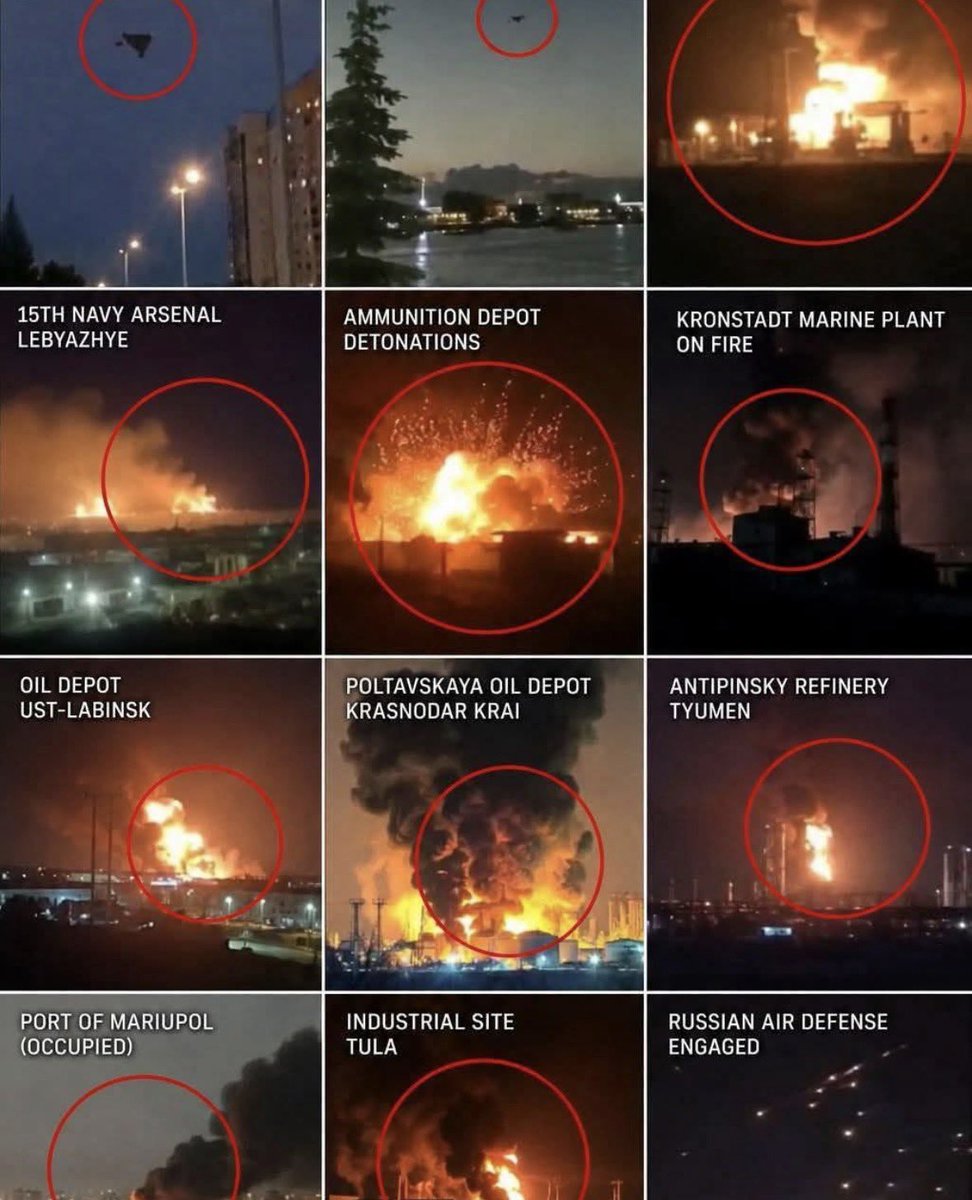
L'armée ukrainienne vient de mener sa plus vaste et plus profonde attaque de drones depuis le début de la guerre. Une vague record de 376 drones a frappé la Russie jusqu'à 1 000 km de la frontière, ciblant le cœur militaire et énergétique du pays.
🔥 Les faits marquants :
La flotte de la Baltique visée : Incendies et explosions à la base navale de Kronstadt et au 15e arsenal de munitions près de Saint-Pétersbourg.
Infrastructures pétrolières en feu : Les dépôts d'Ust-Labinsk (Krasnodar) et de Tyumen durement touchés.
Timing politique : Une riposte directe après le rejet par Poutine des propositions de paix de Zelensky, en pleine clôture du Forum économique de Saint-Pétersbourg.
Malgré la défense antiaérienne russe, la saturation de l'espace aérien a provoqué un chaos logistique inédit jusqu'à la côte Baltique. La guerre change d'échelle. 🇺🇦✈️🇷🇺
#Ukraine #Russie #GuerreEnUkraine #DroneStrike #SaintPetersburg #Kronstadt #Actualite #Geopolitique #OSINT
2
9
53
1,282