
Joined February 2015
- Tweets 18
- Following 161
- Followers 76
- Likes 69
5 Photos and videos

21 Aug 2025
Is AI reasoning - or just faking it well? 🤔
New @NatureMachInt paper reframes the debate: not "Can AI reason?" but "How does AI compute?" via Turing-inspired algebraic circuit complexity.
A step beyond benchmark chasing.
🔍 nature.com/articles/s42256-0…
#AI #Reasoning #Complexity
1
5
172
19 Sep 2024
🚀 Breaking News in AI & Math! 🚀 Our AI-Hilbert paper, features in Nature’s AI & ML Editorial Highlight! 🌟
Check it out:
Paper lnkd.in/ehYiADt5
Editorial Highlight lnkd.in/eDk3SfM7
GitHub lnkd.in/eVWkFshw.
#AI #Innovation #Discovery #NatureComms
4
6
525
15 Jul 2024
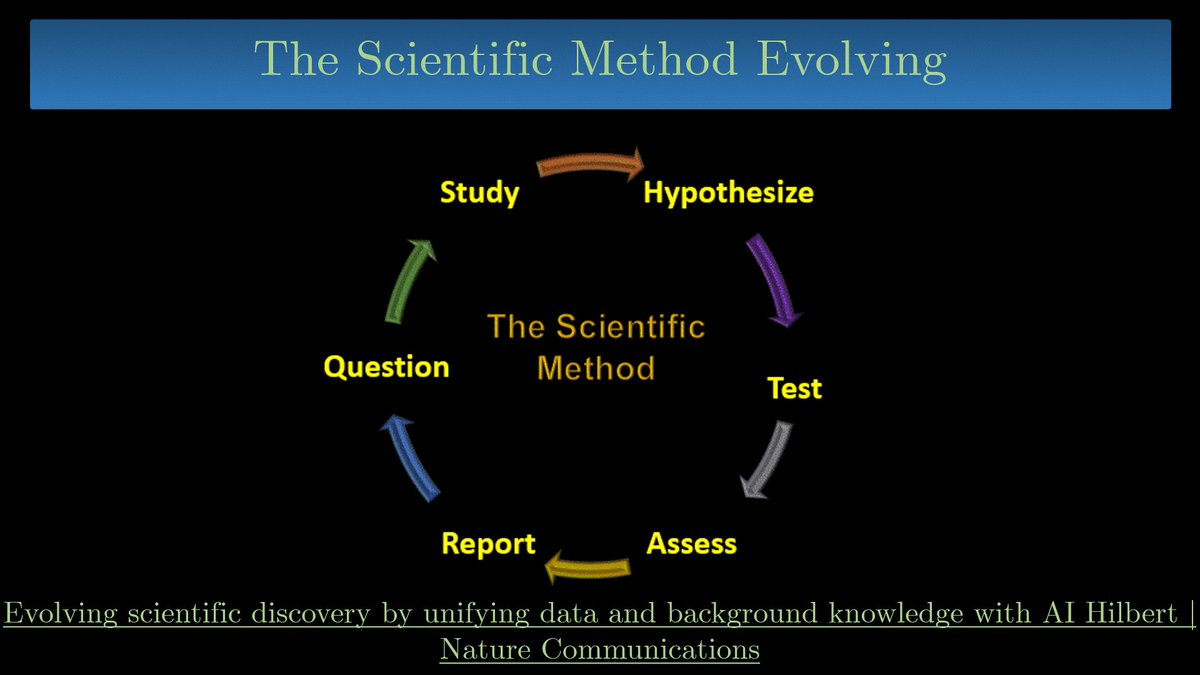
AI-Hilbert is an attempt to evolve the Scientific Method by unifying hypothesis generation and hypothesis testing into a single step. The framework enables making scientific discoveries when both body of theory and data are limited ibm.biz/BdKidt, ai-hilbert.github.io
1
5
413
15 Jul 2024
Evolving scientific discovery by unifying data and background knowledge with AI Hilbert | Nature Communications
2
86
Lior Horesh retweeted

12 Apr 2023
.@Cristina__C, @InverseProblems et al. propose a method that derives scientifically meaningful symbolic formulas by combining symbolic #regression with logical #reasoning. #AI #ML #GettingApplied
@SamsungResearch @IBMResearch @UMBC_CBEE @UMNChemistry
nature.com/articles/s41467-0…
5
14
5,440
Lior Horesh retweeted

12 Apr 2023
AI-Descartes can also distinguish between different sets of background theories. Given high precision atomic clock measurements and either Einstein’s or Newton’s theory, our tool can sort out which theory is more consistent with the data.
1
4
5
517
Lior Horesh retweeted
12 Apr 2023
Given data on the orbital periods of celestial bodies, the SR module of AI-Descartes generates formulas that fit the data well, while the Reasoning module re-ranks them based on the distance to a given background theory and identifies the one that is closest to being derivable.
1
1
3
359
Lior Horesh retweeted
12 Apr 2023
We tested AI-Descartes on Langmuir’s 1918 experimental data in an attempt to rediscover his theory of adsorption. Many expressions fit the data well, but only one (f2) is successfully derived from the background theory by the theorem prover.
1
1
4
385
Lior Horesh retweeted
12 Apr 2023
Our paper is out in @NatureComms! We introduce AI-Descartes, an AI tool that uses both data and background theory for scientific discovery. Symbolic Regression, an #ML technique, generates formulas and an automated theorem prover checks their derivability.
1
9
48
6,916
9 Jan 2023
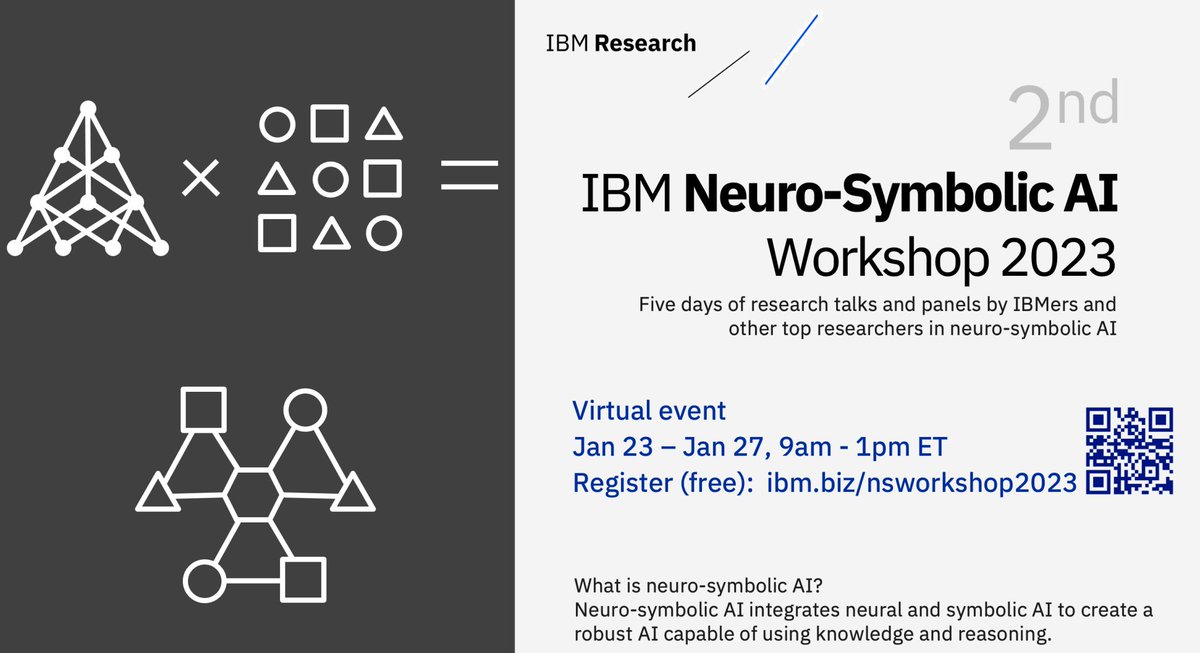
For those of you interested in Neuro-Symbolic AI, consider joining us at the upcoming 2023 IBM Neuro-Symbolic Workshop (23-27 Jan, 9 am-12 pm ET).
Registration is free at: lnkd.in/d5Cubcyi
#ai #ibm #ibmresearch #neurosymbolicai #machinelearning #reasoning #knowledge
4
226
31 Oct 2022
The Math Sciences group at IBM Research is looking for truly exceptional post-doc fellow(s) (Goldstine fellowship).
Full consideration will be given to applications arriving by December 31, 2022
research.ibm.com/goldstine/
3
2
21 Sep 2022
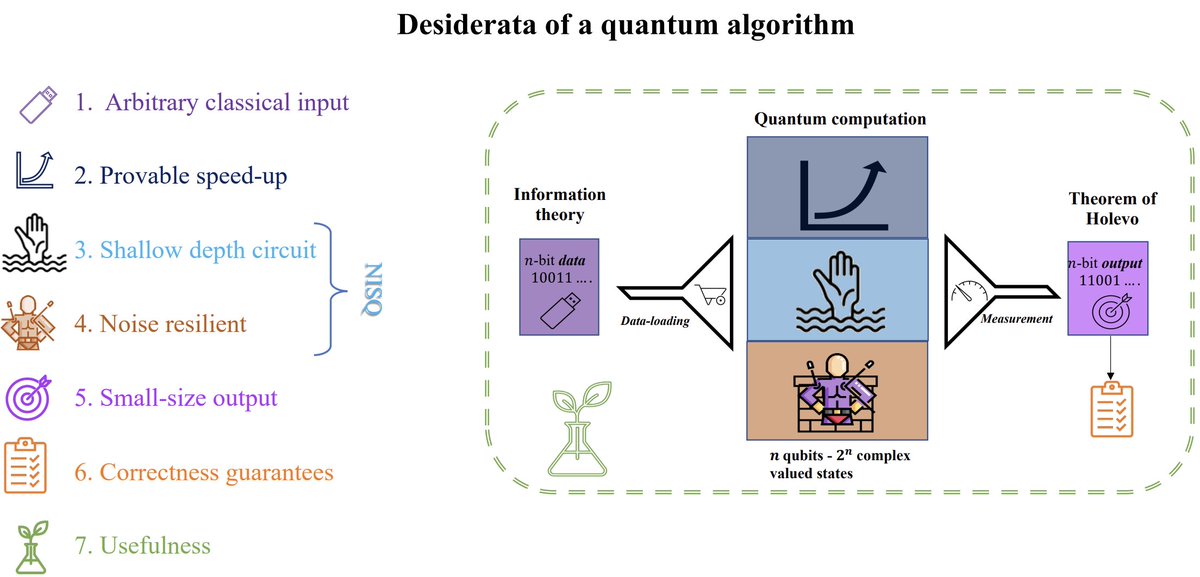
Those of you interested in what we hope is the first, end-to-end #quantum #AI #algorithm that offers provable exponential advantage on noisy quantum devices (NISQ), check arxiv.org/abs/2209.09371.pdf, and share your thoughts...
1
1
5
21 Sep 2022
@PeterShor1 @quantum_aram @regevlab @alfred_aho @QuantumGosset @ewintang @GilKalai @RichardCleve @preskill @krystasvore @ChadRigetti @skdh @lexfridman @frossi_t
1
2
10 Aug 2021
We (Mathematics of AI group at IBM Research) are seeking to hire an exceptional theoretical computer scientist or a mathematician who can extend their expertise to make fundamental breakthroughs in the broad field of AI. Details in the link... krb-sjobs.brassring.com/TGne…
3
Lior Horesh retweeted

4 Aug 2021
Excited to announce our #NeurIPS2021 w/s on Metacognition in AI! Can't wait to get that conversation started with a stellar set of inter-disciplinary speakers and panelists.
sites.google.com/view/metaco…
6
15
15 Jul 2021
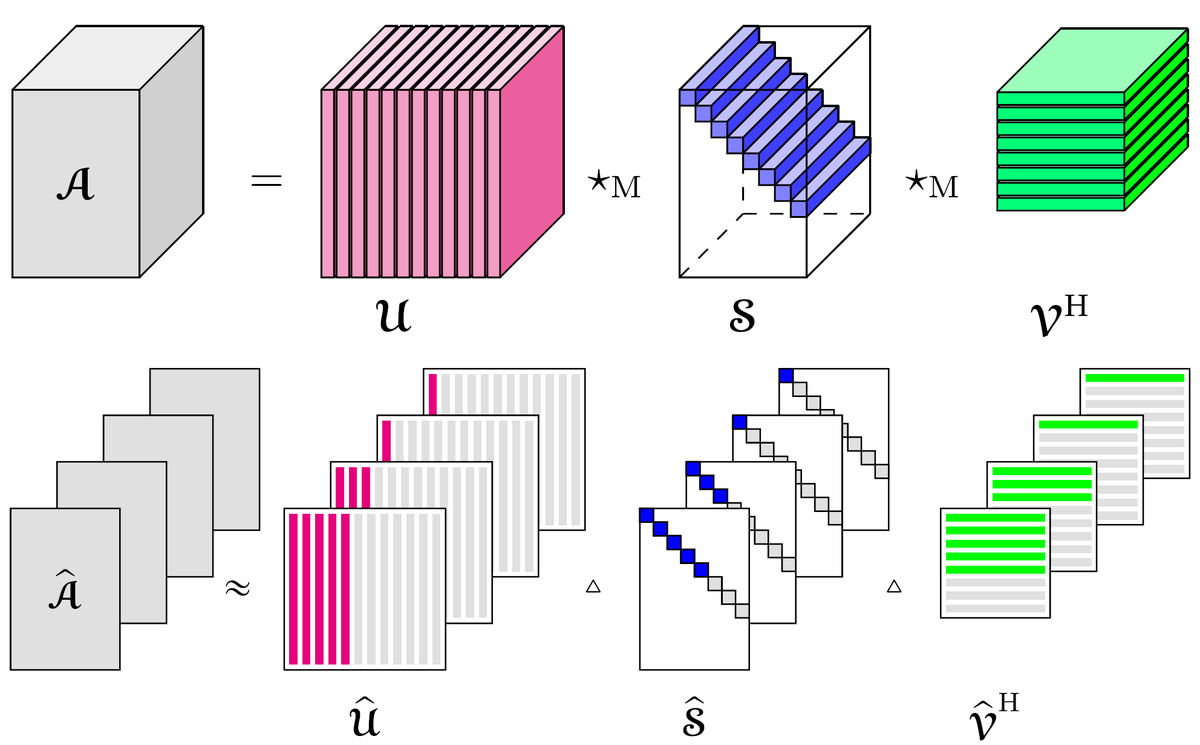
A new tensor algebra offers provably optimal truncated decompositions, while also featuring matrix-mimetic properties. The framework, published in PNAS lnkd.in/dFsNwnt, addresses decades-long open problem lnkd.in/d94b5bc #research #ai #algorithms #algebra #bigdata
3
Lior Horesh retweeted

26 Oct 2019
"Leveraging Secondary Storage to Simulate Deep 54-qubit Sycamore Circuits" is the #1 paper on Arxiv today in quantum physics. Congrats @jagunnels. See it at -> assert.pub/arxiv/quant-ph/qu… and assert.pub/papers/1910.09534. Please retweet.
4
7
Lior Horesh retweeted

27 Oct 2019
Fame is a fleeting thing. "Supplementary information for Quantum supremacy using a programmable superconducting processor" is now #1 (and worth reading). [Sole "SMAuthorship" (Social Media Authorship) because of co-authors, only @InverseProblems and I are on Twitter] 👻⚛️#⃣1⃣
26 Oct 2019

"Leveraging Secondary Storage to Simulate Deep 54-qubit Sycamore Circuits" is the #1 paper on Arxiv today in quantum physics. Congrats @jagunnels. See it at -> assert.pub/arxiv/quant-ph/qu… and assert.pub/papers/1910.09534. Please retweet.
3
11