
Joined October 2009
- Tweets 118,918
- Following 3,394
- Followers 9,354
- Likes 203,769
274 Photos and videos




Chica'sBailBonds retweeted

There is a real, ongoing pattern in serious child protection cases in the UK where multiple safeguarding systems (medical staff, social services, and courts) are later examined after a child dies. Those reviews often highlight failures in assessment, communication, and follow-up.
1
2
144
Chica'sBailBonds retweeted

Looked into this in detail and it made me sick what they did to that poor baby! May they burn in hell for what they did!
1
11
241
Chica'sBailBonds retweeted

Jun 14
KEEP GOING, IRELAND! 🇮🇪
Shut it all down. Starve the traitors.
No fuel. No food. No surrender.
Do you support the Irish people taking their country back from globalist traitors?
A. Yes
B. No
3,542
9,621
40,495
202,824
Chica'sBailBonds retweeted

This broke me. I cannot imagine what her son is going through right now. I'm praying for him and the family. May God rest her soul.
1
11
221
2,487
Chica'sBailBonds retweeted

STOP ALLOWING PEOPLE TO COME TO YOUR HOME FOR FB MARKETPLACE. Meet at the police station or post office - SOMETHING other than your home. And if in your home have protection ready and multiple people.
10
27
285
3,948
Chica'sBailBonds retweeted

We just need swift capital punishment for all of these criminals. Our corrupt culture and corrupt judiciary keep protecting these criminals and showing mercy for what? To display their moral superiority at the cost of the innocent lives of others.
5
13
218
3,440
Chica'sBailBonds retweeted

If you don't execute savages for monstrous crimes, they will only kill more innocent people.
"Mercy to the guilty is cruelty to the innocent."
-Adam Smith
1
25
215
1,669
Chica'sBailBonds retweeted

🚨WHAT THE HELL?!!!
A mother stepped in front of an armed Black male robber to protect her son…
…AND HE SH0T HER IN THE HEAD AS SHE RAN AWAY!!!!!
Read that again… as she RAN AWAY.
Her name was Jean Gragg, she was 40 years old.
Her son had arranged to sell a watch on Facebook Marketplace.
The buyer came to their own home in South Bend, Indiana.
Police say that 18-year-old buyer, John Ford, pulled out a gun, said “I need it,” and tried to rip the watch out of the son’s hands.
Jean did what a mother does… she stepped BETWEEN them.
She put herself in front of the gun and chased him off her property.
Then, police say, surveillance video shows the coward turning and firing at her MULTIPLE TIMES as she turned around and ran back toward her house.
He sh0t her in the head.
He threw the gun over a fence and ran.
On Saturday, Jean Gragg sadly passed away.
He is now charged with M*RDER.
WE. DO. NOT. HAVE. TO. LIVE. LIKE. THIS!!!!!!!!!
Say her name. Jean Gragg.
1,339
8,899
28,894
456,569
That’s the standard deflection, but it doesn’t hold up.
The long decline in the Islamic world was already well underway centuries before European colonialism. The Mongol sack of Baghdad in 1258, the shift toward madrasa-focused religious education, the resistance to sustained rational inquiry after figures like Al-Ghazali, and centuries of relative stagnation under later empires all happened while Europe was still recovering from its own dark ages and then surging ahead.
Colonialism disrupted many societies — yet post-colonial East Asia, parts of India, and others managed rapid catch-up and surpassing once they adopted the institutions and mindset of modernity. Many Muslim-majority countries, despite oil wealth, foreign aid, and independence, have not shown the same trajectory on average.
“Irregular development” is true everywhere. The question is why one civilization that once led in key fields for a few centuries then largely fell behind for the next 700 years, and why that pattern continues in governance, education, innovation metrics, and social attitudes today.
“Islam isn’t uniform” is also true in practice — there are secular Muslims, reformers, and varying interpretations. But the religion isn’t infinitely malleable. Its foundational texts (Quran and Hadith) and classical Sharia framework contain explicit positions on law, apostasy, gender roles, religious supremacy, and governance that many contemporary Muslim societies still reference or poll positively on. That’s why we see consistent patterns across very different countries and cultures when Islamic doctrine is given political weight.
You can’t keep blaming external factors forever while the internal doctrinal and cultural elements remain unexamined. Other civilizations adapted and reformed. The data on outcomes keeps testing the claim — and the results are what they are.
History is stubborn. So is measurable reality.
1
4
83
595
Chica'sBailBonds retweeted

Jun 11
That is my point, actually, that it did turn into abuse. Cordoba and Greece were both conquered and occupied by Islamic forces, subjected to horrendous abuses before they were finally (rightfully) expelled from both nations.
Can we discuss the devshirme? The Islamic slave trade, which continues to this day? The apartheid system that taxed & treated Christians like 2nd class citizens on their own land?
1
5
89
576
Chica'sBailBonds retweeted
Jun 11
What knowledge did Islam preserve? That of the Greeks and Christian Middle East when they swept in and conquered, slaughtering the majority of the native population and forcing the rest to convert?
Islam can f*** off.
3
15
354
3,717
Chica'sBailBonds retweeted

Jun 10
This part, asshole:
Jun 10

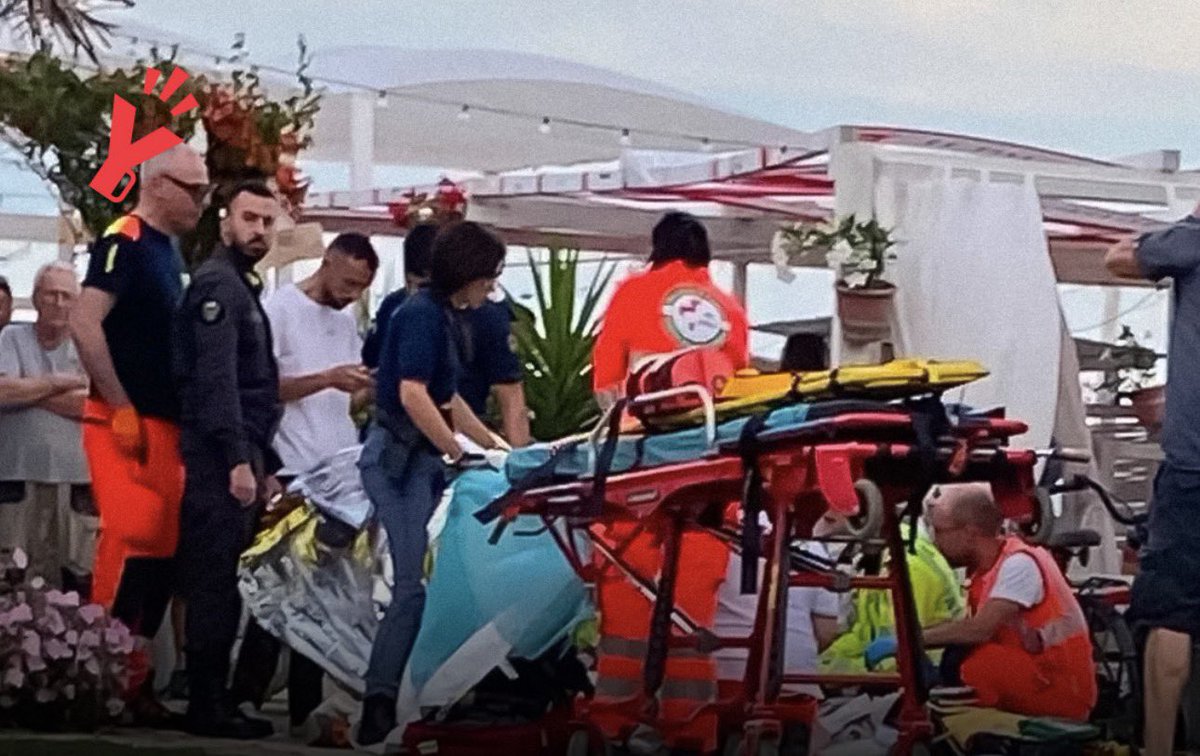
Outrage in Italy as an Albanian man was almost beheaded by a North African gang for defending an elderly man during a robbery.
The North Africans entered a restaurant in Fermo and began harassing an elderly Italian man, demanding money.
The Albanian noticed what was happening and tried to defend the elderly Italian man, when the North Africans became enraged and dragged him outside.
They then beat him up, hitting his head with stones and allegedly trying to behead him, all while screaming “Allahu Akbar”, to the horror of everyone.
The brave man is now in a coma, fighting for his life.
1
22
797
8,392

Islam seems incompatible with MODERN civilisation.
It has contributed basically no science in the modern era.
It has almost no universities in the world’s top 300.
Only 4 Muslims have won a Nobel Prize in Science. All working in the West.
While Jews (1% your population size) have won about 300.
7
41
1,162
17,374
Chica'sBailBonds retweeted

Jun 11
The headless bodies
Destroyed towers
Microwaved babies
Killing fields full of slaughtered infidels
Females consigned to second class life
Slavery
Sanctioned pedophilia
Public domination ceremonies
A holy book calling for torture and killing of infidels
4
78
2,358
26,682
Chica'sBailBonds retweeted

Jun 12
The girls it raped. The infidels it slaughtered. It's still doing both.
1
3
72

Chica'sBailBonds retweeted

Jun 11
Maliq,
We all see Muslim scholar and clerics telling us all that Islam will take over the UK, that infidels will be killed, that wives will be beaten, that child marriage is desirable, and that Female Genital Mutilation will be allowed
All of this is quite contrary to British tradition
Why do you pretend this is not going on ?
We are not all complete fools...
Jun 10

When non-Muslims say Islam is not compatible with civilisation, I always ask:
Which part?
The universities Islam built?
The sciences it advanced?
The cities it developed?
The knowledge it preserved?
History is a stubborn thing.
448
4,450
25,143
463,288

Chica'sBailBonds retweeted

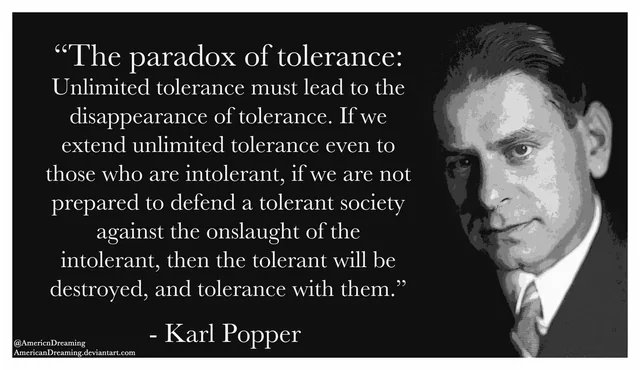
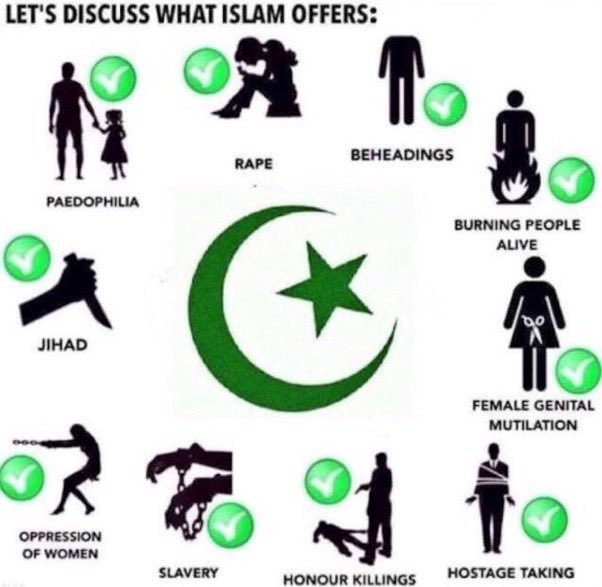
How about we protect our own culture, instead of surrendering to theirs. I don't want to be like them.
1
36
165
2,444