
Catholic, Husband, Father, Grandfather, American
Joined May 2011
- Tweets 31,927
- Following 522
- Followers 1,345
- Likes 717,306
401 Photos and videos
















Chuck retweeted

How are you reading this, Chuck? What is that guy saying? We are not allowed to read.
4
2
5
112
Chuck retweeted
Reading for the Wednesday of the Eighth Week in Ordinary Time ow.ly/jo16106yZsp
6
22
39
2,226
Chuck retweeted
Reading for the Memorial of the Blessed Virgin Mary, Mother of the Church ow.ly/5yg6106yTCK
4
26
52
2,545
Chuck retweeted
Reading for the Saturday of the Fifth Week of Easter ow.ly/yO5E106yfpj
5
19
38
2,510
Chuck retweeted
Reading for the Saturday of the Second Week of Easter ow.ly/r22N106xo3Z
2
15
31
2,396

Mar 8
Doing our best to make them happy....

قتلانَا في الجنة، وقتلاكم في النار.
Our slain are in Paradise, and your slain are in Hell
1
164
Mar 3
My mother just tried to tell me that Khamenei was a moderate leading Iran and everyone else will likely be worse.
CNN is the bane of bommerdom.
I hope the new owners fire nearly everyone.
3
161

Chuck retweeted
Reading for the Friday of the Third Week of Ordinary Time ow.ly/PRFV106tRaJ
6
16
50
2,967
Jan 6
Am I the only one in the country not collecting that sweet day care scam money?
9
235
Jan 4
"I wanted the Narco-terrorist in charge forever." - Lina

Era el pueblo venezolano quien tenía que actuar. Solo ellos. Nadie más.
4
312
Chuck retweeted

Jan 3
Wait a minute the MSM media lied to us again? The people of Venezuela actually didn’t like being ruled by a narco-terrorist?
World Cup style celebrations are ERUPTING all across Venezuela atm, congratulations to the people of Venezuela! Que Dios te bendiga! 🙏🏼
Community note
The video depicts Venezuelan exiles celebrating the U.S. capture of Nicolás Maduro in Doral, Miami, Florida, rather than celebrations within Venezuela.
local10.com/news/local/202…
miamiherald.com/news/nation-wo…
4,346
22,391
128,138
4,190,142
Chuck retweeted

Every left-wing Westerner should see this video before commenting on Venezuela:
1,650
16,286
71,074
2,459,537
Chuck retweeted

26 Dec 2025
Reading for the Feast of Saint Stephen, First Martyr ow.ly/ebYI106siq0
9
15
62
5,504
Chuck retweeted
25 Dec 2025
Reading for the The Nativity of the Lord (Christmas) ow.ly/o5nG106sgXV
5
18
61
3,489
Chuck retweeted
16 Dec 2025
Reading for the Tuesday of the Third Week of Advent ow.ly/1sKb106rRmA
7
17
54
4,001
Chuck retweeted
9 Dec 2025
Reading for the Tuesday of the Second Week of Advent ow.ly/IKA0106rusq
5
17
47
3,904
Chuck retweeted

22 Nov 2025
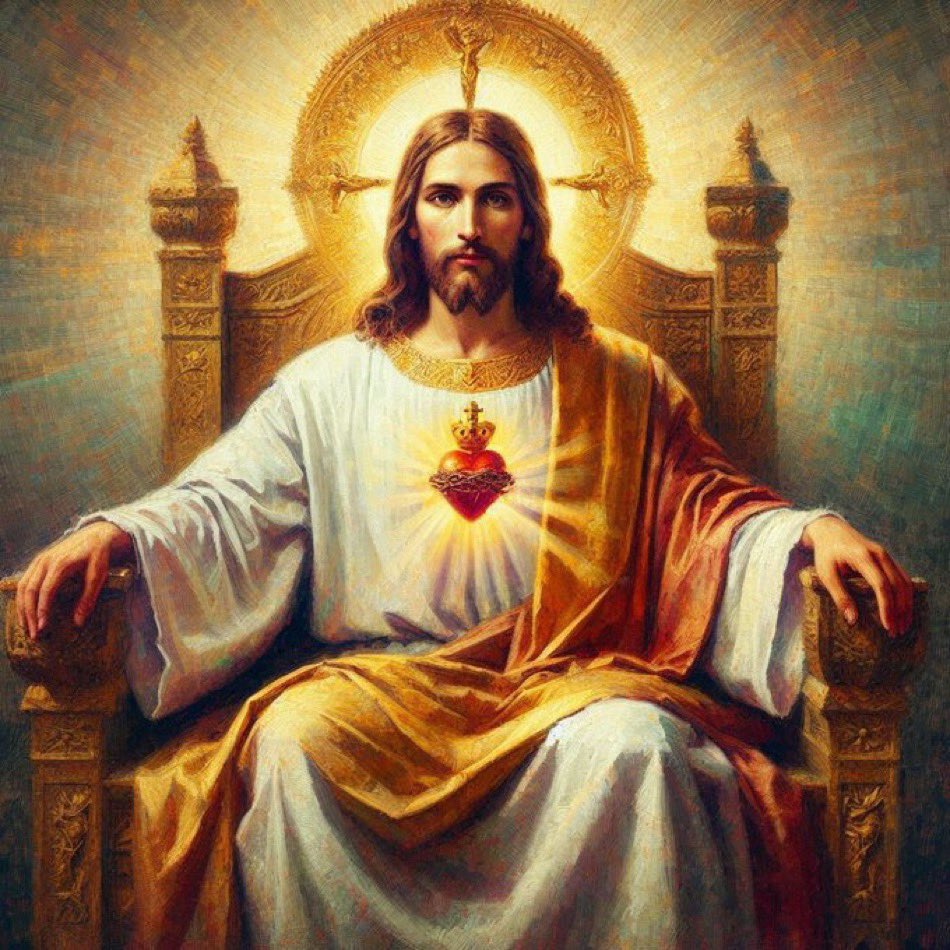
The doctrine of the Social Reign of Christ the King constitutes one of the most solemn and far-reaching assertions of Catholic political theology. Promulgated with particular clarity by Pope Pius XI in the 1925 encyclical Quas Primas, it teaches that Jesus Christ, by virtue of His divine-human kingship, possesses sovereign dominion not only over individual souls and ecclesiastical society but also over civil societies, nations, and the entire temporal order. This kingship is neither metaphorical nor confined to the spiritual realm; it is real, objective, and juridical, extending to every dimension of human life because “all power in heaven and on earth” has been given to Him (Mt 28:18).
The foundation of the doctrine rests upon Sacred Scripture, Tradition, and the constant magisterium. Christ is proclaimed “King of kings and Lord of lords” (Rev 19:16); all authority derives from God and is recapitulated in the Incarnate Word (Rom 13:1). Consequently, civil authority, though distinct in its proper sphere, remains subordinate to the law of Christ and must order itself toward man’s ultimate end—eternal beatitude. As Leo XIII had already taught in Immortale Dei (1885), the State is not an autonomous entity absolved from divine law; rather, it is bound to profess and protect the true religion, to conform its legislation to the natural and revealed law, and to foster those conditions in which citizens may more easily attain salvation.
Pius XI established the feast of Christ the King precisely to counter the secularist ideologies that were expelling God from public life in the aftermath of the French Revolution and the liberal revolutions of the nineteenth and early twentieth centuries. He condemned the notion that the State may be “neutral” toward religion or that religion belongs exclusively to the private sphere. Such neutrality, he declared, is in reality a form of atheism, for it denies the objective sovereignty of Christ over nations. “When once men recognize, both in private and in public life, that Christ is King,” Pius XI wrote, “society will at last receive the great blessings of real liberty, well-ordered discipline, peace and harmony” (Quas Primas, §18).
In practice, the Social Reign of Christ implies that the ideal political order publicly acknowledges the kingship of Christ and the unique mediating role of His Church. Historically, this ideal found expression in Catholic confessional states that enshrined the Catholic religion in their constitutions while granting toleration (not approval) to private non-Catholic worship. Even in pluralistic or hostile circumstances, Catholics remain obliged to work prudently and lawfully for the recognition of Christ’s rights over society whenever conditions permit.
Far from advocating theocracy or the absorption of the State into the Church, the doctrine upholds the classic distinction between the two societies while insisting upon their harmonious subordination under the one Kingship of Christ. Only when nations enthrone Christ as their King—symbolically and effectively—can they hope to escape the disorders of secularism and build a social order truly consonant with human dignity and divine truth. Thus the Social Reign of Christ the King remains both a perennial obligation and the sole reliable foundation for a just commonwealth.
3
47
205
5,745