
Mzalendo
Joined July 2011
- Tweets 97,332
- Following 7,502
- Followers 1,606
- Likes 214,742
182 Photos and videos















Masish retweeted

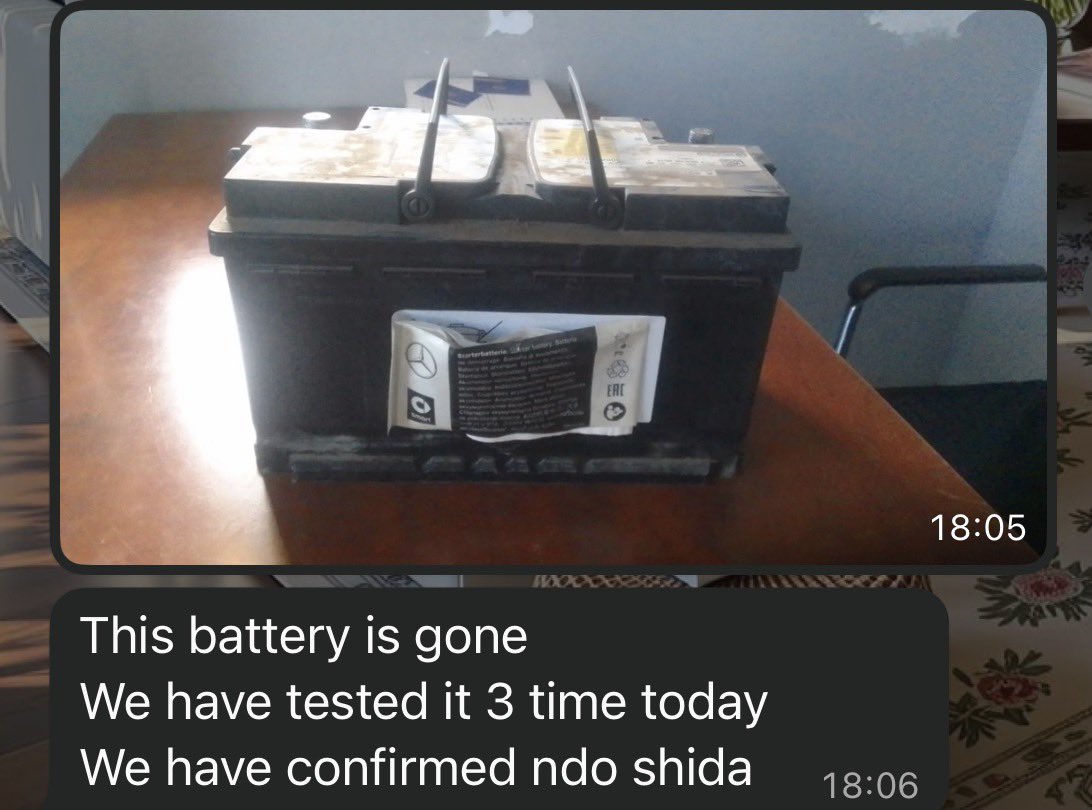
New battery.
Full service.
Metal Sump guard
New Tyres.
Comprehensive insurance in a couple of days.
Cries in luhya because ain’t no way it’s raining and pouring like this!
Loooord, give me dollars please!
😭😭😭😭😭



18
7
63
19,254
Masish retweeted

🌎🇦🇷 Argentina win their opening game with Lionel Messi making World Cup history! 💥
Messi hat-trick means he’s joint TOP SCORER EVER in the World Cup with 16 goals with Miro Klose.
Mbappé, Müller, Ronaldo Nazario surpassed.

2,262
8,769
73,656
1,516,985
Masish retweeted

13h
“if Elon lost 1 trillion dollars he would still be the richest person in the world”
probably the craziest shit i’ve ever read 😭
131
1,028
29,722
611,954
Masish retweeted

17h
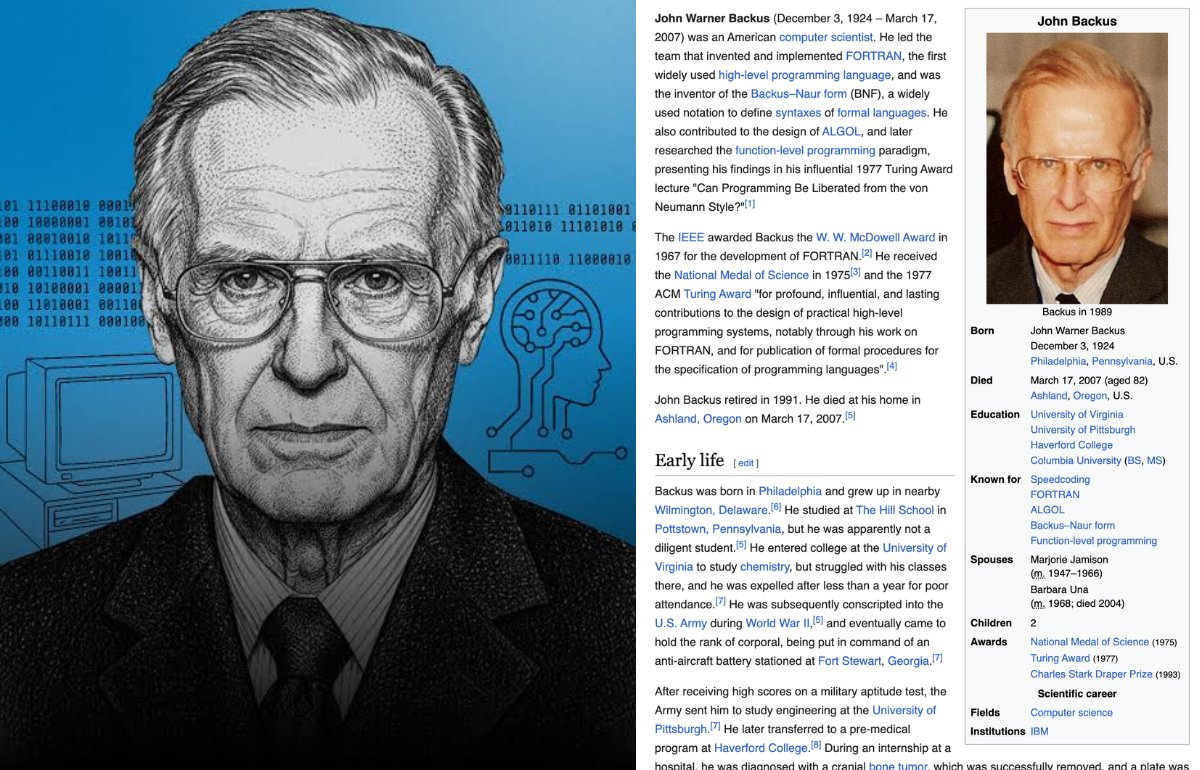
An IBM mathematician spent 3 years convinced he was the worst programmer at his company at work.
He built to escape that embarrassment became the first high-level programming language in history. Every line of code running on Earth today traces back to that one act of shame.
His name was John Backus.
He was born in 1924 in Philadelphia, the son of a wealthy stockbroker who expected him to follow the same path. He failed out of the University of Virginia. He dropped out of Haverford College. He enrolled in a medical program in the Army and decided he hated medicine. He spent years doing exactly nothing the conventional way.
Then one afternoon in 1945 he walked past a radio repair shop in New York and got talking to the owner and ended up building a radio from scratch in the shop's back room. Surprising thing is he had never done it before. He stayed for hours. When he left he knew what he wanted to study.
He taught himself mathematics and got into Columbia. From Columbia he walked into IBM in 1950 with a degree and no idea what he was doing.
He learned to program on machines that had no business being programmed. IBM computers in 1950 spoke in machine code. Raw binary. Every instruction written as a string of ones and zeros that told the hardware exactly which switches to flip. There were no shortcuts. No syntax. No vocabulary a human brain could hold in its head.
The programmers who were good at it held the entire machine inside their minds. They saw the binary and felt the logic. Backus could not do this. He wrote programs that were slow, tangled, and embarrassing next to what his colleagues were producing. He was not the worst programmer at IBM. But he believed he was, which amounted to the same thing.
He started building a tool to help himself. Not out of ambition. Out of humiliation.
The idea was simple to the point of seeming naive. He wanted to write mathematical expressions in something that looked like mathematics, not machine code, and have the computer translate them automatically into the binary the hardware needed. He called the project a "formula translation" system. His colleagues thought it was a nice idea that would never work.
The problem everyone could see was speed. Machine code written by a skilled human would always run faster than code generated by an automatic translator. The translator had to make guesses. Guesses meant inefficiency. Inefficiency meant the whole project was a toy.
Backus spent three years proving them wrong.
In 1957 IBM released FORTRAN to its customers. The first compiled programming language in history. The translator Backus built was so efficient that the code it generated ran at speeds within 20 percent of hand-written machine code. Not a toy. Not a curiosity. A working tool that let scientists and engineers write programs in expressions their own minds had generated, and watch the machine execute them.
The adoption was immediate and total. Scientists who had spent careers translating their equations into machine code by hand were suddenly writing programs in hours instead of weeks. Labs that had used IBM machines for narrow tasks started using them for everything. The market for computing changed overnight.
Then something happened that nobody predicted. Other people started building other languages using the same idea. COBOL. LISP. ALGOL. BASIC. Every language built its own translator using the architectural logic FORTRAN had demonstrated. The idea that a computer could read something resembling human thought, rather than the other way around, was now a proof of concept that anyone could extend.
Every programming language that has ever existed was built on the answer to the question Backus asked because he was ashamed of the code he was writing.
He won the Turing Award in 1977. The committee citation said his work had made it possible for more people to use computers for more things than any other single development in the history of computing.
He said in the acceptance speech that he had not set out to change computing. He had set out to stop writing bad code.
The gap between what you are bad at and what you are trying to fix is usually where the real invention lives.
34
319
1,477
86,158
Masish retweeted

🇳🇴 The Norway fans doing the Viking row up the escalator at Boston’s South Station before heading to their World Cup match against Iraq.
They're living their best life out in the US.
174
846
8,103
510,231

Masish retweeted

THey take these photos so the bosses in Dubai can know the gold has been smuggled into Nairobi and they can send the Jet. 😂😂😂😂😂

President Ruto hosts Zimbabwe businessman Wicknell Chivayo at State House before his departure to France for the G7 Summit

33
476
1,796
42,230
Masish retweeted

Iran v. New Zealand ended around 8pm here in Los Angeles.
At 10:07pm, Iran players were on a bus bound for the airport, where they'd fly back to Tijuana. World Cup organizers wouldn't let them stay and recover.
“Everything is like a disaster for us," Mehdi Taremi said.
829
3,241
18,276
3,040,583
Masish retweeted

13h
When Mamdani got in, my landlord started doing things he was supposed to be doing for years because he knew Mamdani was with the tenants, not the landlords. For example, monthly extermination hadn't happened in the 7 years I've been in my building until literally this year.
19h

New Yorkers, what changes have you seen under Mamdani’s leadership and are you generally pleased? If not, why?

84
3,704
57,655
1,521,974
Masish retweeted

Something I told 14 yo: Once you've prepared sufficiently for exams, switch your focus to "game management." Get enough sleep, keep calm, watch the time, check your answers to avoid dumb mistakes, etc.
74
104
3,252
100,920
Masish retweeted

How to lose $600 million:
Step 1: Get a message from Cursor CEO in 2022
Step 2: Don't see it
Step 3: Don't respond
Step 4: Don't help with content
Step 5: Don't negotiate for 1% advisory shares
Step 6: Cursor sells for $60 billion
Step 7: You sir are $600 million poorer
All jokes aside, massive congrats to @mntruell and the @cursor_ai team!

175
80
2,977
639,648
Masish retweeted

El Instituto Reis de Cabo Verde anunció oficialmente que Vozinha no será profe de volley este verano, por estar en el Mundial con Cabo Verde.
Vozinha pasa sus vacaciones cada año enseñando volleyball a niños en Cabo Verde. Eso le ayuda a mantenerse físicamente bien a sus 40 años. Miren ese estado físico.
Tras su actuación vs España, Vozinha ya supera los 7 millones de seguidores en Instagram y dicen que va varios equipos de Portugal han preguntado por él. Nunca es tarde. Tipazo Vozinha.

86
1,625
21,018
646,471
Masish retweeted

Jun 15
Zohran Mamdani is 34 years old. YOUNG PEOPLE CAN LEAD EFFECTIVELY. You don't have to be 70 with "life experience" to do a good job.
905
12,100
116,441
905,165
Masish retweeted

23h
In 1984, TK Muya, a former civil servant opened a building society lending to tea, coffee and dairy farmers. No banking pedigree, just a bet on the unbanked farmers. Next week that bet lists on the stock exchange in Nairobi: 96 branches, 1.3M customers, KES 208B in assets. The family still holds ~35%.
2
40
96
11,517
Masish retweeted

Everyone I know uses Claude to code. And I know several exceptional SWE. I would never bet against Elon but by all appearances he’s doubling down on a failed venture. Grok and xAI are dead last in the AI race already regardless of whatever self-assessment they judge themselves by
17
5
52
32,082
Masish retweeted

Jamaa wetu ndio aliambiwa apande ceiling apige picha kama anataka loan ingine?


206
2,434
7,867
114,666

Masish retweeted

Kenya is one of the poorest countries in the world, with 45.5% of the population living in extreme poverty.
This means close to half of the country's population lived below the international poverty line of $3 a day.

28
385
562
20,857
Masish retweeted

Getting ready to honor our Champions.
383
2,529
65,294
1,573,851
Masish retweeted

That is so crazy because by form 2 I was done with maths.. there are levels to smartness
Jun 16

good morning, I am thinking about that Dr who has a PhD in pure mathematics
12
52
324
9,759