Head of OTC @wintermute_t | Ex-Macro now Crypto, Vol & Derivatives. Keynesian beauty contest participant & amateur Crossfit athlete. Views are my own
Joined August 2022
- Tweets 2,258
- Following 1,527
- Followers 9,888
- Likes 2,405
491 Photos and videos









Jake O retweeted

May 19
This is our 9th year in crypto
Nine years providing liquidity and staying active through every market condition
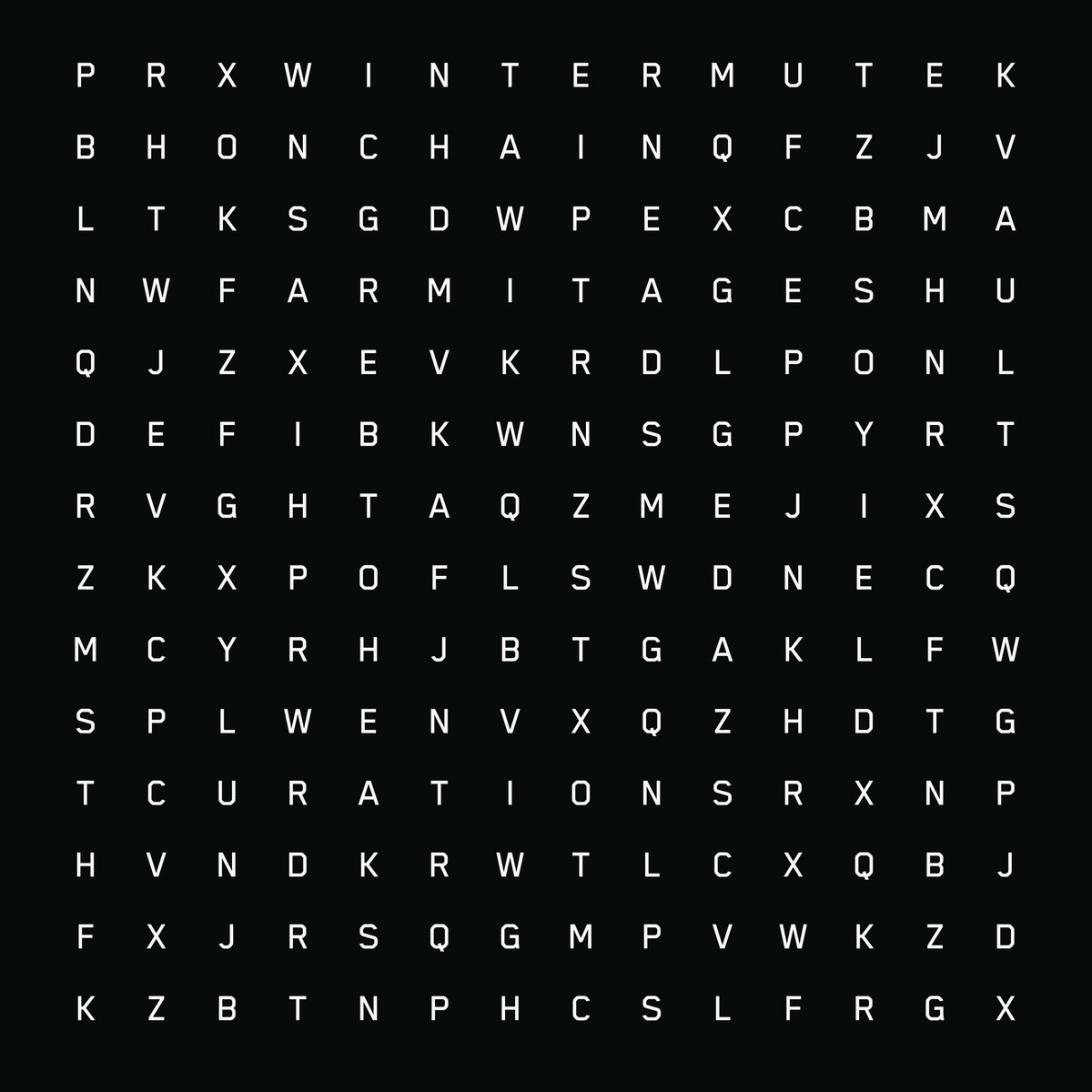
Today we're launching Armitage
Our take on vault curation, starting with two USDC vaults on @Morpho
46
39
490
105,602


Apr 16
lol whatttt
Apr 16

forget bear market it's time for a rapture
3
1,372
Apr 9
The fastest-growing segment of our OTC derivatives business has been options overwriting and yield generation.
To support this, we've launched a native dashboard within our single-dealer platform - sharing indicative pricing on a broad range of assets, not just majors.
>> wintermute.com/node
Apr 9
Wintermute’s OTC desk saw crypto options volumes double in 2025, and for the first time, flow turned yield-driven
The tooling to explore those strategies hasn't kept up
The Yield Dashboard on NODE is our answer to that
2
2
29
10,251
Apr 8
For the avoidance of doubt....
> The charterers would be the payees who are mostly barred by OFAC (UST) from sending crypto (or anything) to IRGC.
> Net marginal impact (assuming they can do this with US blessing/'JV') would be $20-$21m a day (at $1 per barrel as per announcement)
> This is not a 'great new use case' for Cryptocurrency

JUST IN: Iran to reportedly require ships passing through Strait of Hormuz to pay tolls in Bitcoin
1
1
8
1,902
Apr 6
The quantum arc begins
Apr 6

'A baseline requirement': Circle says upcoming Layer 1 Arc will be quantum-resistant theblock.co/post/396378/circ…
8
1,531
Jake O retweeted

Apr 5
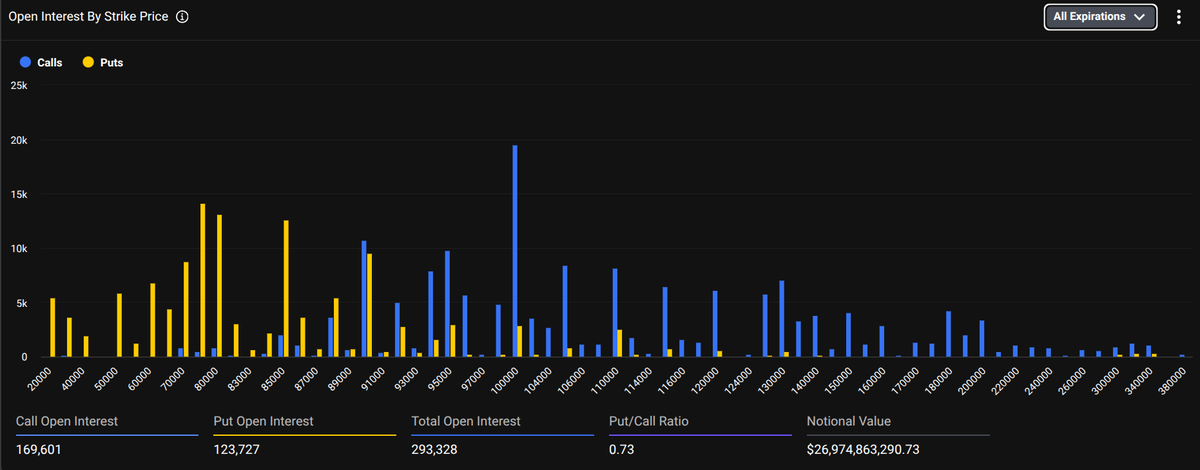
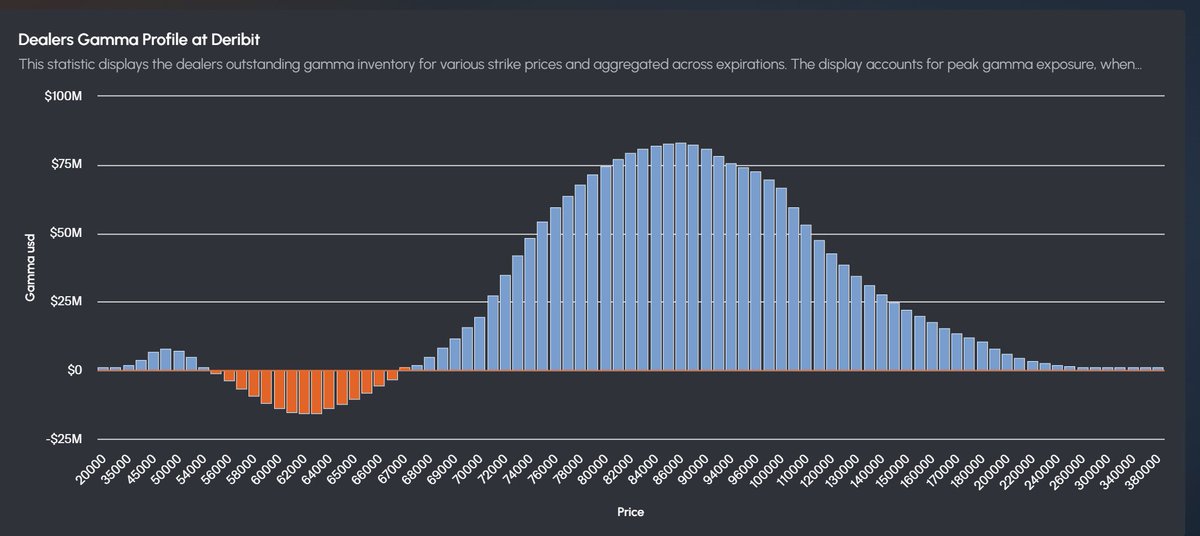
For those who love to speculate on gamma squeezes on potential volatility, MMs are short at current spot, but modest amounts that (as a whole) won't accelerate Spot.
MMs are long the upside Calls, given to them by Funds who sell Calls for yield and to finance Put protection.
If Funds are short Calls, it should be because they are long Spot AUM, so they limit their upside, but on approaching short Call limits, the short can be rolled up without too much issue.
No drama on current positioning, but I would expect demand for optionality ahead of erratic Trump-imposed deadlines if volatility is expected.
Spot/News will lead.

4) Data shows that dealers are short modest Gamma at this level of Spot and below, and long Gamma above.
This makes sense given the weekend theta, and continuous Fund flows buying Puts, funded by selling Calls above current Spot.
As we approach Trump 'deadlines' this may change.
1
5
50
11,586
Apr 1
In prior cycles, a smaller universe of assets pushed traders into perps in high FDV tokens. This led to hedges carrying positively (perps > spot) on secondary sales - a structural quirk which has now given way to $500m - $1bn in altcoin unlocks on a weekly basis.
Structural oversupply has led to these 'inefficiencies' being ironed out and forward rates adjusted lower.

Discount on vast majority of crypto secondaries is avg 90%
It’s never been this bad and talking to secondary MMs they say the same. Usually it’s 60-70% for locked tokens w standard vesting - 1Y lock 3-4 year vest
1
13
3,275
Mar 31

market rally? bc of the collar
oil down? yep, the collar again
claude code leaked? collar's fault
my local dive bar running out of springfest IPA? fckin' collar, man
the beatles breaking up decades ago? yep, collar
libor being replaced years ago? u guessed it, collar
1
4
1,195
Mar 31
With these papers out in the open, I can see PQC roadmap quality becoming a real factor in allocation decisions. Those looking to hedge the quantum threat have a few 'liquid' ways to structure a L/S trade outside of ETH (those with) vs BTC (those without). Some are already outperforming on the session.
Mar 31

Many are wondering "what Google saw" that caused them to revise their post-quantum cryptography transition deadline to 2029 last week. It was this:
research.google/blog/safegua…
1
7
1,616
Jake O retweeted

Mar 31
Today is a monumentous day for quantum computing and cryptography. Two breakthrough papers just landed (links in next tweet). Both papers improve Shor's algorithm, infamous for cracking RSA and elliptic curve cryptography. The two results compound, optimising separate layers of the quantum stack. The results are shocking. I expect a narrative shift and a further R&D boost toward post-quantum cryptography.
The first paper is by Google Quantum AI. They tackle the (logical) Shor algorithm, tailoring it to crack Bitcoin and Ethereum signatures. The algorithm runs on ~1K logical qubits for the 256-bit elliptic curve secp256k1. Due to the low circuit depth, a fast superconducting computer would recover private keys in minutes. I'm grateful to have joined as a late paper co-author, in large part for the chance to interact with experts and the alpha gleaned from internal discussions.
The second paper is by a stealthy startup called Oratomic, with ex-Google and prominent Caltech faculty. Their starting point is Google's improvements to the logical quantum circuit. They then apply improvements at the physical layer, with tricks specific to neutral atom quantum computers. The result estimates that 26,000 atomic qubits are sufficient to break 256-bit elliptic curve signatures. This would be roughly a 40x improvement in physical qubit count over previous state-of-the-art. On the flip side, a single Shor run would take ~10 days due to the relatively slow speed of neutral atoms.
Below are my key takeaways. As a disclaimer, I am not a quantum expert. Time is needed for the results to be properly vetted. Based on my interactions with the team, I have faith the Google Quantum AI results are conservative. The Oratomic paper is much harder for me to assess, especially because of the use of more exotic qLDPC codes. I will take it with a grain of salt until the dust settles.
→ q-day: My confidence in q-day by 2032 has shot up significantly. IMO there's at least a 10% chance that by 2032 a quantum computer recovers a secp256k1 ECDSA private key from an exposed public key. While a cryptographically-relevant quantum computer (CRQC) before 2030 still feels unlikely, now is undoubtedly the time to start preparing.
→ censorship: The Google paper uses a zero-knowledge (ZK) proof to demonstrate the algorithm's existence without leaking actual optimisations. From now on, assume state-of-the-art algorithms will be censored. There may be self-censorship for moral or commercial reasons, or because of government pressure. A blackout in academic publications would be a tell-tale sign.
→ cracking time: A superconducting quantum computer, the type Google is building, could crack keys in minutes. This is because the optimised quantum circuit is just 100M Toffoli gates, which is surprisingly shallow. (Toffoli gates are hard because they require production of so-called "magic states".) Toffoli gates would consume ~10 microseconds on a superconducting platform, totalling ~1,000 sec of Shor runtime.
→ latency optimisations: Two latency optimisations bring key cracking time to single-digit minutes. The first parallelises computation across quantum devices. The second involves feeding the pubkey to the quantum computer mid-flight, after a generic setup phase.
→ fast- and slow-clock: At first approximation there are two families of quantum computers. The fast-clock flavour, which includes superconducting and photonic architectures, runs at roughly 100 kHz. The slow-clock flavour, which includes trapped ion and neutral atom architectures, runs roughly 1,000x slower (~100 Hz, or ~1 week to crack a single key).
→ qubit count: The size-optimised variant of the algorithm runs on 1,200 logical qubits. On a superconducting computer with surface code error correction that's roughly 500K physical qubits, a 400:1 physical-to-logical ratio. The surface code is conservative, assuming only four-way nearest-neighbour grid connectivity. It was demonstrated last year by Google on a real quantum computer.
→ future gains: Low-hanging fruit is still being picked, with at least one of the Google optimisations resulting from a surprisingly simple observation. Interestingly, AI was not (yet!) tasked to find optimisations. This was also the first time authors such as Craig Gidney attacked elliptic curves (as opposed to RSA). Shor logical qubit count could plausibly go under 1K soonish.
→ error correction: The physical-to-logical ratio for superconducting computers could go under 100:1. For superconducting computers that would be mean ~100K physical qubits for a CRQC, two orders of magnitude away from state of the art. Neutral atoms quantum computers are amenable to error correcting codes other than the surface code. While much slower to run, they can bring down the physical to logical qubit ratio closer to 10:1.
→ Bitcoin PoW: Commercially-viable Bitcoin PoW via Grover's algorithm is not happening any time soon. We're talking decades, possibly centuries away. This observation should help focus the discussion on ECDSA and Schnorr. (Side note: as unofficial Bitcoin security researcher, I still believe Bitcoin PoW is cooked due to the dwindling security budget.)
→ team quality: The folks at Google Quantum AI are the real deal. Craig Gidney (@CraigGidney) is arguably the world's top quantum circuit optimisooor. Just last year he squeezed 10x out of Shor for RSA, bringing the physical qubit count down from 10M to 1M. Special thanks to the Google team for patiently answering all my newb questions with detailed, fact-based answers. I was expecting some hype, but found none.
345
1,172
5,942
1,529,125
Mar 2
2026 version of a snow day

claude is down...
somewhere in the world someone's crying because:
- they can't submit their essay
- a founder's automation just froze
- they think their OpenClaw bot is ghosting them
we built an entire layer of society on one API key
2
10
1,927
Jake O retweeted

Feb 26
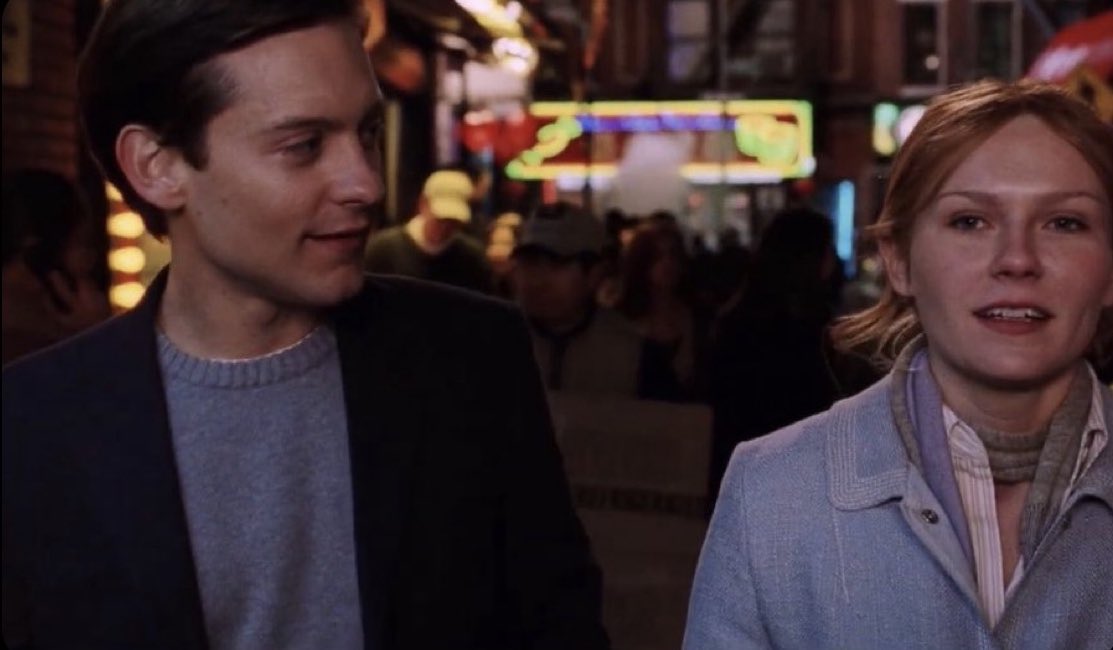
“so it turns out it was Jane Street all along, it wasn’t my horrible risk management, I might make it after all, I’ve got some good idea-“
“peter im getting married”
16
28
586
20,978
Jake O retweeted
Feb 26
If you want to properly understand how crypto works, start here
Big kudos to @lawmaster and Wintermute’s @FrankResearcher and @emparedad0 for pulling this together
Our research team was glad to contribute, as we’ve felt for a while that something like this was genuinely needed
Feb 26

1/ Today I’m releasing an open-source book in collaboration with @FrankResearcher that I wish existed when I started in crypto. It’s split into 15 chapters covering everything that matters - from BTC to DeFi, MEV, Hyperliquid, quantum resistance, etc.
github.com/lawmaster10/howcr…
11
19
277
56,850
Feb 26
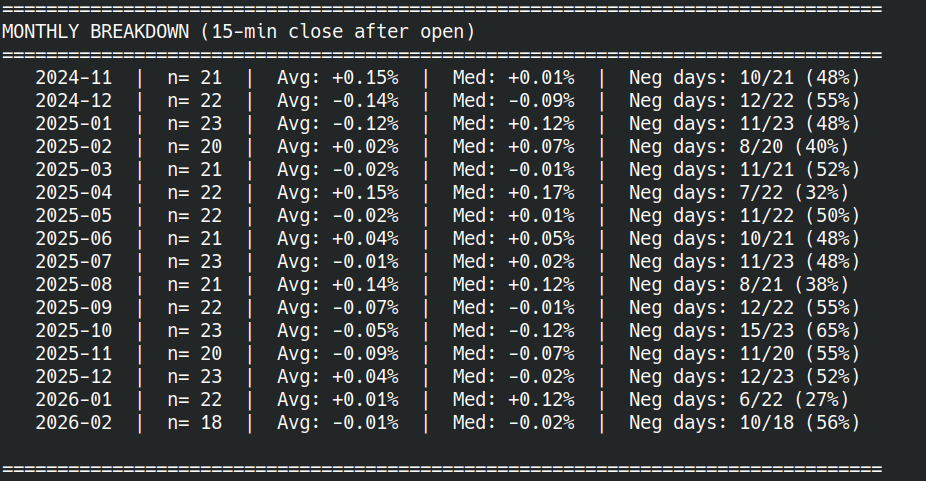
Unlike TradFi, most Crypto data is free and publicly available - so there's no excuse not to check the narratives being pushed via media coverage.
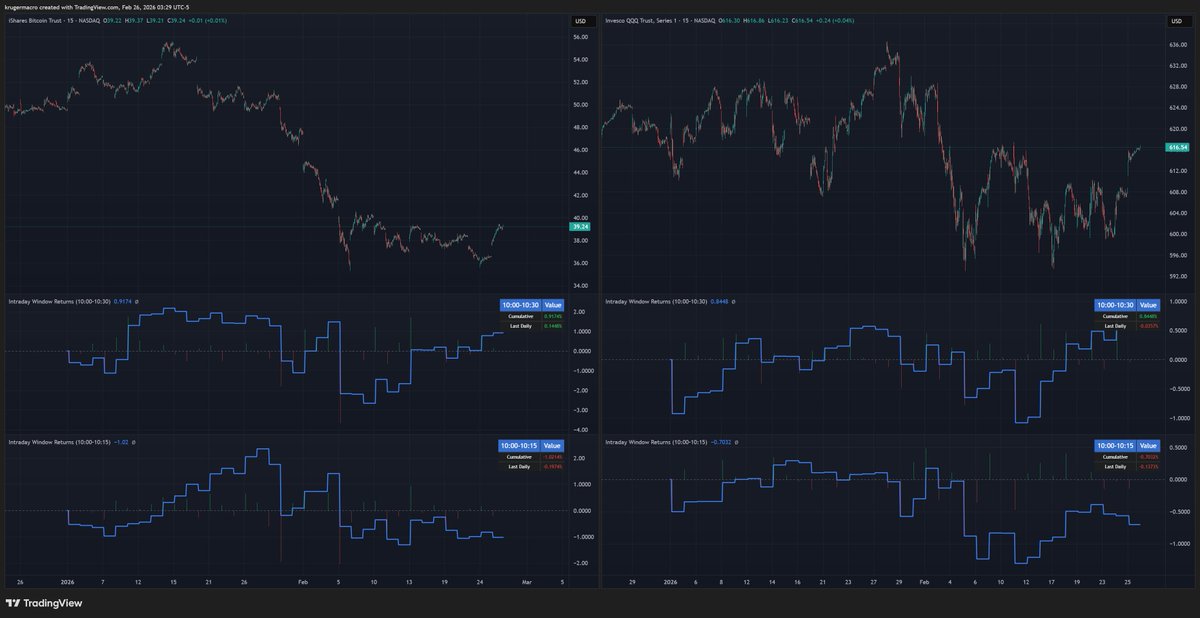
Kudos to Alex for actually looking under the hood. Replicated his work (in BTC) and got similar results... there's normal intraday noise around the US equity open, which you'd expect at a high-volume transition point. The 'narrative' of a consistent, tradeable dump around US open simply doesn't exist.
Feb 26

Everyone says bitcoin dumps at 10AM every day.
I pulled the data, and it's not true.
Since Jan 1, IBIT's cumulative return in the 10:00–10:30 window is 0.9%, and in the 10:00–10:15 window it's –1%. Noisy, not a systematic dump.
More interesting: the performance pattern in both windows closely tracks the Nasdaq's.
The "10AM dump" is just broad risk-asset repricing. The narrative is wrong.
7
4
104
28,301
Jake O retweeted

With just under a week to go, those at the forefront of the industry are asking the UK one question.
Do we want to remain competitive?
Others are innovating with Stablecoins and it’s about time we do the same👇
Feb 24

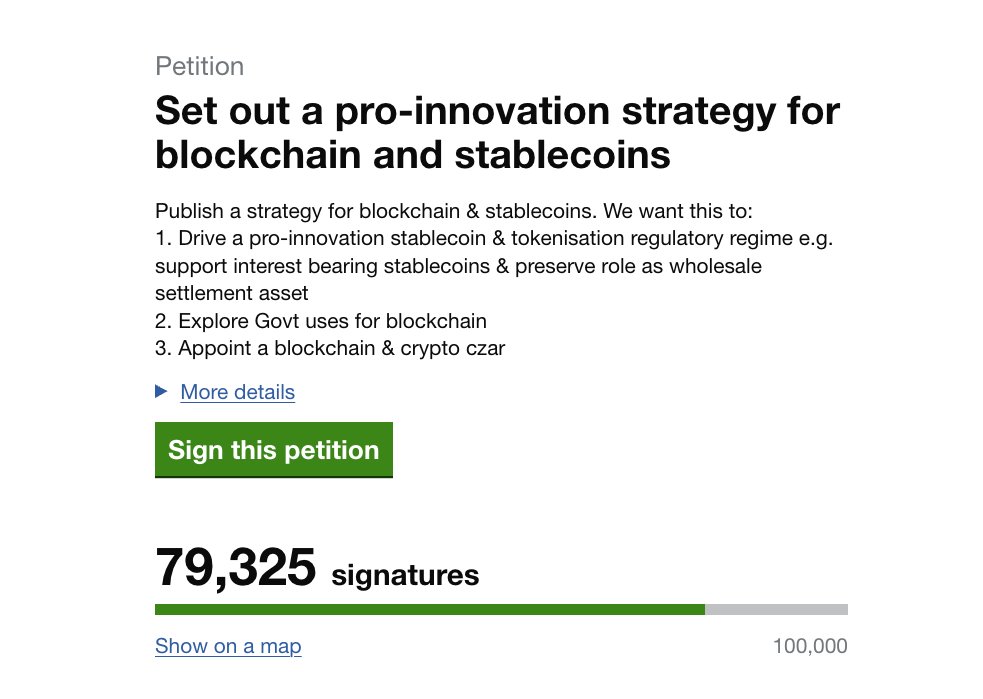
Stablecoin rules in the UK are being finalized, and are at risk of preventing the UK from being globally competitive in the digital economy.
For example, the Bank of England is proposing a cap on stablecoin holdings for individuals and businesses.
The UK has a long history of being a financial hub. Embracing and encouraging innovation, especially when other countries are moving fast here, is important for maintaining that. The current direction of the rules does the opposite, and will act as an innovation blocker.
If you're from the UK you can sign the petition by @StandWCrypto_UK to set out a pro-innovation strategy for blockchain and stablecoins. Link below.
12
18
42
5,669

Jake O retweeted

Feb 23
The Big Short 2 is just Michael Burry getting $2b a year from his newsletter that he rolls directly into VIX call options until the republic collapses
13
42
1,114
47,455
Jake O retweeted
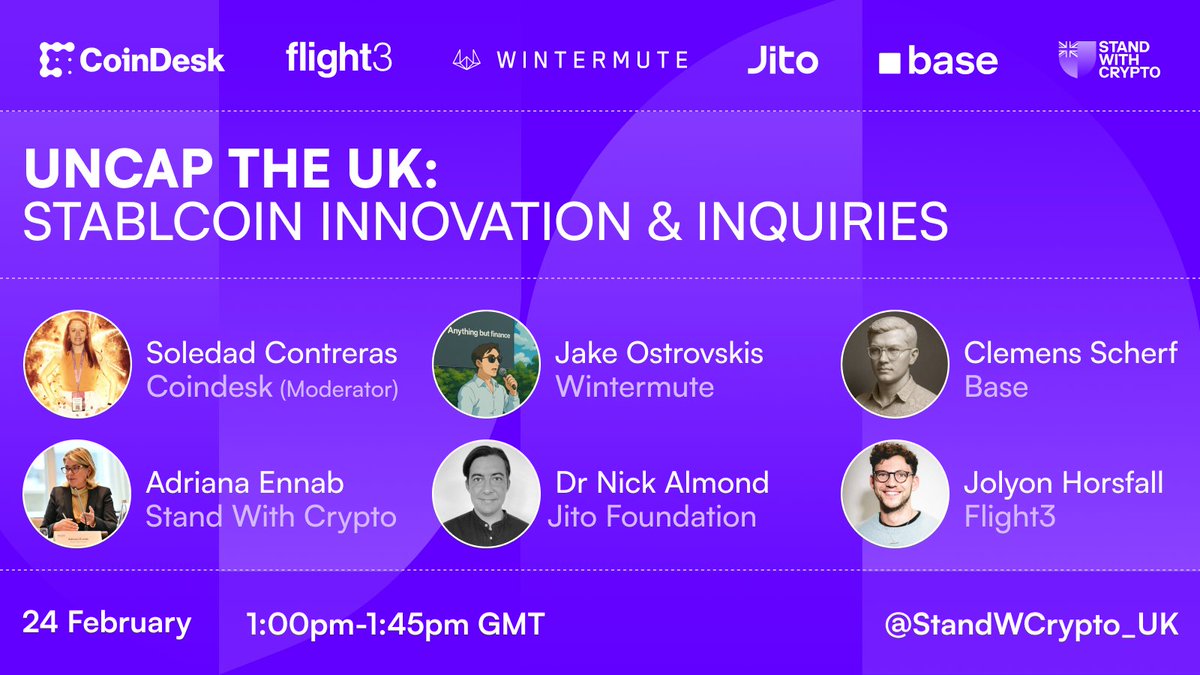
The future of finance in the UK is being capped.
As we approach the stablecoin inquiry, we’re bringing together the people shaping the debate to tackle the questions that matter
🛡️Hosts:
• @CryptoAdEnnab, @StandWCrypto_UK, Director
• Soledad Contreras, @Coindesk, Director of Partnerships
🎙️Speakers:
• @DrNickA, @JitoFDN, Head of Governance
• @JO_Wintermute, @Wintermute_t, Head of OTC
• @Jolyonchain, @Flight3official, Founder
• @_clemens__, @Base, Country Lead UK & Western Europe
📍 Hosted by @StandWCrypto_UK
🗓️ February, 27th, 2026 | 1:00 PM GMT
🔔 Turn on notifications so you don’t miss when we go live
3
3
24
4,088