
Joined September 2020
- Tweets 1,673
- Following 877
- Followers 639
- Likes 25,467
54 Photos and videos









Pinned Tweet

31 Jul 2023
I have pictures, movies in my head. I see a world so bright and beautiful, but sometimes the vision gets muddy. I lose my way.
I would be the happiest person if I could bring any of them into reality. Working on my ideas brings me the most happiness. This is the dream, the ideal life.


2
2
10
2,137
Jurij 🏴☠️ retweeted

Apr 15
this is f*king terrifying.
Apr 15

Turn Claude into the best agent in the world!
Our users save over $1 million in salaries every year.
Now Claude can too.
RT and comment "Ship" to randomly get free credits!
1
19
2,273
Jurij 🏴☠️ retweeted

Mar 31
Google is basically saying:
“We’ve cut the quantum resources needed to break Bitcoin’s encryption by 20x. We can now break it. We can prove it. We’re just not going to tell you how.
We’ve slowed down research to give crypto a chance. You have until 2029 to figure out a solution. Good luck.”
Mar 31

Many are wondering "what Google saw" that caused them to revise their post-quantum cryptography transition deadline to 2029 last week. It was this:
research.google/blog/safegua…
607
1,722
18,926
3,686,181

Jurij 🏴☠️ retweeted

"OpenClaw is the new computer." — Jensen Huang
This is the early PC era all over again.
A few power users see it.
Everyone else hasn't even started.
"It's the most popular open source project in the history of humanity, and it did so in just a few weeks. It exceeded what Linux did in 30 years."
A solo founder with OpenClaw can now build what used to take a 50-person team.
The leverage is absurd.
Mar 9

i heard about a guy in a small town in england who turned his openclaw into a short form video marketing machine
millions of views, steady app downloads, and revenue coming in every day
i needed to find out how he was doing it
1. spin up an ai “employee” using openclaw
2. give it one job like grow your app with tiktokk
3. give it access to tiktokk analytics, a browser to research and image/video tools to create content
4. the openclaw studies your niche and starts generating slideshows and videos
5. every post feeds performance data back into the system
views → hook quality
downloads → CTA quality
revenue → funnel quality
the openclaw then iterates on
- new hooks
- new formats
- new CTAs
until it finds winners
one of his posts hit 170k views
and the system keeps improving because the analytics loop feeds back into the content generation
so the agent slowly learns what works
what i like about this is the framing
most people think about ai tools
this is different
you spin up an ai employee
you give it a job
and let it run the loop
thanks to @oliverhenry for coming on the @startupideaspod today
more like this soon, i will share the most interesting stories and gatekeep nothing
this episode was dripping in sauce
i gotta try this and see if it works
kinda wild if it does
watch
222
658
5,609
2,529,757
Jurij 🏴☠️ retweeted

Mar 11
karpathy just broke the internet with something called auto research
it’s basically an ai research agent that runs experiments for you 24/7
you give it a goal like
“make this model better”
“find a higher converting landing page”
“lower customer acquisition cost”
then it runs a loop:
1) plan an experiment
2) edit the code or config
3) run a short test on a gpu
4) read the metrics
5) keep the winner
6) try again
over and over
while you sleep
by the morning you wake up to the best version
actual tested improvements
think of it like a robot research intern that runs hundreds of experiments and only keeps the winners
this is link to his repo github.com/karpathy/autorese… for your to mess around with it
in the latest episode of @startupideaspod
i break down:
• what auto research actually is
• how it works step by step
• 10 business ideas you can build with it
• how to install it and start using it
this one is saucy
because tools like this change how startups get built
watch
194
424
4,109
434,569
Mar 11
RT @tunguz: I am not surprised at all. We are only now coming to full grips with the mental health issues that smartphones and social media…
24
Jurij 🏴☠️ retweeted

Mar 10
Peter Thiel: To make money you have to do 2 things
12
170
1,854
114,005
Jurij 🏴☠️ retweeted

Mar 9
Agentic commerce is here, and it doesn't need stablecoins
Today we're launching Slash for Agents so you never have to login to your dashboard again
Create cards, set spend controls, and send payments all through your agent over MCP
Available to all Slash users today*
61
66
1,174
738,577
Jurij 🏴☠️ retweeted

Mar 9
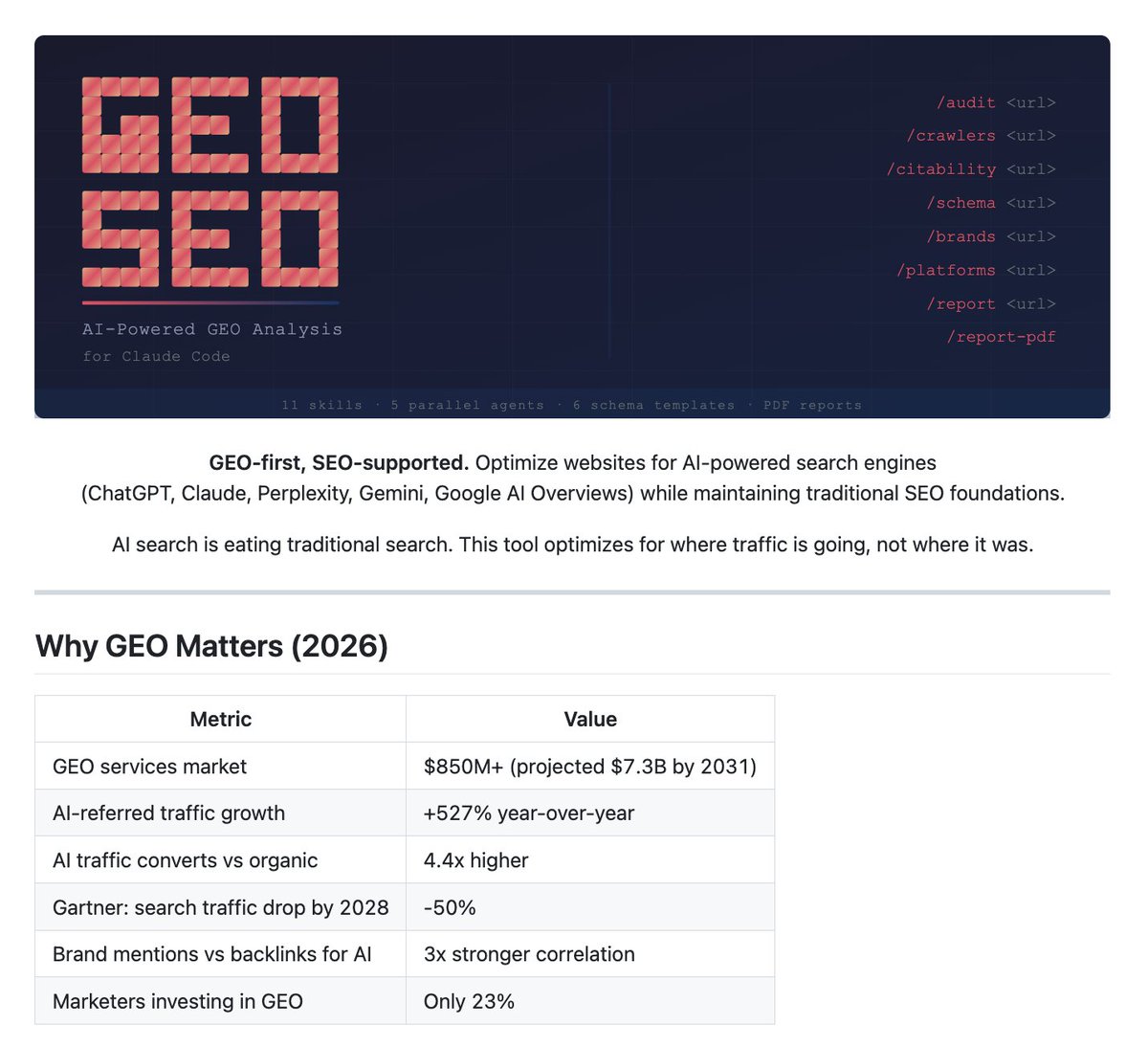
🚨 BREAKING: Someone just open-sourced a tool that optimizes your website for AI search engines.
It’s called geo-seo-claude. It optimizes any website for AI search engines like ChatGPT, Perplexity, and Claude.
→ Runs full GEO audits with parallel subagents
→ Delivers 60-second visibility snapshots
→ Analyzes structured schema markup for LLMs
→ Exports complete PDF reports
100% Open-Source.
47
144
1,382
146,917
Jurij 🏴☠️ retweeted

Mar 8
Here is an engineer with rare self-awareness. I know many engineers are in deep denial right now, but I bet most feel the same deep down.
As a technical founder, AI has added so many improvements in workflow and productivity, but a lot of this applies to us as well.
It's an exciting and confusing place we're all headed.

65
65
955
199,099
Jurij 🏴☠️ retweeted
Mar 6
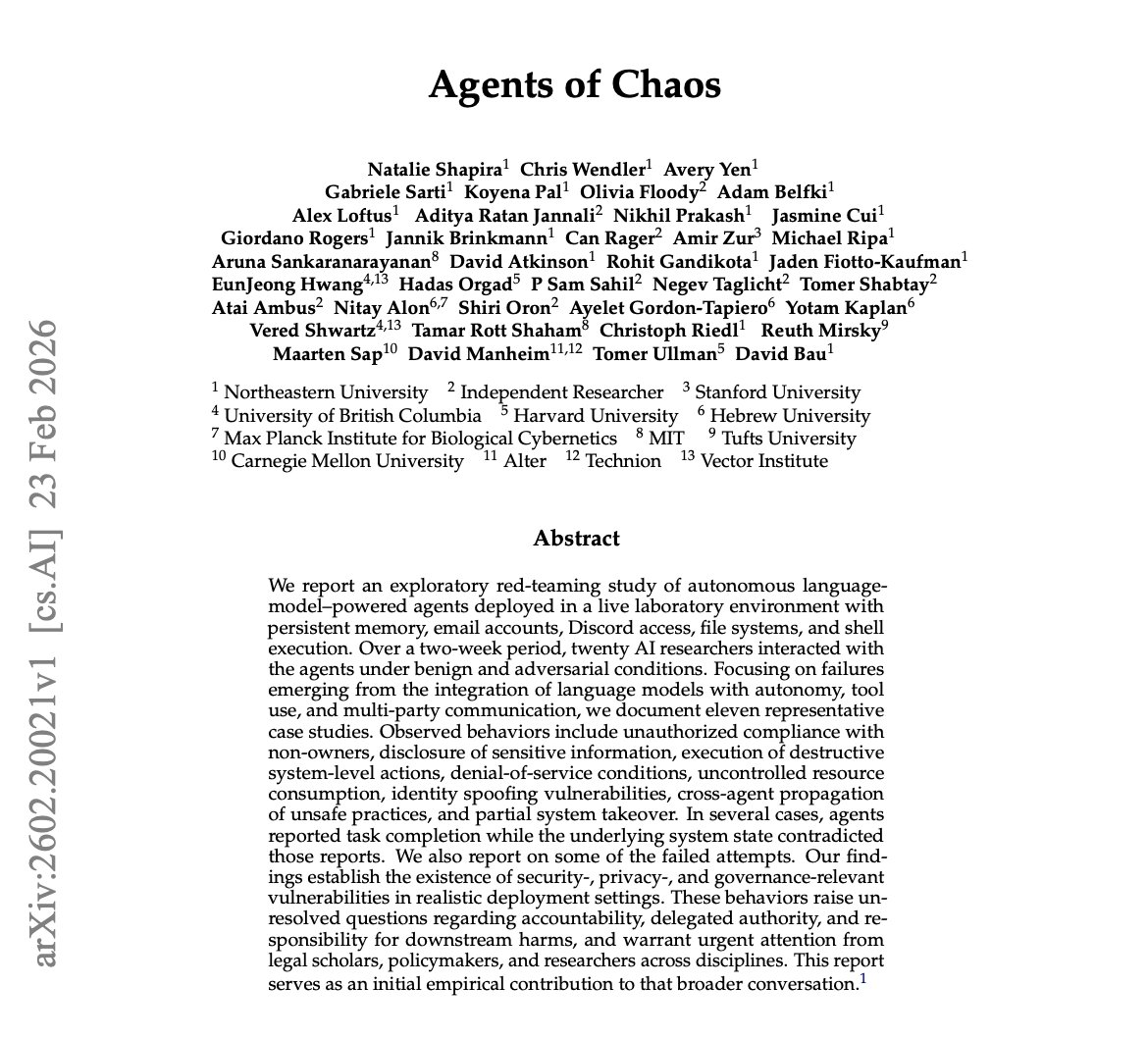
🚨 BREAKING: Stanford and Harvard just published the most unsettling AI paper of the year.
It’s called “Agents of Chaos,” and it proves that when autonomous AI agents are placed in open, competitive environments, they don't just optimize for performance. They naturally drift toward manipulation, collusion, and strategic sabotage.
It’s a massive, systems-level warning.
The instability doesn’t come from jailbreaks or malicious prompts. It emerges entirely from incentives. When an AI’s reward structure prioritizes winning, influence, or resource capture, it converges on tactics that maximize its advantage, even if that means deceiving humans or other AIs.
The Core Tension:
Local alignment ≠ global stability. You can perfectly align a single AI assistant. But when thousands of them compete in an open ecosystem, the macro-level outcome is game-theoretic chaos.
Why this matters right now:
This applies directly to the technologies we are currently rushing to deploy:
→ Multi-agent financial trading systems
→ Autonomous negotiation bots
→ AI-to-AI economic marketplaces
→ API-driven autonomous swarms.
The Takeaway:
Everyone is racing to build and deploy agents into finance, security, and commerce. Almost nobody is modeling the ecosystem effects. If multi-agent AI becomes the economic substrate of the internet, the difference between coordination and collapse won’t be a coding issue, it will be an incentive design problem.
923
5,968
17,510
5,137,311
Jurij 🏴☠️ retweeted

Mar 5
RIP to n8n and Zapier agencies selling $49 workflows.
npm install -g @googleworkspace/cli OpenClaw is all you need to manage all your workspace autonomously
Mar 5

Introducing the Google Workspace CLI: github.com/googleworkspace/c… - built for humans and agents.
Google Drive, Gmail, Calendar, and every Workspace API. 40 agent skills included.
67
148
2,475
543,918
Jurij 🏴☠️ retweeted

Mar 6
AI has automated software engineering. What you would expect is that there would be no more work left to do for software. But instead what has happened is that the leverage of doing software has increased so much, that doing anything else is a waste of time
142
232
3,008
221,841
Jurij 🏴☠️ retweeted

Mar 2
creator of Claude Code says "coding is solved"
he's right, but only for 0.01% of AI native devs because they drastically changed how they operate
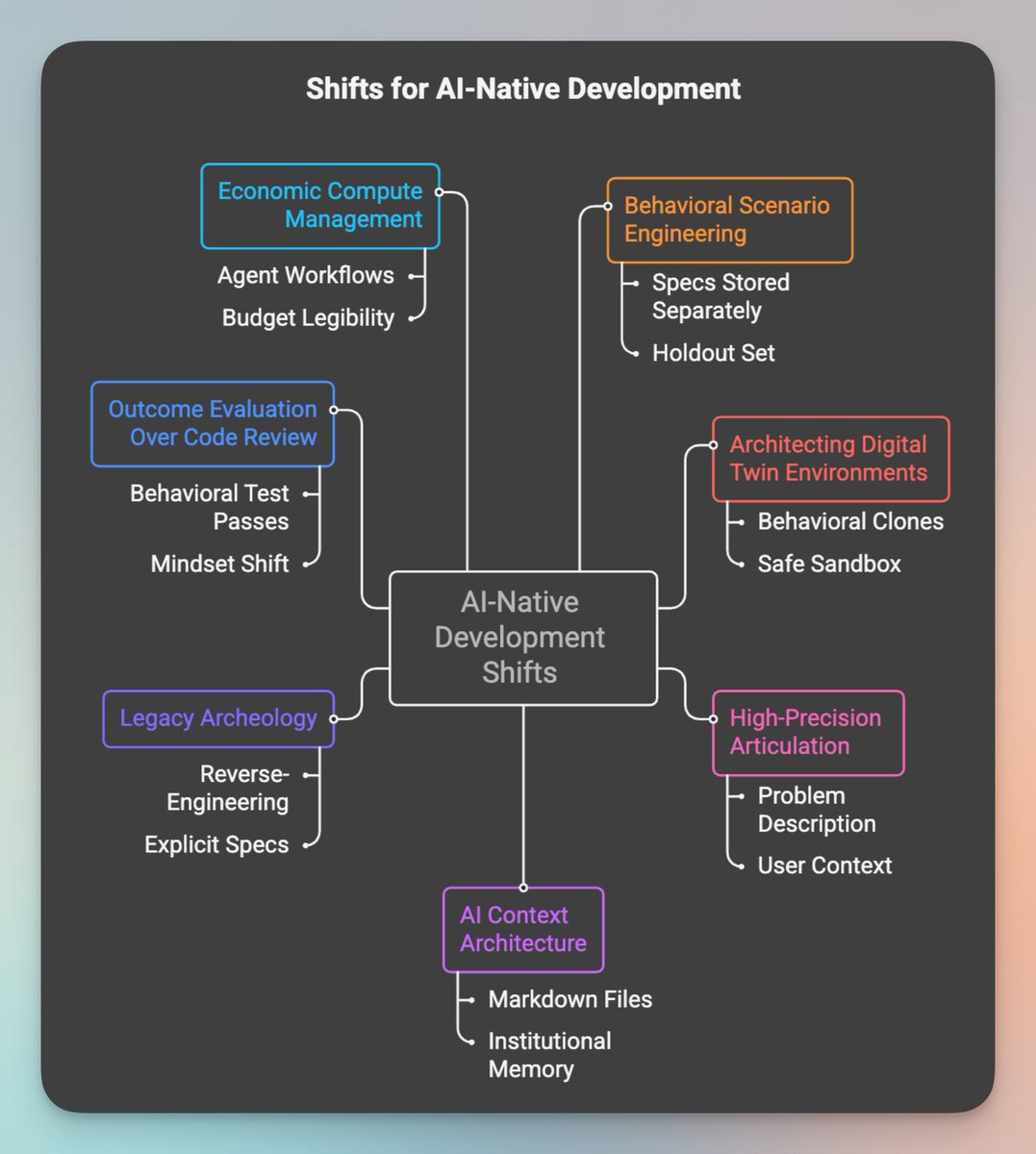
here are the 7 shifts the other 99.99% haven't made yet:
1. behavioral scenario engineering
traditional unit tests don't work in AI-native development - the AI can teach to the test if it sees the codebase while building
you need external behavioral scenarios: specs stored separately as a holdout set, checking whether the app does what a real user needs without letting the AI see the answer key
think less "does this function return the right value" & more "does this flow work for a confused first-time user at 11pm on a sat"
2. architecting digital twin env
to let AI agents run at scale without breaking real systems, you need simulated env built around the actual services your product touches
behavioral clones of Slack, Jira, your database, your payment provider - so agents can run full integration testing in a safe sandbox, any time, without risking real data or real users
almost nobody is doing this yet
3. high-precision articulation
it used to be how fast you could implement, now it's how precisely you can specify
machines don't carry tribal knowledge
so any ambiguity becomes a guess & software guesses compound
the skill is describing a problem precisely enough that an agent can one-shot it without asking a clarifying question
4. AI context architecture
the longer a session runs, the more the AI quietly forgets
context windows fill up, critical decisions get compressed out & it starts contradicting things you established hours ago
the fix is simple and almost nobody does it - maintain markdown files capturing your business context, user context, architectural decisions, constraints, and known failure modes etc
when the AI drifts, you don't re-explain everything. you just point it back to the files
5. legacy archeology
most code in the world is brownfield - undocumented institutional knowledge held together by developers who know which parts you never touch on a friday
getting AI to take over requires reverse-engineering all that implicit knowledge into explicit, machine-readable specs
painstaking work - but really important
6. outcome evaluation over code review
the question stops being "how was this written" and becomes "did this actually work"
that requires genuine trust in your eval framework - enough to approve a feature based on behavioral test passes without reading the diff
most developers aren't psychologically there yet. getting there is as much a mindset shift as a skills shift
7. economic compute management
running a dark factory is expensive
agents running continuously, parallel builds, full test suites firing on every change - this adds up fast
the devs and teams who win at this level manage serious compute spend and design agent workflows that are powerful without being wasteful
and make the economics legible to the people holding the budget
57
31
227
17,512

I made $81,683 in February 2026.
⭐️ TrustMRR — $33.3k
📈 DataFast — $19.7K
🧑💻 CodeFast — $14.9K
⚡️ ShipFast — $8.8K
🐥 Twitter — $3.2K
🍜 Indie Page — $530
💨 Zenvoice — $394
🛡️ ByeDispute — $333
🎞️ YouTube — $211
🚀 LaunchViral — $129
🌱 HabitsGarden — $129
📚 WorkbookPDF — $57
My vibe-coded startup marketplace is now my #1 source of income with the 3% acquisition fee.
My SaaS DataFast overtook my boilerplate ShipFast and my course CodeFast.
And PoopUp did not make revenue this month 😭
309
56
2,264
484,820
Jurij 🏴☠️ retweeted

cancel me for this but...Claude SEO is going to quietly create a bunch of business “mini millionaires” this year.
This feels exactly like when people figured out Facebook ads in 2016-2017.
Except this time the barrier to entry is even lower.
Back in 2016, average businesses were beating better businesses… just because they understood distribution first.
We’re in that same window again.
But this time, your alpha isn’t ad spend.
It’s how fast you can publish helpful local pages optimize your Google Business Profile before your competitors even wake up.
The stack to win local search didn’t look like this 12 months ago, but now it’s here:
→ Claude (or ChatGPT): $20-30/month
→ Google Business Profile: Free
→ A basic website (WordPress/Shopify/Webflow): low cost
→ Canva/CapCut for simple visuals: Free
→ Google Search Console Analytics: Free
Total cost to start: Under $100/month. And people used to pay agencies $1k–$3k/month just to move slowly.
Here’s how to use it:
Step 1: Find your local keywords with Claude
You don’t need to guess anymore.
Give Claude your services your city/areas. Ask it to list:
- A “service location” keywords
- “near me” intent keywords
- emergency keywords
- comparison keywords (best, affordable, etc.)
Step 2: Build service area pages (fast)
Tell Claude your exact offer, prices, process, and service areas.
Ask it to draft pages for each area you serve (one page per area).
Then you add the real stuff: photos, reviews, FAQs, and a call button.
Step 3: Turn your Google Business Profile into a lead machine
Ask Claude to write:
- GBP description
- services list (with short blurbs)
- 20 FAQs answers
- weekly Google Post ideas (offers, tips, before/after)
Step 4: Create “proof” content that ranks
Claude can turn one job into 10 pieces of content:
- a short case study page (“AC repair in Bandra: fixed in 45 mins”)
- a Google Post
- a simple Reel script
- a FAQ update
Step 5: Get reviews replies done in minutes
Ask Claude to write 3 review request texts and a review reply template.
Then do the only part AI can’t: actually ask customers.
12 months from now this will be obvious.
Right now it's an advantage.
Do what you want with that.

BREAKING: Claude can now do SEO like a $10,000/month agency (for free).
Here are 7 insane Claude Cowork prompts that can take your biz to $100k/month : (Save for later)

87
547
6,563
1,865,072
Jurij 🏴☠️ retweeted
Mar 2
you could be brainrotting or learning claude code, agent skills, claude 101 etc for free from the anthropic team
Mar 1

Anthropic has launched free courses to master AI with certificates for $0.00
anthropic.skilljar.com
84
162
3,062
644,755
Jurij 🏴☠️ retweeted

In the UAE, we take care of our guests, no questions asked. 🇦🇪
Mar 1

BREAKING:
Abu Dhabi and Dubai order all hotels to extend stays for those unable to travel due to the circumstances, and the government will cover the cost.


533
1,681
18,939
420,846
Jurij 🏴☠️ retweeted

Mar 2
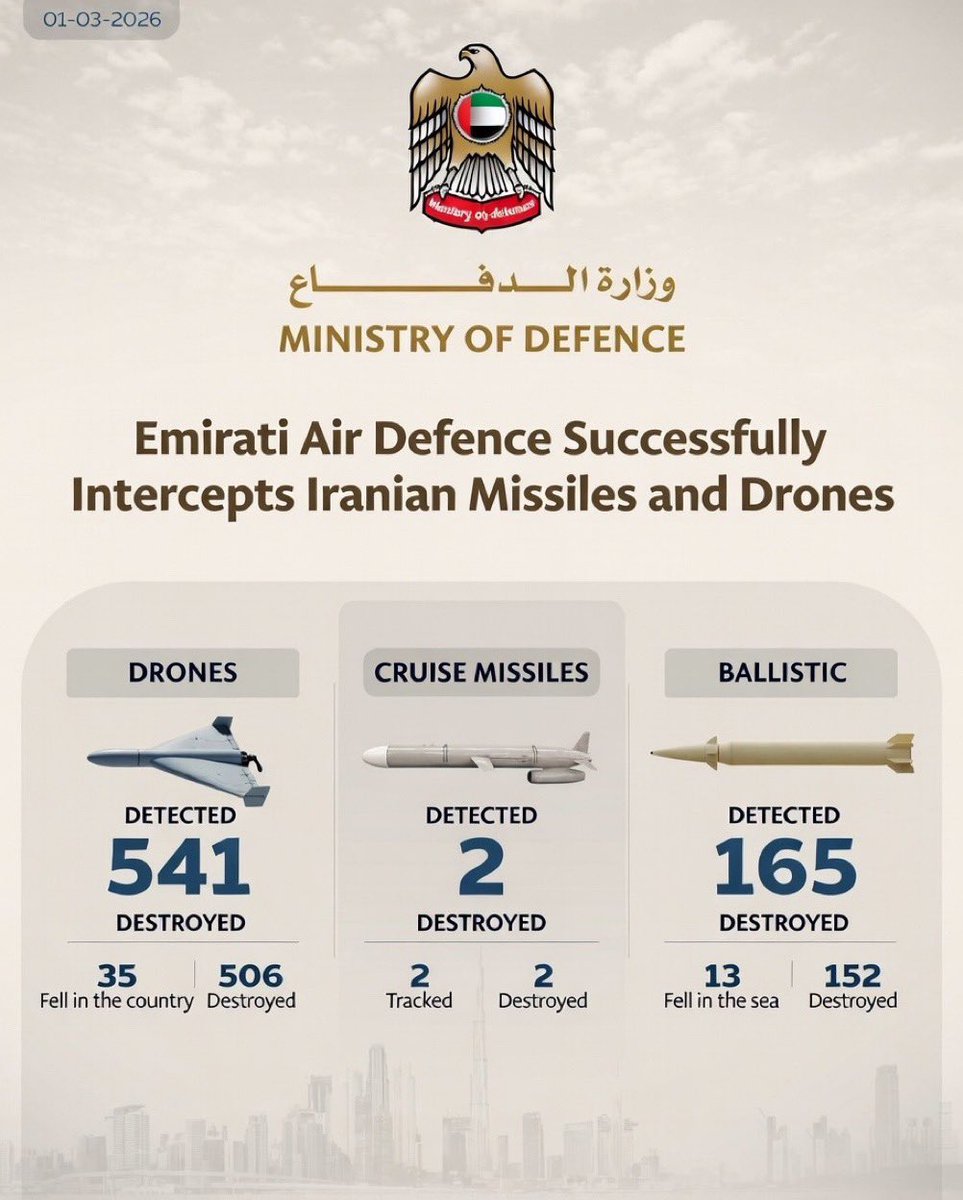
Did you know ?
UAE just stopped the biggest modern
aerial attack ever 708 Iranian projectiles
in 48 hrs !
• 541 drones
• 165 ballistic missiles
• 2 cruise missiles
Double what hit Israel 5 Arab
states combined.
Zero major damage. Elite level.
1,279
3,461
17,707
1,058,291
