
Proud Dad of 2 | Ph.D. student in Clinical Psychology @UWaterloo studying developmental trauma, family systems, and resilience. @CIHR_IRSC Vanier Scholar.
Joined February 2013
- Tweets 584
- Following 716
- Followers 315
- Likes 1,946
49 Photos and videos









Pinned Tweet

14 Mar 2024
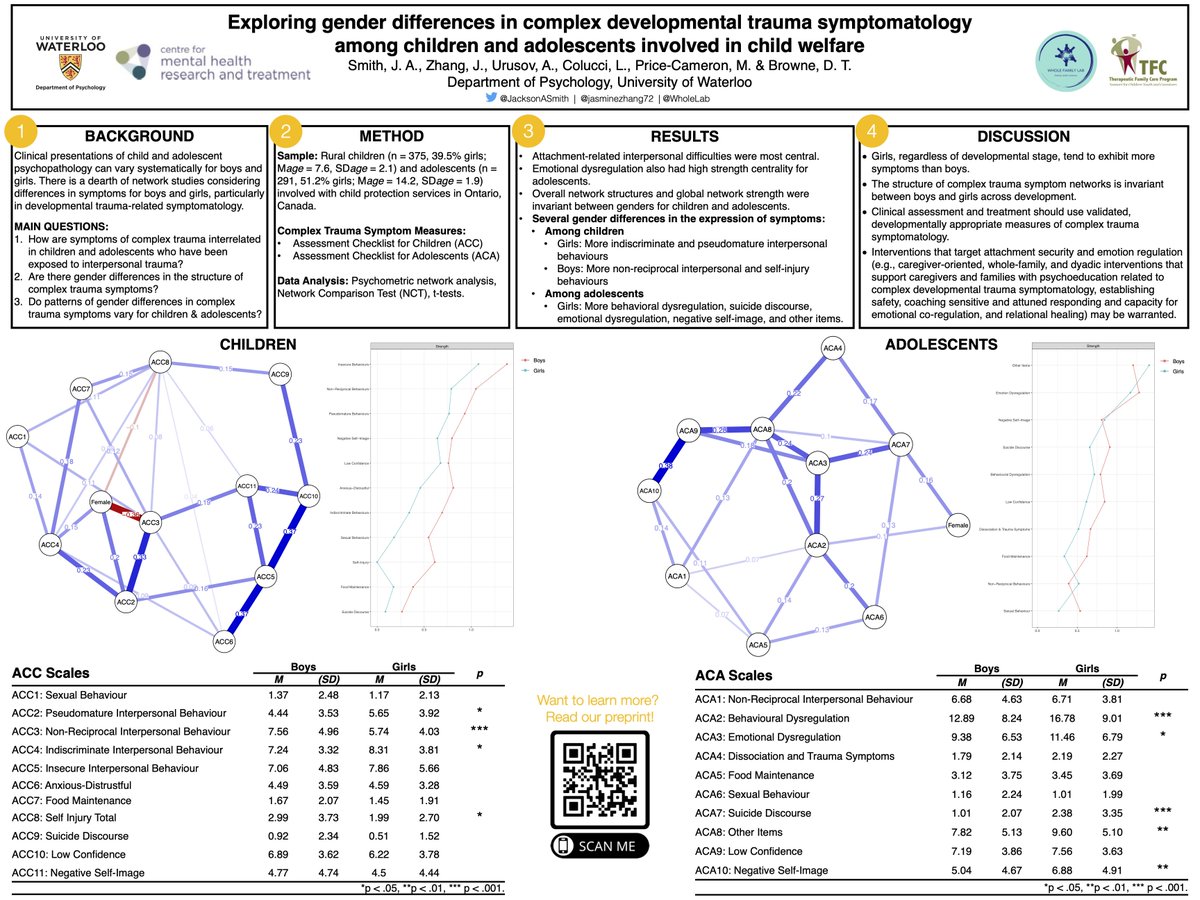
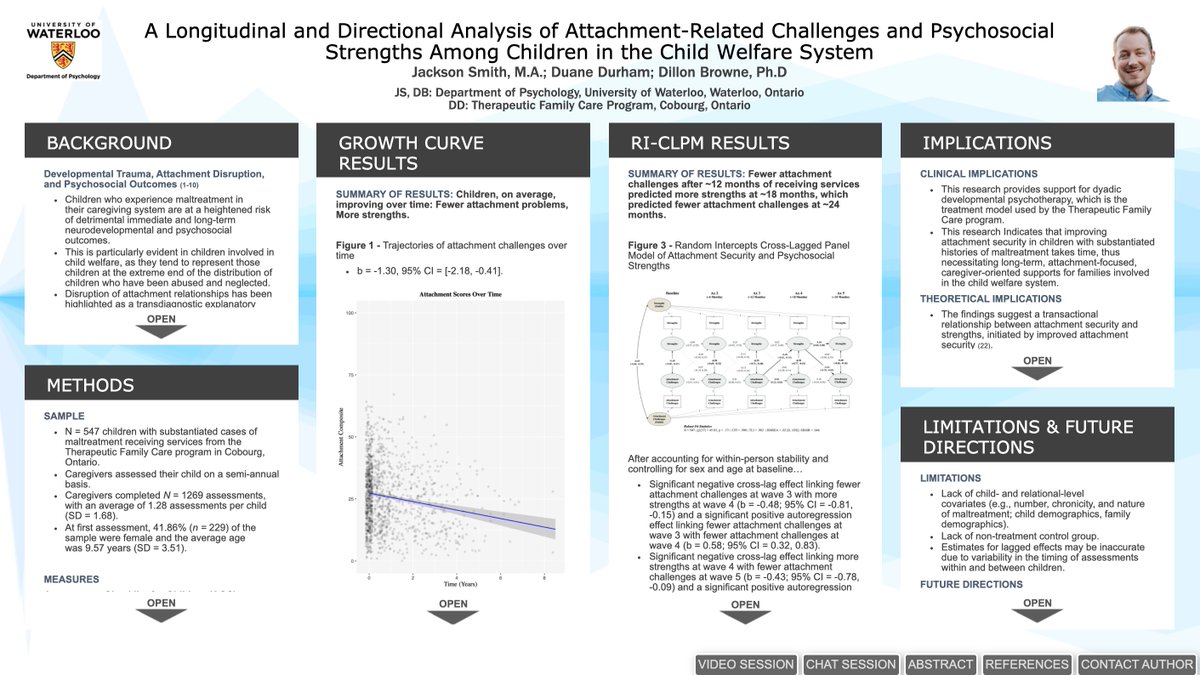
🚨🎉 My latest article “Exploring networks of complex developmental trauma symptomatology among children and adolescents involved in child welfare” out now in JCPP Advances. W/ @WholeLab @jasminezhang72 & others from the @FamilyPsycle lab at @UWaterloo acamh.onlinelibrary.wiley.co…
5
12
856
Jackson Smith retweeted

14 Jun 2024
👔New research for Father's Day!
What can dads do to foster teens' secure attachment?
1. Be present
2. Support teens' autonomy (don't try to control)
3. During conflict: stay engaged, empathetic, & non-aggressive
@SeasEmotion @tandfonline @uvavpr
tandfonline.com/doi/full/10.…
2
7
22
1,879
Jackson Smith retweeted

6 Jun 2024
In our new study with the Children and Youth Planning Table (CYPT) of Waterloo Region, we found "BELONGING" operates as a bridge between relationships and well being. The article is open access (free), give it a read and tell us what you think!
doi.org/10.1002/jcop.23125
2
2
109
Jackson Smith retweeted

21 Apr 2024
In this #OpenAccess paper, @JacksonASmith et al. explores networks of complex #DevelopmentalTrauma symptomatology among children and adolescents involved in child welfare.
Full paper available via @WileyPsychology. bit.ly/3Pmn63z
2
5
1,143
Jackson Smith retweeted
5 Apr 2024
Our open-access special issue on social determinants of health in families is now complete! The collection of studies shows the importance of moving beyond the individual to consider health outcomes across the family unit. Check out the editorial here: frontiersin.org/articles/10.…
2
3
134
Jackson Smith retweeted
15 Mar 2024
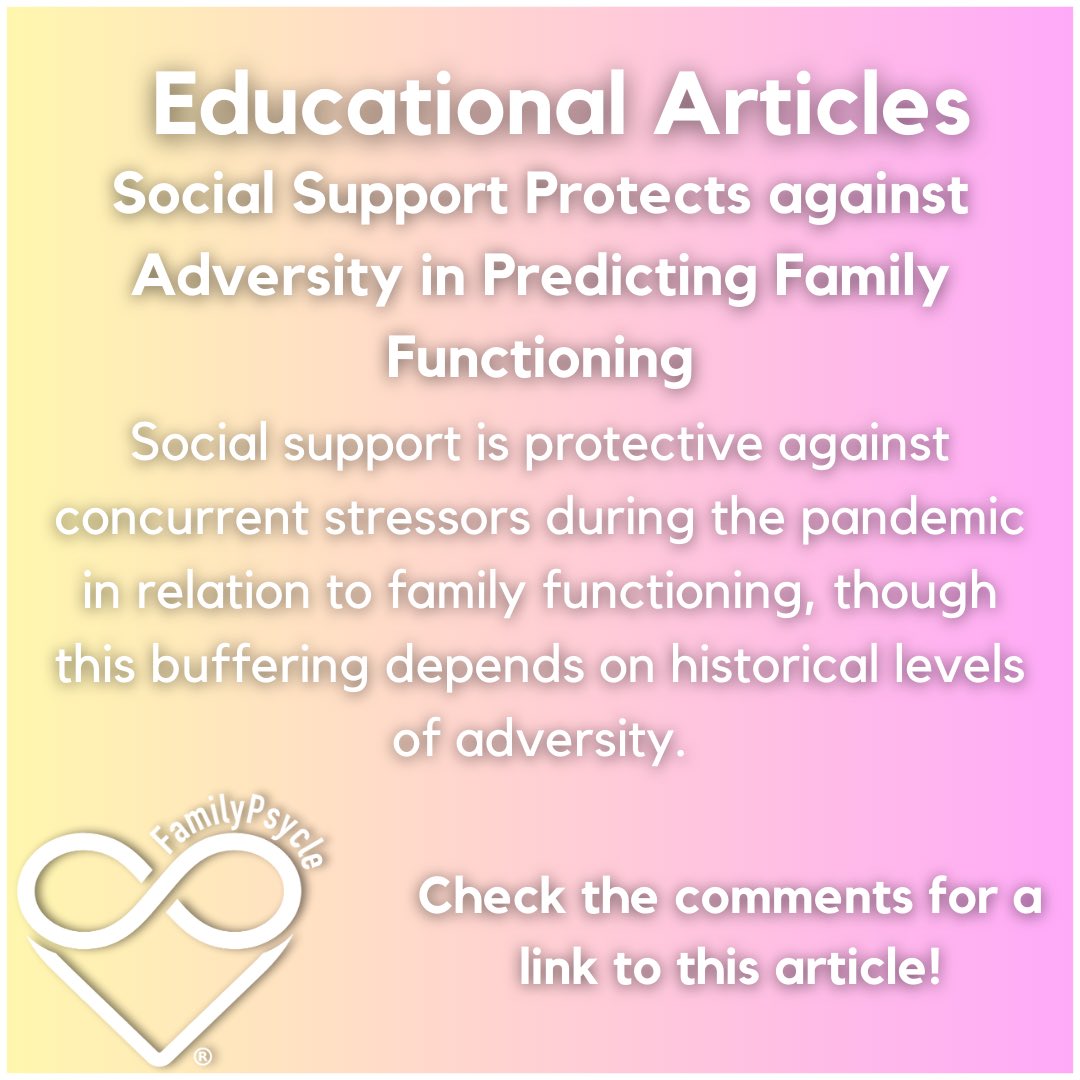
Learning and examining the key roles of topics such as attachment, emotions and social support is important. Check out the two articles mentioned!🧠
Article A: https://
acamh.onlinelibrary.wiley.co… jcv2.12224
Article B: sciencedirect.com/science/ar…

1
1
67
Jackson Smith retweeted

2 Mar 2024
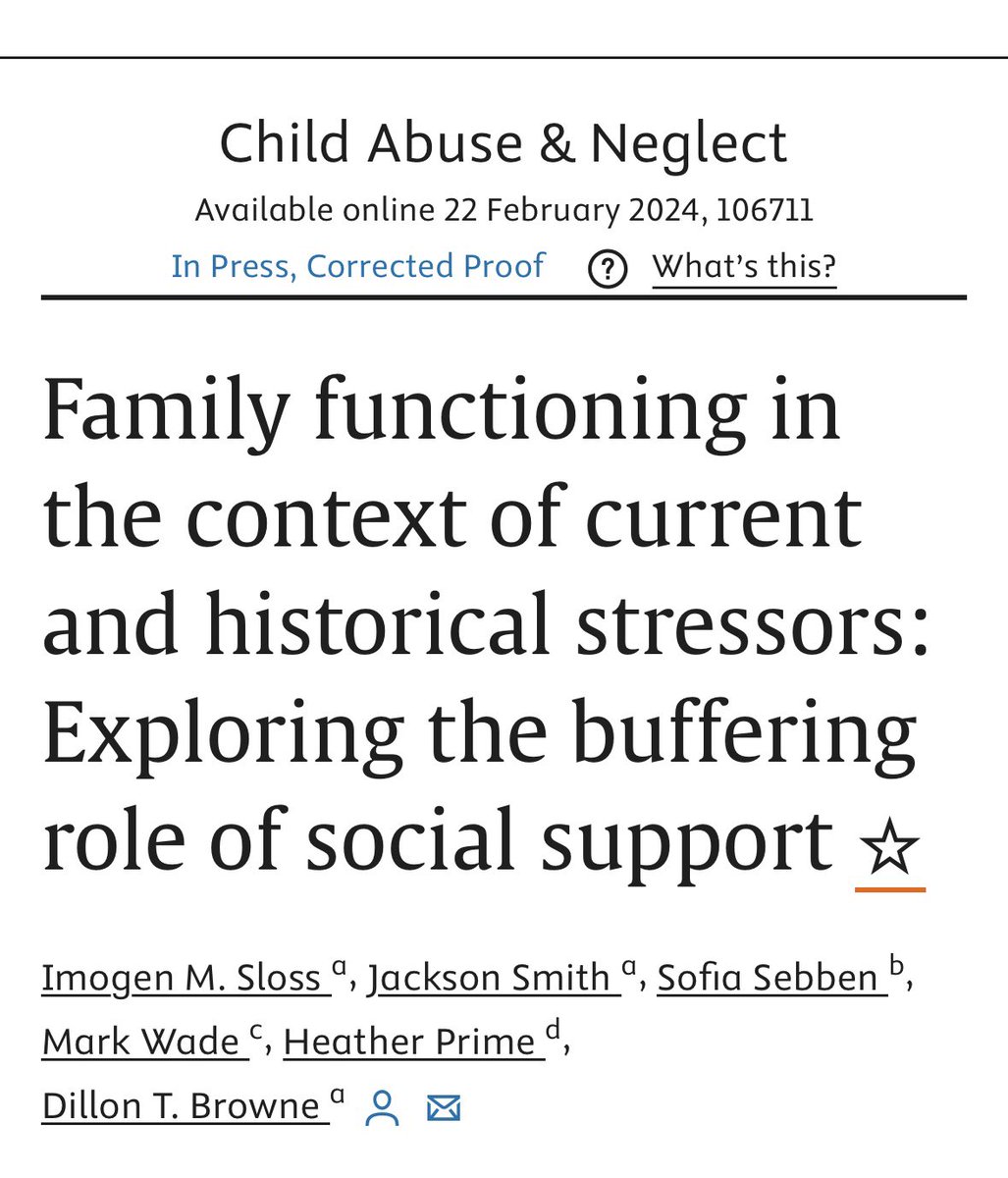
New study! We found that social support may be protective against concurrent stressors during the pandemic in relation to family functioning, though this buffering depends on historical levels of adversity! For more details: sciencedirect.com/science/ar…
1
4
208
Jackson Smith retweeted
27 Feb 2024
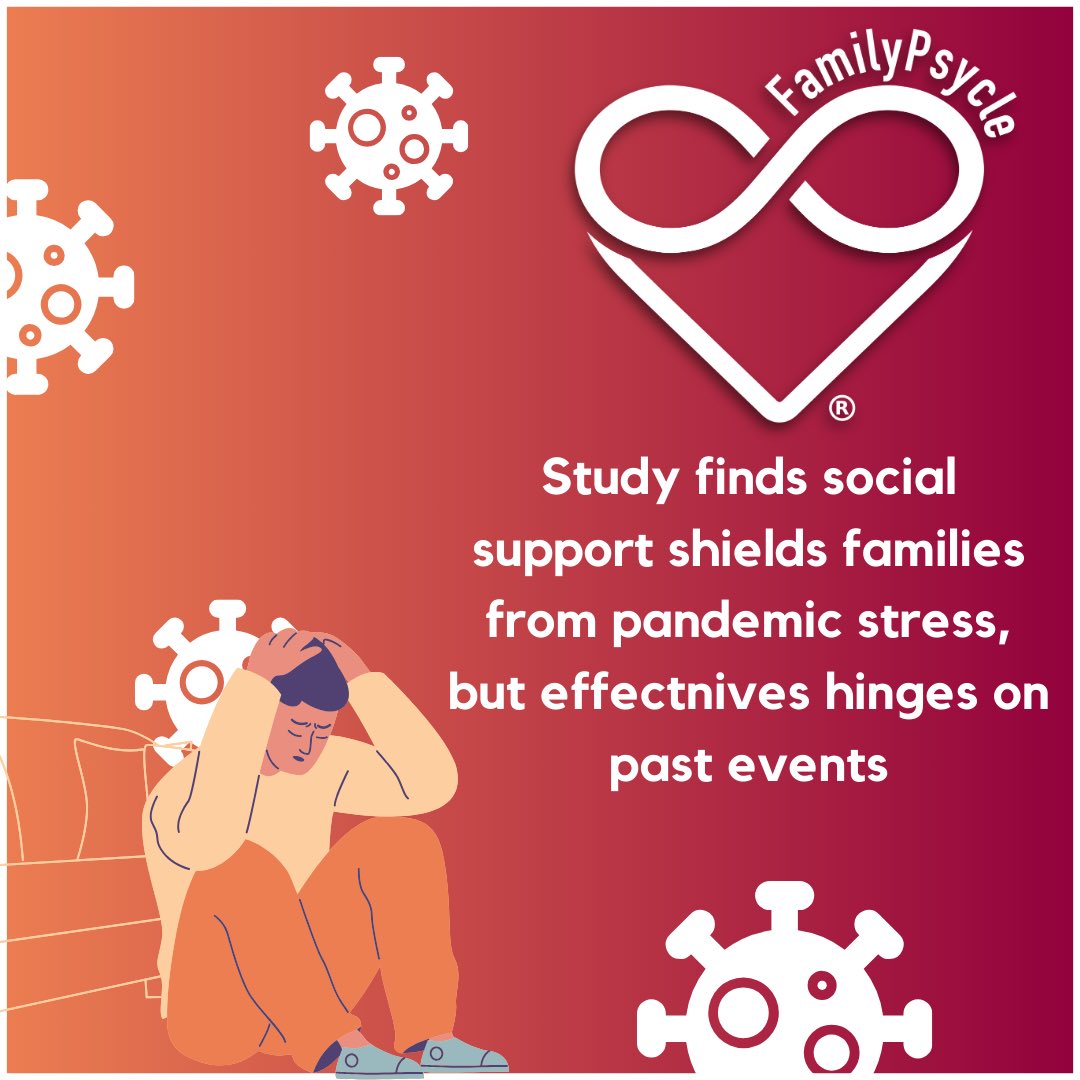
🔊Our recent study demonstrated that social support was protective against stress during the pandemic for families. However, this buffering depends on historical levels of adversity including traumatic events.
Click here for more: sciencedirect.com/science/ar…
1
1
72
Jackson Smith retweeted

28 Feb 2024
With growing awareness about mental health challenges, Dr. @dillon_browne has created the @FamilyPsycle Lab at #UWaterloo which integrates a family-centric perspective into mental health-care services.
More: bit.ly/3TfX1pa | #GlobalFutures
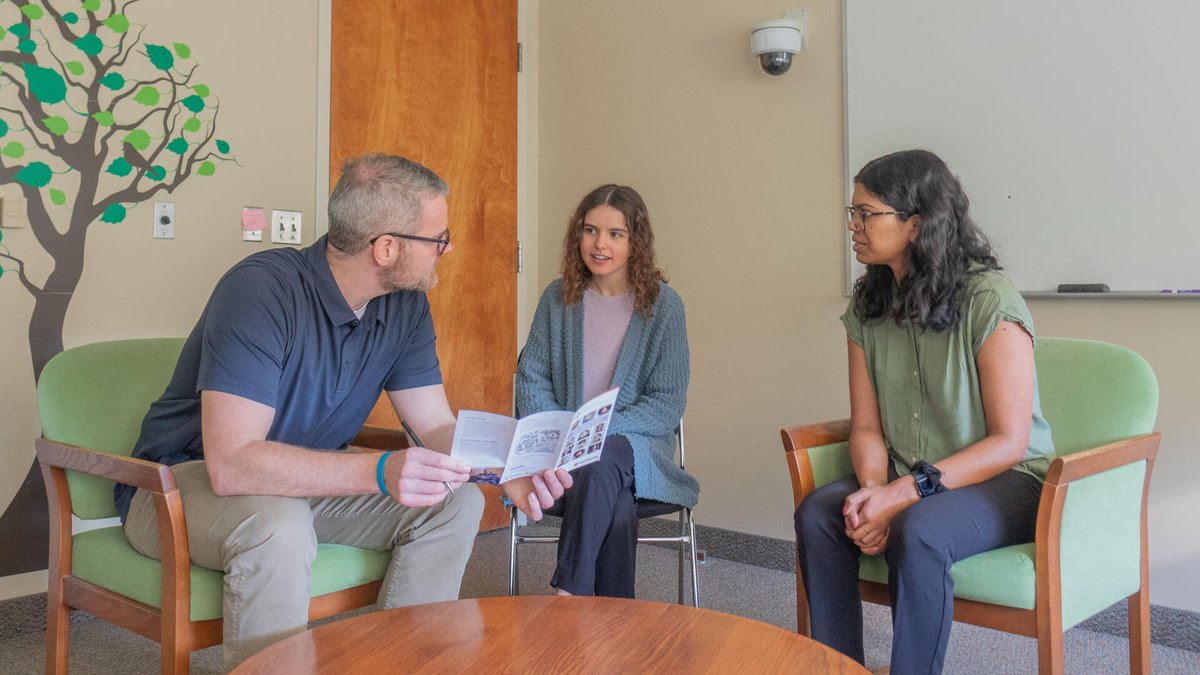
ALT Dr. Dillon Browne talking to two patients inside the FamilyPsycle Lab at the University of Waterloo
4
10
1,467
Jackson Smith retweeted

29 Jan 2024
Child Poverty is Getting Worse in Canada. Teamed up with health economist @shainur22 to highlight why Canada needs to make #ChildPoverty a priority for child #development and #mentalhealth. theconversation.com/child-po…
1
12
31
1,638
Jackson Smith retweeted

22 Sep 2022
If you want to learn multilevel modelling but don't know where to start, @JkayFlake and I have created the website for you: learn-mlms.com
A brief summary of the materials and the impetus for them: (1/6)
28
450
1,673
Jackson Smith retweeted

19 Sep 2023
📢 Our new meta-analysis in World Psychiatry showed that in 206 studies and >500k participants, the distribution of Adverse Childhood Experiences (ACEs) was:
0 ACEs = 39.9%
1 ACE = 22.4%
2 ACEs = 13.0%
3 ACEs = 8.7%
4 ACEs = 16.1%
🧵 (1/4)
onlinelibrary.wiley.com/doi/…
6
72
217
35,211
Jackson Smith retweeted

21 Aug 2023
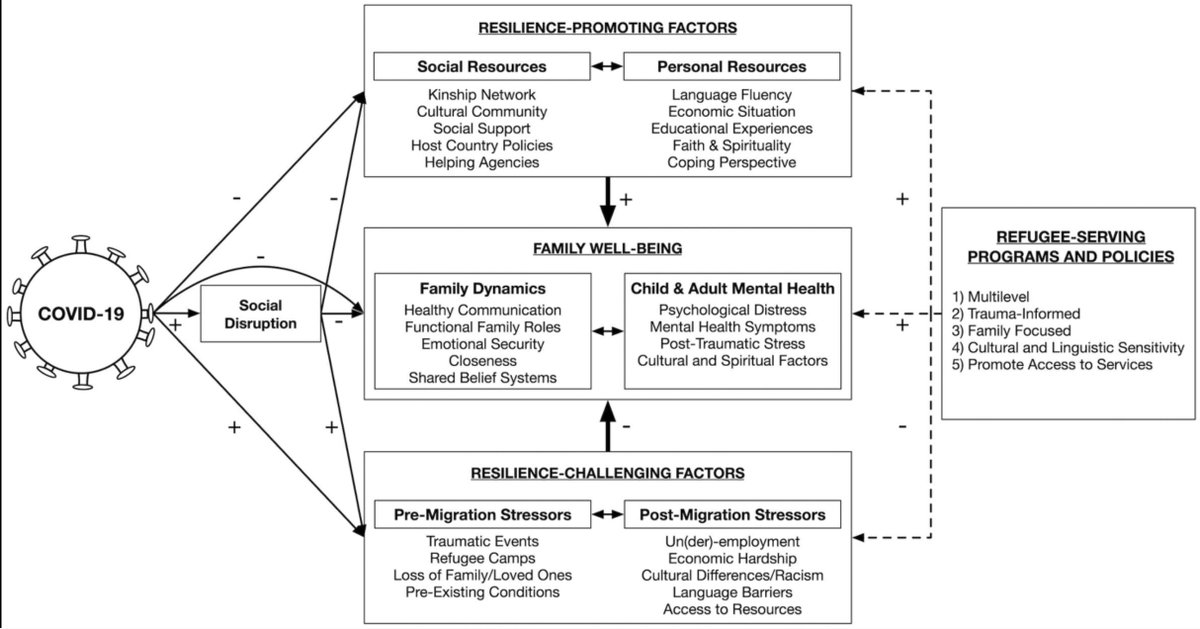
Excited to share that my MA thesis: “Empirical support for a model of risk and resilience in children and families during COVID-19: A systematic review & narrative synthesis” was published #OpenAccess in Development and Psychopathology. bit.ly/3KJvhV9
1
5
41
3,740

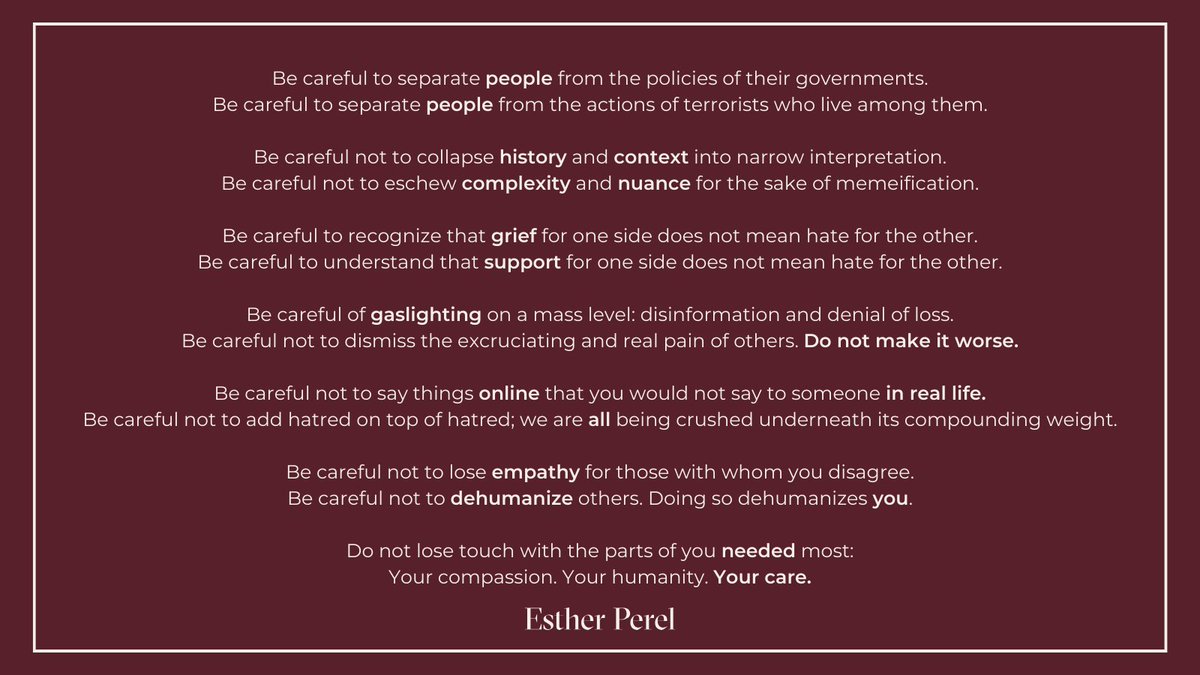
I want to talk about trust and attachment in young children. And there’s no video here for good reason.
Several of you have recently tagged me to ask my thoughts on trending videos depicting parents engaging in one appalling behavior or another - in pursuit, apparently, of social media likes.
In one trend, parents pretend to be FaceTiming with their child’s new kindergarten teacher and call their child over to meet her. When they get to the phone, the child comes face to face with a photo of a scary looking adult (which in some cases appear to be mugshots of women deep in the throes of drug addiction, if, in fact, they are real at all). The children are almost always alarmed. Often they cry.
During one of the biggest transitions in their young child’s life (the start of school), these parents have chosen to stoke anxiety rather than provide comfort.
Other recent trends have involved parents in throwing slices of American cheese at their toddlers - or, more recently, unexpectedly cracking a raw egg on their child’s forehead during a joint cooking activity.
Obviously I’m not going to uplift any examples here. But I do want to address the harm these kinds of behaviors create from a developmental perspective.
The years of early childhood are a time during which trust and attachment are (ideally) formed. With love, attention, and responsive caregiving, young children learn that their world is safe. They develop self worth and self esteem. These are prerequisites to both learning and healthy development.
But the key to developing trust is consistency.
And the behaviors in these videos - even if rare and anomalous - serve only to undermine healthy attachment between parent and child. They provide children with data points that suggest their parents can be unexpectedly and arbitrary cruel. They are a violation of hard earned trust.
Some will argue that these are just jokes in good fun. They aren’t. They are the deliberate infliction of trauma, however brief, for the amusement of strangers. It should go without saying that this isn’t good for children.
Please. Don’t. Just don’t.
559
2,451
10,836
1,490,323
Jackson Smith retweeted

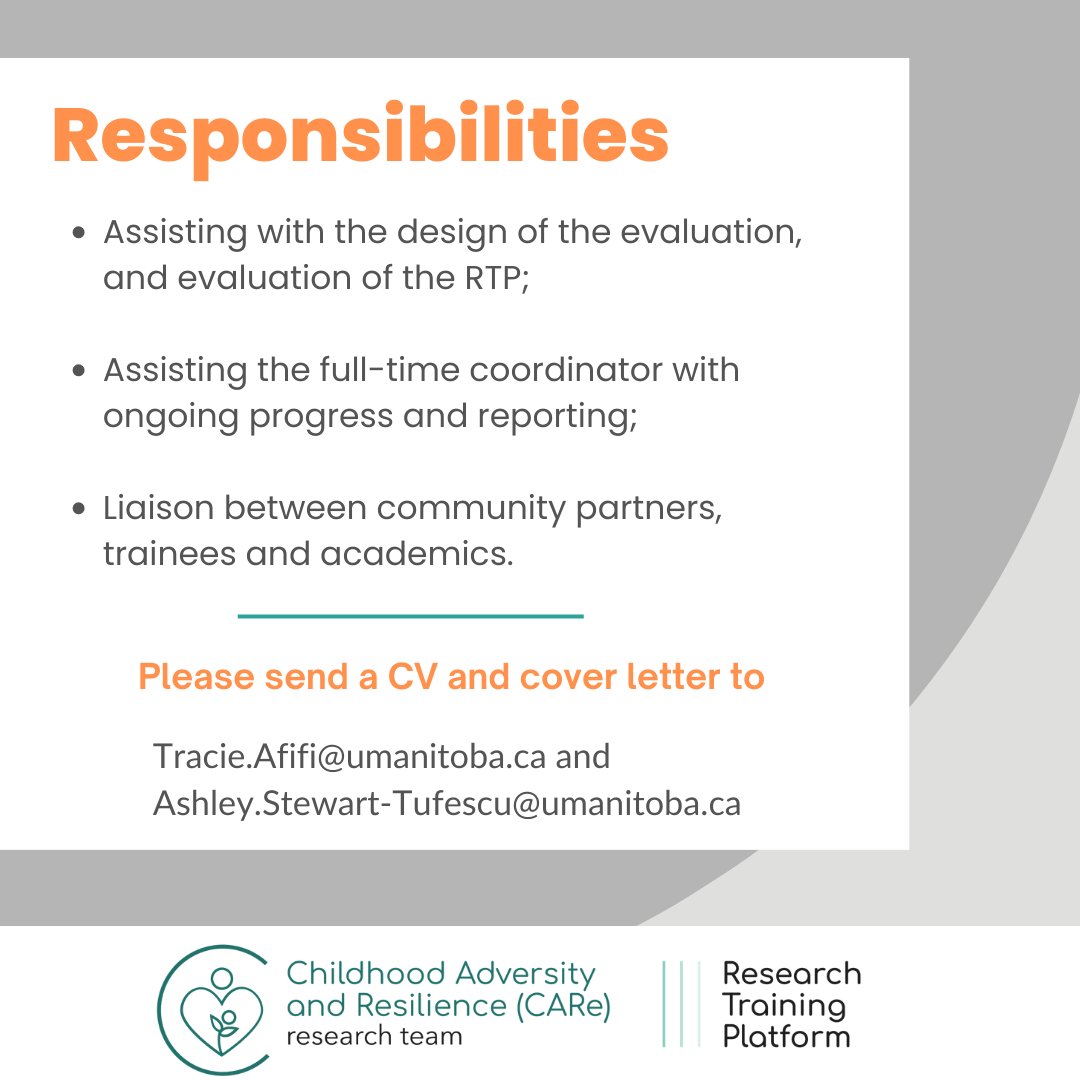
Join our amazing @care_research_rtp team! Learn more about the project led by Drs. @TracieAfifi and @astewarttufescu at: carertp.ca/


1
6
12
1,403
Jackson Smith retweeted

27 Jul 2023
Now accepted at Child Development, myself and Martin Tomasik explore, in tutorial style, how we can use continuous-time dynamic systems to represent theories of change, and why this is important when considering how model parameters relate to theories.
osf.io/gw54v
2
20
54
7,418
14 Jul 2023
Thank you for this clear and rich conversation. What @WholeLab shares is relevant not only for the @UWaterloo community, but for all who have been directly or indirectly affected by trauma and adversity (hint: pretty much everyone).
1
5
534
27 Jun 2023
📢New paper with @WholeLab!
A case study of virtually delivered, weekly emotion-focused family therapy to support caregivers to manage their child's symptoms of depression, anxiety, and anger, facilitate emotion processing, and strengthen relationships.
onlinelibrary.wiley.com/doi/…
1
1
14
1,602
27 Jun 2023
Thanks to @geta_headapp for providing access to the virtual platform and funding (in conjunction with @MitacsCanada) to enable this intervention to be provided to the family, free of charge.
1
130