
Trusting in God's Word for the care of souls | Common Grace informed | @ABC Certified | DMin | Retired USAF
Joined March 2022
- Tweets 2,146
- Following 447
- Followers 621
- Likes 4,922
49 Photos and videos






Pinned Tweet

Feb 23
If you’re a pastor, biblical counselor, or ministry leader, and your public presence here is mostly argumentative and tribal…
how will hurting people see you as safe?
Shepherds are called to be gentle.
Counselors are called to be patient.
Leaders are called to be examples.
If your tone is combative, sarcastic, or constantly “us vs. them,” don’t be surprised when the anxious, grieving, or struggling keep their distance.
You may win arguments.
But you might lose trust.
And trust is the doorway to ministry.
12
10
64
6,897
James Hatt retweeted

Jun 7
2
3
492
Jun 8
This is well worth a read.

4
426
James Hatt retweeted

Jun 3
Let me remind and encourage you again: God is sovereign; you and I aren't. This isn't just theology we should proclaim on Sunday; it must be the foundation of our identity every day of the week. God is in absolute control, and he's infinitely good.
6
77
345
6,234
James Hatt retweeted

May 28
What I continue to observe in biblical counseling is the importance of seeing people holistically.
We are not merely looking at behaviors. We are looking beneath behaviors to wounds, beneath wounds to sin, and beneath even that to the profound reality that this person is made in the image of God.
Every person who sits before us carries both deep brokenness and deep dignity.
3
3
30
1,334
James Hatt retweeted
May 24
A Thread: The Bible Is Sufficient to Teach Us How to Publicly Address Public Accusations. This long-form article uses God’s all-sufficient Word to develop a practical biblical theology for publicly cross-examining public accusations made by biblical counselors. Link below. 1/

8
7
17
6,188
May 22
Van Halen
Rush
The Police
REM
ZZ Top
Kiss
U2
Beach Boys
Motley Crue
Styx
May 21

Introduce yourself with 10 bands you've seen live:
U2
Arcade Fire
Modest Mouse
Sunny Day Real Estate
Pearl Jam
Built to Spill
The Tragically Hip
Gregory Alan Isakov
MXPX
Pedro the Lion
1
2
311
May 19
Interesting
May 18

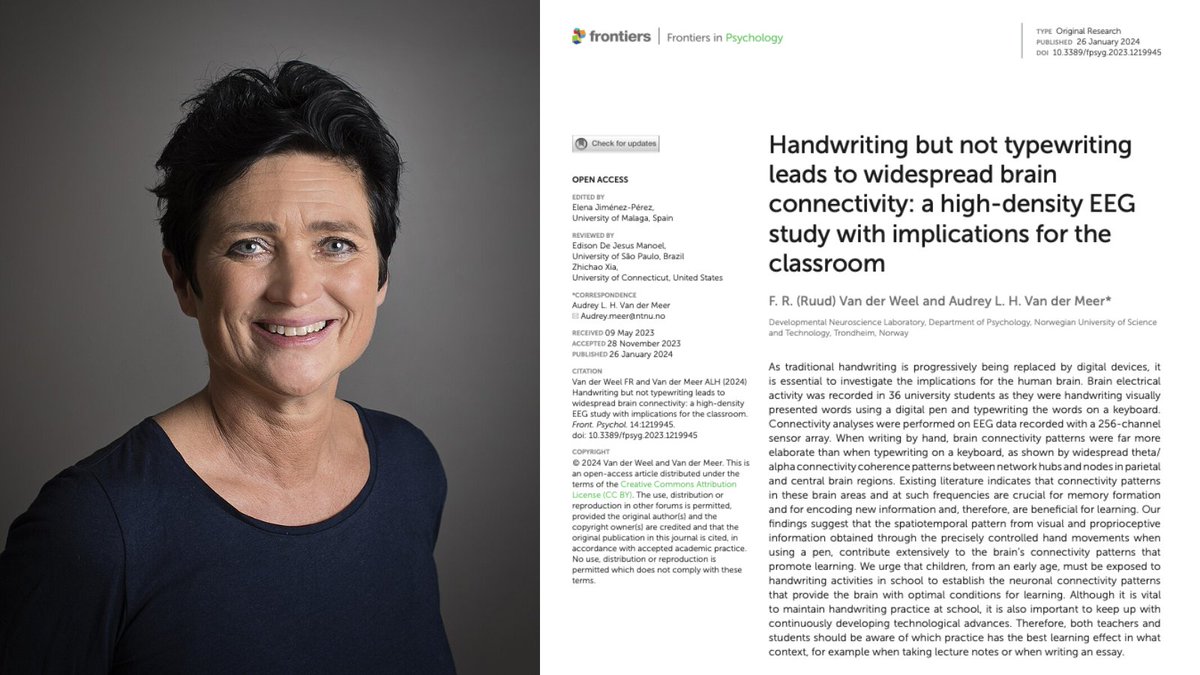
A Norwegian neuroscientist spent 20 years proving that the act of writing by hand changes the human brain in ways typing physically cannot, and almost nobody outside her field has read the paper.
Her name is Audrey van der Meer.
She runs a brain research lab in Trondheim, and the paper that closed the argument was published in 2024 in a journal called Frontiers in Psychology. The finding is brutal enough that it should have changed every classroom on Earth.
The experiment was simple. She recruited 36 university students and put each one in a cap with 256 sensors pressed against their scalp to record brain activity. Words flashed on a screen one at a time.
Sometimes the students wrote the word by hand on a touchscreen using a digital pen, and sometimes they typed the same word on a keyboard. Every neural response was recorded for the full five seconds the word stayed on screen.
Then her team looked at the part of the data most researchers had ignored for years, which is how different parts of the brain were communicating with each other during the task.
When the students wrote by hand, the brain lit up everywhere at once.
The regions responsible for memory, sensory integration, and the encoding of new information were all firing together in a coordinated pattern that spread across the entire cortex. The whole network was awake and connected.
When the same students typed the same word, that pattern collapsed almost completely.
Most of the brain went quiet, and the connections between regions that had been alive seconds earlier were nowhere to be found on the EEG.
Same word, same brain, same person, and two completely different neurological events.
The reason turned out to be something nobody had really paid attention to before her work. Writing by hand is not one motion but a sequence of thousands of tiny micro-movements coordinated with your eyes in real time, where each letter is a different shape that requires the brain to solve a slightly different spatial problem.
Your fingers, wrist, vision, and the parts of your brain that track position in space are all working together to produce one letter, then the next, then the next.
Typing throws all of that away. Every key on a keyboard requires the exact same finger motion regardless of which letter you are pressing, which means the brain has almost nothing to integrate and almost no problem to solve.
Van der Meer said it plainly in her interviews.
Pressing the same key with the same finger over and over does not stimulate the brain in any meaningful way, and she pointed out something that should scare every parent who handed their kid an iPad.
Children who learn to read and write on tablets often cannot tell letters like b and d apart, because they have never physically felt with their bodies what it takes to actually produce those letters on a page.
A decade before her, two researchers at Princeton ran the same fight using a completely different method and ended up at the same answer. Pam Mueller and Daniel Oppenheimer tested 327 students across three experiments, where half took notes on laptops with the internet disabled and half took notes by hand, before testing everyone on what they actually understood from the lectures they had watched.
The handwriting group won by a wide margin on every question that required real understanding rather than surface recall.
The reason was hiding in the transcripts of what the two groups had actually written down.
The laptop students typed almost word for word, capturing more total content but processing almost none of it as they went, while the handwriting students physically could not write fast enough to transcribe a lecture in real time, which forced them to listen carefully, decide what actually mattered, and put it in their own words on the page.
That single act of choosing what to keep was the learning itself, and the keyboard had quietly skipped the choosing and skipped the learning along with it.
Two studies. Two countries. Same answer.
Handwriting makes the brain work. Typing lets it coast.
Every note you have ever typed instead of written went into your brain through a thinner pipe. Every meeting, every book highlight, every idea you captured on your phone instead of on paper was processed at half depth.
You did not forget those things because your memory is bad. You forgot them because typing never woke the part of the brain that would have made them stick.
The fix is the thing your grandmother already knew.
Pick up a pen. Write the thing down. The slower road is the faster one.
1
5
699
James Hatt retweeted
May 16
Is mental health biblical?
---
Well, here are the two extremes that you want to avoid. The culture, because it doesn't believe in the heart in the way the Scripture defines it. The heart is the center of your emotions, your mind, your will. The heart is the causal core, it's the directional system of a human being. Since the world doesn't believe that, the world tends to biologize everything. Everything is biological or physical. That's an unbiblical view of a human being.
The other extreme is in the church, and it's a tendency for us to spiritualize everything; every dysfunction is somehow a sin issue. And neither one of those two extremes are biblical. The biblical view is I'm a duality. I'm a spiritual and a physical being. The language that is more current is, “I'm an embodied soul.” So, there is dysfunction of soul and dysfunction of body.
For example, I was looking yesterday at an antibiotic, and one of the side effects of this antibiotic, this is very interesting to me, is anxiety. It's not an anxiety that's a failure of hope in God. It's an anxiety that is physiological-induced by a medication that causes you to be unable to deal with the things emotionally that you could normally deal with.
Now, that is a mental health issue. Does it become a heart issue? Sure, it does because everything is a heart issue because the heart is the control center. In the midst of that experience, I could get angry at God; I could doubt His goodness. All kinds of things can happen, but it's not first a spiritual issue.
I had a counseling experience with a guy who had a huge personality change, became a very angry man, and we discovered it was a result of an accident that affected the limbic area of his brain that was swollen. They call that the ‘rage center’ of the brain. He got medication and was fine. By then, his church had already disciplined him for a sin against his wife and family. I heard what was going on; I immediately sent him to a major hospital for a multidiscipline examination, and they found out what was wrong with him.
So, we can't deny the body, and we can't deny the soul. We have to have a category for things, whether you call them mental health or whatever, we have to have a category for body dysfunction that creates behavioral thought-emotion difficulty. And that needs to be part of a Christian worldview; it needs to be part of a system of Christian biblical counseling.
There are body issues. There are mental dysfunctions. We know that there are people who don't process well. Dyslexia is a mental processing issue. ADHD is a distractibility mental processing issue. So, we've got to have a category that remembers that God not only created souls; we're not disembodied souls, but we have bodies. And the fall didn't just affect the heart and the soul. The fall affected the body as well.
#askpaultripp episode 2
18
78
378
30,525
James Hatt retweeted

2 Aug 2024
Scripture calls us to govern our bodies as part of our sanctification, but oftentimes we as biblical counselors neglect the physical body while ministering to those with OCD. #ocd #obsessivecompulsivedisorder #mentalhealth #biblicalcounseling
gospelmercies.com/2024/08/02…
3
8
40
4,216
James Hatt retweeted
May 12
ABC 2026: “Equipping the Saints to Live and Counsel the Word of God” rpmministries.org/2026/05/ab… ABC’s Executive Director, Shauna Van Dyke, shares the theological foundation behind ABC’s updated Mission Statement and new logo. @ABCounselors #BiblicalCounseling
1
4
12
594
May 10
This is a great real-world example of common grace.
"God is using Huberman’s thinking to stretch my thinking—just like He used Mowrer’s thinking to stretch Adams’s thinking…"
May 9

I'm listening to Huberman talk about the neuroscience of fear, and I am thinking of Jay Adams talking about how scientific research and even psychological studies can be catalytic—motivating us to return to God’s Word with new questions to find new insights. I think of Adams reading Harvard sleep studies and going back to his Bible because those studies were a catalyst for him—and then Adams using the results of those sleep studies as part of his physiological counsel. I am listening to Huberman and thinking of Adams talking to 100s of physicians about embodied-care and physiological interventions as “preparatory” for progressive sanctification. I am listening to Huberman and thinking of Adams linking the nervous system studies of his day to his understanding of the connection between emotions and actions. I am listening to this and thinking of Adams reading Mowrer's teaching on "dehabituation" and "rehabituation" and that being a catalyst for Adams to study further the Bible's teaching on putting off and putting on.
Could this Huberman video likewise be catalytic for us in any way? I am listening to Huberman discuss the neuroscience of diminishing the fear reflex. I am listening to him discuss the neuroscience of replacing the old fear reflex with new truth—a new narrative. He talks about embedding those new truths back into the old suffering, and I am thinking of the put off and put on process that Paul talks about constantly. Huberman, in essence, is describing the physiological, neurological deactivation and reactivation that occurs in the brain as we put off old lies in our mind and put on new truths in the "spirit of our mind" (Eph. 4:23). Our embodied-soul is calmed as our physical brain and metaphysical mind soothe the soul in the Savior. It is possible that Huberman’s neuroscience understandings (as imperfect as they may be) could be a catalyst for us to think through Scripture more robustly, a la, Adams and Mowrer?
I am listening to Huberman talk about how the brain can slowly be rewired by retelling the old story of suffering. And I am thinking of how Paul does this in 2 Cor. 1, in the safety of the body of Christ. On his first telling in 2 Cor. 1 of his horrific suffering, Paul talks about feeling despair. However, by the time he has told his story several more times, things change. In 2 Cor. 4, Paul is still perplexed, but now he says he is not in despair. His retelling his story has begun to extinguish the old fear-based responses.
I am listening to Huberman and pondering how Paul does not simply retell his old suffering story. Instead, Paul also adds new truth, new narrative to his suffering story, such as: 1. This helps me to comfort others. 2. This motivates me to be less self-reliant. 3. This motivates me to be more God reliant. 4. This enlightens me to see God as the One who resurrects the dead. 5. This enlightens me to see God as the Father of compassion and God of all comfort. 6. This reminds me that God did deliver me. 7. It reminds me that God will deliver me. 8. It reminds me that God will continue to deliver me. 9. It encourages me toward mutual healthy inter-dependence with the Body of Christ. So, by the time Paul gets to 2 Cor. 4, he admits that his suffering still perplexes him, but he is no longer in despair. He has not sought to forget his past traumatic suffering. Instead, he has sought to embed new truths into his old suffering: and it changes Paul—body and soul, brain and mind.
Did I "need" Huberman? Well, did Adams “need” Harvard sleep studies? Did Adams “need” the nervous system understanding of the 1960s? Did Adams need Mowrer's teachings on dehabituation and rehabituation (Mowrer used those terms long before Adams did)? No, Adams did not "need" that. However, God clearly used "secular" research and even "secular" behavioral psychology as a "catalyst" to drive Adams back to Scripture and come to a more rich and robust understanding and application. Adams “redeemed” Mowrer’s secular behavioral approach of dehabituation and rehabituation—but Adams did not totally toss it out. He reshaped it biblically.
I am listening to Huberman and pondering how I could more effectively apply the biblical put off and put on process to care for embodied-souls whose brain and mind both need God’s healing. I do not “need” Huberman. However, God is using Huberman’s thinking to stretch my thinking—just like He used Mowrer’s thinking to stretch Adams’s thinking…
6
143
James Hatt retweeted
May 10
ABC 2026: More Than a Rebrand—A Clearer Vision, A Renewed Hope. A Guest Post by @ElizaJaneHuie rpmministries.org/2026/05/ab… ABC: Anchored to Scripture, shaped by the gospel, committed to equipping others, and invested in the global body of Christ. @ABCounselors #BiblicalCounseling
4
11
721
May 8
Quite a few people, myself included, need this reminder.

Let no corrupting talk come out of your mouths, but only such as is good for building up, as fits the occasion, that it may give grace to those who hear.
Be kind to one another, tenderhearted, forgiving one another, as God in Christ forgave you.
Ephesians 4:29, 32
2
85
May 8
Excellent idea, Jason would be a great guest.
Someone needs to make this happen.
May 7
So here’s an idea...
In another X thread, @jasonkovacs and @TDaleJohnson talked about connecting to discuss these issues. On their recent YouTube podcast, Dale and Keith said they wanted to characterize CIBC accurately and have non-combative, irenic conversations.
Dale, would you consider having Jason on your ACBC Truth and Love podcast? Between your ACBC podcasts, blog posts, journal articles, and YouTube videos, you have had dozens of conversations about CIBC, but none with CIBC leaders.
I’m not suggesting a debate like Brad and Marshall had. I’m suggesting a series of mutual, iron-sharpening-iron public conversations—with the intent to listen to and learn from each other.
Dale, if you prefer not to have a CIBC leader on your ACBC podcast, then perhaps other neutral parties could host a series of non-combative, non-debate, public conversations.
I don’t want to speak for others, but maybe a @timallchin could host a podcast. Or perhaps the new podcast by @jared_poulton and @lucasabatier and @joehussung could be a possible place to host this series of conversations. Or, perhaps the @biblicalcc and @KevinCarson could be a potential podcast host? There could be further discussion about the wisest venue that both Jason and Dale might agree upon.
There are other leaders who could join the conversation—other CIBC leaders, other ACBC-affiliated leaders. However, perhaps a first step might be to see if Jason and Dale are open to a series of mutually-respectful, humble, iron-sharpening public conversations.
Perhaps some of the ten clarifying questions listed in the opening tweet in this thread could be potential conversations starters? Or, the two of you could agree upon points of interaction…
Jason, would you be open to a series of public conversations with Dale about CIBC and what is being called historic biblical counseling?
Dale, would you be open to a series of public conversations with Jason about CIBC and what is being called historic biblical counseling?
3
182
James Hatt retweeted
May 7
A few of the top counseling mistakes I see:
1. Counseling apart from deep communion with Christ and dependence on the Holy Spirit.
2. Treating sanctification as mere behavior modification instead of union with Christ and Spirit-empowered transformation.
3. Giving biblical information without helping people encounter the grace, presence, and mediation of Jesus.
4. Confusing quick insight with true heart change that comes through repentance, faith, suffering, and abiding in Christ.
5. Functionally acting as if the counselor is the healer rather than Christ himself being the Wonderful Counselor and Shepherd of souls.
Biblical counseling is not merely dispensing principles. It is participating in Christ’s ministry of grace and truth through His Word, His Spirit, and His people.
4
10
41
2,134
James Hatt retweeted

We're up to 220 RSVP's.
Hope you'll join us at 2pm EST today.

Free Webinar:
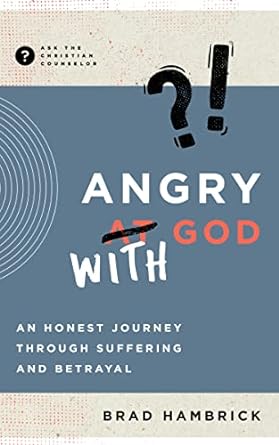
After Church Hurt, Angry with God
Thursday May 7th at 2pm EST
170 people already RSVP'ed! Join us.
event.webinarjam.com/7wrzn/r…
When places that should be safe, like church, become places of pain, we (rightly) bring that pain to God and that pain is often hot.
2
3
413
James Hatt retweeted

May 6
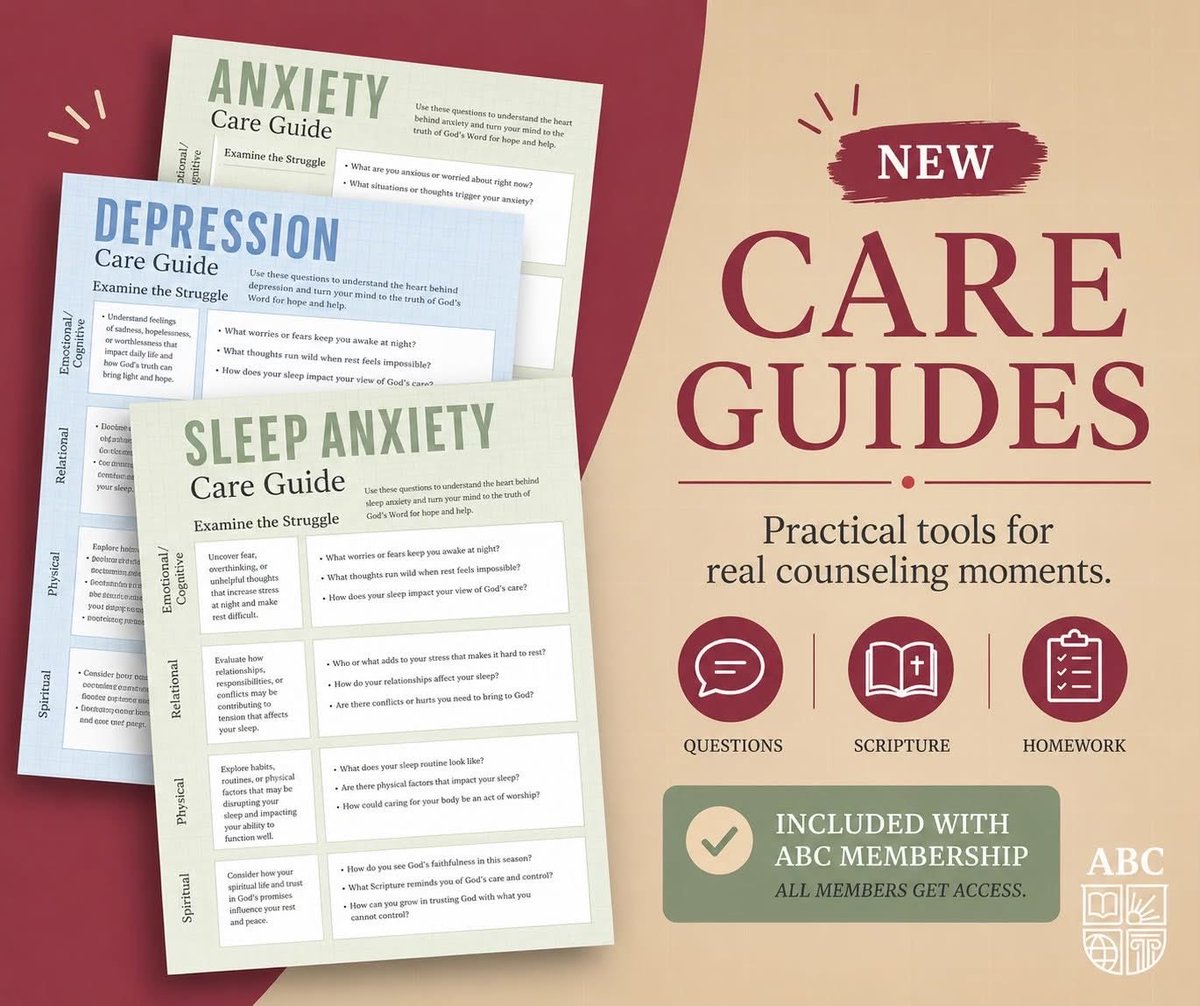
New Counseling Resources 📋
Our NEW Care Guides help counselors ask wise questions, apply Scripture clearly, and give practical homework.
Topics include anxiety, depression, sleep struggles, and more.
Best part? ALL ABC Members get access.
👉 christiancounseling.com
1
2
5
274
James Hatt retweeted

May is Mental Health Month. Save 35% off resources for counselors, ministry leaders, and individuals using the coupon code MHAM26.
Includes minibooks, devotionals, group resources, and related children's books.
Start shopping at buff.ly/QCK4IOv.
2
1
123
James Hatt retweeted

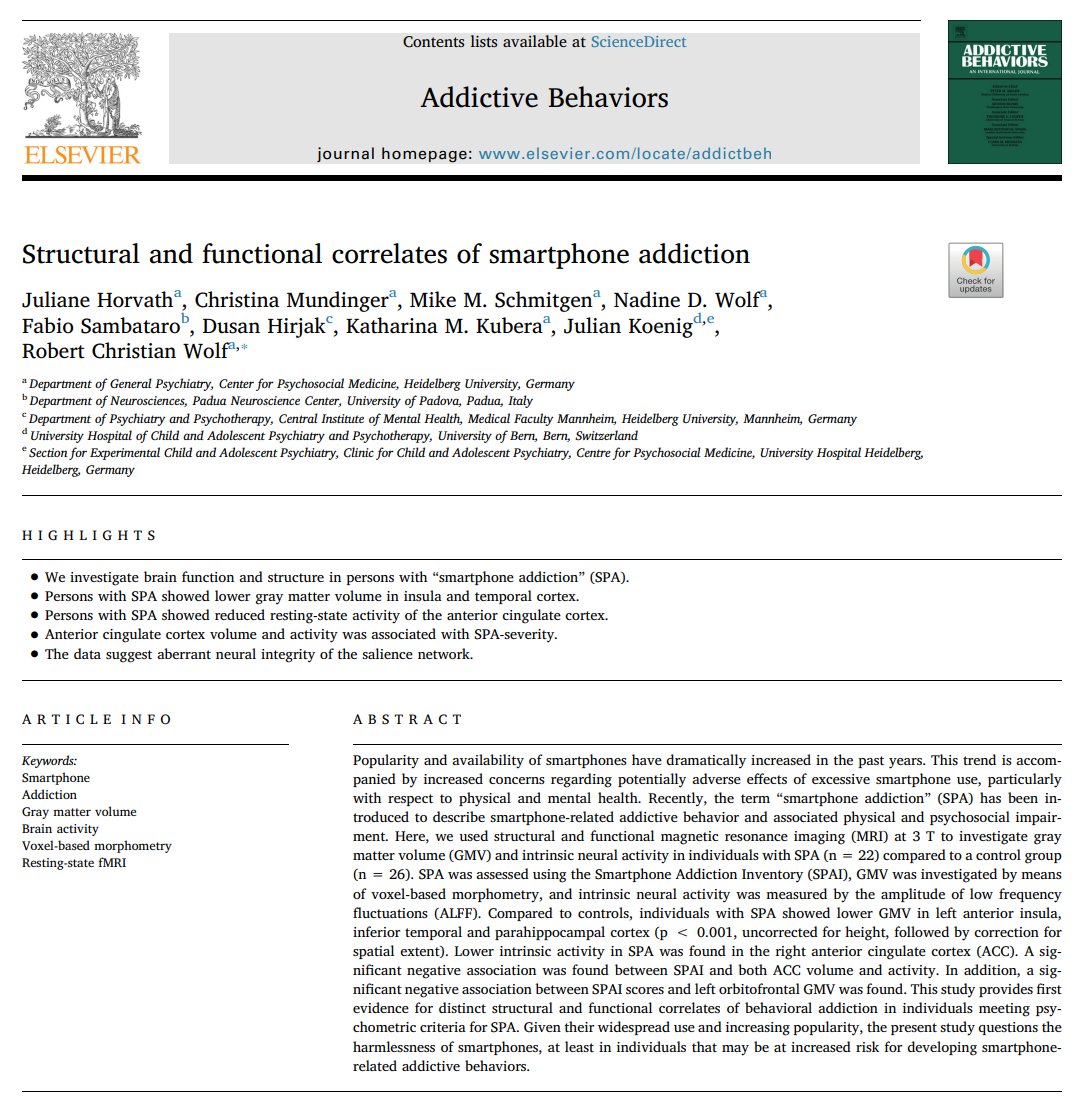
Being addicted to your phone is associated with decreased brain volume and activity.
51
573
2,907
338,378
May 1
How a man receives correction reveals his ruler: pride or the Spirit.
Today many Christians defend ungodly behavior simply because they think they’re right. But Scripture says wisdom is teachable (Prov. 12:1; James 3:17).
If you can’t be corrected, you’re not standing for truth, you’re standing for yourself.
1
6
200