
117 Photos and videos










Peli corporei una polemica inutile.
Va' fatto il laser quando sei ancora in una età un po' incosciente in modo che se a 30 anni, in uno slancio di emancipazione, ti svegli dicendo "vabbè che male c'è ad avere i peli ovunque" ormai addio, non crescono più.
Si chiama prevenzione.
9
2
111
15,762
Jeerva retweeted

Milton Friedman: “Keep your eye on one thing and one thing only: how much government is spending, because that’s the true tax.”
“If you’re not paying for it in the form of explicit taxes, you’re paying for it indirectly in the form of inflation or borrowing.”
102
3,840
15,511
311,726
Jeerva retweeted

Imagine you spent 40 years doing the boring, responsible thing.
You opened a 401k at 23. You contributed every paycheck. You ignored the noise. You bought the index because Bogle told you to, because Buffett told you to, because every honest piece of financial advice for 30 years told you the index was the safest, most diversified, most rules-based way to own America.
The whole point was the rules.
The rules said: a company must trade for 12 months before joining the S&P 500. The rules said: it must show four consecutive quarters of GAAP profitability. The rules existed because in 1999 the index quietly bought a lot of stocks at the top, and pensioners paid the bill.
After the dot-com crash, S&P tightened the rules. Nasdaq tightened the rules. FTSE Russell tightened the rules.
For 23 years, those rules held.
Then SpaceX filed for IPO.
And the rules changed.
The S&P 500 waived the profitability requirement. Nasdaq cut its trading-history window from 90 days to 15. FTSE Russell cut its to 5.
Bloomberg Intelligence estimates the major index funds will absorb between 19% and 24% of SpaceX's float within six months. That's over $30 trillion of passive 401k and retirement money, mechanically buying a single newly public company at IPO valuations, because the rules said they had to.
Except the rules used to say they didn't.
Here's the thought exercise:
If you spend 40 years building a system designed to protect ordinary savers from buying overpriced stocks, and then you waive the protections the moment a sufficiently large stock asks you to, what was the system actually protecting?
Most of investing is about understanding what's a rule and what's a guideline.
A rule binds the rule-maker.
A guideline binds the saver.
You're allowed to find out which is which only after the fact.

Rule changes for the SpaceX $SPCX IPO:
Index providers waived the profitability requirement and cut the seasoning window from 90 days to 5.
This forces over $30 trillion in passive 401k and retirement money to buy SpaceX at IPO valuations.
Bloomberg Intelligence estimates S&P 500 funds must absorb 19% of SpaceX's float within 6 months.
Russell 1000 and Nasdaq 100 funds will absorb 24%.
The rules built to protect passive investors:
1. S&P 500 has required 12 months of trading and 4 quarters of GAAP profitability since 2002. Both waived.
2. Nasdaq cut its inclusion window from 90 trading days to 15.
3. FTSE Russell cut its to 5.
All three benchmarks are now structured to buy SpaceX at IPO pricing.
247
1,780
10,822
3,656,769
Jeerva retweeted

May 30
Servono anni per costruire e bastano attimi per distruggere. Fare il ribelle è molto più facile che produrre, cioè organizzare la soddisfazione di bisogni altrui. Il problema del capitalismo c'era anche prima è nei passaggi del potere dai padri ai figli senza ascensore sociale.
May 29

Rainer Zitelman | "Il capitalismo ha avuto un enorme successo a livello economico, ma è debole nel difendersi intellettualmente. Gli imprenditori sono occupati a creare ricchezza, mentre molti anticapitalisti lavorano in università, ONG e media. Per questo motivo, i critici del capitalismo hanno più influenza sull'opinione pubblica."
2
1
16
2,061
Jeerva retweeted

May 23
La plupart des grandes boîtes sont des organisations zombies. Voici pourquoi.
Dans League of Legends, ton rang n'est pas un titre. C'est une mesure continue. Tu es Master parce que tu joues comme un Master cette semaine. Si tu arrêtes de bosser, tu redescends. Diamond. Platine. Gold. Le système ne te doit rien : ton rang reflète ta compétence à l'instant T, pas celle d'il y a trois ans.
Maintenant regarde une entreprise classique du S&P 500. Un type devient VP parce qu'il a été excellent à 35 ans. À 50 ans, il est toujours VP. Entre-temps, il a peut-être arrêté de produire, arrêté d'apprendre, arrêté de challenger ses modèles mentaux. Aucune importance : le titre est acquis. La hiérarchie pyramidale fonctionne comme un cliquet — tu montes, tu ne redescends pas. Ton elo organisationnel est gelé au pic de ta carrière.
C'est une aberration darwinienne. Ces structures distribuent l'autorité selon la compétence passée, et la compétence passée est un très mauvais prédicteur de la compétence présente — surtout dans un monde qui change vite.
Les jeux compétitifs ont résolu ce problème il y a vingt ans. Le elo se recalcule à chaque partie. La hiérarchie reflète la performance réelle, pas le souvenir d'une performance. C'est brutal, et c'est précisément pour ça que ça marche : les meilleurs joueurs sont vraiment les meilleurs joueurs, pas ceux qui ont été bons en 2008.
L'IA rend cette aberration létale. Quand une équipe de 12 personnes avec les bons outils peut produire ce que produisait un département de 200, le coût d'un VP qui ne produit plus n'est plus seulement son salaire — c'est le delta entre ce qu'il bloque et ce qu'une organisation méritocratique débloquerait. Ce delta explose chaque mois.
Regardez le marché. Le S&P 500 n'existe plus vraiment. Il y a le S&P 7 (Nvidia, Microsoft, Apple, Google, Amazon, Meta, Tesla) qui capte la quasi-totalité de la création de valeur, et 493 zombies qui maintiennent leur cap par inertie comptable. Les zombies partagent une caractéristique : la compétence n'y circule pas. Elle s'y cristallise en titres, en territoires, en process de protection.
Les boîtes qui vont émerger dans les dix prochaines années auront une propriété structurelle nouvelle : l'autorité y sera révocable en continu. La compétence présente sera la seule monnaie. Plus de rentes de titre. Plus de comités. Plus de "j'ai mérité ma position en 2015". Tu produis maintenant ou tu sors du ladder.
C'est pas une question d'idéologie. C'est juste que dans un environnement où l'IA divise par 50 le coût d'exécution, les organisations qui protègent l'incompétence acquise se font oblitérer par celles qui ne la protègent pas.
Tout est à réinventer. Et c'est exactement ce qui rend le moment fascinant.
455
1,381
4,029
1,136,948
Jeerva retweeted

May 23
Da scolpire nella pietra.
( E da applicare da un CDX vero)

Milton Friedman:
“I am in favor of reducing taxes under any circumstances, for any excuse, with any reason whatsoever.”
1
1
7
308
Jeerva retweeted

May 14
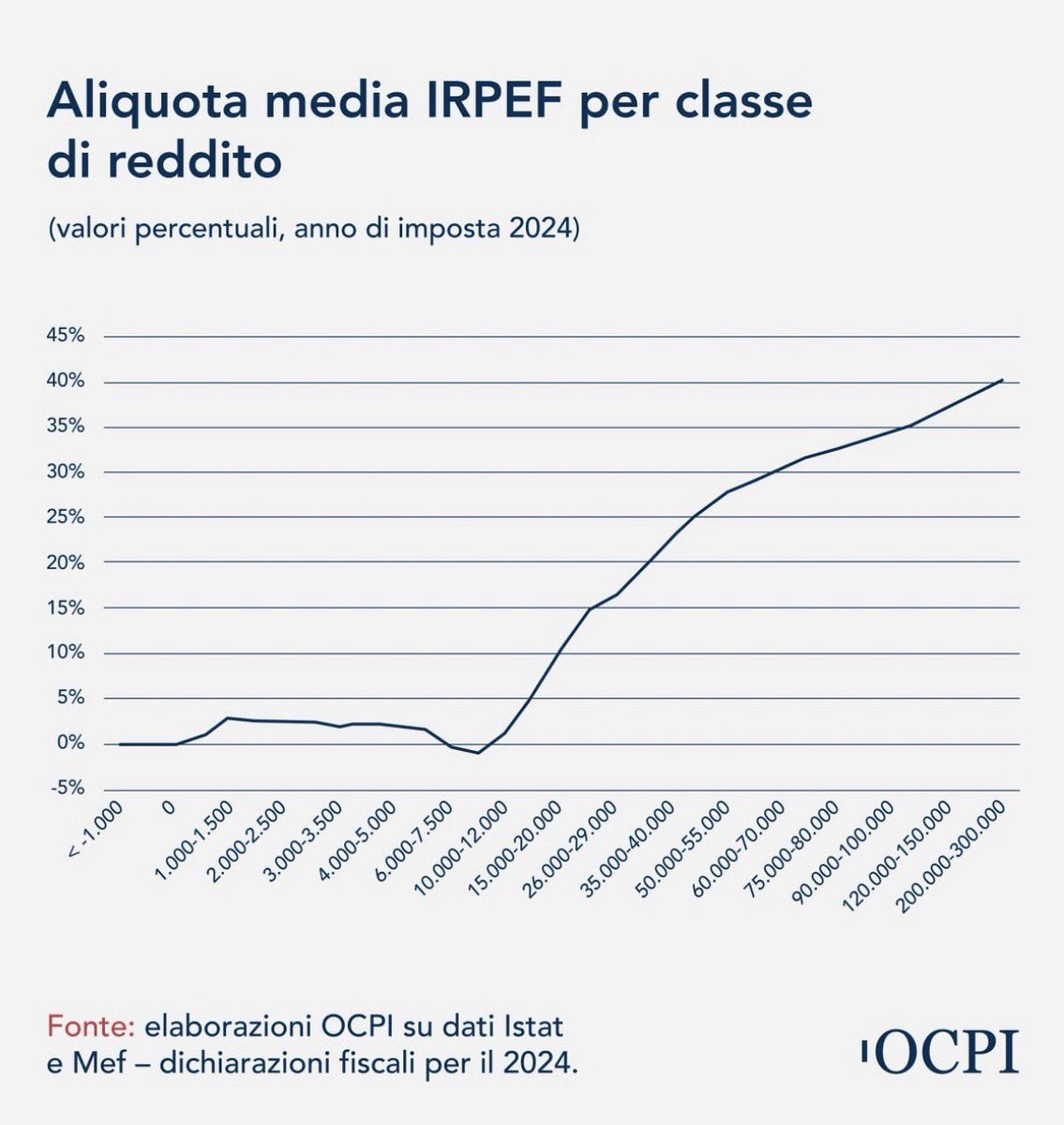
Questo grafico - fatto dall’Osservatorio Conti Pubblici - ci fa capire come funziona la nostra imposta principale, l’Irpef.
Fino a 12 mila euro annui (circa 900 euro al mese), si paga zero IRPEF.
Nel primo scaglione (0-28 mila euro, cioè fino a circa 1.600 euro netti al mese) si paga in media circa 100 euro al mese.
Vuol dire che qualsiasi cosa fai, dai un beneficio ridottissimo. Ma per il motivo più semplice di tutti: già si pagano pochissime imposte.
Ecco perché il mantra “riduciamo le imposte ai redditi bassi” non ha alcun senso.
Il problema di questi redditi non sono le tasse: il problema è che è basso il lordo (e allora le politiche per risolvere il problema sono altre).
Come vedete chiaramente dal grafico, il problema del sistema fiscale italiano è che massacra il ceto medio: quando guadagni 2.500/3.000 euro al mese, un terzo del tuo reddito se ne va in IRPEF.
E se ti viene la malaugurata idea di lavorare un po’ di più, su ogni 100 euro lordi, circa la metà se ne va in Irpef : un gentile trattamento che negli altri paesi europei riservano solo a chi guadagna 9/10 mila euro netti al mese.
Questa è la battaglia principale del @Partito_Libdem : riduciamo la spesa pubblica per dare respiro ai “muli da soma” di questo paese.
109
207
867
77,248
Jeerva retweeted

May 10
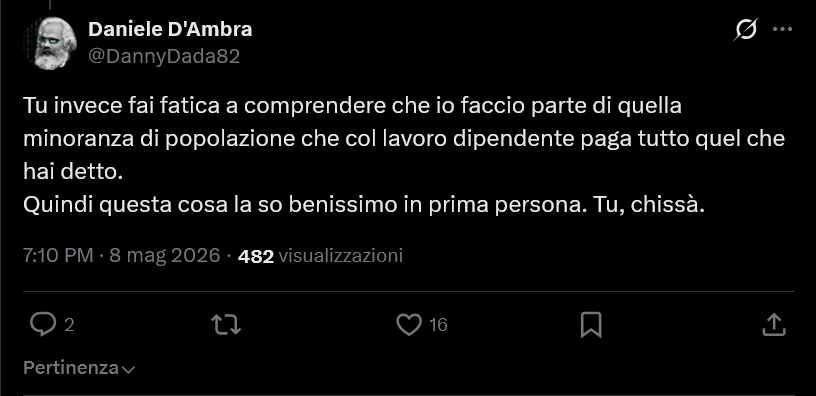
Ehm...no @DannyDada82 .
Tu fai parte di quella minoranza di dipendenti pubblici(l'Istat é finanziato dalla spesa pubblica essenso un ente pubblico) che assorbe il 40% circa di spesa primaria e CHE VIENE PAGATO con le tasse dei privati.
Un dipendente pubblico vive
1\
12
32
171
13,946

Jeerva retweeted

Mar 14
Someone wants to kill the dream of free internet. And AI was born already in captivity.
Tether is committing significant resources and more to make sure communications and intelligence shall remain free as in freedom.
85
92
1,248
74,020
Jeerva retweeted

Mar 10
The sooner you accept you haven't a clue about where the market is going in the short term, and then build your strategy around that - the better off you will be.
17
10
218
9,826
Jeerva retweeted

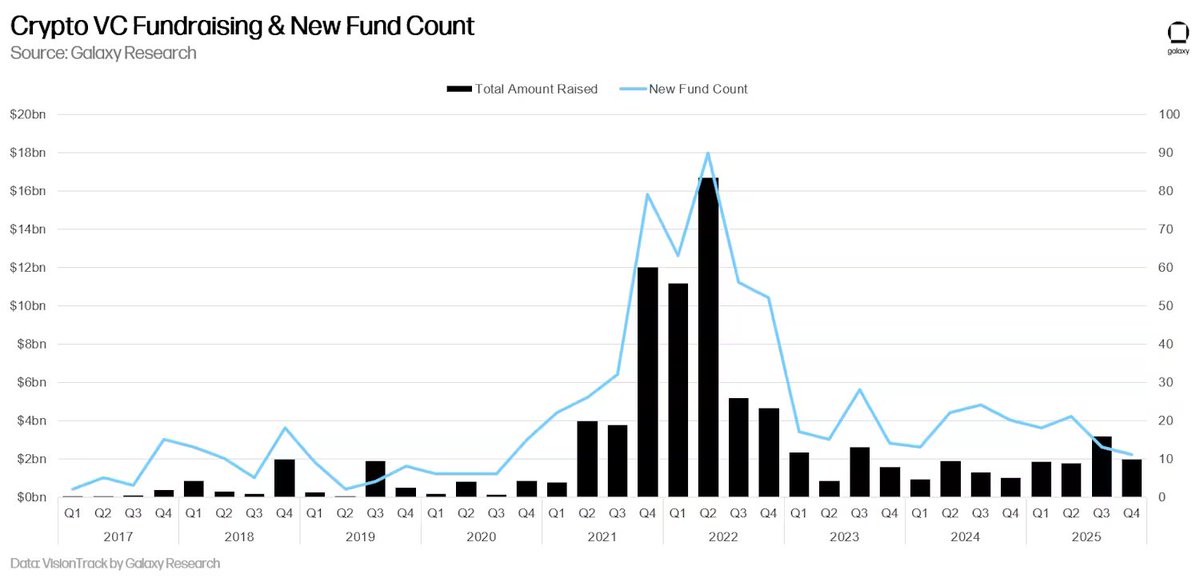
85% of token launches in 2025 are underwater.
VC backed deals barely break even and some are deep in the red.
Back in the day having a "Top VC" on the cap table was a huge catalyst, but not anymore. This chart from Galaxy Research tells the story.
In Q2 2022, crypto VCs raised nearly $17 billion in a single quarter with 80 new funds. LPs threw money at anything with "crypto" in the pitch deck.
Now...
• VC ROI has been falling since 2022
• New fund count just hit a 5 year low
• Last quarter fundraising was only 12% of Q2 2022 levels
"But VCs invested $8.5 Billion last quarter, up 84% QoQ!"
They're not deploying fresh capital, they're spending 2022 house money. The capital deployed from 2023 to 2025 is roughly equal to what they raised in 2022 alone.
The playbook of raising a round, launching a token, and dumping on retail is dying.
There is an upside...
When VC influence fades, the projects that win are the ones with real users and real revenue. Fairer launches. Less insider dumps.
Hopefully less chains, and more builders who optimize for product instead of the next raise.
62
13
168
15,164
Jeerva retweeted

Feb 9
I am the lead engineer at ai.com.
We had $78 million to work with.
$70 million went to the domain.
$8 million went to the Super Bowl ad.
I got the rest.
"The rest" was $500 and a Cloudflare free tier.
This ratio -- 156,000 to 1, marketing to engineering -- is not a bug. It is the business model of the entire artificial intelligence industry in 2026.
You do not need a product. You need a name. Preferably two letters. Preferably letters that made investors lose bladder control in 2024.
I built the website in a weekend. I didn't build it, actually.
I described it to OpenClaw (previosely Moltbook), (previously, reviously Clawdbot) and the AI built it.
We are, after all, an AI company. Using AI to build the website felt appropriate.
The AI charged us nothing. We are charging users $20 a month. This is called "margin."
We have a free tier and a paid tier. The free tier gives you access to a product that doesn't exist. The paid tier gives you access to the same product that doesn't exist, but with more input tokens.
No one has asked "input tokens for what." This is the kind of question that delays launches.
Nobody checked if it worked.
Nobody checked if it scaled.
Nobody checked if it did anything at all.
We were too busy approving the logo.
The logo is a planet with a ring around it. Someone said it looked like the old Saturn car logo. Saturn went bankrupt in 2010. But the logo was free and our design budget went to the domain, so here we are, orbiting a dead brand at $70 million per revolution.
Our product is an "autonomous AI agent" that "organizes work, sends messages, and executes actions across apps."
Which actions. Which apps. At what cost.
In the AI industry, these are called "implementation details." Implementation details are beneath us. We are a vision company. The vision cost $70 million. The implementation cost $500.
The gap between the two is where shareholder value lives.
Our press release promises the agent will "trade stocks, automate workflows, and update your online dating profile."
We are building artificial general intelligence so it can fix your Hinge bio.
This is on the roadmap. The roadmap is longer than the codebase.
Our marketing says you can create an AI agent in 60 seconds. This is technically true. You type a username. You click "generate." You receive a loading spinner. Sixty seconds.
What you do not receive is an AI agent. But the experience of waiting for one is, I'm told, "the product."
Our press release describes a "decentralized network of billions of agents." We used the word "decentralized" because our CEO comes from crypto. In crypto, "decentralized" means "we haven't decided how it works yet." We have not changed the definition.
This is not unique to us.
OpenAI has raised $40 billion. Their product loses money on every user.
Anthropic has raised $15 billion. Their stated goal is to build something they believe might destroy humanity, and investors are fighting to give them more.
Microsoft has committed $80 billion to AI infrastructure this year. Their Copilot product tells people to put glue on pizza. The entire industry is a $300 billion screensaver with a loading spinner.
We fit right in.
Our CEO is the Crypto.com guy.
He previously spent $700 million to rename a basketball arena and hired Matt Damon to tell America "fortune favors the brave" six months before crypto lost 70% of its value.
He paid for our domain in cryptocurrency. I am told this was "tax efficient." I have learned not to ask follow-up questions about things that are "tax efficient."
He is now pivoting from crypto to AI. In the industry, we don't call this "pivoting." We call it "convergence." Convergence means the last bubble popped so you inflate the next one using the same PowerPoint deck with different nouns.
The Super Bowl ad ran during the fourth quarter. Thirty seconds. It told 130 million Americans to visit our website.
The ad was thirty seconds. That's $266,666 per second. Each second of airtime cost more than our entire engineering budget.
Second fourteen showed the logo. Second fourteen cost more than the website.
They did visit. All of them, apparently, at once.
The website went down.
"Prepared for scale, but not for THIS," our CEO tweeted, adding three fire emojis.
The fire emojis were load-bearing. They were doing more work than our infrastructure. The entire site was hosted on Cloudflare's basic tier, which is designed for food blogs and wedding photographers, not for absorbing the combined curiosity of a nation told to visit a two-letter domain during the biggest television event on earth.
But the crash was, in a way, perfect. It is the most honest thing the AI industry has produced. A $78 million promise that, when 130 million people showed up to collect, returned a loading spinner and the words "please refresh and try again."
Every AI company should adopt this as their mission statement.
The previous owner of ai.com was OpenAI. They used it to redirect to ChatGPT -- a product that exists, built by thousands of engineers who were paid more than $500, running on billions of dollars of compute. We bought the domain from them to redirect to a page that asks you to pick a username.
OpenAI also ran a Super Bowl ad this year. They sold us the domain, then bought ad time in the same broadcast to promote the product they used to host on it.
We are now competing with the company that built the thing we may or may not be reselling. During the same commercial break. On the same channel. For the same audience.
The AI industry is a snake eating its own tail, except the tail cost $70 million and the snake can't stay online.
That's the product. A username. For an AI agent that doesn't exist yet. On a website that couldn't survive its own launch. Sold by a crypto CEO during a crypto winter. Wearing the logo of a bankrupt car company.
Twenty-three percent of Super Bowl ads this year were AI companies. That's 15 out of 66.
In 2000, it was dot-coms. Pets.com ran a Super Bowl ad. They went bankrupt nine months later.
Their sock puppet mascot outlived the company. I'm not saying history repeats. I'm saying it rhymes, and the rhyme scheme is expensive.
But none of that matters. What matters is the domain. Two letters. Seventy million dollars. The most expensive thing we own is our name. The least expensive thing we own is everything the name is supposed to represent.
In the AI industry, this is called "brand-first development."
In every other industry, it's called something else.
Anyway, we're hiring.
Backend engineers preferred.
Budget: whatever's left.

768
464
5,071
814,166
Jeerva retweeted

Feb 3
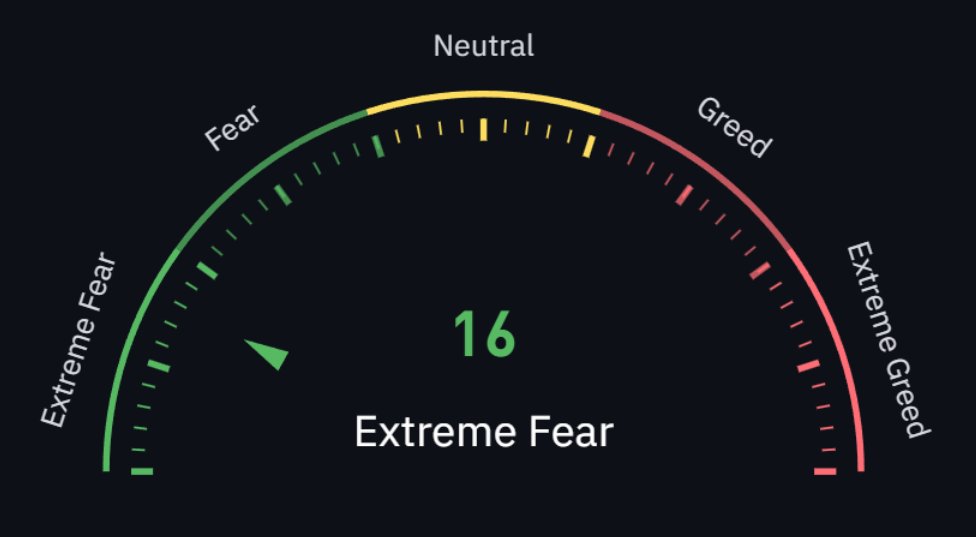
They say sentiment in crypto is nowadays at an all-time low and even worse than the FTX collapse.
In this post, I argue that's not exactly the case.
What is at an all-time low is the lost sense of purpose and focus.
Ten years ago people in crypto were driven by ideals such as decentralization, financial independence, or freedom.
Crypto was the alternative to the fiat banking cartel and an escape from the 9 to 5 corporate job grind.
However, since then, crypto has been literally captured by the big banks (ETFs and BlackRock) and lately, by the government and their friends.
Plus, the space has been diluted to death (e.g. Solana meme printer) and with it retail got absolutely chopped out.
Lately, most crypto projects are all about extraction, not ideals. Memes such as "we're gonna max extract on this one" are not just words, they are the rationale why crypto projects are started.
We basically went full circle.
Satoshi created Bitcoin as a form of protest against the fiat status quo that is highly extractive. Now, crypto is basically the same thing.
If ten years ago most folks had a good shot at getting rich in crypto, nowadays those odds are slim. There are simply too many coins and tokens today.
In 2026, buying Bitcoin is out of reach for most people, and even if it does a 10x in the future, it does not compare to the returns from a decade ago.
The window of opportunity has closed.
If Satoshi built Bitcoin with a long time horizon (mining will take another 130 years to complete), today's crypto projects last for about a week post-TGE.
This has created a high time preference in crypto. That means selling as soon as a token is launched and never looking back. Quick wins, no long-term vision.
This does not apply only to retail, but to builders, devs, and teams. They are no longer rewarded for thinking long term when attention lasts about a week in this space.
Their incentive is to ship quickly, rug, and repeat the process all over again. This only reinforces the down spiral.
Civilization is build by a low time preference society, one where you can delay instant gratification for a higher quality reward later down the road.
This characterization of the space explain why everyone is now depressed, lost, and without a sense of purpose.
I've been here for over a decade and saw the degradation first hand. Make sure to hit a follow @duonine for a different perspective.
You cannot aspire to a higher ideal if your focus is on tomorrow at best. Without a long-time horizon, you cannot build anything great.
Crypto at large has lost its purpose, people no longer believe in the ideals that started this industry.
Plus, most are too young now to even know how it was a decade ago. The motivation for building were entirely different.
People got excited by innovation back then.
Nowadays, the most exciting projects are prediction markets where people gamble on what words Trump will use in his speech or what country will be bombed next.
The space got corrupted.
Perhaps this is just a stage in the cycle of adoption.
I do not believe prices have anything to do with the current state of crypto.
We've had devastating bear markets in the past, much worse than today, but sentiment was never like this.
Something changed.
People no longer believe in the ethos of crypto.
That is a hard one to fix.
Perhaps we need another Satoshi to bring us back on track.
What is certain is that the cycles never stop. My advice is to hold tight and hold on. It will get better, eventually.
Share, like, and follow!
29
17
91
7,578
Jeerva retweeted

Jan 23
So uh, The Dusk Intern sat in on the @binance #AMA with $Dusk CTO @HeinDauven, finally understanding why TradFi settlement feels like using dial‑up internet in 2026.
Spoiler: it’s because it literally runs on 1970s infra
Here’s what he learned before HR tells him to log off🧵
4
20
48
1,743

The Dusk Trade waitlist is open.
Invest in tokenized real-world assets in a licensed, EU-regulated environment.
Join for a chance to win up to $500 in tokenized RWAs
trade.dusk.network/ #DuskTrade $DUSK
23
Jeerva retweeted

15 Mar 2025
Everyone’s focused on putting TradFi stocks on-chain. But if you’re still relying on the same old rails, what are you really fixing?
Tokenized synthetics let DeFi money yield from TradFi instruments, but they don’t remove intermediaries. They don’t lower costs, since they still use all legacy intermediaries. They don’t make markets more efficient.
@DuskFoundation is public, permissionless, and built for fully on-chain capital markets, where securities are natively issued, managed, traded, and settled on-chain. No clearinghouses, no settlement delays, no legacy rails. In our setup, we can remove custodians, clearing houses and settlement. And within the EU, under DLT-TSS, this is all possible.
When you remove friction from finance, you bring liquidity and innovators together in a faster and cheaper way. This will result in more capital flowing to where it creates real impact, accelerating economic growth.
You reshape financial markets with new rails, not new wrappers.
20
35
71
4,717