
Partner @OutlanderVC. Co-founder & board member @Andela. Backing founders building AI and software for the physical world.
Joined December 2007
- Tweets 6,365
- Following 2,065
- Followers 16,779
- Likes 5,822
49 Photos and videos














Jeremy Johnson retweeted

May 18
What happens when everyone becomes more articulate, more efficient, more optimized, and somehow less alive?
AI can obviously be extremely helpful. It can reduce cognitive load, organize information, speed up research, improve communication, support planning, and make certain decisions easier. Used well, it can create more time, clarity, and freedom.
But there is also a real risk that AI can make people feel like every area of life is available for constant improvement. Once a tool can analyze almost anything, it becomes easy to start applying that analysis everywhere - health, work, relationships, routines, travel, home systems, finances, creativity, communication, even emotional dynamics.
At that point, the issue is not the tool itself. The issue is whether the tool is reducing complexity or quietly adding another layer of complexity.
Optimization backfires when the process of improving life starts creating more work than it removes. For example, if AI helps someone make a decision faster, that is useful. But if AI creates more options to compare, more frameworks to consider, more systems to maintain, or more pressure to find the “best” answer, then the optimization is no longer serving its purpose.
There is also a difference between high-value decisions and low-value decisions. Some areas deserve careful analysis: business strategy, major financial choices, health decisions, hiring, travel logistics, and complex planning. But many parts of life do not benefit from the same level of scrutiny. Some decisions are better made quickly, intuitively, or with “good enough” information.
The risk is that AI can blur that line. It can make small decisions feel like they should be optimized with the same seriousness as major decisions.
Another important distinction is whether AI is supporting judgment or replacing judgment. Ideally, AI should help clarify thinking so a person can make a better decision. But if someone starts relying on AI to endlessly validate, refine, or improve every choice, they may become less practiced at trusting their own instincts and experience.
The same applies to relationships and quality of life. Some things improve with planning and structure, but others require presence, spontaneity, emotional attunement, and direct experience. Not every part of life becomes better by being analyzed.
A useful q is whether AI is producing more freedom or more mental overhead.
So the concern is not that AI should be avoided. The concern is that without boundaries, optimization can become self-defeating. The goal should be to use AI in areas where it clearly reduces friction, while being careful not to turn every part of life into a system, project, or performance metric.
*Conflict of interest: AI assisted in the production of this concern about AI optimizing the blood out of life.*
1
103
Jeremy Johnson retweeted

May 12
I’ve always believed the No.1 application of AI should be to improve human health.
That work started with AlphaFold, and now at @IsomorphicLabs with the mission to reimagine drug discovery and one day solve all disease!
We are turbocharging that goal with $2.1B in new funding.
731
2,645
21,263
3,153,180
Jeremy Johnson retweeted

Apr 14
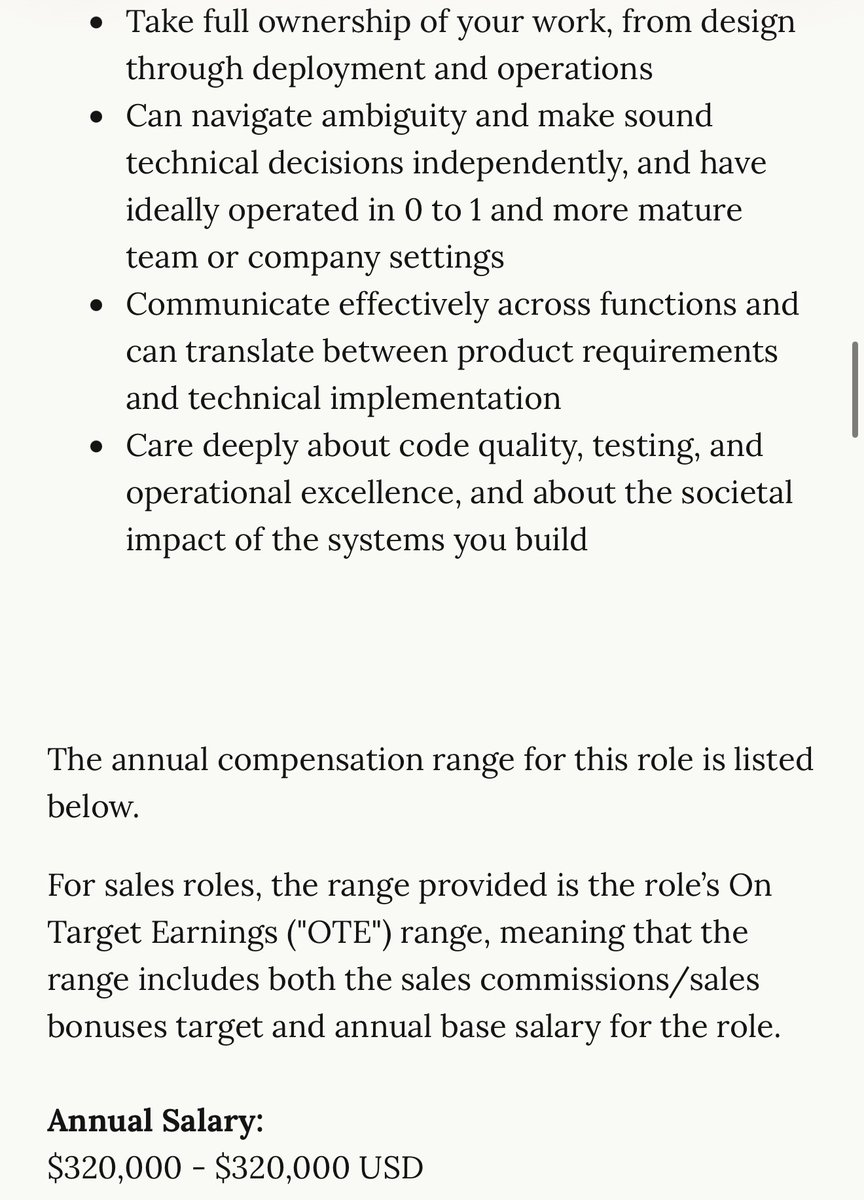
Anthropic has 454 open roles. The company is hiring software engineers at $320K-$405K. Their CEO, Dario, said three months ago that coding is "going away first, then all of software engineering."
The paradox resolves instantly.
Dario's engineers told him they don't write code anymore. They let Claude write it. They edit. They review. They architect. They didn't lose their jobs. They got faster. Anthropic grew from a small research lab to 1,500 employees in four years, adding engineers the entire time.
This has played out five times in computing history. Compilers replaced assembly. Frameworks replaced boilerplate. Cloud replaced server management. Every prediction was the same: most programmers won't be needed. Every result was the same: the number of engineers grew.
The global software engineer pool went from roughly 5 million in 2010 to 28.7 million today. BLS projects 17% growth in US software developer roles through 2033, adding 304,000 positions. The pool is projected to hit 45 million by 2030.
When building software gets cheaper, more problems become worth solving with software. A startup that needed 10 engineers now needs 3. But 50 companies that couldn't afford to build at all now can. The denominator shrinks. The numerator explodes.
Meta's engineering headcount is up 19% from January 2022. Google's is up 16%. Apple, 13%. These companies adopted AI coding tools years ago. They're using Copilot and Claude Code daily. They're hiring more engineers than before those tools existed.
Every generation of "coding is dead" content creates two cohorts: engineers who freeze up, and engineers who build 10x more with the new tools. The second group has won every single time.

205
471
3,674
1,833,910

Feb 26
RT @JamesClear: Always ask, but never expect.
Always ask for what you want. Many people are happy to help—if the request is direct and spe…
568
Jeremy Johnson retweeted

Jan 29
Most of the founder/CEOs I work with are allergic to 2nd hand information.
They like to go to the source, irrespective of the org chart.
24
25
420
30,082
Jeremy Johnson retweeted

Jan 6
If you don’t get flooded with gratitude multiple times a week you’re dumb:
-we live in a free country
-gyms exist
-Christopher Nolan movies exist
-NFL Sundays happen 20 times a year
-you and your wife can drink 5 bottles of red wine then smash all night without a condom
-you can build yourself into a superhero in a few months of hitting the gym
-every food item in the world has been hunted and gathered for you (grocery stores)
-you didn’t have to spend your entire life figuring out how to make a car… you were born into a world where they’re already invented
-you could be working in a coal mine in a third world country 16 hours a day breaking your lower back for less than $1
-you’re spinning on a sphere in an infinite universe and the fact you’re alive is a 1 in 500 trillion miracle
If anyone complains in front of you tell them they’re an idiot :)
47
182
3,785
265,115
Jan 6
RT @JamesClear: Habits that have a high rate of return in life:
- sleeping 8 hours each day
- lifting weights 3x week
- going for a wal…
1,015
Jeremy Johnson retweeted

27 Dec 2025
I was raised in abject rural poverty by a single mom, dropped out of high school at 16, joined the Navy at 18, and served for 26 years.
I am now a member of Congress.
Keep your bullshit to yourself, every American can rise to the level of their God given talents and drive.

27 Dec 2025

Casual reminder that the myth of “pulling yourself up by your bootstraps” is a cruel hoax designed to convince poor people from all walks of life that the injustices they face are a result of their own actions, rather than an oppressive system rigged against them.
532
1,225
7,958
308,808

Our CEO, Carrol Chang, recently connected with John Winsor, Founder of Open Assembly for the Transform Work podcast! Tune in as Carrol shares insights on scaling talent, building global communities, and shaping the future of work – including the importance of change management as it applies to AI adoption.
This one is not to be missed!
Listen on Spotify: thisisande.la/4o07KRf
Amazon Music: thisisande.la/4o4PVRi
Or the Open Assembly website: thisisande.la/3JnixWM

2
8
845
Jeremy Johnson retweeted

8 Oct 2025
Paradoxically, the less you try to convince people to like you, the more likable you become.
177
1,053
11,263
294,678


NYC about to do the hard left doom loop thing
Ya’ll didn’t learn a thing from SF did you?
The innocent will receive no justice, the public school children will receive a far worse education, and housing will become far more expensive

BREAKING: With Eric Adams dropping out, Zohran Mamdani now has an 83% to win the NYC Mayor Election


438
434
7,048
856,099
Jeremy Johnson retweeted

22 Sep 2025
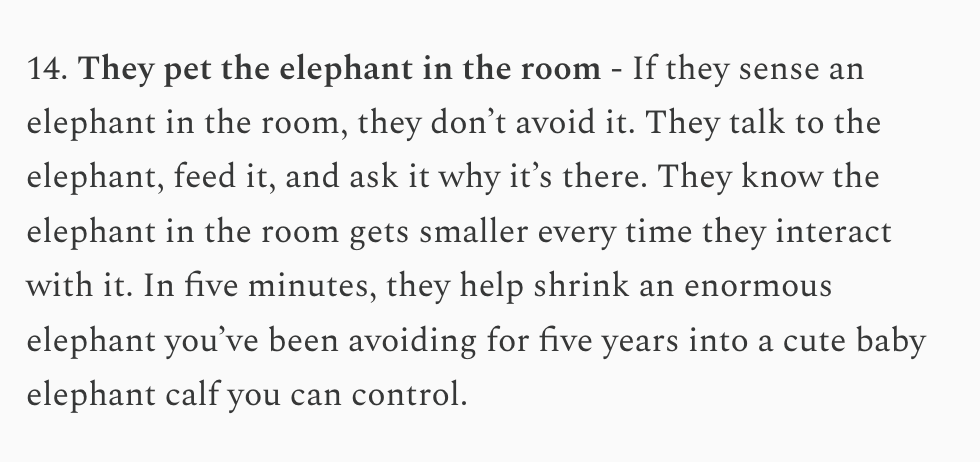
How to spot high agency people:
They pet the elephant in the room.
47
364
4,988
155,993
Jeremy Johnson retweeted

19 Sep 2025
You can beat most people at anything if you just don't quit when it gets boring.
Not hard. Boring.
That's where everyone else stops.
339
1,378
11,468
245,285
Jeremy Johnson retweeted

18 Sep 2025
he ended his term with 60% approval and has the highest approval of any public figure in America
x.com/repdarrellissa/status/…
18 Sep 2025

Barack Obama is the most divisive figure in recent history -- and it's not even close. x.com/libsoftiktok/status/19…
1,649
4,638
61,055
2,076,547
Jeremy Johnson retweeted

16 Sep 2025
This is going to be a Rorschach test for a lot of people. What I see when I look at this is the harm of a quasi-mystical idea of “hate” as a spectral, even demonic, force. It’s a superstition that allows you to turn off your critical faculties, ignore anything that might contradict a sacred belief on a particular topic or about a particular individual — as in this case — and act with impunity.
It has always been a profoundly anti-intellectual idea, developed by those who saw intellectuals as mere tools for often extremely simplistic partisan ends to allow them to win arguments by brute force rather than logic and proof.
It has spread into the rest of society and across the globe in a way that allows taboo to defeat reason and skepticism almost every time.
I hope it’s an idea — like “speech is violence” — that we can relegate to the dustbin of history. If you believe the world is divided into a simplistic binary of “good people” and those infected with hate, then maybe the post-Enlightenment world is not for you.
And for those of us who believe that human morality and nature is more complex and less flattering than the sacred warriors in this battle, it's time to remember that Enlightenment values are not easy. But they are absolutely worth fighting for because the world without them is a place that lets you excuse the most monstrous behavior and never lose your sense of moral superiority.
That's the trap of the binary.
16 Sep 2025

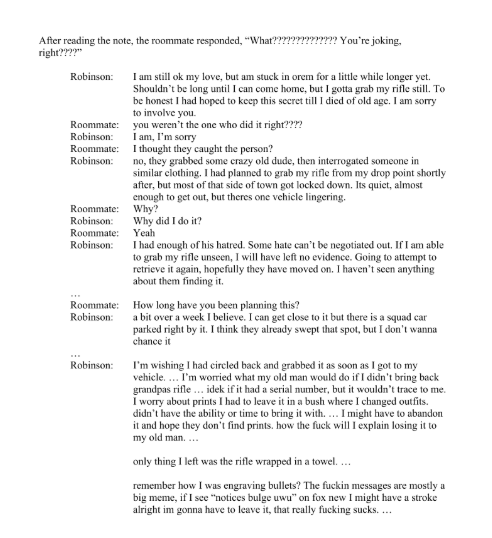
Key text message exchange between Tyler Robinson, the accused Charlie Kirk assassin, and his roommate and romantic partner, per prosecutors.
Live updates here: nytimes.com/live/2025/09/16/…
Full indictment: nytimes.com/interactive/2025…
75
165
994
143,590
Jeremy Johnson retweeted

11 Sep 2025
There’s a new political divide forming:
If you celebrate when an innocent person whose political views differ from you is assassinated you’re gone.
Don’t care what that person’s political persuasion is or how strongly you disagree with them.
Cant think of one counterexample.
1,786
4,030
37,293
43,236,742
We're thrilled to share that Andela and @GitHub have teamed up to train 3000 technologists in GitHub Copilot. This is the first learning program in the newly launched Andela AI Academy and an important step toward ensuring our network is both enterprise-ready and AI-fluent.
Congratulations to the 200 developers who have already completed the Copilot training program in beta. We’ve been inspired by your hunger to learn and are looking forward to seeing the great things you will build.
For our clients: this is your chance to work with AI-fluent developers now, or partner with us to train your own teams so you can deploy enterprise AI solutions with fewer missteps.
The AI era is here, and we’re enabling the technologists who will power it.
Full press release: thisisande.la/45MKuzR
#FutureOfWork #TechTalent #GitHubCopilot

1
2
13
1,270
Jeremy Johnson retweeted

24 Jul 2025
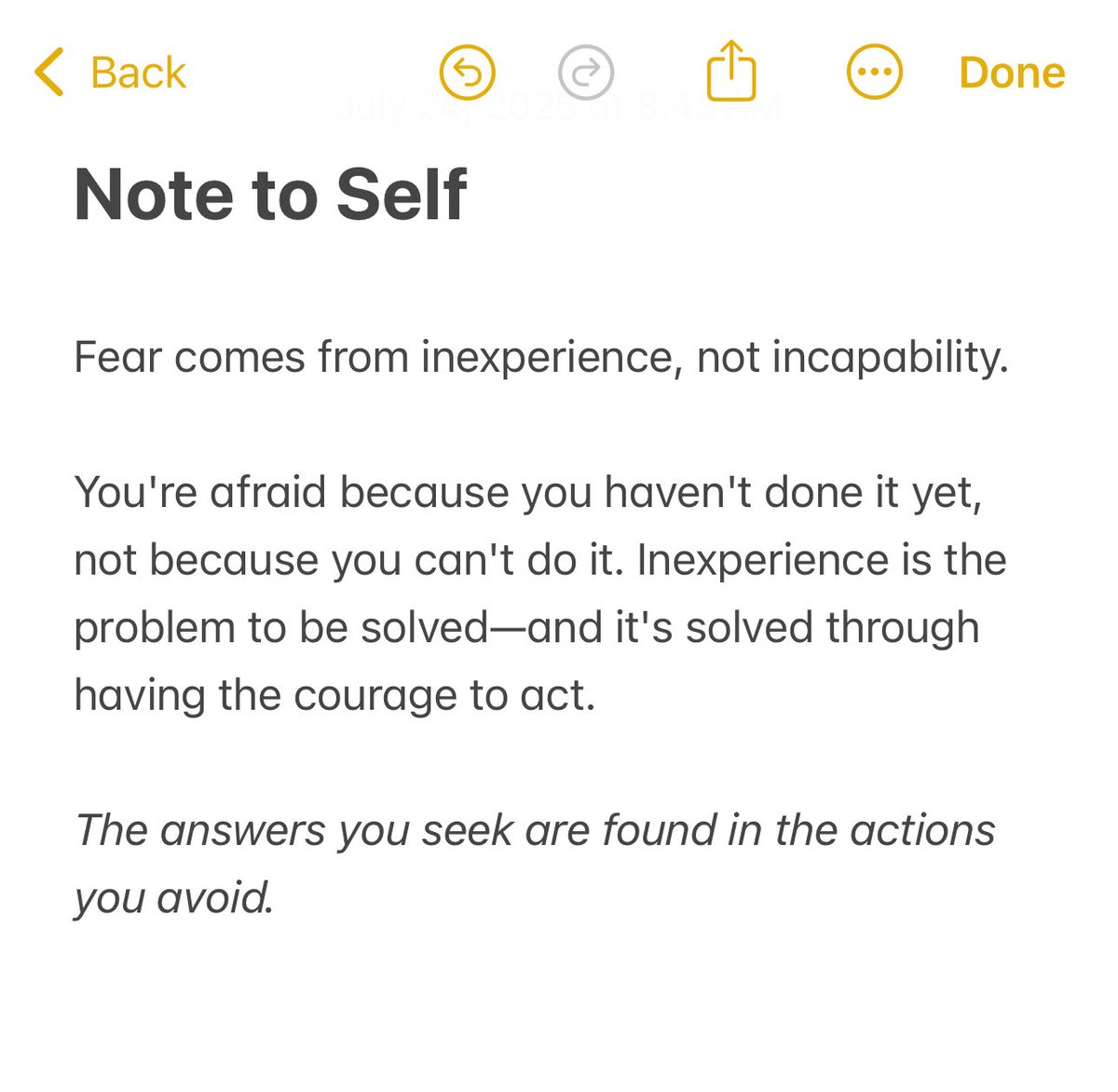
The answers you seek are found in the actions you avoid.
89
847
5,777
320,641