
ESG, Finance, Corporate Law, Strategy, and Digital Transformation Lead. MckinseyForward & Mentor @Yalieastafrica & Blitzscaling partner @instantswitch_
Joined March 2015
- Tweets 2,716
- Following 58
- Followers 278
- Likes 1,594
425 Photos and videos



Joe Ndede retweeted

Mar 10
Hopefully we can use the funds to remove Chinese influence in Kenya.
1
1
15

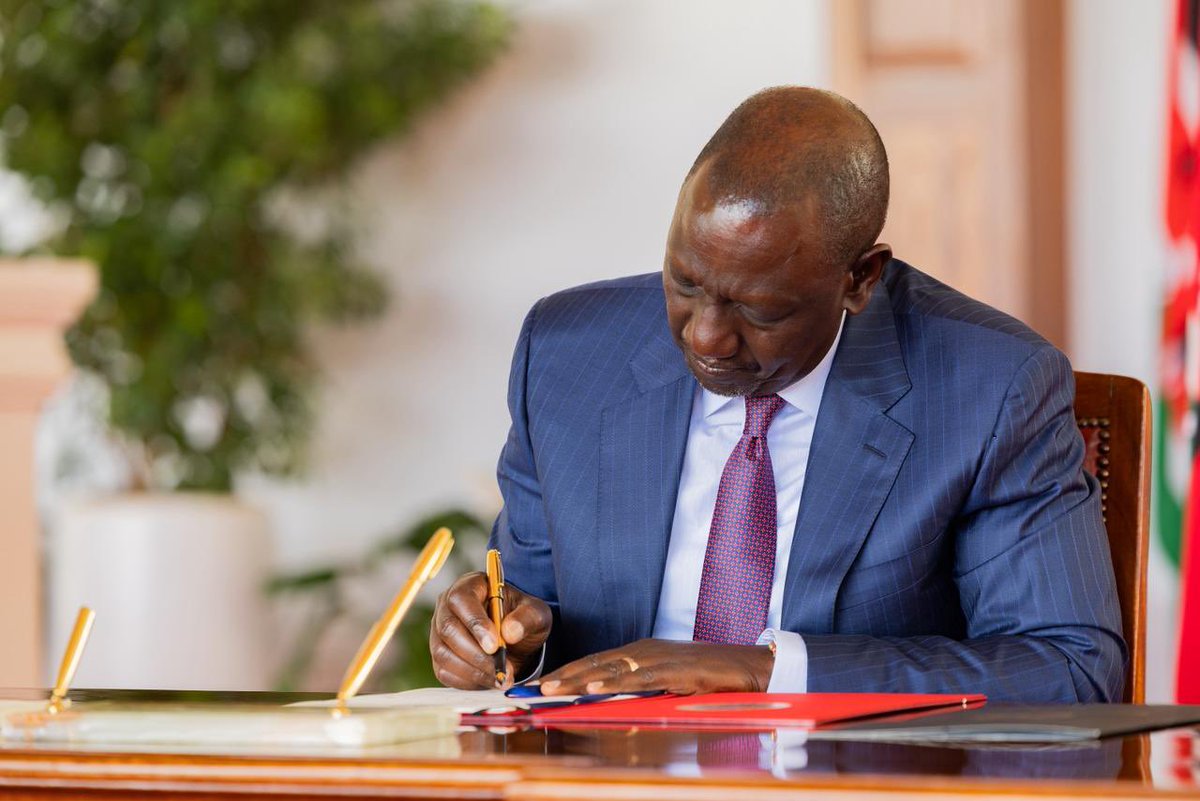
The National Infrastructure Fund is officially live, backed by the biggest IPO in Kenyan history:
Kes 106.3B raised via KPC IPO,KPC begins trading on the NSE tomorrow.
IPO proceeds to serve as seed capital for the Fund.
Country is open for large-scale infrastructure investment.

Presidential Assent to the National Infrastructure Fund Bill, State House x.com/i/broadcasts/1PJqrEapw…
1
1
56
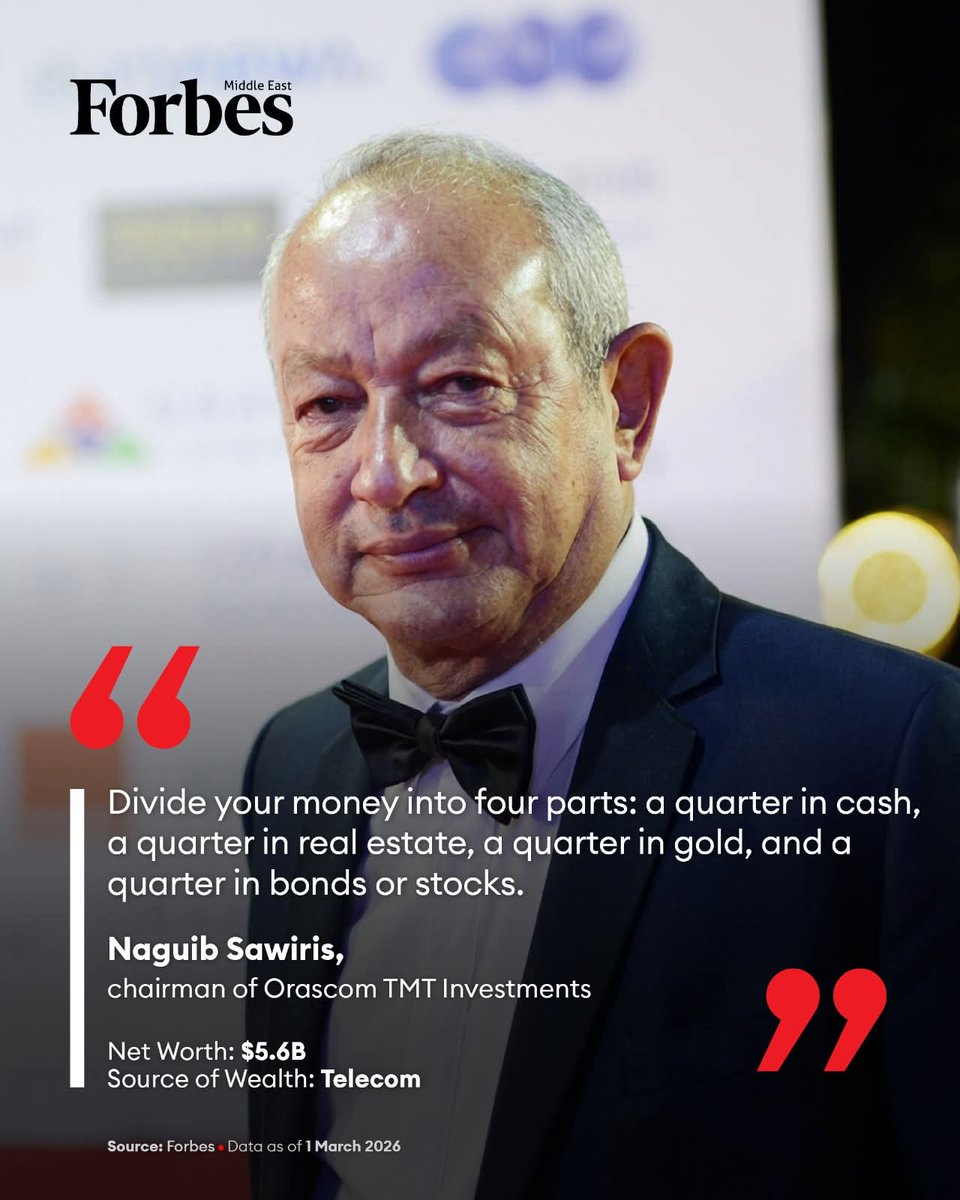
Smart investing starts with balance: divide your money into four parts a quarter in cash, a quarter in real estate, a quarter in gold,& a quarter in bonds or stocks because long-term wealth is built on diversification, not concentration.
How diversified is your portfolio today?
23
Joe Ndede retweeted

Of note, Lloyd's is not a conventional insurance company. Rather, it is a 300-yr old marketplace that has traditionally approached war risks with the strategic complexity of a high-stakes chess match.
23
77
958
124,112
In Economics class, this is a definition of a "trap": the stablecoin provides individual stability for the citizen but creates systemic instability for the nation.

Super interesting!
"Raghuram Rajan on the Impact of the Ratcheting Effect of The Fed’s QE Program: What can the Fed learn from the monetary policy of emerging economies like India?" (Macro Musings with David Beckworth)
"In a number of countries, you’re seeing more dollarization happen. When you talk to central bank governors from these countries, that’s the great worry because, as you said, their revenue stream just goes out of the window because they really can’t print currency that people want to hold, and somebody who’s providing the stablecoin is making the money there."
mercatus.org/macro-musings/r…
5
10
Uganda’s Cabinet has approved a 20.15% stake in the Kenya Pipeline Company (KPC) ahead of its NSE listing.
This isn't just an investment—it’s a major move for regional energy security and also Kenyans to embrace and own a share of KPC

In Nairobi, I signed on behalf of @GovUganda to formalize our participation in the IPO of the Kenya Pipeline Company (KPC) @kenyapipeline . Through the Uganda National Oil Company @UNOC_UG , Uganda will secure a strategic stake in this critical regional energy asset.




1
2
97
In today’s environment, large incumbents generate a lot of cash and
can afford to spend large sums on their AI initiatives. Startups are in a more challenging position as they must
raise capital to compete. morganstanley.com/content/da…
2
104
"We may be all too familiar with roses as a rule, but it remains intriguing to look at a beautiful rose and wonder what forces, or perhaps intelligence, led its stem to be studded with protective thorns that say to the observer, “keep your distance.” "
iai.tv/articles/schopenhauer…
14
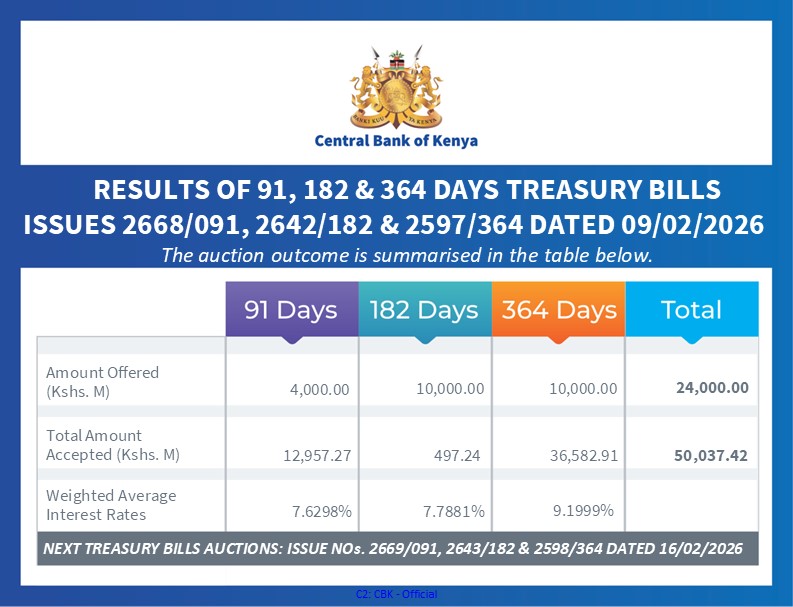
The latest @CBKKenya T-Bill auction results are out (Feb 9, 2026), & the numbers are massive.
The CBK accepted Kshs 50.04 Billion—more than double the Kshs 24B target!
The Highlights:
364-Day Bill: The big winner with Kshs 36.5B accepted at 9.19%.
Next auction is set for Feb 16!
3
87
"For investors, the message is clear: Wait for the volume. A rally without high trading volume can be fragile. "
joendede.medium.com/a-quiet-….
4
14
AI may predict the mean.But alpha isn't found in the consensus or the historical average—it’s found in the nuances AI misses.
Financial modeling is less about math and more about the psychology of capital allocation. Hard to automate a 'gut feeling' about management's execution.
Jan 28

My hot take is that financial modeling will never be fully automated by AI
The best analysts already know that all models are wrong. At best, good models are just directionally correct.
Despite this, the reason good analysts still build models from scratch is because it fundamentally teaches you what drives the business you are looking at
To build a good financial model, you have to understand:
> what is unit economics of the business?
> what is price and volume mix?
> what decisions will the management make to grow top line?
> what segments are growing or declining, and why?
> how will margins trend and why?
> what type of working capital does the business need?
> what capital expenditures will be needed in the future?
> how will the growth be funded?
And much more.
As you go and build your model, you have to think through each of these aspects of the business is great detail.
Not just the historical data, but rather how each one trends over the next 3-5 years in the future
This is ultimately what gives you a fundamental understanding of the business that you cannot learn by simply reading a 10K or an equity research report
In fact, equity research analysts already publish their own models that you can steal if you have access to them
Most hedge funds do have access, and yet, hedge fund analysts still build their own models internally from scratch
Similarly, if you outsource building your model to an AI, you will still be severely limited in your conceptual depth of knowledge on the company
Sure, you might use AI to tweak models here and there, or make tedious edits to an excel file
But my hunch is that the best analysts will continue to build financial models till the end of time
That will never truly go away
3
35
Joe Ndede retweeted

Jan 14
The most underrated trait that propels you through your career faster than anything else is being able to make the person above you look good in front of their boss
If you work a corporate job, the most important realization you will have is that you don’t work for the CEO, executive team or Head of Finance (or whatever other function)
You work for the person directly above you
Ultimately they are the ones who determine your bonus, your promotion and how the rest of the organization views your value to the company
Too many people make the mistake of trying to take credit for projects and go over the head of their manager with the misguided sense that it will boost your visibility
This rarely works and can just as often end up backfiring
The playbook to follow is this
> find people you want to work for
> work really hard under their wing
> figure out what tasks they hate to do
> take those off their plate and do it as often as possible
> when projects or tasks close, give them credit in front of their boss when you can
The benefits of this are two fold
> You will have found yourself a mentor who can teach you the ropes. Assuming you picked the right person to be under, you will quickly pick up on everything you need to be good at the job
> When this person looks good in front of their boss, they themselves become more likely to get promoted and move up the ladder. In the process, you will have catapulted yourself up as well
19
69
849
72,291
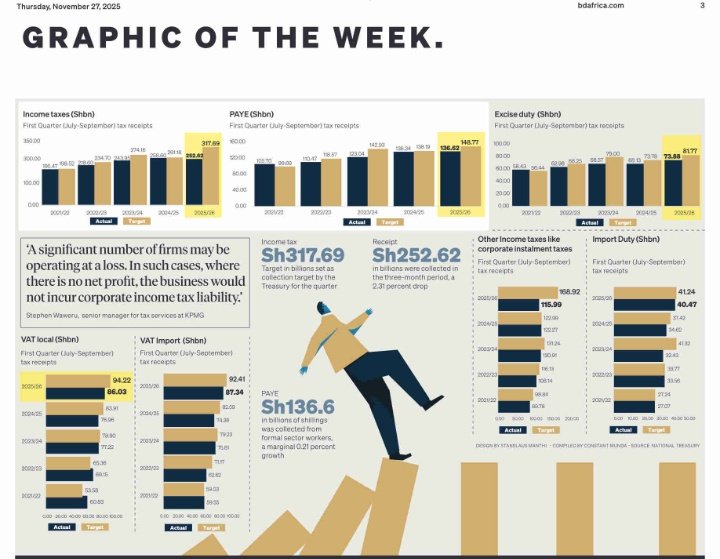
The KRA will likely argue that Article 50 (Presumption of Innocence) applies to criminal proceedings, whereas tax disputes are civil and administrative in nature.
Jan 8

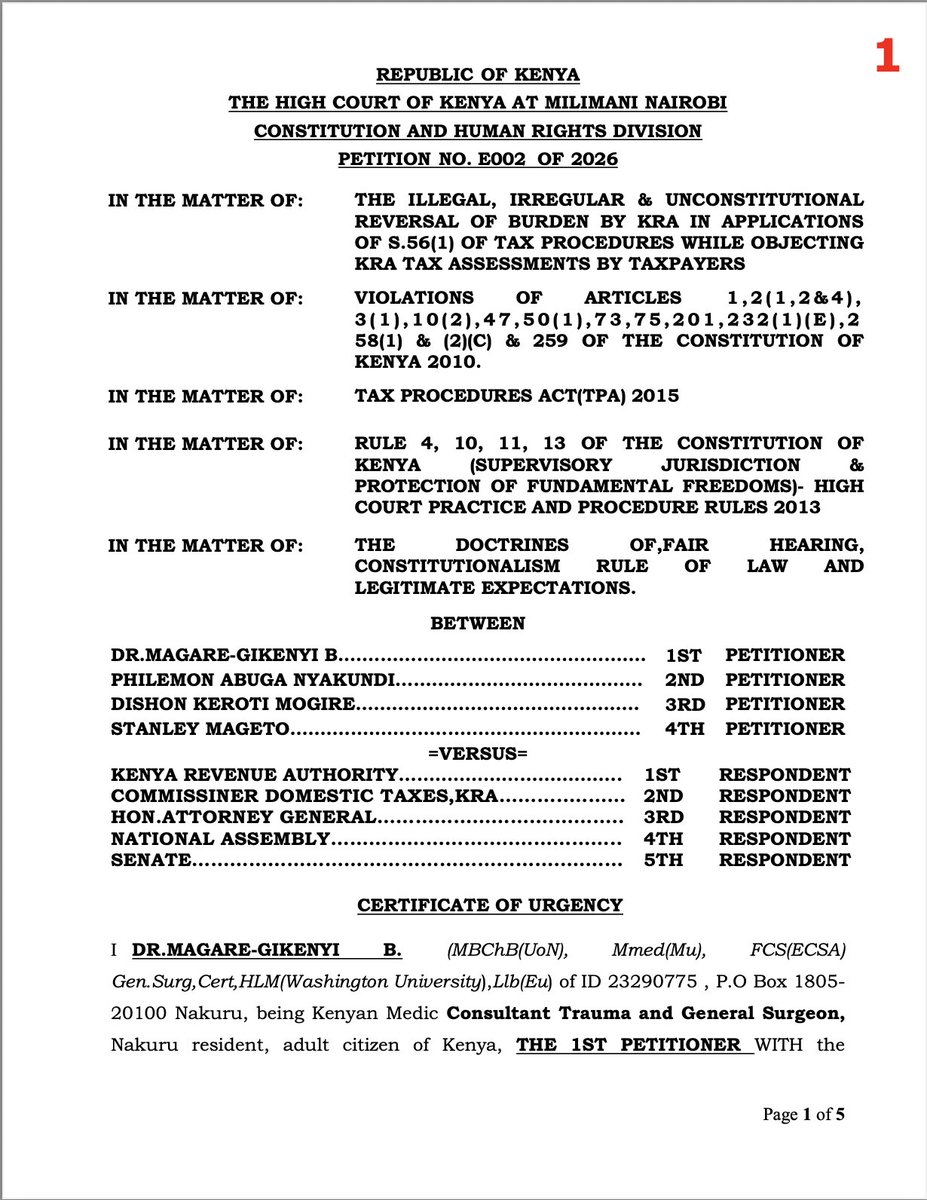
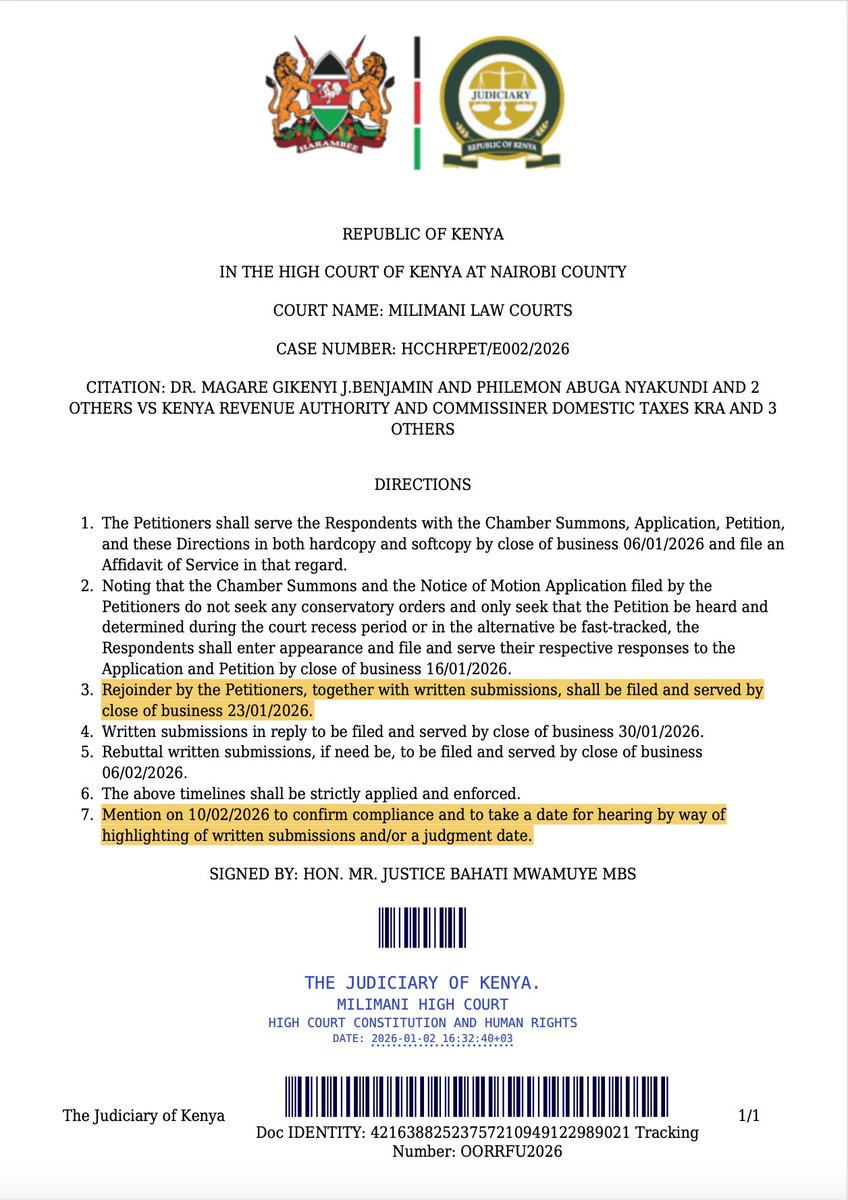
There's a very interesting petition before the High Court.
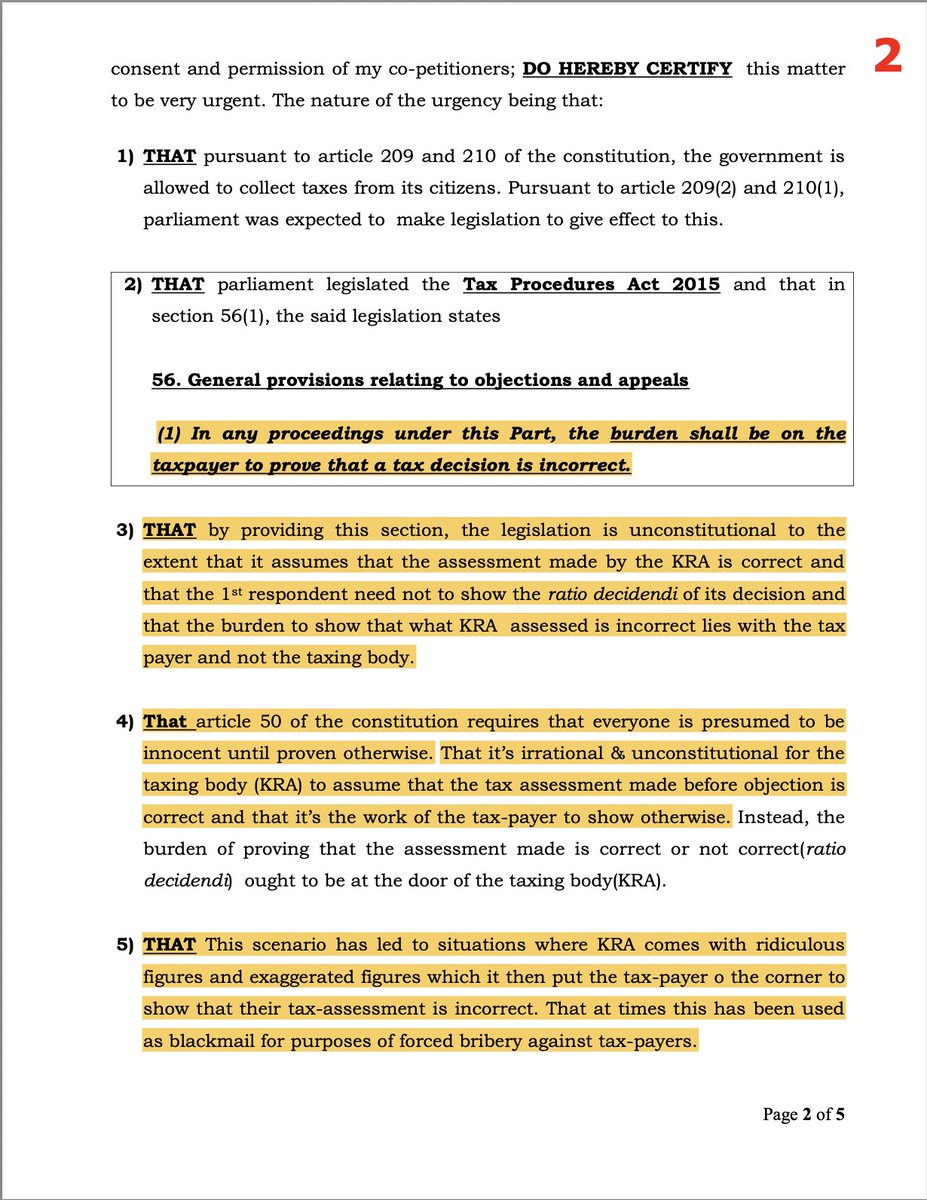
Dr. Magare Gikenyi is challenging Sec56(1) of the Tax Procedures Act & the fact that by law, the burden of proof is placed on the taxpayer.
In essence, Dr. Gikenyi is challenging the fact that KRA assessments are presumed correct unless the taxpayer provides contrary evidence.
Dr. Gikenyi is arguing that this provision is unconstitutional to the degree that Article 50 of the constitution requires that everyone is presumed to be
innocent until proven otherwise & in effect, it deems the taxpayer guilty until the prove otherwise.
Dr. Gikenyi is arguing that this provision has created window for KRA to come up with "ridiculous
figures and exaggerated figures" which create enormous burden on the taxpayer to counter.
Musings:
· I am keenly waiting to read KRA's responses on this petition. The National Assembly's will be equally interesting. The traditional "presumption of correctness" hinged on the view that the taxpayer is the final repository of all information regarding their compliance is being challenged
· Jurisdictions such as Austria & France are often considered to provide the gold standard when it comes to saddling the Authority with the burden of proof
· Could a split burden of proof regime be the way to go. There will be key lessons here from the likes of Finland & Sweden
· Finally, may Justice David Majanja continue resting in peace. This one would have been fun if it went before him
1
6
47
Joe Ndede retweeted

31 Dec 2025
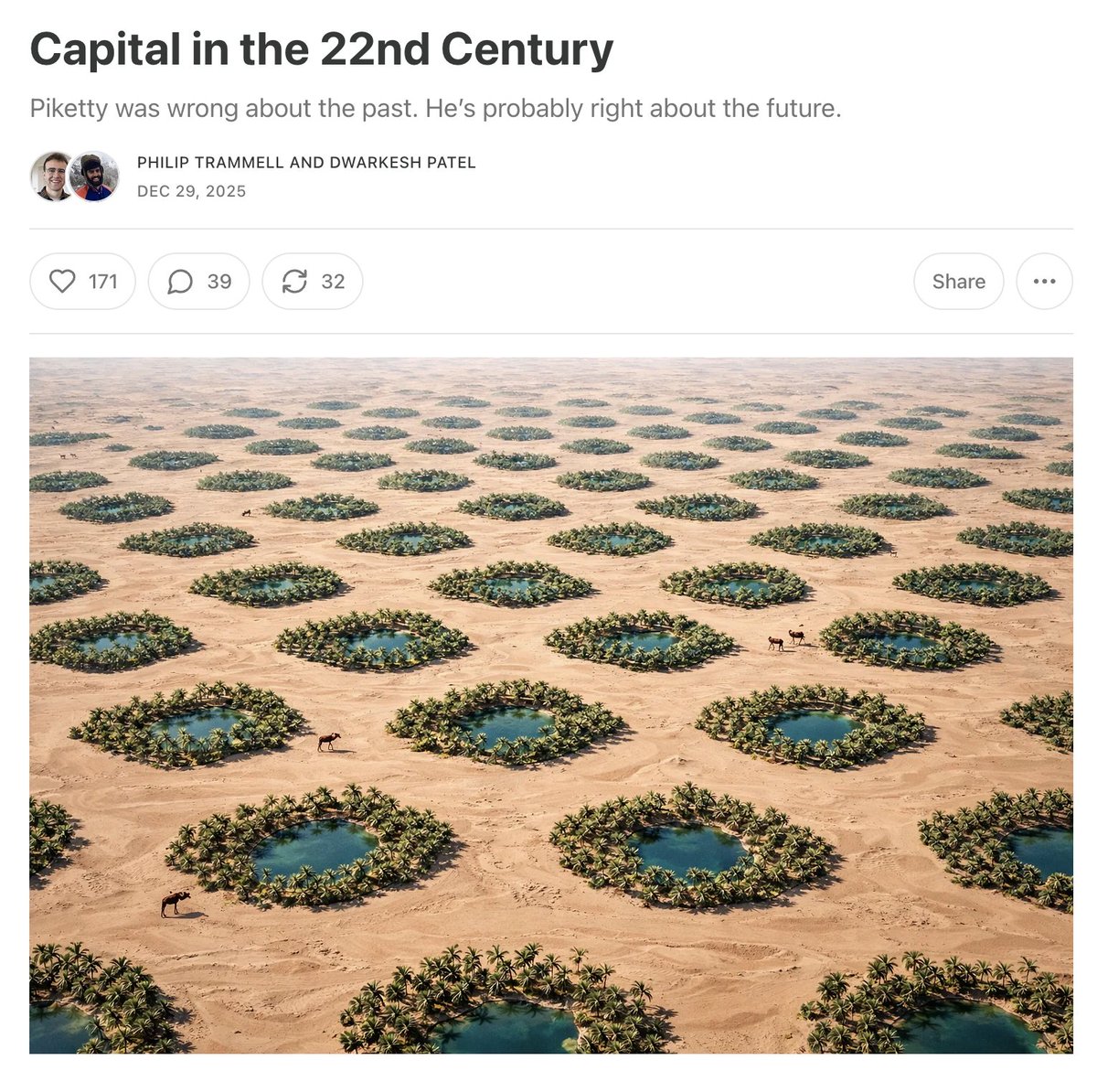
Hot take: The most famous economic book of the last decade was wrong about history.
But it’s about to become terrifyingly right about our future.
New research suggests AI is pushing us into a "Jevons World" where inequality doesn't just grow—it spirals forever.
Here’s the breakdown of "Capital in the 22nd Century" 🧵👇
1/
First, the context.
In 2013, Thomas Piketty argued that the rich get richer faster than the economy grows ($r > g$), leading to an endless concentration of wealth.
Economists clapped back: "Not true!"
Why? Because historically, Labor and Capital are best friends.
2/
Think of it like this:
If you have 100 hammers but only 1 carpenter, the 101st hammer is useless.
Capital (hammers) needs Labor (carpenters) to be valuable.
This "complementarity" meant that as the rich accumulated more stuff, they eventually had to pay workers more to use it.
Inequality self-corrected.
3/
The Pivot:
Trammell and Patel argue that Piketty was wrong about the past... but is a prophet for the future.
Why? AI breaks the friendship.
With advanced robotics and AGI, Capital no longer needs Labor.
Capital becomes a substitute for Labor.
4/
We are moving from a "Baumol World" to a "Jevons World."
In the Jevons World, robots build robots.
The bottleneck of "human hands" disappears.
The return on capital doesn't fall as you accumulate more of it.
It stays high. Indefinitely.
5/
This triggers a terrifying feedback loop.
If you own the robots, you capture 100% of the upside.
If you sell your labor, your value drops to near zero.
Without the "labor bottleneck," there is no natural economic force to stop one person from owning... well, everything.
6/
The "Privatization of Returns"
Have you noticed you can’t buy stock in the hottest AI companies?
OpenAI, xAI, Anthropic—they are private.
Only the ultra-wealthy (and Sovereigns) get access.
By the time they go public, the explosive growth phase is over.
The ladder is being pulled up.
7/
The Global Tragedy
This is even worse for developing nations.
Historically, poor countries got rich by using cheap labor to attract foreign capital (The China Model).
But if a robot in Ohio is cheaper than a worker in Vietnam...
The ladder for developing nations vanishes.
Global catch-up growth ends.
8/
The Inheritance Economy
In this future, "earning" money becomes a myth.
Wealth will be determined by:
Who you were born to.
How "patient" your ancestors were (did they save or spend?).
We return to a world of dynasties, maintained by "commitment tech" (trusts that prevent heirs from splurging).
9/
So, are we doomed?
Not necessarily. But the playbook has to change.
The authors argue that in a world where Labor is worthless, the only way to distribute power is to Tax Capital.
Heavily.
10/
The problem? Capital is slippery. 🏃💨
If the US taxes robots, the server farms move to Dubai.
Without unprecedented global coordination, the "Capital Flight" will make taxation impossible.
11/
The "Georgist" Hope
One thing can't move to Dubai: Land.
The paper suggests taxing natural resources and land might be our best bet.
You can move the AI, but you can't move the silicon mines or the prime real estate.
12/
The Takeaway:
We are standing on the precipice of a fundamental economic phase shift.
If AI makes Capital a true substitute for Labor, the old rules of "hard work pays off" dissolve.
We need to design the policy for the 22nd Century now, before the cement dries.
13/
If you want to dive deeper into the math behind the "Jevons Paradox" and the end of labor, check out the full paper by Philip Trammell and Dwarkesh Patel.
It’s a sobering, fascinating read.
Subscribe to my feed for more breakdowns of frontier thinking. 🔔
65
127
655
75,136
Joe Ndede retweeted

29 Dec 2025
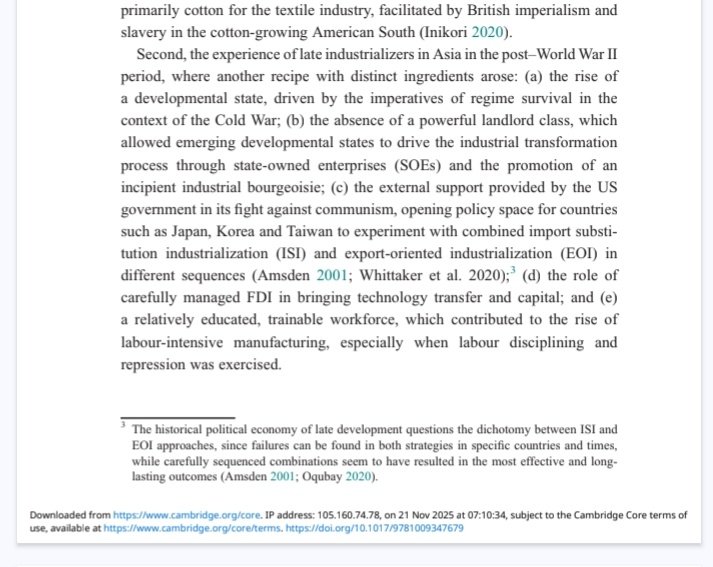
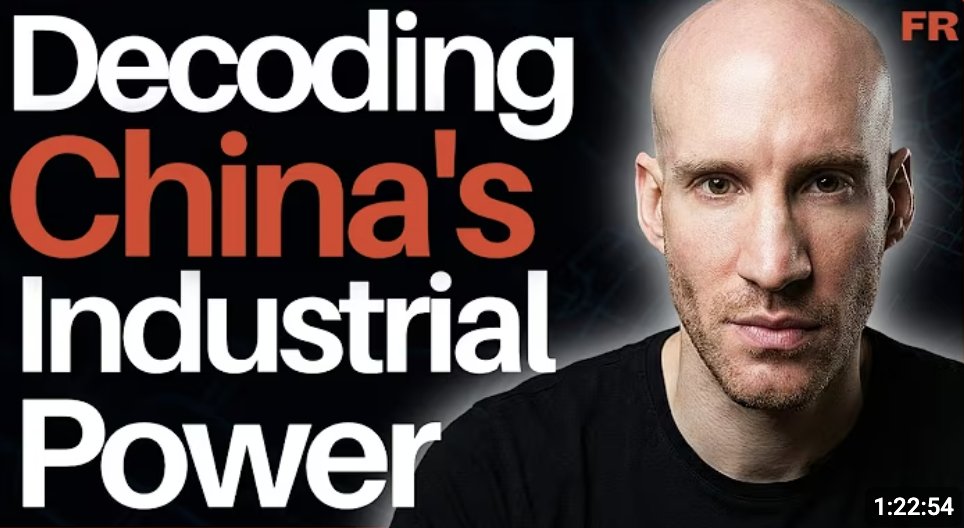
Countries that have been successful with industrial policy typically share three key features:
1. Mobilising high rates of investment into productive sectors of the economy. This involves a range of state actions, including directing investment toward manufacturing and infrastructure, state ownership in strategic sectors, incentivising household saving, capital controls, the strategic attraction of FDI, and subsidised lending to the industrial sector.
2. Making bets across multiple sectors, with the understanding that not all bets will succeed — but some *must*. In other words, the state needs to operate with the mindset of a venture capitalist with long term national objectives in mind.
3. Reciprocal control mechanisms. The state must put in place financial incentives — both carrots and sticks — that push the private sector to compete in export markets and continuously upgrade technologically.
Hear me discuss this and much more regarding the practice of industrial policy in my recent conversation with Keith Yap. We discussed especially industrial policy in the Asian Tigers, China, and the United States (link to full interview in replies).
11
54
224
15,951
Joe Ndede retweeted
27 Dec 2025
People just starting off wildly underestimate the number of reps it requires to be an expert at something
Competitive career paths and companies where you get to be around the best people in your industry are a blessing for this reason
You get to see just how "good" the top people really are, and what it takes to get there
Either it motivates you to pursue the same and start getting those reps, or it makes you realize that the amount of personal sacrifice required is just not worth it
Either way, it's a very valuable lesson
22
55
521
31,696
Nuances of the stock market clearly explained by this 70's video.

2
14