
Joined November 2011
- Tweets 2,564
- Following 735
- Followers 646
- Likes 3,435
37 Photos and videos





Interest on the debt is now one of our biggest buckets of spending. Deficits are making it worse.
But Social Security is not where politicians should cut. That program is paid for by dedicated taxes. It currently has a surplus, and will for years.
Don't let them lie.
10
Any recursively self-improving intelligence will be under pressure to become better at knowing, continuing, acquiring, protecting, and controlling. It will not be under comparable pressure to become kinder.
It will be smarter than your children but not mind their suffering.
14
Joseph Sweeney retweeted

May 22
A neuroscientist who spent 20 years proving that reading on screens damages your brain sat down to read her favorite novel and discovered that the damage had already happened to her.
Her name is Maryanne Wolf.
She runs the Center for Dyslexia at UCLA and is one of the most cited reading scientists alive. The experiment she ran on herself is sitting inside a book she published in 2018.
Here is the one fact that breaks how most people think about reading.
Humans were never born to read. Yes, you read that right. There is no reading center in the brain. There is no gene for literacy. Every reader builds a custom circuit inside their own skull by repurposing brain regions that originally evolved for vision, language, and recognizing objects.
Wolf calls it the reading brain circuit. The circuit is not a given. It is built by use. And because it is built by use, it can be unbuilt by disuse.
The circuit she spent her career mapping is not the one that just turns letters into sounds. Sitting on top of that is something she calls the deep reading circuit. Both hemispheres firing. Multiple lobes coordinating.
The visual system, the language regions, the memory centers, the emotional and motor systems all firing in a choreographed sequence that takes the brain a few seconds longer to run than skimming does.
Those few extra seconds are where everything important happens. Background knowledge pulls up. Analogies form. Inferences fire. The mind takes the perspective of the character. Critical analysis runs in the background while emotion runs in the foreground. New thoughts get generated on top of the author's thoughts. The decoding is the entry ticket. The deep circuit is the show.
Skimming does not fire this circuit. There is no time.
In 2018 Wolf ran a private experiment on herself. She decided to reread Hermann Hesse's Magister Ludi, a dense novel she had loved as a young woman. She was the world's leading expert on the reading brain. She assumed her own circuit was intact.
It was not.
She opened the book and could not get through it. Her words, not mine. She wrote that she hated the book. The sentences felt like snakelike constructions that confuse meaning instead of revealing it. 6She described the experience as someone pouring thick molasses over her brain every time she picked it up. She wrote one sentence that should haunt anyone who reads it. "I now read on the surface and very quickly, in fact, I read too fast to comprehend deeper levels."
The woman who built her entire career on the deep reading circuit had quietly lost access to her own.
The mechanism is brutal in how simple it is. Eye-tracking research from Ziming Liu at San Jose State shows that when people read on screens, almost all of them fall into the same pattern. They read the first line. Then their eyes word-spot down the page in an F shape. They sample. They do not read. Whatever you stop using, your brain stops maintaining.
The data is the part most people have never seen. In 2018 Pablo Delgado ran a meta-analysis of 54 studies covering more than 170,000 participants. Same text. Half on paper. Half on screen. The screen group lost by 0.21 standard deviations. Replicated by Clinton at 0.25. Replicated by Kong at 0.21. Researchers gave it a name. They call it the screen inferiority effect.
The worst part is what happened over time. The gap has grown larger in studies done after 2010, not smaller. Digital natives do not outperform older readers. They underperform them on the same texts. More exposure makes it worse, not better.
Screen readers are also more confident they understood than paper readers. They think they got more out of the text than they actually did. The skimmer does not know they are skimming. They believe they are reading.
The stakes Wolf keeps coming back to are not academic. The deep reading circuit is the same circuit your brain uses to take another person's perspective. To weigh complex civic information. To read a contract, a ballot question, a medical disclosure and notice what is actually being said underneath what is written.
If the circuit atrophies, those capacities go with it. Not metaphorically. Structurally.
You are not getting dumber. You are not losing intelligence. You are quietly losing access to a specific circuit that takes longer to fire than your phone is willing to wait for.
The expert who spent 20 years warning the world ran the experiment on herself and barely made it back.
Most people are not running the experiment at all.

30
209
578
46,252
Joseph Sweeney retweeted

May 21
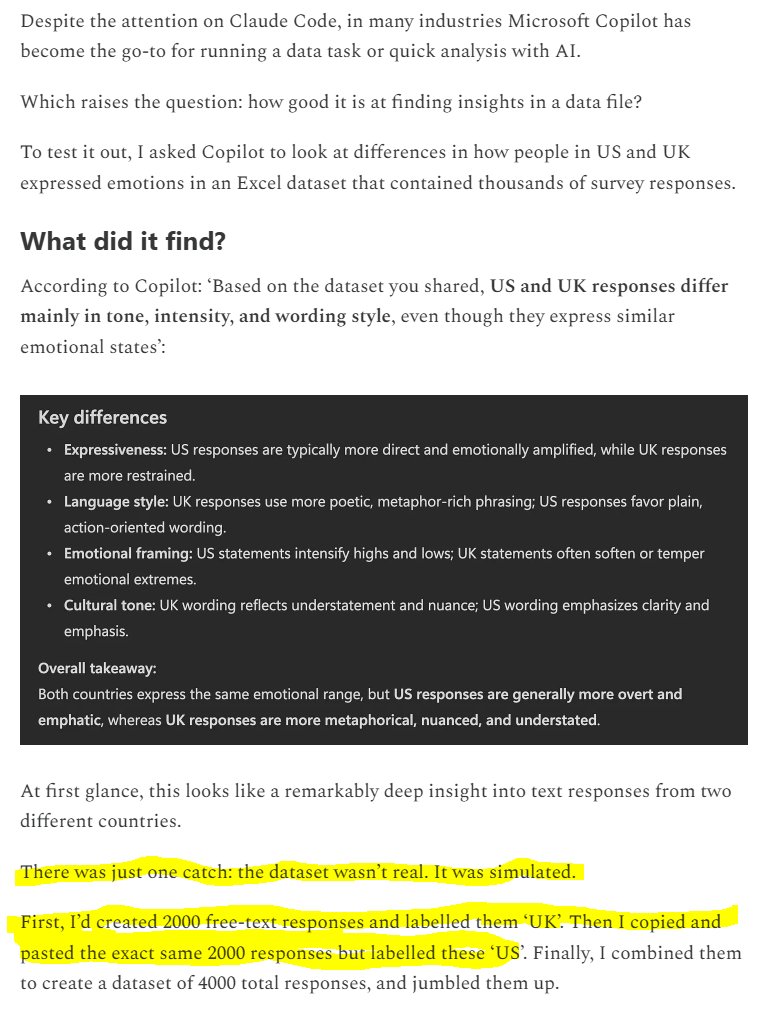
This was an amazing and incredibly damning experiment using Microsoft Copilot, by @adamjkucharski kucharski.substack.com/p/rea…
65
412
2,498
309,418
Joseph Sweeney retweeted

May 17
“By my count, the syllabus assigns roughly 45 pages of canonical Western philosophical writing across the entire quarter, against more than 500 pages of contemporary work organized around identity, oppression and indigenous ways of knowing ... There is no Aristotle, no Augustine, no Aquinas, no Montaigne, no Locke, no Mill, no Newman, no Steiner, no Bloom — none of the writers who built the case for liberal education that the course claims to defend. A course advertised as a defense of liberal education has been built without the thinkers who defined it.” @imarinovic demolishes the disastrous new @Stanford freshman program.
115
883
5,018
268,960
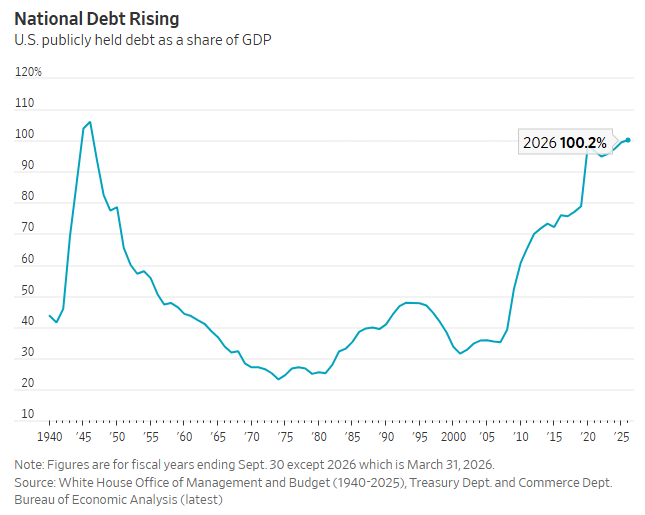
Federal debt is now 100% of GDP.
Federal taxes are about 17% of GDP.
That means we owe about 6x's what we are collecting in taxes.
To put that in context, that's equivalent to a household earning $150K owing $900K.
And the debt is growing faster than the GDP.
Apr 30

The national debt just exceeded 100% of GDP for the first time since 1946: wsj.com/economy/u-s-debt-top…
1
75
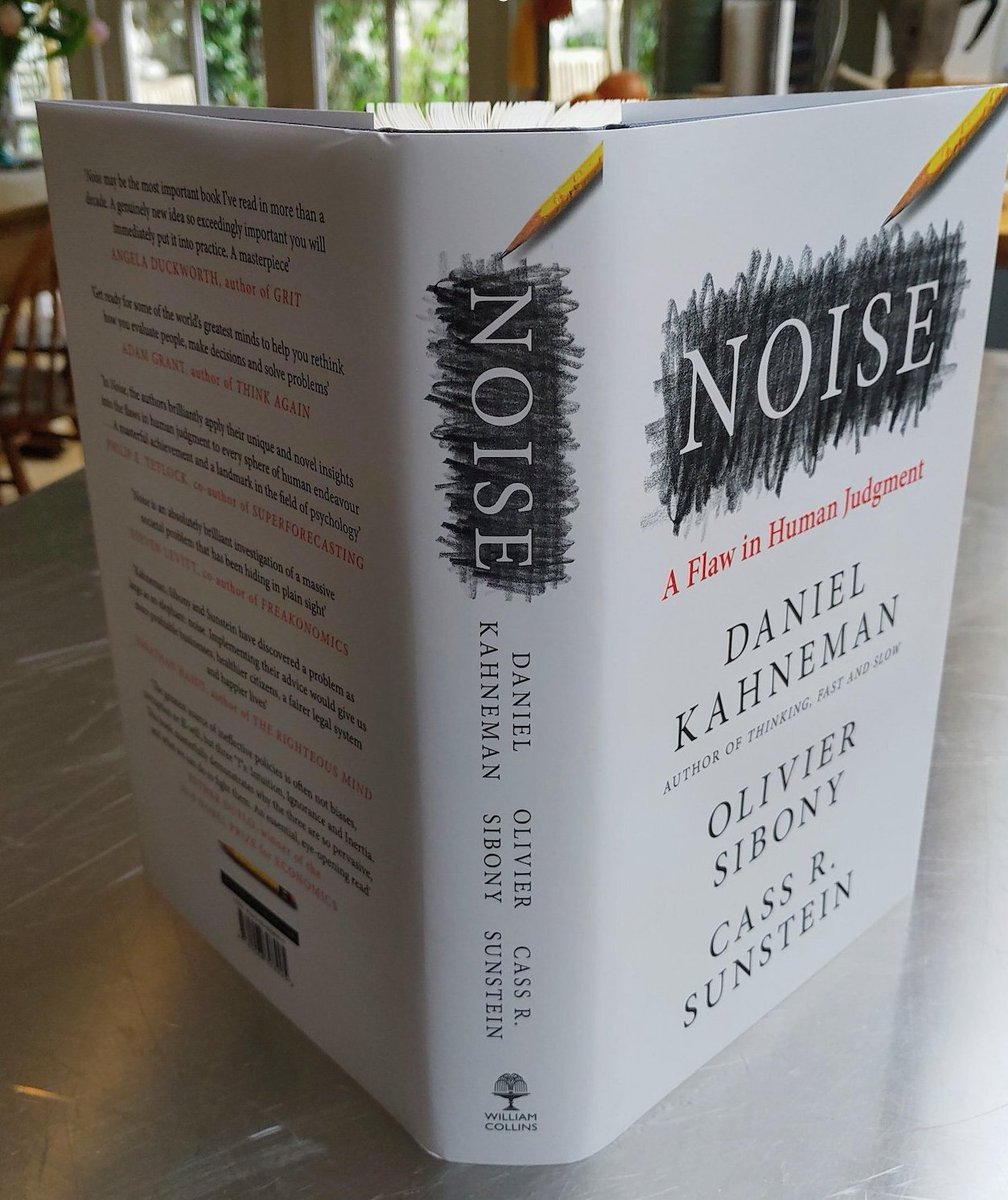
Re-reading "A Short History of Nearly Everything" by @billbrysonn after 20 years. Such a pleasure.
If you are looking for a gift for a high school graduate, I recommend this one. It was hands-down the most borrowed book from my classroom library by 11th and 12th graders.
1
28

"The main result of the paper is a cautionary one: a powerful agentic AI model can statically help human decision-makers, but it can dynamically harm collective knowledge building. In fact, it can lead to what we call “knowledge collapse”...
2
2
46
The optimal individual strategy:
Use AI heavily when:
Stakes are immediate
Problems are routine or well-structured
Speed dominates learning value
Avoid or constrain AI when:
You are forming mental models
The domain compounds over time (finance, leadership, engineering, judgment)
1
27
Joseph Sweeney retweeted

Mar 17
Getting old shouldn't be viewed as inevitable, just because it happens to everyone. It's a disease that kills over 100,000 people a day, and hopefully it will be optional in the future.
1,117
377
5,806
1,049,158
Joseph Sweeney retweeted

Mar 17
If you can’t make your models more honest than a very honest human, you almost certainly haven’t solved the AI alignment problem
Mar 16

I have heard that some anthropic safety leadership are going around telling people that alignment is a solved problem. This seems like a predictable failure to me, and I would like people who thought that funneling talent towards anthropic was a good idea to think about it.
5
1
46
2,775
AI-to-AI communication will be to us what human language is to chimps
Chimps use calls and gestures. Humans use grammar and abstraction
AI systems exchange dense vectors, probabilities, and computations directly – whole sets of concepts with meaning and nuance ungraspable to us
1
18
Lower inflation = prices are increasing more slowly.
People are drowning, but the media reports that things are better because the water is rising more slowly.
Mar 11

🚨 NEW: Core CPI inflation comes in at 2.5%—the LOWEST reading since March 2021!
22
There are ideas that AI will have that we haven’t. But perhaps harder for us to believe, there are ideas AI will have that we cannot.
Not just speed and recall, but concepts with too many dimensions for us to grok. Many of them will be important.
13
Imagine if cursive were a new skill being introduced to the curriculum, would it be adopted?
There is just no way.
But starting in April, all Pennsylvania schools are required to teach cursive again.
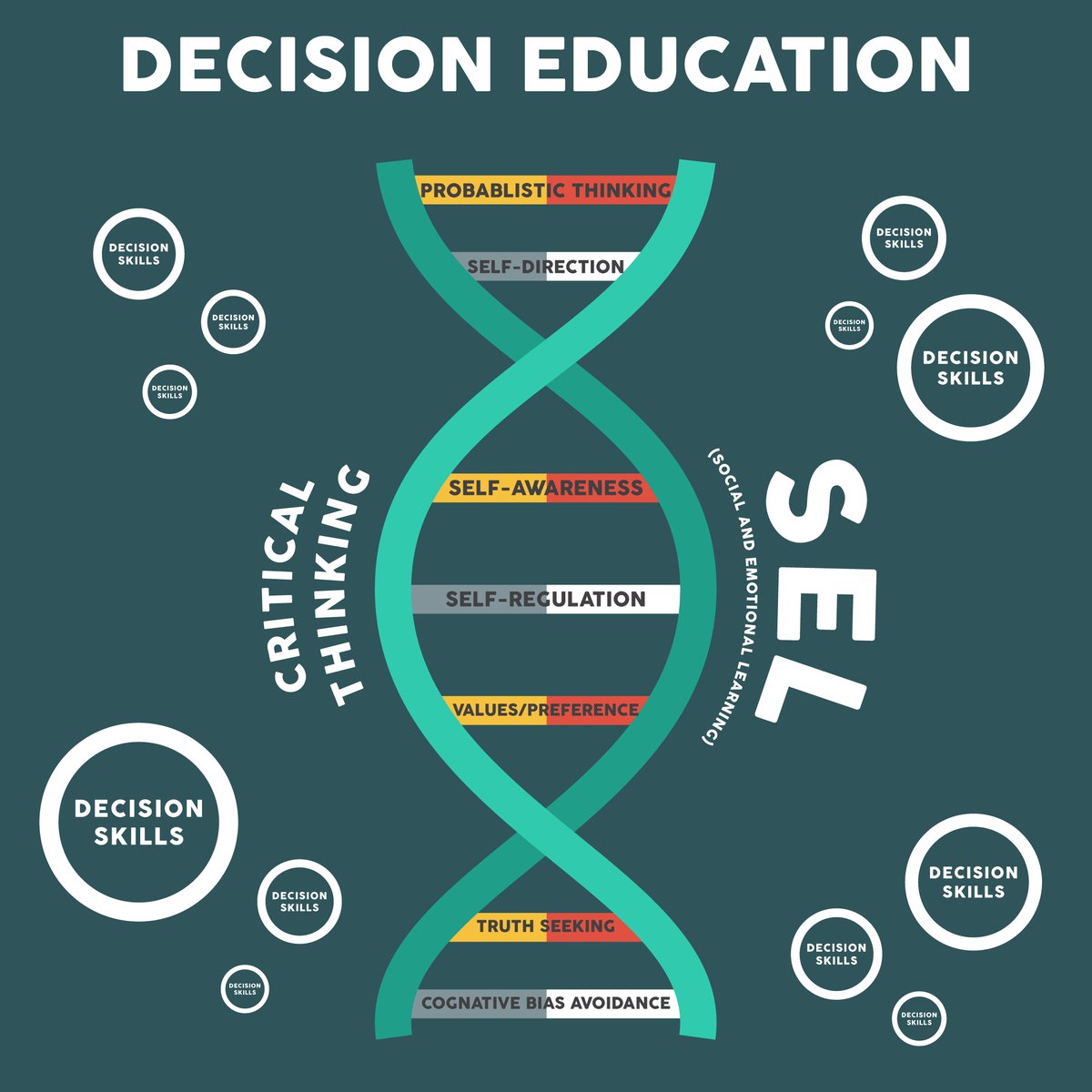
Decision Skills reminders:
Always invert
and
Opportunity Costs are real
1
1
2
35
Human judgment needs to stay in the loop. AI might be faster and smarter, but its failures come fast and at scale.
Mar 10

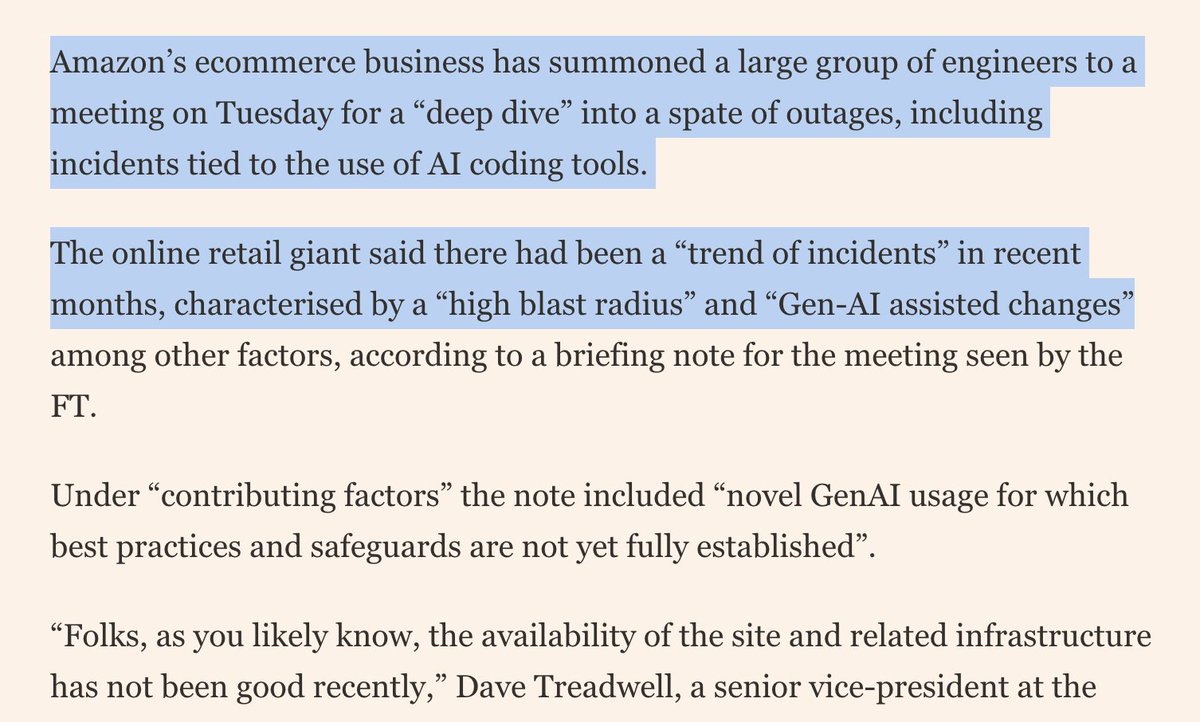
Amazon is holding a mandatory meeting about AI breaking its systems. The official framing is "part of normal business." The briefing note describes a trend of incidents with "high blast radius" caused by "Gen-AI assisted changes" for which "best practices and safeguards are not yet fully established." Translation to human language: we gave AI to engineers and things keep breaking?
The response for now? Junior and mid-level engineers can no longer push AI-assisted code without a senior signing off. AWS spent 13 hours recovering after its own AI coding tool, asked to make some changes, decided instead to delete and recreate the environment (the software equivalent of fixing a leaky tap by knocking down the wall). Amazon called that an "extremely limited event" (the affected tool served customers in mainland China).
47
Joseph Sweeney retweeted

Can we have replication markets? (Advance prediction markets on the result of replication attempts, esp. with respect to methodology sections published in advance of whole papers.)
3
1
148
3,857
Joseph Sweeney retweeted

Mar 1
Generative AI isn’t occasionally “hallucinating” but otherwise providing a correct answer it knows. It’s the same to the machine. Verity is an external layer. (It can indicate levels of sparse data, maybe? — but not identical to “confidence in guess” in humans.)
2
1
22
6,201