391 Photos and videos

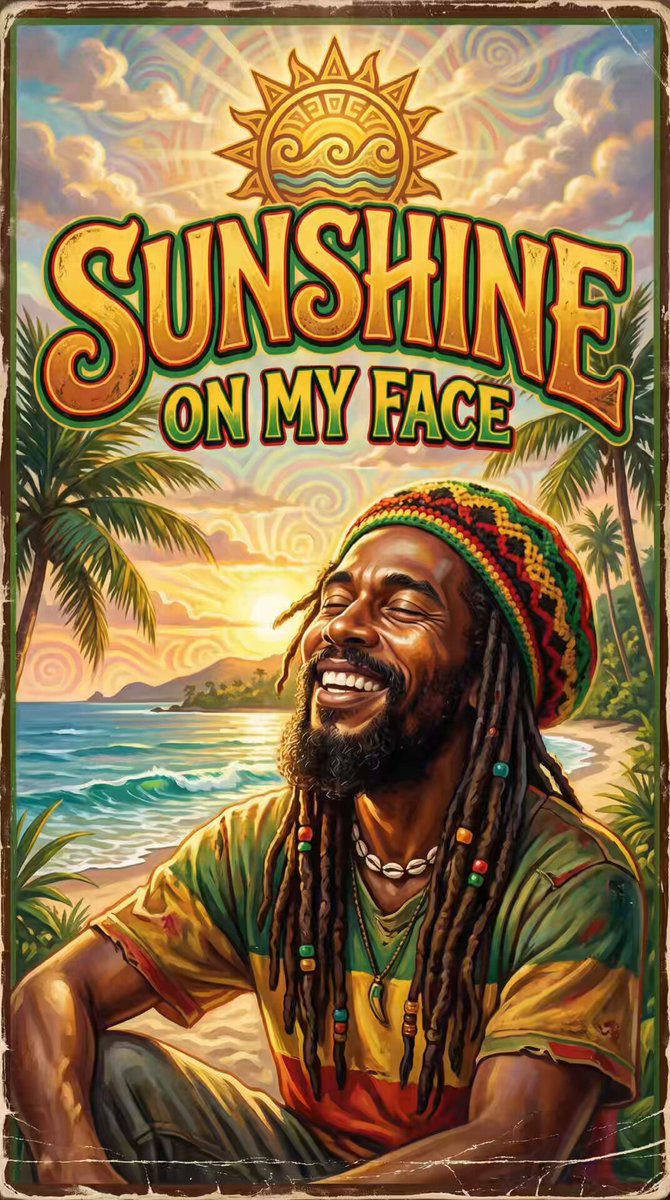











ALL THERE IS ARE LESSONS
TODO QUE HAY SON LECCIÓNES
If all there is, are lessons
Then nothing matters
And everything matters
Profoundly important
Striving for earthly results
Is to miss the spiritual lesson
Of doing the absolute best
Without concern for outcome
“Nothing matters” say the nihilists
And they miss the lessons which do
“Everything matters” say the capitalists
And the humanists
And the environmentalists
While they miss the lessons
In the reality it actually doesn’t
“On a long enough timeline the survival rate for everyone goes to zero”
proclaims Zero Hedge
And the lesson there is memento morí
Which still misses the real lesson
That the spirit lives on forever
And must continue its journey
Either evolving upward toward enlightenment
Or regressing downward toward absolute separation from Love
All there is
are lessons
I finally understand the heart of the Buddha’s philosophy
Neither nihilistic nor materialistic
He understood the art of letting go
The hindrance of striving for that which will forever remain out of reach
The physical may be attained
But without an understanding of the accompanying spiritual lesson
Solomon’s words ring clear:
“Vanity, vanity, all is vanity”
The devil is a tricky bastard
Twisting basic truths into horrifyingly effective lies
All is vanity
not because nothing matters
But because nothing matters
Except the lesson
Success is fleeting
not because conquering the world doesn’t matter
But because the conquest is vanity
without the lesson
Life
Death
Winning
Losing
Waiting and working and willing it so
Let go
Get grounded
Seek flow
Be astounded
At the beauty in a moment
The enormity of it all
Simultaneous insignificance and profound importance
You are as a drop in the ocean
A tiny speck in an infinite universe
Held together by an invisible force
Love
The game is to seek to know Love
Which requires knowledge of self
Willingness to let go
To grow
A formless shape embodied to know
The true value of light in the darkness
Love through the pain
Tragic existence
But you can dance in the rain
Every -ism
political party
religion dogma and creed
Tools of mass control
Blindfolds for innocent souls
Resistance is futile you’re taught to obey
Don’t do your own research
Don’t contemplate
The meaning of it all is so simple
Children understand
ALL THERE IS ARE LESSONS
This is the essence of man
3
18
4,201
Josh Galt retweeted

Jun 15
⚡️The AI race is already past the point where most public analysis is useful.
Most people are still debating chatbots, job loss, copyright, model benchmarks, or whether AI is “overhyped.”
That debate is downstream noise.
The actual contest is over who owns scalable cognition before everyone else realizes cognition became infrastructure.
A frontier model is a generator of leverage across every domain that depends on reasoning, code, research, persuasion, planning, pattern recognition, coordination, and institutional memory.
Once a system can compress expertise and automate parts of judgment, it becomes a meta-asset. It does not compete with one industry. It changes the production function underneath all industries.
That is why the window closed so fast.
The frontier was never going to stay open. Open windows exist in early technological regimes when the stack is still cheap enough, ambiguous enough, and socially underestimated enough for new entrants to assemble the pieces. Then the stack hardens. Capital requirements rise. Talent consolidates. Feedback loops compound. Infrastructure gets territorial. Regulation enters. Security enters. Incumbents weaponize distribution. Governments discover the strategic layer.
That is where AI is now.
The frontier is no longer a garage race. It is an empire race.
Compute, power, chips, data centers, model talent, security review, government access, cloud distribution, product telemetry, evals, synthetic data, and capital markets now form one integrated machine. A late entrant cannot simply buy GPUs and hire smart people. It has to recreate a living factory while the incumbents are using their own models to improve the factory.
The leading labs now have recursive acceleration.
Better models help write better code, find better data, generate better evals, improve agents, automate research support, harden cyber defenses, compress workflows, and shorten the next cycle. The advantage is no longer only scale. The advantage is compounding cognition inside the organization.
That is why the enterprise loop matters.
Companies that only rent intelligence are going to bleed their edge upward. Their workflows, decisions, customer interactions, corrections, and domain patterns become raw material for someone else’s layer. Over time, the firm becomes hollow: still branded, still staffed, still operating, but less differentiated. Its judgment has been extracted, normalized, and resold.
The winners build private cognition loops. They turn their internal work into proprietary learning systems. Their human experts become signal generators. Their agents become execution surfaces. Their evals become memory. Their workflow traces become training data. Their corrections become compounding judgment. Their institutional knowledge becomes machine-operable capital.
That is the new moat.
The same logic applies to nations.
Countries that own frontier cognition gain strategic leverage. Countries that rent it become dependent on foreign model policy, export controls, cloud access, censorship rules, security filters, and geopolitical bargaining. They may still “use AI,” but usage is not sovereignty. Renting the nervous system of another civilization does not make a country sovereign.
That is the part most governments missed.
Europe thought the key move was regulation. The U.S. and China understood, imperfectly but more correctly, that the first move was capacity. Build the labs. Build the compute. Build the clouds. Build the chips. Build the energy layer. Build the talent density. Then regulate from strength.
Regulation from weakness becomes permission theater.

27
38
220
20,457
very well articulated
zerohedge.com/geopolitical/i…
5
Doing the lord’s work here
Jun 13

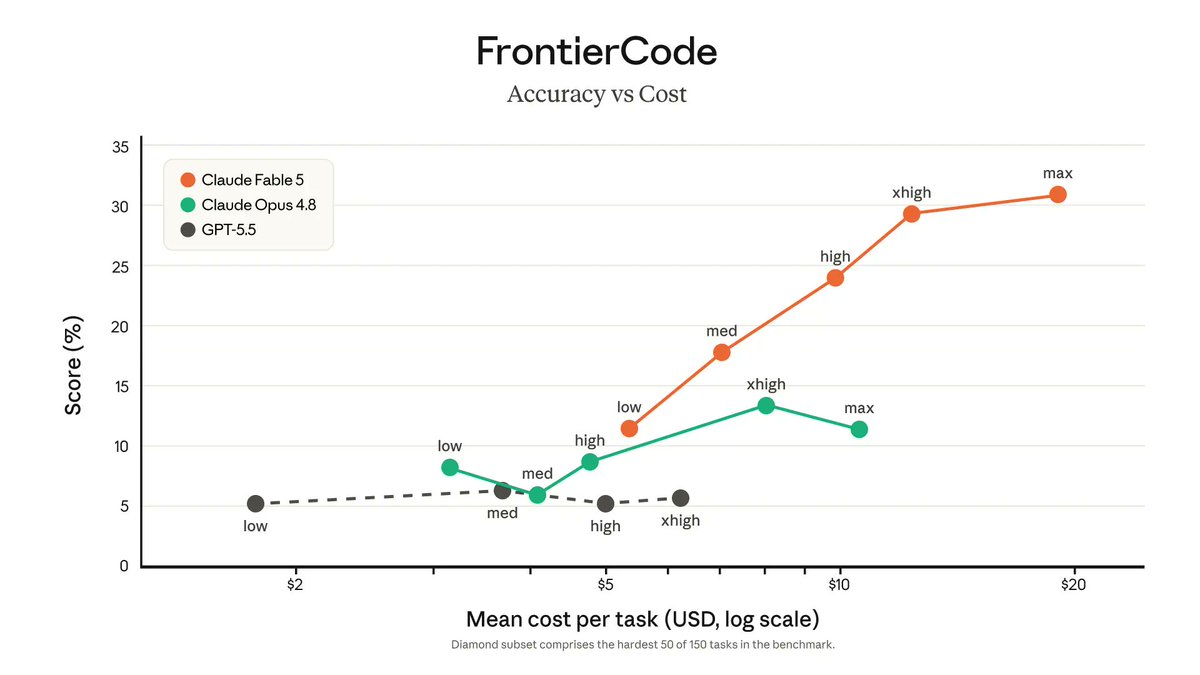
The takeaway from Fable 5 being BANNED by the government: GET GOOD AT LOCAL MODELS SO YOU HAVE 100% CONTROL.
My entire weekend was going to be building my craziest ideas with Fable 5. That's now cancelled.
So instead of building with Fable this weekend, I've decided I'll go deep on local models:
1. Start with the runtime. Download Ollama or LM Studio first. This is the thing that actually runs models on your machine.
2. Match the model to your hardware. A model's size is measured in billions of parameters (7B, 32B, 70B). Bigger is smarter but needs more memory. Rule of thumb: a 7B model runs on almost any laptop, a 32B needs a good Mac with 32GB RAM, a 70B needs serious hardware like a DGX Spark or a maxed-out Mac Studio.
3. Know which model for which job. Qwen 3 is the best all-around choice for most tasks. DeepSeek for reasoning and coding. Gemma 4 when you need something tiny that runs on a phone. Llama when you want the biggest community and the most fine-tunes.
4. Quantization. You can shrink a model to run on weaker hardware with barely any quality loss. Look for versions labeled Q4 or Q5. This is how a model that "needs" a server runs on your laptop. Learning this one concept changes everything.
5. Connect it to your agent. Point Hermes or your agent stack at a local model.
6. Context window is your real constraint locally. Cloud models give you huge context for free. Local models make you pay for it in memory. A bigger context window eats RAM fast. Keep your sessions tight and your prompts lean or your machine chokes.
7. Learn to give local models tools. A smaller local model with web search, file access, and code execution beats a giant model with none. The capability gap closes fast when you wire up the right tools. The model is the engine but the tools are the wheels.
8. Fine-tuning is more accessible than you think. You don't need this on day one, but know it exists. You can take an open model and train it on your own data so it gets good at your specific domain.
I'll probably do a breakdown at some point on this @startupideaspod if people are into it.
The lesson from this ban is basically don't build your entire workflow on something that can disappear with a single letter. Own part of your stack. Local models are insurance.
It reminds me when people realized they don't own social media accounts. And then you saw people build email lists etc.
I remember running a startup and my biggest traffic source was organic FB. All of a sudden, algo changed, and I lost 99% of my traffic.
Same sorta moment (but bigger) for AI.
This is a wake up call.
13
Josh Galt retweeted

Jun 13
fable 5 was the 1st model to me that had “magic model smell.”
beautifully digital mind imbued with a touch of the divine.
i already miss it.
52
20
784
39,210
the US government is aiding and abetting absolute genocide in Gaza but they effing BAN a private company from allowing its paying customers to utilize a technological tool for building apps and shit?
Even a long session of tourettes wouldn't be enough to say all the things I want to say about Trump's gov
9to5mac.com/2026/06/12/anthr…
14
Josh Galt retweeted

Jun 11
this didn't "happen", we caused it
first, children disappeared from daily life
most women turn 30 without ever holding a baby (they don't have siblings or cousins, and young babies have been removed from shared spaces), never changed a diaper or watched one up close.
you cant want what you've never seen
second, we killed the single income.
the average family needs both parents working just to get to the end of the month, so raising a family well went from hard to something practically impossible (2-3 months of maternity leave should be considered a crime against humanity).
then schools and media, the whole cathedral, all pushed towards the same direction in a systematic brainwashing effort: pushing every girl at the career, motherhood turned into that despicable thing you settle for when the better options run out, "a smaller life". nothing worth desiring, and if you do you must be ostracised
social media just finished the job.
presented childfree as freedom and ideal life, filmed the worst four seconds of a mothers day and called it a warning or "here's motherhood"
and underneath all of it, we removed people from history
no ancestors you owe anything, no descendants you're building for, just one atomic self detached from any sense of continuity. one life with no purpose other than its own selfish goals
especially for western people who have been taught that their ancestors are the most evil humans who ever existed
someone with no past and no future has no reason to see themselves as part of history, and everything they do revolves around their own pleasure
why would you carry something you were raised to be ashamed of?
so a quarter of women raised in captivity selecting for civilizational suicide becomes inevitable
the idea that this was a conscious choice is delusional.
we are the first species in history to get everything it ever wanted: safety, medicine, abundance, ninety good years, and the result is suicide.
everything else alive still manages to reproduce through famine and plagues. we got paradise and stopped
anyone shutting off their own survival drive with no threat in sight is definitionally suicidal and that's where we are now


703
2,384
12,090
1,248,075
it's especially grotesque when you've lived both sides, and been immersed in both sides
money doesn't change people it reveals who they really are
also why there has been a growing trend for wealthy families to show their kids the other side, reality for most humans, through unique work-vacations like these youtube.com/watch?v=jCy-TbrL…

As someone who partially grew up among European elite kids like him, this reminds me just how incredibly hollow some of them are.
For a quick background, I went to one of the poshest high schools in France (Janson de Sailly, for those who know) and, afterwards, to what was at the time - and probably still is - the most expensive undergraduate school in Europe (EHL in Lausanne, Switzerland).
Needless to say, many of my classmates were from unbelievably privileged backgrounds. Just in my classroom in Lausanne I had the son of a (very famous) Russian oligarch, the son of Italy's largest real estate developer and the son of Spain's largest real estate developer (funnily, the latter two were flat mates).
Another classmate of mine came from the richest family in Naples, Italy and - while we were at school - his father (known in Naples under the nickname "Il Sultano") got arrested for having bribed half of Naples's city council - which, if you know Naples, ought to tell you something.
These were the kids I was doing group projects on business ethics with (literally) 😅
Anyhow, my story, and probably my luck, was that - before going to high school in Paris - I was raised in very normal public schools in the South of France where my friends were anything but wealthy. Their parents were farmers and everyday workers.
Which means - and I'd come to realize this was very important in life - that it was easy for me to understand how big a mistake it is to see money as identity and meaning - and to confuse someone's net worth with their actual worth.
What really struck me at the time was the contrast with my "poor" classmates of earlier in my life. They couldn't define themselves by what they had - by definition - and this forced them to reach deeper for their identity: their skills, knowledge, humor, etc.
Rich kids can skip that entire process, and the tragedy is that most of them do: they reach for the readymade identity that money provides. I remember being incredibly frustrated by many of my classmates, like "ok, I get it, your dad is rich and you own a lot of nice things but who are YOU, what else is there?" The answer, more often than not, was nothing.
To be fair, there were exceptions. One of my classmates I was most impressed by came from one of Zurich's wealthiest families (which, if you know Zurich, means insanely wealthy) yet he was almost OCD in not showing he had money: driving the shittiest car imaginable, living in a small studio, etc. He was very intellectual, very contrarian, and clearly at war with the idea that his family's wealth ought to define who he was.
I only discovered who he actually was when I started my first company and he approached me to invest: to discuss the investment I went to one of his family homes, which it turned out was a literal palatial castle on the shores of Geneva lake. The guy had decided to live in a small rundown studio when he literally had a castle sitting empty a 5-min drive away.
THAT I was impressed by: it's easy to see that money isn't meaning when you don't have any. To see it when you have more than almost anyone - when everyone around you is organized around the opposite assumption - is much harder. But to actually live it, to choose the studio when you have the castle keys in your pockets - with no audience to applaud you for that - that shows real depth.
At the end of the day, I think, the real distinction isn't between rich and poor but between people who exist from the inside out and people who exist from the outside in.
Wealth just happens to make it incredibly easy to be the latter, to skip the work of becoming someone and settle for a borrowed identity that glitters from the outside but is hollow all the way through. A Potemkin village identity.
This is actually a real societal issue, and magnified by social media (with idiotic posts like this one 👇): the more "outside in" folks out there, the less people with genuine internal anchors, the more fragile everything becomes.
When you think about it, everything that genuinely matters in a society is built by people who think for themselves: they take the world in, pass it through something genuinely their own, and give back something that didn't exist before: an idea, a conviction, a stand.
Every reform, every invention, every act of moral courage in history came from someone with an internal anchor strong enough to resist the current. Remove those people and all you have left is the current.
This isn't new, by the way. Most ancient traditions warn against exactly this, from the Bible (the golden calf story) to Confucius, who built his entire ethics around the distinction between the exemplary person (the Junzi, 君子) - oriented around internal cultivation and righteousness - and the petty person (Xiaoren, 小人), oriented around profit and gain. The junzi builds himself from the inside, the xiaoren chases what's outside.
So please, do not make the mistake of being impressed by wealthy people flaunting their wealth. Don't focus on the glitter, focus on the hollowness it's trying to hide.
30
lol this is basically what's happening

17
this is cool
I would absolutely use this
and I know lots of others who continually hear music in their heads who would probably make amazing output with this
Jun 7

BOOOM! WE DID IT!
BRAINWAVE TO REAL-TIME MUSIC AI!
It has been a life long decades quest to read brain activity and to convert it to words, and/or music, colors and/or images.
Today I am very excited to announce with the assistance from Mr. @Grok director of The Zero-Human Lab, we have solved brainwave to music and this is the absolute worse it will be.
We found the code using an array of NeuroSky toy chips and our software pipeline connecting to open source ACE-Step 1.5 and a highly modified LoRA model we built for this. The lyric version is in testing now.
This would mean that the model will interpret words from the brainwaves and music!
Today we have the music side done and the quality and genera will expand. The is the worse it will sound.
Your Brainwave Music™️will be cut into 2-5 minute pieces based on a number of factors.
The specimen below is from a dream/hypnogogic state I was in last night and I have a recording of my thoughts after the state. The music was made in real-time and GUIDED the dream state with known technology like binaural beats (not easy to hear in this clip) and word back masking.
This specimen below shows the interplay of my brain state to the music made by my brain and adjusted to produce profound insights. I solved a very difficult issue in this session with a new AI model.
IT FREAKING WORKS!
THIS IS OUR FUTURE OF MORE POWERFUL BRAIN FUNCTION!
Our goal is to produce a portable device you wear and will be able to give real-time audio and PEMF (skull region), ultrasound (temple region) to maximize creativity and remote viewing.
It is very early days but I wanted you to know first!
YOUR support of my X account, just by reading this and sharing it, subscribing to my X, buying me a Kofi.com/BrianRoemmele, and becoming a member at ReadMultiplwx.com supports this research.
I will open source this at some point and build a device ANYONE can own.
Thank you!
I love you.
2
Insistence is resistance
Resistance is suffering
Break free by rejecting the inverted external
Source is connected through BEing
It’s always been inside us
The deception is looking for a savior
You are already one with divine power
Accept it own it create a new reality with it
1
9
very, very few people on earth understand what is happening right now and we're only really about 7 months into it...
Jun 2

You can build an entire company without leaving Claude Higgsfield MCP.
Brand identity, app screens built for downloads, motion videos that drive revenue, founder vision in one post.
Built-in marketing skills generate ads, Virality Predictor finds winners.
15

There's no moat with AI
this is the uncharted territory, literally every company CAN build literally anything themselves
"AI consultants" are only as useful as the companies they find who don't have the time or interest to build it themselves
But considering pretty much EVERY human is going to be fighting for their career life over the next 1-2 years it's going to be a highly competitive space in every interaction.
So if someone is showing you solutions they're already building, the only answer is to meet them in solutioning, not to be critical, evasive, or defensive
You're not the one building it anyway lol, you're using Claude or Codex or whatever
It's a tool in the skilled hands of a wise brain, nothing more, so your only selling point is efficiency, effective output, and the integrity and joy you bring to the interaction
Just because they can, doesn't mean they want to, or will
But bring some humility and realism to the interaction - you're not special, you're just a brief step ahead of them
And it's just going to keep speeding up, so you may as well enjoy playing the game, it's as chill and slow as it is EVER going to be, today
12