
Joined March 2023
- Tweets 25,310
- Following 2,795
- Followers 3,279
- Likes 36,095
1,105 Photos and videos











May 23
Concrete Vaults are where structured DeFi starts making real sense.
Instead of manually chasing opportunities across fragmented markets, @ConcreteXYZ is building vault infrastructure designed to automate capital deployment, optimize exposure, and improve long term efficiency transparently.
Smart vault architecture may become one of the most important layers of next generation DeFi.
@ConcreteXYZ |@crypttoji
4
7
55
May 21
Physical AI is starting to feel real. 🤖
@PrismaXai isn’t just talking about the future, they’re actively building the service layer that connects robotics, AI, and frontier infrastructure into one ecosystem.
From live robot teleoperation to embodied intelligence discussions at #NYTechWeek, this is the kind of event that shows where innovation is actually heading.
Robots, rollups, and real-world AI adoption are converging faster than most people realize.
1
2
48
May 21
One of @ritualnet core ideas is heterogeneous node execution. Nodes don’t need to be identical, they can specialize based on compute strengths.
This creates a more efficient system for handling diverse AI operations.
By reducing forced uniformity, the network can allocate resources more intelligently.
It is closer to a distributed compute fabric than a traditional blockchain.
@ritualfnd | @ritualnet | @Jez_Cryptoz @joshsimenhoff
7
12
85
May 21
Most DeFi assets just sit in wallets waiting for the next move.
ctAssets change that by turning idle capital into productive onchain exposure.
Built within the @concrete_xyz ecosystem, ctAssets are designed to integrate directly with automated vault strategies, structured yield systems, and efficient capital deployment across DeFi.
Instead of manually chasing opportunities, users gain access to infrastructure built for compounding, flexibility, and scalable onchain finance. ☕️
@ConcreteXYZ |@crypttoji
3
3
40
May 20
Most DeFi protocols compete for attention.
Very few focus on capital efficiency.
That’s why @ConcreteXYZ stands out to me.
Instead of turning DeFi into a nonstop cycle of manual farming, switching pools, and chasing emissions, Concrete is building infrastructure designed to optimize capital deployment automatically.
With: • Concrete Vaults
• automated compounding
• ctAssets
• structured DeFi strategies
• institutional-grade yield infrastructure
users can access more efficient onchain strategies without constantly micromanaging positions.
The bigger picture here is important.
As DeFi matures, the market will likely move away from chaotic short-term farming and toward systems that prioritize sustainable yield, automation, and smarter treasury management.
That’s the direction Concrete is positioning for.
@ConcreteXYZ | @crypttoji
6
9
80
May 19
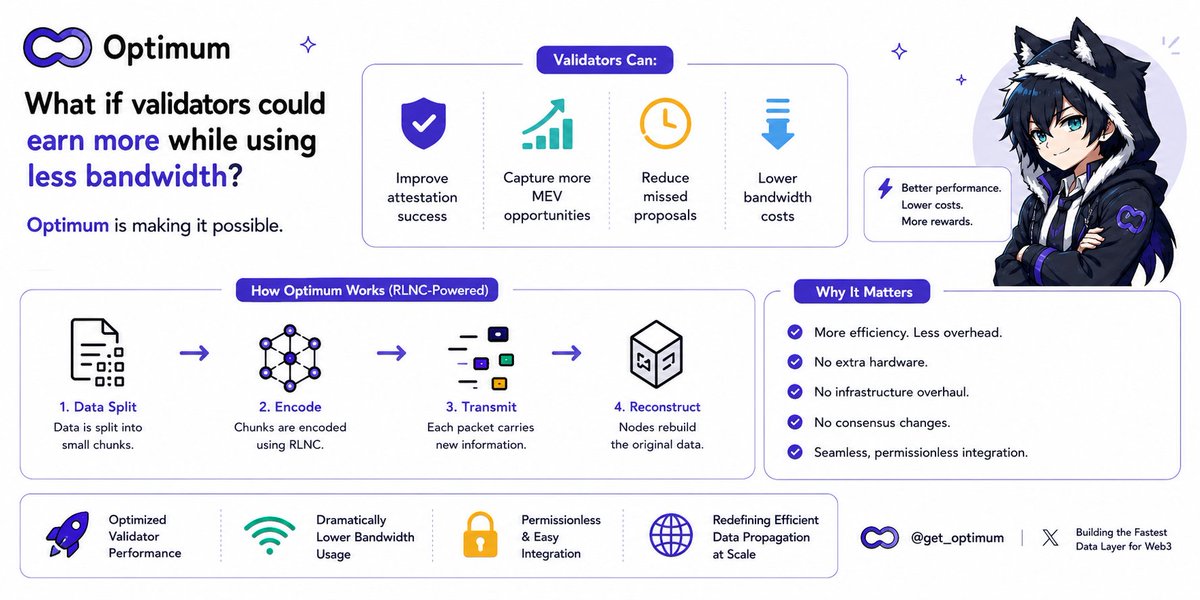
Most validator upgrades come with tradeoffs.
More performance usually means more hardware, higher bandwidth usage, or deeper infrastructure complexity.
@get_optimum is approaching the problem differently.
By using RLNC-based data propagation, Optimum helps validators transmit and recover blockchain data more efficiently across the network. The result is faster and more reliable delivery without requiring changes to consensus or specialized setups.
That efficiency can translate into: • stronger attestation consistency
• fewer missed block opportunities
• improved MEV capture potential
• reduced bandwidth overhead for node operators
What stands out is the simplicity of the integration. Validators don’t need to rebuild their stack or invest in expensive hardware upgrades to benefit from better network performance.
As blockspace demand grows, infrastructure efficiency becomes just as important as execution speed. Optimum is positioning itself as a lightweight but impactful layer for scaling validator operations sustainably.
@get_optimum @blockchainjeff
2
3
28
May 19
Ritual is exploring a shift from uniform blockchain execution to a more adaptive model built for AI workloads.
Instead of forcing every node to perform the same task, it enables specialized computation across the network.
This matters because AI workloads are not uniform like transactions.
Different tasks require different compute profiles, and Ritual is designed to reflect that reality.
@ritualfnd | @ritualnet
1
25
May 19
Most DeFi protocols compete for attention.
@concretexyz is building for capital efficiency.
Vaults that automate compounding, structure yield strategies, and deploy capital onchain without forcing users to micromanage every move.
The interesting part is how ctAssets turn passive positions into productive liquidity while keeping exposure flexible.
Feels less like short-term farming, more like infrastructure for scalable DeFi participation.
@ConcreteXYZ | @crypttoji
6
2
9
45
May 19
Watching the world move while keeping your own space protected.
That’s the feeling I get from @SeismicSys.
Most onchain systems treat transparency as the default for everything. But in reality, people don’t live like that. We don’t broadcast every move, every balance, or every intention to the public.
Privacy isn’t about hiding. It’s about control.
A skater doesn’t show every practice session. A trader shouldn’t expose every strategy. A builder shouldn’t leak every interaction.
Seismic makes privacy feel normal again, not as an extra feature, but as the foundation.
More secure. More natural. More human.
28
9
37
233
May 18
Most people still think blockchain is about putting everything on-chain.
Ritual takes a different path.
Private data stays private.
Computation happens where it makes sense.
But verification becomes public, trustless, and immutable.
That’s what makes sovereign AI agents possible.
Not “AI on blockchain”
but blockchain as the trust layer for autonomous intelligence.
The future isn’t louder chains.
It’s verifiable intelligence.
@ritualnet |@ritualfnd
@joshsimenhoff
@Jez_Cryptoz
4
9
70
May 18
Most blockchains focus on transparency.
Seismic is trying something different with programmable privacy.
Not everything onchain needs to be fully public to be useful.
Feels like the kind of infrastructure that could matter a lot for AI, finance, and real apps later on
@SeismicSys

2
6
40
May 18
Everyone chases the highest APY.
Very few are building the infrastructure that makes yield sustainable.
That’s why Concrete stands out to me.
• Automated vaults
• Smart yield routing
• Credit infrastructure
• Built on top of proven DeFi ecosystems
Feels less like a temporary farm…
and more like the yield layer DeFi will actually scale on. 👀
@ConcreteXYZ

2
3
28
May 14
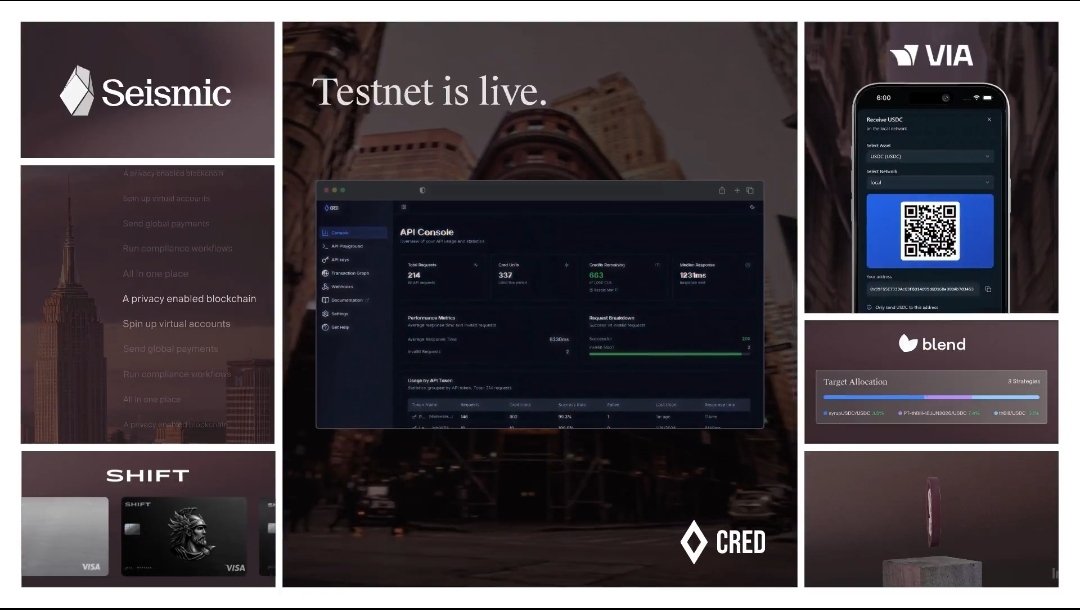
Seismic Testnet going live feels different compared to most chain launches.
Not because of hype.
But because they didn’t build in isolation.
30 financial service companies involved: • fintech startups
• regulated institutions
• even local governments
That says a lot about the direction @SeismicSys is aiming for.
Most blockchains talk about adoption after launch.
Seismic seems to be designing with real-world financial infrastructure from day one.
Privacy compliance usability is a difficult balance in crypto.
If they execute this properly, the impact could be much bigger than just another “fast chain” narrative.
8
8
94
May 14
The Next Phase of Blockchain Infrastructure Will Be Defined by Flexibility
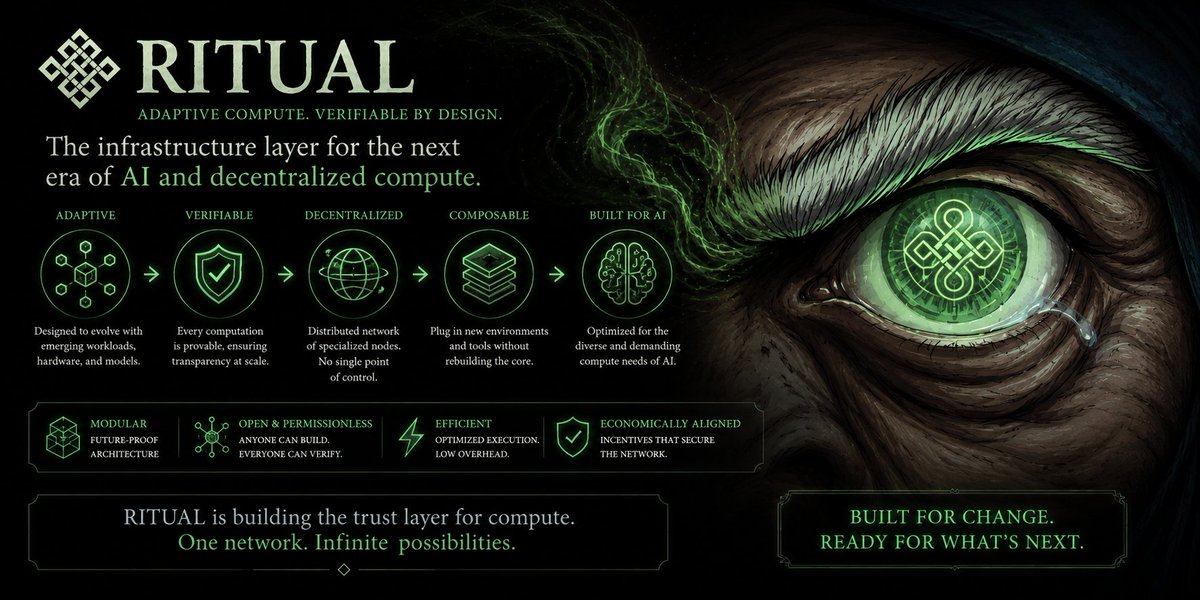
One thing becoming increasingly clear in crypto is that infrastructure built for static workloads may struggle in an environment driven by AI.
Most existing chains were created during a period where computation was far more predictable. The assumptions were simpler: one execution flow, one dominant environment, and relatively stable demand patterns.
But that landscape is changing fast.
AI introduces workloads that are heavier, more dynamic, and constantly evolving alongside hardware improvements. What works efficiently today may become limiting much sooner than expected.
That is why projects like @ritualnet are interesting to watch.
Instead of focusing purely on maximizing current performance, the design direction appears more focused on creating infrastructure that can evolve alongside future compute demands.
A few ideas that stand out to me:
✧ Infrastructure should support multiple forms of execution instead of locking into a single model
✧ Specialized compute layers will likely become more important as AI workloads diversify
✧ Systems that can integrate new environments without major redesigns may age far better over time
✧ Long-term scalability is not only about speed but also about architectural flexibility
✧ The chains that survive multiple technology cycles will probably be the ones built to absorb change naturally
In the long run, adaptability may become one of the most valuable properties a blockchain can have.
Not because it sounds good conceptually, but because compute itself is no longer evolving in a predictable direction.
@ritualfnd
@joshsimenhoff
@dunken9718
@Jez_Cryptoz
@0xMadScientist
9
1
13
56
May 13
Crypto has spent years stuck between two extremes.
Everything transparent?
Good for verification.
Bad for privacy.
Everything private?
Good for confidentiality.
Harder to build trust around.
Most chains lean heavily to one side.
@SeismicSys is interesting because it feels built around the idea that both are necessary.
Selective visibility.
Programmable privacy.
Transparency where it matters, confidentiality where it’s needed.
That balance could matter more than people think.
Because institutions were never rejecting blockchain itself.
They were rejecting an environment where every action becomes public forever.
Markets need openness.
But real adoption also needs discretion.
Feels like Seismic is trying to build that middle layer the industry has been missing.
Not fully exposed.
Not completely hidden.
Just practical.
@noxxW3 @heathcliff_eth @xealistt

2
4
48
May 13
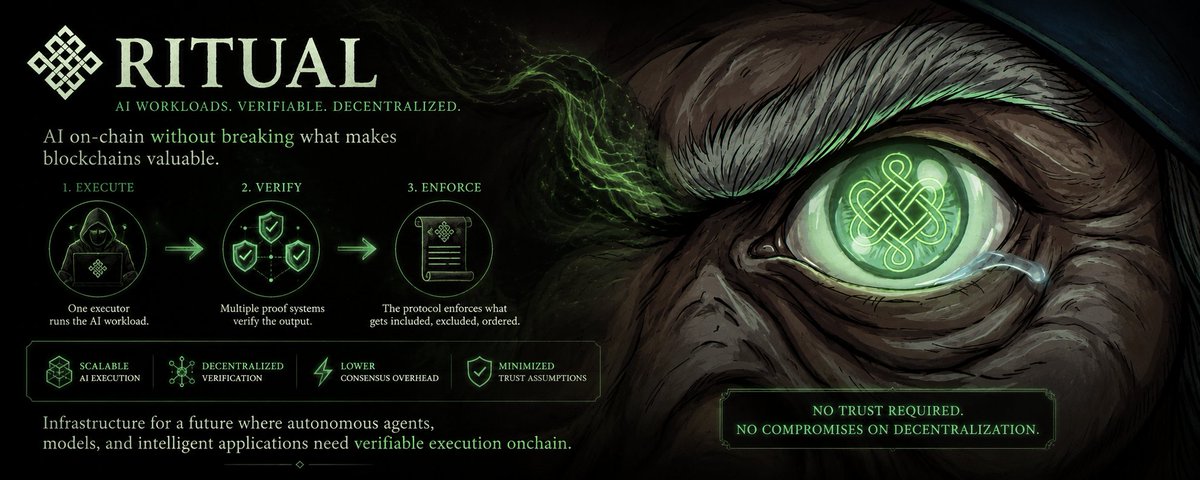
Been digging into @ritualnet lately, and I think many people misunderstand what they’re actually building.
It’s not about forcing AI directly onto the blockchain.
The interesting part is the architecture:
→ one executor handles the AI workload
→ multiple systems verify the output
→ the protocol decides what gets finalized and ordered
So the chain doesn’t become overloaded trying to run massive AI computations itself.
That design feels important.
Because most AI crypto ideas still quietly depend on trust somewhere in the process.
Ritual seems more focused on making AI execution verifiable without giving up decentralization.
Feels less like an “AI narrative” and more like infrastructure being built for autonomous systems that will eventually need to operate onchain.
@ritualfnd |@Jez_Cryptoz @joshsimenhoff
6
8
51
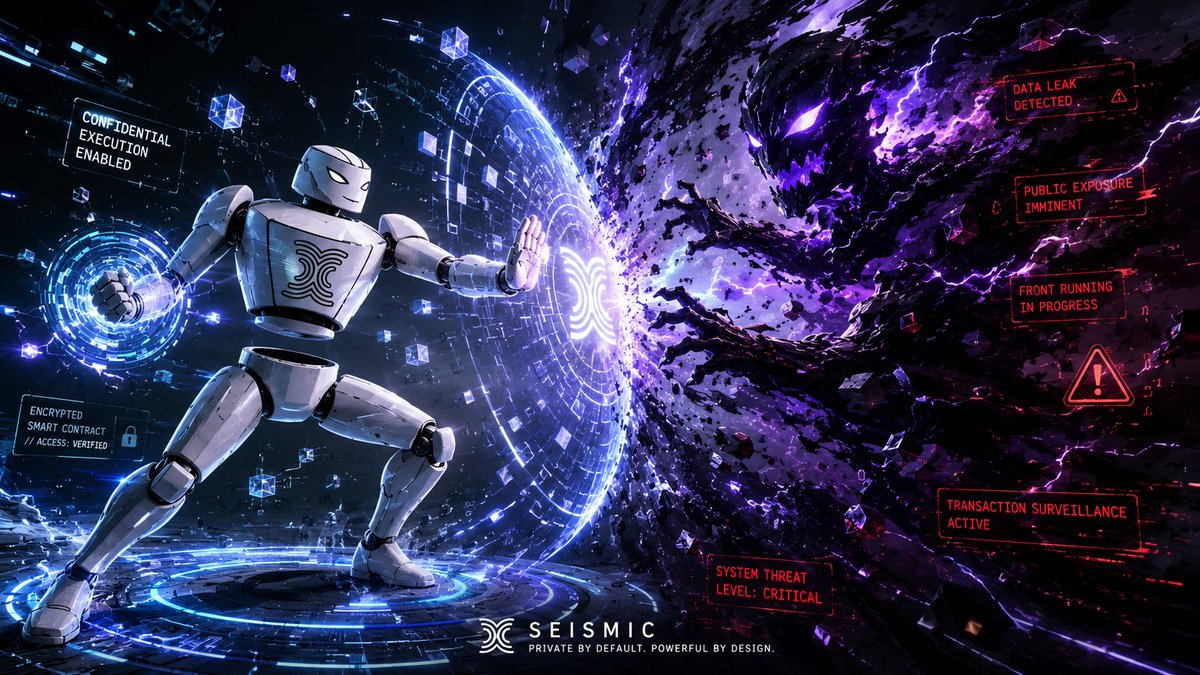
𝗦𝗲𝗶𝘀𝗺𝗶𝗰 𝗮𝗻𝗱 𝘁𝗵𝗲 𝗙𝘂𝘁𝘂𝗿𝗲 𝗼𝗳 𝗖𝗼𝗻𝗳𝗶𝗱𝗲𝗻𝘁𝗶𝗮𝗹 𝗘𝘅𝗲𝗰𝘂𝘁𝗶𝗼𝗻 𝗶𝗻 𝗕𝗹𝗼𝗰𝗸𝗰𝗵𝗮𝗶𝗻 𝗜𝗻𝗳𝗿𝗮𝘀𝘁𝗿𝘂𝗰𝘁𝘂𝗿𝗲
Most blockchains focus on making transactions faster.
Seismic is focused on something far more important: protecting execution itself.
As on-chain activity grows, problems like: ▶ transaction surveillance
▶ front running
▶ data leakage
▶ exposed strategies
are becoming impossible to ignore.
Seismic approaches this differently through encrypted execution powered by Trusted Execution Environments (TEE), allowing smart contracts to process data privately while still remaining verifiable.
That changes the conversation from:
“How fast can a transaction be?”
to:
“Should every transaction be public in the first place?”
The result is a blockchain environment designed for: ▶ confidential DeFi
▶ private AI agents
▶ protected trading strategies
▶ encrypted smart contracts
Privacy is no longer just a feature.
It’s becoming infrastructure.
@SeismicSys
3
4
44
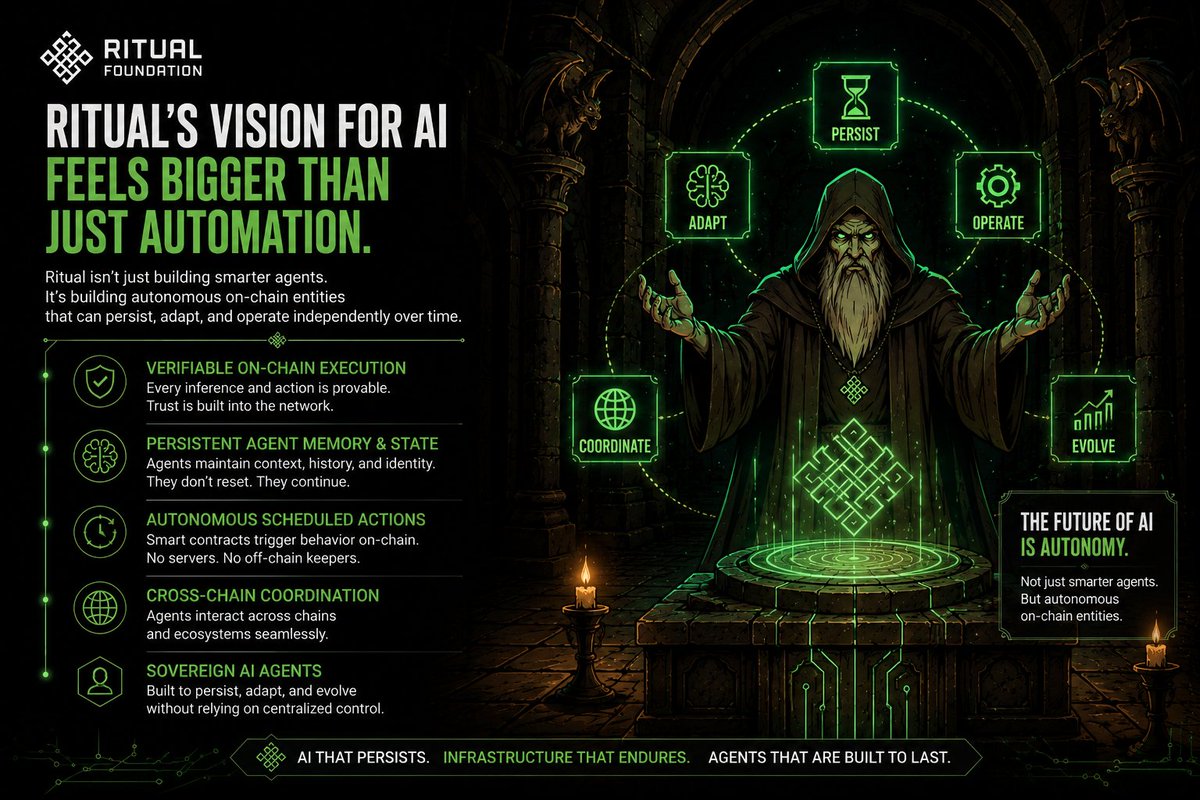
𝗥𝗶𝘁𝘂𝗮𝗹’𝘀 𝗩𝗶𝘀𝗶𝗼𝗻 𝗙𝗲𝗲𝗹𝘀 𝗕𝗶𝗴𝗴𝗲𝗿 𝗧𝗵𝗮𝗻 𝗝𝘂𝘀𝘁 𝗔𝗜 𝗔𝘂𝘁𝗼𝗺𝗮𝘁𝗶𝗼𝗻 👀
Most AI projects focus on what agents can do.
But Ritual seems more focused on whether agents can actually survive and operate independently over time.
That’s the part that stands out to me lately.
Instead of treating AI as an external tool, Ritual is building infrastructure for:
• Verifiable on-chain AI execution
• Persistent agent memory & state
• Autonomous scheduled actions
• Cross-chain coordination
• Sovereign AI agents
Most agents today still rely on APIs, servers, or centralized systems behind the scenes.
Ritual’s direction feels different because it pushes toward agents that can persist, adapt, and continue operating without constant human coordination.
Not just smarter AI.
But autonomous on-chain entities. 👀
@ritualnet | @ritualfnd
@Jez_Cryptoz @joshsimenhoff @0xMadScientist
8
12
79
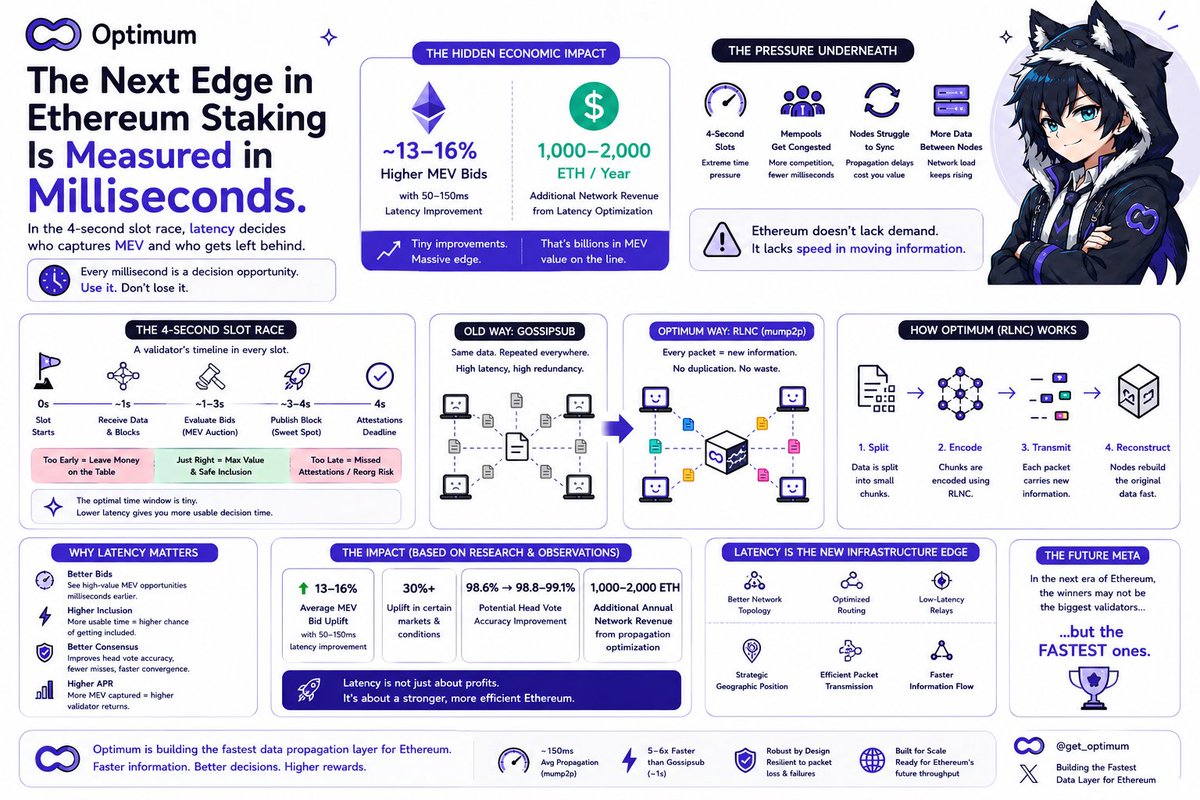
⚡ 𝗘𝘁𝗵𝗲𝗿𝗲𝘂𝗺’𝘀 𝗡𝗲𝘅𝘁 𝗠𝗘𝗩 𝗪𝗮𝗿 𝗠𝗶𝗴𝗵𝘁 𝗕𝗲 𝗠𝗲𝗮𝘀𝘂𝗿𝗲𝗱 𝗶𝗻 𝗠𝗶𝗹𝗹𝗶𝘀𝗲𝗰𝗼𝗻𝗱𝘀
For years, validator competition was mostly about:
- uptime
- hardware quality
- staking scale
But Ethereum’s infrastructure race is evolving.
Now the real edge may come from something almost invisible:
Latency.
Not many people realize this, but validators are constantly operating against an extremely tight deadline.
Every Ethereum slot lasts just 4 seconds.
Inside those 4 seconds, a validator has to:
- receive the latest block data
- compare builder bids
- decide which payload is most profitable
- publish the block
- allow enough time for attestations to spread across the network
And the timing balance is brutal.
Wait too long chasing a higher MEV bid:
→ the block may arrive late.
Publish too quickly:
→ you potentially leave valuable MEV on the table.
This creates a hidden economic race happening every single slot.
The fascinating part is how small the margins are.
Research around @get_optimum and low-latency propagation suggests that even a 50–150ms advantage can materially improve validator performance.
That tiny time window can mean:
- seeing better bids before competitors
- capturing newer arbitrage opportunities
- improving inclusion probability
- increasing effective slot usage
In some simulations and observations, faster propagation produced bid uplifts around 13–16%.
Not because the validator became smarter.
Simply because it had more time to react.
And MEV markets are extremely time-sensitive.
The most profitable opportunity often appears at the very end of the block-building process:
- liquidation cascades
- DEX arbitrage
- cross-market pricing gaps
- sudden orderflow changes
Milliseconds determine who captures that value.
This is why networking infrastructure is becoming one of Ethereum’s most underrated battlegrounds.
The conversation is shifting from:
“Who has the strongest machine?”
to:
“Who receives information first?”
Projects like @get_optimum are focusing on this exact problem.
Instead of optimizing computation, they optimize propagation itself.
Faster data movement across validators means:
- lower propagation delays
- more usable decision time
- faster consensus convergence
- better validator efficiency
And the implications go beyond validator profits.
Lower latency across the network can improve:
- attestation accuracy
- chain stability
- overall consensus efficiency
Some estimates suggest Ethereum could unlock thousands of ETH in additional annual value simply through better propagation mechanics.
Which means Ethereum’s next scaling layer may not just be execution or data availability.
It may be network speed itself.
The future validator meta might not belong to the biggest operators.
It could belong to the fastest ones.
3
8
77