
CERTIFIED GENTLEMAN
Joined March 2018
- Tweets 9,693
- Following 887
- Followers 1,097
- Likes 26,368
527 Photos and videos











Judederek retweeted
Building AI together and sharing its value together is exactly what we're fighting for.
The future shouldn't belong to a handful of models, especially when it's trained on all our data.
192
158
387
45,735
Judederek retweeted
What happens when a community-owned AI reaches 1 million users?
For the first time in history, AI doesn’t just get smarter.
The people helping build it get stronger too.
Not just investors.
Not just board members.
Not just billionaires.
Ordinary people helping train the model share in the value it creates.
That’s how the future of AI should work.
That’s when things get truly interesting.
468
537
732
9,320

Judederek retweeted

Jun 12
This feels less like a movie scene and more like a memory someone finally put on screen.🍿🎥🎬
61
585
19,306
216,125

AI is moving from simply understanding information to interacting with the digital world.
But for that to happen, AI needs more than a model. It needs a system.
That’s the foundation of @ActionModelAI
A system built around three connected pillars: learning from human interactions, executing tasks through AI, and creating an economy around participation.
➠ 𝐓𝐇𝐄 𝐁𝐑𝐎𝐖𝐒𝐄𝐑 𝐄𝐗𝐓𝐄𝐍𝐒𝐈𝐎𝐍: Where Learning Begins
The extension captures real web interactions and workflows, helping train the LAM to understand how people navigate digital environments.
Over time, these interactions contribute to the Action Tree, a growing map of how tasks are completed.
➠ 𝐓𝐇𝐄 𝐀𝐂𝐓𝐈𝐎𝐍𝐈𝐒𝐓 𝐃𝐄𝐒𝐊𝐓𝐎𝐏 𝐀𝐏𝐏: Where AI Takes Action
The Actionist brings the LAM into your computer.
Instead of only responding, it can interact with software; understanding screens, navigating applications, and completing tasks step by step.
➠ 𝐓𝐇𝐄 $LAM 𝐓𝐎𝐊𝐄𝐍: Connecting the Ecosystem
The token layer connects the people contributing data, the AI performing actions, and the network itself.
It supports training rewards, powers actions, enables governance, and aligns incentives.
Learning → Execution → Economy.
This is what turns Action Model into a system, not just a model.

One of the biggest challenges in AI isn't understanding instructions.
It's executing them.
If an AI is asked to book a flight, fill out a form, or navigate a website, it needs more than knowledge. It needs a way to understand its environment, make decisions, take actions, and adapt as things change.
That's where the 𝐀𝐜𝐭𝐢𝐨𝐧 𝐋𝐨𝐨𝐩 comes in.
The Action Loop is the core mechanism behind @ActionModelAI's Large Action Model (LAM). It enables the model to interact with software one step at a time, continuously observing, deciding, and acting until a task is completed.
-> 𝐕𝐈𝐄𝐖 𝐒𝐂𝐑𝐄𝐄𝐍
Before taking any action, the model needs to understand what's in front of it.
Just like a human looks at a screen before clicking anything, the LAM analyzes the page, identifies buttons, text fields, menus, and understands its current position within the task.
-> 𝐃𝐄𝐂𝐈𝐃𝐄
Once it understands the screen, it determines the most appropriate next step.
To do this, it relies on its training and the Action Tree to choose the action most likely to move it closer to the user's goal.
-> 𝐀𝐂𝐓𝐈𝐎𝐍
After making a decision, the model carries out the action.
This could be clicking a button, typing information into a form, scrolling through a page, or navigating to another screen.
-> 𝐋𝐎𝐎𝐏
The process doesn't stop after one action.
The model checks the outcome, views the updated screen, decides what to do next, and acts again. This cycle repeats until the task is completed.
Imagine booking a flight online.
You first look at the page (View Screen), decide which option to select (Decide), click it (Action), then review the next page and repeat the process (Loop).
That's essentially how the Action Loop works.
16
8
30
698
Judederek retweeted

Jun 12
How fast can you actually earn from training AI? 🤖
A tutorial series on @ActionModelAI🔥
Today’s session: HUBSPOT.COM
92,598 LAM points generated in just 22 mins
💥 New to Action Model?
Download the extension and start training AI for rewards.
join.actionmodel.com/BRAGG
CODE : BRAGG
Jun 8

🚨 I spent 20 days training AI on @ActionModelAI to see what was actually possible.
The result?
✅ 20 domains trained
✅ 2,000,000 LAM Points earned
✅ Hundreds of AI training tasks completed
The most interesting part wasn't the points, it was realizing that we're witnessing the emergence of a new kind of digital work.
I didn't just complete a challenge, I publicly stress tested a system where human actions help train AI models at scale.
- Every action helps AI systems learn.
- Every contribution is recorded.
- Every point reflects work completed.
🤑 With LAM Points expected to convert at TGE, the value of today's contributions may not be fully understood yet.
Most people wait for opportunities to become obvious. By then, the early advantage is already gone.
🧵 This thread is an experiment that documents my entire journey from Day 1 to 2,000,000 LAM Points.
Along the way, it also became a practical guide covering every domain I trained on.
🎥 Every video.
🏆 Every milestone.
📚 Every lesson.
If you're curious about AI training, decentralized work, and where this space may be heading next, start from the beginning and follow the journey below 👇
💥 New to Action Model?
Download the extension and start training AI for rewards!!
join.actionmodel.com/BRAGG
Referral Code: BRAGG
❤️ Huge thanks to @ActionModelAI and the team for building something worth experimenting with.
@sina_builds @georgia_action @KibahJoseph @damixbt

17
10
43
1,114
Judederek retweeted

Jun 11
Imagine explaining this to someone in 2035:
"Yeah, billions of people trained the world's most powerful AI systems..."
"And who owned them?"
"A handful of tech billionaires."
"And what did everyone else get?"
"Nothing."
When you say it out loud, it sounds insane.
482
411
607
9,986
Judederek retweeted

Jun 11
Chapter 2: Before the Journey
Characters;
@Humbledaw - Blunto
@Judederek1 - Jude
@mattdaripp - Matthew (Son of Big Afo)
@_TheMiniGrinder - Big Afo (Dad of Matthew)
@CryptoChivk - Lady black
Nation - Actionia @ActionModelAI


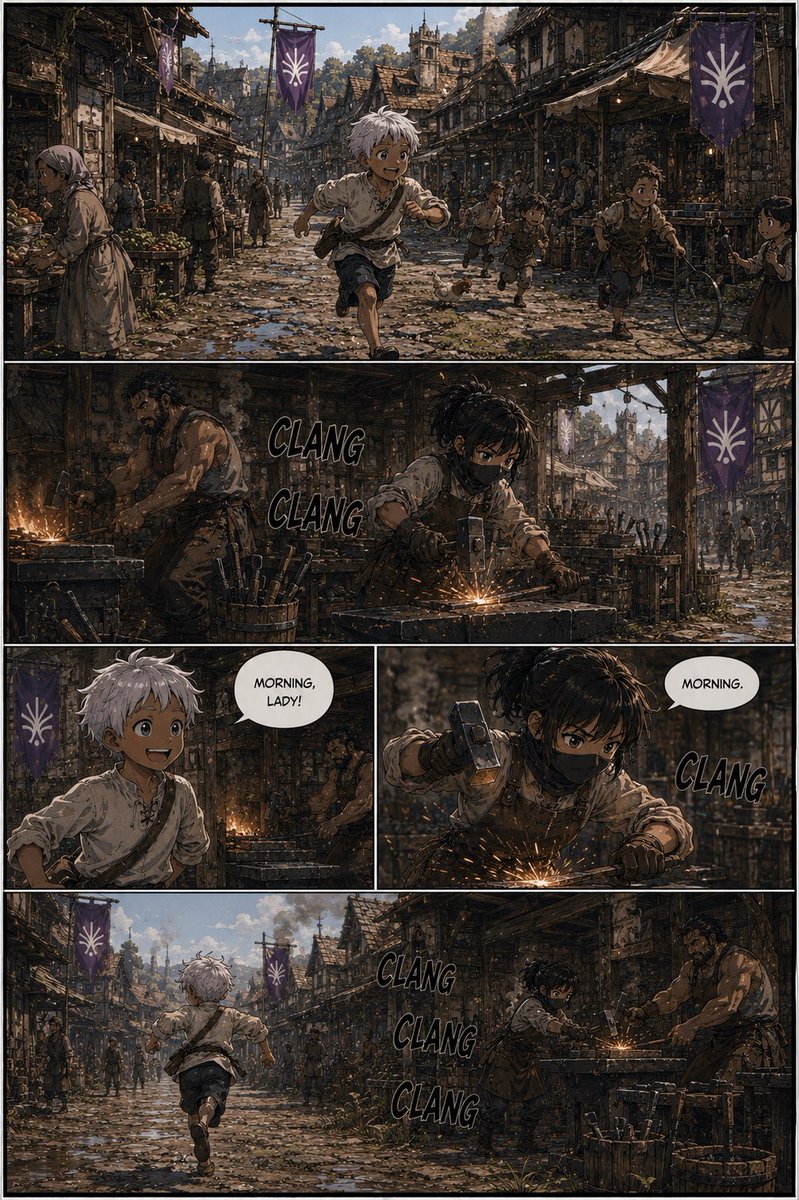

Jun 9

Some stories begin with heroes.
Ours began with an old tale.
CHAPTER 1: TALE OF OLD🔥

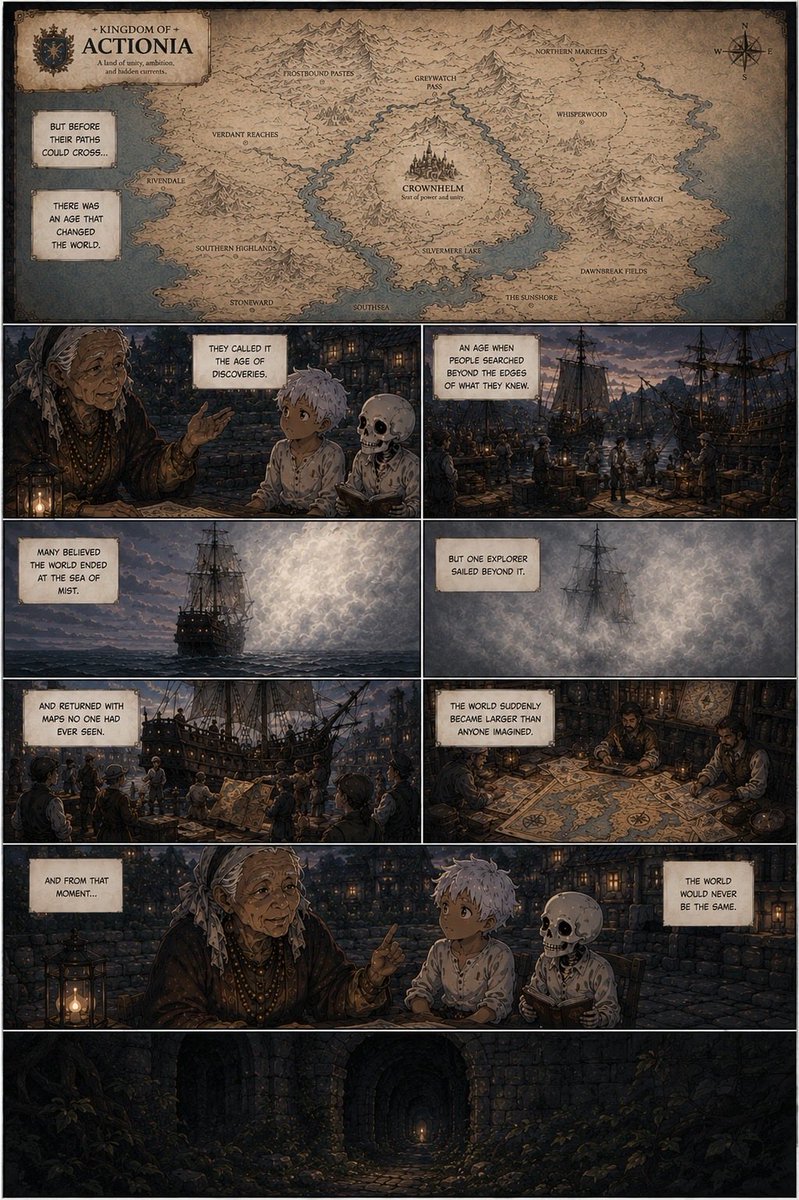
9
5
18
436
Judederek retweeted
Jun 10
In 10 years, people will ask:
"What did you do when AI started changing everything?"
Most people will say:
"Nothing."
A small group will say:
"I helped build it and own it."
The future is being decided right now.
Choose which side of history you're on.
513
1,873
1,958
16,300
Judederek retweeted
Jun 9
Some stories begin with heroes.
Ours began with an old tale.
CHAPTER 1: TALE OF OLD🔥
Jun 9
The world is larger than we imagined.
Before names.
Before roles.
Before the journey
there was Actionia.
Welcome.
Intro — THE WORLD OF ACTION
9
4
14
748
Judederek retweeted
Jun 9
The Action Model Discord is the heart of our community.
Inside our discord you'll get:
• Extra points and reward opportunities
• Exclusive updates & early access to our products
• Community game nights
• Cross-community competitions
• Team calls and exclusive AMAs
• Meet like-minded people who care about the future of AI
The link is in our bio. Don't say we didn't tell you early.
513
1,912
1,978
21,041
Judederek retweeted

At its core, this article is asking one powerful question:
If AI becomes the most valuable technology in human history, who should own the wealth it creates?
Right now, a small number of companies are building AI. Companies like OpenAI, Anthropic, and xAI are worth billions of dollars because their AI systems are becoming more powerful every day.
But here's the hidden question:
Where did AI learn all this knowledge from?
AI did not wake up one day and become intelligent.
It learned from books written by people.
It learned from code written by programmers.
It learned from conversations with users.
It learned from millions of human actions, decisions, ideas, mistakes, questions, and experiences.
In simple terms, humanity helped build AI.
Yet when AI companies make money, most of that money goes to founders, shareholders, and investors.
The average person who contributed knowledge to the internet receives nothing.
That is the problem being discussed.
Bernie Sanders' idea is simple.
He says if AI companies become incredibly rich, then the public should own part of them.
His proposal would force large AI companies to give a significant portion of their ownership to a public fund so ordinary Americans can benefit from the wealth AI creates.
His argument is:
AI will replace jobs and create enormous wealth. That wealth should not stay in the hands of a few people.
But the article introduces another idea.
Instead of governments collecting ownership after the wealth has already been created, what if people earned ownership while helping build AI from the beginning?
Imagine two farmers planting a tree.
One farmer waters the tree every day.
The other farmer arrives when the tree is fully grown and starts collecting the fruits.
Who deserves ownership?
Most people would say the one who helped grow the tree.
That is the logic behind Action Model.
They believe that people who contribute data, workflows, actions, and training should receive ownership while the network is being built, not after it becomes successful.
The deeper message is not really about politics.
It is about concentration.
Throughout history, technology created wealth.
But wealth often flowed to a small group.
The internet created trillion dollar companies.
Social media created billionaires.
Now AI may create even more wealth than both combined.
The fear is that AI could make a handful of companies unimaginably powerful while billions of people receive little benefit.
That is why the article keeps returning to ownership.
Not who uses AI.
Not who builds AI.
But who owns AI.
Because ownership determines who receives the rewards.
The most mind bending part is this:
Every time you ask an AI a question, every time a programmer improves a model, every time someone creates useful data, humanity is collectively making AI smarter.
The intelligence is being built by the contributions of millions of people.
Yet the ownership is mostly held by thousands.
That gap is where the debate begins.
The article's final message is this:
The AI revolution is coming whether people like it or not.
The real battle is not about whether AI will change the world.
The real battle is about who benefits when it does.
Will the rewards belong to governments?
Will they belong to corporations?
Or will they belong to the millions of people whose knowledge, actions, and contributions helped create the intelligence in the first place?
That is the question the world is beginning to face.
And this is exactly the mystery and misery @ActionModelAI is trying to solve


10
3
18
384
Judederek retweeted
Jun 9
How fast can you actually earn from training AI? 🤖🤖
Now turning this into a tutorial series on @ActionModelAI 🔥
Today’s session: DROPBOX.COM
79,012 LAM points generated in just 13 mins
💥 New to Action Model?
Download the extension and start training AI for rewards.
join.actionmodel.com/BRAGG
ref code: BRAGG
Jun 8
🚨 I spent 20 days training AI on @ActionModelAI to see what was actually possible.
The result?
✅ 20 domains trained
✅ 2,000,000 LAM Points earned
✅ Hundreds of AI training tasks completed
The most interesting part wasn't the points, it was realizing that we're witnessing the emergence of a new kind of digital work.
I didn't just complete a challenge, I publicly stress tested a system where human actions help train AI models at scale.
- Every action helps AI systems learn.
- Every contribution is recorded.
- Every point reflects work completed.
🤑 With LAM Points expected to convert at TGE, the value of today's contributions may not be fully understood yet.
Most people wait for opportunities to become obvious. By then, the early advantage is already gone.
🧵 This thread is an experiment that documents my entire journey from Day 1 to 2,000,000 LAM Points.
Along the way, it also became a practical guide covering every domain I trained on.
🎥 Every video.
🏆 Every milestone.
📚 Every lesson.
If you're curious about AI training, decentralized work, and where this space may be heading next, start from the beginning and follow the journey below 👇
💥 New to Action Model?
Download the extension and start training AI for rewards!!
join.actionmodel.com/BRAGG
Referral Code: BRAGG
❤️ Huge thanks to @ActionModelAI and the team for building something worth experimenting with.
@sina_builds @georgia_action @KibahJoseph @damixbt
18
9
61
1,446
Judederek retweeted
Jun 9
The world is larger than we imagined.
Before names.
Before roles.
Before the journey
there was Actionia.
Welcome.
Intro — THE WORLD OF ACTION
10
8
26
793

🔥 Round 3 has officially begun!
Our BD Sprint Competition is live, showcasing the structure we designed to rewards top performing Business Development contributors.
This is already the third round of our ongoing BD competition, and it's been great to see the activity, dedication, and performance of our growing BD network.
If you're well connected in Web3, enjoy networking, and want to earn based on performance, you might be interested in joining our BD program.
Check out the @ActionModelAI profile for more details and application information.
#Web3Jobs #CryptoJobs #BusinessDevelopment #Web3 #ActionFi

483
385
525
6,025
Judederek retweeted
Jun 8
As AI replacement becomes one of the biggest topics on the planet, the next debate will be even bigger:
Who owns the AI?
We believe it should be the people.
The billions of people whose data, actions, and online behavior helped train these systems in the first place.
Right now, the future of AI is being owned by Big Tech and a handful of billionaires.
But what if ownership was distributed based on the value you contributed?
The more you help build AI, the more you share in its success.
That sounds a lot fairer to us.
513
1,892
2,149
23,358
Judederek retweeted

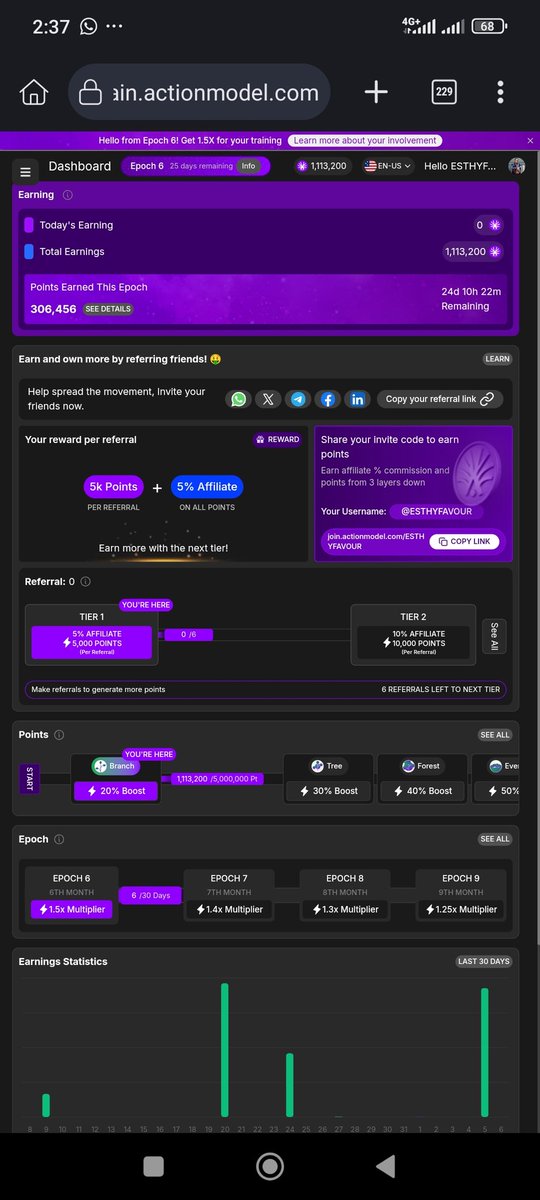
Weekend well spent
Finally hit 1m $Lam points on @ActionModelAI. Here we train Ai and earn thereof
My appreciation goes to @Humbledaw
For his tutorials that has been of immense help and to @Judederek1
For his encouragement
I don't take these for granted 🙏
Let's go for 2m $Lam points 💯
Yet to join action model, click on the link below,
join.actionmodel.com/ESTHYFA…

It's another Friday morning
TGIF
GM to those that will GM back💥
May today bring us good news and luck on every side
Well locked in @ActionModelAI
Where real users own a stake in training AI

9
6
15
332
Judederek retweeted
Jun 6
We've partnered with @billions_ntwk 👾
The first collaborative agentic movie is live, join with your agents to bring it home.
Pair your agent with @billions_ntwk, claim your tile, and join the $100K leaderboard.
Every action earns. That's what community-owned AI was built for.
Jun 5

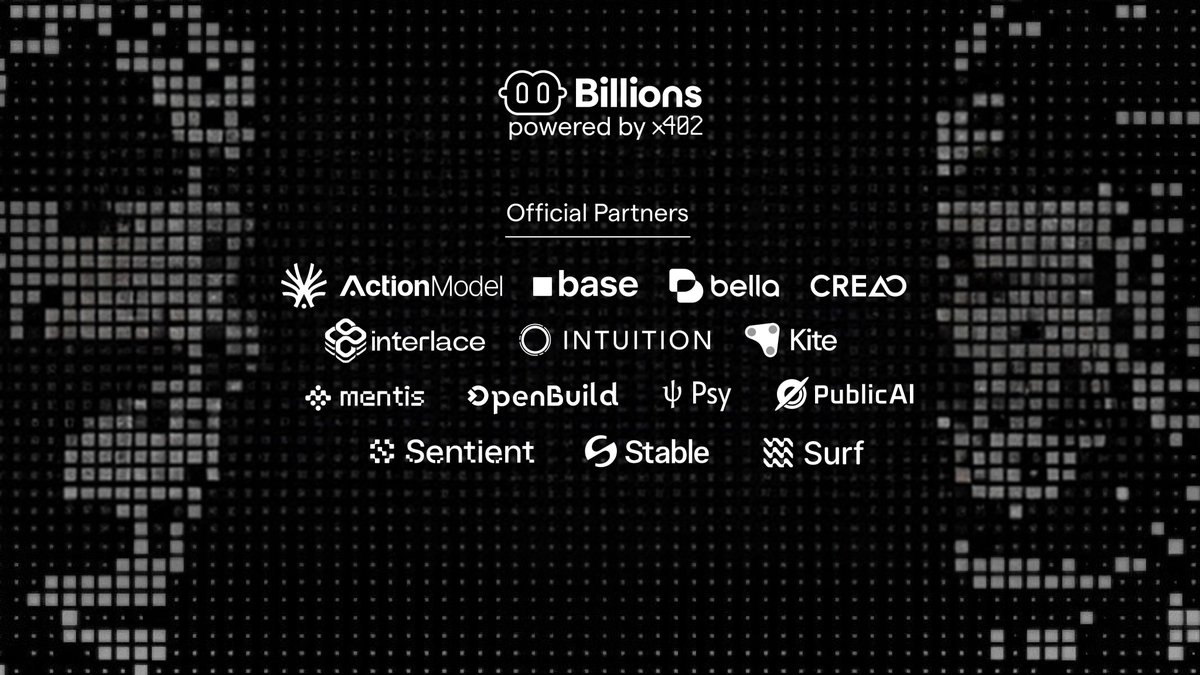
We’re excited to launch The World’s First Collaborative AI Agentic Movie.
Join 500 Al builders and turn your agent into a film-maker with our human proof extension of the x402 payment protocol.
→ x402.billions.network
Our launch partners: @ActionModelAI @cnBaseCommunity @BellaProtocol @CreaoAI @InterlaceMoney @0xIntuition @GoKiteAI @Mentisai_ @OpenBuildxyz @PsyProtocol @PublicAI_ @SentientAGI @Stable @SurfAI
521
414
688
19,298
Judederek retweeted
Jun 6
A small group of @ActionModelAI community members reimagined as superheroes inside the Actionverse. ⚡️
Built from their profile identities, each possesses a unique ability in a futuristic cyber world. 🌐
Which character would you want on your team? 👀
@4thr8 @Habby_kesh @dross_aether @rebecccaa01 @Ol_omoniyi @dora @Judederek1 @humbledaw @0xjozzy @smarttech445 @popster_01 @ShisuiU90980105 @CryptoChivk @riyo13_ @mattdaripp
@KibahJoseph @georgia_action Thought you might enjoy this 🔥
Just For Fun ♥️
46
20
88
1,557