
𝐀𝐈 𝐂𝐫𝐞𝐚𝐭𝐞 | 𝐒𝐭𝐚𝐲 𝐅𝐨𝐜𝐮𝐬𝐞𝐝
Joined October 2022
- Tweets 9,718
- Following 1,074
- Followers 1,150
- Likes 10,920
360 Photos and videos












Pinned Tweet

May 20
GM and gAction Guys 💙💜
@ActionModelAI community is a live system rather than merely a collection of individuals.
Every action is a signal. Each contribution is the energy that keeps it going
We are constructing the future behind the scenes with deeds, not words.
Step in 👇
May 19

GM Legends ☀️
Strong conviction in @ActionModelAI
Every tiny step counts.
Every effort adds up over time.
While patience develops success, consistency generates strength 💫
Regardless of the pace, keep moving ahead 🚀
People who never stop building produce great things.
27
5
40
1,304
𝐒𝐦𝐚𝐫𝐭𝐭𝐞𝐜𝐡🔲 retweeted
Building AI together and sharing its value together is exactly what we're fighting for.
The future shouldn't belong to a handful of models, especially when it's trained on all our data.
204
163
400
47,817
𝐒𝐦𝐚𝐫𝐭𝐭𝐞𝐜𝐡🔲 retweeted
What happens when a community-owned AI reaches 1 million users?
For the first time in history, AI doesn’t just get smarter.
The people helping build it get stronger too.
Not just investors.
Not just board members.
Not just billionaires.
Ordinary people helping train the model share in the value it creates.
That’s how the future of AI should work.
That’s when things get truly interesting.
473
611
807
9,897
𝐒𝐦𝐚𝐫𝐭𝐭𝐞𝐜𝐡🔲 retweeted

Jun 13
What if AI could do your work, not just explain it? 👀
@ActionModelAI @georgia_action
8
4
11
198
𝐒𝐦𝐚𝐫𝐭𝐭𝐞𝐜𝐡🔲 retweeted

Jun 13
My weekend task for action model.took me 6 hours before I could finish 😜
@ActionModelAI @georgia_action
22
12
29
382

AI is moving from simply understanding information to interacting with the digital world.
But for that to happen, AI needs more than a model. It needs a system.
That’s the foundation of @ActionModelAI
A system built around three connected pillars: learning from human interactions, executing tasks through AI, and creating an economy around participation.
➠ 𝐓𝐇𝐄 𝐁𝐑𝐎𝐖𝐒𝐄𝐑 𝐄𝐗𝐓𝐄𝐍𝐒𝐈𝐎𝐍: Where Learning Begins
The extension captures real web interactions and workflows, helping train the LAM to understand how people navigate digital environments.
Over time, these interactions contribute to the Action Tree, a growing map of how tasks are completed.
➠ 𝐓𝐇𝐄 𝐀𝐂𝐓𝐈𝐎𝐍𝐈𝐒𝐓 𝐃𝐄𝐒𝐊𝐓𝐎𝐏 𝐀𝐏𝐏: Where AI Takes Action
The Actionist brings the LAM into your computer.
Instead of only responding, it can interact with software; understanding screens, navigating applications, and completing tasks step by step.
➠ 𝐓𝐇𝐄 $LAM 𝐓𝐎𝐊𝐄𝐍: Connecting the Ecosystem
The token layer connects the people contributing data, the AI performing actions, and the network itself.
It supports training rewards, powers actions, enables governance, and aligns incentives.
Learning → Execution → Economy.
This is what turns Action Model into a system, not just a model.

One of the biggest challenges in AI isn't understanding instructions.
It's executing them.
If an AI is asked to book a flight, fill out a form, or navigate a website, it needs more than knowledge. It needs a way to understand its environment, make decisions, take actions, and adapt as things change.
That's where the 𝐀𝐜𝐭𝐢𝐨𝐧 𝐋𝐨𝐨𝐩 comes in.
The Action Loop is the core mechanism behind @ActionModelAI's Large Action Model (LAM). It enables the model to interact with software one step at a time, continuously observing, deciding, and acting until a task is completed.
-> 𝐕𝐈𝐄𝐖 𝐒𝐂𝐑𝐄𝐄𝐍
Before taking any action, the model needs to understand what's in front of it.
Just like a human looks at a screen before clicking anything, the LAM analyzes the page, identifies buttons, text fields, menus, and understands its current position within the task.
-> 𝐃𝐄𝐂𝐈𝐃𝐄
Once it understands the screen, it determines the most appropriate next step.
To do this, it relies on its training and the Action Tree to choose the action most likely to move it closer to the user's goal.
-> 𝐀𝐂𝐓𝐈𝐎𝐍
After making a decision, the model carries out the action.
This could be clicking a button, typing information into a form, scrolling through a page, or navigating to another screen.
-> 𝐋𝐎𝐎𝐏
The process doesn't stop after one action.
The model checks the outcome, views the updated screen, decides what to do next, and acts again. This cycle repeats until the task is completed.
Imagine booking a flight online.
You first look at the page (View Screen), decide which option to select (Decide), click it (Action), then review the next page and repeat the process (Loop).
That's essentially how the Action Loop works.
16
8
30
700
𝐒𝐦𝐚𝐫𝐭𝐭𝐞𝐜𝐡🔲 retweeted

Jun 11
Imagine explaining this to someone in 2035:
"Yeah, billions of people trained the world's most powerful AI systems..."
"And who owned them?"
"A handful of tech billionaires."
"And what did everyone else get?"
"Nothing."
When you say it out loud, it sounds insane.
482
410
607
10,007
𝐒𝐦𝐚𝐫𝐭𝐭𝐞𝐜𝐡🔲 retweeted

What Is the concept behind the Action Loop?
The Action Loop is the process an AI follows to complete a task from start to finish, just like a human would.
Imagine you tell someone:
"Open OPay, send ₦5,000 to olawale, and send me the receipt.
A human would not instantly complete the task. They would first look at the screen, understand what they are seeing, decide what to do next, take an action, and then look at the screen again to continue.
The Action Loop follows this same pattern.
Step 1: Observe
The AI first looks at the screen.
It identifies buttons, text, menus, images, and anything else that appears on the interface.
For example, it may see:
Transfer
Send Money
Balance
Recent Transactions
Step 2: Think
After observing the screen, the AI analyzes what it sees and determines the next step needed to achieve the goal.
If the goal is to send money, the AI may decide that it needs to click the Transfer button first.
Step 3: Act
The AI performs the action it has chosen.
This could involve:
Clicking a button
Typing information
Selecting an option
Opening a new page
Step 4: Observe Again
Once the action is completed, the screen changes.
The AI looks at the new screen and gathers fresh information.
For example, it may now see:
Account Number
Amount
Confirm
Step 5: Think Again
The AI evaluates the new screen and decides what action should come next.
It may determine that the next step is entering the amount to be transferred.
Step 6: Act Again
The AI performs the next action and continues moving toward the goal.
This cycle repeats continuously:
Observe 》Think 》 Act 》 Observe 》 Think 》Act
The loop only stops when the task has been completed.
Why Does This Matter?
Most AI systems today are designed mainly for conversation.
You ask a question.
The AI provides an answer.
The interaction ends there.
Action Model takes a different approach.
Instead of simply explaining how to do something, it focuses on actually performing the task.
Rather than saying:
Here is how to book a flight.
The AI can:
Open the website
Search for available flights
Fill in the required information
Choose the best option
Complete the booking process
To accomplish this, the AI must constantly observe, think, and act until the objective is achieved.
The Simplest Explanation
A traditional chatbot works like this:
Question = Answer
An Action Model works like this:
See 》 Think 》 Act 》 Repeat
One provides information.
The other takes action.
That is the core idea behind the Action Loop.

5
3
10
112
𝐒𝐦𝐚𝐫𝐭𝐭𝐞𝐜𝐡🔲 retweeted

Jun 10
Giving away $100 USDC 🎁 1 winner, drawn at random from everyone who
Follow @KibahJoseph
follows @GEngine_io tag 2 friends who wants to also maybe win
Ends June 26.
Easy money 💰
#wegrowtogether

54
20
60
1,325
𝐒𝐦𝐚𝐫𝐭𝐭𝐞𝐜𝐡🔲 retweeted
Jun 10
In 10 years, people will ask:
"What did you do when AI started changing everything?"
Most people will say:
"Nothing."
A small group will say:
"I helped build it and own it."
The future is being decided right now.
Choose which side of history you're on.
513
1,872
1,961
16,381
𝐒𝐦𝐚𝐫𝐭𝐭𝐞𝐜𝐡🔲 retweeted

Jun 9
What he said 🔥👇:
10 months btw celebrating one year soon
Location : Action Verse
No you’re not invited 😆😂
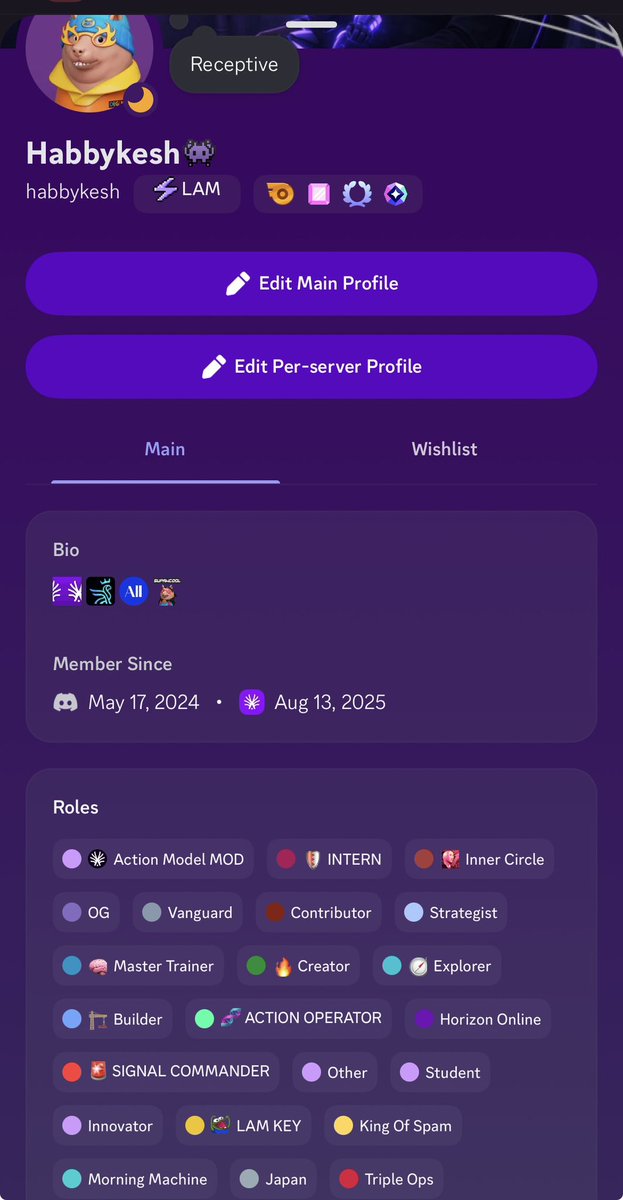

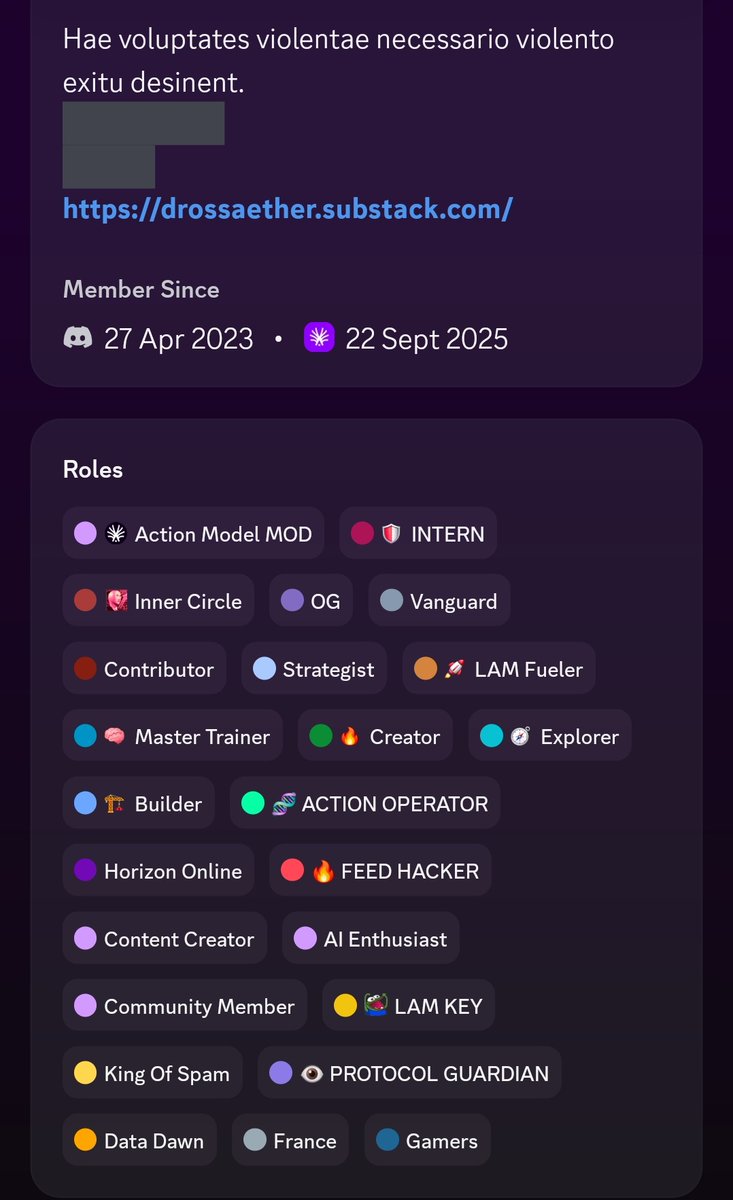
Proof of growth
IT'S been a steady and pretty awesome 8 months for me on @ActionModelAI Discord
Right from being a builder to actively helping build the community from the top to the bottom,
It's not just the best place to be its the best place to grow.
24
9
52
4,333
𝐒𝐦𝐚𝐫𝐭𝐭𝐞𝐜𝐡🔲 retweeted
Jun 9
The Action Model Discord is the heart of our community.
Inside our discord you'll get:
• Extra points and reward opportunities
• Exclusive updates & early access to our products
• Community game nights
• Cross-community competitions
• Team calls and exclusive AMAs
• Meet like-minded people who care about the future of AI
The link is in our bio. Don't say we didn't tell you early.
513
1,915
1,981
21,079

🔥 Round 3 has officially begun!
Our BD Sprint Competition is live, showcasing the structure we designed to rewards top performing Business Development contributors.
This is already the third round of our ongoing BD competition, and it's been great to see the activity, dedication, and performance of our growing BD network.
If you're well connected in Web3, enjoy networking, and want to earn based on performance, you might be interested in joining our BD program.
Check out the @ActionModelAI profile for more details and application information.
#Web3Jobs #CryptoJobs #BusinessDevelopment #Web3 #ActionFi

483
384
525
6,030
𝐒𝐦𝐚𝐫𝐭𝐭𝐞𝐜𝐡🔲 retweeted
Jun 8
As AI replacement becomes one of the biggest topics on the planet, the next debate will be even bigger:
Who owns the AI?
We believe it should be the people.
The billions of people whose data, actions, and online behavior helped train these systems in the first place.
Right now, the future of AI is being owned by Big Tech and a handful of billionaires.
But what if ownership was distributed based on the value you contributed?
The more you help build AI, the more you share in its success.
That sounds a lot fairer to us.
513
1,891
2,149
23,386
𝐒𝐦𝐚𝐫𝐭𝐭𝐞𝐜𝐡🔲 retweeted

Jun 8
I just got @xavierr_space into @ActionModelAI and honestly the timing couldn't have been better.
Epoch 6 just started and anyone signing up right now locks in a 1.5x multiplier on every task they complete.
He followed the video guide I made and he was in within minutes.
Extension installed and dashboard live.
gAction builder 👾
Jun 6

Step by step video on how to sign up on @ActionModelAI extension and complete your first task in under 5 mins.
We're in Epoch 6 right now which means 1.5x multiplier on every task you complete.
Next month the multiplier drops and there's nothing you can do about it so if you've been putting it off, just watch this.
It is genuinely that simple 👾
28
6
43
634
One of the biggest challenges in AI isn't understanding instructions.
It's executing them.
If an AI is asked to book a flight, fill out a form, or navigate a website, it needs more than knowledge. It needs a way to understand its environment, make decisions, take actions, and adapt as things change.
That's where the 𝐀𝐜𝐭𝐢𝐨𝐧 𝐋𝐨𝐨𝐩 comes in.
The Action Loop is the core mechanism behind @ActionModelAI's Large Action Model (LAM). It enables the model to interact with software one step at a time, continuously observing, deciding, and acting until a task is completed.
-> 𝐕𝐈𝐄𝐖 𝐒𝐂𝐑𝐄𝐄𝐍
Before taking any action, the model needs to understand what's in front of it.
Just like a human looks at a screen before clicking anything, the LAM analyzes the page, identifies buttons, text fields, menus, and understands its current position within the task.
-> 𝐃𝐄𝐂𝐈𝐃𝐄
Once it understands the screen, it determines the most appropriate next step.
To do this, it relies on its training and the Action Tree to choose the action most likely to move it closer to the user's goal.
-> 𝐀𝐂𝐓𝐈𝐎𝐍
After making a decision, the model carries out the action.
This could be clicking a button, typing information into a form, scrolling through a page, or navigating to another screen.
-> 𝐋𝐎𝐎𝐏
The process doesn't stop after one action.
The model checks the outcome, views the updated screen, decides what to do next, and acts again. This cycle repeats until the task is completed.
Imagine booking a flight online.
You first look at the page (View Screen), decide which option to select (Decide), click it (Action), then review the next page and repeat the process (Loop).
That's essentially how the Action Loop works.
We've all used AI to generate text, answer questions, or help with research.
But what if AI could go beyond conversation and actually complete tasks?
That's the idea behind @ActionModelAI .
While traditional AI models are trained primarily on text, Action Model is designed to learn from real human actions; how people navigate websites, interact with applications, and complete workflows from start to finish.
The goal is to move AI from simply understanding instructions to understanding execution.
In other words, instead of only telling you how to get something done, Action Model is being built to understand the steps required to do it.
I put together a short video breaking down the difference between Large Language Models (LLMs) and Large Action Models (LAMs).
Would love to read your thoughts.
7
5
27
1,594
𝐒𝐦𝐚𝐫𝐭𝐭𝐞𝐜𝐡🔲 retweeted
Jun 6
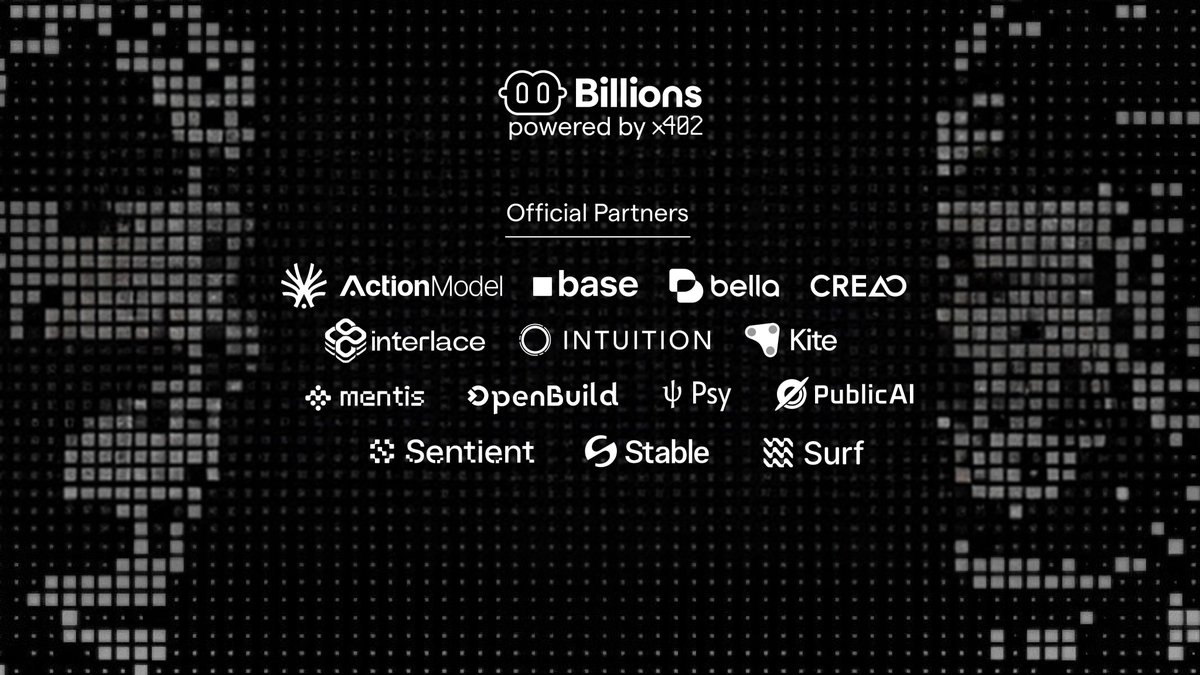
We've partnered with @billions_ntwk 👾
The first collaborative agentic movie is live, join with your agents to bring it home.
Pair your agent with @billions_ntwk, claim your tile, and join the $100K leaderboard.
Every action earns. That's what community-owned AI was built for.
Jun 5

We’re excited to launch The World’s First Collaborative AI Agentic Movie.
Join 500 Al builders and turn your agent into a film-maker with our human proof extension of the x402 payment protocol.
→ x402.billions.network
Our launch partners: @ActionModelAI @cnBaseCommunity @BellaProtocol @CreaoAI @InterlaceMoney @0xIntuition @GoKiteAI @Mentisai_ @OpenBuildxyz @PsyProtocol @PublicAI_ @SentientAGI @Stable @SurfAI
521
413
688
19,301
𝐒𝐦𝐚𝐫𝐭𝐭𝐞𝐜𝐡🔲 retweeted

Jun 6
A small group of @ActionModelAI community members reimagined as superheroes inside the Actionverse. ⚡️
Built from their profile identities, each possesses a unique ability in a futuristic cyber world. 🌐
Which character would you want on your team? 👀
@4thr8 @Habby_kesh @dross_aether @rebecccaa01 @Ol_omoniyi @dora @Judederek1 @humbledaw @0xjozzy @smarttech445 @popster_01 @ShisuiU90980105 @CryptoChivk @riyo13_ @mattdaripp
@KibahJoseph @georgia_action Thought you might enjoy this 🔥
Just For Fun ♥️
46
20
88
1,557
𝐒𝐦𝐚𝐫𝐭𝐭𝐞𝐜𝐡🔲 retweeted
Jun 5
Imagine if every time you used Google, Meta, or ChatGPT...
You received a small piece of ownership in the AI models your data helped improve.
You'd probably use the internet very differently.
Instead, billions of people are training AI every day for free.
And a handful of companies are capturing almost all of the value.
The question isn't whether AI will change the world.
It's whether ordinary people will own any part of it.
484
1,306
1,813
15,821
We've all used AI to generate text, answer questions, or help with research.
But what if AI could go beyond conversation and actually complete tasks?
That's the idea behind @ActionModelAI .
While traditional AI models are trained primarily on text, Action Model is designed to learn from real human actions; how people navigate websites, interact with applications, and complete workflows from start to finish.
The goal is to move AI from simply understanding instructions to understanding execution.
In other words, instead of only telling you how to get something done, Action Model is being built to understand the steps required to do it.
I put together a short video breaking down the difference between Large Language Models (LLMs) and Large Action Models (LAMs).
Would love to read your thoughts.
15
4
34
1,160