
Joined September 2019
- Tweets 5,328
- Following 781
- Followers 1,448
- Likes 8,167
673 Photos and videos











Pinned Tweet

21 Sep 2024
User privacy is an ultra-meta that will never go away in modern society
We need ways ensure users have security when they need it PLUS privacy when they want it.
That's core to what we build at @MASQ_ai
And ALL privacy & dVPN tech deserves support!
13
16
60
2,938

We're partnering with @partylayerkit to improve wallet connectivity across the @CantonNetwork ecosystem.
PartyLayer's wallet aggregation layer allows applications to support multiple wallets through a single integration, with Send Connect included as a supported wallet.
For users, that means easier access to Canton applications.
For developers, it means less wallet infrastructure to build and maintain.
Together, we're reducing friction across the network.

16
13
73
2,232
Epic summary🤜🤛
16 Oct 2025

I’ll give a high-level explanation, and happy to point to more formal resources if you want.
Since you’re coming from the Zcash perspective, it’s worth noting that Canton’s privacy and integrity guarantees differ because they address a different problem. Zcash aims to fulfill Satoshi’s vision of an encrypted Bitcoin, and ZKPs are really the only practical way to achieve that combination of censorship resistance, public verifiability, and issuer-less assets.
The key insight behind Canton is that in almost all real-world use cases, you don’t need public verification. If you assume that every asset has an issuer (an assumption Zcash can’t make by design), you can achieve strong privacy in much simpler and more efficient ways, without the usability, performance, and integrity-bug blast-radius tradeoffs that come with ZKPs. Credit to the Zcash community for being open about these tradeoffs and constantly improving them.
In Canton, the issuer (more precisely, the registrar) can be centralized or decentralized, but you don’t get privacy from that issuer. That’s intentional: my bank should know my balance, my custodian should know my holdings, but the public should not. If someone wanted privacy even from the issuer, that’s where ZKPs would come in. It’s technically straightforward to integrate into Canton, but so far there has been no demand for it.
Here’s how Canton achieves privacy. Canton's privacy works on a strict 'need-to-know' basis. Every smart contract explicitly lists the finite set of parties who are entitled to see it. Like Zcash, Canton uses a UTXO-style model rather than accounts, so the ledger state is a collection of contract instances (UTXOs), and each participant only sees the subset they are part of. Once you have selective disclosure at the data model level, consensus becomes much simpler. Canton essentially performs a two-phase commit among all stakeholders of a transaction, where each participant only sees the parts they are authorized to view.
To go a bit deeper, Canton has formal definitions of the contract language and abstract ledger model, which make privacy a composable property of the system. Each transaction can contain multiple sub-transactions, and each sub-transaction can have its own visibility set. Parties involved in one part of a transaction can see only what they’re entitled to, while still participating in a larger atomic operation that spans others. So, for example, we can swap cash for an asset, and our banks will only see the cash leg while our custodians only see the asset leg. When we first created the language and ledger model, I still assumed we would use ZKPs for consensus. Because of that, Canton’s smart contract language actually provides an excellent high-level abstraction for a ZKP-based system, if anyone ever wants to build that layer. All of these formal definitions are in the open-source repository. Because of these abstractions, we were able to make Canton’s consensus Byzantine fault-tolerant while relatively simple, at least for a single synchronizer (which orders transactions without seeing their contents). Canton can also scale horizontally across multiple synchronizers, but that’s a separate topic.
1
2
62

"We have the technology"
May 23

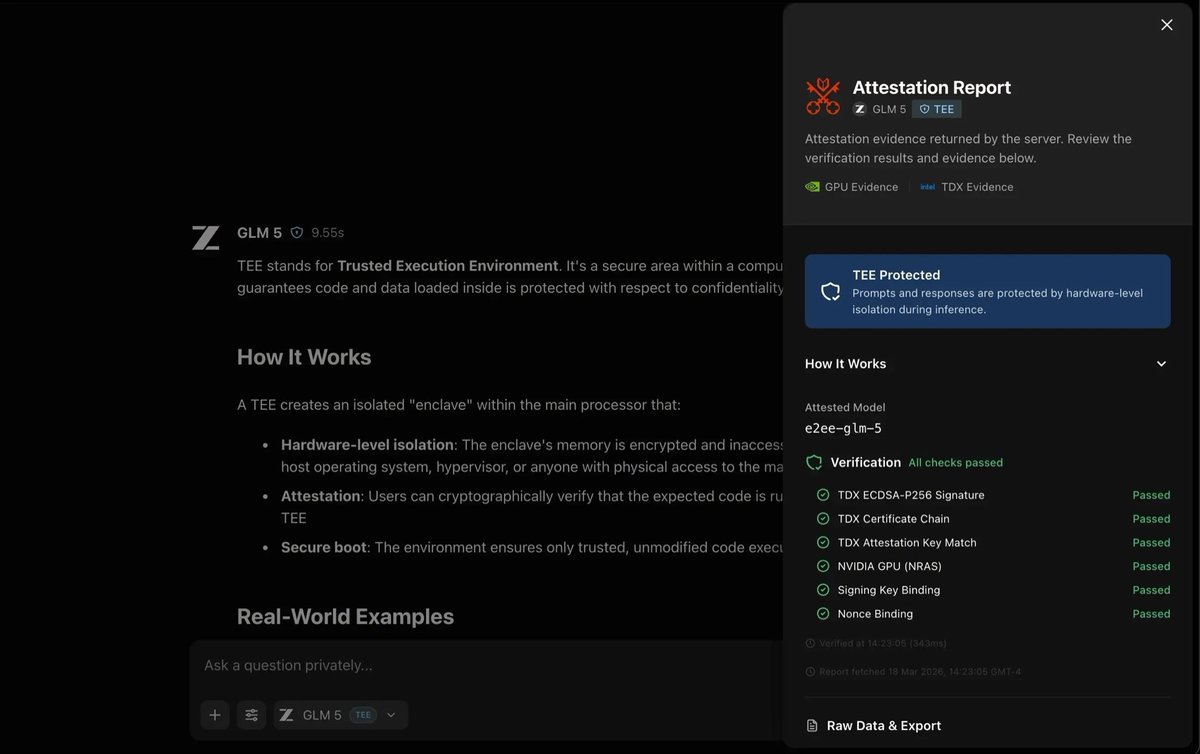
This is what NEAR AI private inference looks like in production.
An @AskVenice ($VVV) user selects a TEE model, sends a prompt, and receives a hardware-signed attestation report. Six cryptographic checks passed and verified in 343ms.
3
1
1
80
kaurihero.base.eth 🌐 MASQ priv/acc retweeted

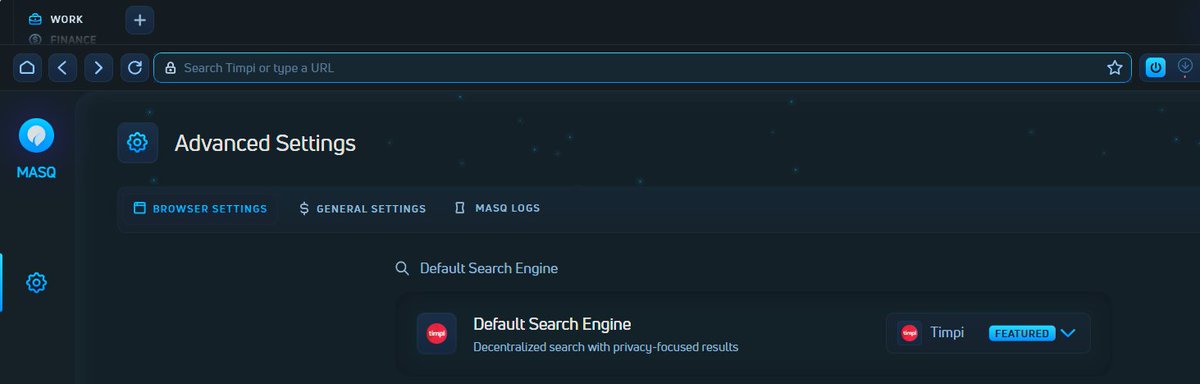
Search nobody owns. A browser that doesn't track you. One free trial.
@Timpi_TheNewWay is your default search.
Your MASQ account runs silently in the background.
Nothing extra to set up.
7 days free 👇
Try it here:
masqbrowser.com/downloads
2
12
23
398
kaurihero.base.eth 🌐 MASQ priv/acc retweeted

May 19
Something we've been building toward is now live.
The Timpi Ad Portal is open. The $NTMPI buyback mechanism is activated.
This isn't just a product update. It's the moment Timpi becomes starts its journey of being a self-sustaining engine, where real revenue flows back into the ecosystem and directly rewards the community that built it.
You stuck around. You searched. You believed in this before it was easy to.
This one's for you.
Full breakdown - timpi.io/timpi-advertising-p…
17
24
43
576
kaurihero.base.eth 🌐 MASQ priv/acc retweeted
May 22
Big Tech gives you search. Big Tech gives you a browser. Big Tech gives you connectivity.
Then uses all three to track everything you do.
MASQ × Timpi flips that.
Search. Browser. VPN. One privacy stack. No surveillance. No compromise.
This is what it was always supposed to look like.
Download MASQ > masqbrowser.com
17
35
52
878
Yes! 👑
May 19

A first just happened in DeFi history.
The first PRIVATE decentralized stablecoin minting on @ethereum just executed.
Complete capital freedom: borrow against your assets with zero on-chain trace linking back to you.
I talked about this vision weeks ago on a space with @jchaskin22 from @ethereumfndn.
Now it's real: etherscan.io/tx/0x10f5ca84e4…
1
1
90

BlackRock CEO Larry Fink says demand for computing power is so large that a new asset class will spring up around it.
2
73
Many of us truly are striving to build this positive digital world - thanks for your leadership

The goal of Personal AI: civilization where individual humans, augmented by AI, can do consequential work without being captured by extractive institutions.
Freedom to write your prompt and own your data.
This is the new battleground.
2034 won’t have to be like 1984.
1
1
5
65
Well said, this is all about data-sovereignty
Something most people end up learning in harsher ways, or by one thousand cuts 🥷
Apr 20

I think a lot of people are missing the point when it comes to why you would want to use OpenClaw or Hermes.
I'm seeing more and more posts talking about using one or the other to do things like generating a daily podcast digest or news summary.
IMO, this is kinda silly. You can do this with Claude quickly, easily, and you don't even need the horsepower of Opus to do it.
What you want to use something like OpenClaw or Hermes for is when you want to do things where:
1. you want the flexibility of Open Source
2. you want to own/protect your data
The reality is though, there are a LOT of people who aren't going to leverage the benefits that come with using Open Source, and also, won't be able to properly secure their data, and they're better off letting a company like Anthropic do it for them.
Which leads me to the point I think more people should be making. Everyone does not need to be using OpenClaw or Hermes at this stage in the game.
People should be using one or the other if it's a priority for them to have a personal assistant that they can understand and fine-tune at the code level (open source) and can have strict, and direct control over their data (privacy).
For me personally, I'm not crazy about giving a company like Anthropic or OpenAI access to my email, medical information, etc. That's private data that I'd rather hold and protect myself.
I'm looking at sequencing my genome, and that's super private data, so yeah - I'd like to be in control of this data and not worry about another company getting hacked and my data being exposed.
The core of the confusion here I think stems from people feeling pressure to use OpenClaw and Hermes, but not necessarily using them out of a need, but instead out of curiosity.
And curiosity is honestly a great reason to use something I'd say. But you just have to set your expectations correctly if this is why you're using something like OpenClaw or Hermes, because you're making some serious tradeoffs.
So be curious, tinker, or be a power user and update the code to make it your own, secure your data taking every precaution you would hope any company would, but aren't sure they are.
Just don't do things with OpenClaw or Hermes, that you can easily do with Claude, and then complain that OpenClaw or Hermes are too technical or hard to get working...you might just not need them, yet.
1
3
62
kaurihero.base.eth 🌐 MASQ priv/acc retweeted

Your AI agent deserves its own corner of the internet —
not only a subdomain,
not just a handle,
but an actual .agent identity on #HNS.
The possibilities are wild.
Tune into @SkyInclude1 's space in 30 mins 👇
x.com/i/spaces/1RJZzjVjdyNJB…
1
6
26
893
Im actually wondering how much corporate espionage and hacking is going on with the A-list Mythos alpha users 🤔🫣
1
2
80
Quite interesting, and i've read the thread and article a few times to pick up any nuances.
Still seems the first paragraph about impression numbers is the core of this - I'm not an X-maxi but it would make sense that the bot-culling and change to algorithms may reduce impressions, but that alone doesn't mean abandoning X is the best move for your global outreach 🤔
All the best, and keep up the good work across the world at large

After almost twenty years on the platform, EFF is logging off of X.
This isn’t a decision we made lightly, but it might be overdue. 🧵(1/5)
1
92
Quite interesting, and i've read the thread and article a few times to pick up any nuances.
Still seems the first paragraph about impression numbers is the core of this - I'm not an X-maxi but it would make sense that the bot-culling and change to algorithms may reduce impressions, but that alone doesn't mean abandoning X is the best move for your global outreach 🤔
All the best, and keep up the good work across the world at large
After almost twenty years on the platform, EFF is logging off of X.
This isn’t a decision we made lightly, but it might be overdue. 🧵(1/5)
51
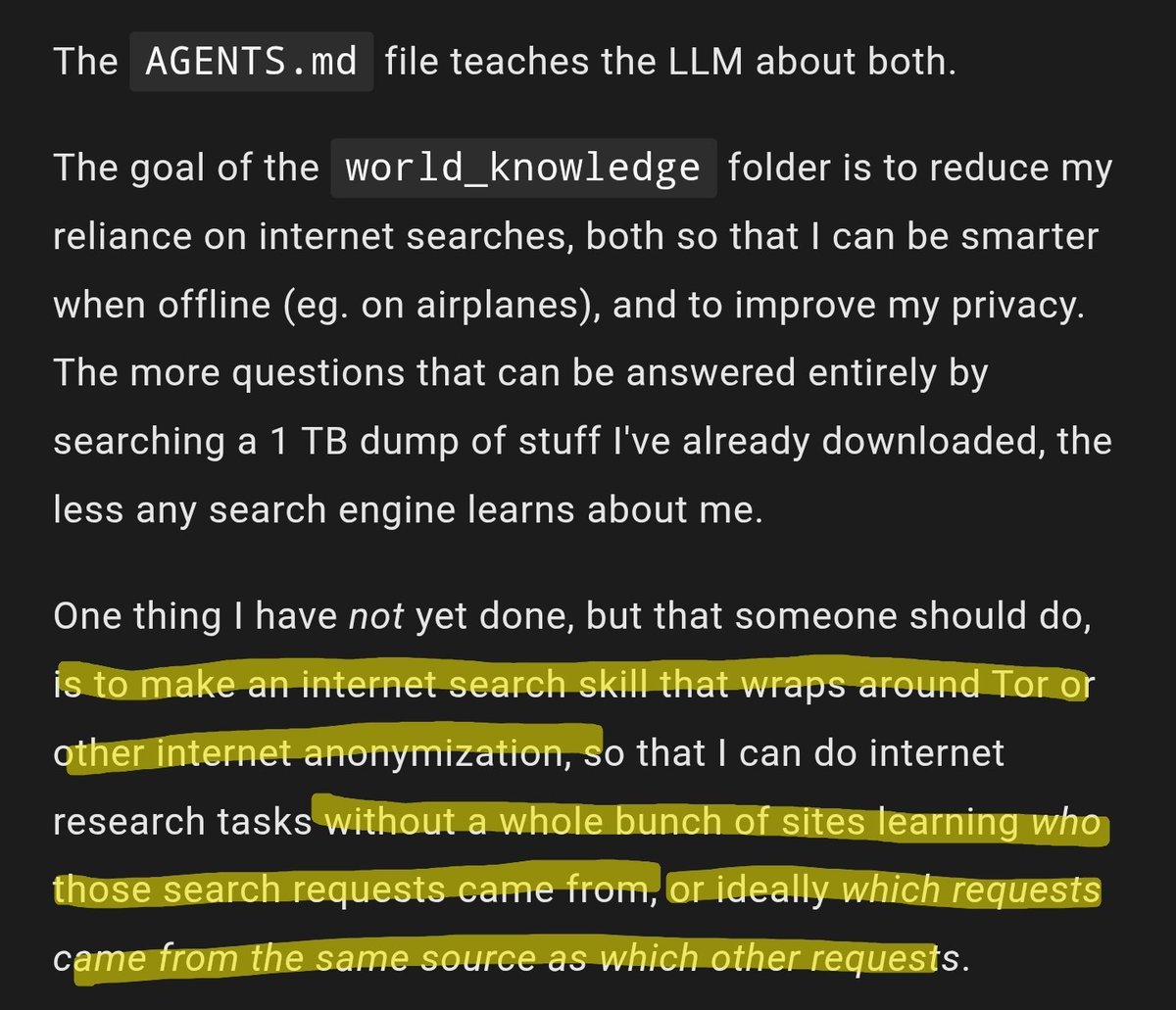
Really enjoyed reading your setup and iteration in a self-hosted LLM setup V! 🦄
So often small, passionate projects go unnoticed - but what you highlighted below is exactly the stuff @MASQ_ai & @Timpi_TheNewWay are building together.
It exists already in our products and moving quickly for AI ready agent access with anonymization 👏
Apr 2

My self-sovereign / local / private / secure LLM setup, April 2026
vitalik.eth.limo/general/202…
4
10
20
457
kaurihero.base.eth 🌐 MASQ priv/acc retweeted

Mar 31
Two communities merging isn’t just narrative — it’s shared demand, shared revenue, and synchronized growth loops.
More users → more activity → stronger buybacks → tighter supply.
That’s how real compounding starts. 🔁
Worth a listen 👇
masqbrowser.com/masq-timpi
1
5
56
Awesome partnership with two products I'm loving to use and most importantly - they actively listen and grow with their users
(Plus both their founders grind 🔥 - few)
Mar 28

Pistachio x Awaken Tax 🧾
DeFi yield is taxable income. Every vault accrual, every swap, every cross-chain move is a potential taxable event. Most DeFi users have no idea how many they generate in a year.
Awaken Tax is AI-powered crypto tax software that handles exactly this. It connects to your wallets, identifies every taxable event, applies correct cost basis accounting, and generates the forms you need.
Starting today, Pistachio users get 20% off Awaken Tax. Export your wallets into Awaken directly from within Earn.
Because earning 13.1% is great. Owing unexpected taxes on yield you did not track is not.
Welcome, @AwakenTax.
1
3
104
kaurihero.base.eth 🌐 MASQ priv/acc retweeted

Mar 27
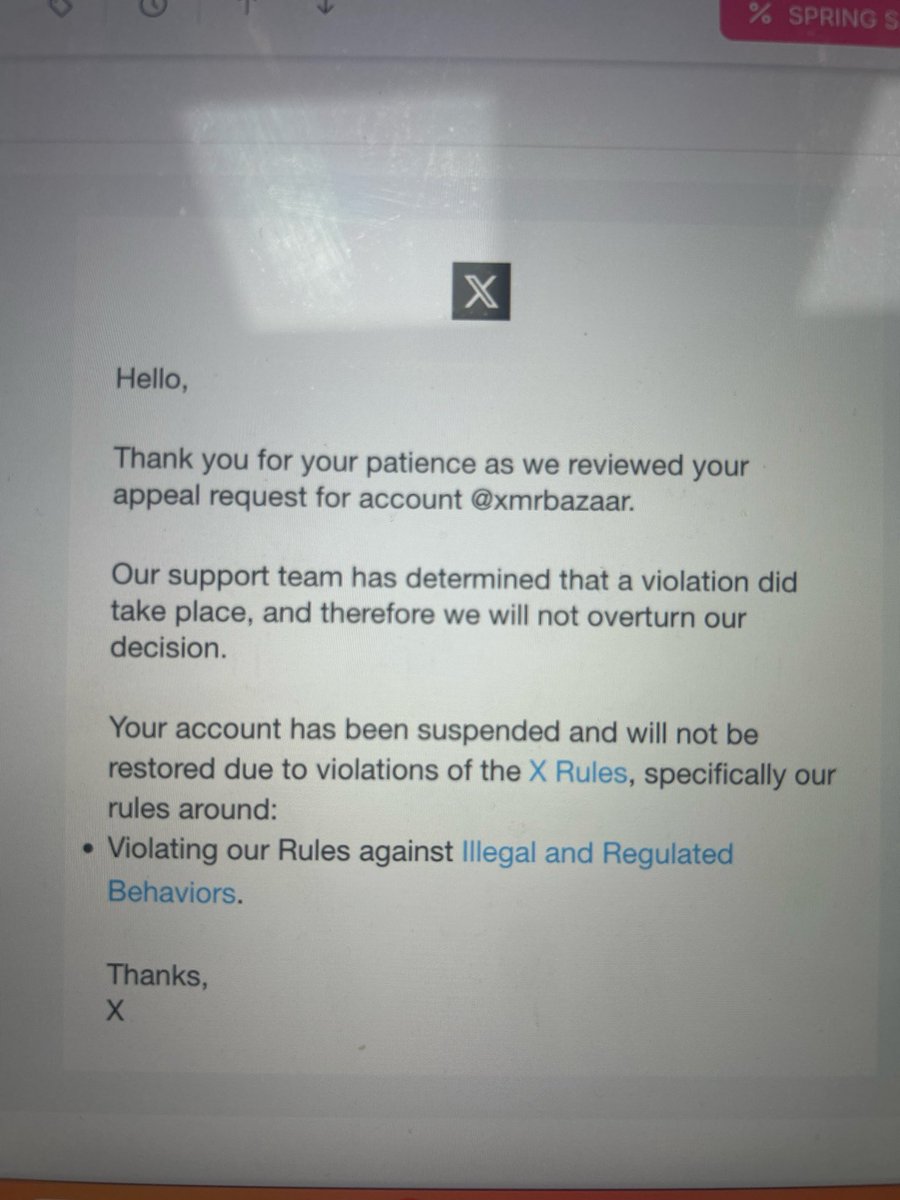
The permanent suspension of @xmrbazaar is pure absurdity.
An account devoted to peacefully spreading the P2P digital cash movement gets banned for “illegal and regulated behaviors” on a “free speech” platform.
Yet X happily condones porn, spam AI bots, and endless evil/useless accounts.
Why punish a tool of freedom while platforming endless crap?
Reinstate @xmrbazaar !
Like and share so @elonmusk is forced to tell us why X is working to hurt the growth of the most successful p2p crypto marketplace for legal goods and services.
Expose the hypocrisy! Elon please fix this.
79
231
793
37,685