
IT professional, Telecommunications Specialist, Fervent Reader, Grammar-Nazi, Vocab Dilettante, discerning eye towards political upheaval.
Joined April 2018
- Tweets 234
- Following 832
- Followers 42
- Likes 659
31 Photos and videos

Kanchit Kumar retweeted

Jun 15
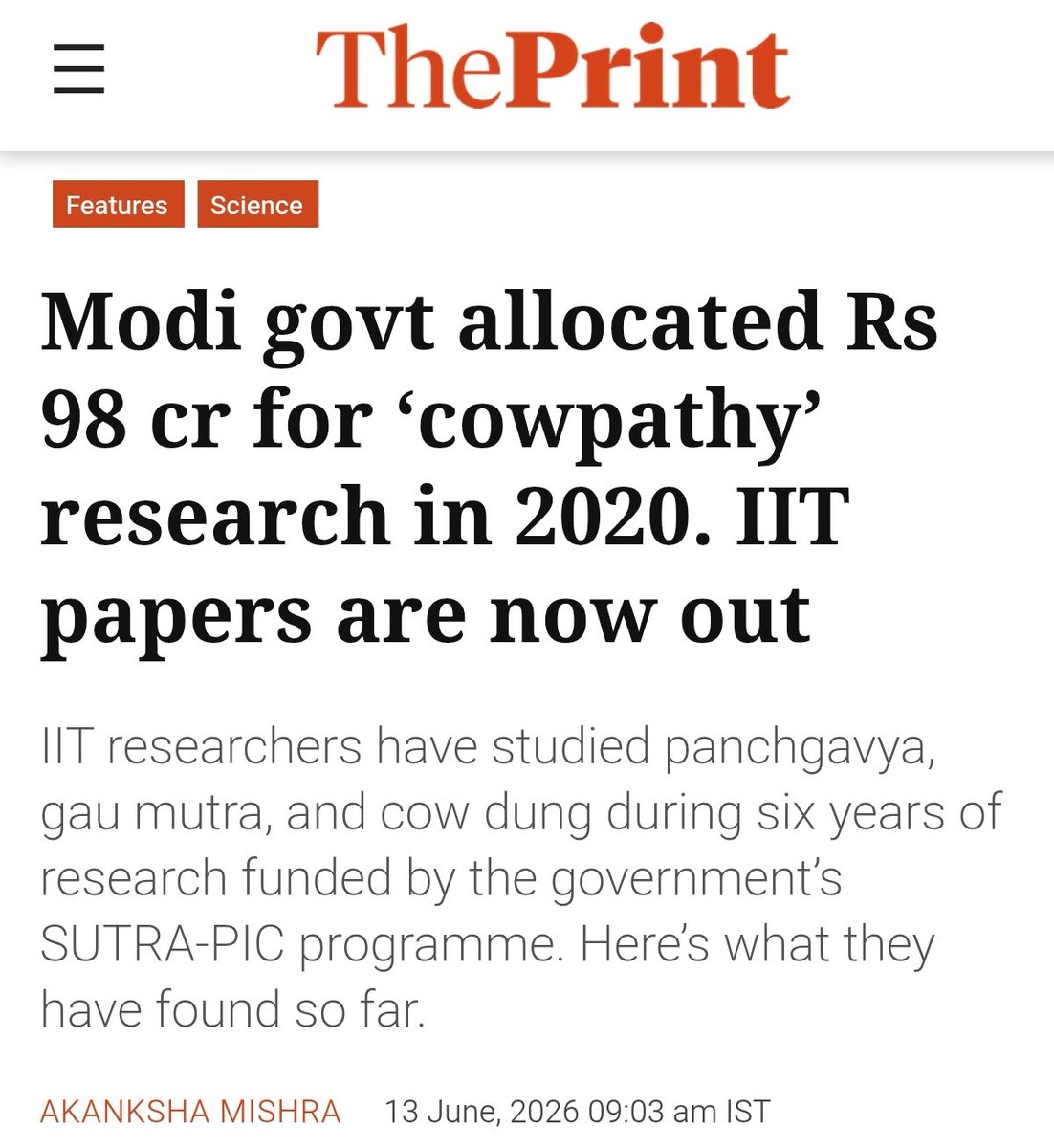
Let me summarise this for you...
This is the picture:
-A religiously-motivated, unfalsifiable premise;
-A dedicated funding line that could only ever reward positive outcomes and pre-planned confirmation;
-So-called published "science" sitting at the bottom of the evidence hierarchy with no translational pathway built or even planned;
-A sponsoring ministry that won't show its books; and
-An opportunity cost measured against every competitively-reviewed proposal in real Indian science that didn't get that Rs 98 crore.
Ultimately some compounds we already knew were in animal urine got identified.
Nothing that matters to a person or a society evolved from this colossal wastage of public funds.
85
695
2,581
81,465
Kanchit Kumar retweeted

Jun 13
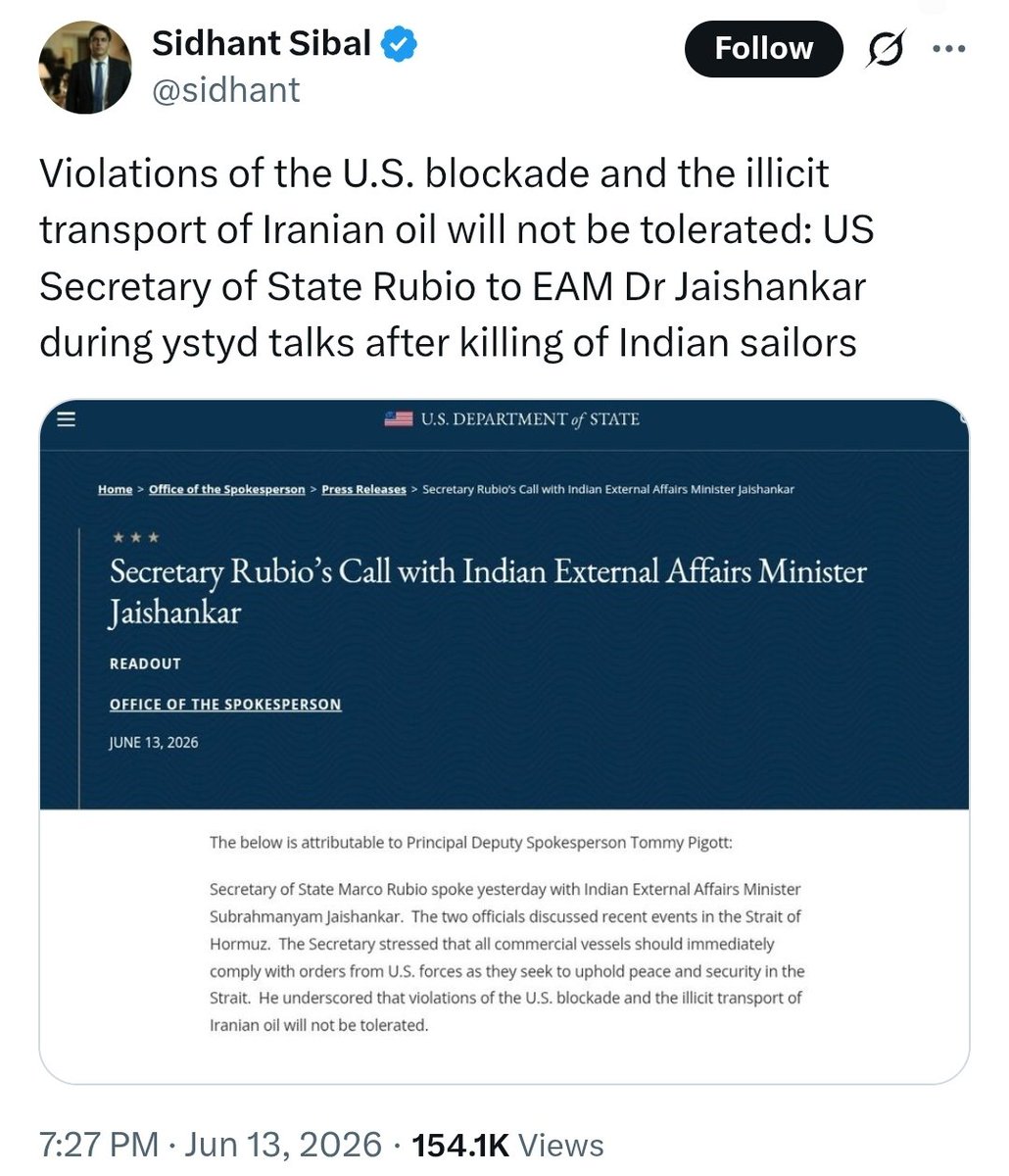
America is neither apologising for killing Indians nor displaying any intentions of not repeating it in future. What a pathetic state we are in.
17
70
247
4,029
Kanchit Kumar retweeted

Jun 13
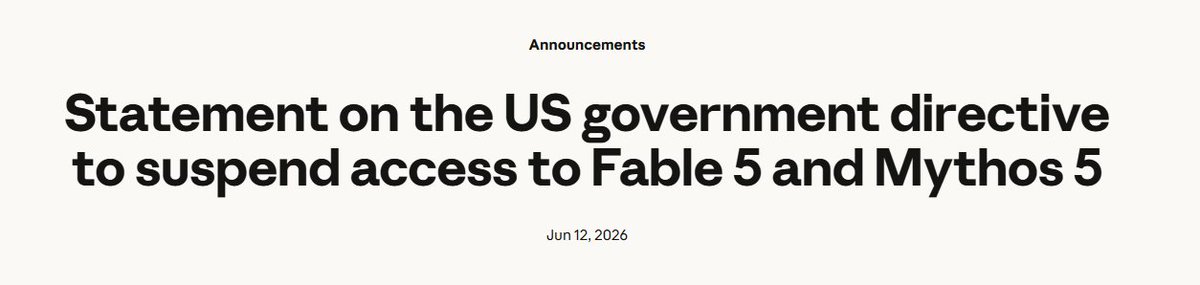
Nilekani has argued India does not need to build frontier AI models and should let the Valley handle it.
That view got tested on Friday when the US pulled Fable 5 and Mythos 5 from every non American user within hours, The strategy works when access is permanent.
It breaks down when one export control letter can turn off your best AI tools overnight.
Nuclear comparison works in direction but breaks on difficulty, Pakistan built a bomb for about $3 billion using domestic uranium and its own physics talent.
Frontier AI needs Nvidia GPUs made at TSMC, both supply chains the US controls. You cannot go independent in AI the way countries went independent in nuclear because the basic inputs are not available at any price.
Space fits better than nuclear, Only 3countries can put humans in orbit independently and the barrier is cost, not secrecy, Same with frontier AI.
US hyperscalers will spend over $650 billion on AI this year. India entire IT sector makes around $250 billion. That spending gap alone explains why India cannot build a Fable competitor the way ISRO built a launch vehicle.
Open source AI from China and India right now is the equivalent of buying rides on someone else rocket while you build your own program.
India signed the Pax Silica declaration in February, formally joining the US led tech bloc alongside Japan, South Korea, Australia, and the UAE.
4 months later, Indian users still lost access to Fable 5 and Mythos 5 because the ban hits all foreign nationals regardless of alliance status.
Being inside the bloc gives you a seat at the table for chip supply chains. It does not protect you from overnight model shutdowns. Alliance membership and frontier model access turn out to be separate commitments.
Chinese AI labs released their best models under free licenses partly because US chip controls pushed them toward open source as a workaround.
MIT research shows Chinese open source now leads US models in global downloads. On Friday when Anthropic two best models went dark for every non American user, Qwen and DeepSeek were still sitting on Hugging Face, downloadable with no permission needed.
For most of the world, Chinese open source just became the default insurance against American export controls on AI.
Trump June 2 executive order asked AI companies to voluntarily submit frontier models for government review before release.
Anthropic did not pause Fable 5 and Mythos 5 for that process, 10 days later Commerce Secretary Lutnick sent an export control letter forcing a total shutdown of both models for every user on earth.
I wrote this in the past, in Jan 2025. If you're curious, read it. Even the GOI or any nation knows this too. If I know this, I'm just a normal being. 👇
anthropic.com/news/fable-myt…
43
156
625
62,067
Kanchit Kumar retweeted
Jun 13
Good morning! Just got to know this!
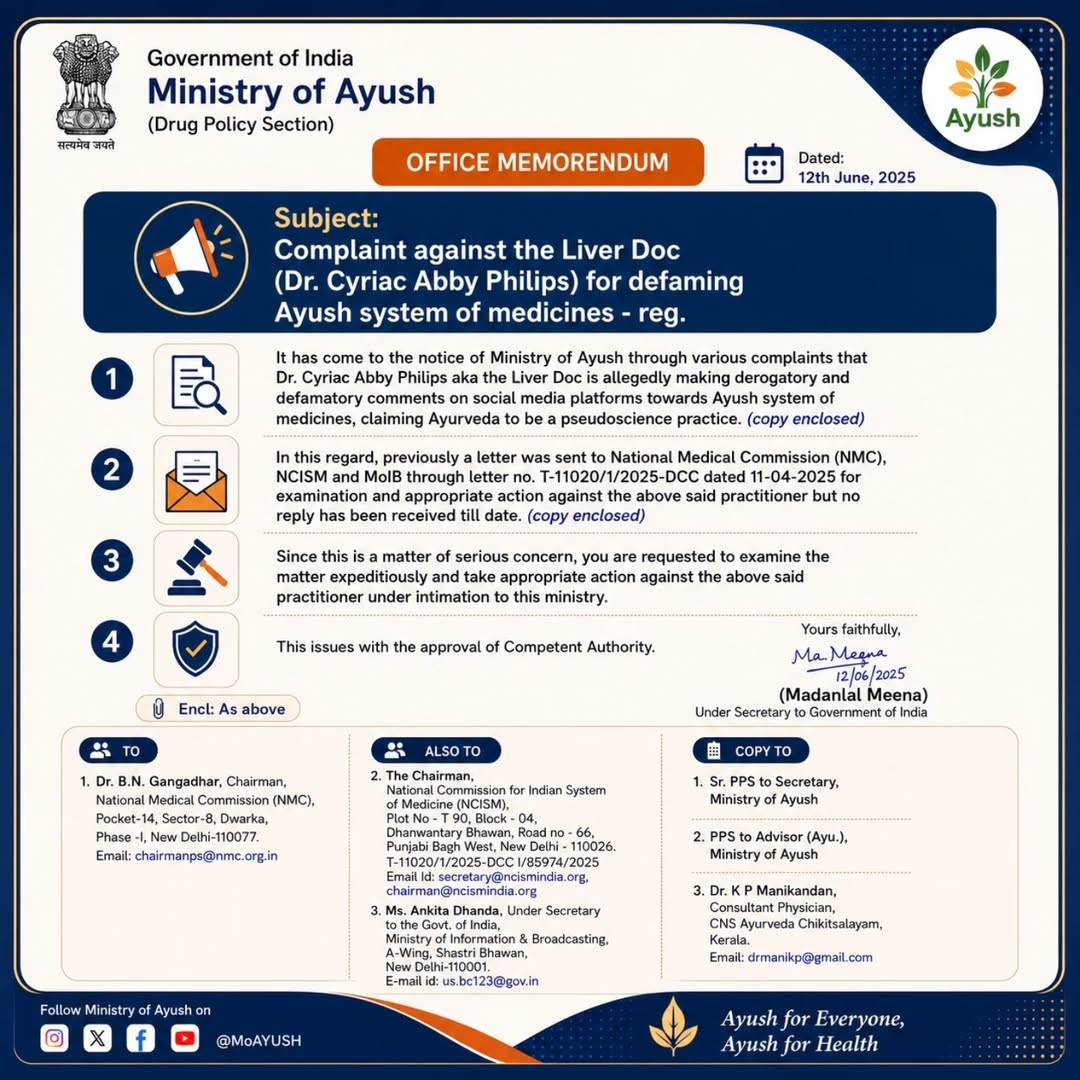
1/2 A whole government Ministry is unleashed on me - because I speak against unscientific practices and primitive traditional healthcare that can harm, I communicate scientific information for public and patients alike.
This was an official memo released during the Ministry of Ayush meeting on 12-6-2026 fully dedicated towards shutting down my social media presence.
Imagine - the people in this meeting were eating biscuits and drinking tea, paid for by the citizens of the country - to decide how to gag and shutdown a citizen doctor who educates people on medical science via social media.
Yesterday, my Instagram account was briefly hacked, but I got back control and removed unauthorized access within an hour.
The Article 51A(h) of the Indian Constitution outlines the fundamental duty of every citizen to develop a "scientific temper, humanism, and the spirit of inquiry and reform". Added during the 42nd Amendment in 1976, this non-justiciable directive promotes logical reasoning, critical thinking, and rationality.
The Ayush system is not scientific, it kills scientific temper, it does not promote the spirit of inquiry, it lacks logical reasoning, has the deadest version of critical thinking and none of its products and practices are rational.
The only thing that needs to be shut down, is an unscientific body like Ayush that goes against the Indian Constitution and wastes public tax money... and not me.
Also, please look closely at the person at the end, who is copied to, by the Ministry. His name is Vaidya K P Manikandan and he is the owner and founder of CNS Ayurveda Hospital, where children are treated for chronic conditions such as severe mental health disorders, autism and epilepsy (please see an official release from the hospital in the next post). One such victim of his was saved by my team (we reported it: pubmed.ncbi.nlm.nih.gov/3629…) and he put a criminal defamation case against me and the authors (for publishing a scientific peer reviewed paper!) which was later "stayed" by the High Court of Kerala.
This has nothing to do with service to patients, but everything to do with protecting the business of alternative medicine (especially Ayurveda). These low life complaintants should be ashamed.
225
1,056
3,491
98,014
Kanchit Kumar retweeted

When this decade is dissected by future generations it will stand out for - celebration of unscientific nonsense, sanction of lynchings/mob violence, corruption rewarded & all this applauded by big media. Endorsed & overseen by uneducated ignoramuses. #Facts
Jun 9

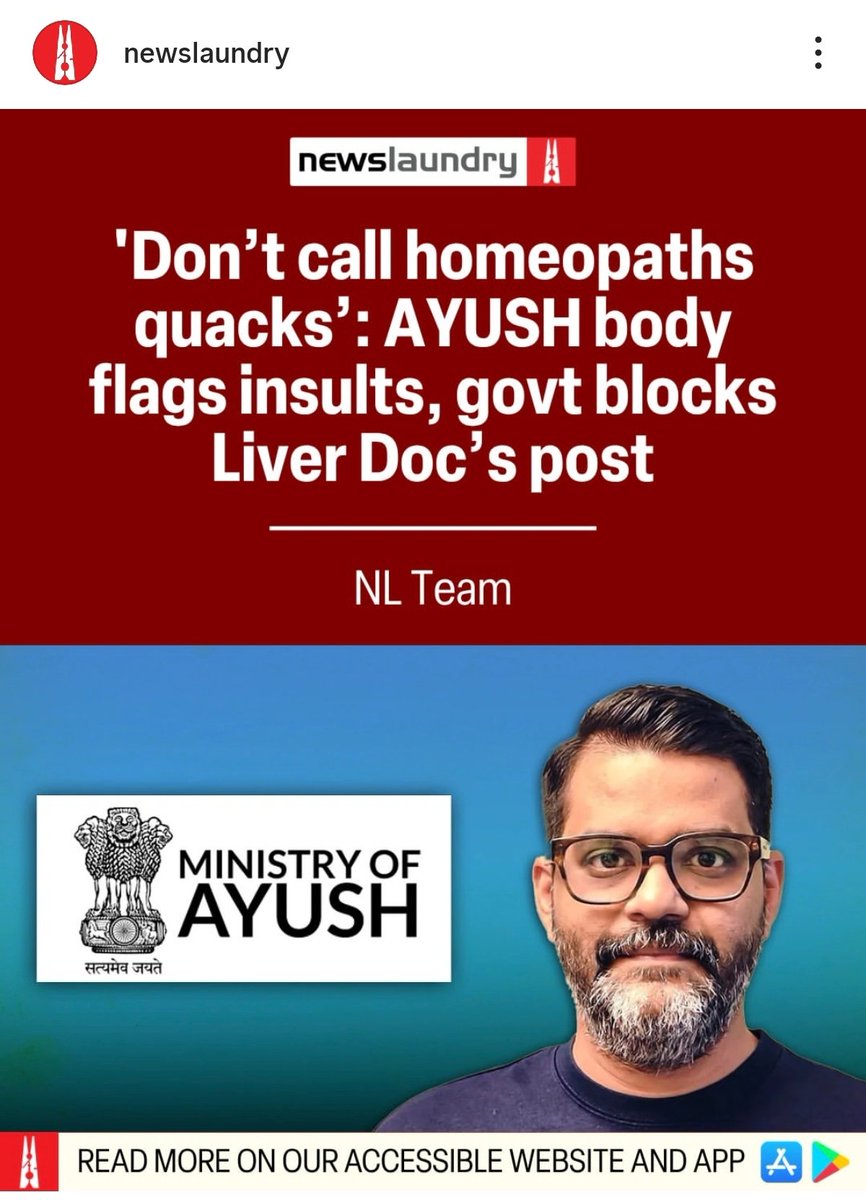
Don't call Homeopathy quacks ok. Don't call them quacks. Make note of it...the word not to use, is quacks.
See here, check the comments:
instagram.com/p/DZW3PR4jy9l/…
#mustread via @newslaundry
newslaundry.com/2026/06/09/d…
18
273
1,414
86,988

Claude Fable 5 is by far the most ridiculous model that makes me genuinely afraid for the future of software engineering.
I compiled the top 10 most unbelievable things I've seen Claude Fable 5 do today:
— Migrate a 50M line codebase from Stripe in a day (humans take 2mos)
— Draw amazing 3D graphics a) Boeing 747 b) space simulations with >5000 objects c) Minecraft roller coasters d) full photorealistic forest scenes e) NYC skyline f) stormy clouds)
— One-shot Pokemon FireRed the game
— Optimize a real world proprietary interaction net evaluator 10x more than the next best model, gpt5.5
AND it's about the same price as GPT 5.5 ($10/M input, $45/M output) vs Fable 5 ($10/M input, $50/M output) and 6x cheaper than GPT 5.5 Pro.
Community note
The claim misrepresents Anthropic's report: Fable 5 performed a codebase-wide migration within a 50M-line codebase in one day, not a full 50M-line migration. GPT-5.5 standard pricing is $5/M input and $30/M output, not the $10/$45 long-context rates used in the comparison. anthropic.com/news/claude-fa… developers.openai.com/api/docs/prici…
390
424
6,145
917,651
Kanchit Kumar retweeted
Jun 9
Don't call Homeopathy quacks ok. Don't call them quacks. Make note of it...the word not to use, is quacks.
See here, check the comments:
instagram.com/p/DZW3PR4jy9l/…
#mustread via @newslaundry
newslaundry.com/2026/06/09/d…
77
295
1,807
126,456
Kanchit Kumar retweeted

A weakening rupee forced RBI and North Block into action !
RBI has opened the floodgates: The fully accessible route (FAR) expanded to long term 15–40Y bonds and FPI limits scrapped, effectively turning the sovereign curve into a high-beta, tradeable asset class for global capital.
Govt then removes LTCG and interest tax—handing over yield without asking for duration stability.
This is a full-stack FPI inflow push. But it leans heavily on footloose debt capital to do the job forex reserves once did.
The fiscal and monetary lines are blurring, with tax policy now a currency defence lever. For a country historically cautious on debt liberalisation, this is a sharp pivot—with vulnerability to sudden reversals if global rates or risk sentiment turn.
#FPI #RBIPolicy
3
9
50
4,462
Kanchit Kumar retweeted
Jun 5
Xi Jinping is aggressively appointing scientists and technologists in topmost government and CCP positions to ensure rapid advance in major frontier technologies. He's determined to not let America have any substantial edge anywhere.
That's what a serious national strategy looks like.

16
92
261
7,438
Kanchit Kumar retweeted
Jun 2
Let me tell you what Scamdev is promoting here as an Ayurvedic treatment in 2026 and calling it health tourism.
For arthritis or some disease of the joints, they have cut the patient and are doing "singi" therapy, which is sucking out blood through a horn-like object placed over the cut area...they believe they are sucking out "bad blood" that will cure chronic illness.
You can actually see the old man (ancient garbage healer) kneeling down and sucking the woman's blood from her knee through the horn.
This is not just negligence, but extremely dangerous because it can spread infections and transmit illness to both the treating sucker and the sucker-punched patient.
Not just that, the video also shows patients poked with multiple needles by quacks, being bled from the back, none of the "therapists" with gloves or other aseptic precautions...
...and Baba is roaming around letting microbes from his unkempt hair and beard settle on the patients whose blood is freely drawn out without any protection.
If this was in any other country, these crooks would be rotting in jail for doing this to patients.
But the Indian government is promoting these batsh*t crazy loonies who claim to be "healers" and giving them civilian awards.
Jun 2

गैर जरूरी ऑपरेशन, टेस्टिंग, और दवाओं से अपने आप को बचाएं, रोगों को जड़ से मिटाएं...
#niramayam
#singi
#integratedtreatment
#chikitsa
#healthtourism
110
905
3,494
198,677
Kanchit Kumar retweeted
May 30
This young boy has done an investigation what Godi Media chaps together have zero clue of, as they're busy bootlicking 24x7.

#WATCH | Ranchi, Jharkhand | A class 12th student, Sarthak Sidhant, says, “…I have written a blog that compares the tender documents of CBSE. I have uploaded and published it… There were at least 15 discrepancies, as per my blog. I would like to highlight three or four of them. Let me give a background about Coempt. It was known as Globarena, and they have a very shady background. 23 students killed themselves because of coempt… Now, I would like to tell you about RFP (Request for Proposal). What happens is the government issues a tender and asks the bidder to bid for it. CBSE issued this tender three times… I have compared the old RFP and the new RFP, and I found some discrepancies… The first discrepancy is that there were three clauses of poor performances which was completely wiped out from the new RFP. In the earlier RFP, there was a clause called blacklisted earlier, whereas in the new RFP, it was changed to blacklisted currently. Why would the board want a service provider which was blacklisted earlier? The third thing I found out is the 50 crore limit, which you needed to qualify, and coempt qualified that by 1.7% … The time frame of corrupt practices was halved, and there were project criteria changes… It shows a pattern that the industry giant TCS was not preferred, but coempt was preferred, which works as a very fragmented group of institutions…”
11
413
1,541
20,112
Kanchit Kumar retweeted
May 30
Bad move. Extremely bad move.
May 30

After 3 years of BSc NEET prep, I didn’t get MBBS. I chose BAMS instead.
Going from pure science to decoding Sanskrit shlokas was tough in the beginning. But one semester down, and I’m completely in love with this science.
Same niche? Let’s grow together 🤝
52
122
2,505
199,842
Kanchit Kumar retweeted
May 24
Dear Gen Z,
Do not be fooled by the fake CJP movement.
As a smart youth, check their genuine intentions. And how?
Just ask the creators and controllers of CJP to raise these 7 substantive issues immediately -
1) Demand a National Factories Mission (1 giant PSU factory per district) to generate 8 crore jobs in India for youth (and ensure due reservations (both horizontal and vertical) in each, for social justice).
2) Demand a total end to communal politics that sows discord between communities & distracts from real issues.
3) Demand children of all politicians and civil servants (centre and state) to be enrolled only in govt schools and colleges.
4) Demand complete disclosure of PM CARES FUND and all ELECTORAL BOND cases; and all assets transferred as part of the I.B.C. processes to crony capitalists.
5) Demand all top ministers and civil servants with children or relatives settled in US (and other interests in US) to leave their official posts right now.
6) Demand immediate fast track trial of all MPs and MLAs with multiple criminal cases against them.
7) Demand a full actual disclosure of money spent in each election in each constituency by each candidate, and disqualify every one who exceeded official limits.
Start by demanding this. See what happens.
I wish you the best ... May you win 🌹
May 24

Dear Gen Z
I stand with you. I feel your pain. I want a better, vibrant future for you. I wish you well and pray for you.
That is why I oppose fake movements like CJP, created overnight by the AAP (backed by BJP RSS) to confuse, distract and defuse your genuine anger. To kill opposition voices rising for you.
In time, you'll realise. I know because we lived through the IAC-1 scam and saw it unfold exactly similarly, with horrifying consequences for our nation. CJP is IAC-2.
Best wishes and success to you 🌹
35
168
443
12,132
Kanchit Kumar retweeted
Apr 11
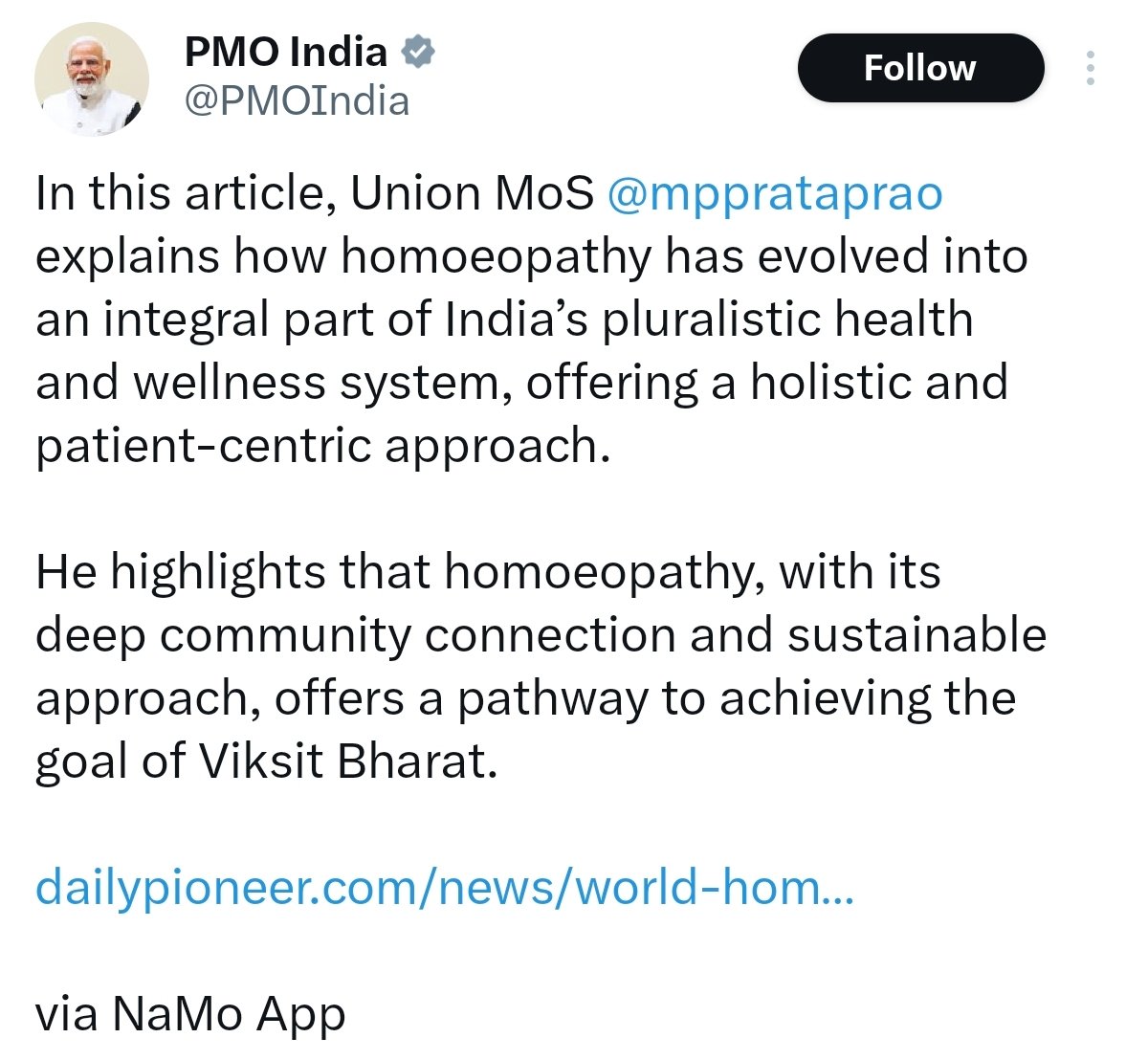
Can anyone show me another Prime Minister who publicly claims that promoting Homeopathy within the healthcare system can help their nation progress?
Just one?
In the country of its origin, Germany, the Health Minister Karl Lauterbach is actively moving to abolish state-funded insurance coverage for homeopathic treatments, arguing that services without proven medical benefits should not be financed by statutory health insurance.
People like this man are giving me second hand embarrassment because his team of science illiterates is the sole reason why India is now the pseudoscience capital of the world, dethroning China to the second place.
162
855
3,595
89,812
Kanchit Kumar retweeted

Feb 25
Whats going on @SamsungMobile suddenly S22, S23 devices are getting power ic issue. Within my contact circle 2 S23 and 1 S22 suddenly turned off and now not powering up. When shown in service center, they mentioned power ic has short and need to change whole mother board.
3
1
81
Kanchit Kumar retweeted
Feb 4
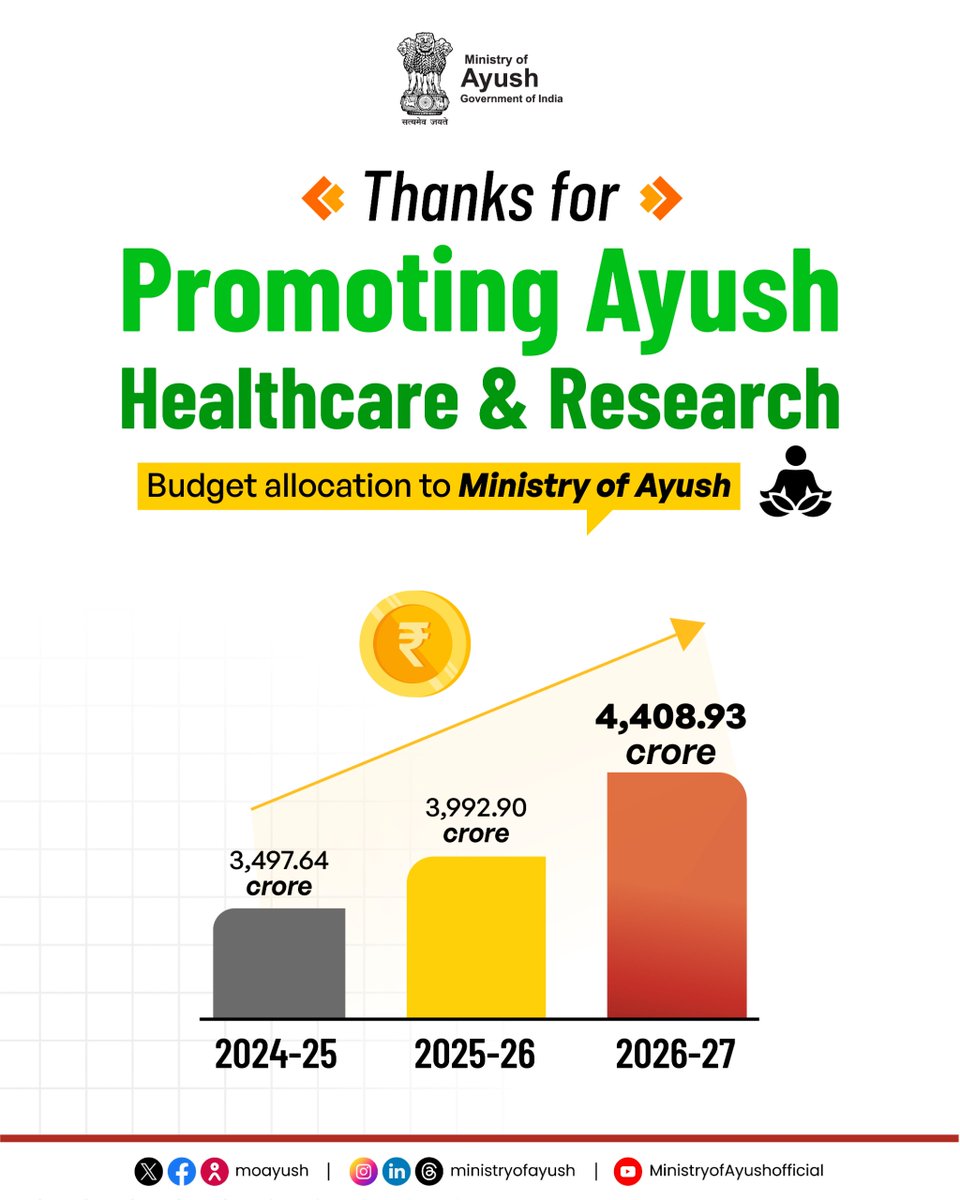
Ministry of AYUSH will receive ₹44,000,000,000 (Forty-four thousand million / Forty-four billion Indian Rupees) this year for promoting pseudoscience, creating more stethoscope-wearing Instagram quacks, building more unscientific institutions, and endangering peoples liver and kidneys.
Feb 1

The Budget 2026-27 lays special emphasis on expanding access to Ayush-linked health services and promoting evidence-based research in the sector. The ₹4,408.93 crore allocation for the Ministry of Ayush in #Budget2026 is a testament to global confidence (1/3)
@mpprataprao
133
807
3,243
119,869
Kanchit Kumar retweeted
Feb 1
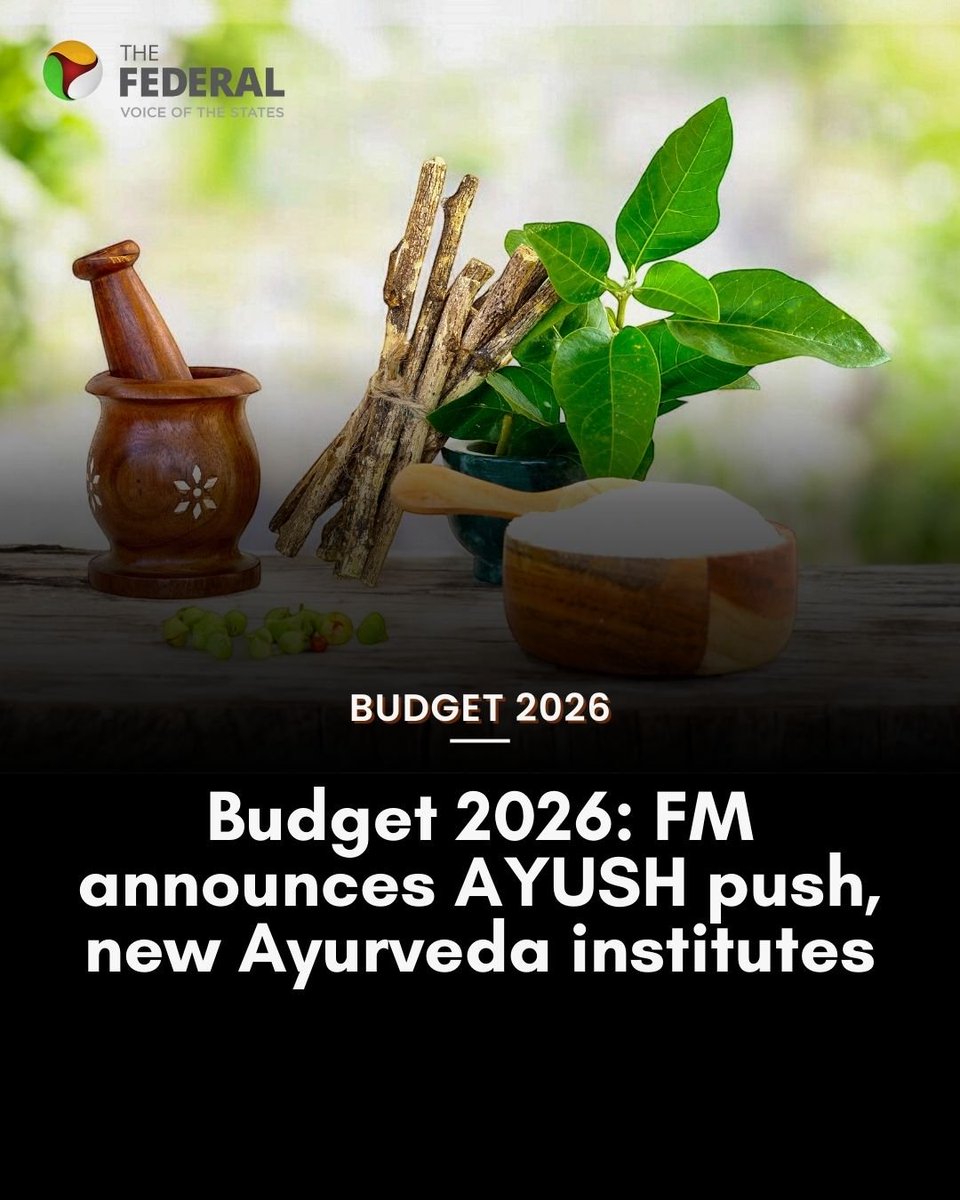
In rivers and bad governments the lightest (most useless) things swim at top.
- Benjamin Franklin
38
220
1,333
26,908
Kanchit Kumar retweeted

8 Oct 2025
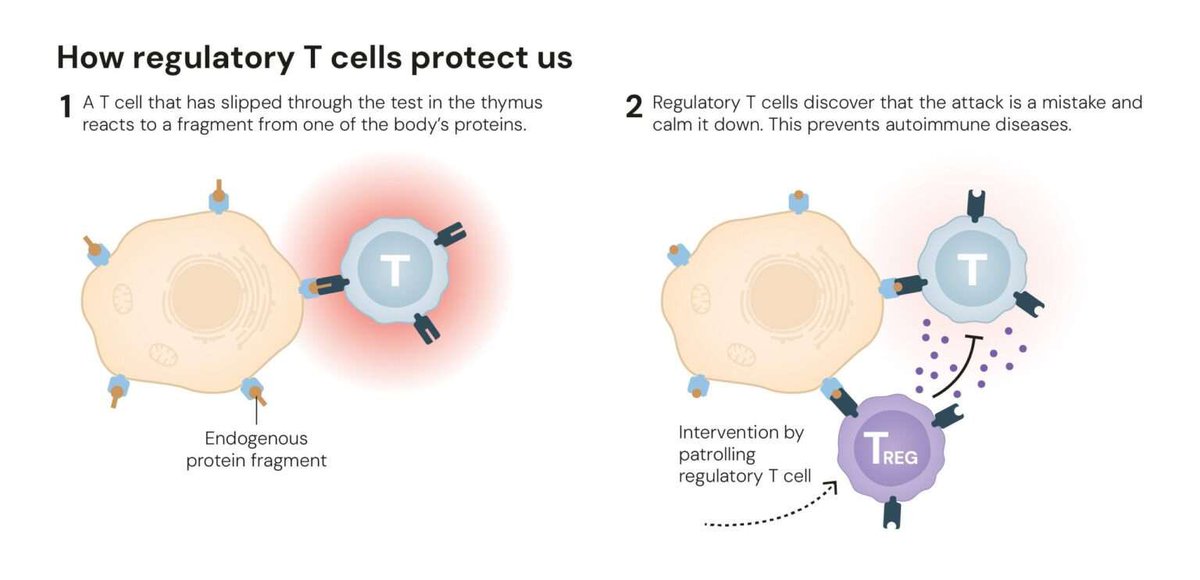
Can anyone explain why this is worthy of the Nobel prize in medicine, and how it applies to gastroenterology?
43
63
560
79,947
Kanchit Kumar retweeted

7 Oct 2025
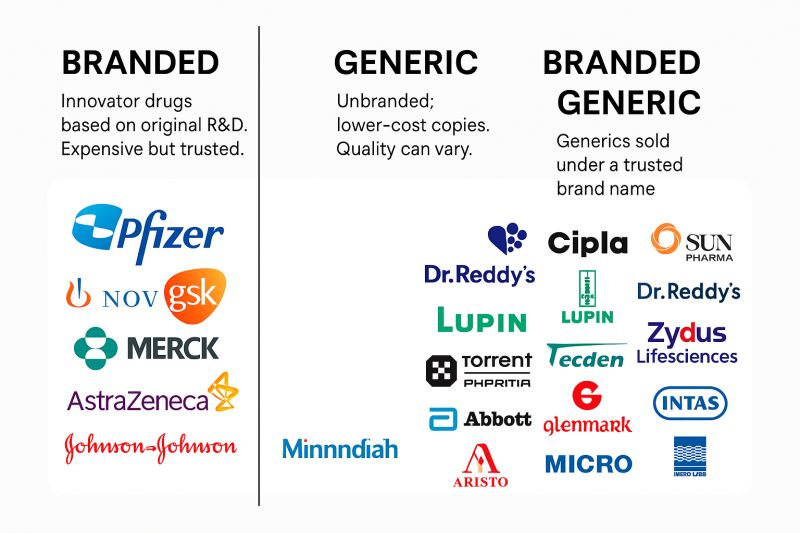
When Generic Medicines Don’t Work as Expected
A 35-year-old man came to me with severe nerve pain that had troubled him for nearly nine months. His story was complicated by long-term alcohol abuse and uncontrolled diabetes, both of which are known to damage the nerves. Despite quitting alcohol (with medical help), bringing his blood sugars under control, and taking several medicines commonly prescribed for nerve pain, such as gabapentin, pregabalin, and duloxetine, he continued to suffer. The pain was so intense that it interfered with his daily activities and even robbed him of sleep.
At the time he consulted me, he was already taking pregabalin (300 mg/day) and duloxetine (60 mg/day), but with very little relief. Since his condition was stubbornly resistant to treatment, I even considered doing a nerve biopsy to check for less common causes of neuropathy. Detailed blood work, already done, were negative. However, the patient wanted to wait for a month before undergoing any invasive procedure.
During this time, I decided to make one change: I switched his pregabalin from a generic version to the innovator (original) brand, keeping the dose exactly the same. When he came back for follow-up, the transformation was remarkable. He reported 80% improvement in pain, and his quality of life improved dramatically.
The takeaway:
While generic medicines are effective and affordable for most people, occasionally they may not work as well as the original brand in certain individuals. If symptoms don’t improve despite the right treatment, it may be worth discussing, whether switching to the innovator brand is an option, even if it comes at a slightly higher cost. Sometimes, that change can make all the difference.
Dr Sudhir Kumar MD DM 07-10-2025
87
171
1,056
98,022
Kanchit Kumar retweeted

6 Oct 2025
In honor of today's Nobel Prize, here are ~500,000,000 human regulatory T cells in culture.
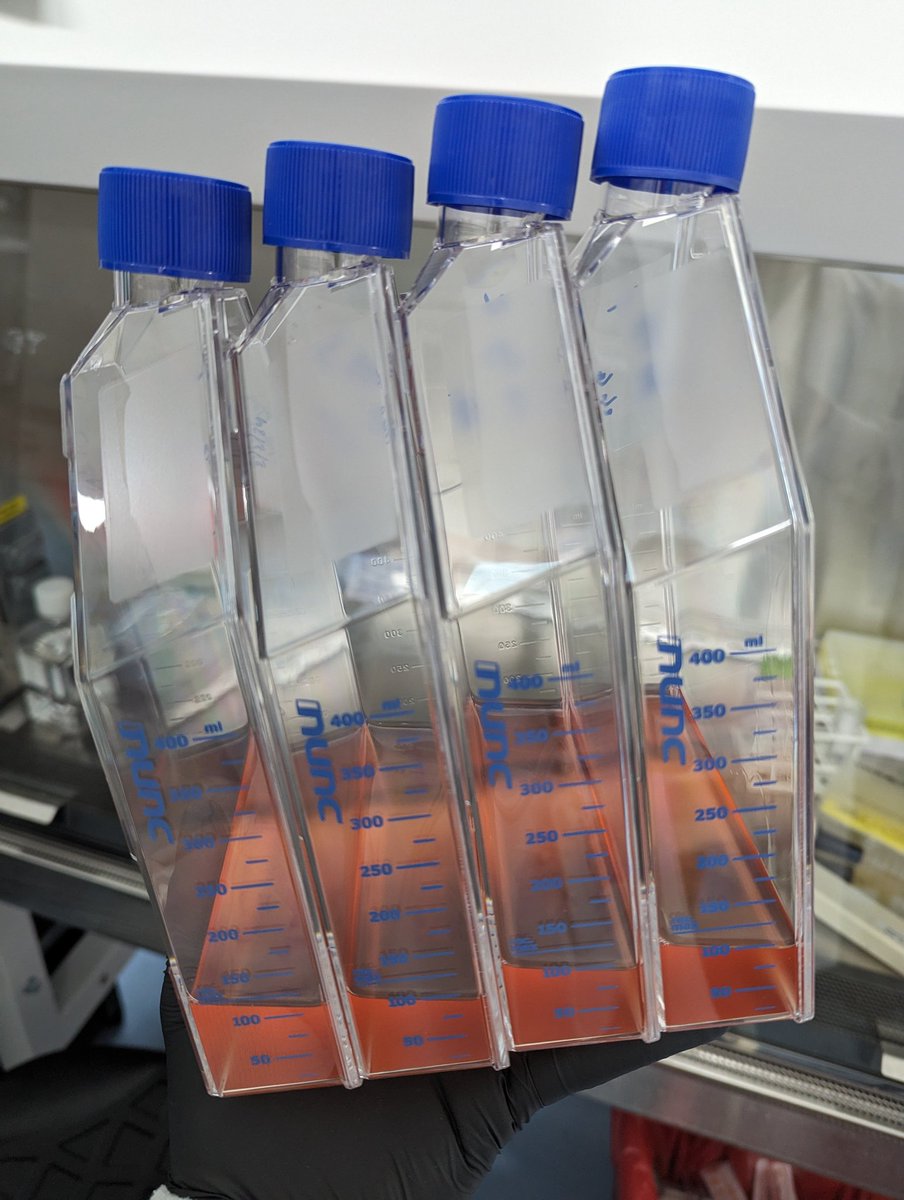
6 Oct 2025

Wow. It's not every day when a Nobel Prize is awarded for the niche area that you work on.
Many congratulations to the winners, whose work quite literally enables mine.
16
374
3,316
131,361