
SaaS Sales Sourdough Smoked Meats
Joined January 2020
- Tweets 9,498
- Following 941
- Followers 1,742
- Likes 8,568
817 Photos and videos











Jun 13
I’ve spent the last month or so debating a pretty dumb local issue in our small town. Every single opposition is a NIMBY retired boomer with 0 care for anyone but themselves.
It has radicalized me against the older generation.
My new political affiliation is simple.
1. Remove voting right from anyone collecting social security
2. Families receive an extra vote for every dependent under the age of 18.
1
63
Jun 8
The real scam is opening the app and seeing 5 cars near you and somehow always getting a matched with a car 5 times further away.
Jun 6

Standard experience booking an Uber
“5 minutes away”
I order it
“Finding your driver…”
“Pickup in 7 minutes”
I open my timer
9 minutes and 21 seconds later, it arrives
This is so tedious and I am tired of being deceived at the margin
1
168
Jun 7
I’ve decided my new screener for tech sales reps is if they can get this resolved in under an hour.
There may not be a better filter for low agency
Jun 6

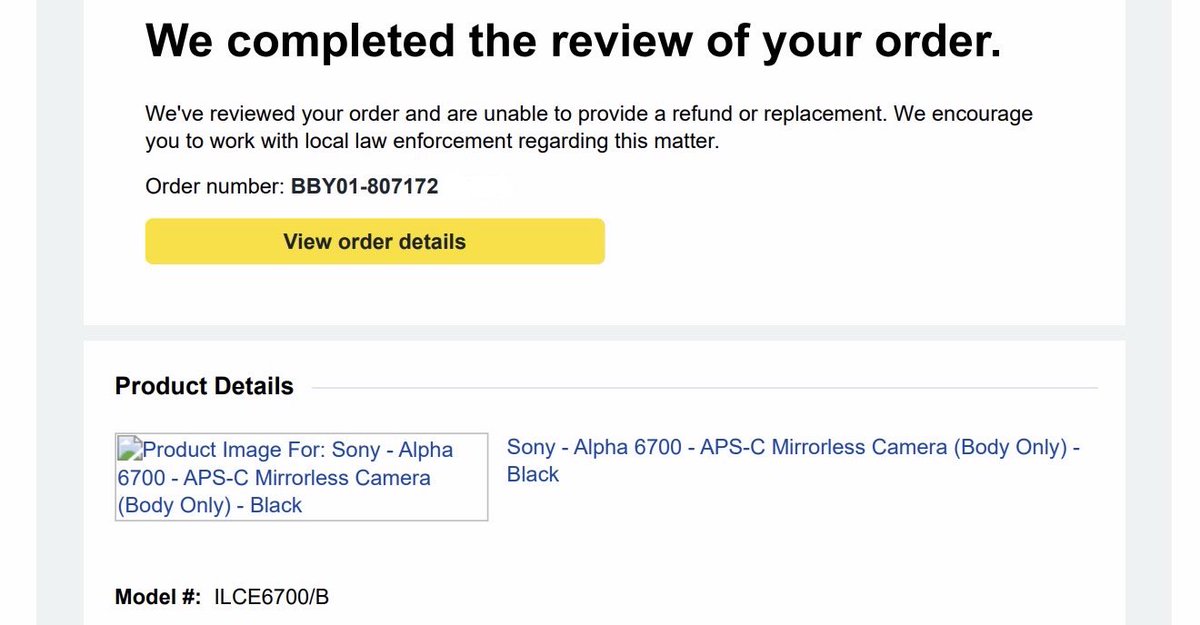
Bought a $1,742.80 camera online from BestBuy.
The FedEx delivery driver stole it. FedEx admitted it.
But BestBuy won’t give a refund. They said we need to “work with local law enforcement.”
Thought everyone should know if you buy from @BestBuy and a @FedEx driver steals what you paid for, your money is gone. Neither company will make it right.
I’ve spent over $30K at BestBuy and will never spend another penny there.
2
326
Jun 5
Sorry all, I opened my fidelity app yesterday for the first time in a few months and started planning some ridiculous landscaping projects.
2
89
Apr 30
Of all the folks using AI today I can tell you this is 100% wrong.
My job and most jobs have close to infinite work. AI crushes bottle necks and waiting. I’m working more hours, with higher output than ever before.
There’s too much work.
Apr 30

The winner in all of this AI token spend isn’t:
1. More revenue growth
2. Less OpEx
It’s:
1. Leisure time - go home early, work on a side gig, play video games etc etc etc
My suspicion is that people are using blower token budgets to do their job in less time. Not so more work in the same time.
This may change but humans are not motivated to do more work and see upside accrue to a few.
Take this to the bank as Wall Street starts demanding specific data about AI enhancements over these next 18 months.
257
Kyle Logiks retweeted

Apr 19
The Ascension, by Paolo Veronese, 1585, 📸 by @gwephoto

20
762
10,508
241,290
Kyle Logiks retweeted

Half the comments here are denying what should've been obvious by now.
At a time when many are starting to get exposed to how software gets built, maintained, and secured, technical knowledge becomes relevant across all roles.
What most misunderstand is that you don't need deep technical knowledge to troubleshoot, but you do need to understand how developers, ops, and security teams work and have opinions on what good looks like.
Then add directional insight on what your applied technology can change in how they work; if that insight is coming from your own corpo marketing, you probably already lost.
This applies for cloud infrastructure software, the only area today that is relevant.
If you are still selling Workday to HR, then, well, Godspeed my fren.
Apr 9

If you are a “non-technical” seller you need to obsess over leveling up your technical acumen.
I don’t think the future “deal team” is an Account Executive Solution Engineer Solution Architect Sales Manager VP of Sales
Sellers that need multiple layers of support just to talk to a customer don’t have a long shelf-life for high paying roles.
Sellers that can handle technical business conversations will do very well for a long time.
(This is my opinion and I’m often wrong so take with grain of salt)
6
1
28
5,541
Kyle Logiks retweeted

Apr 4
Wemby can't believe what Jokic did to him 😮
626
4,111
53,372
2,724,149
Apr 4
Gave a few of my research tasks to Grok and it one-shotted all of them way faster than OpenAI or Claude.
Was trying to teach a few real-life people how to use AI and it’s really hard to teach how to be a “vibe model rotatooor”
Did I ever doubt the bitter lesson?
Apr 3

Two weeks ago I was on cruise control w/ claude and chatgpt.
Spreadsheets formatting perfectly, connecting dots on difficult tasks, outstanding financial modeling, great POVs.
Something happened this week and they are both borderline unusable. I’m running the exact same prompts and it’s largely just spitting out nonsense.
1
154
Mar 31
Run it back again.
Making OKC the villain is doing serious hate watch numbers.
Mar 26
Silver almost certainly has the data to show that these kind of calls drive engagement by hate watching, there’s no other explanation.
This shit 10Xs, any other NBA content on socials
86
Mar 27
Was on r/techsales and found out the whole sub says they use “chat” talking about chatgpt.
Is this widespread?
1
213
Mar 27
I created an internal tool that has automated 6 things I do every day that take hours. Mostly all coordination problems
1. Generate an executive style POV in my style from a massive markdown file.
Cover on internal calls, parse down to one-page to share with execs.
2. Business case pulling in “voice of the customer”, industry benchmarks, and some secret integration sauce.
3. Standard customer facing pricing deck with agenda, executive summary, business case overview, bill of materials, cash flow summary, next steps from the mutual action plan.
4. Mutual action plan template that pulls in all discussed dates from calls transcripts, notes, auto populated with my best practices and standards
5. Pricing spreadsheet I can manipulate on the fly since our pricing tool is absolute garbage, calculates all my margin accelerators and quota attainment on the opportunity
All I do is drop all my notes, attachments, call transcripts etc into a folder and answer a couple questions.
Calls back to Claude and generates 5 documents in about 5 minutes.
Insane level of time saving
Mar 27

People asked why I was so blown away by Claude Cowork, so I thought I’d puke some quick thoughts out
The true promise of Claude Cowork, and ultimately any sort of agentic, AI powered workflow tool is to realize the perfect embodiment of the organization as described by Peter Drucker, who famously said:
“Because the purpose of business is to create a customer, the business enterprise has two--and only two--basic functions: marketing and innovation. Marketing and innovation produce results; all the rest are costs”
Build the product and generate demand. That’s what drives value. Everything else is a cost
If you’ve never worked in a large organization, it’s hard to truly explain how many “costs” there truly are, and how many of those costs are just a coordination tax.
Take the launch of a new software product: The business needs to document how the product works, where it breaks and has errors. The support reps need to know how the support it. The onboarding and implementation team need to learn how to set it up. The Account Management team needs to learn how to upsell it and drive value through adoption. The sales team needs to learn how to sell it. The marketing team needs to position it in the marketplace and run campaigns about it. The partner network needs to learn it
The amount of coordination, repackaging, enablement, internal distribution etc is. Absolutely. Staggeringly. Enormous. Hundreds of people involved. Thousands at larger businesses.
Every one of these businesses have created convoluted templates and processes to document, enable, support, service, and sell
Now imagine taking all the market research, customer feedback, data, decisions, positioning, and yes, code, and cascading that automatically through the organization, repackaged using the templates that have already painstakingly been created and refined and honed through hundreds of launches, to the relevant team with the correct context and packaging, directly into the hands of actual internal or external end user
That’s the world that just got way, way, way closer to reality. In fact, the main reason it won’t happen any time soon are the people, many of whom will fight tooth and nail against this automation because they will fight like crazy to protect the status quo
This is why you are already seeing AI-native startups move so quickly. Because product launches are cascaded through the organization and out to the customer with way less friction than incumbents can ever dream of
Incumbents are going to have to whip their companies into the AI era. Their employees will not go willingly. But the future is here, and the startups are moving way, way faster
1
1
281
Mar 26
Silver almost certainly has the data to show that these kind of calls drive engagement by hate watching, there’s no other explanation.
This shit 10Xs, any other NBA content on socials
Mar 26

SGA SHOVES Derrick White and gets 2 free throws.
Derrick White NEVER TOUCHED SGA
199
Kyle Logiks retweeted

Mar 25
You are not bullish enough.
The trucking market is an 11 out of a 10 right now, with some the strongest charts since COVID.
The resurgence of the US industrial economy and manufacturing renaissance is real, along with tightening capacity.
I told Bloomberg Open Interest that I am an 11 out of 10 about how bullish the signals are in domestic freight.
61
223
1,442
311,870
Mar 19
Manufacturing is a bottleneck to trillions of dollars of commerce. More manufacturing even if automated will create more wealth and prosperity for everyone.

It’s just a weird sickness at some point, this level of greed. You have $200 billion dollars. You could wipe your ass with $100 bills and keep getting richer every day. Why kill thousands and thousands of jobs at this point?
2
186
Mar 19
This might make sense looking at the world through the lens of software development, but it doesn’t hold water where ERP is responsible for running a business.
Start ups see a couple agents write a some lines of software and automate a few jira tickets and think they’ve reinvented enterprise workflows.
ERPs aren’t just about bloatware executing workflows, it’s executing them correctly, within constraints, and in a way that is auditable and compliant.
HR, logistics, production planning, and financial processes all depend on governed logic, approvals, and traceability that don’t live in an agent layer.
Start ups look at SORs as “just a database” but it’s actually thousands of workflows with business rules, regulatory requirements, and financial truth.
Take something like life sciences order fulfillment. You can’t just swap one SKU for another because an agent sees available supply. That substitution depends on regulatory approvals, market-specific labeling, batch attributes, and compliance rules that differ between the EU and the US. The system has to know what is legally interchangeable, what isn’t, and how that impacts traceability and reporting. That logic lives in ERP. An agent automating “replace A with B” doesn’t have that context, and getting it wrong is a major regulatory violation.
Agents can orchestrate and accelerate work, but they rely on those underlying systems to ensure that actions are valid and accountable.
Without that foundation, you’re not creating a more efficient system of action, you’re putting your entire enterprises IP, financial records and manufacturing BOMs at risk.
There is clearly going to be a move towards composable, API-heavy architectures where agents play a bigger role, but that doesn’t make systems of record obsolete or a liability. It makes them more important, because they are the only layer ensuring that agents act with the right business logic.
The future isn’t about replacing systems of record with agents, it’s about agents operating on top of governed systems that can actually support real-world complexity.

1
4
321
Mar 7
My favorite part about this is some guy in a tshirt with a podcast mic thinking he has a clue about what white collar workers actually do.
Mar 7

Anthropic researcher: Even if all AI progress stops now & algorithms don’t improve, current models already can automate most white-collar jobs within 5 years.
Manual task-feeding to AI model is already more economically viable than human labor.
2
218