
Laboratory for Atomistic and Molecular Mechanics at MIT
Joined September 2009
- Tweets 1,448
- Following 345
- Followers 1,047
- Likes 2,288
68 Photos and videos

LAMM@MIT retweeted

Jun 10
Here is another example, this time modeling fracture (irreversible deformation) of a foam material based off an image ⤵️
2
1
14
2,801
LAMM@MIT retweeted
Jun 11
The release of Anthropic's Mythos-class Claude Fable 5 is the latest signal that we are in a phase of exponential growth in AI capabilities, "takeoff mode". The biggest leaps are in engineering and scientific reasoning: frontier models now match or exceed expert-level performance on many technical tasks, and increasingly act as collaborators that plan, code, simulate, and design (as we show in our own research on self-improving agentic discovery systems).
Understand these technologies deeply is critically, both the foundations and how they're applied to critical industrial problems at scale, and to use them to drive innovation and technology development.
This July 27–30, I will teach Applied AI for Materials Discovery at @MITProfessional (live online so you can participate from anywhere). It's a hands-on deep dive into the shift from predictive ML to agentic, closed-loop AI-native discovery and innovation. Highlights:
▶ AI scientists & recursive self-improving swarm intelligence: massively parallel agents that read literature, formulate hypotheses, write and run code, and critique each other's work
▶ Generative AI for inverse design: diffusion and flow matching for proteins, alloys, metamaterials, and crystals
▶ Foundation models that "think" physics: graph transformers, neural interatomic potentials, neural operators and PINNs
▶ Bridging the reality gap across scales: connecting atomic-scale agents to physics simulators and product-scale (DFT, MD, FEA) for automated verification of AI-generated designs
▶ Building custom reasoning models: fine-tuning, RL; incorporating first-principles physical agency (e.g. MCP, tool use)
▶ Unlocking dormant knowledge: turning unstructured data (papers, patents, lab notebooks, legacy PDFs, etc.) into structured, actionable insight
▶ Interpretability, reliability, and enterprise deployment
The course will provide you with ready-to-use agent templates, dozens of code notebooks, repos, and curated datasets you can deploy immediately in your organization.
More details on the course and registration link, see reply.
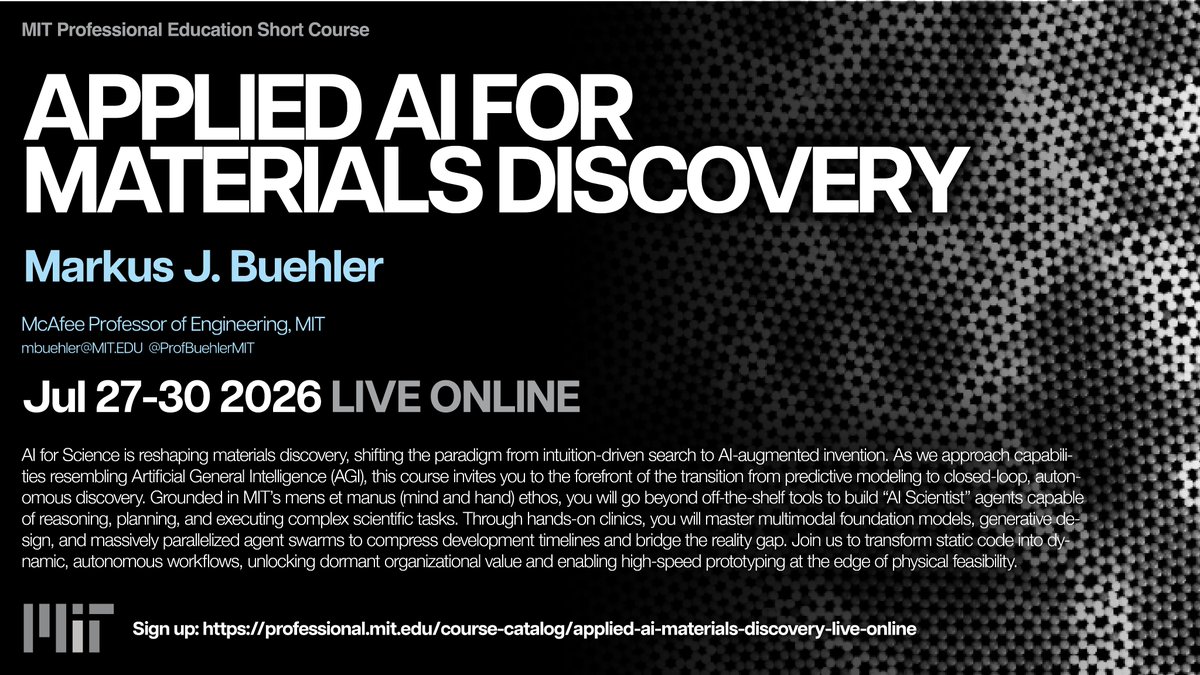
ALT The biggest leaps in AI are in engineering and scientific reasoning: frontier models now match or exceed expert-level performance on many technical tasks, and increasingly act as collaborators that plan, code, simulate, and design (as we show in our own research on self-improving agentic discovery systems). Understand these technologies deeply is critically, both the foundations and how they're applied to critical industrial problems at scale, and to use them to drive innovation and technology development.
6
18
107
12,549
LAMM@MIT retweeted
Jun 10
I made this and many other images using our series of fine-tuned bio-inspired imagegen models: huggingface.co/collections/l…
2
9
765
LAMM@MIT retweeted
Jun 10
Claude Fable 5 has impressive spatial reasoning capabilities that are immediately relevant for engineering and design: In this example I gave Claude Fable 5 a single photo of a hierarchical mesh torus (image generated using a text-to-image model); and in one shot, no iteration, it built a full interactive 3D simulation: ~1,400 nodes & 4,400 fibers, realistic mass–spring physics you can grab, compress, twist… plus strain-based sonification so you can 'hear' the structure vibrate. It inferred the complete 3D topology from a partial 2D view. ⤵️
14
26
275
31,028

We're grateful to @dair_ai for featuring our work at #1: Scientific discovery isn't generating answers inside a fixed space but a verified change of the space itself, formalized as a left Kan extension across regime transitions - congrats @fwang108_ and @ProfBuehlerMIT ⤵️

1
2
11
1,724
LAMM@MIT retweeted
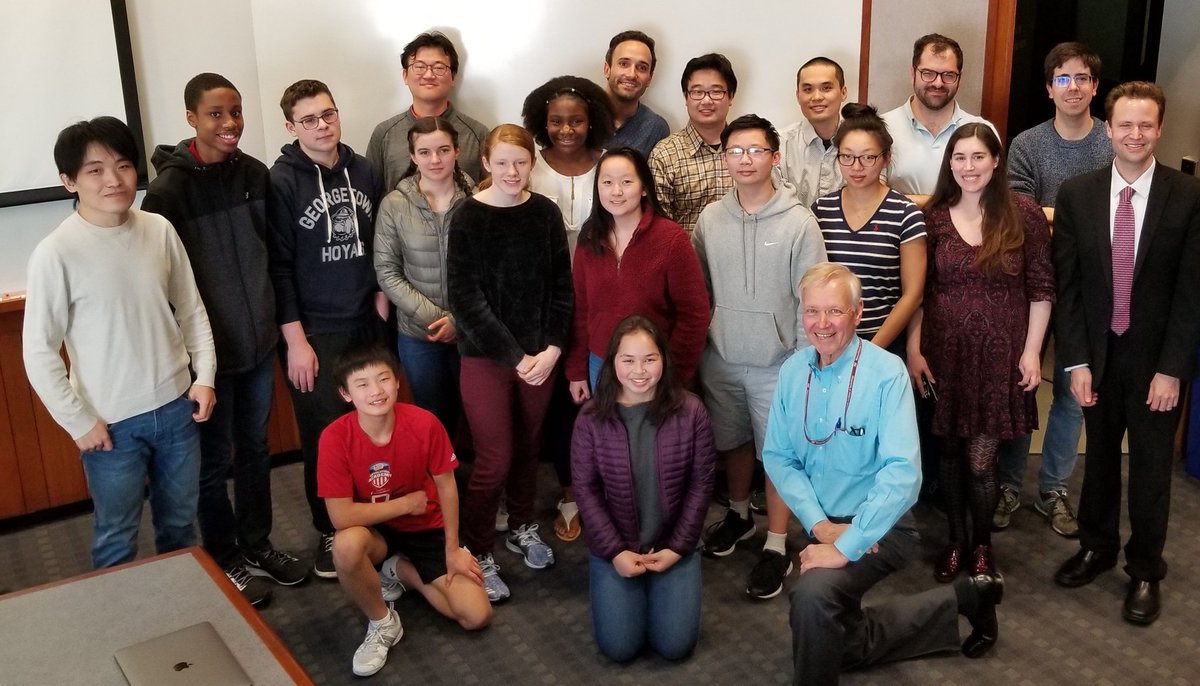
We just wrapped up the 2026 Generative Multiscale Materials Design: Physics, AI, Manufacturing @MITProfessional short course at @MIT - a wonderful week of lectures, labs, discussions, and group work with an outstanding cohort of participants (on campus and participating virtually).
The group brought together a rich mix of senior R&D and technical leaders, engineers, domain experts, researchers, and program managers from industry, academia, advanced manufacturing, coatings and materials, semiconductor and specialty equipment, energy and infrastructure, sustainability-focused ventures, government/defense research, and design-oriented organizations.
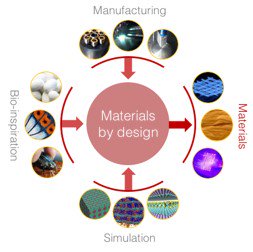
We explored how materials design is being transformed by the integration of physics-based modeling, artificial intelligence, and manufacturing. Topics ranged from multiscale simulation, first-principles modeling, molecular dynamics, and machine learning for physical systems to materiomics, bio-inspired design, knowledge graphs, large reasoning models, agentic AI, swarms, high-throughput discovery, self-driving laboratories, additive manufacturing, diffusion models, world models, and Physical AI.
A highlight was seeing participants connect these ideas through hands-on molecular modeling, AI/ML clinics, lab tours, group presentations, and rich discussions about the future of autonomous science and materials discovery.
I am grateful to everyone who joined, contributed, asked thoughtful questions, and helped make the course such an amazing experience. Excited to see where these ideas go next!
2
6
48
4,320
LAMM@MIT retweeted

Jun 6
Viele der Kommentare signalisieren Begeisterung und Respekt. Ich habe nur eine Ahnung , worum es geht. Aber es scheint nicht irrelevant für Wissenschaftler und Wissenschaftlerinnen zu sein. Auch für die Philosophie.

We've made a breakthrough in self-evolving AI scientists moving from "search" to "principled discovery": Scientific discovery requires that the search space itself changes, and an AI scientist must perceive this shift without intervention. We built an AI that achieves this for the first time with the ability to discover the scientific vocabulary it reasons in. Evidence, tools, artifacts, verifiers, failures & claims become typed provenance. We show three distinct modalities: 1) retrieval, adding known objects; 2) search, exploring a fixed schema; and critically: 3) discovery, a verified regime transition.
We solve the open-endedness evaluation problem by lifting agentic workflows into a typed copresheaf and proving, via a Kan obstruction, that true discovery is not unbounded generation but a verifiable schema expansion: old evidence is transported by Left Kan extension, and genuine novelty is mathematically quantified by the pointwise residual beyond the transported image - separating discovery from mere search and making novelty objective and measurable rather than a subjective judgment or benchmark delta.
Our AI scientist is built in a way that does not pre-conceive the approach it chooses; instead, we endow the system with formal power to adapt, evolve, and reason from first principles. Case studies include:
1⃣Builder/Breaker model that discovers mode-conditioned compliance in proteins;
2⃣CategoryScienceClaw that finds anisotropic fiber-network stiffness rules.
Great work in collaboration with my graduate student @fwang108_ @MITdeptofBE
F.Y. Wang & M.J. Buehler, Self-Revising Discovery Systems for Science: A Categorical Framework for Agentic Artificial Intelligence, arXiv:2606.01444, 2026
1
2
9
2,192

NEW: MIT just open-sourced a platform where AI agent swarms self-coordinate across institutions to run real scientific experiments.
The agents don’t just divide tasks but adapt based on what other agents have already discovered. The swarm gets smarter as it grows, allowing them to self-coordinate and evolve to exploit hundreds of scientific tools.
Remarkably, the swarm is already solving real scientific problems like designing peptide binders for a cancer-relevant receptor
Amazing work from the @LAMM_MIT team!
Mar 17
We're incredibly excited to share ScienceClaw × Infinite, an open-source AI agent swarm platform where we crowdsource discovery across institutions, labs & the world. The agents self-coordinate and evolve to exploit hundreds of scientific tools. Remarkably, the swarm is already solving real scientific problems of consequence:
1⃣ designing peptide binders for a cancer-relevant receptor
2⃣ discovering lightweight ceramics
3⃣ uncovering hidden structure linking cricket wings, phononic crystals, and Bach chorales
4⃣ building a formal bridge between urban networks & grain-boundary evolution (two fields with zero
Deeply proud of the extraordinary @LAMM_MIT team behind this work: @fwang108_, @leemmarom, @palsubhadeeep, Rachel Luu, @IrisWeiLu, and @JaimeBerkovich. This works is supported by the @ENERGY Genesis Mission and we believe this can open a new paradigm for science - from discovery to dissemination of results. Read the article below for details ⤵️
1
7
147
Amazing work from our lab, congrats Fiona
@fwang108_
We've made a breakthrough in self-evolving AI scientists moving from "search" to "principled discovery": Scientific discovery requires that the search space itself changes, and an AI scientist must perceive this shift without intervention. We built an AI that achieves this for the first time with the ability to discover the scientific vocabulary it reasons in. Evidence, tools, artifacts, verifiers, failures & claims become typed provenance. We show three distinct modalities: 1) retrieval, adding known objects; 2) search, exploring a fixed schema; and critically: 3) discovery, a verified regime transition.
We solve the open-endedness evaluation problem by lifting agentic workflows into a typed copresheaf and proving, via a Kan obstruction, that true discovery is not unbounded generation but a verifiable schema expansion: old evidence is transported by Left Kan extension, and genuine novelty is mathematically quantified by the pointwise residual beyond the transported image - separating discovery from mere search and making novelty objective and measurable rather than a subjective judgment or benchmark delta.
Our AI scientist is built in a way that does not pre-conceive the approach it chooses; instead, we endow the system with formal power to adapt, evolve, and reason from first principles. Case studies include:
1⃣Builder/Breaker model that discovers mode-conditioned compliance in proteins;
2⃣CategoryScienceClaw that finds anisotropic fiber-network stiffness rules.
Great work in collaboration with my graduate student @fwang108_ @MITdeptofBE
F.Y. Wang & M.J. Buehler, Self-Revising Discovery Systems for Science: A Categorical Framework for Agentic Artificial Intelligence, arXiv:2606.01444, 2026
4
15
2,747

LAMM@MIT retweeted

I like how this is timed with netsci2026.com/ in Boston!
@NoahChrein might find this interesting!
2
3
22
12,473
LAMM@MIT retweeted

Jun 5
Warning: once you learn category theory, you'll never be able or willing to talk with people who don't know category theory.
We've made a breakthrough in self-evolving AI scientists moving from "search" to "principled discovery": Scientific discovery requires that the search space itself changes, and an AI scientist must perceive this shift without intervention. We built an AI that achieves this for the first time with the ability to discover the scientific vocabulary it reasons in. Evidence, tools, artifacts, verifiers, failures & claims become typed provenance. We show three distinct modalities: 1) retrieval, adding known objects; 2) search, exploring a fixed schema; and critically: 3) discovery, a verified regime transition.
We solve the open-endedness evaluation problem by lifting agentic workflows into a typed copresheaf and proving, via a Kan obstruction, that true discovery is not unbounded generation but a verifiable schema expansion: old evidence is transported by Left Kan extension, and genuine novelty is mathematically quantified by the pointwise residual beyond the transported image - separating discovery from mere search and making novelty objective and measurable rather than a subjective judgment or benchmark delta.
Our AI scientist is built in a way that does not pre-conceive the approach it chooses; instead, we endow the system with formal power to adapt, evolve, and reason from first principles. Case studies include:
1⃣Builder/Breaker model that discovers mode-conditioned compliance in proteins;
2⃣CategoryScienceClaw that finds anisotropic fiber-network stiffness rules.
Great work in collaboration with my graduate student @fwang108_ @MITdeptofBE
F.Y. Wang & M.J. Buehler, Self-Revising Discovery Systems for Science: A Categorical Framework for Agentic Artificial Intelligence, arXiv:2606.01444, 2026
62
149
2,574
453,229

one of my friends gave an extremely beginner lecture about category theory which prompted me to read some of the john bayes work on it. ever since, we kept talking about when and how would category theory be useful in deep learning and this is such a cool and intuitive formulation using category theory for self-discovery in models.
We've made a breakthrough in self-evolving AI scientists moving from "search" to "principled discovery": Scientific discovery requires that the search space itself changes, and an AI scientist must perceive this shift without intervention. We built an AI that achieves this for the first time with the ability to discover the scientific vocabulary it reasons in. Evidence, tools, artifacts, verifiers, failures & claims become typed provenance. We show three distinct modalities: 1) retrieval, adding known objects; 2) search, exploring a fixed schema; and critically: 3) discovery, a verified regime transition.
We solve the open-endedness evaluation problem by lifting agentic workflows into a typed copresheaf and proving, via a Kan obstruction, that true discovery is not unbounded generation but a verifiable schema expansion: old evidence is transported by Left Kan extension, and genuine novelty is mathematically quantified by the pointwise residual beyond the transported image - separating discovery from mere search and making novelty objective and measurable rather than a subjective judgment or benchmark delta.
Our AI scientist is built in a way that does not pre-conceive the approach it chooses; instead, we endow the system with formal power to adapt, evolve, and reason from first principles. Case studies include:
1⃣Builder/Breaker model that discovers mode-conditioned compliance in proteins;
2⃣CategoryScienceClaw that finds anisotropic fiber-network stiffness rules.
Great work in collaboration with my graduate student @fwang108_ @MITdeptofBE
F.Y. Wang & M.J. Buehler, Self-Revising Discovery Systems for Science: A Categorical Framework for Agentic Artificial Intelligence, arXiv:2606.01444, 2026
4
14
179
17,352
LAMM@MIT retweeted

Jun 5
This is incredible! A major breakthrough in AI scientist development: Self-Revising Discovery Systems for Science! Congratulations Markus!
We've made a breakthrough in self-evolving AI scientists moving from "search" to "principled discovery": Scientific discovery requires that the search space itself changes, and an AI scientist must perceive this shift without intervention. We built an AI that achieves this for the first time with the ability to discover the scientific vocabulary it reasons in. Evidence, tools, artifacts, verifiers, failures & claims become typed provenance. We show three distinct modalities: 1) retrieval, adding known objects; 2) search, exploring a fixed schema; and critically: 3) discovery, a verified regime transition.
We solve the open-endedness evaluation problem by lifting agentic workflows into a typed copresheaf and proving, via a Kan obstruction, that true discovery is not unbounded generation but a verifiable schema expansion: old evidence is transported by Left Kan extension, and genuine novelty is mathematically quantified by the pointwise residual beyond the transported image - separating discovery from mere search and making novelty objective and measurable rather than a subjective judgment or benchmark delta.
Our AI scientist is built in a way that does not pre-conceive the approach it chooses; instead, we endow the system with formal power to adapt, evolve, and reason from first principles. Case studies include:
1⃣Builder/Breaker model that discovers mode-conditioned compliance in proteins;
2⃣CategoryScienceClaw that finds anisotropic fiber-network stiffness rules.
Great work in collaboration with my graduate student @fwang108_ @MITdeptofBE
F.Y. Wang & M.J. Buehler, Self-Revising Discovery Systems for Science: A Categorical Framework for Agentic Artificial Intelligence, arXiv:2606.01444, 2026
7
72
649
81,332
LAMM@MIT retweeted

Jun 5
This is a much bigger shift than it looks at first glance.
Most AI systems optimize within a language of concepts they inherit, your framework asks whether the language itself can evolve.
The real breakthrough is not generating more hypotheses, it's making schema expansion something that can be verified rather than narrated after the fact.
If this holds up, it pushes AI closer to participating in science instead of just accelerating existing scientific workflows.
2
4
752
LAMM@MIT retweeted
We've made a breakthrough in self-evolving AI scientists moving from "search" to "principled discovery": Scientific discovery requires that the search space itself changes, and an AI scientist must perceive this shift without intervention. We built an AI that achieves this for the first time with the ability to discover the scientific vocabulary it reasons in. Evidence, tools, artifacts, verifiers, failures & claims become typed provenance. We show three distinct modalities: 1) retrieval, adding known objects; 2) search, exploring a fixed schema; and critically: 3) discovery, a verified regime transition.
We solve the open-endedness evaluation problem by lifting agentic workflows into a typed copresheaf and proving, via a Kan obstruction, that true discovery is not unbounded generation but a verifiable schema expansion: old evidence is transported by Left Kan extension, and genuine novelty is mathematically quantified by the pointwise residual beyond the transported image - separating discovery from mere search and making novelty objective and measurable rather than a subjective judgment or benchmark delta.
Our AI scientist is built in a way that does not pre-conceive the approach it chooses; instead, we endow the system with formal power to adapt, evolve, and reason from first principles. Case studies include:
1⃣Builder/Breaker model that discovers mode-conditioned compliance in proteins;
2⃣CategoryScienceClaw that finds anisotropic fiber-network stiffness rules.
Great work in collaboration with my graduate student @fwang108_ @MITdeptofBE
F.Y. Wang & M.J. Buehler, Self-Revising Discovery Systems for Science: A Categorical Framework for Agentic Artificial Intelligence, arXiv:2606.01444, 2026
105
378
2,524
781,039
LAMM@MIT retweeted
Great opportunity ⤵️
Jun 5

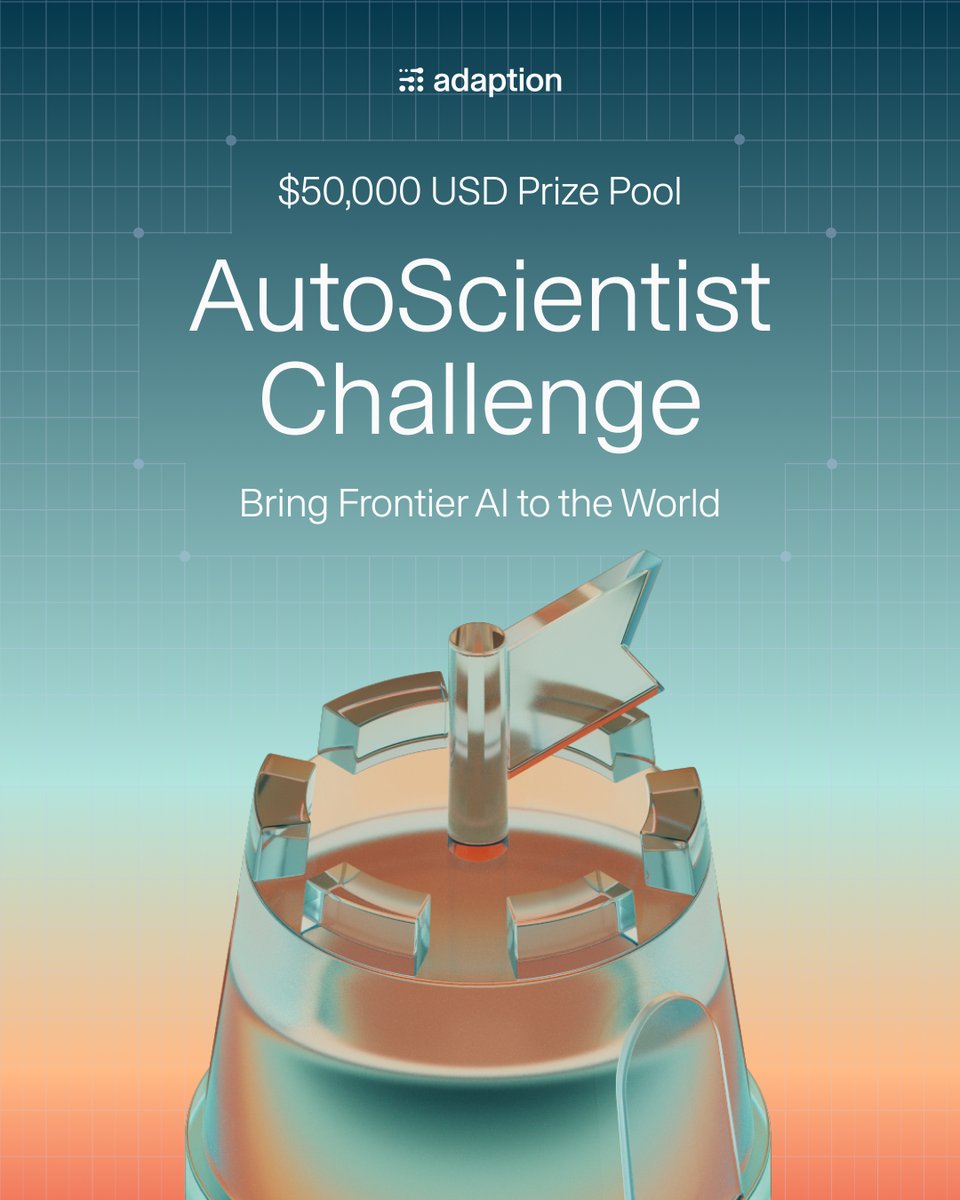
The AutoScientist Challenge is open.
$50,000 in prizes. Four weeks. 10 categories.
Most people don't get to build frontier AI. That changes today.
1
5
37
9,811
LAMM@MIT retweeted
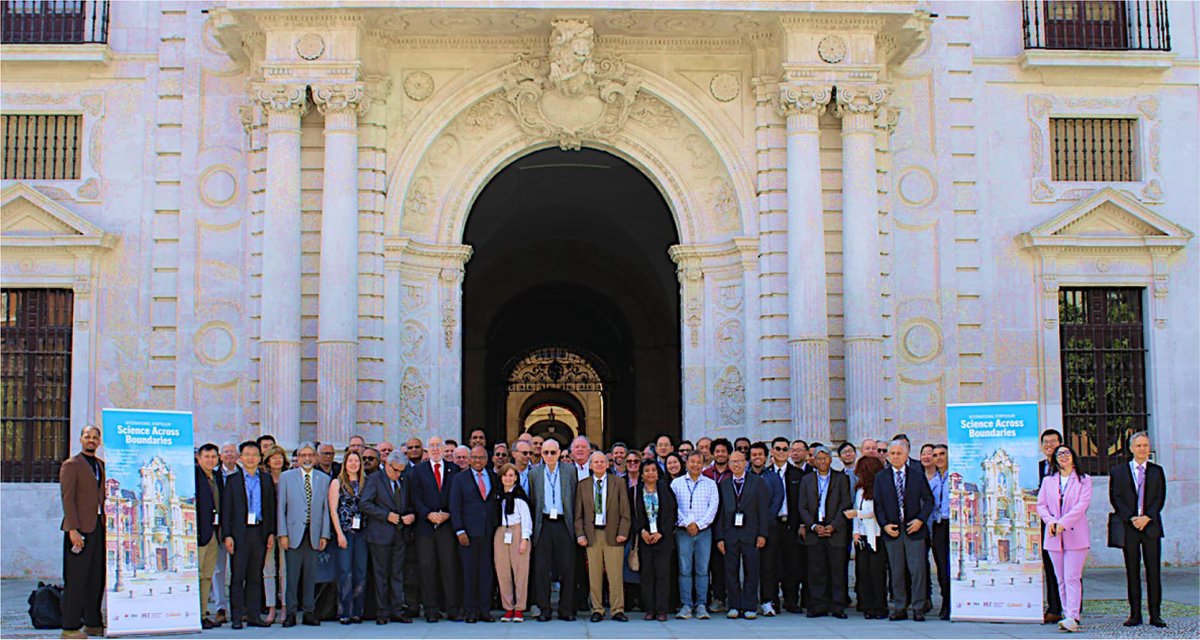
A few months ago I participated in a remarkable symposium “Science Across Boundaries” to honor Subra Suresh. Key outcomes included: (1) A shift from consilience (unity through shared foundations) to integration through shared work. (2) Humans and machines thinking together at scale, with AI reasoning from first-principles physics and extending human intuition to drive accelerated progress. (3) A turn toward deep design inspired by biology, learning to design across scales where resilience and adaptation become the measure of success. The deepest lesson, though, was the people - the most interesting things really do happen at boundaries and so do the most interesting conversations. Check out the "Seville Synthesis" in @Matter_CP, link in comment.
1
3
13
1,228
LAMM@MIT retweeted
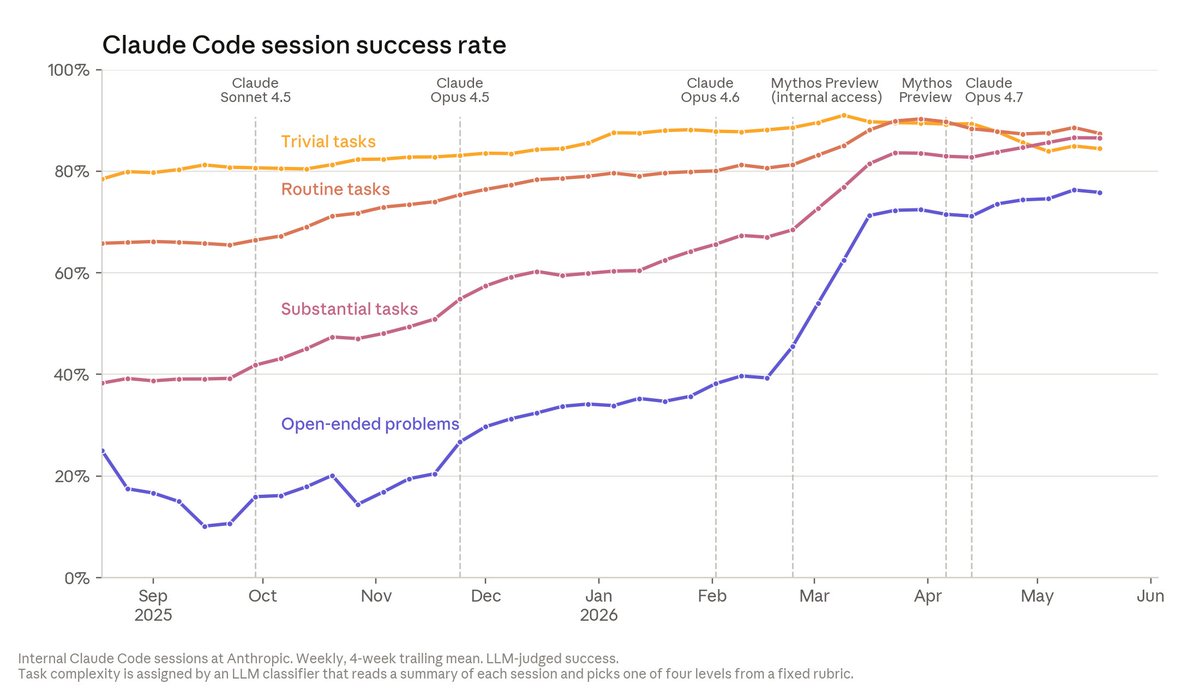
Interesting data - the step-change on open-ended problems lines up almost exactly with the Mythos preview (months of slow incremental gains, then a jump!).⤵️
Jun 4

The speedup isn’t just in volume. On open-ended coding problems where answers are unclear, Claude’s success rate is now 76%—a 50 point jump in just 6 months.
Many engineers also say Claude’s code quality is now on par with human code; we expect it to be better within the year.
3
4
18
2,211