Joined July 2019
- Tweets 23,208
- Following 171
- Followers 154
- Likes 8,675
5,926 Photos and videos













Pinned Tweet

21 Nov 2021
Adios....
ya eres inmortal.
21 Nov 2021

Descanso en paz arropado por mi familia.
El filósofo Antonio Escohotado a los 80 años elpais.com/cultura/2021-11-2… vía @el_pais
7
Lҽσɳαɾԃσ C retweeted

Video nuevo! Campaña ANTI MESSI organizada POR ARGENTINOS youtube.com/watch?v=E8mMuEVn…
3
13
102
2,632
Jun 13
Que mal jugo Paraguay el primer tiempo.
Si EE.UU. continua jugando asi todo el torneo, va a llegar facilmente a las semis. Gran equipo armo Pochetino.
28
Lҽσɳαɾԃσ C retweeted

Jun 1
DOS FEMINISTAS SE PUSIERON A LLORAR POR MILEI A RAÍZ DEL CRIMEN DE AGOSTINA
- La culpa la tiene Milei con su economía
- La solución NO es encerrar a los femicidas (?)
- Ultraderecha antifeminista 😭
- Te precarizan la vida así le pegás a tu mujer (???)
Fascinante estos especímenes. De qué carajo están hablando? Y encima vuelven a invitar a la loquita anti-gym bros 🤣
90
105
524
12,904
Lҽσɳαɾԃσ C retweeted

Jun 1
Tres comentarios sobre el post que referencia abajo:
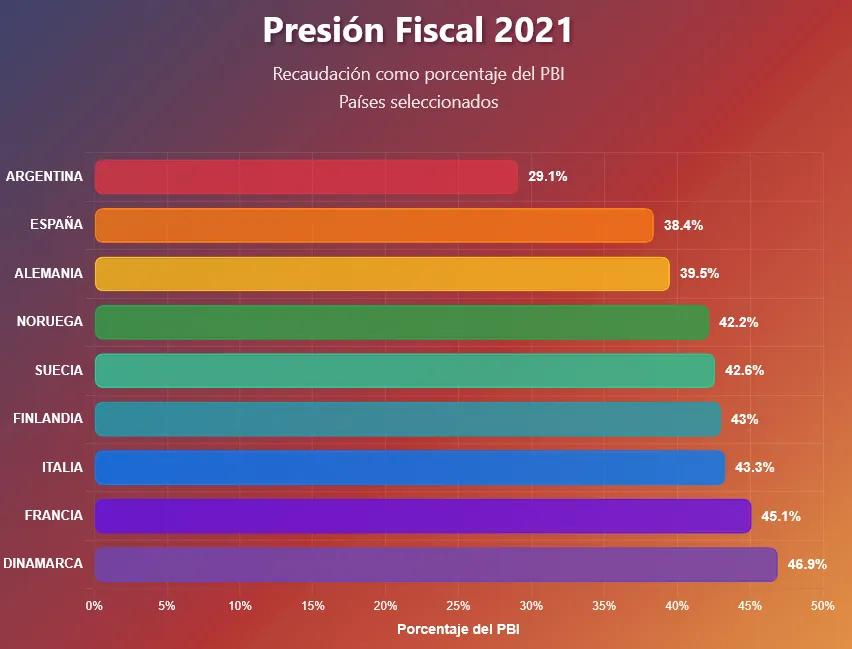
1. En países como Argentina el número tiene que sumar la presión tributaria de nación, provincias y municipios. Cuando llego @jmilei superaba el 40 %.
2. Con esos niveles de presión tributaria estos países dejaron de crecer. Hoy están viendo como recuperar competitividad y en algunos casos como el sueco están revirtiendo el proceso, privatizando y bajando impuestos.
3. Decía Milton Friedman: no vean lo que hacen los países ricos, ahora que son ricos. Vean lo que hicieron para hacerse ricos. La presión tributaria era muy inferior, además de tener moneda sólida, apertura, desregulación y demás. Exactamente lo que intenta hacer este gobierno para crecer!

Los países escandinavos tienen mucha más presión tributaria que Argentina y son de los países con más calidad de vida y felicidad del mundo. Tiene Estados que garantizan buena salud y educación para todos, no recortan en servicios públicos.
Datos comparativos:
44
116
490
33,853
May 31
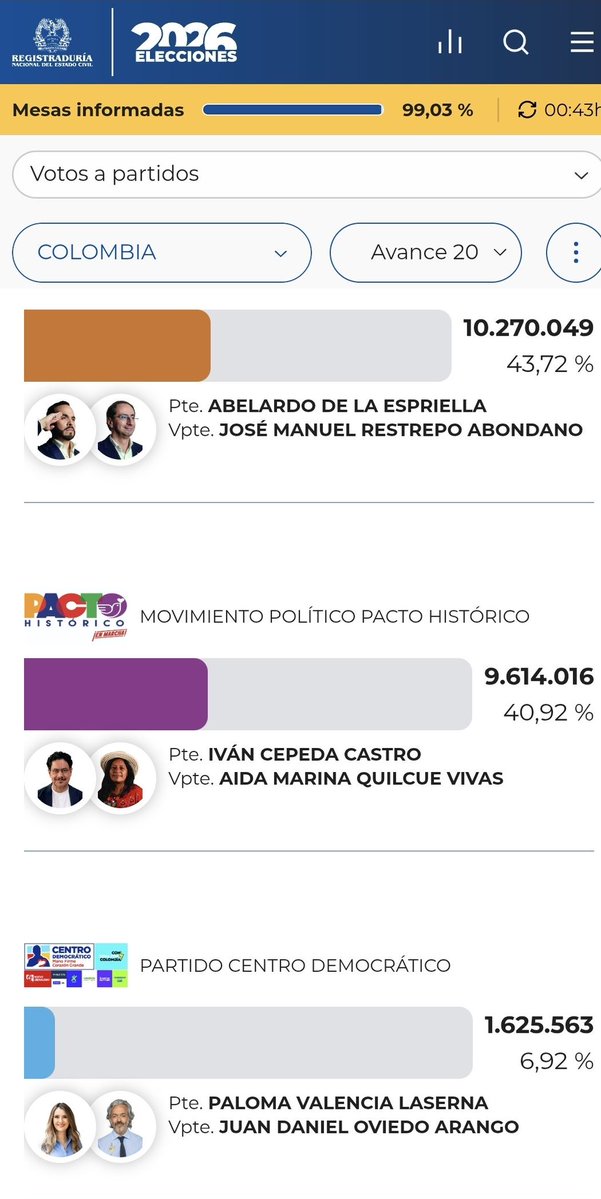
99% de las mesas escrutas en las elecciones en Colombia.
Adios a Petro y el petrismo.
65
Lҽσɳαɾԃσ C retweeted

May 27
La envidia comunista, no tiene fronteras!

260
7,627
35,274
536,751
May 20
La mejor cuenta parodia !!
😆😆😆😆

💥 "GOLPISTAS SON USTEDES, que apoyan a un tipo como Paz".
🇧🇴✊🏻 "Los pueblos TIENEN DERECHO a la REBELIÓN. ¡Viva la rebelión de Bolivia!"
🗣️ @myriambregman en @DiputadosAR
27
May 20
Carlos Rangel predijo a los ponchitos rojos comunistas hace mas de 50 años atras...

1
21
Lҽσɳαɾԃσ C retweeted

May 19
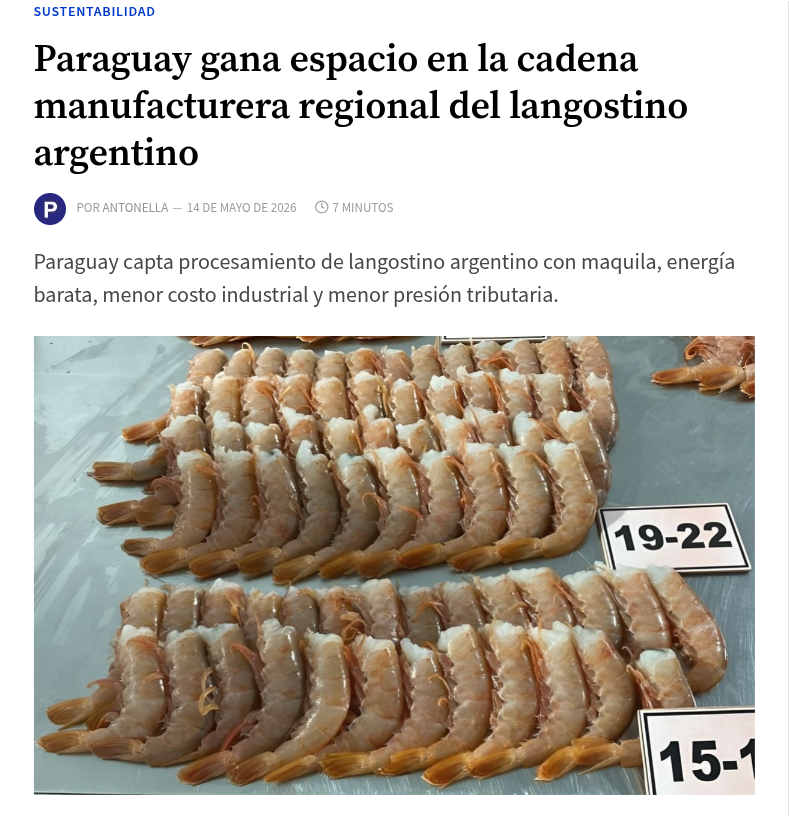
🇵🇾 Paraguay exporta langostinos al mundo.
Paraguay no tiene mar.
Los langostinos son argentinos. Las fábricas son paraguayas.
Y Argentina se quedó mirando.
Los langostinos son argentinos. Las fábricas son paraguayas.
Y Argentina se quedó mirando.
¿Qué pasó?
South Atlantic (empresa española) invirtió USD 35 millones en Hohenau, Paraguay.
No para pescar langostinos.
Para procesarlos.
El flujo es increíble:
El langostino sale del Mar Argentino.
Cruza la frontera en camiones refrigerados.
Se procesa en Paraguay.
Se exporta a Estados Unidos, Canadá y Europa.
Con etiqueta "Made in Mercosur".
Argentina exporta materia prima cruda.
Paraguay exporta producto terminado con valor agregado.
¿Por qué Paraguay ganó esta batalla?
Cansado de pagar USD 100/MWh de energía.
Cansado de cargas laborales del 35%.
Cansado de sindicatos paralizando plantas en plena temporada.
Cansado de impuestos del 35% más retenciones a la exportación.
¿Adónde fue la fábrica?
A donde los números funcionan.
Energía:
Paraguay: USD 41/MWh
Argentina: USD 100 /MWh
Impuestos:
Paraguay: 1% tributo único
Argentina: 35% retenciones
Costo laboral:
Paraguay: USD 700/mes 16,5% cargas
Argentina: USD 1.200 /mes 35% cargas
Conflictividad:
Paraguay: Marco flexible, cero paros
Argentina: SOMU y STIA bloqueando plantas
¿Resultado?
Planta de Hohenau: 24-25 toneladas diarias procesadas.
600 empleos formales en Paraguay.
Cero empleos nuevos en Chubut.
Los sindicatos argentinos lo llamaron "un golpe al corazón de la industria local".
La empresa lo llamó "supervivencia".
Conarpesa cerró plantas en Patagonia porque era inviable competir.
Abrió en Paraguay porque con 1% de impuesto y USD 41/MWh, los márgenes vuelven a existir.
El dato más brutal:
Argentina tiene 5.000 kilómetros de costa.
Paraguay tiene cero.
Argentina exporta langostino crudo.
Paraguay exporta langostino procesado, empacado, con marca, listo para el supermercado europeo.
¿Quién captura más valor?
No el que tiene el recurso.
El que tiene el sistema para transformarlo sin que el Estado lo ahogue.
Mientras Argentina discute quién tiene la culpa, Paraguay procesa 25 toneladas diarias.
Mientras Argentina cobra 35%, Paraguay cobra 1%.
Mientras Argentina para por huelgas, Paraguay exporta sin interrupciones.
En el comercio global 2026, no gana el que tiene el mar.
Gana el que tiene energía barata, impuestos bajos y estabilidad.
Paraguay no tiene costa.
Pero tiene lo que importa: un sistema que no expulsa inversiones.
Argentina tiene el Atlántico.
Paraguay tiene las fábricas.
Y las fábricas quedaron con las ganancias.
245
1,836
4,697
186,846
May 19
Vieron...
😏😏
Los golpistas ahora se quieren disfrasar de pobres victimas, lloran por la represion y claman por derechos humanos.
No falla.!!
May 19

#URGENTE‼️‼️ Se agrava la situación en #Bolivia, el gobiernod e Rodrigo Paz a Ordenado disparar a mansalva los manifestantes, esto es la muestra que al imperio no le importa asesinar a los hemanos Bolivianos.
No dejemos de compartir por que el mundo debe pronucniarse al respecto, esta vez no podran ocultar sus delitos estos asesinos
#FuerzaBolivia
7
May 19
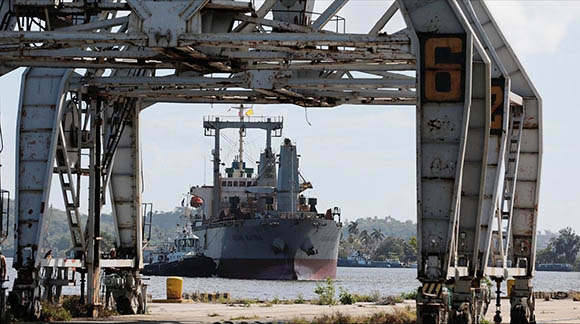
Que bloqueo tan raro de EE.UU.
🤔🤔

En nombre del pueblo cubano, expresamos nuestro más profundo agradecimiento por el nuevo cargamento de ayuda solidaria proveniente de #México y #Uruguay, dos naciones a las que nos une un enorme cariño.
Este donativo, que llega en días muy difíciles para #Cuba por el impacto directo y multidimensional del bloqueo de los Estados Unidos en la vida cotidiana de nuestro pueblo, es un testimonio vivo de la histórica solidaridad entre nuestros pueblos y de los principios de humanismo, cooperación e integración que deben unir a la región.
Nuestro más sincero reconocimiento a la presidenta de México, Claudia Sheinbaum, por su liderazgo y firme compromiso, así como al gobierno de Uruguay por sumarse a esta iniciativa.
En tiempos difíciles, gestos como este nos recuerdan que #CubaNoEstáSola y que la solidaridad trasciende cualquier frontera.


10
May 17
Aca hay un negocio en potencia, las tetas inflables.
😆
May 17

Behind-the-scenes of Terminator 3 (2003), the inflatable bladders used under Kristanna Loken’s costume for the chest expansion effect accidentally popped during testing, making her break character and laugh.
96
May 17
Tremenda esta frase:
- "El mundo dejó de tener hijos cuando dejó de mirarse a los ojos"
😯
May 17

¿Por qué cayó la natalidad en todo el planeta al mismo tiempo, en países tan distintos como Corea, Argentina, Irán y España? La respuesta más incómoda cabe en un bolsillo. Advertencia esto es una teoría pero la correlación es fuerte.
Alrededor de 2010, en todos los continentes, en países ricos y pobres, religiosos y seculares, las tasas de fertilidad empezaron a caer de forma sincronizada. Todos hacia abajo, todos al mismo tiempo, todos desde que el iPhone se masificó y las redes 4G cubrieron el mundo.
La explicación económica habitual no alcanza. Corea y Argentina no se parecen en nada, y sus curvas se desploman en paralelo.
Los smartphones movieron la vida juvenil del mundo físico al digital. Las horas que antes se pasaban en plazas, bares y fiestas hoy se pasan mirando una pantalla. En EEUU la socialización presencial adolescente se redujo a la mitad mientras el ocio digital se triplicó. Por cada diez por ciento más de cobertura 4G, los nacimientos adolescentes cayeron casi un punto.
Dentro de las parejas, el phubbing vacía las noches de intimidad. TikTok, Netflix, videojuegos y pornografía compiten con la pareja real y suelen ganar, porque ofrecen dopamina barata sin la fricción del otro.
Se suma la crisis de salud mental de la generación criada con pantalla en mano. Ansiedad, soledad, adolescencia prolongada hasta los treinta y pico. Por eso los incentivos pronatalistas que ensayan Hungría o Corea fracasan. El problema no es el dinero, es que la gente joven está sola en su cuarto.
El mundo no dejó de tener hijos porque se hizo más rico. El mundo dejó de tener hijos cuando dejó de mirarse a los ojos.
15
Lҽσɳαɾԃσ C retweeted
May 15
Estuve en “Solo una vuelta más”, el programa de Diego Sehinkman en TN. Se armó un interesante debate con dos economistas opositores. 👇
60
318
1,884
81,066

MONO = UNO
RIEL = RIEL
COMO DICE? Monorriel!
Creado por @EmilianoGoggia para undinamo.com
4
20
132
2,826
Lҽσɳαɾԃσ C retweeted

May 15
Me acaba de explotar la cabeza: (Los sueños son) “una descarga selectiva de señales lanzadas directamente a la parte posterior del cerebro, donde reside la visión. La corteza cerebral se ilumina como si estuviera recibiendo imágenes reales, y tú percibes esa activación artificial como un sueño. La historia que tu mente consciente inventa después no es más que tu cerebro intentando dar sentido a ese ruido”. El sueño es un efecto secundario.
May 14

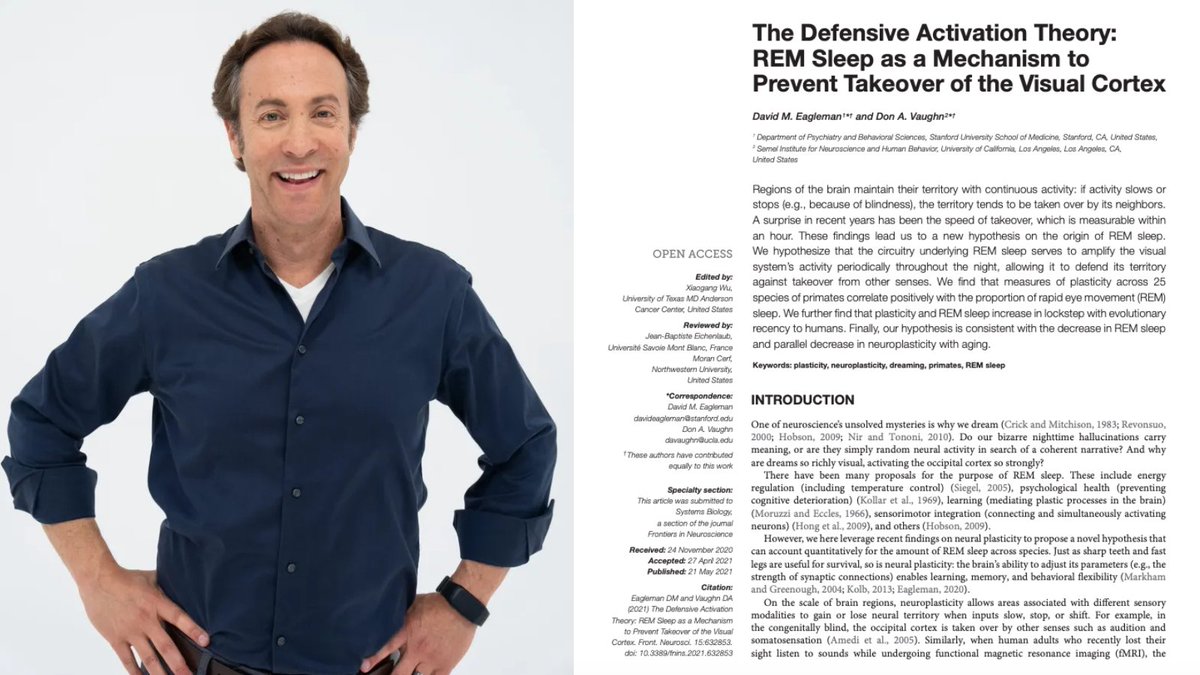
A Stanford neuroscientist published a paper a few years ago that quietly answered one of the oldest questions in human history, and almost nobody outside his field has heard of it.
The question is why we dream. Not what dreams mean. Why they exist at all. Why your brain spends a third of its sleep hallucinating images instead of just resting like every other organ in your body.
His name is David Eagleman.
He runs a lab at Stanford. The paper is called "The Defensive Activation Theory", and the moment you read it the explanation collapses every other theory you have ever been taught about dreams.
Freud said dreams were repressed desires. He was guessing. He had no brain scans. He had no electrodes. He had a couch and a notebook and a century of credibility that nobody has been able to fully scrub off the subject since.
Modern neuroscience replaced him with the memory "consolidation theory". The idea that dreams are your brain sorting through the day, filing things away, deciding what to keep. That story is partially true. Sleep does consolidate memory. But it does not explain the single strangest thing about dreams, which is that they are almost entirely visual.
You do not dream in pure sound. You do not dream in taste. You do not dream in smell. You dream in pictures. Vivid, detailed, often impossible pictures that activate the back of your brain so hard a scientist scanning you would think your eyes were wide open.
Eagleman started from one fact almost nobody outside neuroscience knows. The brain is territorial. Every region holds its turf through constant electrical activity. The moment a region goes quiet, its neighbors start invading. They take the silent territory and reassign it to themselves.
This is called "cortical takeover", and it is not slow. It is not a long process measured in years. In experiments where adults are blindfolded, the visual cortex starts processing touch and sound within an hour. One hour of darkness, and the territory is already being annexed.
In congenitally blind people, the visual cortex is fully repurposed. It runs language. It runs hearing. It runs touch. The hardware never went unused. It was just reassigned to whoever showed up first.
Now sit with the implication of that for a second.
Every night, when you close your eyes and fall asleep, the sun has set. The planet has rotated. The visual cortex, which takes up roughly a third of your entire cortex, is suddenly receiving zero input. For eight hours. Every single night. For your entire life. And evolution has shaped your brain inside a planet that has been spinning into darkness for billions of years.
If cortical takeover happens in an hour, the visual cortex should have been lost a long time ago. Stolen by hearing. Stolen by touch. Reassigned by morning. Humans should have evolved into a species whose vision works fine during the day and then degrades every time the sun goes down because the territory keeps getting renegotiated overnight.
But that did not happen. Vision works the moment you open your eyes. Which means something is defending the territory while you sleep.
Eagleman's claim is that dreams are that defense.
Every 90 minutes through the night, a precise burst of activity fires from the brainstem into the visual cortex. Pontine-geniculate-occipital waves. PGO for short. They are anatomically aimed. They are not general arousal.
They are a targeted volley of signal launched directly at the back of the brain where vision lives. The cortex lights up as if it is receiving real images, and you experience that artificial activation as a dream. The bizarre narrative your conscious mind invents around it later is just your brain trying to make sense of the noise.
The dream is not the point. The dream is the side effect. The point is keeping the territory occupied.
The evidence for this is the part that should haunt you.
Newborns spend roughly 50% of their sleep in REM. Adults spend twenty. Old adults spend fifteen. The amount of dreaming you do tracks almost perfectly with how plastic your brain is. Newborns have the most plastic brains on earth. Their visual cortex is in the highest danger of being overrun by neighboring senses while it develops.
So evolution gave them an enormous defense budget. As you age, your brain becomes less plastic, the takeover risk drops, and the defense system scales down accordingly.
Eagleman and his co-author ran the same correlation across twenty-five primate species. The more plastic a species' brain, the higher the proportion of REM sleep. The relationship held across the entire primate family tree. Plasticity and dreaming move together. They are two halves of the same evolutionary equation.
A species that ranks higher on flexibility and learning also dreams more. A species that is born ready to walk and survive dreams less. Plasticity is the asset. Dreaming is the insurance premium.
And the prediction the theory makes is the one that quietly closes the case.
Of all your senses, only one is disadvantaged by darkness. You can still hear in the dark. You can still feel in the dark. You can still smelll and taste in the dark. The only sense that depends on light is vision. Which is exactly the sense your dreams are made of. The defense system is targeted at the only territory that is actually vulnerable while you sleep.
Memory consolidation is real. Emotional processing is real. Your brain does do those things at night. But Eagleman's argument is that those functions piggyback on a much older system whose original job was simpler and more brutal. Keep the lights on inside the visual cortex while the planet is dark, or lose it.
For thousands of years, people have asked what dreams mean. Prophets wrote about them. Poets wrote about them. Freud built a discipline on them. None of them had access to the actual answer, which is that dreams may not mean anything in the symbolic sense at all.
They may be the visible flicker of a defense system running in the background, the way a screen saver protects a monitor by keeping the pixels moving even when nobody is looking.
The strangest thing about the theory is how cleanly it explains why dreams feel so real. Your visual cortex cannot tell the difference between a PGO wave and an actual photon. It is the same hardware lighting up the same way. The cortex does its job. It builds an image. Your conscious mind, half-awake, wraps a story around it and calls it a dream.
You are not seeing your subconscious tonight. You are watching your brain defend a piece of itself from being stolen.
Every animal that has ever closed its eyes on this planet has done the same thing.
36
480
3,402
237,642
Lҽσɳαɾԃσ C retweeted

May 10
Para Recordar
🇦🇷 Presentadora argentina Juana Viale: «Cuántos impuestos tiene Paraguay,.. porque nosotros tenemos más de 160».
🇵🇾 Presidente Peña: «Paraguay tiene 3 impuestos.
La cifra máxima es del 10%.
El impuesto personal es
fácilmente deducible al 1%»
33
180
1,514
104,061