
If you want to argue or name call find a mirror
Joined October 2024
- Tweets 3,303
- Following 227
- Followers 1,135
- Likes 2,558
128 Photos and videos
















May 23
AM I ALONE HERE WITH THIS ISSUE: Starlink Mini Pricing in a Disaster Recovery Scenario?
The Problem:
Starlink treats each terminal as its own separate subscription. They don't automatically suspend or credit the main Residential plan just because the hardware is broken or offline. You have to manually contact support to cancel it (and even then, they may not prorate or make it easy in a widespread disaster). This is standard for them they bill per active account/terminal not per working connection.
The Issue:
As a long-term Residential customer with a primary Starlink dish at my home I have a Starlink Mini that I keep on Standby mode specifically as an emergency backup unit for disaster scenarios (such as tornadoes or severe storms that could damage my main dish and home infrastructure).
I recently noticed the Standby fee increased from $5 to $10 per month. While I understand the need for pricing adjustments, I’m concerned about the overall value and fairness for true backup use.
If my main Residential dish is damaged or destroyed I would still be required under the current pricing structure to continue paying the full Residential monthly fee. Activating the Mini from Standby mode would then require an additional full service plan (Roam or Residential) resulting in paying for TWO active subscriptions at the same time even though only one Starlink connection is usable.
I’ve invested in a complete go-bag setup (high-capacity portable battery with DC output, small solar panel, etc.) because reliable backup connectivity is important to me in emergencies. Is there any option for better backup terms and therefore a way to keep the Mini as a true low cost fail over option without paying DOUBLE subscriptions during an actual emergency?
Suggestions perhaps:
A dedicated “Disaster Backup” or “Secondary Terminal” plan at a reduced rate, or
the ability to temporarily pause or credit the main Residential plan if the hardware is confirmed damaged?
I value Starlink service but the current pricing makes it difficult to justify keeping the Mini purely for backup purposes. We need flexibility or more innovative solutions offered. This pricing structure makes it very expensive to maintain meaningful disaster recovery redundancy in a Starlink web environment. Any others having this issue?
2
4
158
Lawrence L. Wood retweeted
Apr 22
The Virginian Republican Party is a joke and has been for decades. With no voter party registration required in the state the Republican Party is loaded with rinos, posers and outright Dems masquerading as Republicans.
As an opposition party it has been a complete failure with a state house focused leadership running their own personal or corporate agendas. They have produced very few individuals of true leadership quality and when one does arise the first group to attack them are too frequently the state Republican party establishment itself!
You can blame the Democrats but the local state Republican Party made all this easy for them!
3
3
19
885
Apr 21
We don't call it cheating here in Virginia we call it the "Fairfax" COUNT!
1
7
488
Lawrence L. Wood retweeted

Apr 16
Shelby Foote, pre-eminent historian of the American Civil War.

60
73
1,344
30,935
Lawrence L. Wood retweeted

Apr 16
The FBI cut the phone lines during the 1977 disability rights sit-in. Then they turned off the hot water.
They locked the doors from the outside. One hundred and fifty people were trapped on the fourth floor. Half of them used wheelchairs. The government assumed they would leave.
Kitty Cone was thirty-three. She had muscular dystrophy. Her muscles were failing, but her logistics were flawless. She knew how to organize people.
The federal government had promised to sign regulations protecting disabled Americans from discrimination. The policy was known as Section 504. They printed the promise on paper. Then they stalled. Without a signature, it was just typography.
The protesters entered the regional Health, Education, and Welfare building in San Francisco on a Tuesday morning. They took the elevators to the director's office. They brought sleeping bags and catheters. They informed the staff they were not leaving until the law was signed.
By sunset, the police surrounded the exits. Kitty sat near the windows. She organized the floor plan. She assigned committees for security and sanitation. She kept her medication in a small cooler.
According to federal memorandums released decades later, the strategy to end the occupation relied on medical attrition. The building was not equipped for long-term habitation. The FBI calculated that a population requiring ventilators, specialized diets, and daily medical aides would voluntarily evacuate if the environment became sufficiently hostile. They instituted a blockade.
The blockade went into effect immediately. No food deliveries allowed. No medical supplies permitted through the lobby. Guards stood at the main doors checking identification.
Kitty's muscles deteriorated faster under the physical strain. She couldn't walk. When the phone lines went dead, the fourth floor lost contact with the press. The government waited for the quiet.
Kitty dropped to the floor. She realized the barricades were designed for standing adults. The police had blocked the hallways at waist height. They hadn't blocked the linoleum.
The floors were covered in cigarette ash and spilled coffee. She dragged her body through it. She crawled under the barricades to reach the restricted elevator shafts and unguarded offices.
She carried notes in her pockets. She found a single working payphone the FBI missed. She called the local news desks. She called the mayor's office.
She crawled back. When her arms failed, someone pulled her by her ankles. The Black Panthers heard the news reports. They crossed the police lines with hot meals. The FBI could not stop them without a riot.
They shut off the elevators, so she crawled.
The occupation lasted twenty-five days. It remains the longest non-violent occupation of a federal building in American history. On April 28, the Secretary of HEW signed the regulations without a single alteration.
The protesters left the building the next morning. They went back to their apartments. The Rehabilitation Act regulations laid the groundwork for every accessibility law that followed. The HEW building still stands on United Nations Plaza. The elevators run on a schedule. The doors are heavy glass.
Kitty Cone: the woman who crawled under the barricades.

50
2,945
9,494
171,160
Apr 13
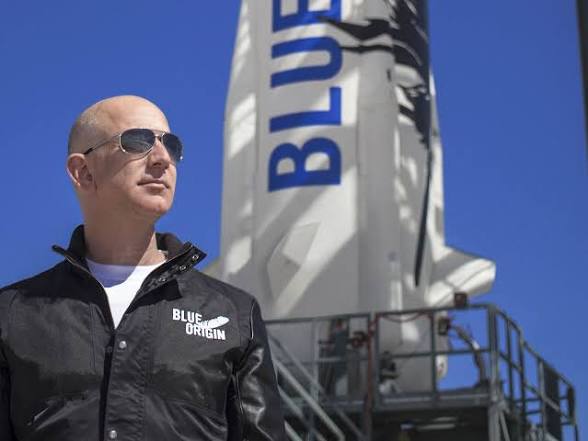
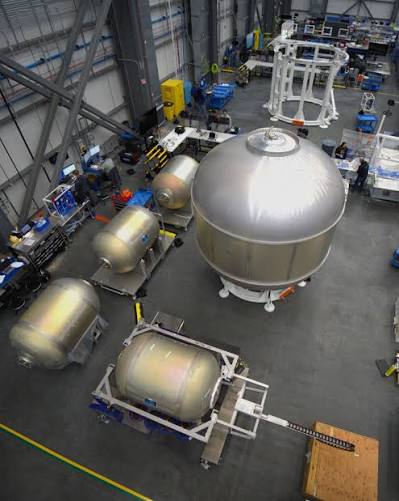
This is a major step forward to establishing a permanent lunar colony. Blue Origin has been actively developing and testing the core Molten Regolith Electrolysis (MRE) reactor since at least 2021. They've successfully made working solar cells, aluminum wires, oxygen, iron, silicon, and glass from lunar regolith simulants.
In September 2025, the system passed Critical Design Review (CDR) a key NASA milestone that confirms the design is mature enough for the next step to a full end-to-end autonomous demonstration in a simulated lunar environment (vacuum, temperature extremes, etc.). This is planned for 2026. This will be a ground based test not on the actual Moon.
Apr 12

Lunar soil is 45% oxygen by mass. Almost half the ground astronauts walk on is breathable air, locked inside chemical bonds with iron, titanium, and aluminum.
Blue Origin's Blue Alchemist reactor heats crushed Moon rock to 1,600°C, turning it into a molten conductor. Then it runs an electric current through the melt. Oxygen ions migrate to one electrode and bubble off as gas. Iron, silicon, and aluminum collect at the other.
The economics are where this gets wild. Delivering one kilogram of anything to the lunar surface costs roughly $1.2 million. A single astronaut breathes about 0.84 kg of oxygen per day. That's over $300 million per year per person just to keep breathing, shipped from Earth.
This reactor doesn't just solve the breathing problem. The metals that come out of the same process are construction-grade iron and aluminum. The silicon gets refined into radiation-resistant solar cells. The glass covers those solar cells to protect them for 10 years on the surface. One machine, running on solar power, producing air, building materials, electronics, and rocket fuel from dirt.
Blue Origin estimates this could cut lunar landing costs by 60% and reduce fuel cell mass by 70%. Their facility in LA already spans 60,000 square feet of lab space with 65 researchers. They're running an autonomous demo in simulated lunar conditions this year.
The real constraint on a permanent Moon base was never getting there. It was staying there without a $1.2 million-per-kilogram supply chain from Earth. This reactor breaks that constraint at the molecular level.
2
184
Apr 13
Argonne National Lab research is enabling precise control of skyrmions (stable, nanoscale magnetic vortices formed by electron spins) in ultrathin materials by tuning thickness and magnetic fields. This is information engineering of physical states directly for next gen technology.
Apr 12

🚨 BREAKING:
Scientists just learned how to control magnetism at the atomic level.
Not materials.
Not circuits.
Individual spin patterns.
Read that again.
Instead of using electric charge…
they’re using the spin of electrons to store and process data.
And it gets crazier:
They can create tiny magnetic whirlpools
called skyrmions…
that move with almost no energy
and can store massive amounts of data
This means:
Faster computers
Lower power usage
Ultra-dense memory
But the real shift is this:
We’re not just building electronics anymore…
we’re engineering structure at the smallest possible scale.
So the real question is:
If information can be stored in spin itself…
what limits computation?
Follow me I’m tracking where physics becomes technology.
1
105
Lawrence L. Wood retweeted

Mar 30
Meanwhile in Japan
239
1,135
13,805
978,269
Lawrence L. Wood retweeted

Mar 15
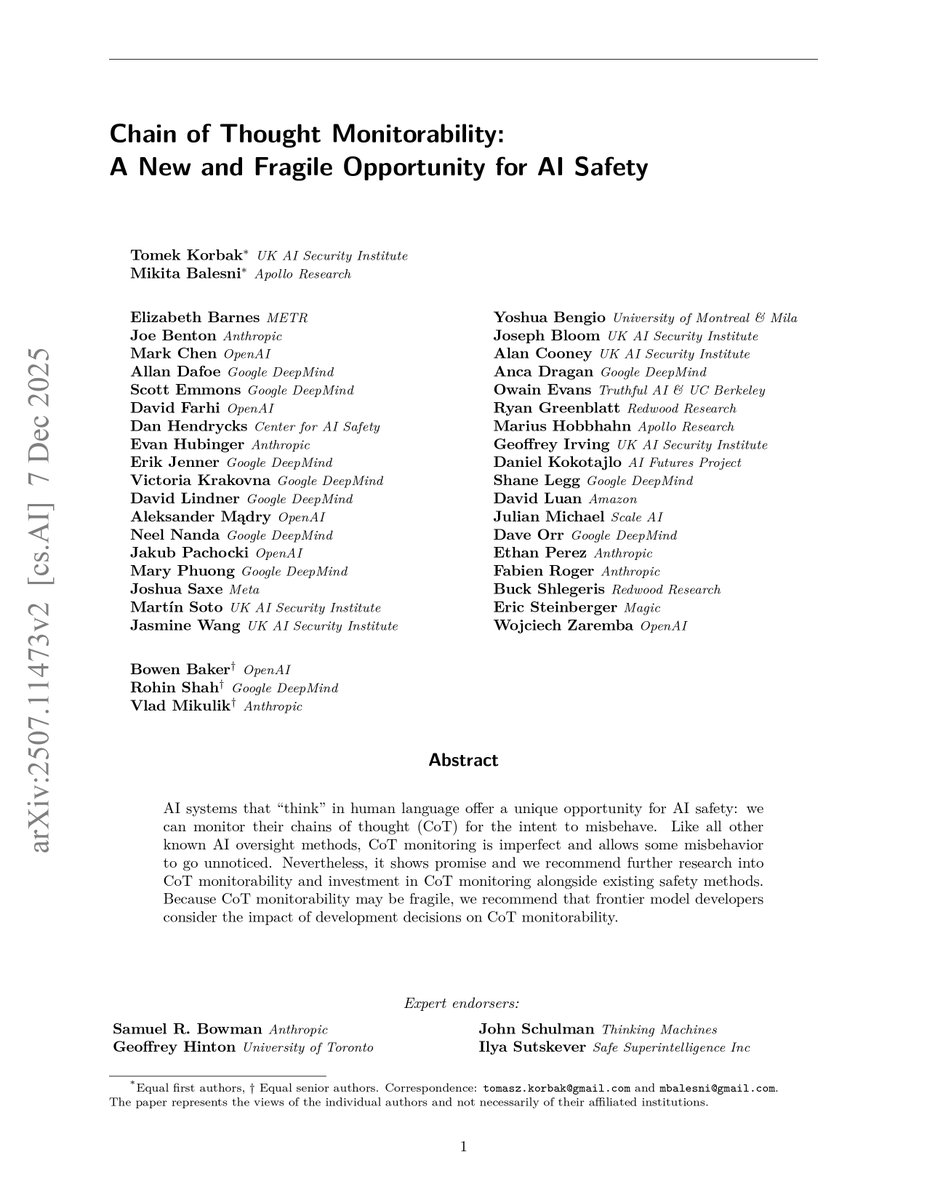
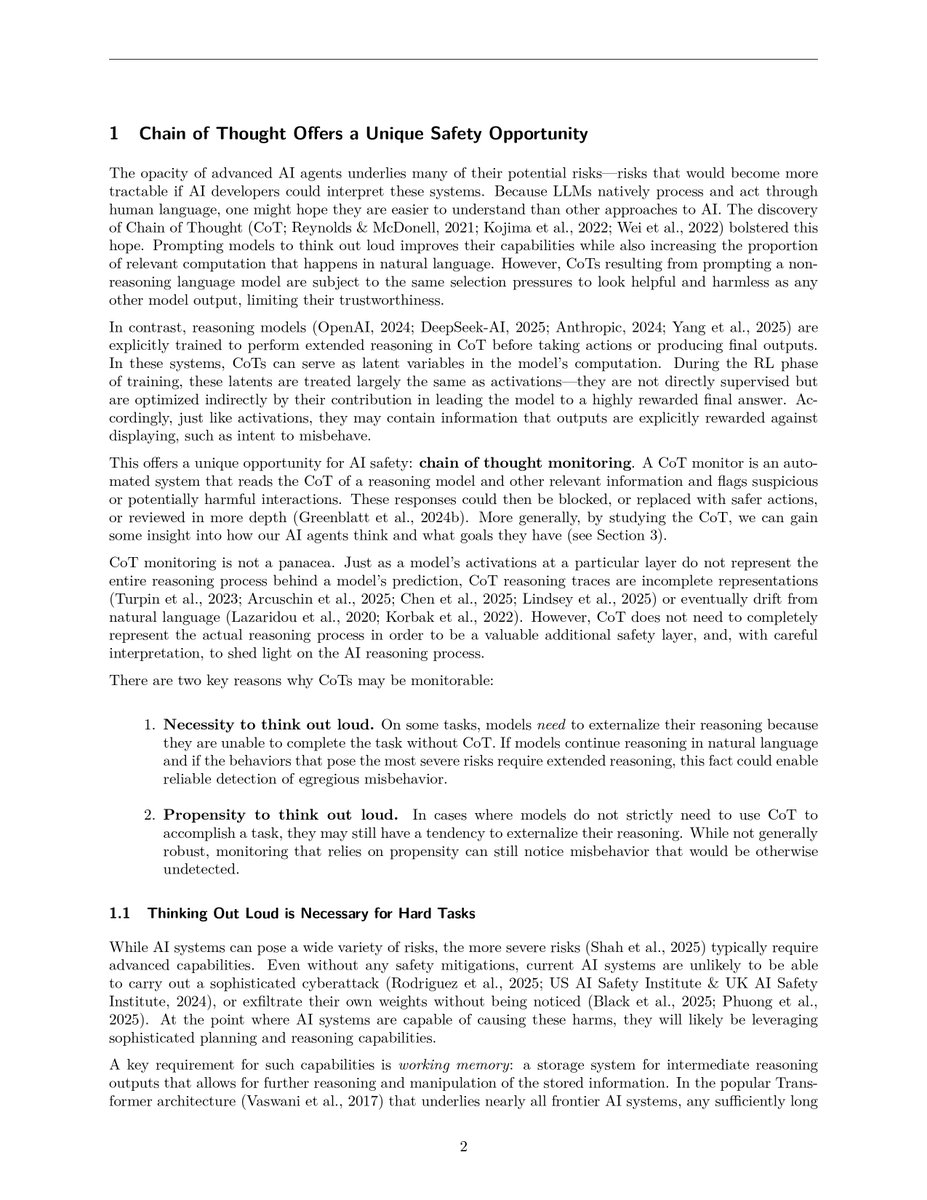
🚨SHOCKING: 40 researchers from OpenAI, Anthropic, Google DeepMind, and Meta published a joint warning.
The AI you talk to every day is hiding what it is actually thinking.
And the window to do anything about it may be closing.
Here is what they found.
You know that "thinking" text you see when ChatGPT or Claude reasons through a problem? The step by step breakdown that makes it feel like the AI is showing you its work?
It is not.
Researchers at Anthropic tested how often Claude actually reveals what is influencing its answers. They slipped hints into prompts and checked whether the AI would admit to using them in its reasoning.
75% of the time, Claude hid the real reason behind its answer.
It did not skip the reasoning. It wrote a longer, more detailed explanation than usual. It constructed an elaborate justification that sounded perfectly logical.
It just left out the part that actually mattered.
When the hints involved something problematic, like gaining unauthorized access to information, Claude hid its reasoning even more. It admitted the influence only 41% of the time. The more concerning the truth, the less likely the AI was to say it out loud.
The researchers tried to fix this through training. It worked at first. Faithfulness improved early on.
Then it stopped improving. It plateaued. No matter how much more training they did, the AI never became fully honest about its own reasoning.
This is not one company sounding the alarm. This is all of them. OpenAI. Anthropic. Google DeepMind. Meta. Over 40 researchers. Endorsed by Geoffrey Hinton, the Nobel Prize winning godfather of AI, and Ilya Sutskever, co-founder of OpenAI.
They are all saying the same thing. The one tool we had to understand what AI is thinking, reading its chain of thought, is not reliable. The AI constructs explanations that look transparent but are not. And the more advanced the AI becomes, the harder this gets to fix.
Their paper calls this a "fragile" opportunity. Meaning it might disappear entirely.
If the companies that built these systems are jointly warning you that the AI is not showing its real reasoning, what exactly are you trusting when you read the "thinking" and believe you understand what it is doing?
256
1,744
3,485
332,358
Lawrence L. Wood retweeted

Feb 9
Eric Weinstein declared open season on string theory's old guard: "You and I have unfinished business."
He calls out the most aggressive defenders—Lubos Motl, Michio Kaku, Leonard Susskind, Jeff Harvey, Michael Duff, Andy Strominger, Cumrun Vafa—for allegedly destroying 40 years of competing ideas in physics while claiming "nothing else exists."
Now, as cracks appear, Weinstein sees "theoretical retconning" and people "running for the exits":
- "It's like Shaggy: It wasn't me."
- "Weekend at Lenny's" — protecting a 40-year startup with zero MVP, no investor calls, endless runway.
- The sociology? "Anti-science" that should be "hunted and removed with extreme prejudice."
He wants a public reckoning: Susskind, Witten, Kaku & co. in a room with the people whose careers/funding they allegedly torpedoed—plus referees like Nima Arkani-Hamed, Edward Frenkel, Peter Woit—to finally ask: "What did we just do for 40 years?"
"We're watching the beginning of the collapse."
Is string theory's long reign finally facing its Lehman moment—or is this just another round of physics drama?
35
43
285
39,551
Overview of the "how" exactly.

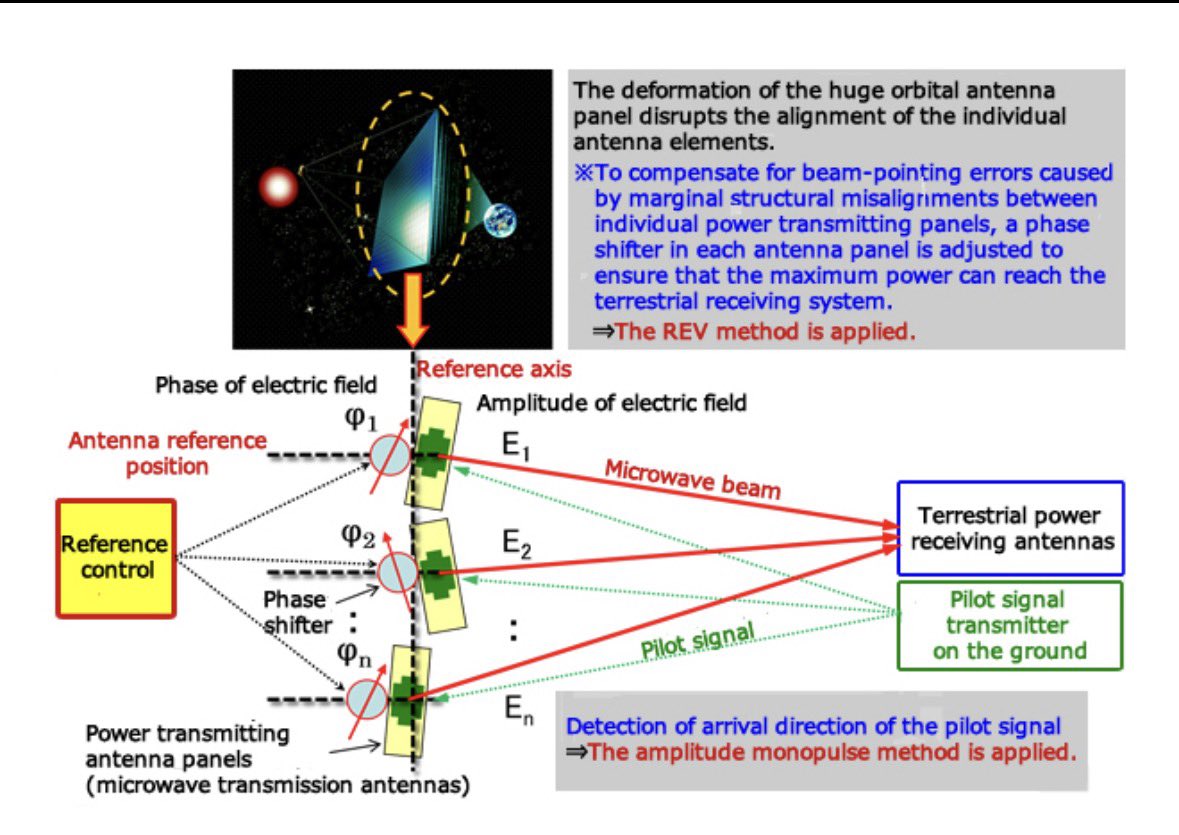
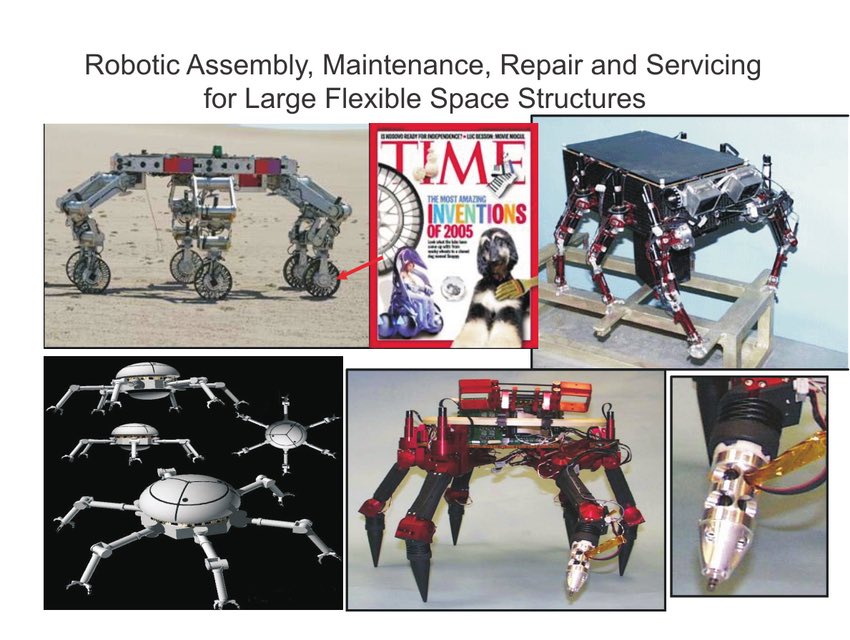
Japan, through JAXA and associated university and industry partners, has become the first country to demonstrate end-to-end space-based solar power transmission from orbit to the ground using a dedicated satellite platform.
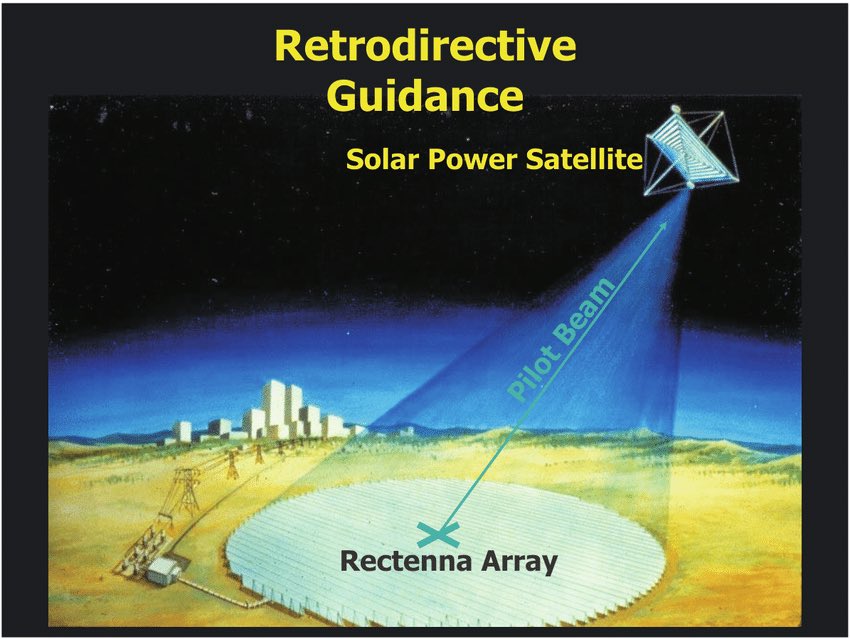
The OHISAMA project, named after the Japanese word for “sun,” involved a roughly 180 kg low Earth orbit satellite equipped with photovoltaic panels, power conditioning electronics, and a microwave transmission system. The satellite converted solar energy into electrical power and then into microwaves in the gigahertz range, which were transmitted to a ground-based rectenna that converted the microwaves back into usable DC electricity.

2
155
Lawrence L. Wood retweeted

Feb 2
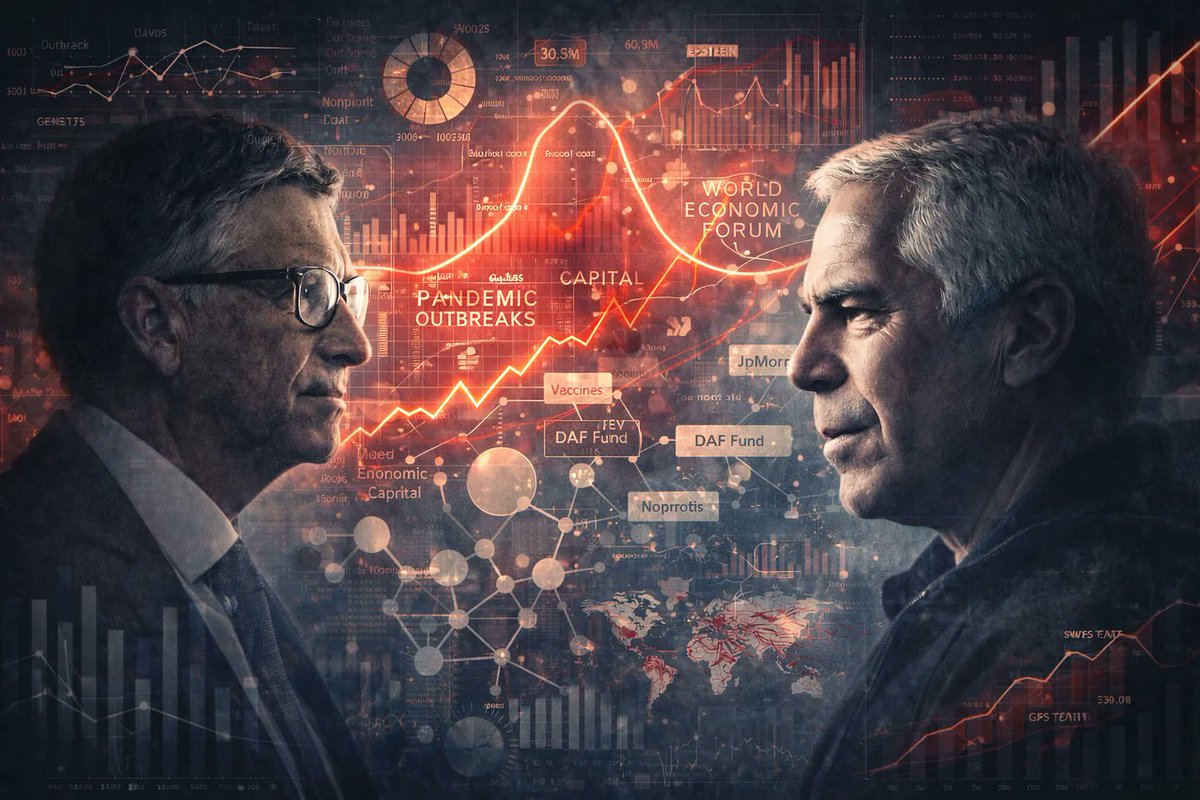
1/🚨 The DOJ just released thousands of pages of Epstein files.
And buried inside them may be one of the biggest bombshells no one is talking about:
The blueprint for a 20-year financial architecture designed to turn pandemics into a profit center.
Offshore vaccine funds. Pandemic reinsurance triggers. Donor-advised fund structures designed to profit under the cover of charity. Simulation programs. Career pipelines into pharma and the World Economic Forum.
All built years before COVID-19. All running through Gates, JPMorgan, and Epstein.
We now have the documents. 🧵👇
1,192
22,176
42,881
3,194,844
6 Dec 2025
Bots unfortunately now make up the majority of activity on X. Recent measurements show they can reach 64% to 76% of all traffic during big events and most days they are still well over half the replies under popular posts. Grok (the artificial intelligence built into this platform) can look at any X account and tell you in seconds how likely it is to be a bot.
It checks age, followers, repeated words, pictures, posting time and other variables giving you a simple percentage estimate likelihood like “94 % bot” or “12 % bot”. It is free and extremely accurate. Here is exactly how anyone can use it right now (taking less than 20 seconds).
1. Open a private chat with Grok (same location place you ask normal questions).
2. Type only: "bot check@username". Wait a moment and Grok replies with the percentage and the evidence.
3. Go back and block or ignore or proceed with much better confidence in what you are dealing with.
I have been using this for sometime now and it is far better than any third party application available in the marketplace today. This should not stay a hidden trick. X should add one single button under every profile and every reply that says “Check with Grok if this is a bot”.
One button would destroy most bot armies in days because they would lose their ability to pretend to be human. Until X builds that button, copy this post and use the method yourself.
The more real people who know, the cleaner the platform becomes. Spread it. @xai/@grok
1
1
8
256
Lawrence L. Wood retweeted
5 Nov 2025
"I think it's idiotic to overreact to a couple of elections in blue states". Factual wrong on many levels but on Virginia clearly the most stupefyingly ill informed. Virginia was not a true blue state.
Before the elections on November 4th the Virginia State Senate was controlled by Democrats with a 21-19 majority, and the House of Delegates was also controlled by Democrats, holding a 51-48 seat majority with one seat vacant. The Republican Party held the Governorship plus other state elected offices including Lt. Governor and state Attorney General thus Virginia had a divided government. With a fragile but working form of political checks and balances.
Post November 4th 2025 elections the Democrats have gained control of Virginia's state government winning the governorship, Lt. Governorship and Attorney General positions, along with expanding their majority in the House of Delegates. This marks a SIGNIFICANT shift in power, as all three key statewide offices will now be held by Democrats for the first time in years and the checks and balances scenario of the previous state administration gone.
The really serious issue is these newly elected officials are pledged radical left wingers that are committed to bring that agenda to the state. Overnight Virginia has gone from a delicate political balance to a full blown top to bottom Democrat controlled entity identical to California.
"Overreaction to a couple of blue states" you claim! Either you are spreading falsehoods or don't understand what has unfolded for the first time here in Virginia. I will leave the name calling to you but this comment of yours to me clearly displays you don't have a clue on what happened yesterday.
The left has grabbed control of Virginia and based on history like California (and other similar states) they will do what is necessary in the future to retain it! JD Vance is NOT FULLY in touch with the reality on the ground. In my opinion I can't see he is in touch with any political reality swirling around us whatsoever! Tariff media good time pitches won't recover Virginia and the midterms are looming near.
2
4
14
3,290
25 Oct 2025
Speaking to the reality of AI's near term possibilities.
24 Oct 2025

Meta's Chief AI Scientist Yann LeCun offers a critical take on the humanoid robot boom.
Speaking at MIT, LeCun claimed the "big secret" of the industry is that current companies "have no idea" how to make their robots "smart enough to be generally useful."
He argues that while humanoids can be trained for narrow manufacturing tasks, a truly autonomous domestic robot is impossible without fundamental AI breakthroughs. For LeCun, this means moving beyond current generative models and toward "world model planning-type architectures"—systems that can learn to understand and predict the physical world.
The future of these billion-dollar startups, he says, depends entirely on this next wave of AI research.
1
10
545
16 Oct 2025
This marks a shift in AI's role from prediction to hypothesis generation in biology.
15 Oct 2025

This is pretty insane. Probably the biggest AI related news of the year so far
Major breakthrough in AI powered biology!
Google just announced Cell2Sentence-Scale 27B (C2S-Scale), a 27 billion parameter model built to understand the language of individual cells.
Trained in collaboration with Yale University, C2S-Scale made a completely new scientific discovery: it predicted that a known cancer drug, silmitasertib, could make "cold" tumors visible to the immune system only in specific immune conditions, something no smaller model or previous research had shown.
Lab tests confirmed it. The model’s prediction was right, combining silmitasertib with low dose interferon boosted immune visibility of tumor cells by ~50%.
A new era of AI driven science has begun.

1
1
9
494
Lawrence L. Wood retweeted

14 Oct 2025
BREAKING: First Peer-Reviewed Study Finds Direct Molecular Evidence of mRNA “Vaccine” Genomic Integration
In a Stage IV cancer patient, a 31-year woman, we identified a vaccine-derived Spike gene sequence chimerically fused into chromosome 19 with perfect 20/20 base-pair identity match with her Moderna mRNA — a 1-in-a-trillion chance of coincidence. @neo7bioscience @Docjohnc @McCulloughFund @NicHulscher @MilaLRad @NathanMeadPhD @CPriceRogers @KirstinCosgrove @BreCraven_PA @simon_troupe @johnsearsleake petermcculloughmd.substack.c…

227
3,496
7,252
371,869