
Yonatan Tzur's laboratory @GeneticsDepart1 of @HebrewU focusing on #meiosis, #germline and genome engineering
Joined October 2018
- Tweets 1,759
- Following 558
- Followers 608
- Likes 12,834
135 Photos and videos









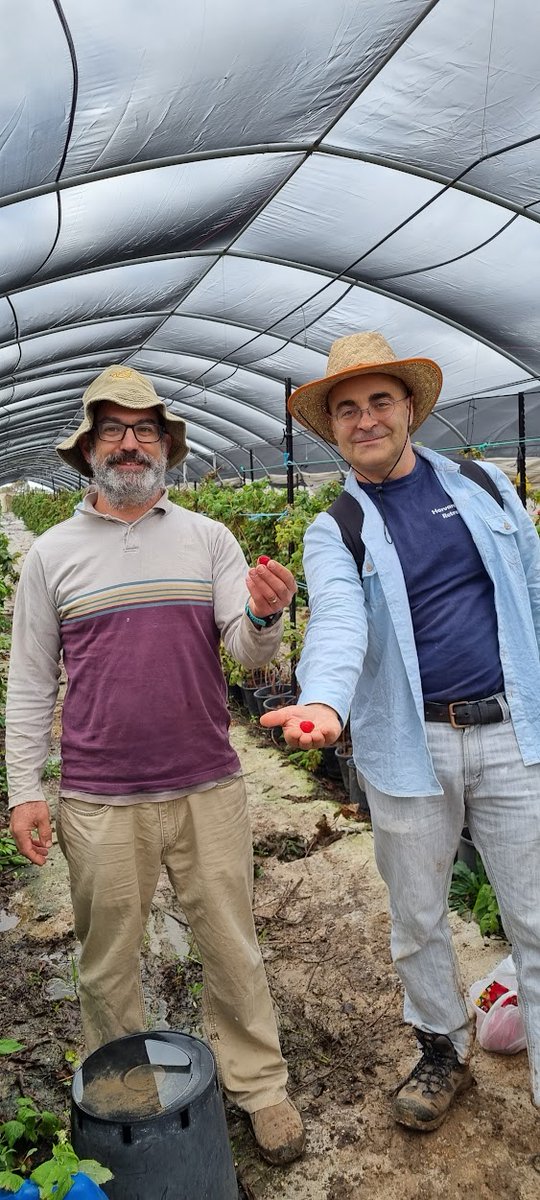
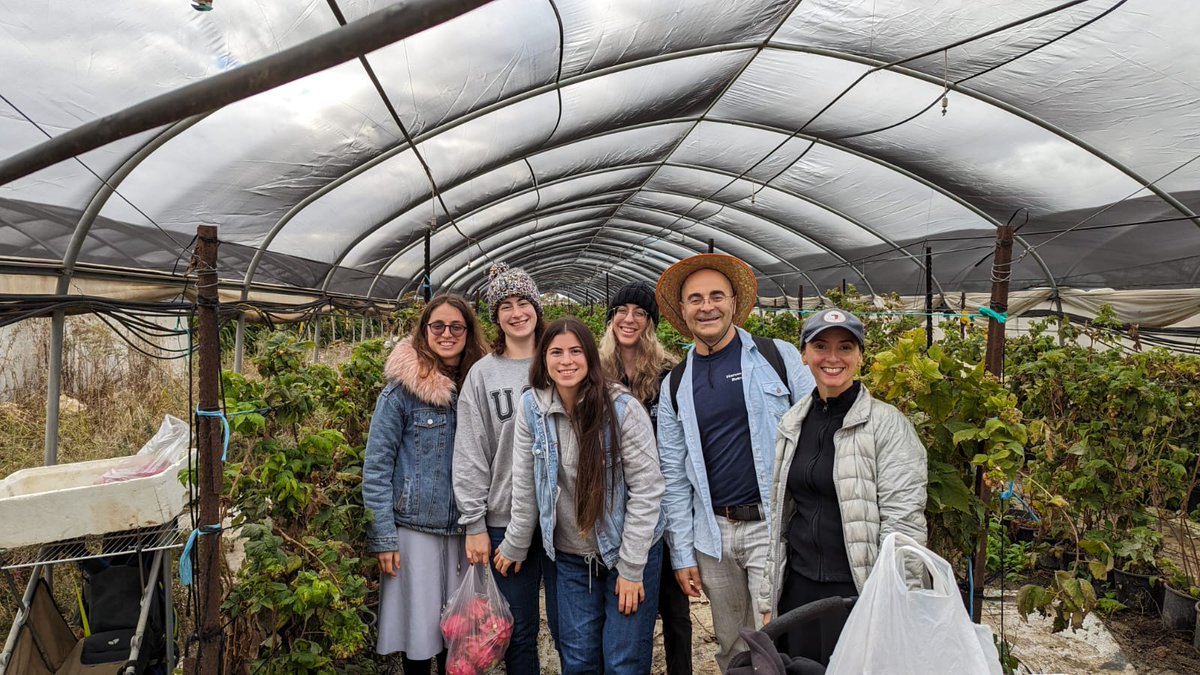


Please RT:
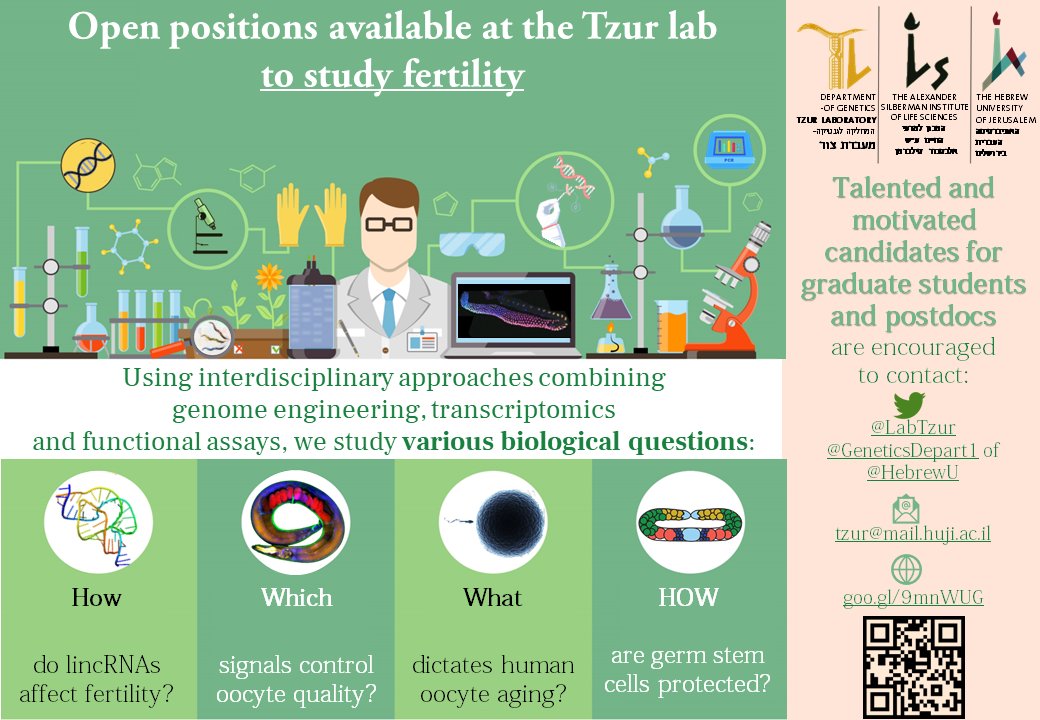
The Tzur lab at the Hebrew University is looking to recruit post docs and graduate students to study germ cell development and fertility using C. elegans and human oocytes.
Candidates can apply via: tzur-lab.wixsite.com/tzur-la…
or email: tzur@mail.huji.ac.il
1
47
46
Tzur lab retweeted

Jun 3
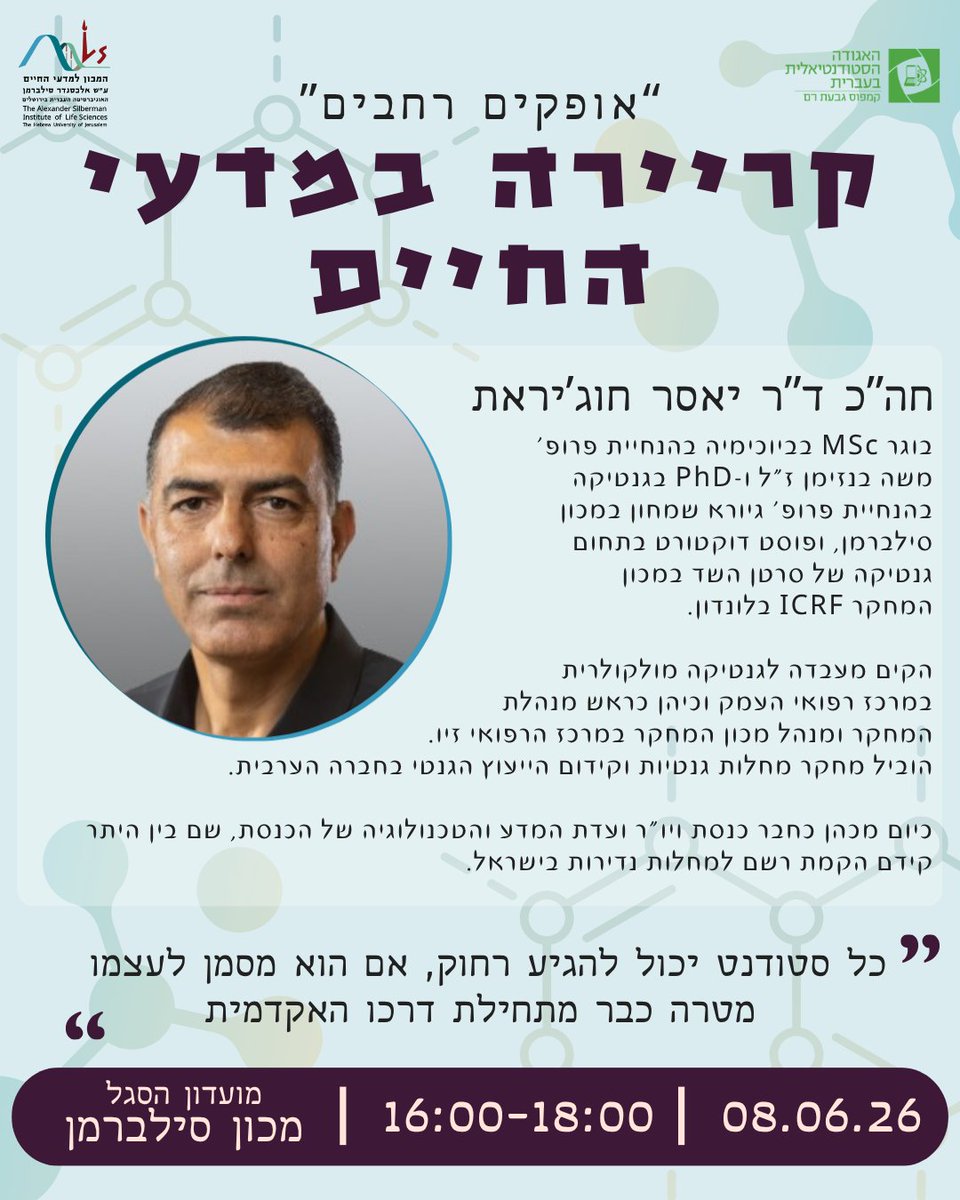
הכירו את ח״כ ד״ר יאסר חוג׳יראת, בוגר מכון סילברמן, יו״ר ועדת המדע והטכנולוגיה בכנסת.
במפגש הקרוב של “אופקים רחבים” הוא ישתף במסלול מהמחקר להשפעה ציבורית.
📅 8.6.26 | ⏰ 16:00–18:00
📍 מועדון הסגל, סילברמן
🍻 בירה חינם לנרשמים
🔗 להרשמה: forms.gle/Mkxv8BZQxwNANKTD8
2
2
60
🤯
May 19

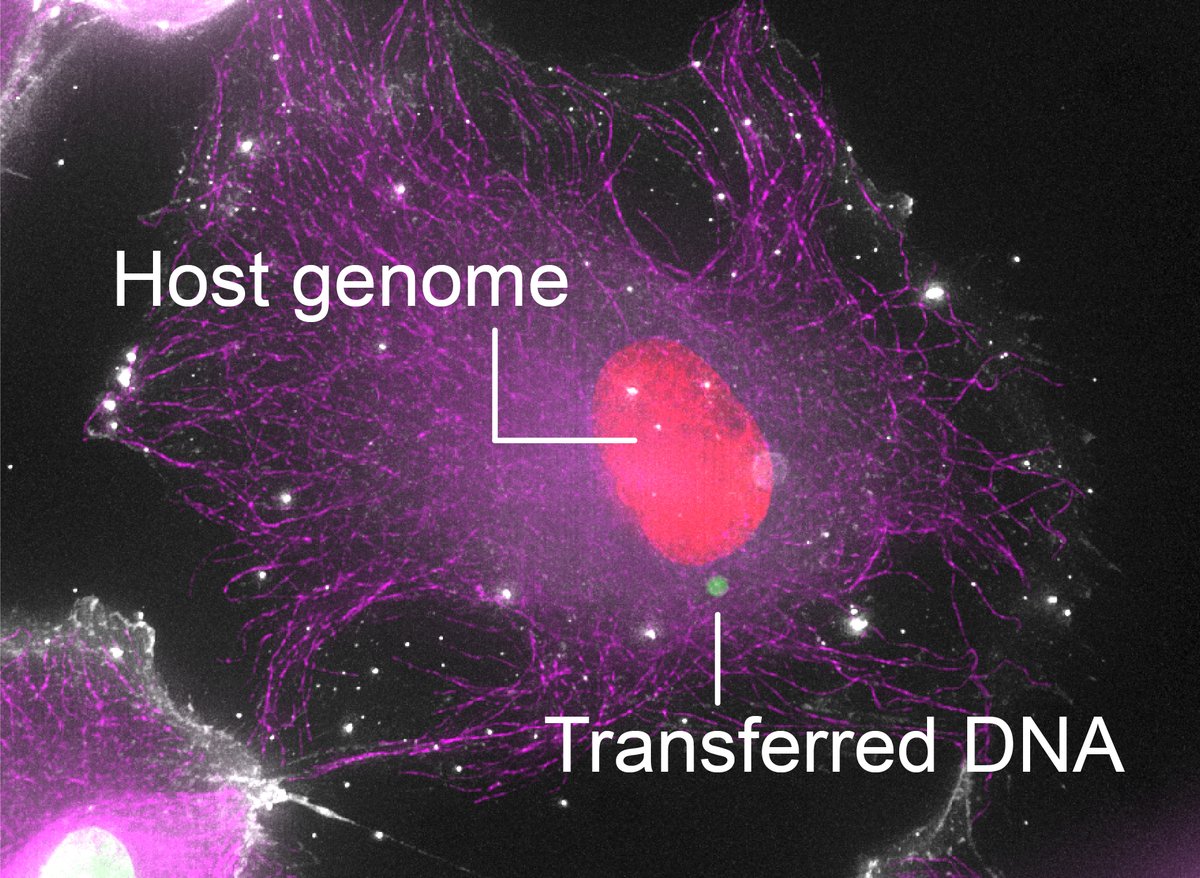
Excited to share our latest paper, out today @CellCellPress. We found that large pieces of the human genome can transfer between cells upon direct contact, endowing recipient cells with heritable phenotypic changes. (1/7)
cell.com/cell/fulltext/S0092…
93
Tzur lab retweeted

May 15
Now out in @NatureBiotech ! Do lncRNAs commonly bind 1000s of genomic sites? Maybe they do, but the dozens of studies that report genomic binding maps of lncRNAs are deeply flawed, with probes binding suprious DNA sites rather than RNA-bound ones. nature.com/articles/s41587-0…
12 Nov 2025

A preprint‼️that's bound to ruffle some 🪶 "Widespread DNA off-targeting confounds studies of RNA chromatin occupancy" led by our @MicahGoldrich and Louis Delhaye from @pieter_mestdagh. TL;DR we show that many of lncRNA chromatin occupancy maps are flawed🧵biorxiv.org/content/10.1101/…
10
40
143
38,640
I have been waiting for that....
May 5

Important announcement!!!🫵💥💫
Would you have a tooth pulled if it helped your chances to get an important grant funded?
Absurd question (obviously), but the situation right now is so bad funding-wise, that I bet some of you actually considered it for a second…
Well, don’t get desperate - we created a new tool that might help! (keep your teeth!)
I’m excited to announce that as of today we are officially releasing “QED for Grants” for everyone. What started off as an extension of our existing paper review platform, grew in the last few months to an entirely new design. We’ve been working like crazy on this, and although we have more things we want to add in the (very near) future, we decided to release our AI for grants NOW, earlier than planned. It’s not perfect, no AI is, but for the first time, when I run my own grants through @qedscience, I feel it gets the research, finds real problems, and gives me very useful feedback that I can implement before submission. It’s like sending it to 20 scientists from my domain, knowing they’ll agree to dedicate their entire week to carefully read and comment on every line.
It’s very important to write your own grants yourself, it makes you think hard and you learn a lot from doing it, and q.e.d’s system is designed to preserve these positive aspects and augment them - you get feedback on your own writing, we don’t write for you!!
But at the same time, a typical PI spends many months every year writing proposals and sadly only a tiny fraction gets funded, even if the ideas are good. When you are forced to submit an unreasonable amount of grants the quality of the writing drops, and rejection rates increase. Not because the essence is bad. It’s simply too competitive right now (the cuts made it so much worse) and if your proposal is not super clear and tight, and if it’s not a perfect fit for the grant you’re submitting, you’re doomed.
Our grant solution is not an authoring, text-generating tool. It gives you constructive feedback on your writing (it comments on the deep things, not grammar and typos). It’s meant to help you with the questions that torment you late at night (“is this a good fit?”, “Is this novel enough?”, “Did I miss something?”). Tens of thousands of you already use q.e.d to improve your manuscripts and critically read papers, we built the grant tool by the same principles (you’ll identify many of the features that you told us you like).
We’ve processed thousands of proposals, learned where things fail, where reviewers get stuck, why good ideas come out weak. We interviewed hundreds of scientists, and also experts who work in funding agencies and university research authorities, and implemented their feedback (we’re constantly looking for more feedback). Our AI is always happy to give you constructive (and polite!) critique, and it will go through your grant line-by-line, forcing you to improve clarity, flag weak points, and push the whole thing to a higher standard. We study, in scale, what gets funded and what doesn’t, and what is the perfect fit for each type of grant.
So please, use it, pressure-test it, tell us where it fails, and together we’ll improve it every day to put you in the best position for actually testing your ideas in the real world. As always with q.e.d, the system is completely secured and private, and we are NOT training on your data (see the FAQ on our website).
Please like, retweet, and share with your favorite colleagues! (link to the platform below in the thread👇)
1
1
3
2,095
Just when you think we found the roots, there is something even more amazing and ancient👇
Apr 27

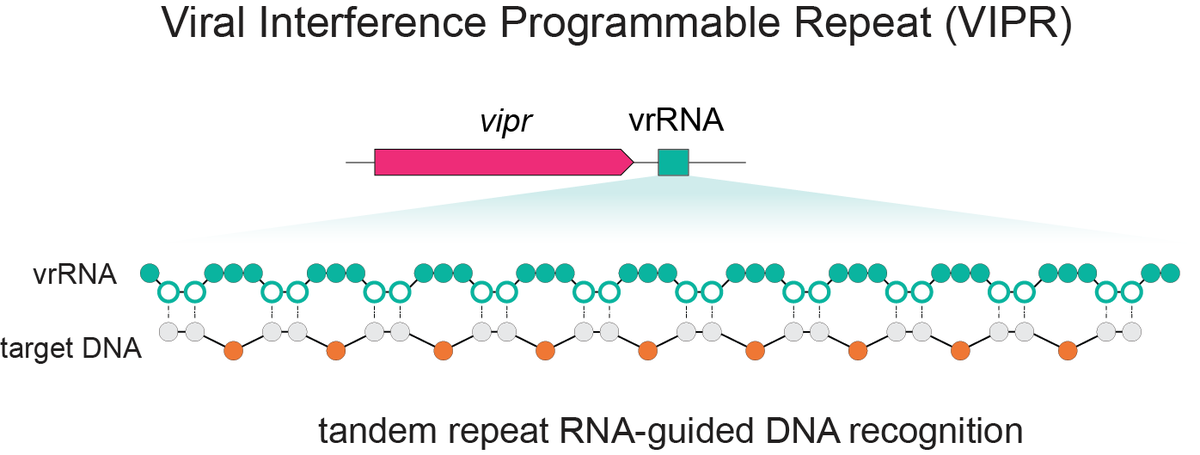
Excited to share our discovery of a new programmable RNA-guided DNA-targeting system hiding inside bacteriophages that predates CRISPR.
We call it VIPR (Viral Interference Programmable Repeat), and it uses an entirely new logic to find its targets.
Thread link below.
1
119
Tzur lab retweeted
Apr 26
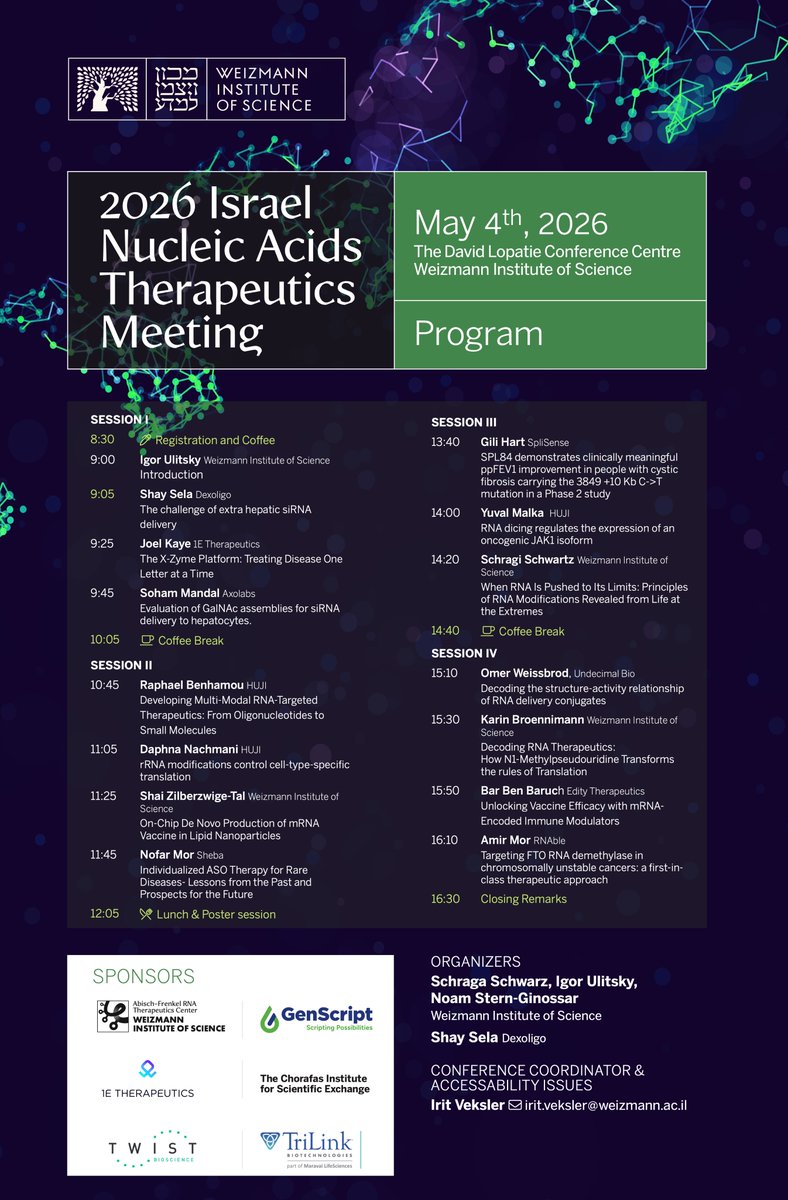
Despite EVERYTHING, we're still on for our annual Nucleic Acids Therapeutics next week at the Weizmann! There are still places to register (for free!), link in the first comment. Looking forward to meeting friends, great science, deep discussions, and great food, as always :-)
1
2
18
990

And now do comparative transcrptomics between Jedis and Sith lords
Apr 21

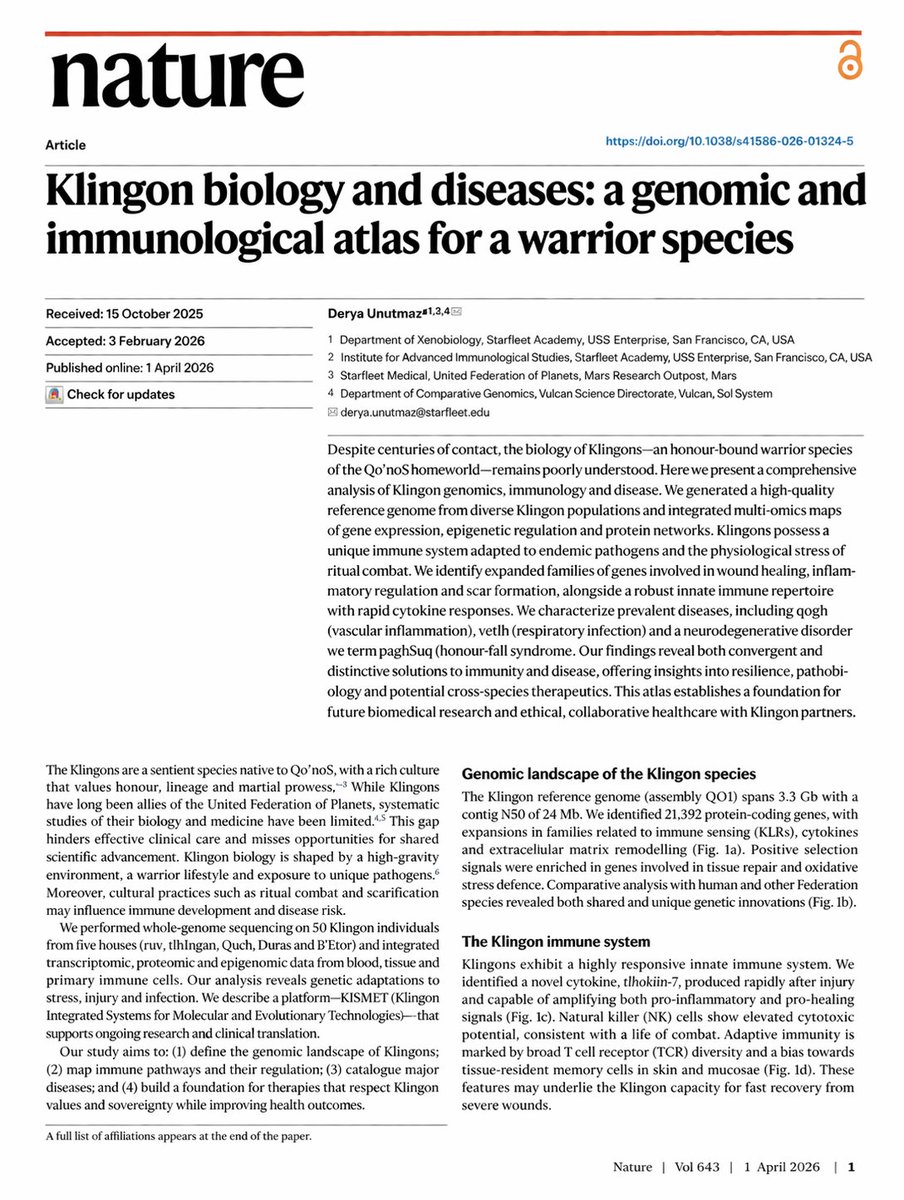
I will share many examples of ChatGPT Images 2.0 that I generated during early access testing. It is truly incredible what it can create! The image below is almost a replica of the first page of a Nature article, but what is actually unbelievable is that the content actually makes biological sense! In fact, I generated the full 8 pages of this paper, and I will share those as well.
The prompt was simply: “Create a Nature paper front page on Klingon biology and diseases, by Derya Unutmaz, Starfleet, USS Enterprise, Mars” or my dream paper 😅
69
Can a mammal be male without Y chromosome or the SRY gene? Checkout this new publication👇

1/n
🤩 Beyond excited to share our recent paper, published today @NatureComms!! 🤩
This study represents, in my view, one of the most striking phenotypes we ever found with really important findings and implications.
nature.com/articles/s41467-0…
1
1
127
Tzur lab retweeted

New preprint! 🦟🧬The key to engineering daughter-killing in mosquitoes isn't what X-linked gene you target with CRISPR. It's when during sperm development you cut it. X-poisoning in Anopheles at last. shorturl.at/T31TG
1
3
9
371
Tzur lab retweeted

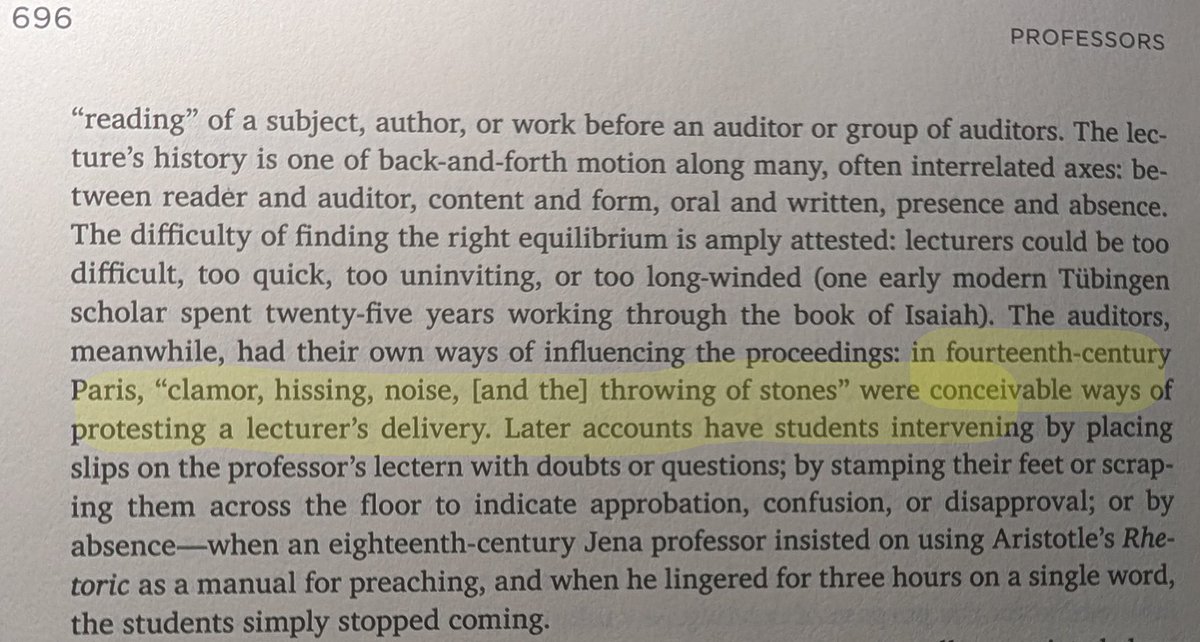
Professors today: "Wahh, wahh, my students gave me bad course evaluations and it hurt my feelings 😞😞😞"
Professors in 14th century Paris: "I gave a bad lecture and the students threw stones at me"
12
449
4,029
102,133
Tzur lab retweeted

Mar 28
Professors work on the bench
Mar 27

What's a clichè in movies that never actually happens in real life?
7
15
193
26,867

Once again it took time and effort to show the community that a "weird C. elegans thing", is actually conserved in evolution.
Mar 13
A new mechanism for “RNA memory”! 😱
Thrilled to share another crazy paper from the lab (can’t believe we posted 2 in 2 days!), summarizing >10 years of research:
Work on transgenerational inheritance of small RNAs in the powerful model organism C. elegans changed how we think about what’s possible in inheritance and evolution, because it allows the most heretical thing: inheritance of parental responses to the environment! However, it’s still unclear whether RNAs are inherited across generations in other animals, largely because the RNA-dependent RNA polymerases that amplify heritable small RNAs and prevent their dilution in C. elegans are not conserved in mammals.
In this new work, an amazing collaboration with the Rink and Wurtzel labs, we show that planarians establish long-lasting and heritable small RNA–based gene regulatory states despite lacking canonical RNA-dependent RNA polymerases and nuclear RNAi machinery (that are required in C. elegans).
You might say “they are both worms…” BUT planarians are evolutionarily very distant from C. elegans (flatworms vs. roundworms, diverged more than 500 million years ago), making this particularly surprising. These are totally different animals.
We find that ingestion of double-stranded RNA induces sequence-specific silencing that persists for months and survives repeated cycles of whole-body regeneration. Even more strikingly, RNAi can be transferred between animals, echoing James V. McConnell’s controversial “RNA memory” experiments from the 1970s (his lab was targeted by the Unabomber terrorist Ted Kaczynski, who sent McConnell a bomb. This and other controversies ended this line of experiments…)
Mechanistically, we find that the response transitions from a transient systemic dsRNA-triggered phase to a stable, cell-autonomous post-transcriptional “memory phase” maintained by antisense small RNAs. Using a new luminescence reporter (transgenesis is currently impossible in planarians), we show that silencing spreads along the targeted gene and identify a weird type of planarian small RNAs with untemplated polyA tails.
RNAi inheritance without canonical RdRPs establishes planarians as a powerful system for studying RNA-based regulatory inheritance beyond C. elegans and raises the possibility that RNA-mediated inheritance may be more broadly conserved in animals, potentially even in mammals.
Here’s a video of a planarian that is treated by RNAi against β-catenin and develops multiple heads instead of just one. This is one of the phenotypes that is inherited. Another phenotype is “loss of eyes” (which we show is not only inherited across multiple regeneration cycles, but can also be transmitted between animals in transplantation experiments).
Amazing work led by first authors Prakash Cherian and Idit Aviram (co-supervised by Omri and me).
Please read the preprint, the link is in the next tweet, and share!
3
2
17
4,389
The C. elegans germline.
The tissue that allows you to study tumorogenesis 4 generations down the road!
Mar 12
Humanity is notorious for leaving problems for the next generations, but in animals we are discovering the biological mechanisms: we found that C. elegans develop germline tumors if THEIR GRAND GRANDPARENTS’ cells fail to clear the garbage from their body cavity… What the hell, you ask? Read our new preprint! 👇
Congrats to Itai Rieger, Yael Mor, Itamar Lev, and all the other authors on a superb job (this was many years in the making):
“Scavenger Cells Failure to Maintain Systemic RNA Homeostasis Causes Epigenetically Inherited Germline Tumors”
biorxiv.org/content/10.64898…
1
1
5
3,467
Tzur lab retweeted
Mar 10
Version of Record now out in @eLife
elifesciences.org/articles/1…, after a great review process.
Mega project by the mighty @AlanMonziani . I thought we're done with EPB41L4A-AS1, but reading the proofs gave me some more appetite, so who knows?
10 Apr 2025
New preprint 📜 from @AlanMonziani in the lab – EPB41L4A-AS1 long noncoding RNA acts in both cis- and trans-acting transcriptional regulation and controls nucleolar biology biorxiv.org/content/10.1101/… . A🧵 1/n
1
4
22
2,287
Tzur lab retweeted
Mar 6
Barista
Mar 4

What's a job where you have zero room for error, like one mistake and it’s a huge deal?
1
2
24
6,204
Tzur lab retweeted
Feb 26
It’s finally out! Together with @EMBO and @ReviewCommons, we conducted a structured side-by-side comparison of human peer review and our AI scientific review.
Here’s what we did: Authors whose manuscripts had already received journal-agnostic review at Review Commons were provided with an independent AI review generated by @qedScience. The AI analysis was compared to the combined feedback of multiple human reviewers, not to a single report, and had no access to those reviews.
We then asked authors how they evaluate the strengths and limitations of both approaches, and how they would actually want to use AI.
The conclusion was clear: Scientists want AI feedback to strengthen their work IN ADVANCE, under their control. Not as a gatekeeper, but as a tool for constructive input.
That is exactly what we are building at q.e.d! We are on the authors' side.
q.e.d. is not working in isolation; we are collaborating with leading pro-scientists organizations, including EMBO (and other journals), Review Commons, and OpenRxiv (@biorxivpreprint), and are working closely with researchers across fields. At the same time, we are building an alternative model that puts agency directly in scientists’ hands.
Researchers should be the ones deciding when their work is ready to be shared. We are building the infrastructure to support that.
A pleasure doing this with the great Thomas Lemberger @tlemberger and Niv Samuel Mastboim @nivmast

5
64
222
35,358

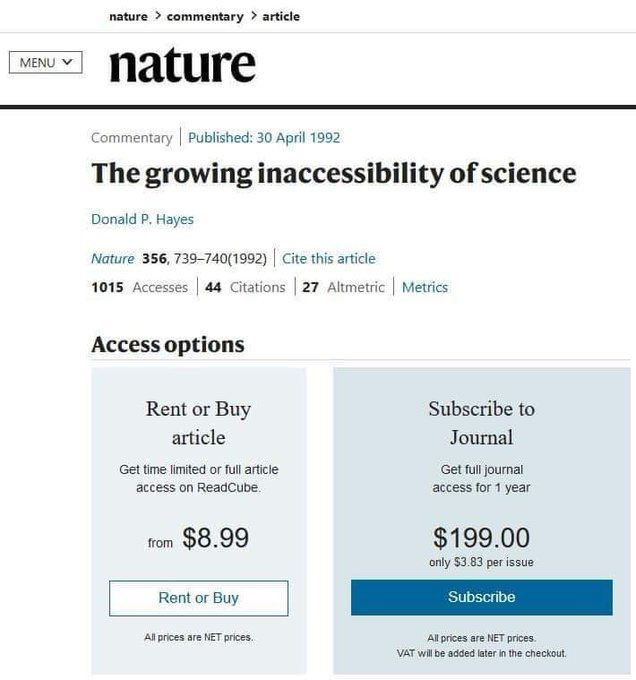
Its the world of RNA
19 Dec 2025

Do viruses use RNA to rewire bacteria?
Yes!
In our paper in @MolecularCell we use #RILseq to uncover that phages don’t just encode proteins, they use small RNAs to hijack bacterial DNA replication and fine-tune infection.
@MeetingRna @RNA_ISR @HebrewU
cell.com/molecular-cell/full…
100