
Judgment and decision-making & open science. Professor of Organizational Behavior at @OsloMet.
Joined November 2014
- Tweets 2,413
- Following 759
- Followers 494
- Likes 7,074
99 Photos and videos


Pinned Tweet

31 Mar 2025
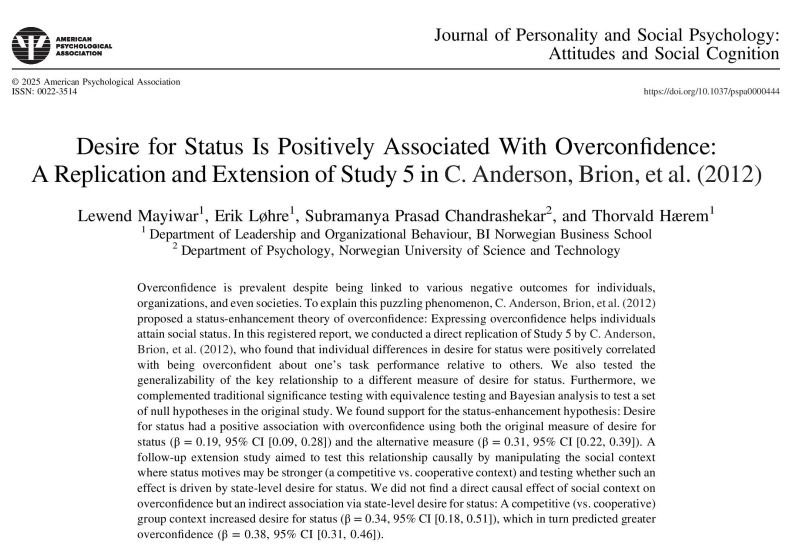
New paper out in JPSP with @LohrErik, @PRASAC, & Thorvald Hærem! In a registered report replication and extension, we find that the desire for status is linked to greater overconfidence.
Pub: psycnet.apa.org/doi/10.1037/…
OA: osf.io/fyx9c_v1
2
5
15
1,139
Lewend Mayiwar retweeted

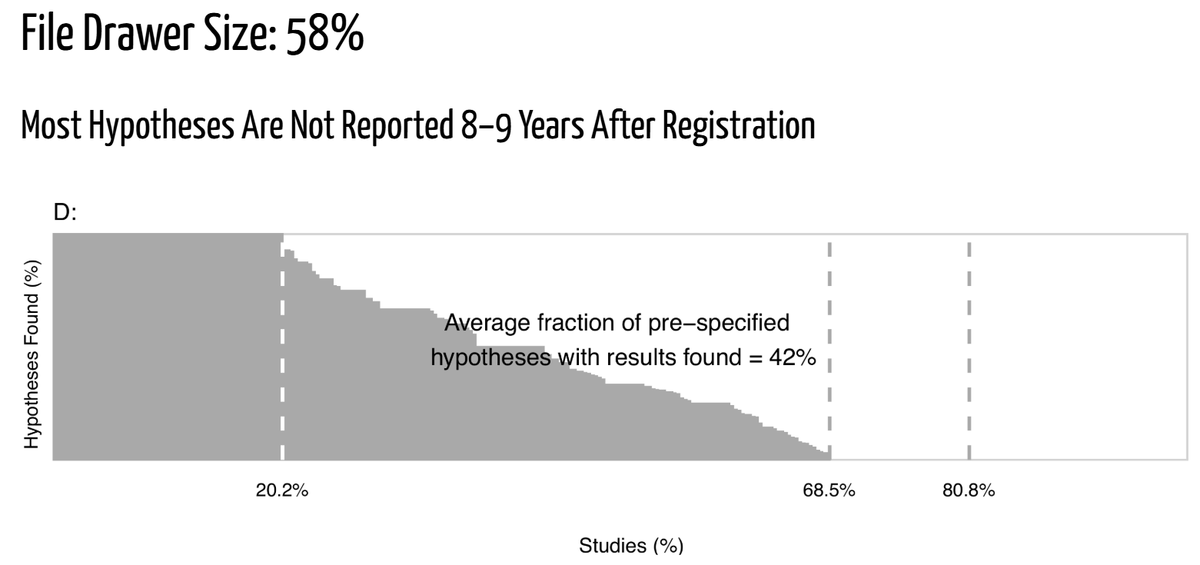
This is being used to ridicule pre-registration but it's doing exactly what it's supposed to:
1. Tells us the file drawer of unreported tests, which we would not know otherwise.
2. Enables journals to make their own decisions about what needs to be reported.

Important to keep in mind that even in what is arguably the most rigorous part of social science -- econ studies with preregistration -- the papers hide most of hypotheses tested
1
3
15
1,878
Lewend Mayiwar retweeted

May 26
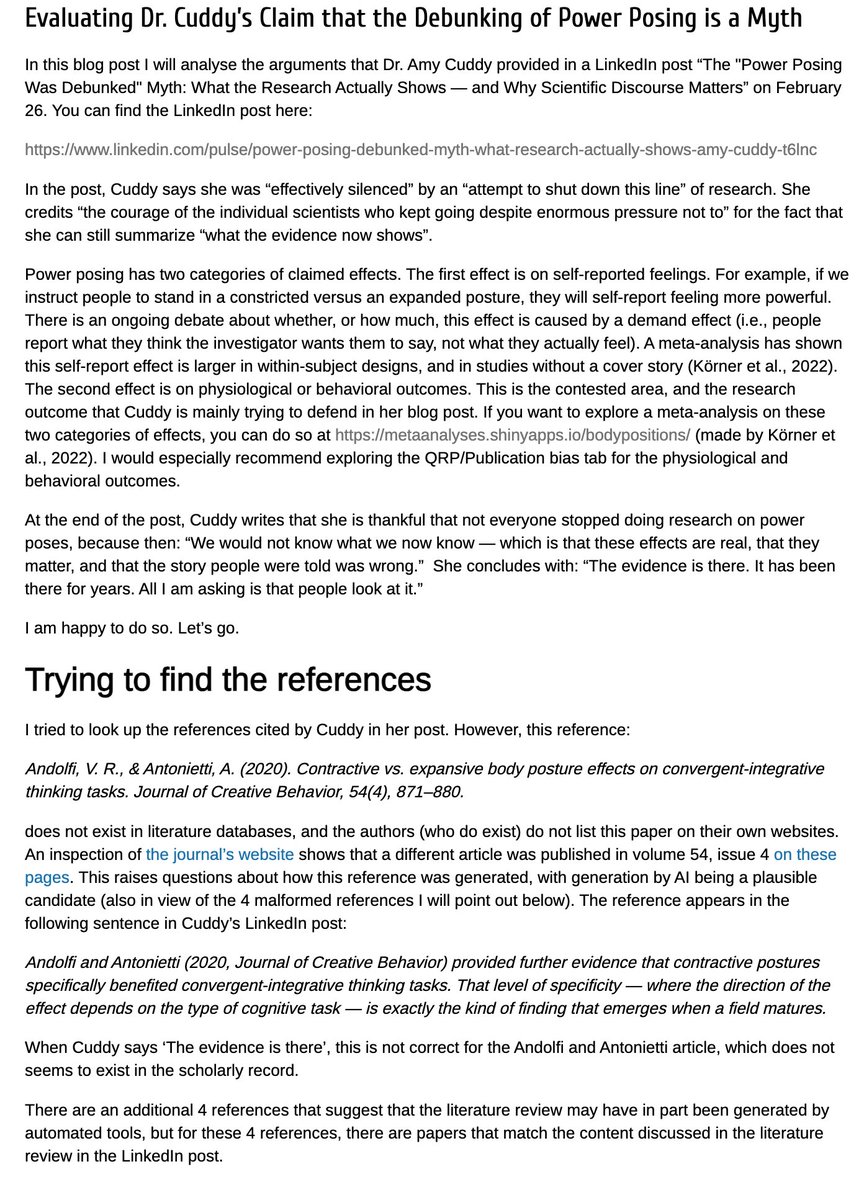
There is yet another debate about power posing
Amy Cuddy wrote a blog defending power posing: linkedin.com/pulse/power-pos…
Dan Lakens reviewed and critiqued her claims:
daniellakens.blogspot.com/20…
1) some of the papers she cited seemed to be AI hallucinations
2) she cites evidence in favor of power posing that is actualy the complete opposite of power posing (!) or a total null effect (= .99)
3) she also cites a meta-analysis that shows there is no effect of high power poses (compared to neutral control conditions)
4) And the only robust effects seem to on self report items when their are clear demand effects
After reading these, the body of evidence for power posing is extremely weak (especially for increasing feelings of power on real behavior, which is what the original claims were all about).
But you should read it yourself and draw your own conclusions.
1
10
42
6,657
Lewend Mayiwar retweeted

May 25
Hallucinate cites? Claims that contradict the content of the paper? Conspiratorial tone implying her program of research was silenced by shadow forces? Loose understanding of statistics?
How can a rigorous scientist show such lapses in judgment?
Unless...
May 25

New blog post: Evaluating Dr. Cuddy’s Claim that the Debunking of Power Posing is a Myth.
daniellakens.blogspot.com/20…
On an AI generated description of a non-existent study, incorrectly citing findings from studies, and the importance of scientific criticism.
2
10
4,801
Lewend Mayiwar retweeted

May 22
⚡ Empowering researchers with AI: Tools, open platforms, & meta-science for credible science ⚡
A talk I gave at University of Vienna about my journey in developing science boosting platforms and tools is now online:
youtube.com/watch?v=4k_WIm8H…
🧵👇
1
4
7
614
Lewend Mayiwar retweeted

May 18
New AMPPS paper introducing a new LIBRARY: the Language-Based Assessment Model (L-BAM) Library 📚 with 50 open models for assessing mental health, well-being, implicit motives, and more 🧵
journals.sagepub.com/doi/ful…
1
1
1
69
Lewend Mayiwar retweeted
May 13
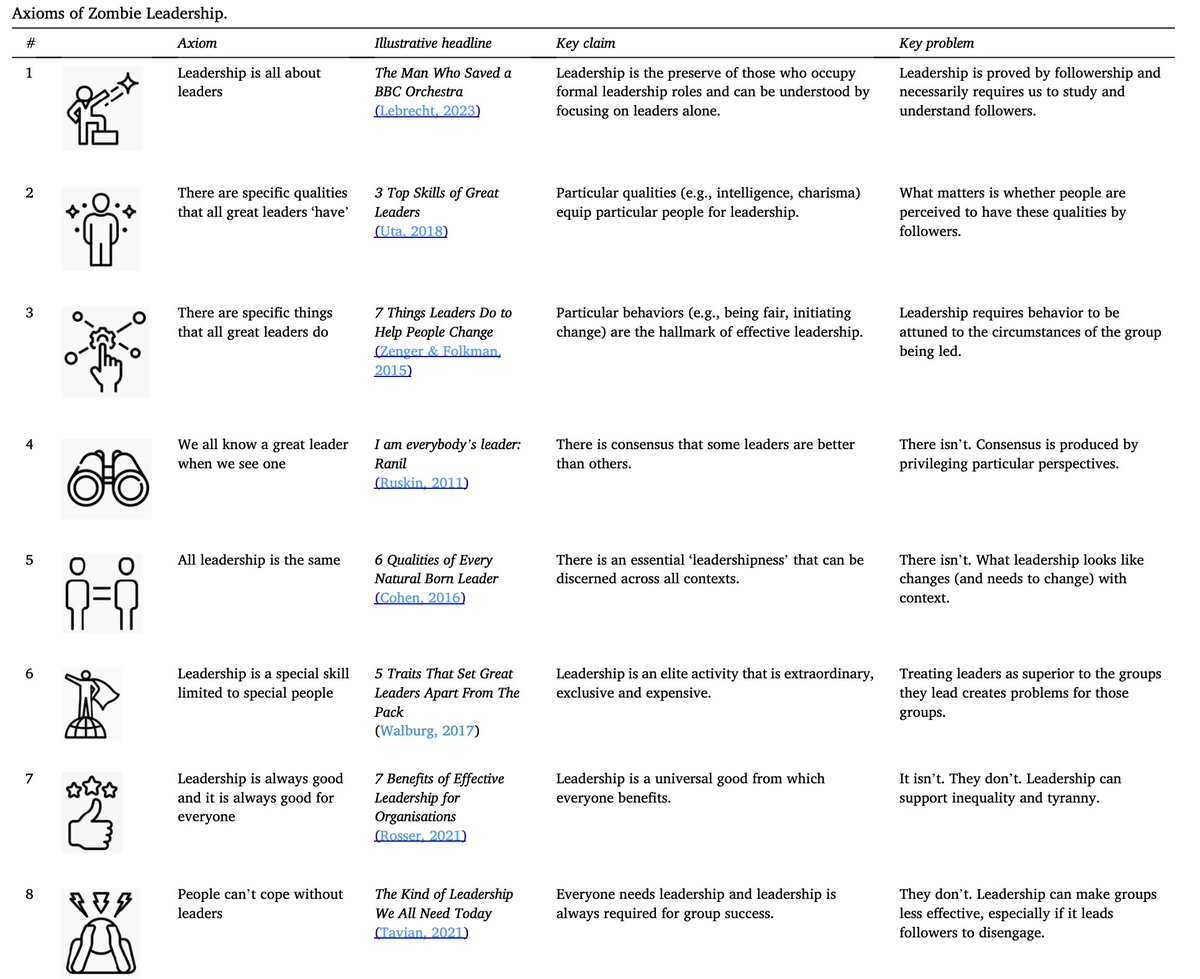
Considerable progress has been made in the field of leadership in recent years. However, this is undermined by a strong commitment to outdated ideas which have been repeatedly debunked but which nevertheless resolutely refuse to die--called "Zombie Leadership"
Zombie leadership lives on not because it has empirical support but because it flatters and appeals to elites, to the leadership industrial complex that supports them, and also to the anxieties of ordinary people in a world seemingly beyond their control. It is propagated in everyday discourse surrounding leadership but also by the media, popular books, consultants, HR
practices, policy makers, and academics who are adept at catering to the tastes of the powerful and telling them what they like to hear.
This review paper outlines eight core claims (axioms) of zombie leadership and how to finally put them to rest:
leadershiphq.com.au/wp-conte…
3
7
53
5,843
Lewend Mayiwar retweeted

Attention @arxiv authors: Our Code of Conduct states that by signing your name as an author of a paper, each author takes full responsibility for all its contents, irrespective of how the contents were generated. 1/
139
921
6,555
1,089,000
Lewend Mayiwar retweeted

May 13
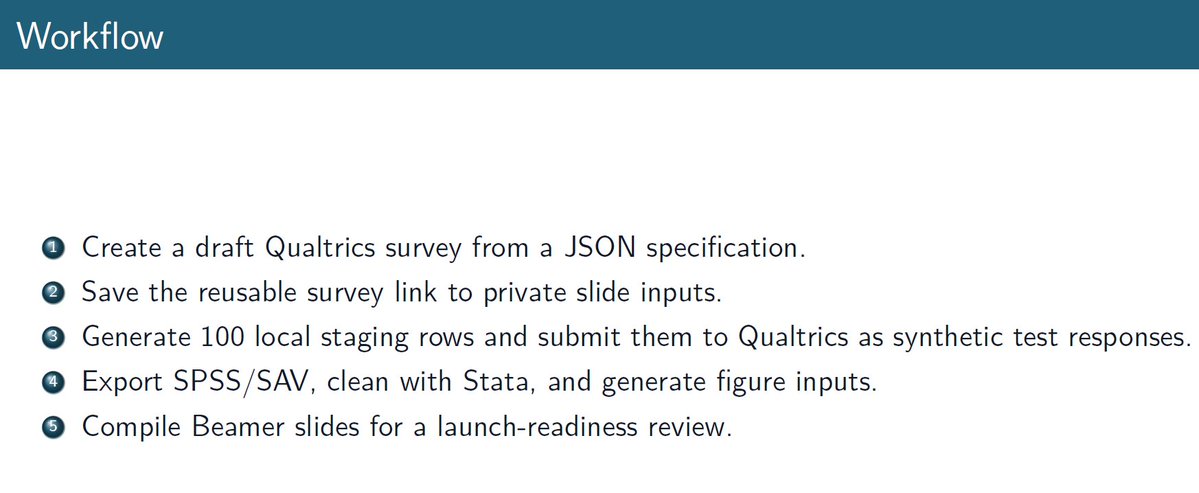
Do you run Qualtrics surveys? Then use my GitHub repo to automate the whole process with Codex! Tell Codex what you want to study, and it will create the survey, push to the survey to Qualtrics and generate synthetic responses, download and clean the data, and produce a set of slides summarizing the process.🧵with complete guided example!
7
41
208
18,791
Lewend Mayiwar retweeted
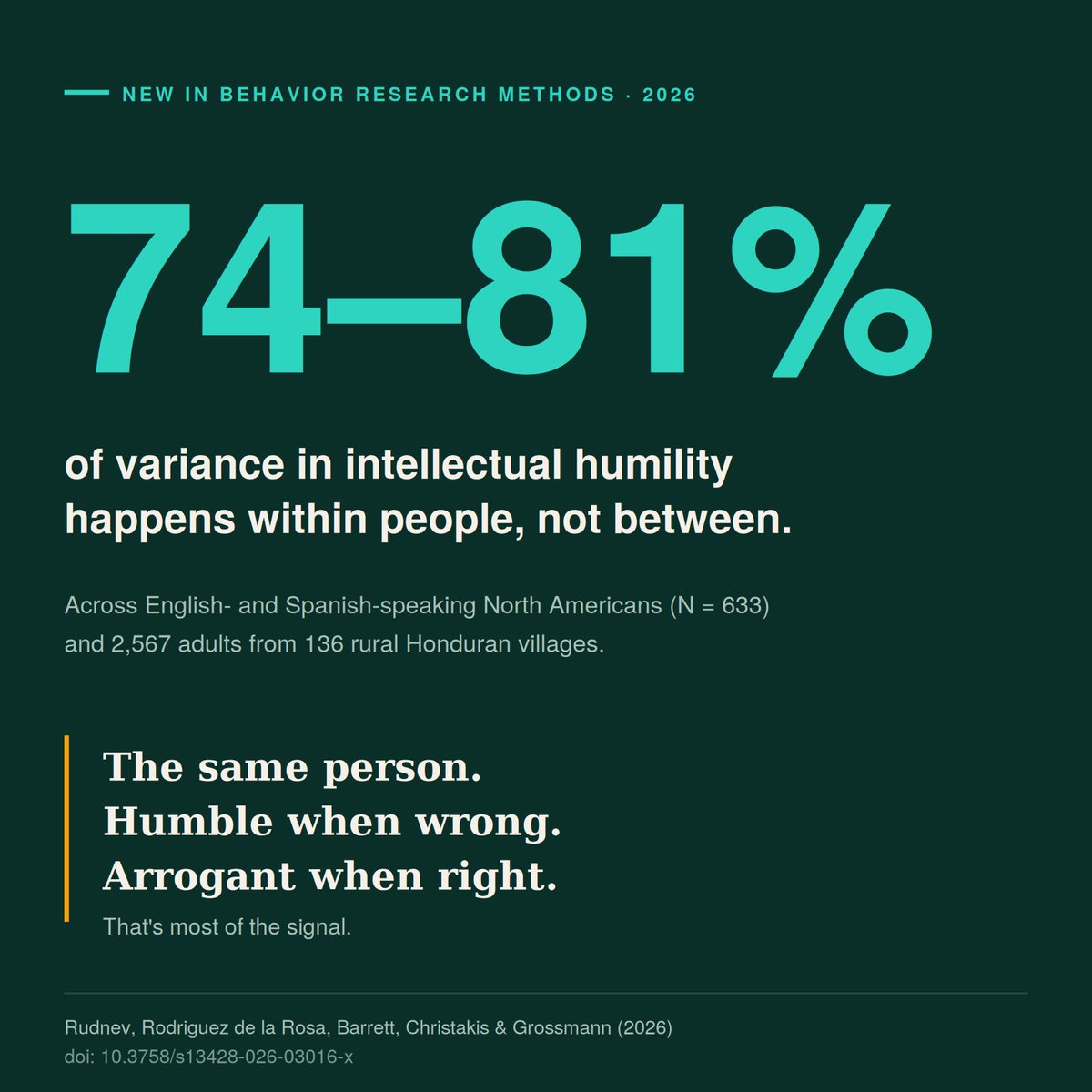
1/ We've been measuring intellectual humility wrong. Most scales ask "are you intellectually humble?" but the people least humble are the most miscalibrated about it. They overclaim. The #humilityparadox. Out today in Behavior Research Methods. Here's what we did instead. 🧵
1
3
6
812
Lewend Mayiwar retweeted

Apr 29
Imagine a 19-year-old scrolling TikTok. She watches a creator list five "signs you have undiagnosed anxiety." She recognizes three in herself. By the end of the week, she's describing herself as anxious to her friends. A month later, she's avoiding situations she used to handle fine.
What went wrong?
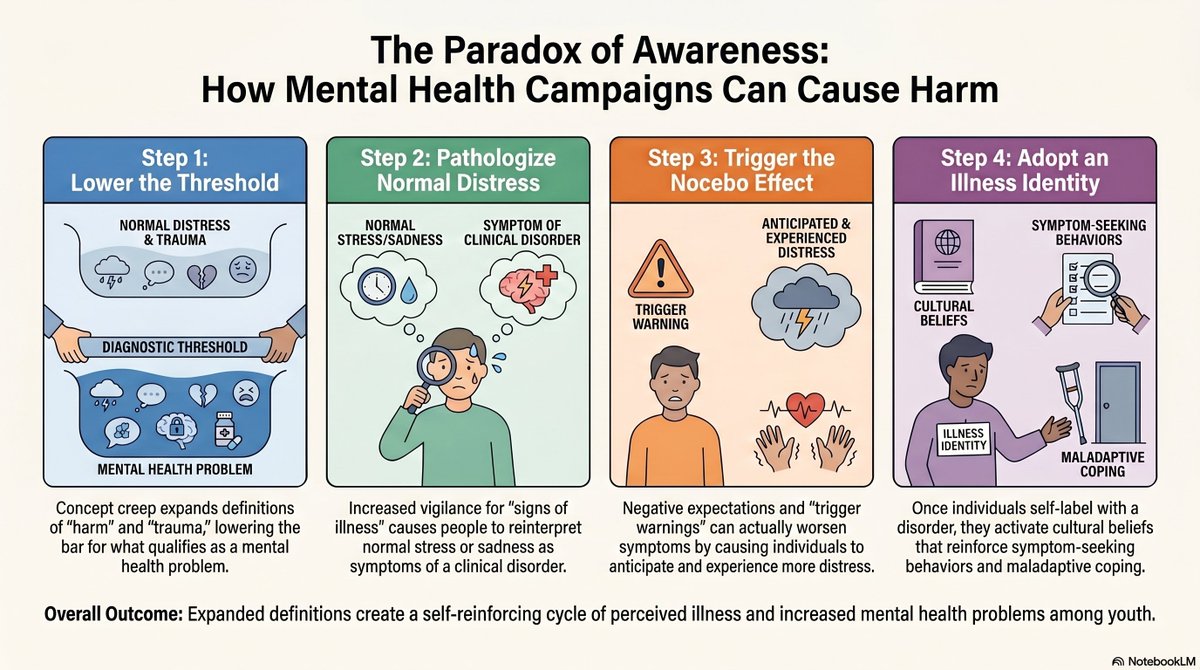
In a new paper by my PhD student Dasha Sandra, titled "Why mental health awareness can harm: Converging explanations for a societal problem", we argue that well-meaning mental health awareness can backfire, and we identify how. Four separate literatures (concept creep, nocebo effects, prevalence inflation, and illness self-labeling) have been circling the same problem from different angles. We show they converge on three mechanisms:
1.Awareness lowers the threshold for what counts as a disorder.
2. It trains people to scan their inner lives for symptoms and reinterpret normal distress as pathology.
3. Once someone adopts an illness identity, they behave in ways that confirm and deepen it.
The evidence is wide. Learning that loneliness is harmful makes solitude feel worse. Learning that stress is harmful worsens well-being and performance. Awareness videos about fake conditions like "wind turbine syndrome" produce real headaches. Trigger warnings raise anticipatory anxiety without reducing distress.
This does not mean awareness should stop. It means awareness can have unintended consequences, including manufacturing the suffering it tries to prevent. Inoculating people against these mechanisms works, and we already have evidence it does.
Link to paper: michael-inzlicht.squarespace…
234
1,812
7,490
537,862
Lewend Mayiwar retweeted

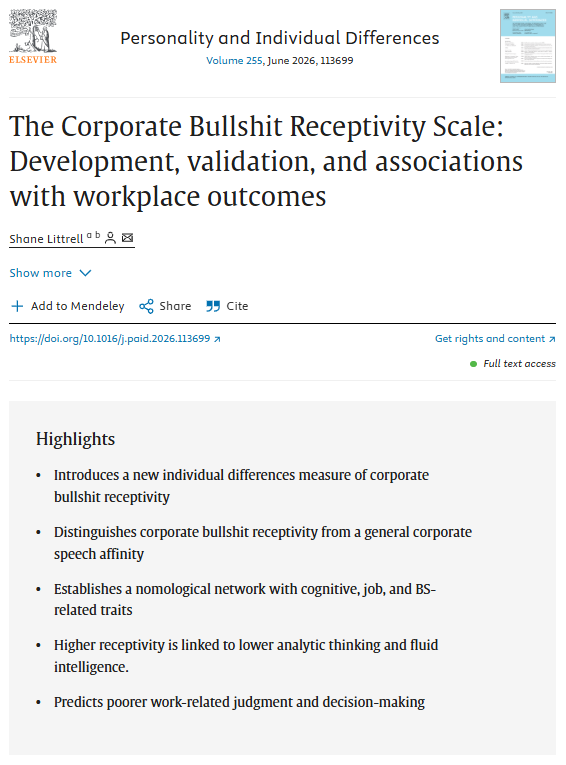
🧵Happy to announce that, "The Corporate Bullshit Receptivity Scale: Development, validation, and associations with workplace outcomes" is now published! 😀🥳 (see replies below for more info)
1) Official version: sciencedirect.com/science/ar…
2) Open access version: researchgate.net/publication…
1
8
27
3,011
Lewend Mayiwar retweeted
Feb 13
This is an existential terror manipulation for academics
Watch AI create a complete, original job market paper in 6 minutes with almost no prompting.

14
20
86
59,504
Lewend Mayiwar retweeted

Jan 19
I am also hiring a PhD student (4-years, home student only to join the project, starting in September 2026🌏
Please share it widely!
royalholloway.ac.uk/studying…

I am hiring a 4y postdoc for my Leverhulme-funded project on the role of beliefs about what in/outgroup members believe/do about climate change in shaping pro-climate behaviours🌏
Start date: May 2026 at latest
Deadline: Feb 8
Please share it widely!
jobs.royalholloway.ac.uk/vac…
7
7
4,024
Lewend Mayiwar retweeted

5 Nov 2025
Wow, another hit to classic psychology. It is harder and harder to stand on the shoulders of giants, if they are, in fact, despicable moral dwarfs.
5 Nov 2025

The fall of "When prophecies fail": Another social psychology classic turns out to be based on fabrications and lies.
In 1954, Dorothy Martin predicted an apocalyptic flood and promised her followers rescue by flying saucers. In “When Prophecy Fails “ (1956), the now-canonical account of the event, Festinger, Riecken and Schachter claimed that the group doubled down on its beliefs and began recruiting—evidence, the authors argued, of a new psychological mechanism, cognitive dissonance.
When Prophecy Fails is one of the most influential case studies in 20th-century social science. It shaped popular understandings of how belief survives disconfirmation, and became a touchstone for explaining the origins of religious movements...
But the case was misrepresented. The cult did not persist, proselytize, or reinterpret its failure as a spiritual triumph. Its leader recanted, the group disbanded, and belief dissolved. Drawing on newly unsealed archival material, this article demonstrates that the book's central claims are false, and that the authors knew they were false. The documents reveal that the group actively proselytized well before the prophecy failed and quickly abandoned their beliefs afterward.
They also expose serious ethical violations by the researchers. The newly unsealed Box 4 of papers contain transcripts, telephone logs, research notes, channeled messages, and internal communications among the researchers. Collectively, they reveal serious ethical breaches: fabrications, covert manipulation, and at least one instance of interference with a child welfare investigation.
One coauthor, Henry Riecken, posed as a spiritual authority and later admitted he had “precipitated” the climactic events of the study. This article shows that the authors of When Prophecy Fails misled their readers—and that scholars in psychology, sociology, and religious studies have been building theories atop a collapsed foundation.
The full scope and variety of the misrepresentations and misconduct of the researchers needed the unsealed archives of Festinger to emerge, the full story could not be written until now. Every major claim of the book is false, and the researchers’ notes leave no option but to conclude the misrepresentations were intentional.
1
4
21
5,896
Lewend Mayiwar retweeted
9 Oct 2025
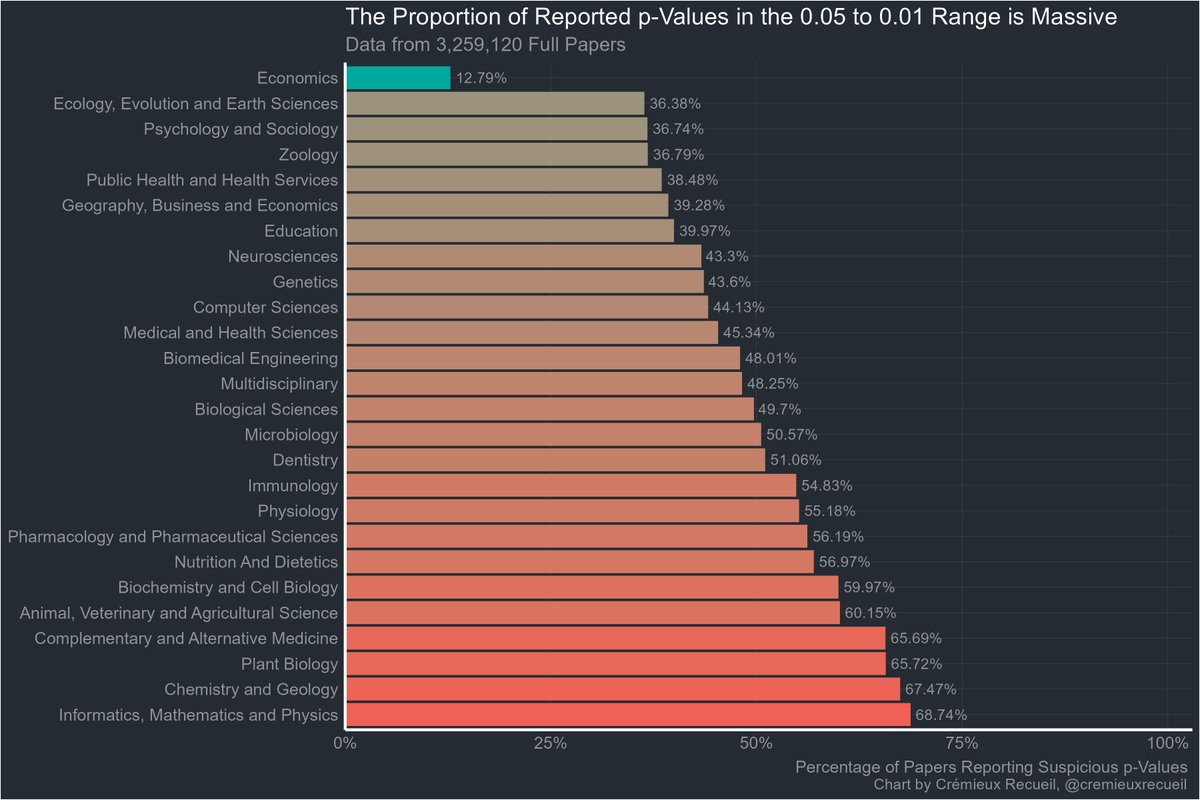
Psychology is now one of the most robust sciences in terms of no p-hacking and transparent reporting.
7 Oct 2025

Education, like many fields, clearly has a bias towards significant results.
Notice the extreme excess of results with p-values that are 'just significant'.
The pattern we see above should make you suspect if you realize this is happening.
2
14
1,404
3 Oct 2025
Our paper on national identity & voting in Kurdistan is now out in PSPB! A personally meaningful paper as it explores a familiar social psychological question in a unique context, Kurdistan, where I am from. And lucky to write this with my amazing mother doi.org/10.1177/014616722513…
1
6
141
1 Sep 2025
Nice summary of my first solo author and most rejected paper now out in @SocialPsychBull! No self-other differences in risky decision making among experts, but all were susceptible to gain and loss framing.
31 Aug 2025

📊 Would you rather make risky decisions for yourself or for others? Which one would turn a possible loss into a much bigger issue than potential gains? Mayiwar (2025) tested groups of professional decision-makers, giving them hypothetical risky-choice tasks.
🧵 1/5

2
5
287
Lewend Mayiwar retweeted

13 Aug 2025
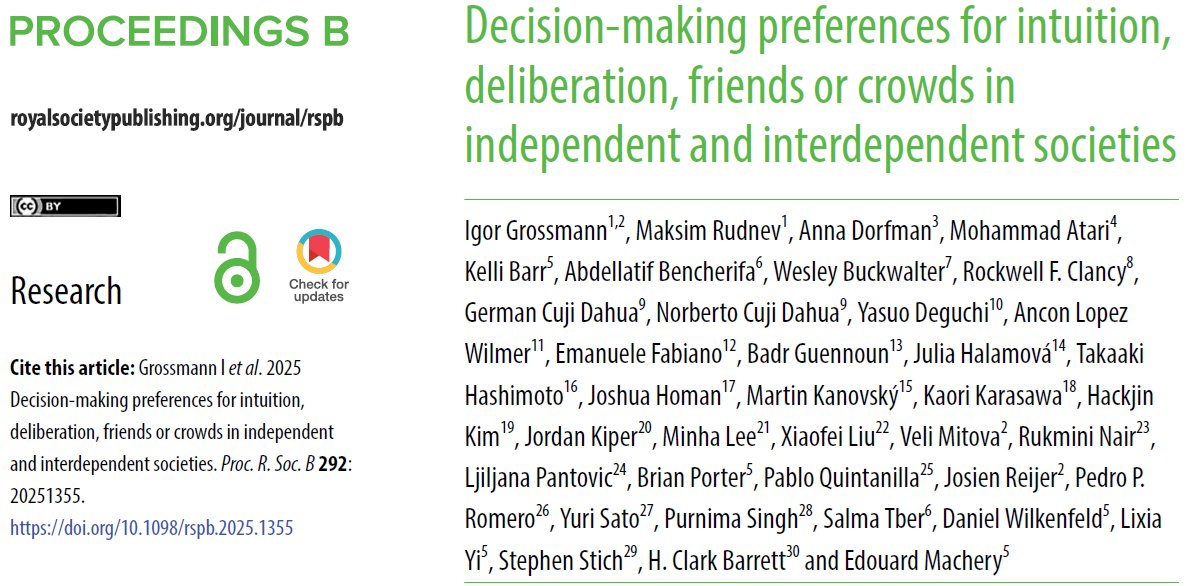
1/12 Finally out! 🎉 This project took a village to audit, analyze, and edit. It began with a simple worry: is Solomon’s paradox (psychologicalscience.org/new…) too trivial? Doesn’t everyone know that stepping back (#selfdistancing) & getting outsider #advice helps us choose wiser?
2
4
14
1,745
Lewend Mayiwar retweeted

1/8
New (and first) paper accepted at JEP:LMC 🎉 Ever fallen for this type of questions: "How many animals of each kind did Moses take on the Ark?" Most say "Two," forgetting it was Noah, and not Moses, who took the animals on the Ark. But what’s really going on here?🧵
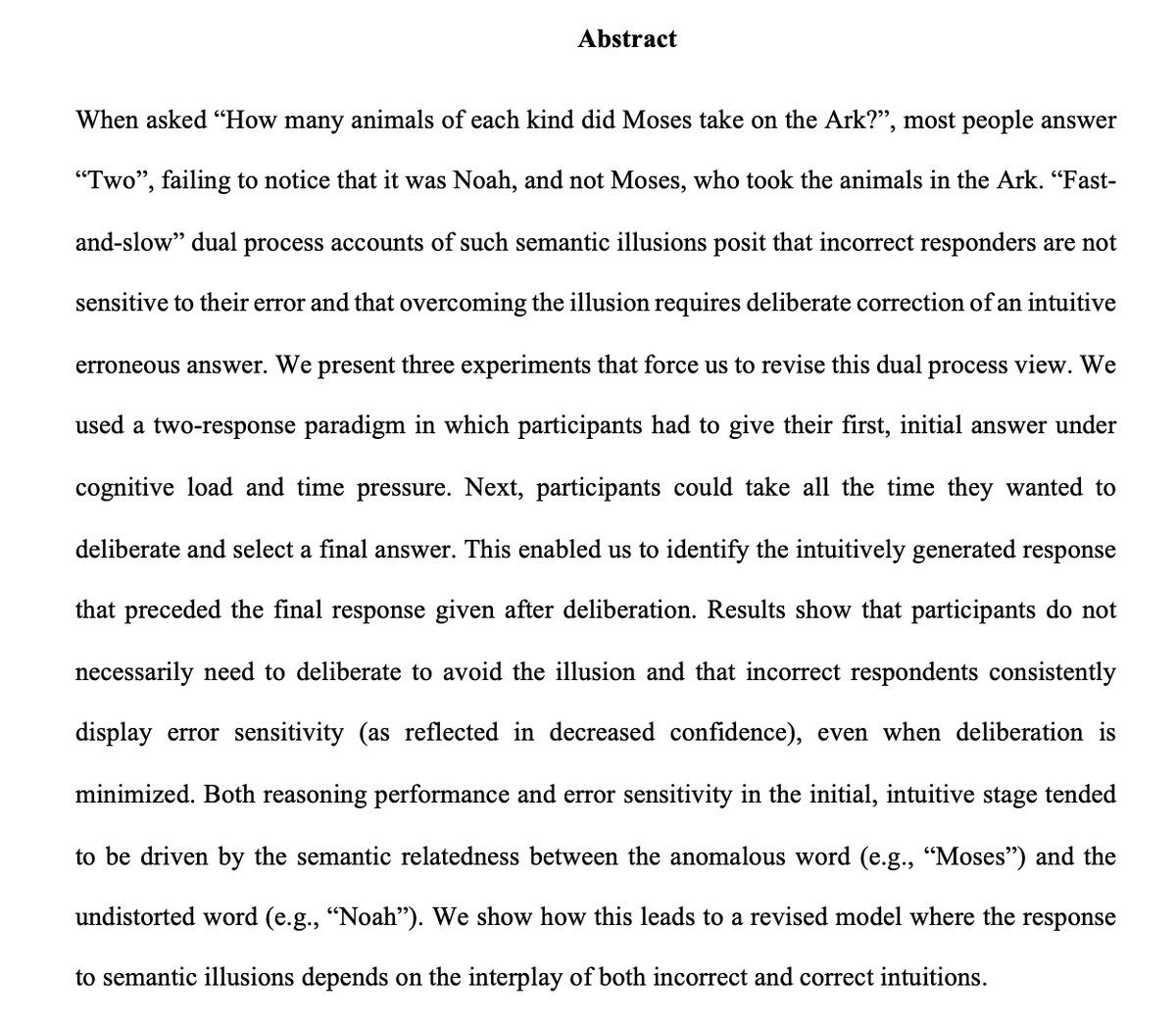
ALT Abstract of the paper summarizing the main findings.
2
3
8
1,174
7 Aug 2025
Paper in press at Personality and Social Psychology Bulletin, written with my amazing mother(!) ❤️ We find that national identity predicts voting in a stateless region, Kurdistan Region of Iraq, via trust in government and life satisfaction.
Preprint: lnkd.in/dATGXGQd
2
3
92
7 Aug 2025
Grateful to the editor for making this such a smooth process, and an anonymous reviewer for their helpful feedback. Also glad that little brother pointed us to important details about Kurdistan's political and historical context that helped us better contextualize our analyses.
1
27