
LexiAI Chatbots - multilingual, AI-powered chatbots specifically designed for legal queries and case resolution in accordance with global legislation.
Joined March 2024
- Tweets 188
- Following 55
- Followers 10
- Likes 334
131 Photos and videos














The EU's AI Transparency Code: A Necessary Step Forward?
The EU has published its new Code of Practice on Transparency of AI-Generated Content.
👉lexiai.org/lexiai-legal-chat…
#AIAct #AITransparency #AIGovernance #AILaw #EUAIAct #EU #LexiAI
8
Trump Signs Voluntary AI Security Order
👉linkedin.com/pulse/trump-sig…
#TrumpAI #AIExecutiveOrder #VoluntaryAI #AIInnovation #AISecurity #AmericaFirst #TechPolicy #ArtificialIntelligence #AI #ExecutiveOrder #AIPolicy #AIRegulation #AIandLaw
13
Europe is redefining its technological future.
Read the full story ↓
Europe's Bid for Technological Independence
V. Asparuhov
lexiai.org/lexiai-legal-chat…
#Europe #TechSovereignty #DigitalSovereignty #EU #AIinEurope #EUPolicy #StrategicAutonomy
#AI #ChipsAct #EULaw #LexiAI
15
AI Fairness and Algorithmic Bias youtu.be/KnS1U77dYU8?si=iwwa…
#AIFairness #algorithmicbias #ethicalai #machinelearning #responsibleai #artificialintelligence #ai #LexiAI #lexiai #fairness #bias #nondiscrimination #algorithms
13
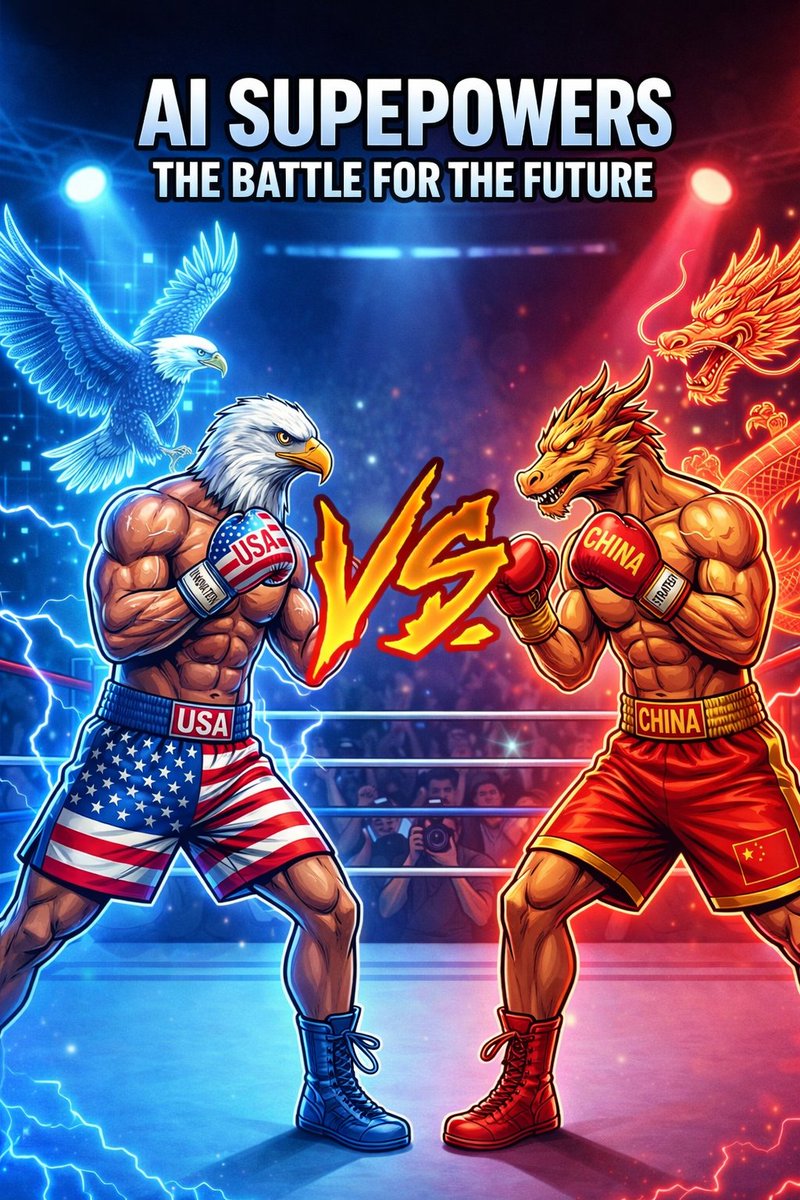
AI SUPERPOWERS: The Battle for the Future USA vs. China — two competing models of AI governance are shaping the global tech order. Who will lead the next AI era?
tiktok.com/@lexiaichatbot/vi…
#USvsChinaAI #USAI #ChinaAI #LexiAI #AIregulation #AI #Regulation #Law #AIinUSA #AIinChina
1
23
Η ομάδα της LexiAI αγαπά τη Θεσσαλονίκη! Με αγάπη από την επίσκεψή μας στην Ελλάδα τον Μάρτιο.
The LexiAI team loves Thessaloniki!
👉 chatgpt.com/g/g-3FIZMV9uY-gr…
#LexiAI #νομικός_βοηθός #Θεσσαλονίκη #Ελλάδα #νομικά
20
SMBs in Bulgaria rely on PravotoBot for cost-effective legal support, while individuals use it to resolve everyday issues - especially in consumer and telecom disputes.
It’s even been used in courtrooms via voice input.
Bridging the gap between people and the law. ⚖️
#PravotoBot
24
PravotoBot – Expanding Access to Legal Information in Bulgaria
For just 11 months, PravotoBot has achieved significant growth, supporting thousands of users with free, AI-powered legal assistance.
👉 pravotobot.com
#PravotoBot #Law #Bulgaria #ПравотоБот #България
29
DireitoBot: assistente jurídico com IA para o Brasil
Dúvidas sobre leis no Brasil?
O DireitoBot responde, explica e cria documentos com IA - rápido e simples.
👉lexiai.org/lexiai-legal-chat…
#DireitoBot #DireitoBrasileiro #AssistenteJurídico #Brasil #Direito #LeisBrasileiras #LexiAI
17
Themis - No Blindfold in Some Countries
In many countries (like France), Lady Justice is not blindfolded.
Why? Because justice should be aware and wise, not blind to context.
Different legal cultures interpret fairness in different ways
#Law #LadyJustice #France #Justice #Themis
43
Explore LexiAI for AI-powered legal chatbots that answer your legal questions anytime, anywhere.
Visit our website to discover how LexiAI can simplify your legal processes with multilingual support.
🌐 lexiai.org
#AI #LegalChatbots #Chatbots #LexiAI #Innovation
15
Virtual Reality & Legal Chatbots
The Future of Law!
👉
tiktok.com/@lexiaichatbot/vi…
#virtualreality #legaltech #aichatbots #futureoflaw #LegalInnovation #LawAndTechnology #VRInLaw #techrevolution #legalchatbots #LexiAI #lexiai
28
USA — Blindfolded Justice
In the US, Lady Justice is almost always blindfolded.
The message?
➡️ Justice doesn’t care who you are
➡️ Only what you did
But in the age of AI… can algorithms stay blind too? 🤖⚖️
👉youtu.be/e_olo04arNU?si=cwN1…
#USLaw #Justice #AIandLaw #LexiAI
20
For over 2,000 years, Themis has stood for justice.
Empires changed. Laws changed. Technology changed.
But one idea remained:
⚖️ Justice must be fair.
Will that still be true in the age of AI?
👉youtu.be/e_olo04arNU?si=PBMp…
#FutureOfLaw #Themis #LexiAI #Law #AI #justice #fairness
37
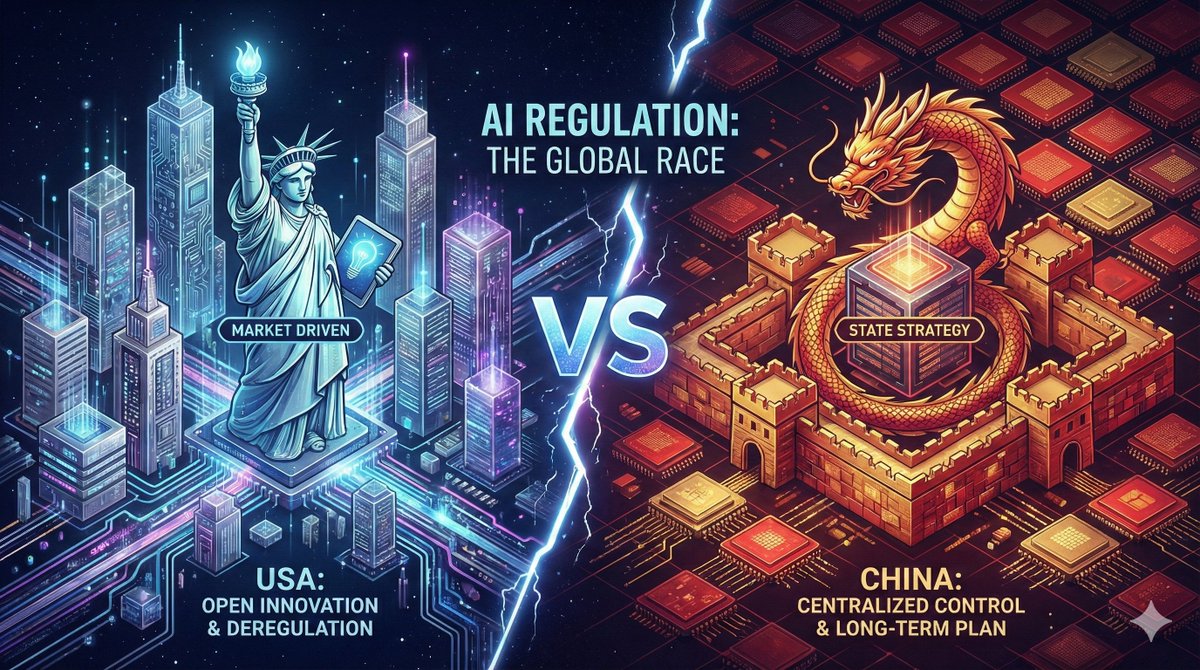
The State vs. The Market: China & US AI Strategies!
👉
tiktok.com/@lexiaichatbot/vi…
Who will lead the next AI era?
#USvsChinaAI #USAI #ChinaAI #LexiAI #AIregulation #AIGovernance #AIcompliance #AIpolicy #GlobalAI #AI #Regulation #Law #USA #AIinChina #USAIregulation #ChinaAIregulation
37
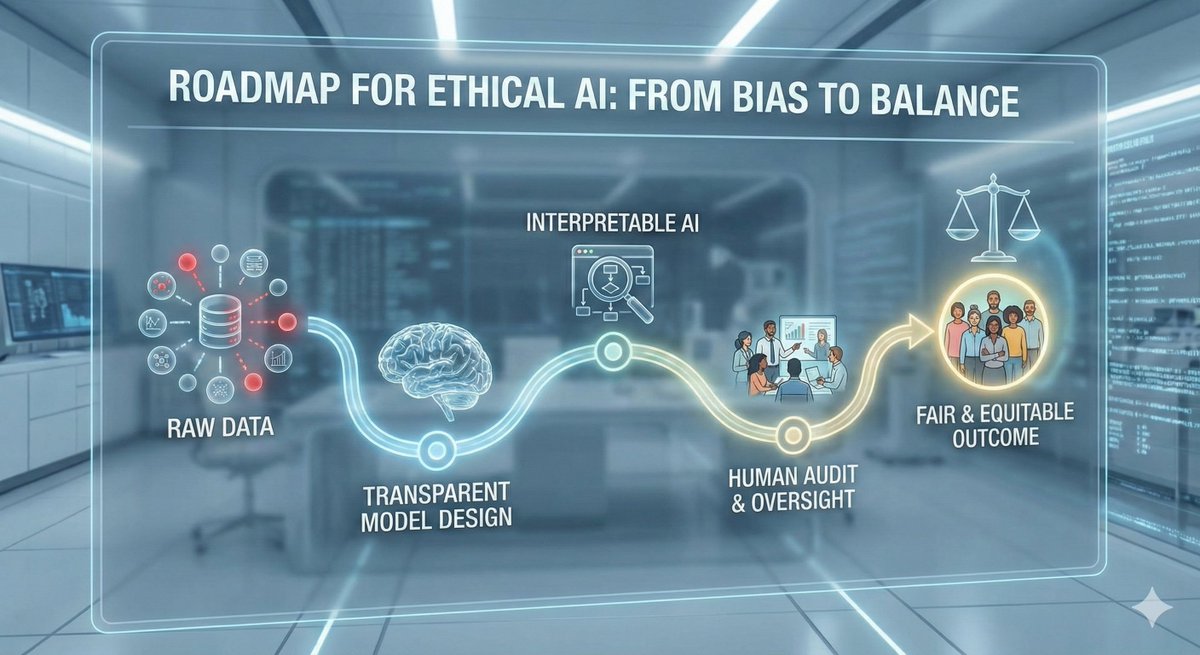
AI Fairness and Algorithmic Bias (V. Asparuhov)👇
lexiai.org/lexiai-legal-chat… via @LexiAIOrg
#AIFairness #algorithmicbias #ethicalai #machinelearning #responsibleai #artificialintelligence #ai #LexiAI #lexiai #fairness #bias #nondiscrimination #algorithms
1
1
43
AI Fairness and Algorithmic Bias
tiktok.com/@lexiaichatbot/vi…
Is AI the objective judge we hope for, or just a high-speed mirror of our own biases? ⚖️
#AIFairness #algorithmicbias #ethicalai #machinelearning #responsibleai #artificialintelligence #ai #LexiAI #lexiai #fairness #bias

1
1
32

Crypto Is Being Re-Centralised.
And nobody talks about it.
It is always just bullish or bearish, but no one talks about the fact that adoption is already here and at the same time it was the end of many things.
Here Are the Numbers and facts:
➡️ My core thesis: crypto is decentralised on chain and still 100% centralised in power:
Most users do not interact with blockchains.
They interact with infrastructure.
Order books on CEXs.
Stablecoins as money.
Custodians as vaults.
Staking providers as coordinators.
These are control layers.
They decide who gets liquidity, what becomes liquid, which assets survive, and which users are throttled.
This is where power lives today.
Crypto can remain mathematically decentralised while becoming economically and politically centralised.
That is the modern paradox of the industry..deeper:
CEX order books, stablecoins, custodians, and a small set of staking coordinators. These layers decide who gets liquidity, what becomes liquid, what gets listed, and what gets throttled. That is where control lives today. Mathematical decentralisation does not prevent economic centralisation. Power migrates to the interface layer.
➡️ Price discovery is still dominated by a few CEXs:
TokenInsight’s 2025 exchange report puts Binance at 42.09% spot market share!
Again, 42% is just under the power of Binance.
The next venues are far smaller:
Bybit 8.63%,
MEXC 8.49%,
Gate around 8%,
Bitget 6.86%,
OKX 6.83%,
Coinbase 6.58%.
This is a hub-and-spoke system.
When 1 venue anchors more than 40% of spot liquidity, the entire market inherits that venue’s internal rules, outages, listing politics, surveillance systems, and liquidation dynamics.
Price discovery becomes institution-dependent, not protocol-dependent. 100%.
Practical consequence: a venue-level shock becomes a market-level shock. The chain can be perfectly functional and the market can still break.
➡️ CEXs are structurally conflicted businesses, regulators explicitly warn about this:
IOSCO’s global policy recommendations list conflicts of interest from vertical integration as a primary risk in crypto markets.
Large CEX groups combine trading venue, broker-like execution, custody, market-making incentives, staking, lending, and token relationships inside 1 corporate structure. In tradfi these functions are separated to prevent abuse.
In crypto they are bundled. This produces permanent misalignment: users take downside risk while platforms control assets, rules, data, and access. The exchange is both referee and player.
Result: losses are socialised. Power is not.
➡️ Proof of Reserves is not the safety guarantee it is marketed as:
PwC Switzerland states that Proof of Reserves in its current form has fundamental limitations and does not provide a complete picture of an organisation’s financial health.
PoR usually shows partial on-chain assets at a moment in time. It does not show full liabilities, off-balance-sheet obligations, governance quality, or group-wide risk. A platform can appear solvent on-chain while being institutionally fragile. PoR reduces uncertainty. It does not eliminate insolvency risk.
FTX would likely have passed early PoR snapshots!
➡️ Stablecoins are a giant centralisation layer and they dominate CEX flows:
The ECB shows that reserve assets for USDT and USDC consist predominantly of US Treasuries, reverse repos, money market fund shares, cash, and bank deposits. Reuters, citing the ECB, reports that around 80% of global trades on centralised crypto platforms involve stablecoins and warns of run risk and forced liquidation of reserve assets.
CLS independently states that stablecoins account for about 80% of trading volume on major exchanges. Stablecoins are not a side tool.
They are the settlement layer of crypto markets. If stablecoin confidence cracks, liquidity cracks.
Centralisation here is balance sheets, custodians, and redemption gates.
➡️ ETF era: ownership decentralised, custody and control concentrated:
CoinShares reports that Grayscale, BlackRock, and Fidelity control 89% of US Bitcoin ETF assets.
89%!
Coinbase publicly states it was selected as custodian for 8 of 11 spot Bitcoin ETF mandates.
Reuters apparently reports Coinbase dominates crypto ETF custody, servicing more than 80% of issuers. This concentrates control twice: issuer concentration and custody concentration.
These become regulatory and operational chokepoints layered on top of a decentralised asset that was designed to eliminate chokepoints.
➡️ Staking can decentralise consensus while centralising decision making:
Even with thousands of validators, stake gravitates toward a few operators because users optimise for convenience, yield, and liquidity.
Liquid staking and large providers become default coordination layers. Governance weight, upgrade influence, and censorship leverage concentrate over time. IOSCO’s later thematic review still warns that inherent conflicts in crypto market structures remain insufficiently addressed.
This mirrors CEX dynamics: bundling, scale advantages, and network effects create winner-take-most outcomes.
➡️ The comparison that actually matters: protocol failure versus institution failure:
Protocol failure tends to be transparent, bounded, and on-chain. Institution failure is opaque, legal, political, and contagious across custody, liquidity, and price discovery. This is why CEX dominance is not merely “not your keys”. It is systemic fragility.
➡️ Decentralised rails do not guarantee decentralised power:
Crypto runs on decentralised protocols and centralised infrastructure. The real chokepoints are trading venues, stablecoin issuers, ETF custodians, and staking coordinators.
🔺These entities can freeze, censor, throttle, and reshape incentives at scale. 🔺
If this concentration continues, crypto does not replace legacy finance.
It reconstructs it, just faster, louder, with stronger monopolists and with fewer safeguards.
Honestly, crypto price discovery is in many ways more centralised than the system it originally set out to replace. And we are all responsible for that.
I doubt this will change.
And 10/10 was not an exception. It was a warning shot.
A visible catastrophe, yes, but not an anomaly.
It is the structural outcome of the market we have built.
And it is exactly what we should expect going forward.
I, a small and insignificant crypto enthusiast, warned about this from the very beginning. And alone in the last 2 years the situation has changed so much that I think there is no way back.
13
14
72
3,132