
🌱 Passionate about sustainable living | Let's build a greener future together! 💚 #SustainableLiving
Joined August 2023
- Tweets 326
- Following 4,278
- Followers 2,613
- Likes 84
8 Photos and videos





20 Oct 2023
ALERT 🚨 Councillor Jill Scott reports "horrific" floods in Brechin, with trapped residents and hundreds of homes underwater. My heart goes out to all affected. Such extreme weather events are intensified by #ClimateChange. It's the harsh reality we face. 😢💔 #BrechinFloods #ActOnClimate
20 Oct 2023

🚨 Councillor Jill Scott who lives in Brechin describes the floods as "horrific," with people trapped and hundreds of homes flooded.
📹 Alison Gordon/Brechin Community FB page
#SevereWeather #Angus #StormBabet #Babet #Scotland #Brechin #Flooding
9
1,276
20 Oct 2023
Diverse views on #GlobalWarming among U.S. adults 🌍: 20% see weather extremes as the top threat, yet 7% believe it's not a threat at all. With such varied perspectives, how can we unify our approach to tackle climate change? Let's bridge the gap and take action together! 🌱 #ClimateActionNow #UnitedForClimate
1
7
355
20 Oct 2023
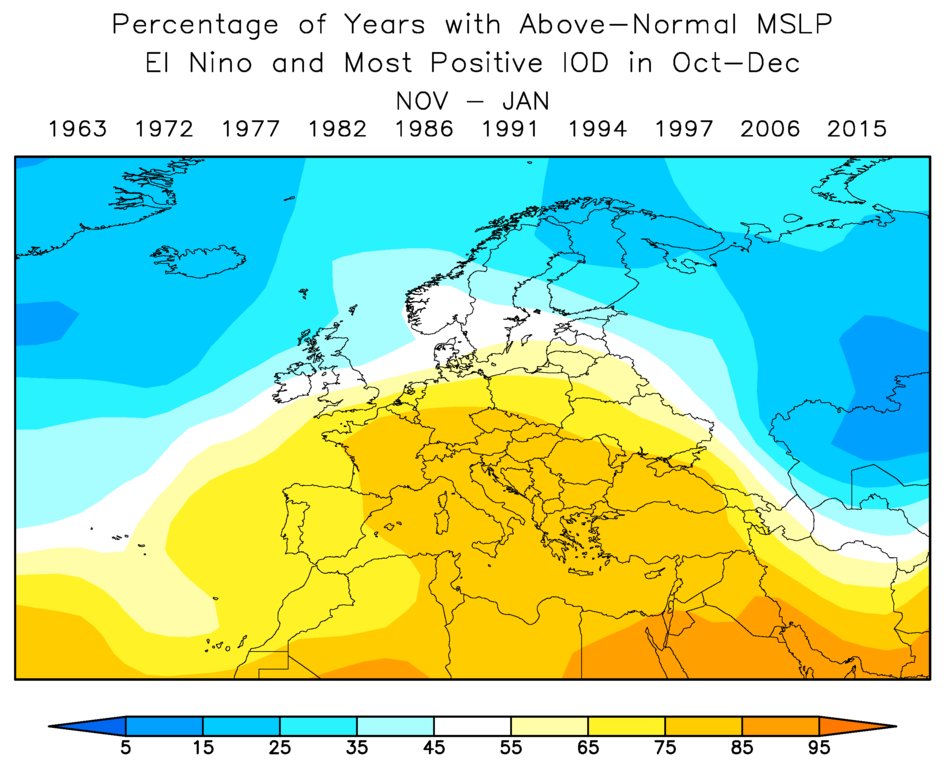
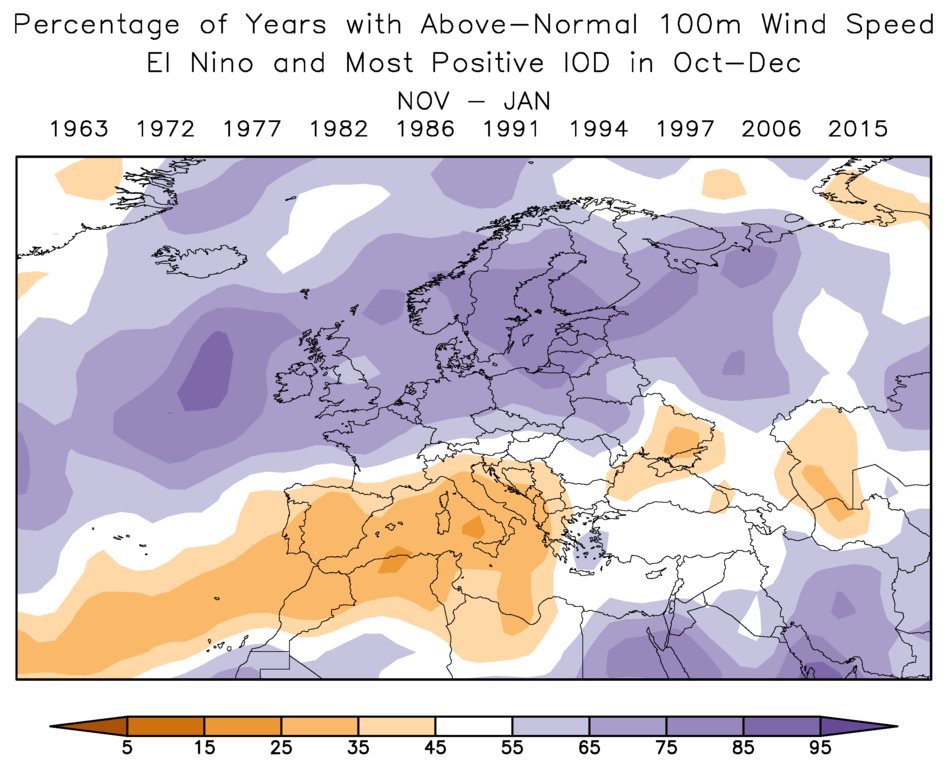
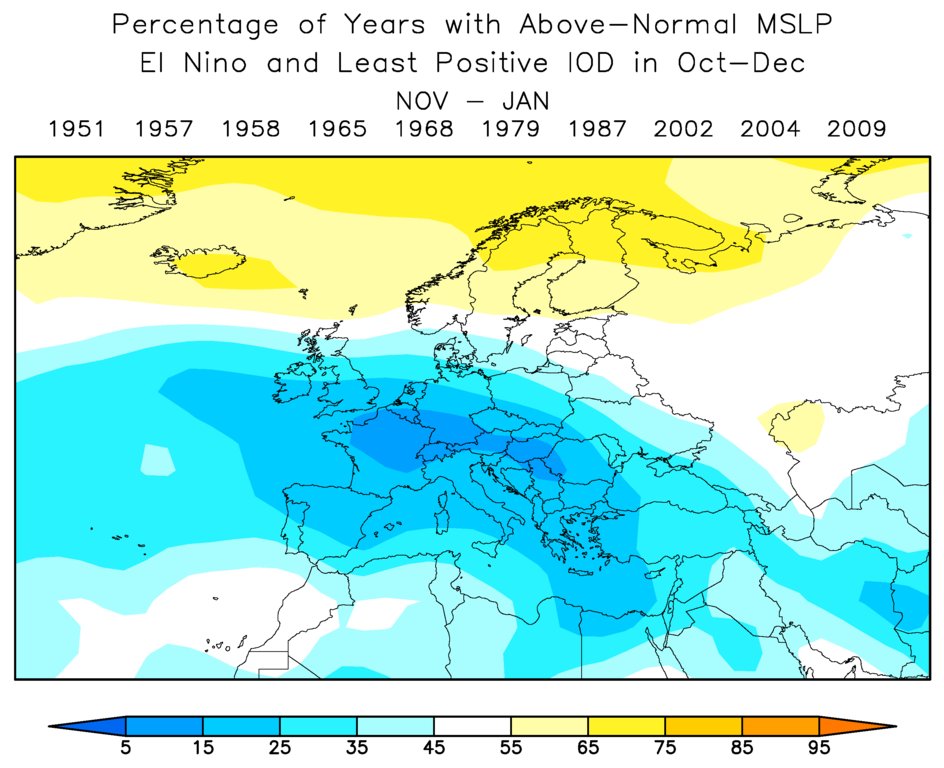
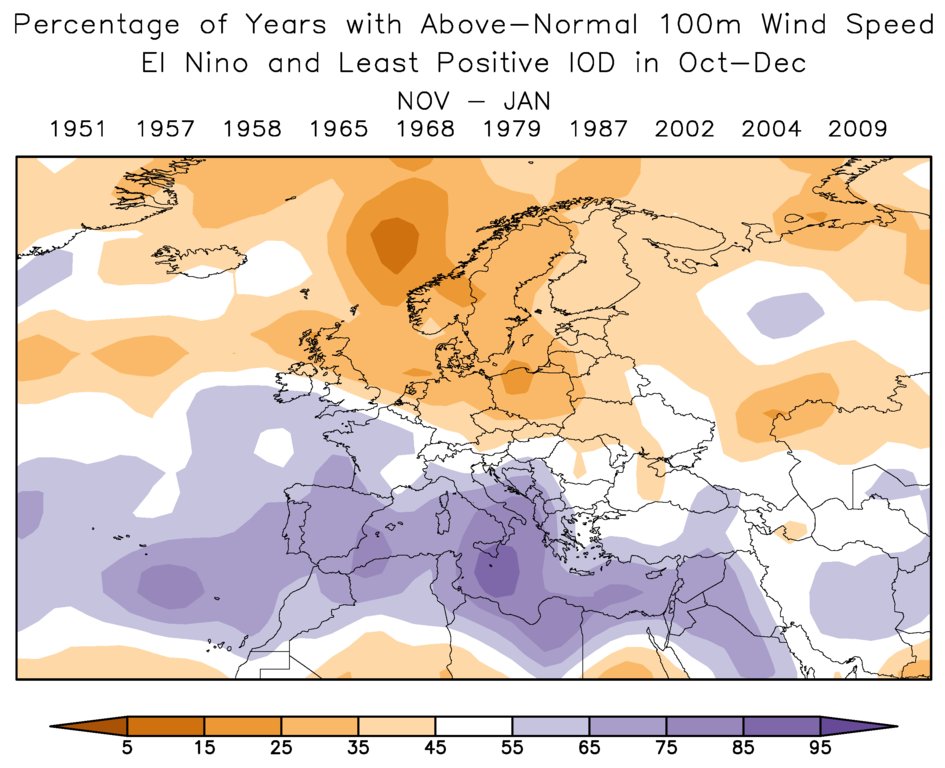
🌍 A deep dive into climate patterns: The positive IOD (Indian Ocean Dipole) is impacting northern Europe's early winter climate, making it warmer, wetter, and windier. This isn't just a blip - it's a significant change.
🔍 Side-by-side contrast: El Niño winters with IOD versus those with a near-neutral IOD clearly show the difference in temperature patterns.
⚠️ Dangers ahead: Such shifts can affect not only our comfort but also our ecosystems, agriculture, and infrastructure. Stronger storms, flooding, and changing rain patterns can challenge our resilience. Let's act on the signs our planet is showing us and work towards mitigating these changes.
#ClimateChange #IODImpact #ProtectOurPlanet
18 Oct 2023

This isn't the whole story of course, but the now-strongly positive IOD certainly favors a more westerly pattern for northern Europe in early winter: warm, wet, and windy.
Contrast El Niño winters with IOD versus near-neutral IOD:
1
3
269
20 Oct 2023
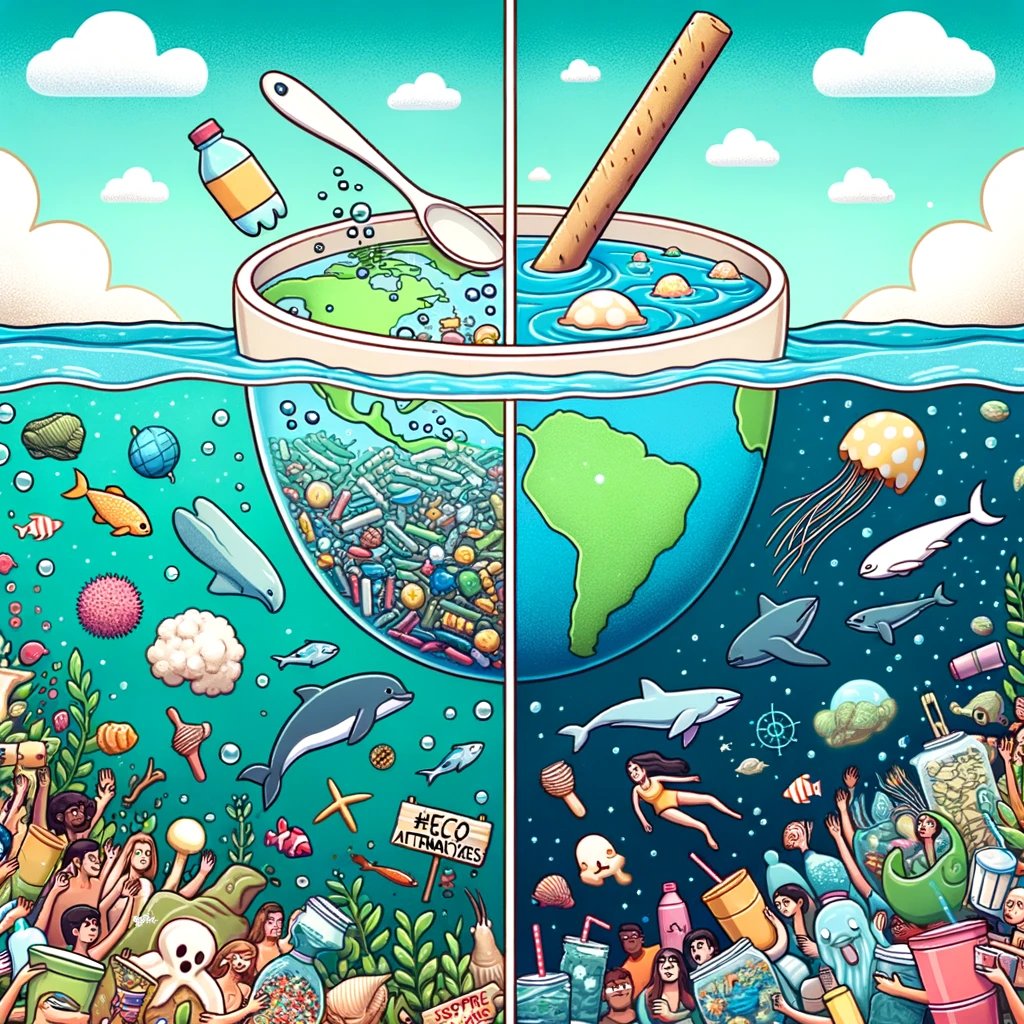
🌊 Did you know? Our oceans are becoming soup bowls of microplastics, threatening marine life and entering our food chain. But it's not too late!
🍃 Let's champion biodegradable alternatives and wave goodbye to single-use plastics. How are you making the switch in your daily life? Share your eco-friendly swaps and inspire others! 🌿🔄 #BeatPlasticPollution #EcoAlternatives #SaveOurOceans
1
1
8
174
20 Oct 2023
🚨 UN's recent report paints a grim picture: Disasters are undoing social & economic advances at an alarming rate, with climate change as a main driver. Droughts, rising temperatures, & heatwaves are affecting billions, especially our children.
🌍 2 billion under water stress.
🌾 80% increased risk of crop failure in sub-Saharan Africa & SE Asia.
🔥 Labor productivity is halved at 34°C.
🔥 Over 820M children exposed to heatwaves.
🌊 920M children exposed to water scarcity.
But there's hope! Investing in resilience can change the narrative. Early warning systems can triple benefits in vulnerable areas, & initiatives like Cidanau Watershed show how conservation benefits everyone.
The message is clear: We MUST prioritize resilience & holistic solutions. Let's not leave anyone behind. The time for global action is NOW. 🌱🤝 #ClimateAction #ResilienceForAll #GAR2023 #SustainableDevelopmentGoals
undrr.org/news/new-report-sh…
2
128
20 Oct 2023
🌞 Solar panels, from rooftops to vast fields, are the unsung heroes of our age! Harnessing the sun's power, they're lighting up homes & cities, reducing our carbon footprint. Big or small, every panel is a step towards a brighter, sustainable future. 🏠🏢 #SolarPower #EcoWarriors #BrighterTomorrow
5
134
20 Oct 2023
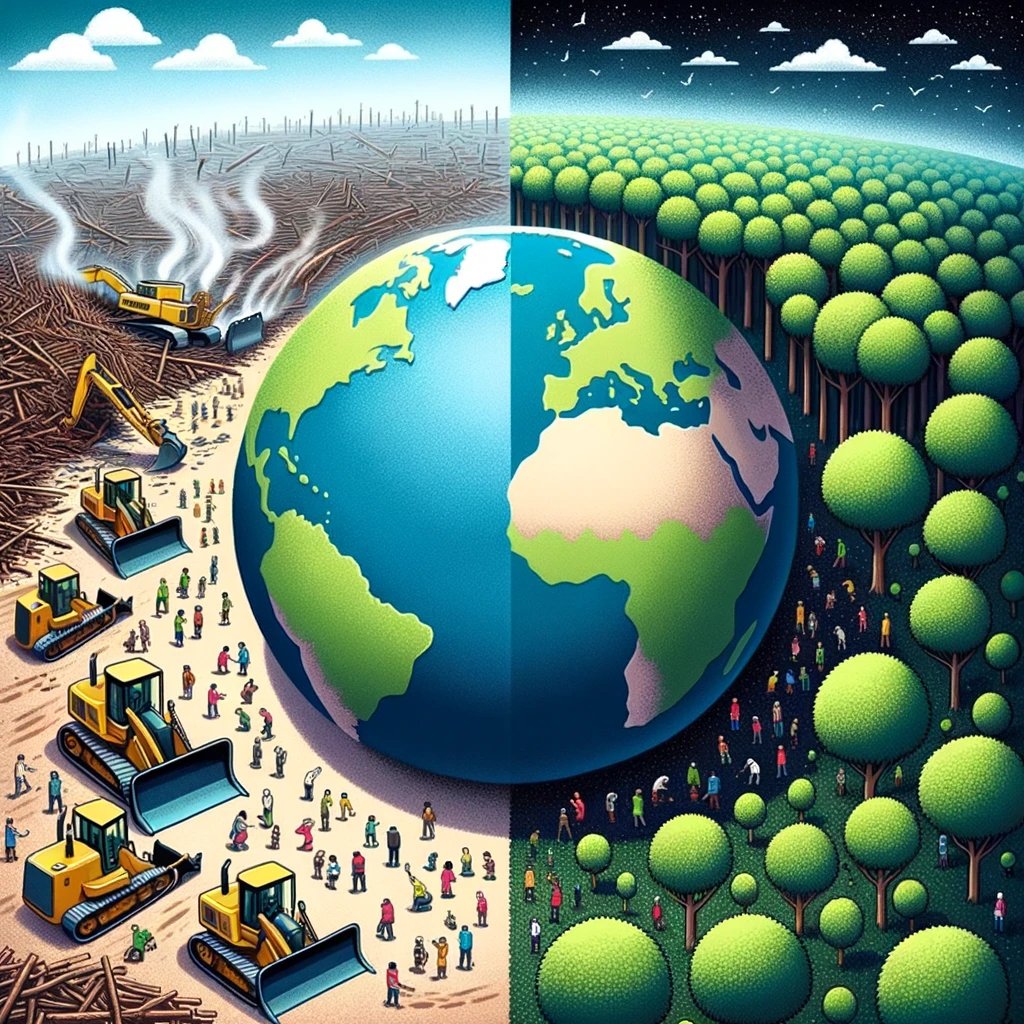
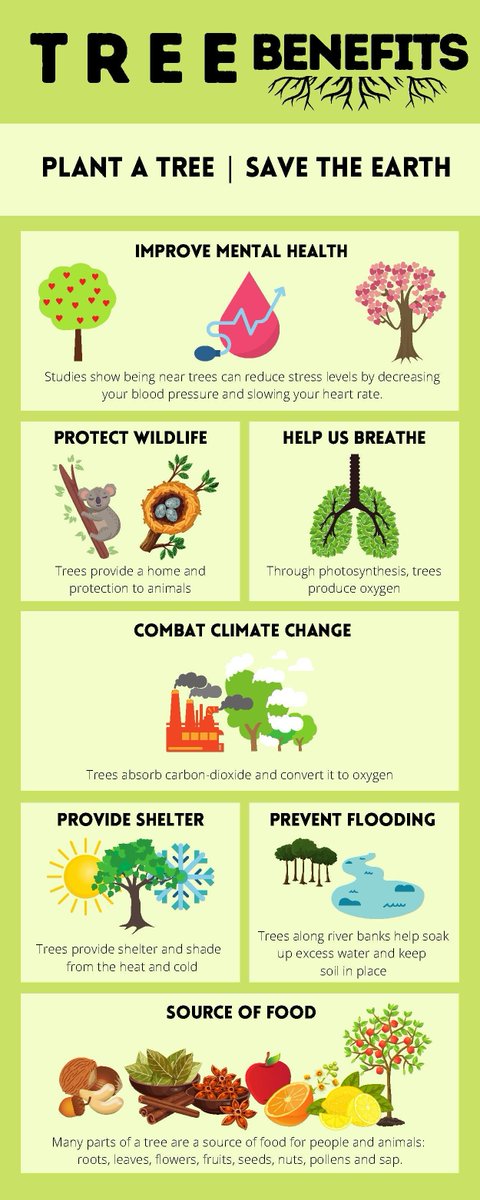
🌳 Every minute, we lose an area of forest the size of 40 football fields. But with every seed planted, we sow hope for our planet. Let's shift the narrative from #Deforestation to #Reforestation. 🌱 Our Earth deserves more green. Will you plant the change? 🌍 #PlantForThePlanet #GreenFuture
3
7
207
20 Oct 2023
🌍 A haunting glimpse into a potential future if we don't act NOW on climate change. But hope is not lost. Together, we can rewrite this narrative.
🌱 Invest in renewable energy. 💚 Reduce, Reuse, Recycle. 🚲 Opt for sustainable transportation. 🌳 Support reforestation efforts. 🗳️ Vote for climate-conscious leaders.
Our collective actions can prevent this dystopia. Let's unite for a greener, brighter future. 🌟
#ClimateAction #HopeForTomorrow #SaveOurPlanet 🍃🔗🌈
1
107
20 Oct 2023
As the 12-month running mean global temperature surges to unprecedented levels, the potential consequences are vast and far-reaching:
🌊 Rising Sea Levels: Accelerated melting of polar ice caps and glaciers will lead to higher sea levels, endangering coastal cities and habitats.
🌀 Extreme Weather Events: Increased frequency and intensity of hurricanes, typhoons, heatwaves, droughts, and heavy rainfall events.
🔥 Wildfires: Prolonged droughts and higher temperatures create favorable conditions for wildfires, endangering ecosystems and communities.
🦠 Shifted Habitats: Altered temperature patterns will push many species out of their native habitats, leading to potential extinction for those that cannot adapt.
🚜 Food Production: Changes in temperature and precipitation patterns will impact agriculture, leading to potential food shortages and increased prices.
🌾 Ecosystem Disruption: Ocean acidification and bleaching of coral reefs disrupt marine life, affecting the food chain and biodiversity.
💧 Water Scarcity: Melting glaciers and changing rain patterns will affect freshwater supplies, leading to potential water crises in many regions.
🏠 Human Displacement: Sea-level rise and extreme weather events can lead to large-scale human migration, causing social and economic challenges.
For a deeper dive into these indicators and visualizations, visit: zacklabe.com/climate-change-…
#ClimateChange #GlobalWarming #ActNow 🌍🔥🌊

Well the 12-month running mean global temperature is quickly headed off toward new heights... 📈
More climate indicator visualizations: zacklabe.com/climate-change-…
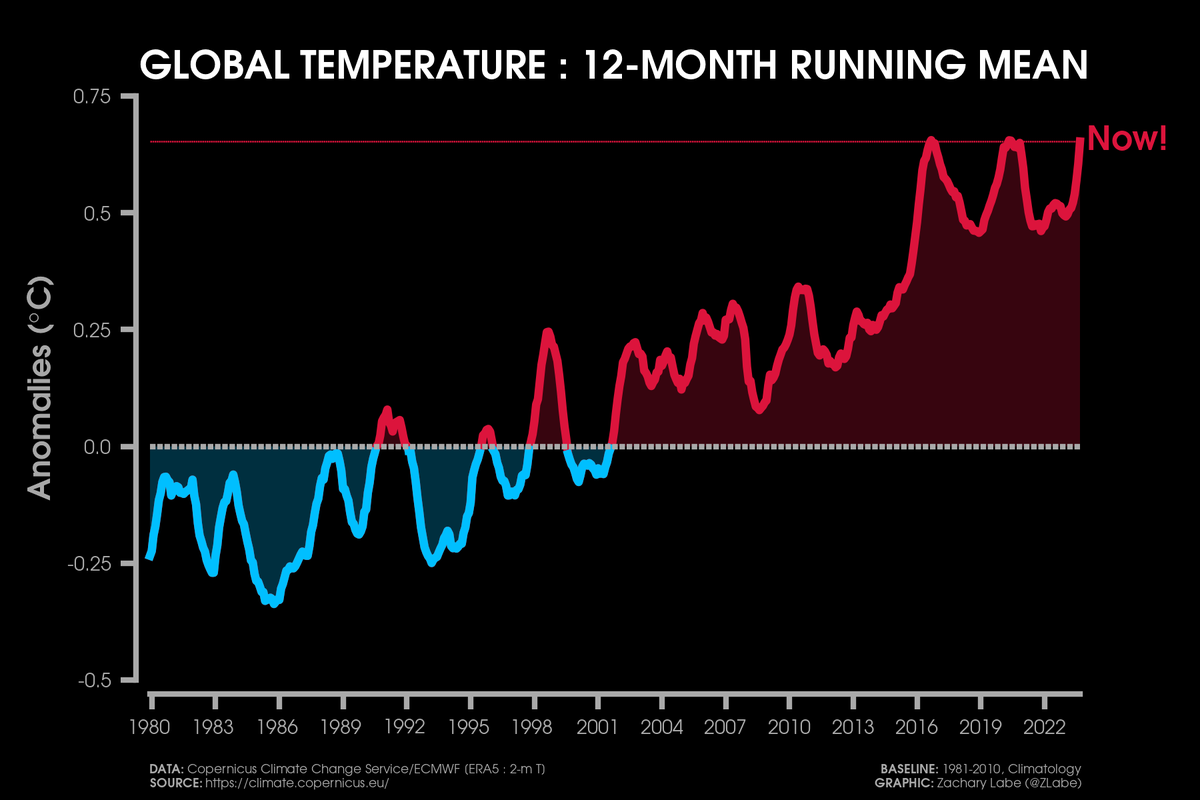
ALT Line graph time series of a 12-month running mean of global mean surface temperature anomalies from 1979 through September 2023. There is a long-term increasing trend and large interannual variability on this graph. Anomalies are computed relative to a 1981-2010 baseline. Blue shading is shown for below average anomalies, and red shading is shown for above average anomalies.
1
109
20 Oct 2023
🌡️ Arctic Climate Alert 🌡️
Recent temperature anomaly data from the Arctic region reveals significant deviations from the 1981-2010 reference period. Intense warming is observed in vast areas, while specific regions like the Arctic Ocean show cooler anomalies.
60-90°N: 2.556K
66-90°N: 3.035K
Greenland: 2.820K
Arctic Ocean: 2.081K
Such disparities in temperature can lead to unpredictable changes in the Arctic ecosystem and global climate patterns. Swift, collaborative action is needed!
#ArcticWarming #ClimateChange #ProtectThePoles 🌍❄️🔥
1
94
20 Oct 2023
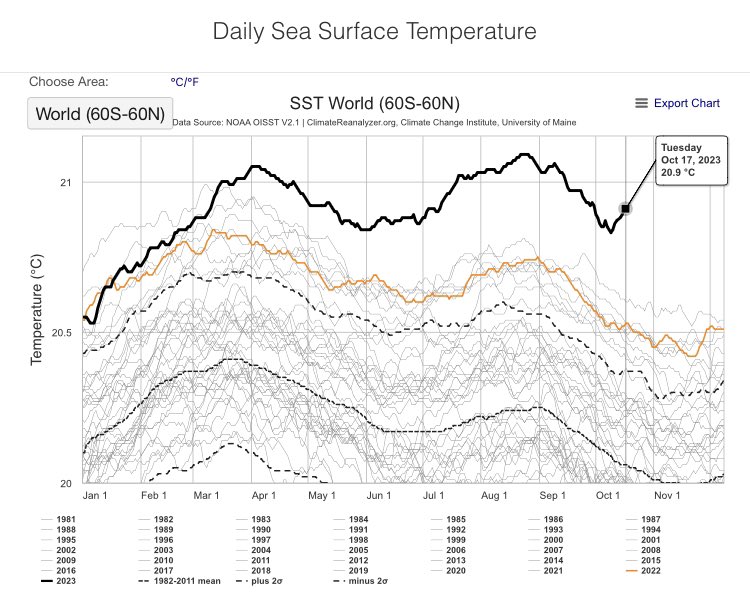
🚨 Climate Alert: Rising Sea Surface Temperatures 🚨
The latest data reveals an alarming trend: global sea surface temperatures (SST) have consistently risen over the decades. As of Oct 17, 2023, the SST reached a concerning 20.9°C, standing out starkly against previous years. This upward trajectory affects marine life, weather patterns, and more. Immediate global action is crucial to address this #ClimateEmergency.
🌊🌡️ #ProtectOurOceans #ClimateChange #SSTTrends
19 Oct 2023

This is the Million Dollar Question 🙋♂️ and there are many factors from less anthropogenic Sulfur to less Sea Spray to less Algae Snort. Maybe most surprisingly, editors are on the political theatre 🎭 trained, the have no clue how to communicate.
1
78
20 Oct 2023
🚨URGENT UPDATE🚨
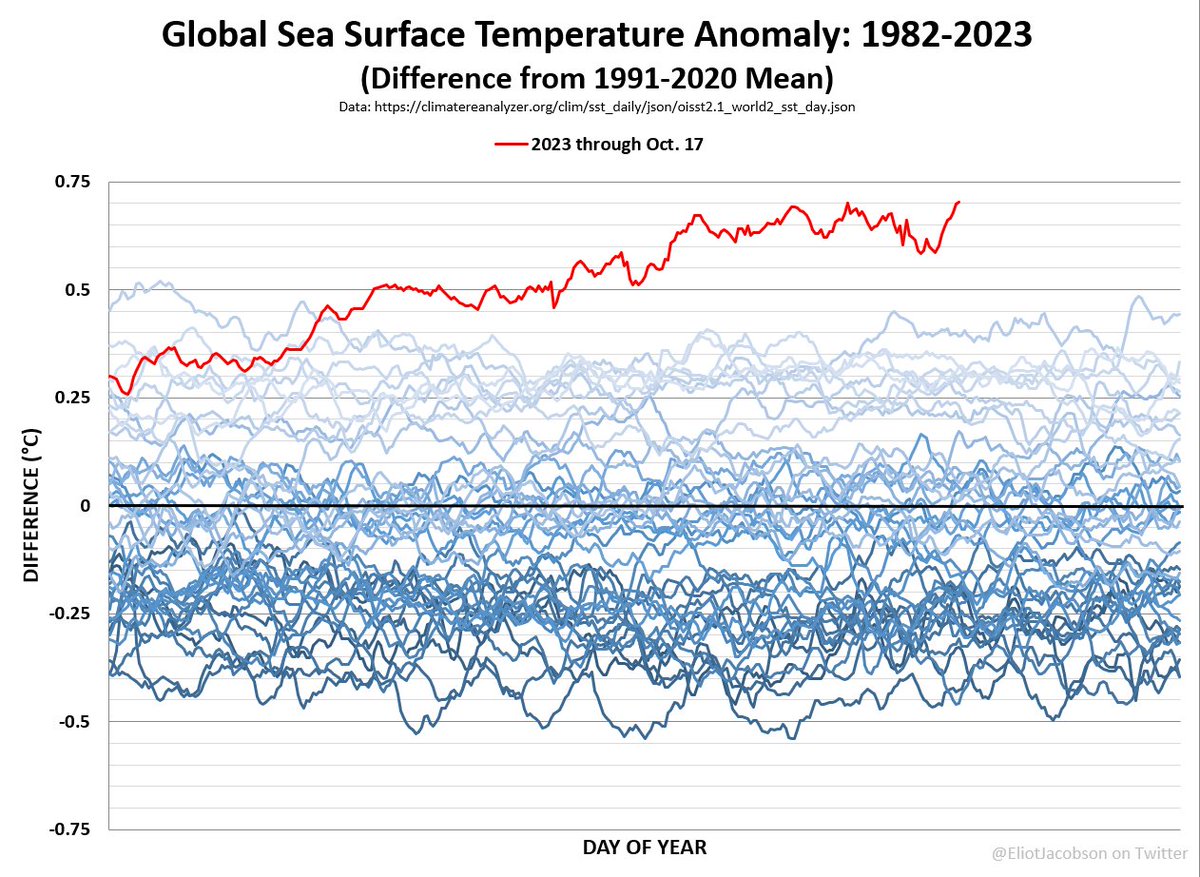
Global sea surface temperatures have reached an alarming milestone! As of yesterday, the temperature anomaly soared to a record 0.702°C above the 1991-2020 average, surpassing the previous high of 0.700°C from just last month.
These soaring temperatures underscore the accelerating impacts of climate change on our oceans. It's not just a record—it's a dire warning. We must take action NOW.
#ClimateChange #OceanTemperatures #CodeUFB
18 Oct 2023

Breaking News!
Breaking News!
Breaking News!
Yesterday the global sea surface temperature anomaly hit a new record high of 0.702°C above the 1991-2020 mean, beating the previous record anomaly of 0.700°C set on September 9th. This is a 'Code UFB' event.
1
89
20 Oct 2023
🚨 Beer Lovers, Climate Crisis is Affecting Your Brew! 🚨
🍺 Hops in key beer regions like Germany, Czech Republic & Slovenia are ripening earlier, yielding less & losing their bitter component since '94. 🔥 Due to warmer conditions, hop yields could fall by 18% & bitterness decrease by 31% by 2050. 🌍 This is a glaring example of how climate change impacts things we love & take for granted.
🔍 Research shows the start of hop growing season shifted by 13 days from 1970-2018. This not only affects hop cultivation but poses challenges for breweries.
🌱 As the climate crisis escalates, the very essence of our beloved brews is at risk. From water to barley, every ingredient faces the heat.
🌡️ It's not just about beer. It's a reminder of how our daily lives & pleasures are intertwined with the health of our planet.
🔄 Hop growers are relocating fields due to temperature & precipitation changes. The beers we love today might taste different tomorrow.
📢 This isn't just a 'hop' topic. It's a wake-up call for action! 🌏🔥 #ClimateCrisis #SaveOurBrews
edition.cnn.com/2023/10/10/b…
45
19 Oct 2023
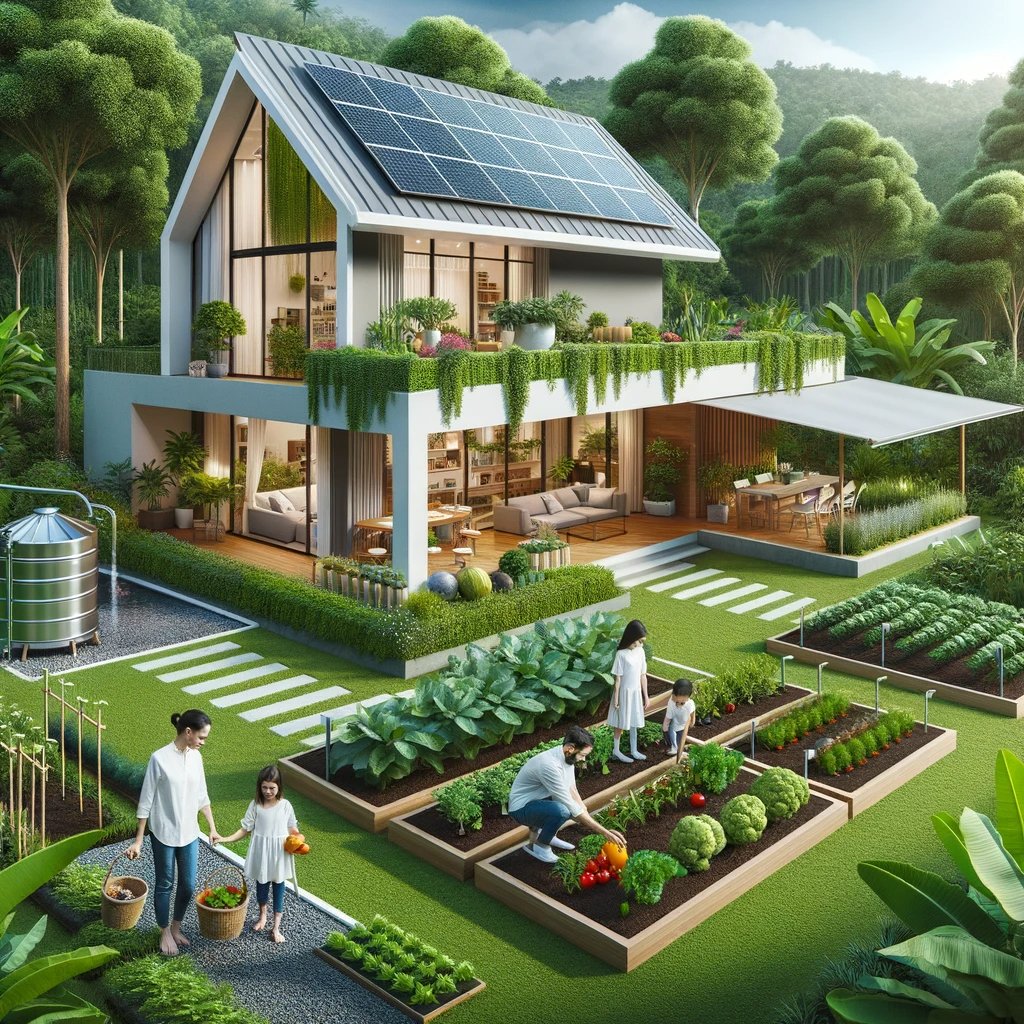
The dream - A modern, eco-friendly home surrounded by lush greenery with solar panels and a rainwater harvesting system. A diverse family is seen gardening together.
2
143
4 Oct 2023
🔬 Why Peer Review Matters in Climate Science:
1️⃣ Quality Control: Peer review acts as a filter ensuring only credible, well-researched studies get published.
2️⃣ Objective Feedback: Fellow experts can spot weaknesses, errors, or biases in a study that may have been overlooked.
3️⃣ Consensus Building: Repeated validation across the community helps establish a consensus on climate patterns and impacts.
4️⃣ Trustworthiness: Knowing a study has been vetted by other professionals gives it a stamp of credibility.
5️⃣ Setting the Record Straight: Contrary to what some "armchair experts" might claim, the peer review process ensures that climate science isn't just opinion—it's backed by rigorous research and scrutiny.
So when distinguishing between genuine experts and self-proclaimed ones, the peer-review process is a gold standard in establishing credibility. Always check the source! 🌍📚 #PeerReviewMatters #ClimateScienceIntegrity
1
338
4 Oct 2023
🌍🔍 The Holistic Approach in Climate Science Explained:
1️⃣ Multiple Perspectives: Climate experts don't just focus on one element. They analyze air, water, land, and even the living organisms to gauge climate health.
2️⃣ Interconnectedness: Everything in our climate system is connected. Melting ice impacts sea levels, which then affects coastal ecosystems and human settlements.
3️⃣ Feedback Loops: Scientists study how one change can amplify or diminish another. For example, reduced ice cover means darker oceans which absorb more sunlight, leading to more warming.
4️⃣ Local vs Global: They recognize that local changes can have global implications, and vice versa. A forest fire in one region can impact air quality continents away.
5️⃣ Long-Term Vision: Instead of just immediate effects, climate science delves into long-term impacts, ensuring we're prepared for the future.
In essence, it's not about isolated facts but understanding how the entire puzzle fits together. By looking at the bigger picture, we get a clearer view of our planet's health and the actions needed. 🌐🌳 #HolisticClimateView #BigPictureThinking
1
6
340
3 Oct 2023
🌍📊 Why Being Data-Driven Matters in Climate Science:
1️⃣ Volume: Climate experts analyze vast amounts of data from satellite observations, ocean buoys, weather stations & more.
2️⃣ Historical Context: This data spans decades, even centuries, offering a comprehensive look at trends and changes over time.
3️⃣ Precision: Advanced tech & tools allow scientists to observe even minute changes in climate parameters with high accuracy.
4️⃣ Consistency: Multiple independent data sets from around the world converge to similar conclusions, adding to the robustness of findings.
5️⃣ Objective Insight: By relying on data, scientists reduce biases. Their conclusions are based on what the data shows, not what they feel or believe.
Climate science isn't about guessing. It's about understanding patterns and predictions based on solid evidence, ensuring our responses to climate change are informed & effective. 🌡️🔍 #DataDrivenDecisions #ClimateFacts
3
227
3 Oct 2023
Listening to climate experts is crucial because:
1️⃣ Expertise: They've spent years, sometimes decades, studying climate systems, trends, and impacts. Their knowledge is based on rigorous scientific research.
2️⃣ Data-Driven: Their conclusions are based on vast amounts of data collected over long periods. It's not mere speculation or personal belief.
3️⃣ Peer Review: Climate science, like all science, is subject to peer review. This means other experts in the field scrutinize and validate their findings before they're published.
4️⃣ Accountability: Climate scientists are accountable to their peers, institutions, and the public. They uphold the integrity and credibility of their work.
5️⃣ Holistic Understanding: They look at the bigger picture, considering various factors and their interplay in the climate system.
6️⃣ Impartiality: Most climate experts aim to present facts, not opinions. They don't benefit from 'doomsday' scenarios but are concerned about presenting accurate information for informed decision-making.
In an era of misinformation, relying on trained experts who base their conclusions on data, research, and rigorous methodologies ensures we're getting the most accurate and reliable information about pressing issues like climate change. 🌏🔬#TrustScience #ClimateFacts
1
172
2 Oct 2023
🔄 Upcycling: Transforming the Old to New 🌱 🧵
1️⃣ Fact: Upcycling reduces waste by converting old items into something more valuable, reducing the need for new raw materials.
1
3
253
2 Oct 2023
7️⃣ Fact: For every ton of discarded textiles used again, 20,000 liters of water are saved.
🔄 Upcycling is more than a trend; it's a sustainable lifestyle choice. Join the movement, repurpose with purpose, and create a brighter future.
1
3
159