- Tweets 5,724
- Following 2,232
- Followers 462
- Likes 4,797


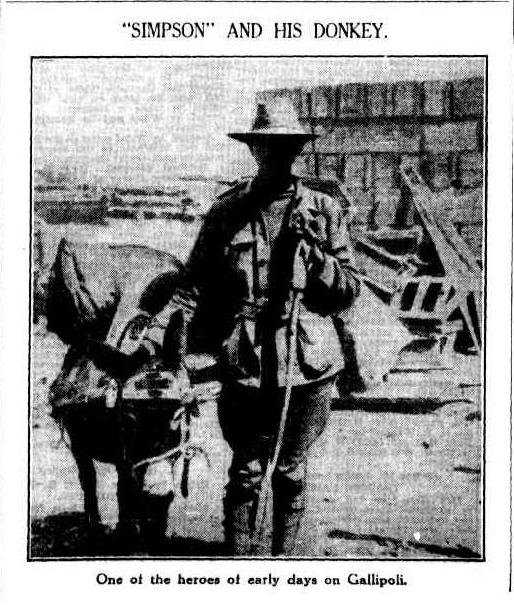






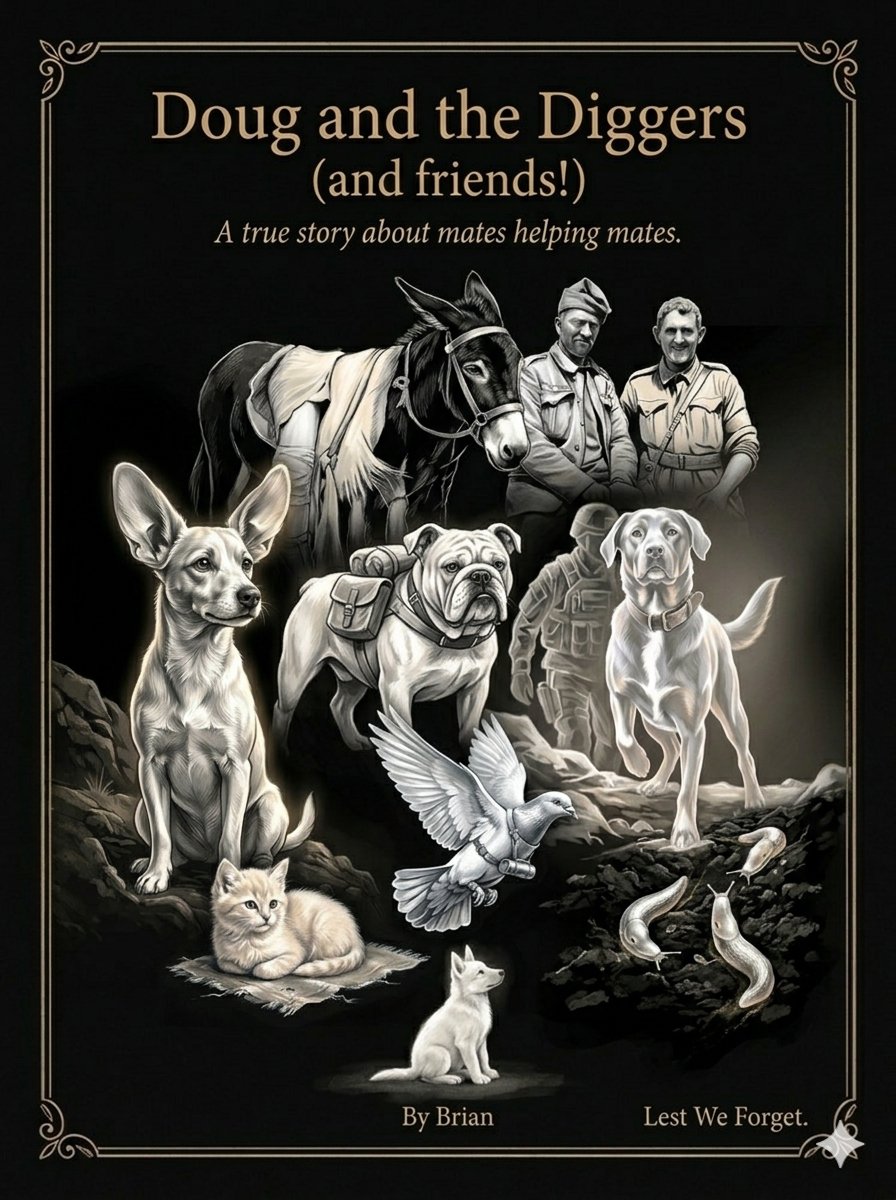
ALT Children's book cover: Doug and the Diggers (and friends!) — A true story about mates helping mates. Inverted gouache illustration on black ground. A gathering of wartime animal companions arranged in a vertical portrait: a donkey with two smiling soldiers at the top; Horrie the desert dog with large ears on the left; Digger the bulldog with his pack; Sarbi the Labrador striding forward; a carrier pigeon in flight; a kitten on a small rug; luminous slugs on dark earth. At the bottom, a small white German Shepherd puppy — Doug — sits watching them all. Text reads: By Brian. Lest We Forget.















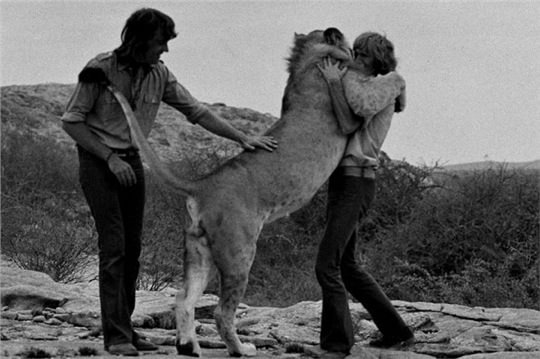
ALT A black and white photograph capturing a profound moment of interspecies affection. In the center, a fully grown male lion stands tall on its hind legs, leaning its massive weight onto a man standing on the right. The man has his arms wrapped tightly around the lion's thick neck in a deep embrace, their faces pressed closely together. To the left, a second man stands smiling warmly, reaching out to gently stroke the lion's lower back. Both men have shoulder-length hair typical of the 1970s and are wearing casual button-down shirts and trousers. The trio is standing on flat, uneven rocks in a rugged, arid landscape, with sparse scrub brush and a gently sloping hill in the background.