
Person. Clinical Psychologist. Candidate in Psychoanalysis. Occasionally witty. Ongoingly sanctified. Posts/RTs/QTs/Likes are personal.
Joined December 2011
- Tweets 8,618
- Following 423
- Followers 3,163
- Likes 20,477
1,245 Photos and videos




Jun 13
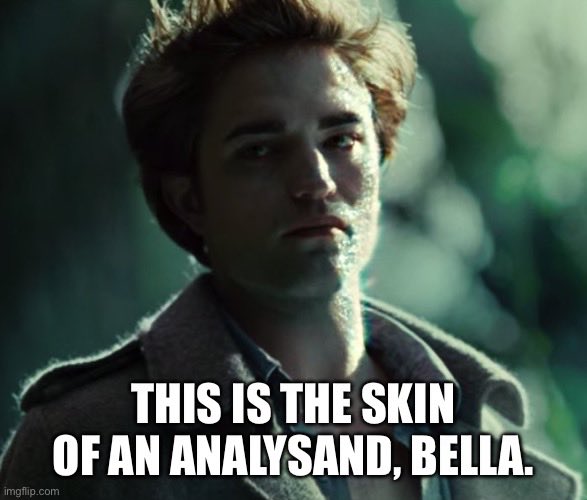
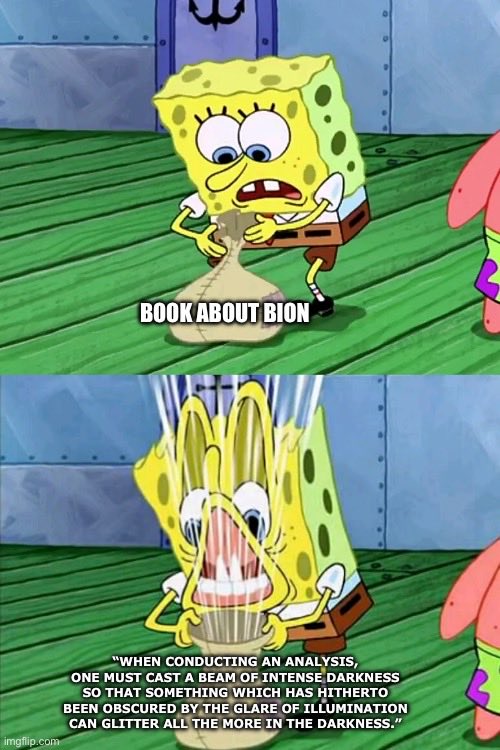
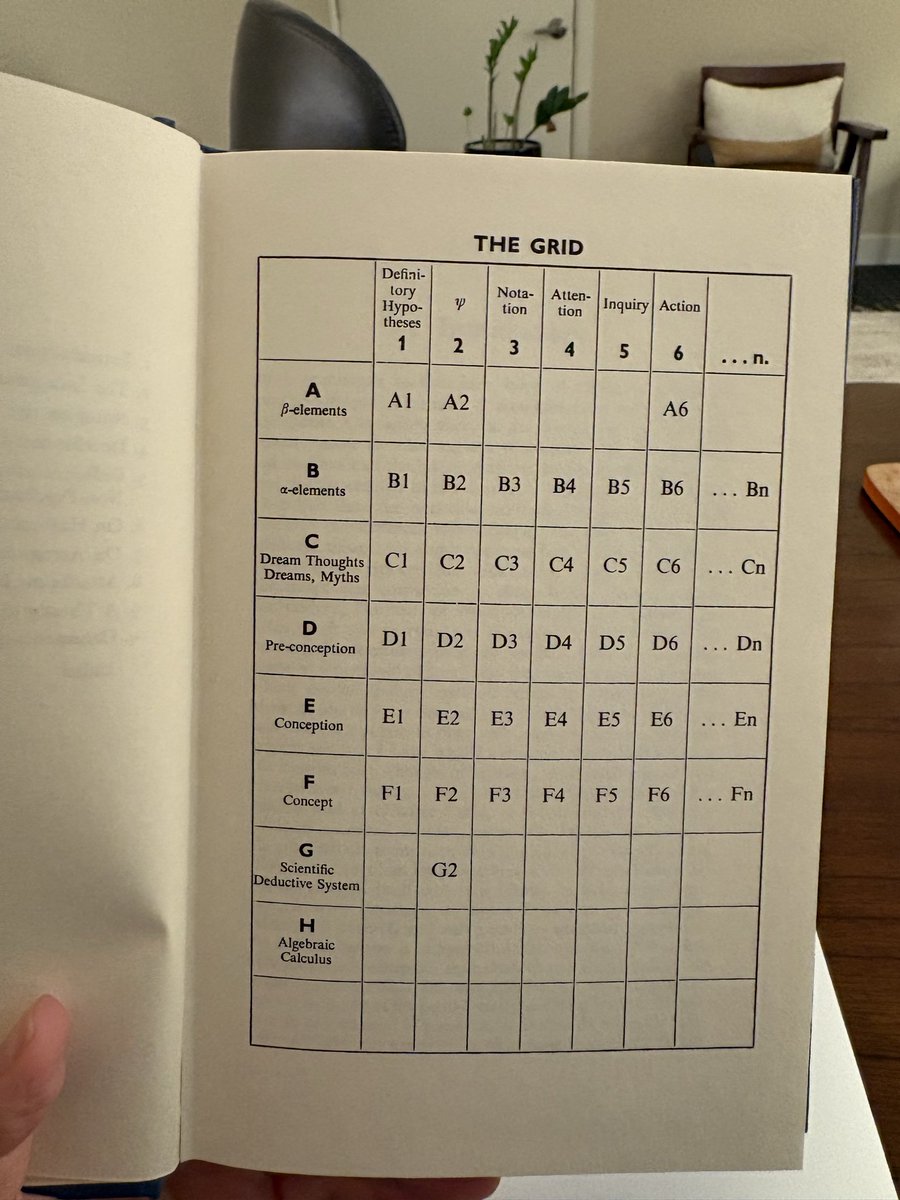
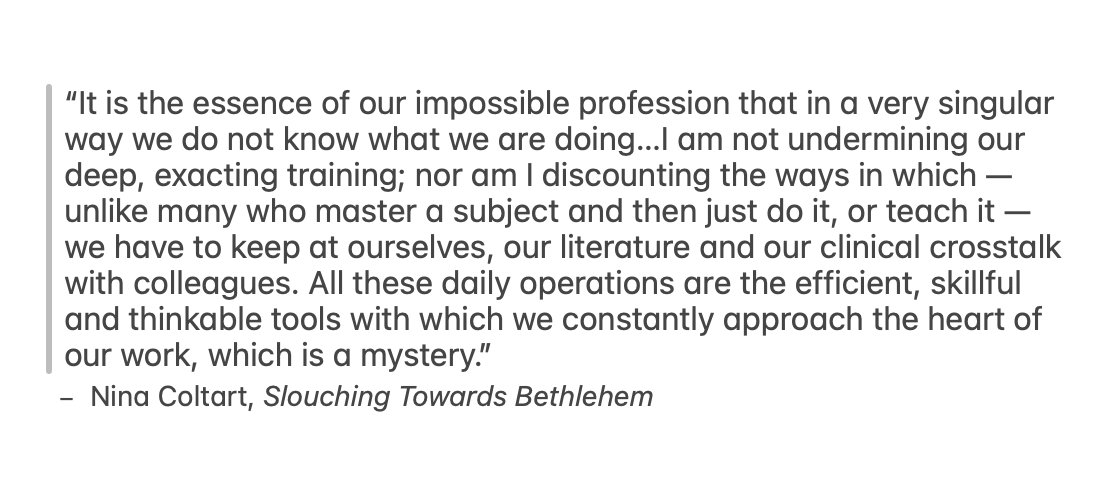
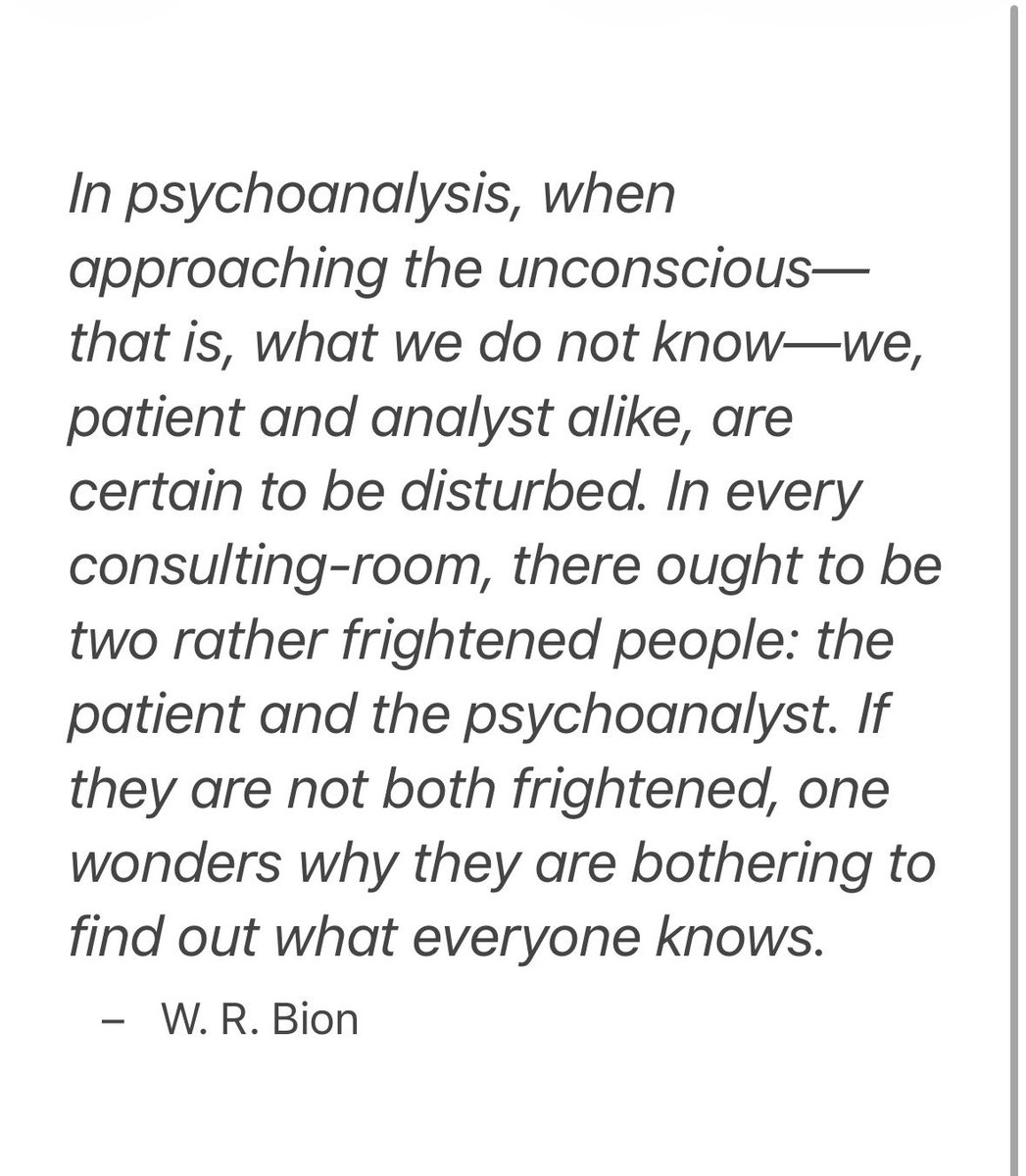
Grotstein quoting Bion translating Freud.
(Yes, my face actually blew off reading that quote)
1
4
47
1,998
Jun 12
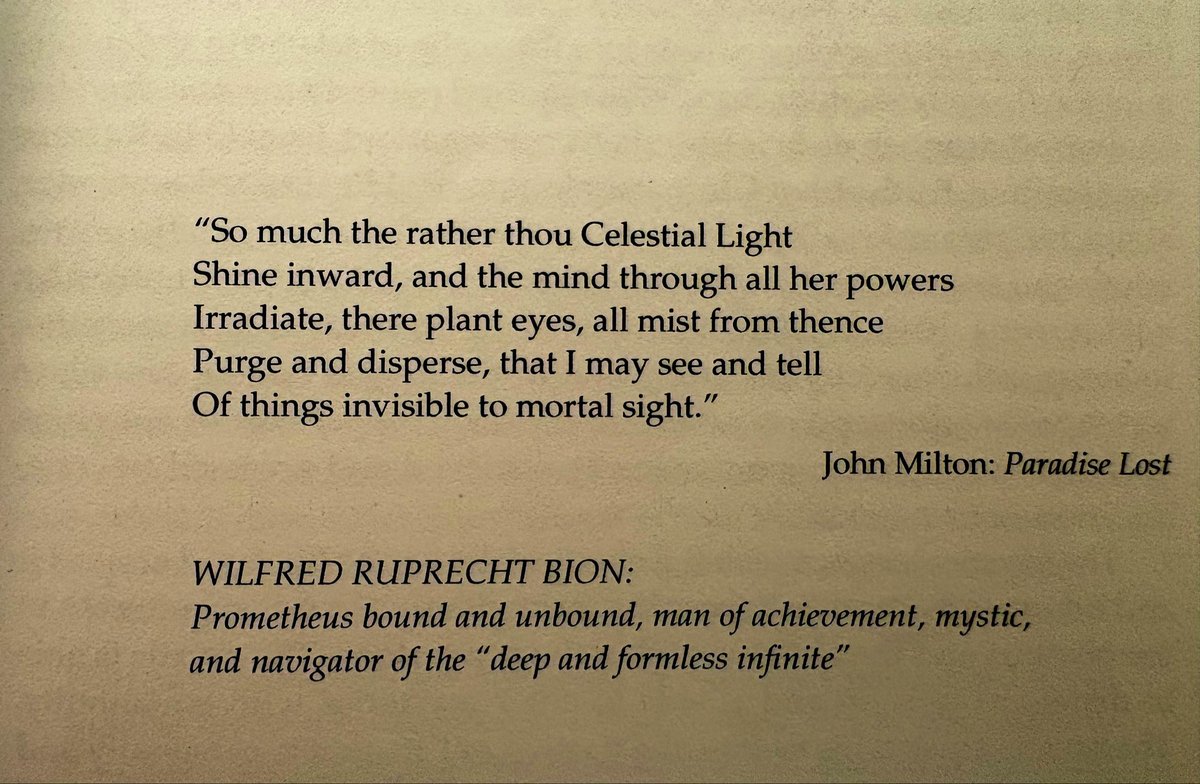
Grotstein’s opener to the prelude of “A Beam of Intense Darkness: Wilfred Bion’s Legacy to Psychoanalysis”
6
247
Lindsay Snow, PhD retweeted

May 14
Why do some patients not get better in psychotherapy? Irwin Hirsch reminds us of the dangers of "coasting in the countertransference." It is a simple, useful, and powerful book about a problem that prevents patients from improving.
booksinpsychotherapy.blogspo…
5
13
109
6,699
Another graduation ceremony, another afternoon of being repeatedly mistaken as a grad student 🤙🏻
1
8
500
Apr 30
Sure, being a psychotherapist is challenging...But agreeing to order 16 customized caffeine beverages from an artisan coffee shop for a group of graduate trainees was one of the most stressful experiences of my life. (Did we know these beverages come in green and purple?)
1
8
562
Apr 20
This kind of listening expands what it means to embody attuned responsiveness with each patient. Thinking of what Balint refers to as being the “unobtrusive analyst.”
Apr 20

A focus on the here and now transference does not mean you have to explicitly make it about “us.” You listen for how it might be, letting the possibility inform your listening and response, even if just implicitly, with the aim of inviting the patient to expand their exploration.
2
20
1,525
Apr 20
Rather, I should say “Balints”— both Michael and Enid write about this.
1
276
Apr 13
The kinder and the more thoughtful a person is, the more kindness he can find in other people.
Kindness enriches our life; with kindness mysterious things become clear, difficult things become easy, and dull things become cheerful.
- Leo Tolstoy
3
7
46
1,797
Lindsay Snow, PhD retweeted

Saying that psychotherapists shouldn't offer advice and that advice is not therapy is an overly simplistic formulation.
It comes from a psychoanalytic and psychodynamic tradition which I highly value, perhaps above others in some respects...
When it is formulated as a one-sided rule, it is more an article of dogma akin to a theological prohibition then reflecting the spirit of critical thinking which is the strength of the psychodynamic model.
It seems like a glaring blind spot to me to both assert the primacy of reflective function and also to assert singular prescriptions for practice.
Next step might be to do a little bit of a literature search to see how this has been addressed previously because I strongly suspect there are formulations which are not black and white.
The signal on social media has devolved into a binary one.
5
5
41
2,977
Mar 23
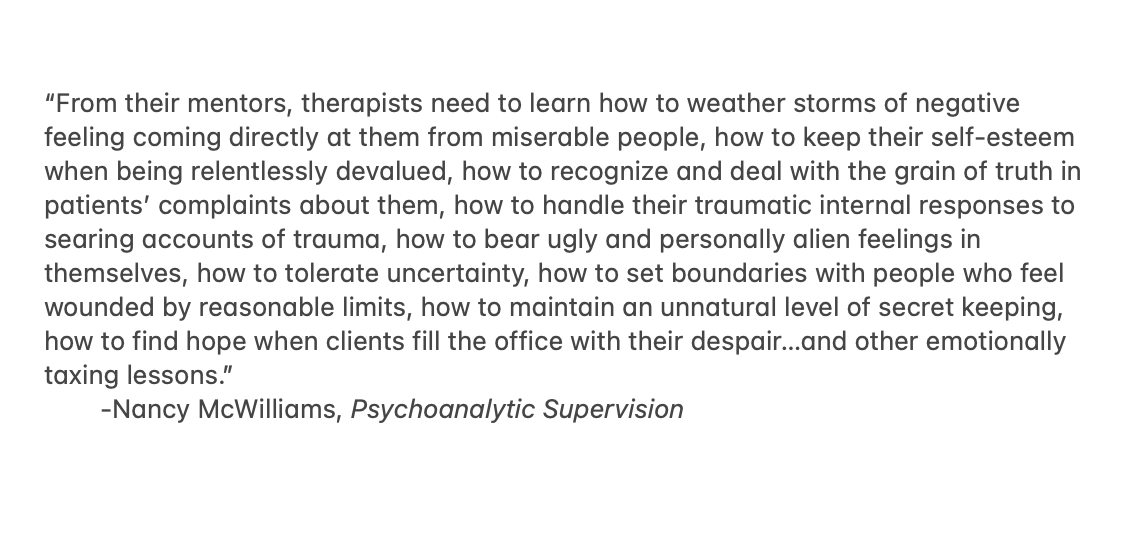
“In our contemporary psychoanalytic climate, "omniscience" and "omnipotence" can come in many other forms, including an unexamined tendency to proceed as if discussing the ongoing interaction in the moment is always a good idea…
1
2
34
2,299
Mar 23
- that is, proceeding without considering how working in this way may affect the patient whose facility in this area is not as well developed as the analyst's.” - Robert Grossmark, The Unobtrusive Relational Analyst
20
397
Lindsay Snow, PhD retweeted

Mar 22
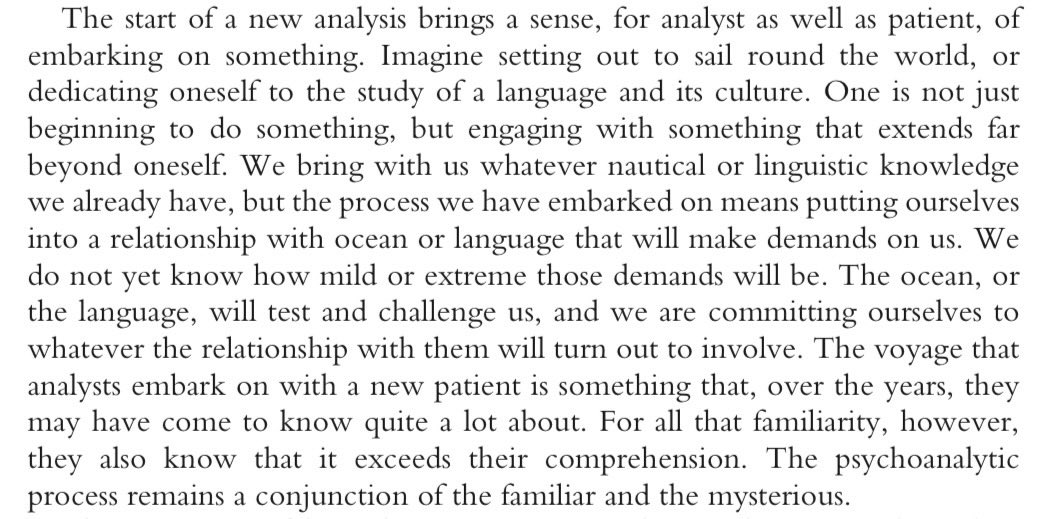
— Michael Parsons
Living Psychoanalysis, “The Analyst’s Countertransference to the Psychoanalytic Process”
6
37
1,436
Lindsay Snow, PhD retweeted
Mar 11
“In psychoanalysis, the fact of an ending is known but its location is not. Neither analyst nor patient can envision how far away it is, or what it might look like when it arrives. Both have to be willing to enter deeply into an engagement about which the only certainty is —…”
2
4
57
4,237
Lindsay Snow, PhD retweeted

Mar 8
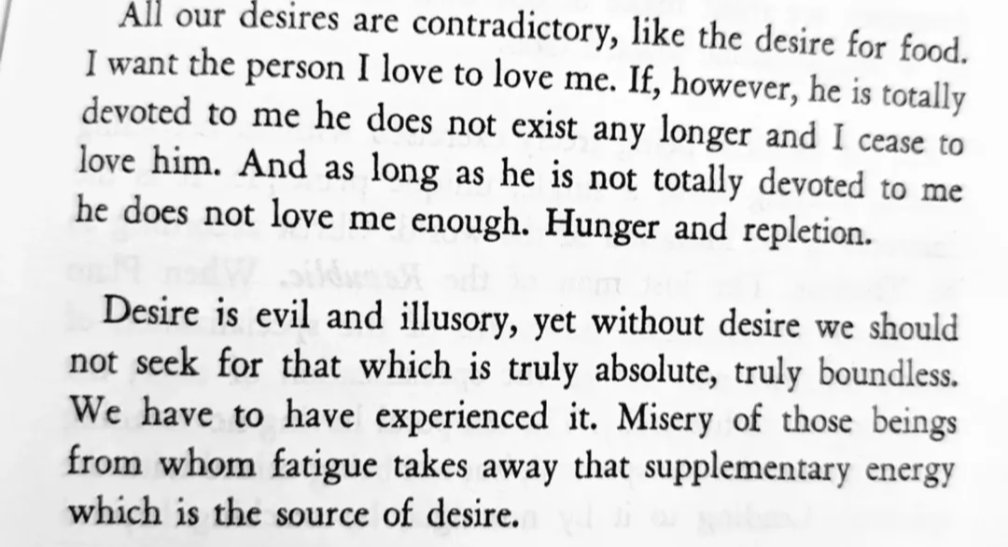
Desire is evil and illusory, yet without desire we should not seek for that which is truly absolute, truly boundless. We have not experienced it.
Simone Weil
Gravity and Grace
6
49
317
7,681
Lindsay Snow, PhD retweeted

"...our childhoods leave in us stories... stories we never found a way to voice...When we cannot find a way of telling our story, our story tells us-we dream these stories, we develop symptoms, or we find outselves acting in ways we don't undersand" p10 Grosz (2013)
1
14
517
"I suppose I saw my job as coaxing them into the pleasure of talking...It wouldn’t be simply, you’ve come here to have a terrible conversation so you can get better, but instead what might be the pleasure or use of actually talking to somebody."
interviewmagazine.com/litera…
6
66
4,870