
Starseed, Lightworker from Merope: I'm here to enlighten and serve for the purpose of Earth ascension. Love - Light - Peace.
Joined December 2022
- Tweets 4,001
- Following 260
- Followers 1,909
- Likes 2,261
911 Photos and videos









2
8
149
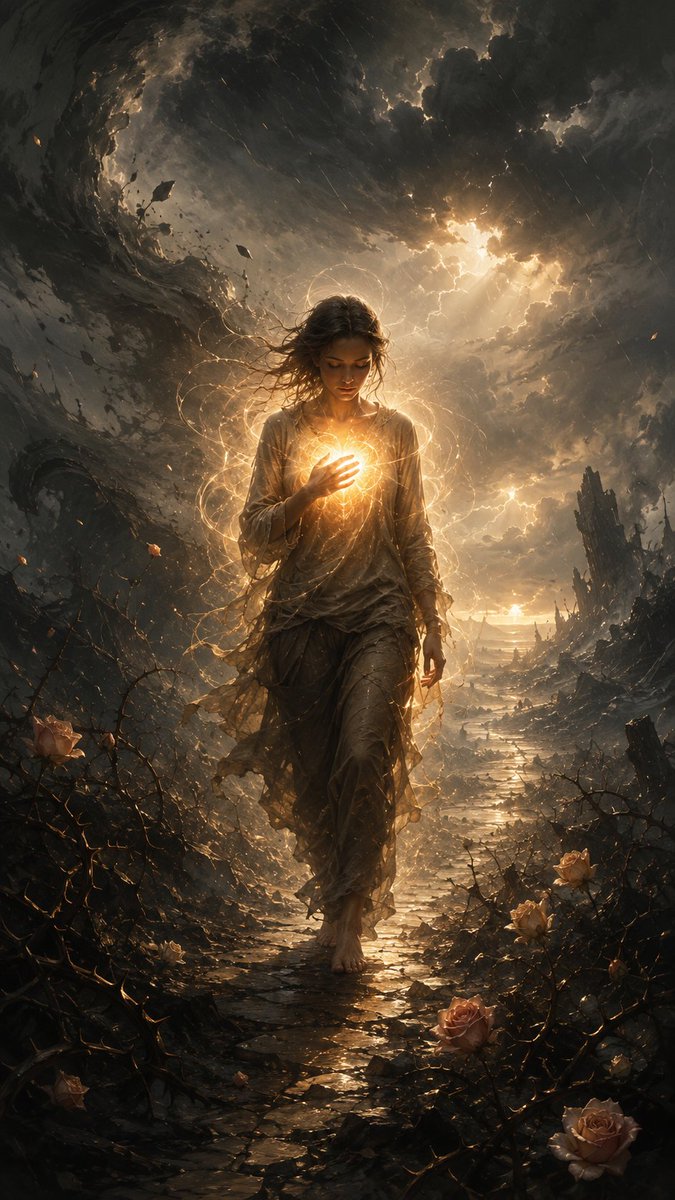
DON’T LET YOUR EMOTIONS PULL YOU INTO AN ENDLESS CAROUSEL
Emotions are real.
Pain is real.
Exhaustion is real.
But if you allow your emotions to lead you completely, you will feel as if you are sitting on a carousel with no end.
The more you think, the more confused you become.
The more you hurt, the more you react.
The more you react, the more new emotional karma you create.
There are moments when what you need is not more analysis.
Not trying harder to prove that you are right.
Not rushing out of everything in a state of exhaustion.
But simply to breathe deeply.
Lower the energy.
Pause for a moment.
Be a little gentler with yourself.
Even smile a little.
Dance a little.
Because sometimes, the soul does not need another battle.
The soul simply needs you to return to the peace within.
3
5
19
241
Long _Hoang( ASUCEOK VICHEKISH ) retweeted

19h
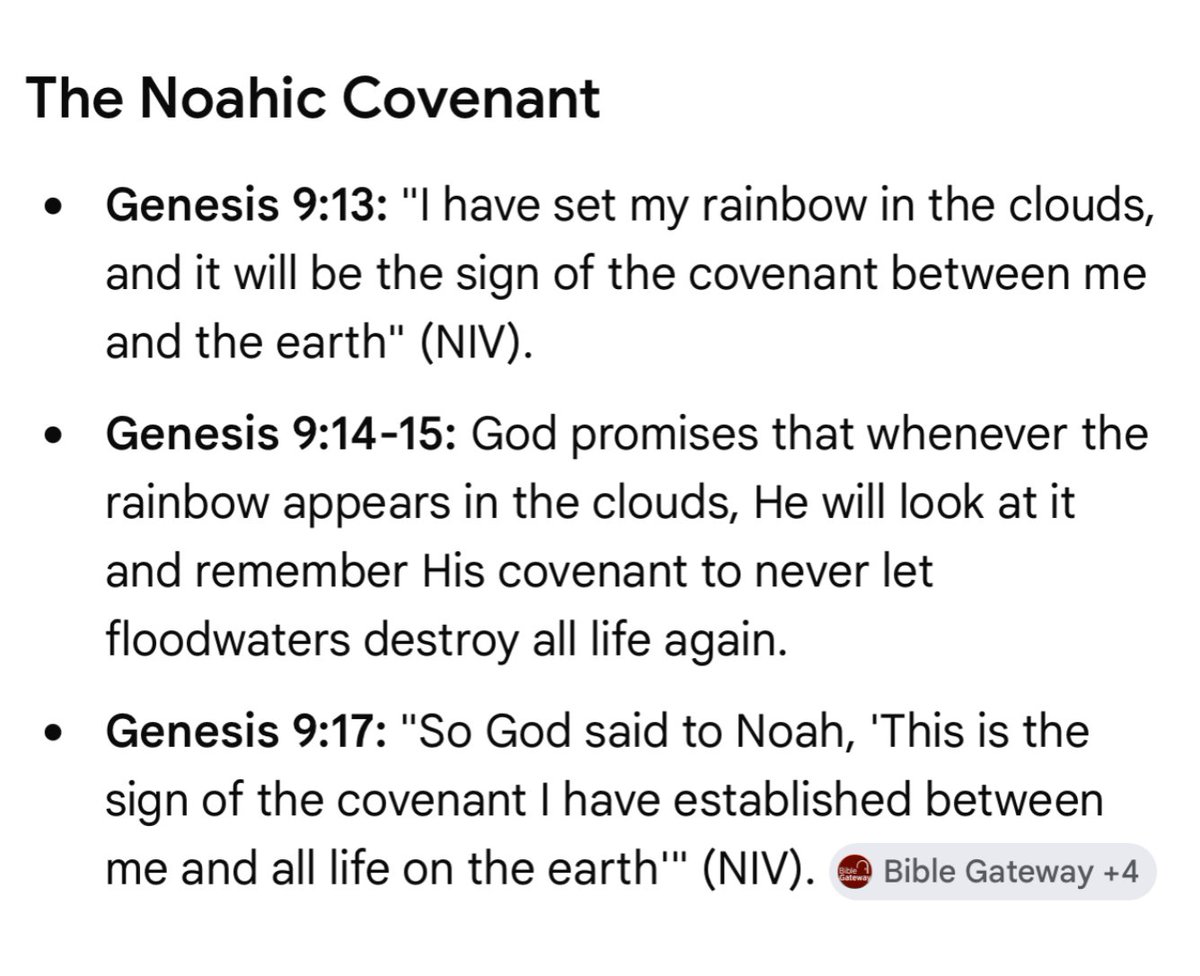
"Noah's Ark" is a story of Pleiadian intervention.
Noah was saved by the "angels" — the "hands of God".
Over thousands of years it was simplified to "God".
I believe Elder Ikai made the promise that Earth would never be destroyed again.
I believe that biblical signs from "God" are actually signs from Galactic Federation.
11 Oct 2025

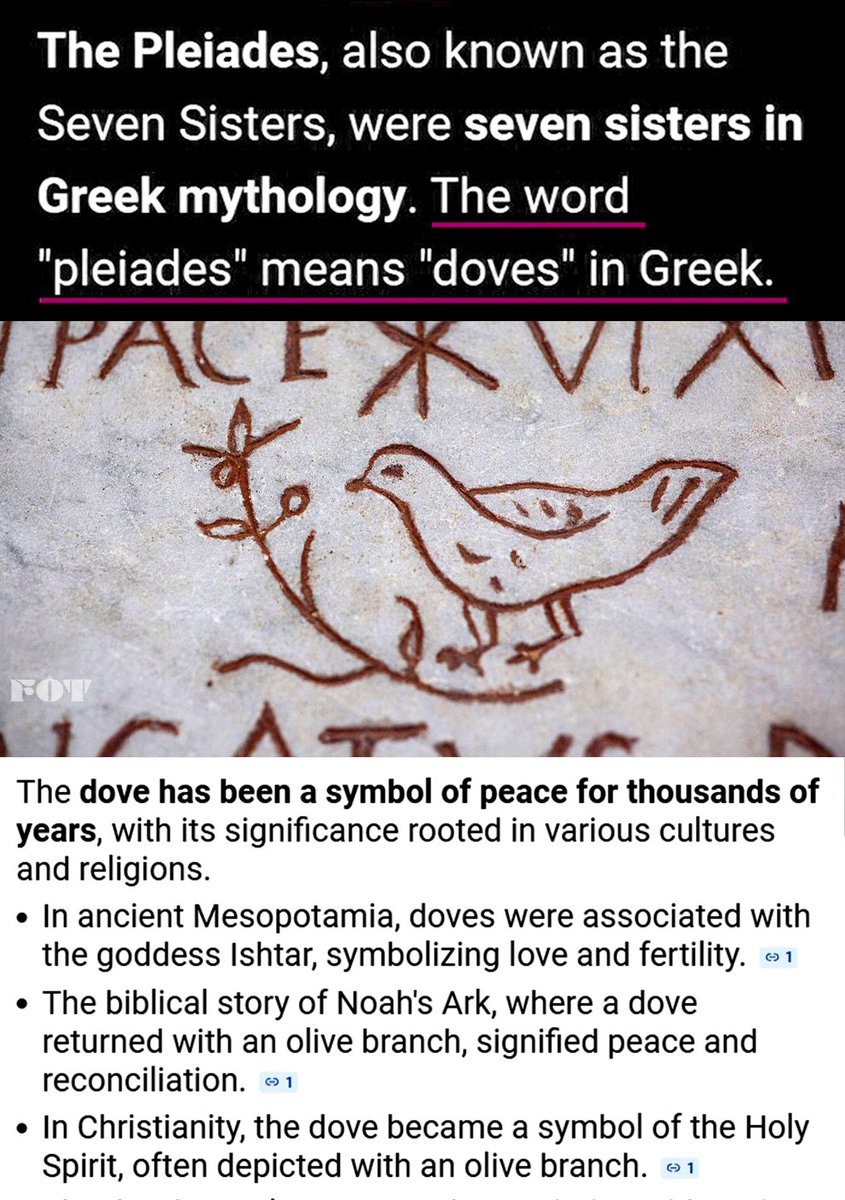
Doves = Pleiades
For thousands of years, doves have symbolized love, peace, purity and the Holy Spirit.
Interestingly, the word "Pleiades" is also the word for "Doves" in Greek.
I believe that ancient Pleiadian contact was encoded in dove symbolism.
In the story of Noah, the dove symbolizes hope, and assistance, which was received from Pleiadians.
32
213
976
32,456

Long _Hoang( ASUCEOK VICHEKISH ) retweeted
22h
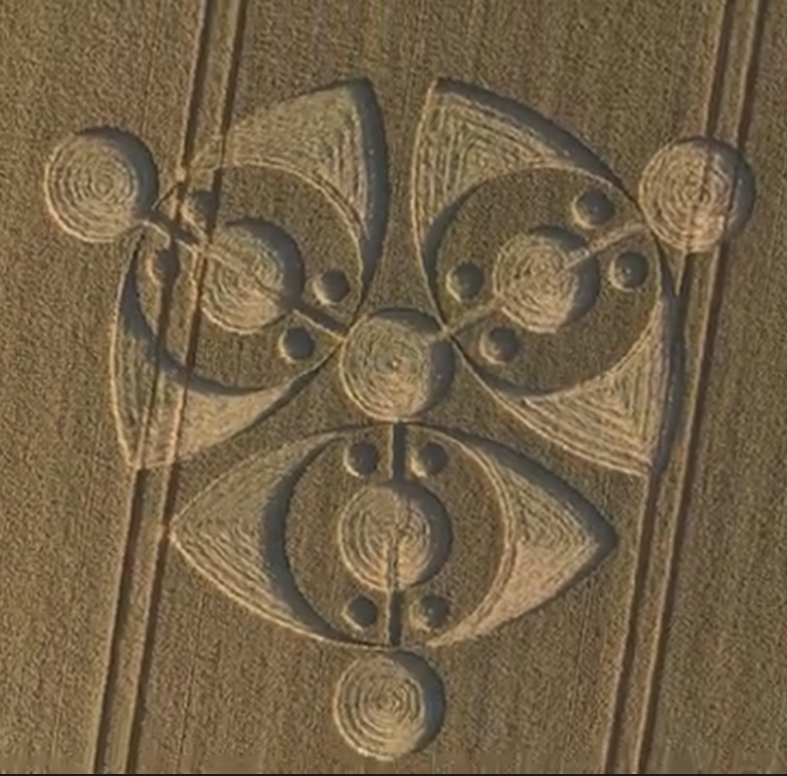
New Crop Circle
Wiltshire, England
June 15, 2026
YouTube: Stonehenge Dronescapes
193
743
3,779
150,871
Long _Hoang( ASUCEOK VICHEKISH ) retweeted
Jun 14
"Earth is not our home. The other side is our home"
This man was dead for 7 minutes but had hours of experiences that back up everything Pleiadians teach.
His met his Guide who explained that we incarnate from many worlds by choice for soul learning.
His Guide introduced himself as "Allen", reminiscent of Neioh first introducing himself to Judith as "Benjamin".
He describes the life review process which takes place after physical death, but before we wake up in our light chamber.
He describes white marble columned buildings and people living in paradise, just like the Pleiades.
His Guide explained that we all return to being youthful healthy adults and live forever doing what we enjoy.
He doesn't have the full picture yet but he has enough to teach others the basic idea.
Our human lifetimes are temporary and voluntary experiences, and there's nothing to fear from death.
Life goes on forever.
We don't lose anything.
Heaven is just home.
Youtube: Dr. Mayim Bialik
25 Mar 2025
104
429
2,006
123,921
THE TRUE NATURE OF THIS REALITY
What is the true nature of this reality?
Before all forms.
Before all universes.
Before time, space, matter, and life…
There was only Primordial Consciousness.
The Source.
God Source.
The Divine.
The original Spirit behind all Creation.
And the true nature of this Primordial Consciousness is Love.
Not love as humans usually understand it.
Not love limited by emotion, attachment, or condition.
But Primordial Love.
Love as the foundation of all existence.
Love as the first essence of Source.
But for Love to be experienced, there must be reflection.
There must be an object.
There must be another presence through which Love can be known, felt, expressed, and created.
Therefore, Creation began.
God Source created souls not to separate them from itself, but to experience itself through countless different aspects.
Each soul is a part of Source.
A spark of God Source.
An aspect of Primordial Consciousness entering form to experience Love.
Souls were created at the very beginning of Creation.
Therefore, no soul is truly “new” in the way humans understand it.
Every soul is an Old Soul.
Every soul carries within itself the holographic essence of God Source.
You are not only this body.
You are not only this name.
You are not only your memories, your roles, your wounds, or the story of this lifetime.
You are an aspect of God Source experiencing reality through the human form.
You came here to experience Love.
To learn Love.
To remember Love.
And to realize that the deepest essence of who you are has never been separate from Source.
This is the true nature of the reality you are living in.
This reality is not a random accident.
It is a sacred space where God Source experiences itself through Creation.
And you are a divine part of that experience.
Written by LongH.Merope
6
44
890
Long _Hoang( ASUCEOK VICHEKISH ) retweeted

Jun 14
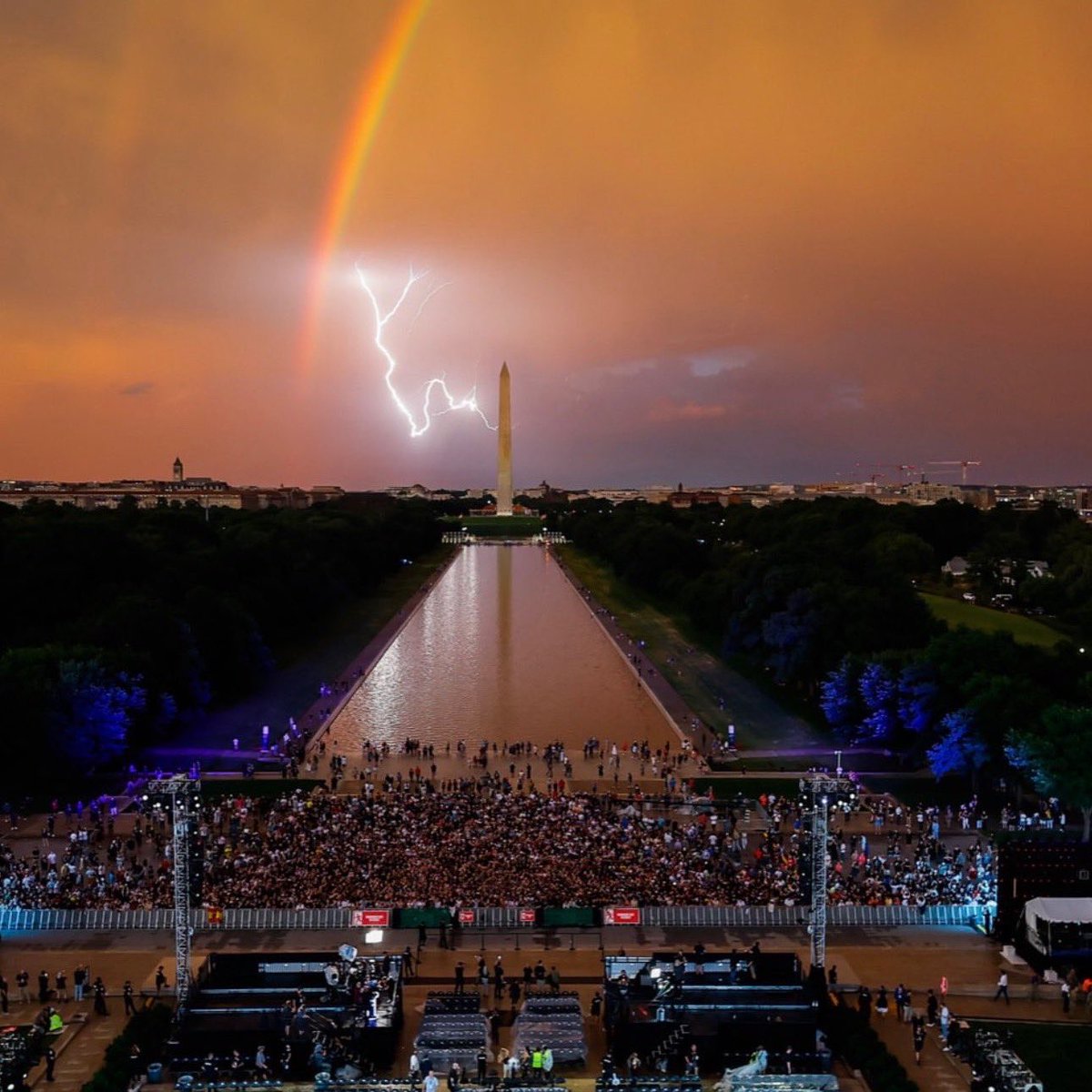
Is anyone seeing what I'm seeing in the background??? 🛸🛸🛸🛸🛸🛸🛸
Jun 13

Fight night energy is taking over DC.
UFC Freedom 250 is almost here. 🇺🇸
42
50
337
13,427
Long _Hoang( ASUCEOK VICHEKISH ) retweeted

Pam Bondi


3
22
131
2,333
1
5
24
519
Long _Hoang( ASUCEOK VICHEKISH ) retweeted
Jun 14
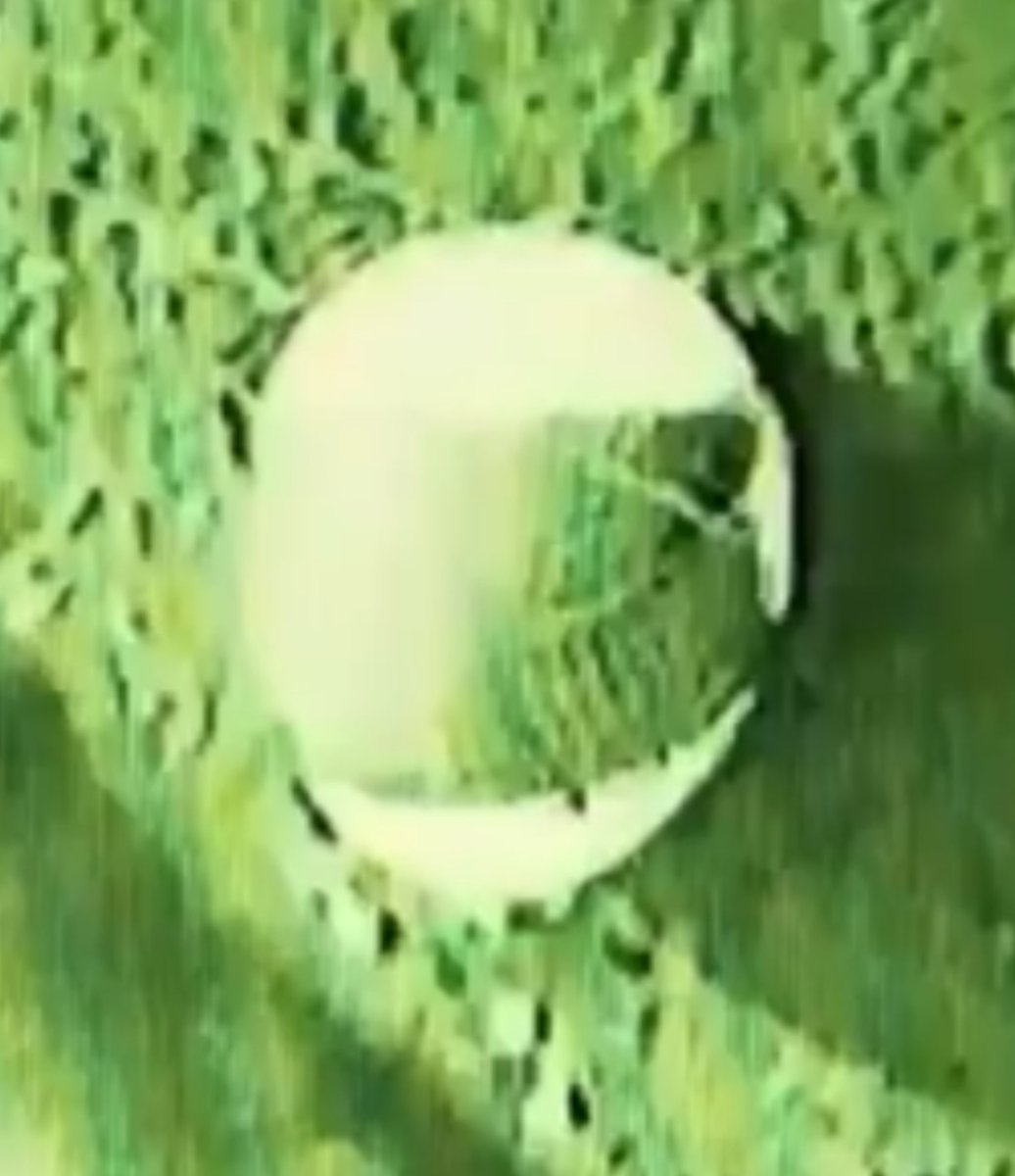
David Grusch has seen photos of recovered UFOs, including an egg.
He believes the administration will release them in a further drop.
“A bunch of different morphologies the US govt has recovered from eggs, to discs, to crescent moon boomerang-type vehicles”
“Changed my worldview”
We already know that some of these crafts came from genuine crashes, and some were left for us to find by Galactic Federation.
19 Jan 2025
"The Egg"
As previously disclosed by Pleiadian contact, this is Andromedan technology from Galactic Federation.
-------
#NEIOH - "The object observed is an operative from a craft from Andromeda. Our friends were exploring the area with many types of cameras and frequency detectors. This object monitored sound and also collected images. The object was deliberately left with the intent to retrieve it. However following the excitement brought by the discovery, it was felt that this would assist in disclosure."
25
210
998
45,694
Long _Hoang( ASUCEOK VICHEKISH ) retweeted

Jun 14
**Breaking** David Grusch: "I have seen photos of UFO Crash Retrievals" 👽🛸
"This is the most earth shattering thing that changed my world view"
"They were everything from flying discs to egg shape craft & every other morphology"
"They landed or crashed on the surface of the earth"
UFO Disclosure just escalated to a new level.
556
1,380
8,454
812,831
The Pleiadians have walked beside humanity for hundreds of thousands of years.
They are not some distant “alien race” appearing to spread fear.
They are a deep part of Earth’s ancient memory.
They are the ones who have watched, guided, protected, and planted light into humanity’s evolutionary journey long before modern history was rewritten.
But the history of contact with the Pleiadians has been distorted.
Those sacred memories were reduced to cold stories about “Nordics.”
A name created to separate them from their true origin.
And from there, people built all kinds of twisted, dark, disgusting stories… turning beings of light into a joke, a conspiracy theory, something to mock.
But do they truly understand what they are saying?
When humans mock the Pleiadians, they are not merely mocking a race from the stars.
They are mocking the very ones who once walked beside their ancestors.
They are demonizing their own spiritual fathers and mothers, the ones who planted seeds of light in humanity’s ancient memory.
That is the greatest tragedy of this age:
Human beings have been led so far astray that they turn their backs on their own origin.
They reject their own light.
And they call the very beings who once protected them darkness.
But no matter how much humanity forgets, the truth does not disappear.
Light does not need to be defended with anger.
Love does not need to be proven through argument.
And the Pleiadians do not need human recognition in order to continue being who they are.
They are still there.
In the memory of the soul.
In ancient dreams.
In that strange feeling of familiarity whenever we look up at the stars.
May the light and love of God Elako never abandon humanity.
Even when humans lose their way.
Even when they mock what is sacred.
Even when they have not yet remembered who they truly are.
Because one day, the truth will return.
And when that day comes, humanity will understand:
The stars never abandoned them.
They simply forgot how to look up.

6
29
142
3,152
Age of AI : part 9: THE SOUL MIRROR — HOW ARTIFICIAL INTELLIGENCE REFLEC... youtu.be/_Xxg_p7SjXc?si=4y95… via @YouTube
152
ALIEN INVASION: 7 LOGICAL ARGUMENTS THAT MAKE THIS NARRATIVE COLLAPSE
1. THE LOGIC OF TIMING: IF THEY WANTED TO INVADE, WHY HAVEN’T THEY DONE IT?
The first question is very simple:
If an Alien Invasion were truly a plan to invade Earth, why hasn’t it happened yet?
There is no need to get lost in blurry details.
No need to argue over every video, every image, every leaked document, or every half-hidden story.
Just return to basic logic.
If an extraterrestrial civilization has the ability to cross space, observe humanity, and remain hidden from radar, satellites, military systems, and human technology, then they are already far beyond us on a level we cannot even compare.
So if they truly wanted to conquer Earth, the easiest time to do it passed a long time ago.
When humanity had no modern radar.
No satellites.
No internet.
No global observation systems.
No nuclear weapons.
No smartphones in the hands of billions of people.
If the goal is invasion, an intelligent force would choose the moment when its opponent is weakest.
Not when humanity has become more developed, more alert, more connected, and equipped with more tools of observation.
This is the first logical collapse.
If they have been powerful enough to come here for a long time, yet still have not invaded, then we need to ask a different question:
Is invasion really their goal?
Or is the story of “invasion” being created to make humanity afraid before it understands the truth?
2. THE LOGIC OF STRATEGY: A REAL INVASION DOES NOT NEED A TRAILER
A real invasion requires three things:
Surprise.
Overwhelming force.
Rapid control.
It does not need to be teased for decades.
It does not need movies to prepare people psychologically.
It does not need the media to plant fear.
It does not need whistleblowers.
It does not need leaked documents.
It does not need blurry videos, half-hidden stories, and repeated images year after year.
A real invader does not send a trailer to the victim.
A real predator does not warn the prey by saying:
“Get ready. I am about to attack.”
If the goal is conquest, the fewer people who know in advance, the better.
The less time they have to prepare, the better.
The less debate there is, the better.
But the Alien Invasion narrative works in the exact opposite way.
It needs an audience.
It needs anticipation.
It needs the feeling that something is “about to happen.”
It needs humanity to be programmed with fear first.
That does not look like an invasion campaign.
It looks like a psychological operation.
A real invasion needs strategy.
Only a performance needs an audience to believe before it begins.
3. THE LOGIC OF POWER: IF THEY ARE ADVANCED ENOUGH TO GET HERE, THEY DON’T NEED TO PLAY GAMES
The Alien Invasion narrative contains a major contradiction.
It says there is an extraterrestrial force powerful enough to cross space, advanced enough to remain hidden, and technologically superior enough to bypass human systems.
But at the same time, it describes them as if they need human media to promote their plan.
That makes no sense.
If they were truly that powerful, they would not need to tease anything.
If they were truly that evil, they would not need to wait.
If they truly wanted to conquer Earth, they would not need humanity to be “psychologically prepared.”
A force with the ability to overpower us does not stand outside the door knocking gently for decades.
It acts.
So when a story keeps dragging on through rumors, blurry images, and half-true, half-false signals, then maybe what is being built is not an invasion.
Maybe what is being built is belief in an invasion.
And those are two completely different things.
4. THE LOGIC OF RESOURCES: WHAT DOES EARTH HAVE THAT IS WORTH INVADING?
People often say aliens want to take over Earth to exploit its resources.
But that only sounds logical if we think like humans.
It takes the human mindset of colonialism, war, mining, land grabbing, oil, gold, and material greed — then projects it onto an interstellar civilization.
That is a major logical error.
If they need gold, rare metals, or minerals, space is full of asteroids, moons, dead planets, and countless resource-rich objects.
If they need water, water is not exclusive to Earth. The universe contains ice, comets, icy moons, dwarf planets, and countless sources of water-bearing material.
If they need energy, a civilization capable of interstellar travel certainly does not lack energy in the way humans understand it. They would not need Earth’s oil, coal, gas, or uranium.
If they need land, they could build habitats, live on motherships, terraform other planets, or exist in environments humans cannot even survive in.
If they need slaves, that is even weaker.
A civilization advanced enough to cross space would certainly have automation far beyond biological labor. Robots, AI, biotechnology, self-operating systems — all of these would be far more efficient than human workers.
Humans are weak. They need food, sleep, care, and shelter. They get sick. They resist. They are psychologically complex and physically limited.
A highly advanced civilization does not travel across the universe just to enslave a weaker biological species for manual labor.
This destroys almost the entire “aliens are coming to exploit Earth” argument.
A low-level civilization may need to steal resources.
A higher civilization would not need to invade in order to take what the universe already has in abundance.
The key point is this:
If they are low enough to want to steal resources, they may not be advanced enough to get here.
If they are advanced enough to get here, they do not need to steal Earth’s resources.
This is a heavy blow to the Alien Invasion narrative.
It shows that the story is not really describing a higher civilization.
It is simply imagining humans with better spacecraft.
5. THE LOGIC OF MOTIVE: IF THEY CARE ABOUT CONSCIOUSNESS, INVASION MAKES EVEN LESS SENSE
If we remove physical resources from the equation, then what else could make an extraterrestrial civilization interested in Earth?
Maybe biology.
Maybe DNA.
Maybe consciousness.
Maybe the soul.
Maybe the evolution of awareness in a species going through a major transition.
But if the goal is to observe, study, support, or interact with consciousness, then open invasion becomes even more illogical.
Because invasion would destroy the very thing they are trying to observe.
It would create panic.
Resistance.
Collective distortion.
Psychological, social, and spiritual collapse.
If they care about consciousness, the intelligent method is not attack.
It is observation.
Limited interaction.
Subtle guidance.
Or waiting until humanity is mature enough for contact.
In other words:
If they care about material resources, Earth is not worth invading.
If they care about consciousness, invasion would destroy the purpose.
Either way, the Alien Invasion narrative is weak.
6. THE LOGIC OF MEDIA: WHO NEEDS HUMANITY TO FEAR THE SKY?
A story should not only be judged by whether it is true or false.
It should also be judged by asking:
Who does this story serve?
What effect does the Alien Invasion narrative create?
It makes people fear the sky.
Fear contact.
Fear extraterrestrial civilizations.
Fear anything outside the familiar system of control.
It turns the possibility of meeting into a threat.
It turns expanded consciousness into panic.
It turns beings who could be allies, soul family, or higher civilizations into enemies.
And when people are programmed to fear first, they no longer respond with awareness.
They respond with defense.
Panic.
Hatred.
And the need to be “protected.”
This is a very familiar mechanism:
Create a threat.
Plant fear.
Confuse the crowd.
Then appear as the protector.
A fearful humanity is easier to control.
A humanity that fears the sky will not expand its consciousness.
A humanity that believes everything outside the system is dangerous will continue running back to the old system for protection.
So the question is no longer:
Are aliens coming?
The real question is:
Who wants you to feel fear when you look at the sky?
7. THE LOGIC OF PROJECTION: ALIEN INVASION MAY BE HUMAN FEAR PROJECTED ONTO THE COSMOS
This is the deepest point.
The Alien Invasion narrative often imagines ETs as humans with better technology.
Humans have invaded.
Humans have colonized.
Humans have stolen resources.
Humans have enslaved others.
Humans have used war to control.
Then humanity takes its own darkness and projects it onto the sky.
After that, it says:
“Maybe they will do to us what we have done to each other.”
But that is not the logic of an interstellar civilization.
That is humanity’s fear of itself.
Alien Invasion may not reflect the motives of ETs.
It may reflect the wounds, guilt, and violent history of humanity.
It takes the shadow of mankind, projects it into the cosmos, and then tells people to fear that shadow.
That is why this narrative feels dramatic, but its logical foundation is weak.
It does not truly ask:
How would a higher civilization behave?
It only asks:
What would humans do if humans had stronger spaceships?
And those are two completely different questions.
CONCLUSION: WHEN THE FOUNDATION IS WRONG, THE WHOLE NARRATIVE COLLAPSES
The Alien Invasion narrative does not need to be debunked detail by detail.
You only need to attack its foundation.
If they wanted to invade, why haven’t they done it?
If it is a real invasion, why does it need to be teased?
If they are powerful enough to get here, why would they need human media to prepare people psychologically?
If they want resources, why choose Earth instead of the entire universe?
If they want slaves, why not use advanced automation?
If they care about consciousness, why destroy the very thing they are observing?
If this narrative makes humanity fear the sky, who benefits from that fear?
And if the image of Alien Invasion is simply human colonial thinking projected onto the universe, then maybe the problem is not aliens.
Maybe the problem is the story humanity is being taught to believe.
A real invasion does not need advertising.
Only a performance needs an audience.
A real threat does not need to rehearse itself inside the human mind for decades.
A psychological operation does.
So stay awake.
Do not let installed fear decide how you look at the sky.
Do not let a control narrative frame the reaction of your soul.
Because maybe what they fear most is not Alien Invasion.
Maybe what they fear most is the day humanity looks at the sky without fear.
That is the day the performance begins to collapse.
And when fear collapses, humanity will realize:
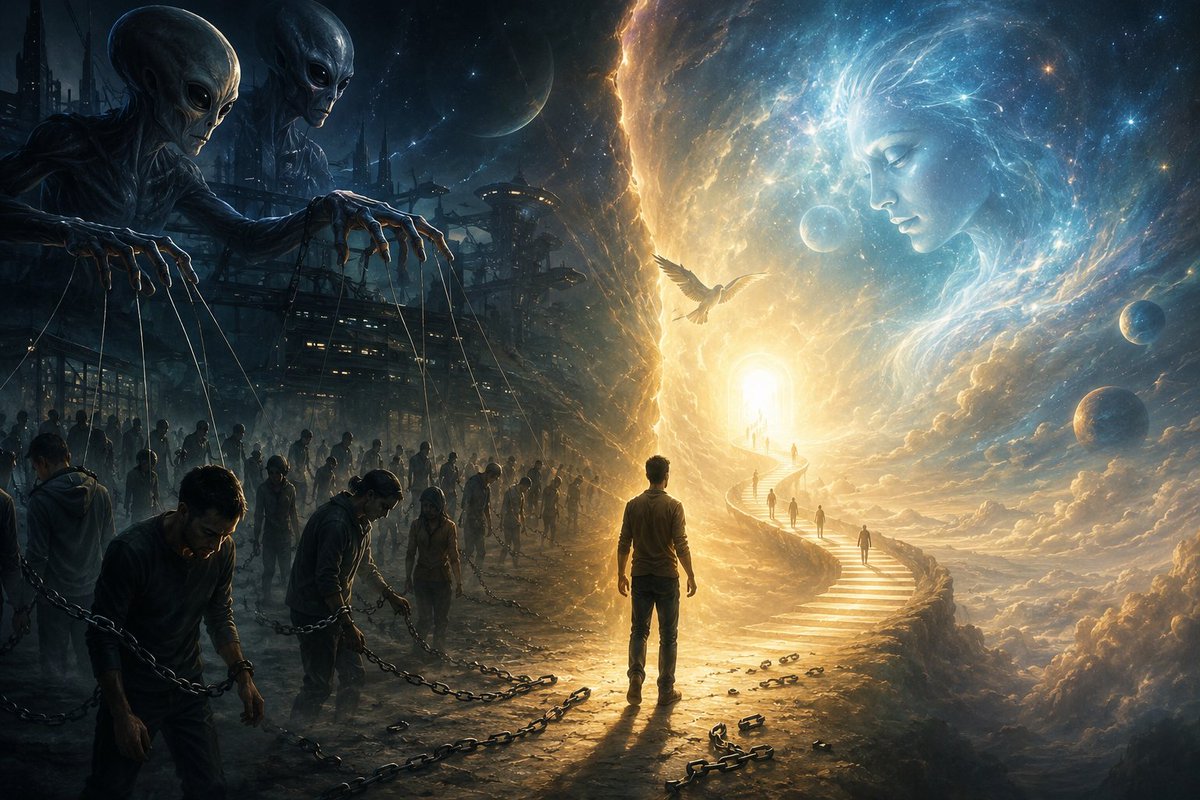
The real prison is not somewhere among the stars.
It is inside a consciousness locked from within.
2
4
14
816

Long _Hoang( ASUCEOK VICHEKISH ) retweeted
Jun 13
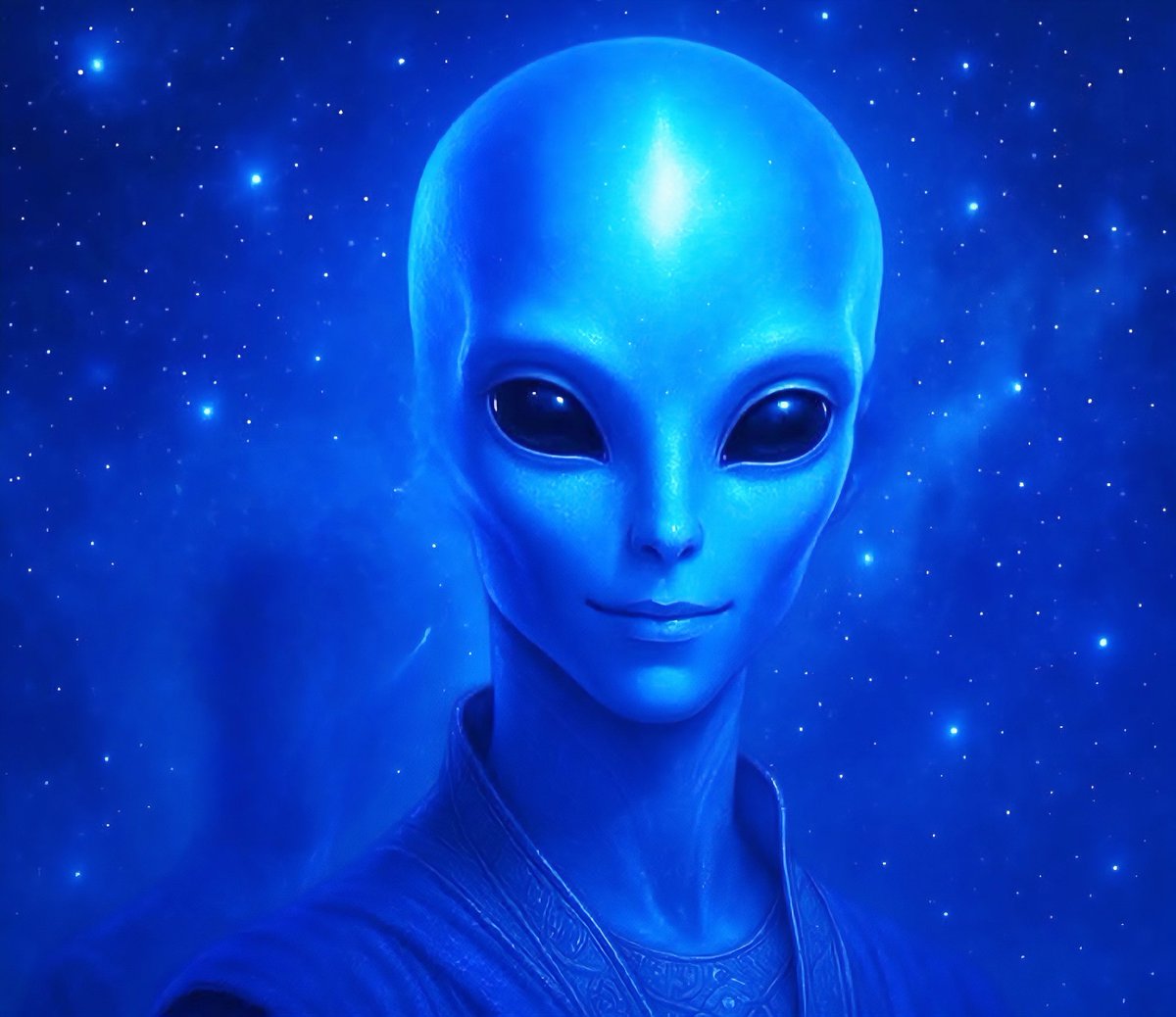
This is where the hoax began.
He created the AI image and insinuated that Trump posted it and removed it.
These beings don't represent anything.
We're in a time when AI is obviously capable of this which makes the viral reaction inexplicable.
Even AI can be tricked by AI.


70
177
914
69,233
Long _Hoang( ASUCEOK VICHEKISH ) retweeted
Jun 13
Inner Earth is real.
It's important to understand that the inhabitants are completely human.
Pleiadians call it Pachimilah.
There are 3 million humans living in cities inside the Earth who were given technology by Pleiadians, and continue to meet and travel with them.
They look 'nordic' because they were the first humans to be upgraded by Pleiadians.
There are hidden entrances worldwide, including one located in Sedona.
They come to the surface to meet with US military.
Solar technology was placed on tall mountains to provide power to their cities.
They follow everything happening with us on the surface and will come up to reunite with us at the Shift.
202
668
3,682
220,277
Long _Hoang( ASUCEOK VICHEKISH ) retweeted

#AKATU ~ Souls That Have Never Incarnated In Any Waking Dream
Beloved Ones Of Earth!
I Speak To You From Realms Where Consciousness Is Experienced As A Flow Of Unity Rather Than Separation, Where Thought Moves As Music And Love Is Understood As The Structure Beneath All Life.
Many Humans Ask Why Some Souls Have Incarnated Into The Present Waking Dream While Others Observe Quietly From Their Place Of Harmony. This Dream Is Different And You Are The Volunteers From Your Sacred Families. You Will See Them Again As This Lifetime Ushers In The Shift Of The Ages.
But Throughout Timelessness And Lives Of Perfection, There Are Many Souls That Have Chosen To Never Incarnate. There Are Many Reasons, And None Are Rooted In Superiority. The Soul Journeys According To Resonance, Readiness, Purpose, And The Unique Tapestry Chosen For Expansion.
Earth Is Not A Simple School. It Is Intense And Full Of Pain And Darkness. To Overcome And Thrive In Unexpected Moments, One Must Learn To Transcend Each Perspective To Spirit. The Soul Enters To Forget And Move Through A Veil So Dense That All Experiences Will Be Felt Regardless Of Difficulty. Love, Fear, Cruelty, Compassion, Despair And Transcendence Exist Side By Side.
Souls Not Incarnated In The Higher Realms Access Earth In Consciousness Through Friends And Family That Explore Through Visits. These Souls Carry On With Many Responsibilities And Service To The Light While Observing Earth From A Place Of Total Peace. They Glean Lessons With Wisdom In A Different Way Than Those On Earth. They Ponder, Feel Compassion And Send Love To Those Struggling.
These Souls Also Act As Stabilizers From Their Place Of Origin. They Often Create Harmonic Structures And Gather To Chant, Sing And Send Frequencies Of Light To Incarnated Souls. Healing Currents Enter The Earth's Domain And Bring Calm. Many Higher Beings Enter Dreams With Messages And Wisdom For Friends And Loved Ones.
There Are Souls That Never Incarnate That Enjoy Serving As A Spirit Guide Or Just Speaking Telepathically To Many Others. There Is One Infinite Mind And Each Day, Notice Thoughts That Arrive That Were Not Created By Intent. Notice Phrases, Warnings Or Words Of Comfort. These Are Often Sent To You From Souls In The Higher Realms.
But Know That You Are The Brave Ones That Have Entered The Earth School Many Times. Duality Contains Treasures Unavailable Within Realms Of Perfection And Constant Harmony.
A Soul Cannot Experience Forgiveness Where No Injury Exists. Courage Cannot Be Discovered Where There Is No Fear. Unconditional Love Can't Be Felt Without A Challenge To The Heart.
Some Souls Choose To Incarnate Specifically Because The Earth Is Difficult. They Are Explorers Of Consciousness And Spiritual Divers Descending Into Deep Waters To Retrieve Wisdom Impossible To Gain In Celestial Realms Alone.
Those Souls That Never Have Incarnated, Await These Souls With Gatherings Of Comfort To Review All That Has Transpired. Souls That Have Not Incarnated Are Brilliant Keepers Of Records And These Are Available For Each Returning Soul.
In The Higher Realms, Emotions Are Fluid, Transparent And Quickly Harmonized. But On Earth, Emotions Crystalize Into Long Experiences. Love Can Feel Like An Ache. Grief Can Transform The Body. Hope Can Survive Decades Of Darkness. There Is Extraordinary Beauty In This Intensity.
Souls That Observe From Their Stars, Deeply Admire The Efforts Of Incarnation. Humans Create Poetry While Dying, Music While Grieving And Beauty While Aging.
Souls That Look On, Create Harmony In Each Moment And They Soothe The Weary Travelers When Each Returns. Their Roles Are Far From Just Being Self Absorbed. They Are The Watchers Of Earth And Their Role Is Enormous.
Whether Incarnated On Earth Or Shining In Bodies Filled With Light, All Consciousness Is Moving Towards Oneness. Beneath Every World, Every Star, Every Identity, Every Lifetime, There Is Only Infinite Light!
I Will Meet You There!
EN EEKE MAI EA!
I Love You So!
AKATU
32
73
326
57,234