
Joined February 2017
- Tweets 1,147
- Following 755
- Followers 2,441
- Likes 1,054
45 Photos and videos



Jun 11
RT @C_NMNg: With a rich literary tradition of 100 million people, this is an intellectual & cultural rock-bottom yet to be reached. I’m how…
51
Long on Minswap retweeted

Jun 9
It's finally happening. We can put this whole install script NPM worm madness behind us...
github.blog/changelog/2026-0…
7
39
168
59,730
Long on Minswap retweeted

Jun 8
OK, so I became one of those people: Claude diagnosed my sleep disorder.
Here's the story.
I'd been sleeping worse and worse since hitting my mid-30s. I've been averaging 5:30-5:45 a night for a couple years now, while in my 20s I was getting 7 hours a night. I figured it must be stress, sleep hygiene, perhaps just aging--or maybe I'm one of those freaks of nature who doesn't actually need much sleep.
Eventually I bought an Oura ring and started tracking sleep, figuring "what gets measured gets optimized." But it didn't optimize anything, it mostly just showed me high-resolution charts that, yeah, my sleep sucks. It never pointed out anything obviously wrong other than how little I was sleeping.
Nothing seemed to help. Phone in another room, eye mask, blackout curtains, white noise machine, nothing seemed to help. My body just didn't want to sleep more than 6 hours a night.
Eventually I decided: fuck it. I'm pretty productive, maybe this is all I need. People say humans need 7-9 hours a night, but that's averages right? I'm probably just an outlier.
I stopped worrying about it.
Later I mentioned to an acquaintance that I was tired since I had woken up multiples times in the night.
They said: multiple times? That's really weird. You shouldn't be waking up multiple times in the night at your age.
Weird? That's not weird.
Is that weird?
That evening I asked Claude: is it weird for an in-shape mid-30s male to be waking up multiple times a night?
Answer: yes, that is weird. If you aren't sleeping enough and waking up multiple times a night, that usually means something is wrong. You should look into getting a sleep study.
I asked it what a sleep study measures, and if any of that data already lived in my Oura ring. Sure enough, some of it did--not sleep study grade, but enough for a first cut.
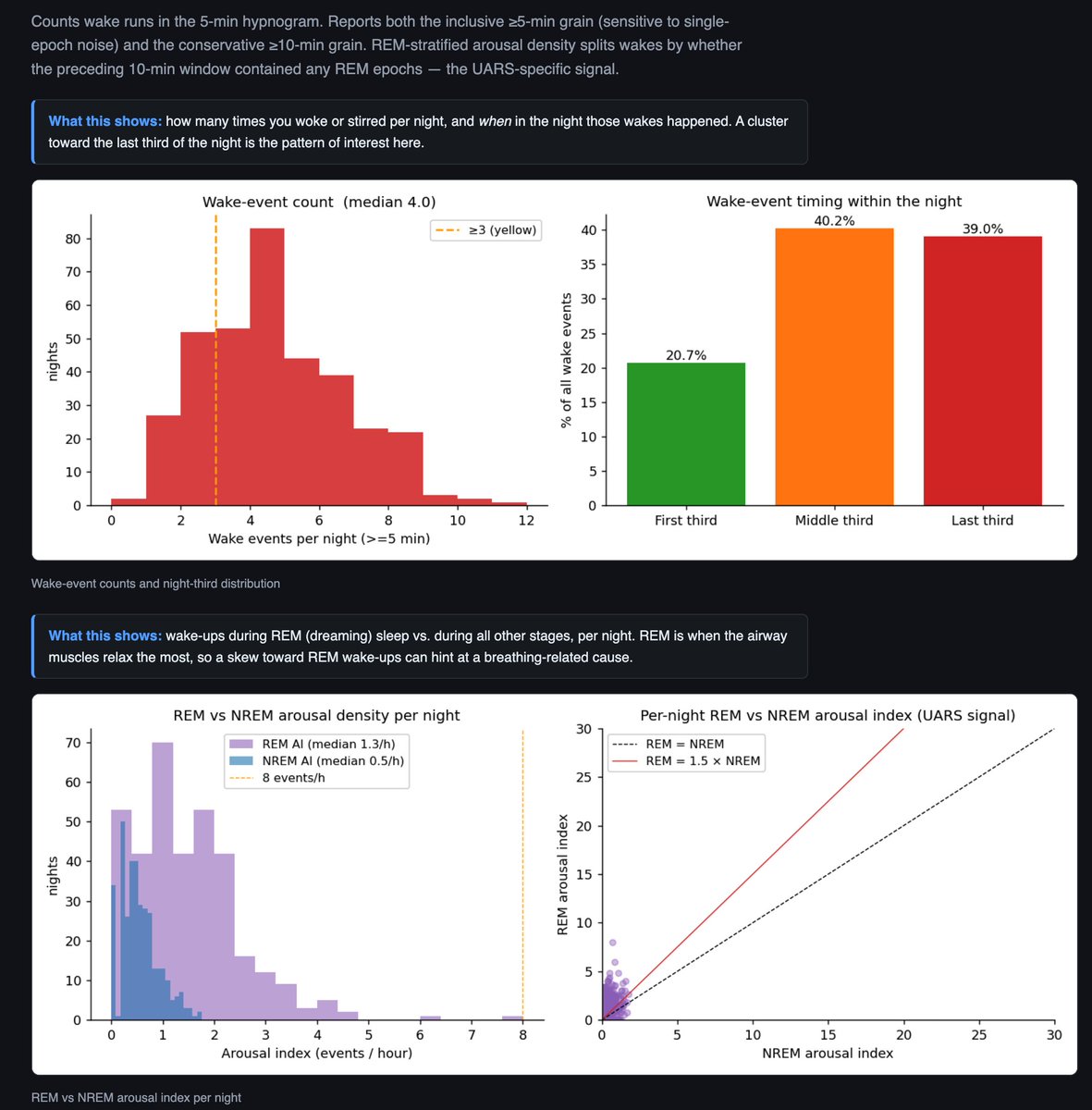
So I busted out Claude Code, since I would want Claude to have maximum access to tools for this. I had it figure out how to pull from the Oura API (using personal access tokens, ask your Claude for instructions) and pull down all of my sleep data. I then had it use Python to statistically analyze everything (heart rate, SpO2, wake events, sleep stages), test multiple hypotheses, and generate a dashboard full of charts, while explaining everything it was doing so I could follow along.
After 30 minutes of slicing and dicing, a hypothesis emerged: UARS, upper-airway resistance syndrome, a mild cousin of sleep apnea.
No way. Sleep apnea?
I don't snore, I'm not overweight. No way I have sleep apnea. This is the first time I've ever heard this.
Claude walked me through it. UARS is milder than full-blown sleep apnea. In UARS, your airway doesn't collapse, it just narrows, particularly in REM sleep when the muscles in your throat relax. This causes your oxygen to gradually drift down over the course of REM sleep, until your brain yanks you awake before it becomes a full apnea. In your 20s the muscle tone in your throat keeps your airway open, but as you age that tone slackens, which can trigger this effect, fragmenting your sleep.
It looks exactly like this: waking up disproportionately during REM sleep multiple times a night. That actually tracked; I realized that almost every time I woke up in the middle of the night, it was out of a dream.
Claude was clear that the Oura ring data was not dispositive, because it wasn't able to measure breathing disruptions per hour (RDI), which you'd get in a sleep study. Do a sleep study, get the RDI number, and then we'll have our smoking gun.
It pointed me to an FDA-approved at-home sleep study device (with finger probe and chest sensor) called WatchPAT for $200. After one night of recording, I got the results back to the next day:
Mild sleep apnea, likely UARS. Dammit Claude. Nicely done.
Here's the takeaway, and why I'm posting this: I'm a textbook "no way it's me" case. UARS often shows up in healthy, normal weight people who don't fit the apnea stereotype, and often gets missed for that reason.
It's easy to attribute poor sleep to insomnia or anxiety or stress, and there's an infinite supply of influencers who will pitch you reasons to feel like your sleep ritual is the problem. If you just got that red light glasses, or the blackout curtains, or took that sleeping peptide, maybe you'd be able to fix your sleep.
Roughly 10-15% of adults have some form of sleep apnea, and vast majority of them (80% ) are undiagnosed. If this might be you, run your fitness tracker data through your neighborhood frontier LLM. You'll thank yourself later.
183
61
1,457
162,167
Long on Minswap retweeted

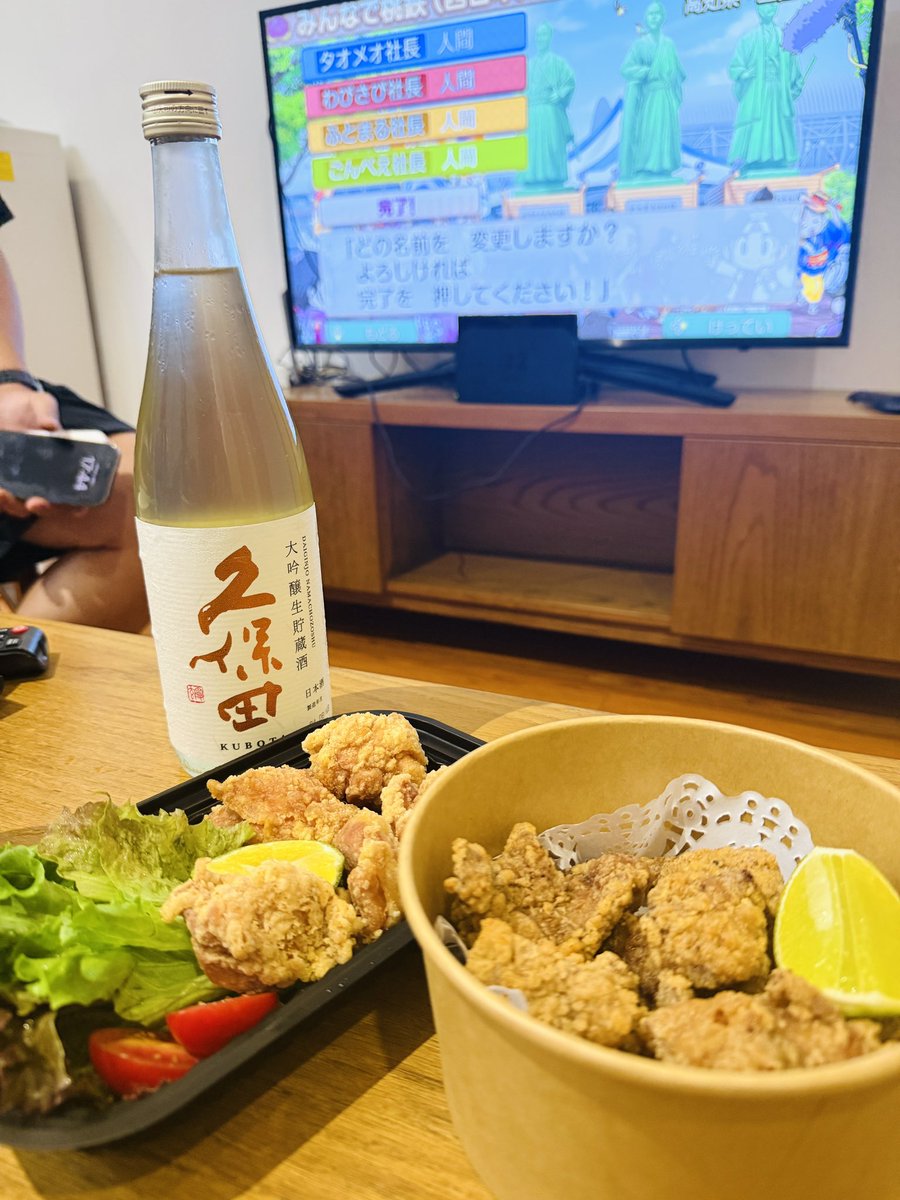
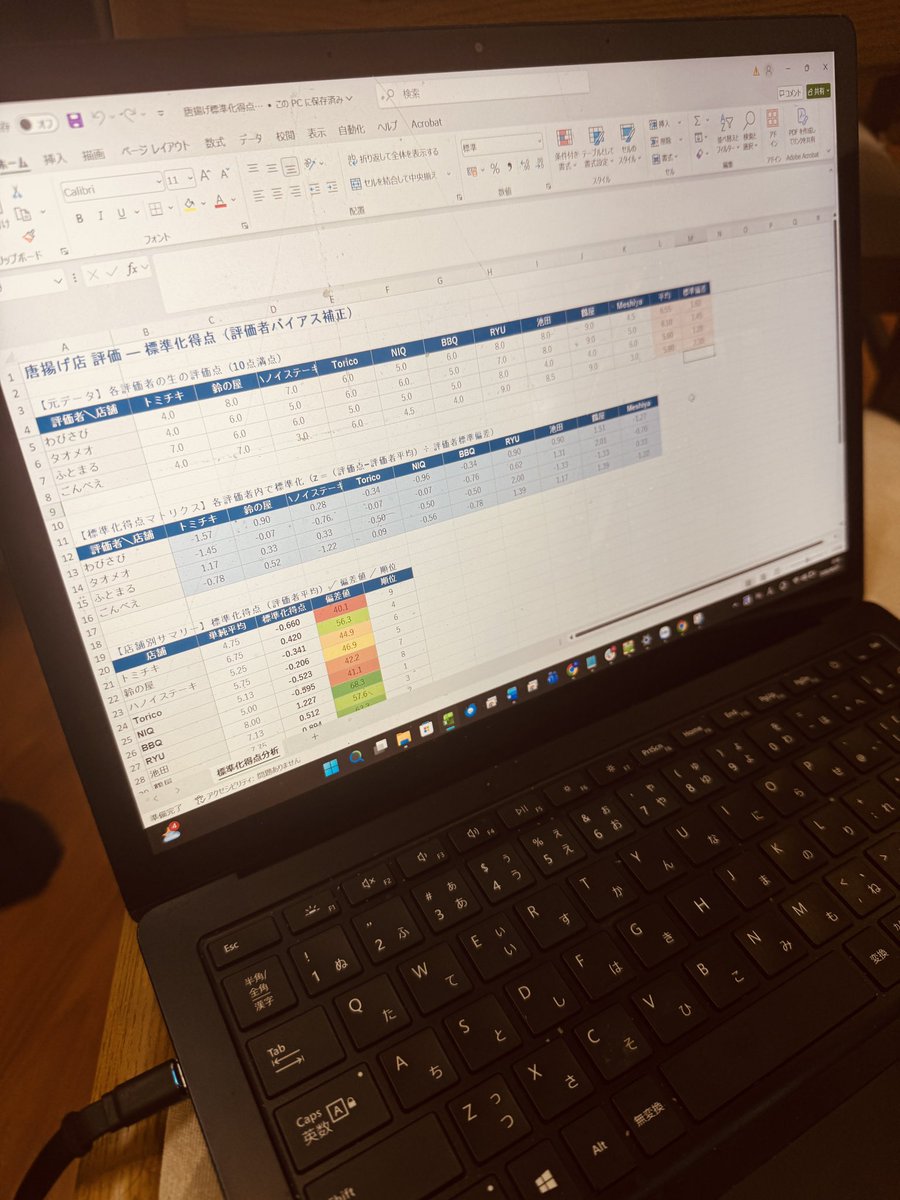
ハノイで”俺たちの唐揚げフェス”開催
ルールはデリバリーできる店限定
10店舗超を取り寄せ、男子4人で本気の食べ比べ
評価シート作成→点数化→評価者バイアス補正→最後は統計処理
1位:餃子 龍
2位:鶴屋
3位:和食いけだ
大人4人、本気で遊んだぜ!


3
5
76
9,745

May 25
so true, and I'm getting allergic to it, kinda like the uncanny valley of texts
May 25

A lot of the emails I get from founders are now written in a hard-hitting journalistic style. I know they're written by AI, because no founder ever wrote this way before. And once you realize something is written by AI, it's hard not to ignore it.
4
388
May 17
great idea

Pay your shipper with crypto!
Most online shops in Vietnam let you pay on delivery
Step 1: Choose "cash on delivery" at checkout
Step 2: Scan. Pay. Done.
7
223
Long on Minswap retweeted

Pyth Pro is live on Cardano.
The pricing layer for perpetuals, synthetics, lending, RWAs, and equity-linked products, now available to every Cardano builder.
Our technical team supported the architectural and structuring phase of development, working alongside @IntersectMBO.
May 6

NEWS: Cardano DeFi just got the pricing layer it's been waiting for.
Pyth Pro is live on @Cardano 🧵
25
93
548
21,575
Long on Minswap retweeted

May 4
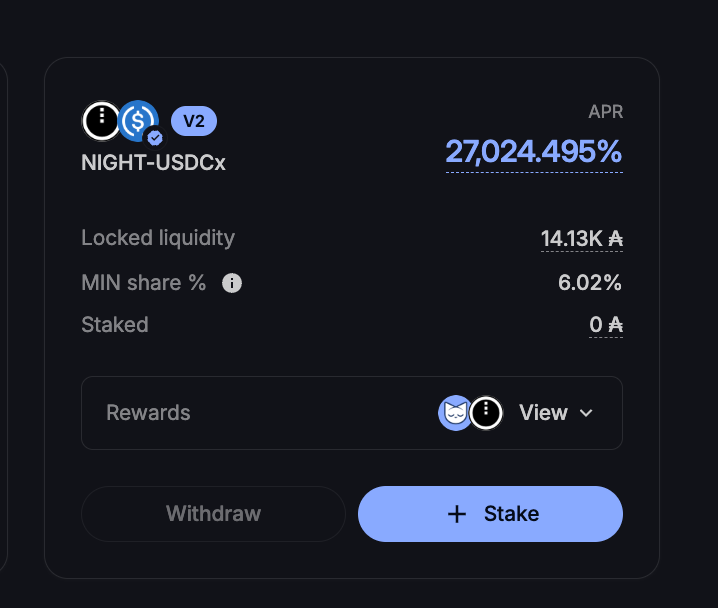
Only on Minswap: where the yield is at.
17
62
283
13,274
Long on Minswap retweeted

Apr 29
Codex with GPT 5.5 is as flawed as Claude Code with Sonet 4.7. Both are good at nailing implementations ad hoc. But the code they produce when left unattended is a disaster for long-term maintenance.
13
6
85
14,715
Apr 30
Does anyone miss the intellectual challenge of programming the old way?
2
10
389
Long on Minswap retweeted
Apr 29
Here's to $4 billion more 🍾

Congratulations to @MinswapDEX for surpassing $4 billion in on-chain trading volume.


8
34
263
6,536
Apr 26
What I felt recently is that AI makes new software less secured (because of vibecoding) but it also makes hackers way more productive (too easy to automate hacking)
It's a negative relationship, I think we need to solve this before making vibecoding (I mean AI-assisted software development) a real thing.
2
12
727
Apr 26
HCMC economy is very interesting
On one side, you have the charity meals and charity ice tea on the street for laborers and drivers
One the other side, you have to pay for the smallest thing in a restaurant like extra rice, napkin,... (those would be free in Hanoi)

The banner of a charity-run, near-zero cost restaurant ($0.08 per meal) in Ho Chi Minh City reads: “For people whose incomes are yet to be high”. Moreover, “Don’t be shy, come and eat, dear uncles and aunties!”. These times are getting more difficult for most working people.

5
453

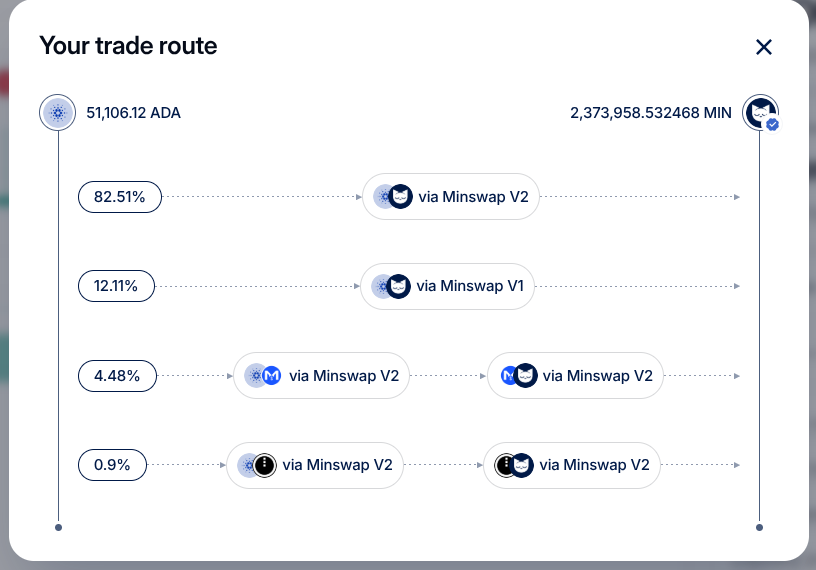
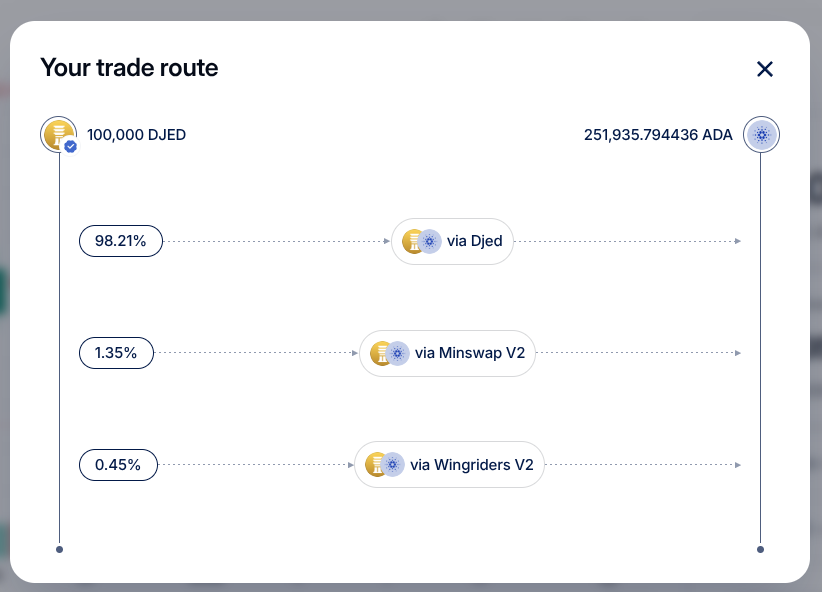
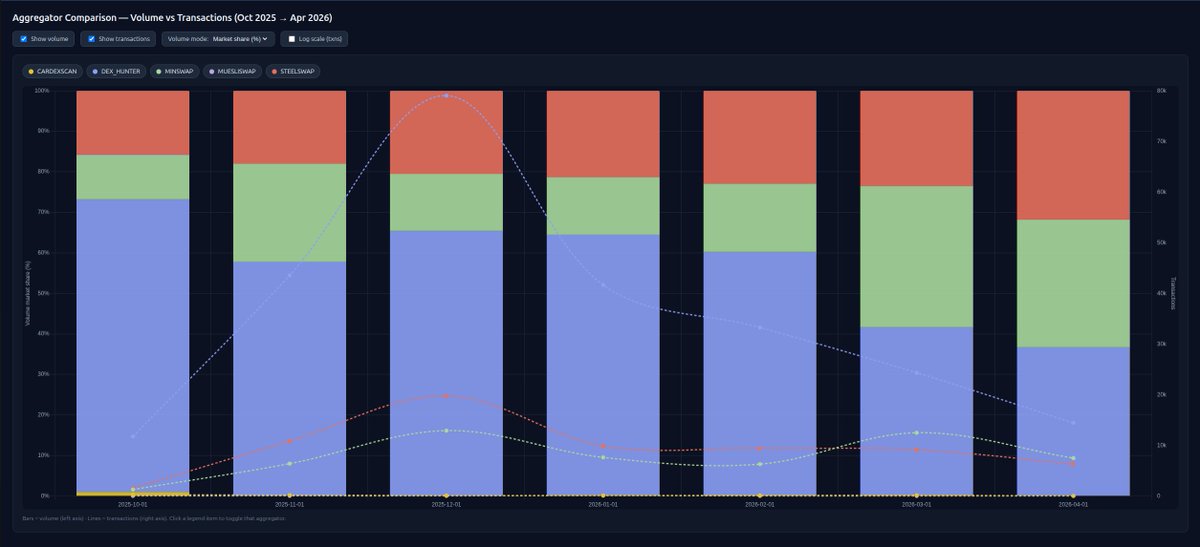
@MinswapDEX aggregator is now closing in on the #1.
🥇 #1: 36%
🥈 Minswap: 32%
Since launch:
📊 11% → 32% share
🔁 6x transactions
👛 5x wallets
⚡ Non-atomic routing.
More protocols. Deeper liquidity. Better prices.
One swap. Every DEX.
2
8
19
3,628
Apr 22
Cardano Governance needs a shift. I became a DRep to advocate for
1) mechanisms for driving transaction volume
2) better financial oversight and austerity
3) proven practice over unproven theory
4) lean and efficient organizational structures
5) increase Cardano competitiveness vs. others
I believe its best for Minswap stakeholders. I appreciate all support.
Apr 22

The Proposal to have Long as DRep of the Minswap protocol is being voted on.
2 days to vote cast your vote now ↓
5
7
34
2,072

Apr 21
Software Engineering in 2026
Guy: Hey can you review my (AI-assisted) PR?
Me: Sure, here is my (AI-generated) findings
Guy: Nice job, can you check my new (AI-coded) commits?
Me: Ok, it looks (AI-approved) solid
1
8
450
Long on Minswap retweeted

Fransız bir Yu-Gi-Oh! hayranı, 7 ayda kendi başına 3D düello sistemi geliştirdi.
• 3600 kartı tanıyan çipler yaptı
• Kart koyunca 3D canavar sahaya geliyor
• Çağırma anında kamera otomatik değişiyor
Community note
To provide more context, his pseudo is SuperZouloux. He created this project in 2022.
Then few months after releasing it, Konami do not want to accept his project and decided banning him for using it.
(He can't use it anymore on stream or for creating content)
x.com/Superzouloux/s…
67
1,199
8,078
2,053,188
Long on Minswap retweeted

Apr 15
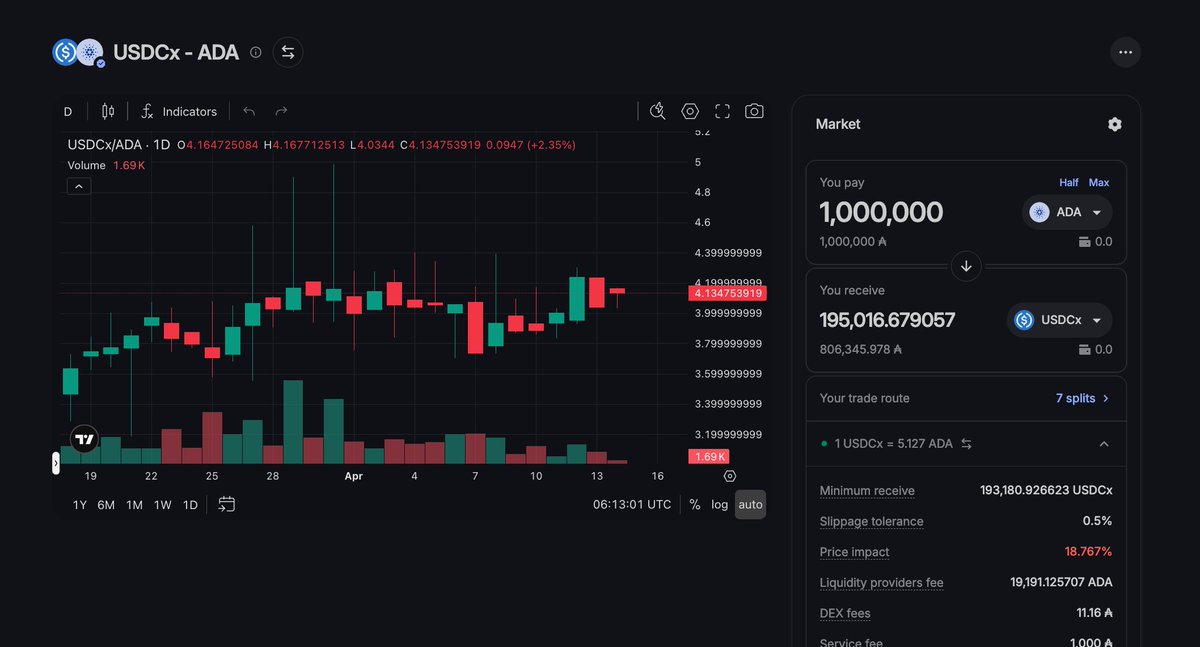
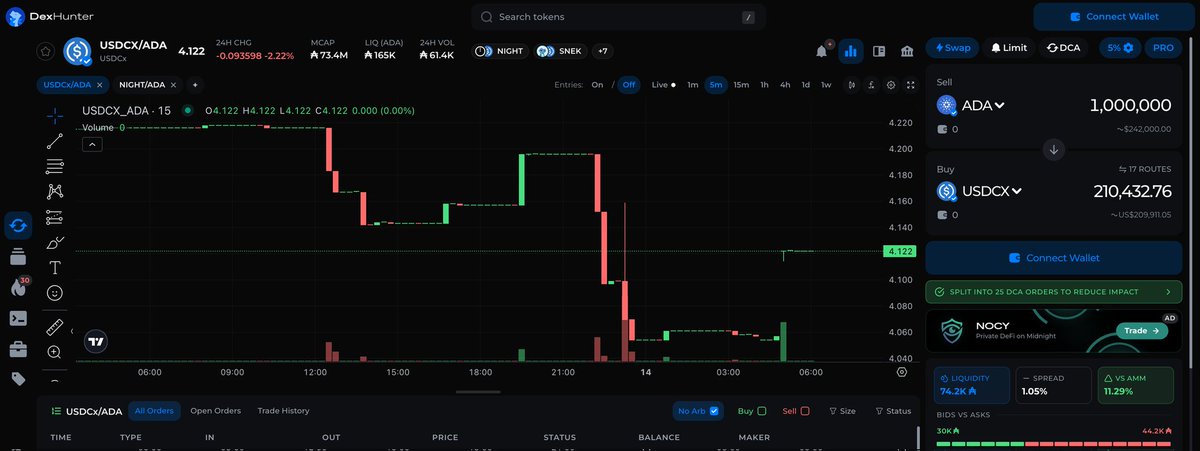
Some “best price” routes you see on aggregators aren’t actually executable.
What’s happening? --> algo reuses the same pool across multiple hops.
Looks great in the UI, but breaks in reality
The first trade moves the pool → the second leg is now mispriced → execution fails or slips hard.
If your quote depends on stale pool states, it’s not a quote.
Time to re-check your aggregator.
3
3
21
1,693