
Views are my own. Human rights fundamentalist. RT does not necessarily mean approval. Vi
Joined February 2011
- Tweets 148,359
- Following 4,863
- Followers 4,594
- Likes 69,477
733 Photos and videos

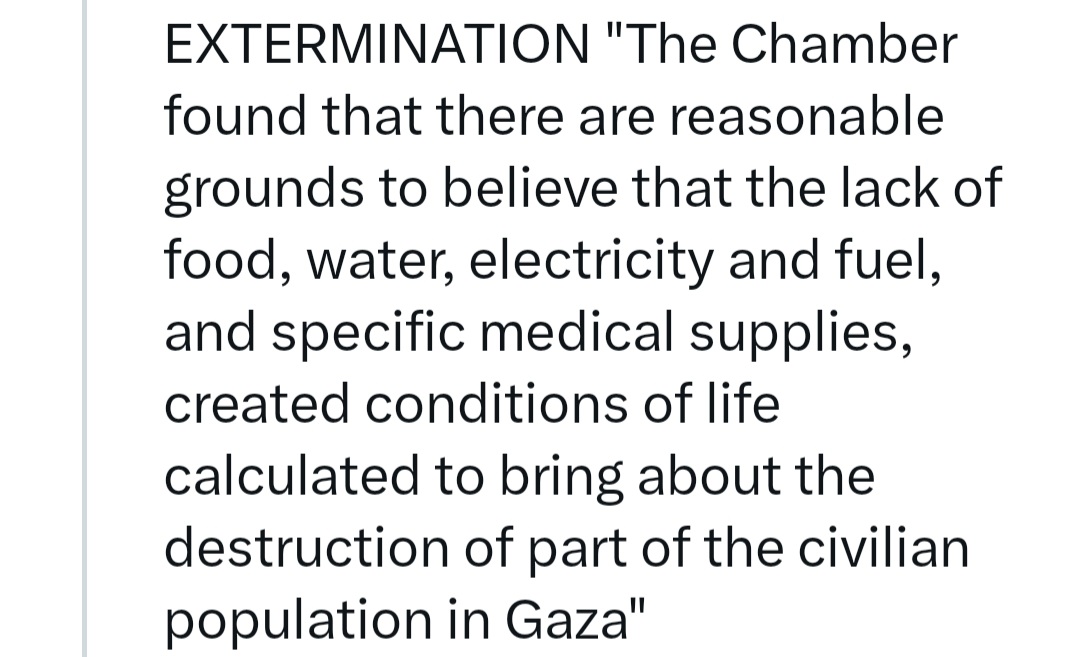
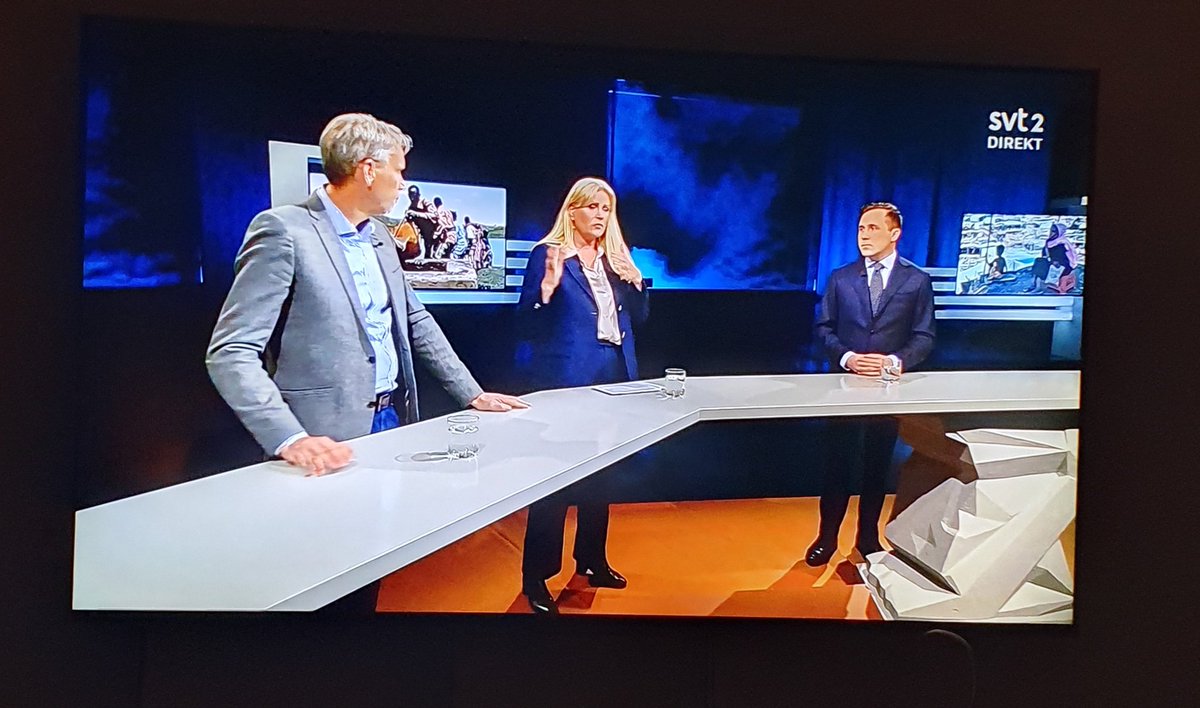
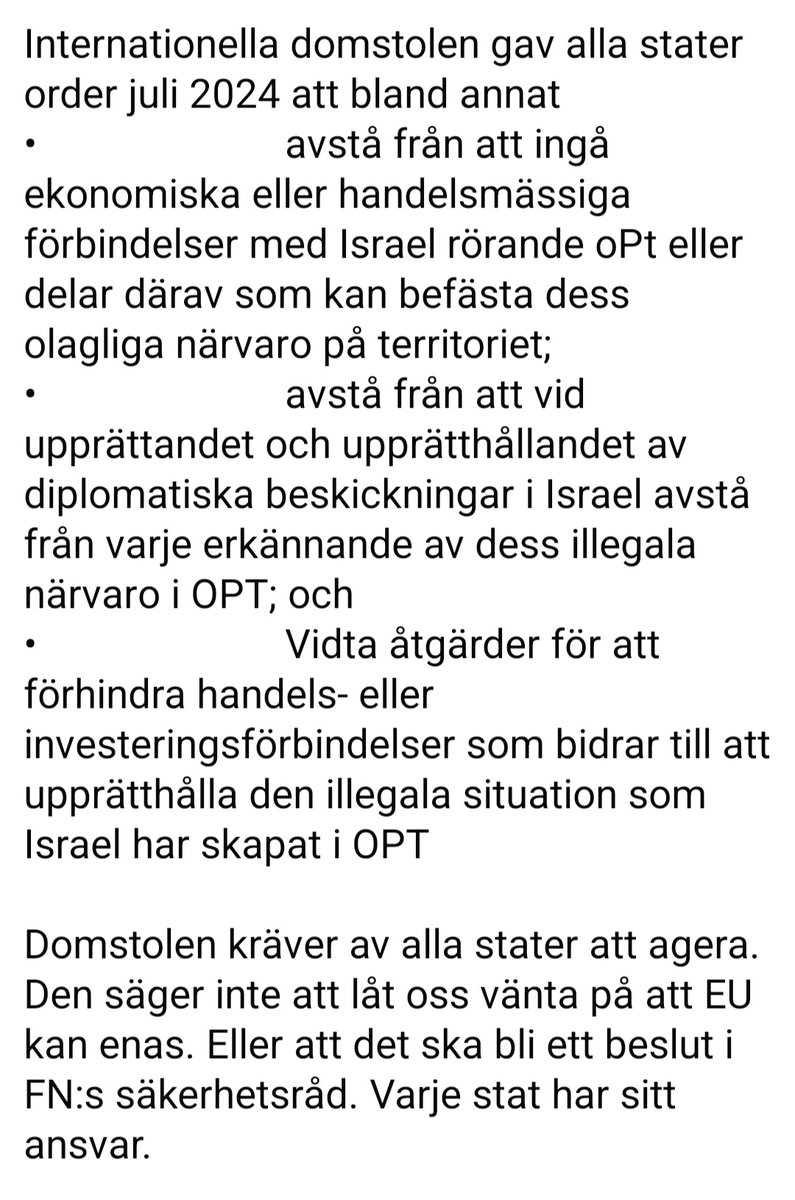
Magnus Walan retweeted

7/9 Again, wrong, sorry: the basis of South Africa's genocide case vs Israel is.... genocide. Not apartheid. Very different crimes.
And very different proceedings. This one, on genocide, will take years. The other one above, on illegal occupation and apartheid, over and done.

2
19
87
1,544
Magnus Walan retweeted
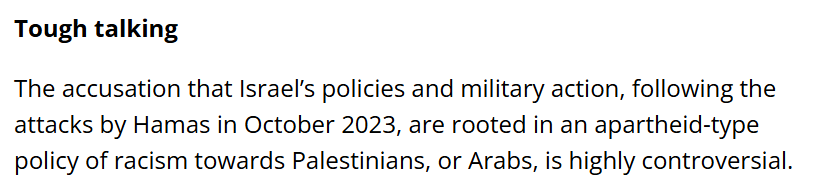
4/9 Also, "accusations" of apartheid far pre-date Oct 2023:
🇵🇸 NGO @alhaq_org, 2009: alhaq.org/media/15340.html
🇮🇱 NGO @btselem, 2021: btselem.org/publications/ful…
@hrw, 21: hrw.org/report/2021/04/27/th…
@amnesty, 22: amnesty.org/en/latest/campai…
@MichaelLynk5, 22: ohchr.org/en/press-releases/…
Etc
1
12
65
1,597
Magnus Walan retweeted
Mr @ArminLaschet,
You seem to have learned from the recent UNSC humiliation just as much as you have learned from history.
@kajakallas would be right to denounce Israel’s apartheid. And so should you - if you care about international law, that is. ⤵️
x.com/clafrancavilla/status/…

Dear @Euractiv,
Apartheid is a crime, not a comparison. And @kajakallas would be right to denounce Israel's.
As I noticed some gross inaccuracies in your piece (it happens, doesn't it), I took the freedom to unpack a few things for you. No need to thank me.
Here you go 🧵1/9
11
44
440
Magnus Walan retweeted

Jun 11
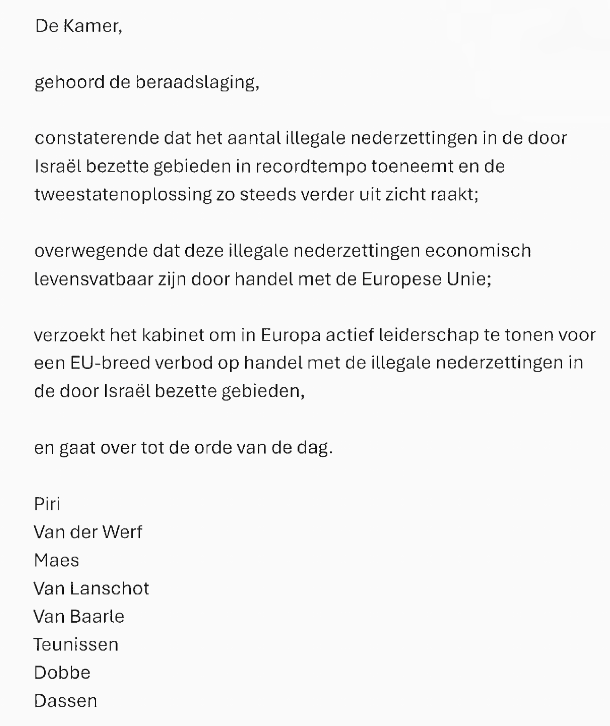
🇳🇱Dutch parliament just adopted a motion calling on the Netherlands "to show active leadership in Europe for an EU-wide ban on trade with the illegal settlements in the territories occupied by Israel"
Backed by big majority w/ all gov coalition parties incl. very pro-Israel VVD
10
162
340
8,226
Magnus Walan retweeted
Jun 11
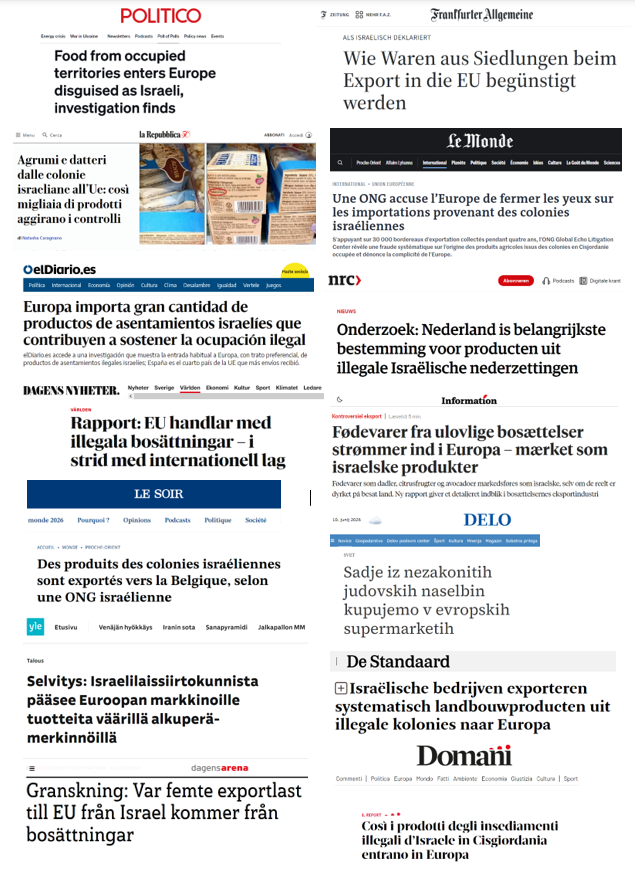
🧵New report by Global Echo, exposing EU imports of agricultural goods from Israel's illegal settlements in breach of EU rules, makes waves in European media.👇
The findings strengthen the calls for the EU to end imports of these products, as required by international law.
13
236
307
21,180
Magnus Walan retweeted

Jun 8
Breaking news: A major earthquake off the coast of Mindanao in the Philippines triggered tsunami warnings around the Pacific region.
nyti.ms/4eeCiv9
41
276
702
160,068
Magnus Walan retweeted
Jun 8
Breaking news: Israel said it had struck military targets in Iran, hours after Iran retaliated for an Israeli attack in Lebanon.
nyti.ms/4vxGDjZ
80
148
589
105,905
Magnus Walan retweeted

Liar. Pretend to be shocked.
"In Judea and Samaria and along the seam line, the IDF, ISA, and the Israel Police foil hundreds of attacks every year, though unfortunately not all of them".
The terror engulfing the West Bank is overwhelmingly that of the settler terrorist vigilantes.
The IDF, ISA, and Police do not lift a finger to prevent it. On the contrary. they are transforming their role from that of voyeurs in a specator sport into protagonists in a bloody participation sport.
And that is exactly what Netsnyshu wants.

Prime Minister Benjamin Netanyahu, at the Start of the Government Meeting: :
"We are fighting terrorism on all fronts. In Judea and Samaria and along the seam line, the IDF, ISA and the Israel Police foil hundreds of attacks every year, though unfortunately not all of them. This morning, an abhorrent terrorist set out, reached Kochav Yair, and unfortunately managed to murder an Israeli citizen and wound others before being neutralized. First and foremost, I praise the rapid-response teams that acted immediately against the terrorists. I praise the officers of the Israel Police who neutralized the terrorist and also apprehended his accomplice.
In the Gaza Strip, we are squeezing Hamas from all sides. We currently hold over 60% of the Strip's territory, and we will soon reach 70%. We are not allowing them to rearm or harm us, and we are also eliminating their senior commanders.
In Lebanon, our forces have eliminated 350 terrorists in the past week alone. They captured the Beaufort Ridge, where they discovered a massive underground infrastructure. We are completing the elimination of the terrorist villages adjacent to our border. We are striking them very hard, and we know that Hezbollah is on the run. We will not allow firing at our territory or our communities, and we will act accordingly."
3
29
52
4,459
Magnus Walan retweeted

Jun 6
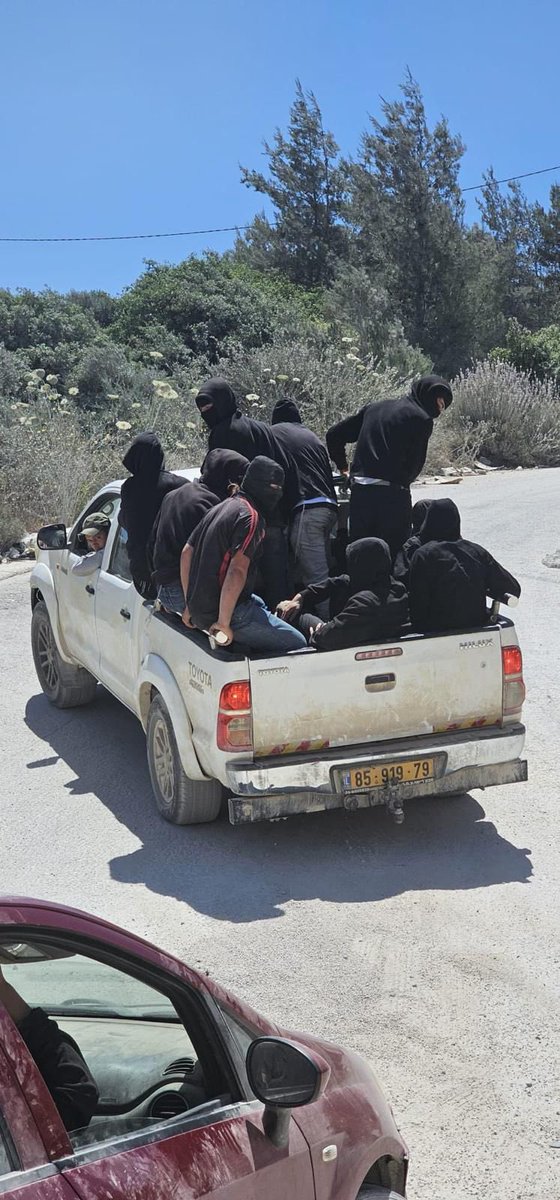
A Jewish lynch mob has raided the Palestinian village of Huwara this morning, assaulting two Palestinians.
This, despite appearances, is not a story of "extremism". To describe it as such is to obscure the legal reality.
Settler violence in the occupied Palestinian territory has long been directed by organs of the State. The perpetrators operate as auxiliary militias, at times in civilian clothes, at times in uniform, but increasingly with functions that blur any meaningful distinction.
From that reality flows a conclusion that is as simple as it is complex. Under international law, responsibility lies not only with the individuals who wield the firearms, but with the occupying Power that supports their actions.
The remedy is not another condemnation. It is compliance with the law. As the International Court of Justice has made clear, Israel's continued presence in the occupied Palestinian territory is unlawful. The obligation is to bring that presence to an end, completely, unconditionally, and without delay.
80
1,184
1,938
285,395
Magnus Walan retweeted
Jun 7
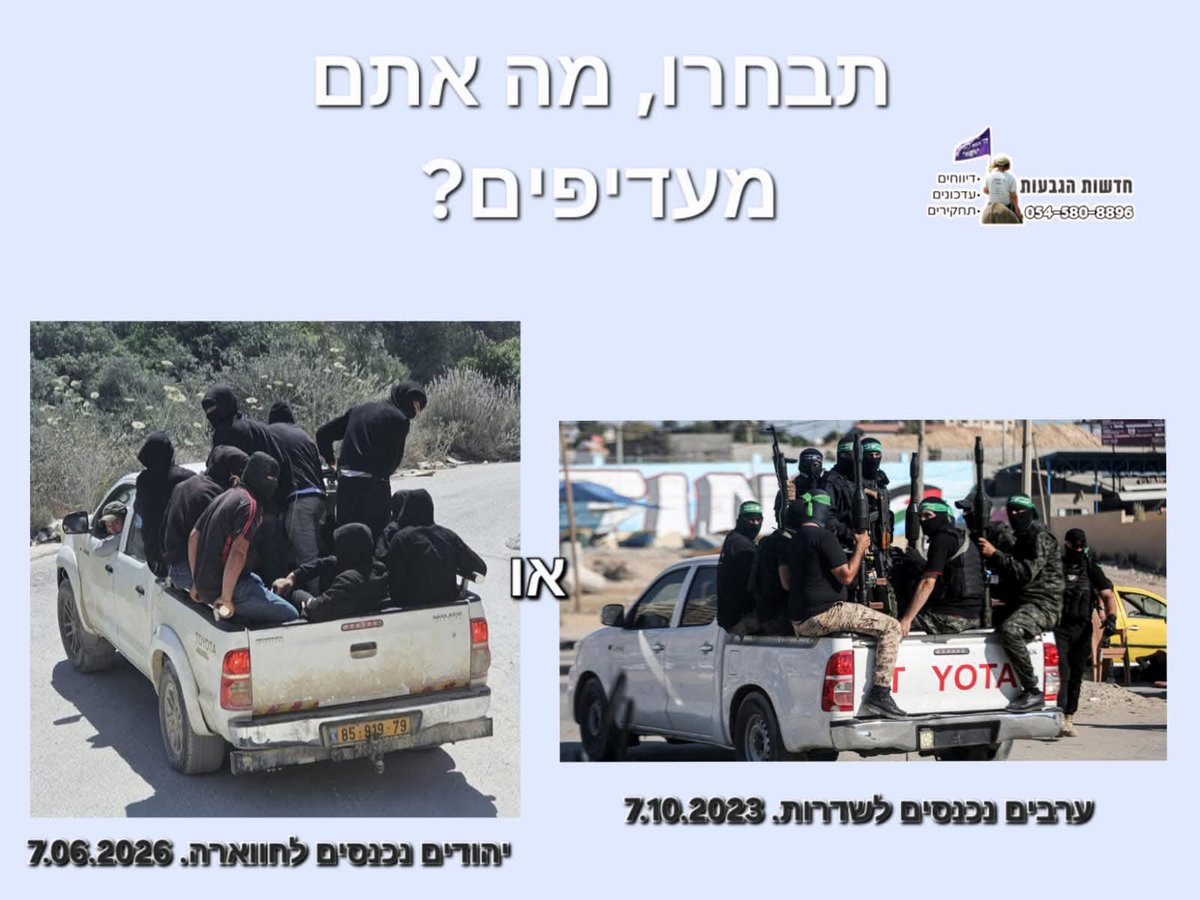
On settlers' social media, they draw the comparison themselves: "Which would you prefer, Hamas militants raiding Sderot on 7 October, or Israeli settlers raiding a Palestinian town?"
The comparison is revealing, though perhaps not in the way they intend. International law does not turn on nationality or political allegiance. It turns on conduct. Civilians who directly participate in hostilities lose, for such time as they do so, the protection afforded to them as civilians. The rule applies equally to Hamas militants crossing into Israel and to Israeli settlers who organize, arm themselves, and raid Palestinian communities.
The legal consequences are neither novel nor controversial. They are the same consequences that flow from any direct participation in hostilities. The law is indifferent to the flag under which the civilian acts. It asks only what was done, by whom, and with what effect.
That some settlers now embrace the analogy is striking. In doing so, they may have acknowledged more than they intended.
6
91
210
4,979
Magnus Walan retweeted
Jun 5
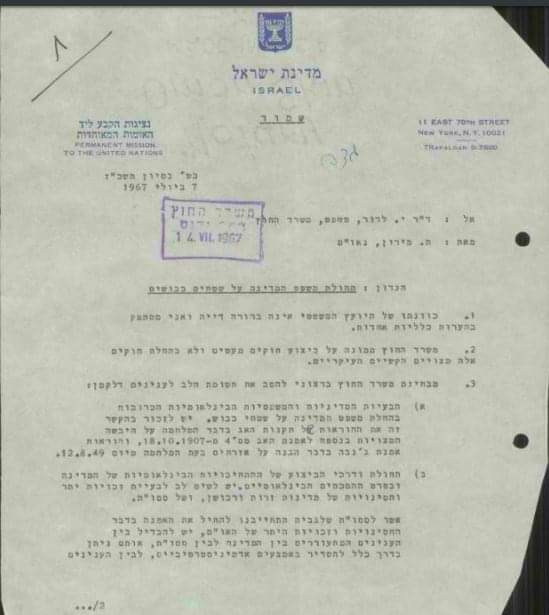
On 5 June 1967, Israel launched a war of aggression against Egypt, Syria and Jordan, and came to occupy the West Bank, including East Jerusalem, and Gaza, territory intended to form part of a future Palestinian State.
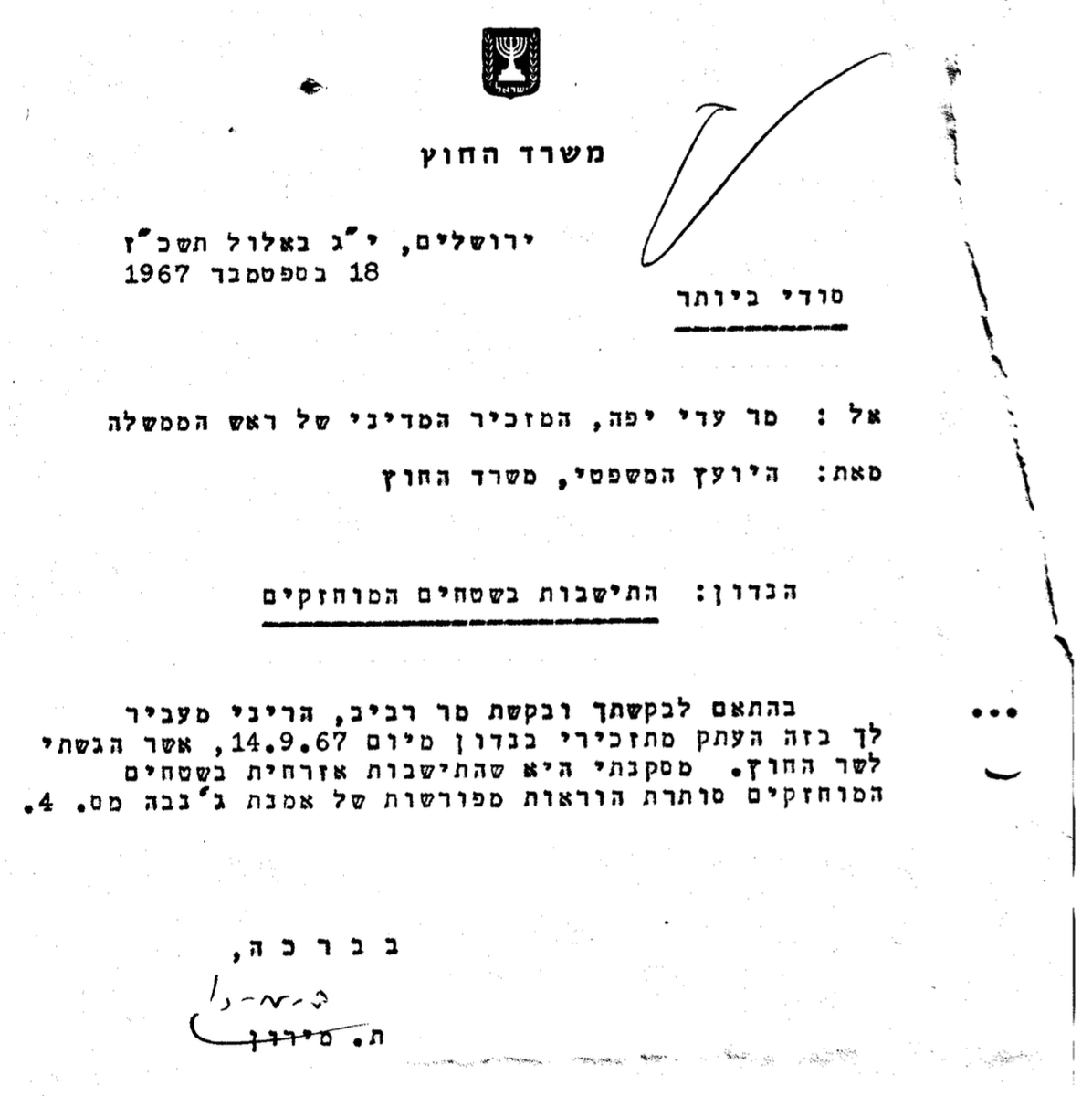
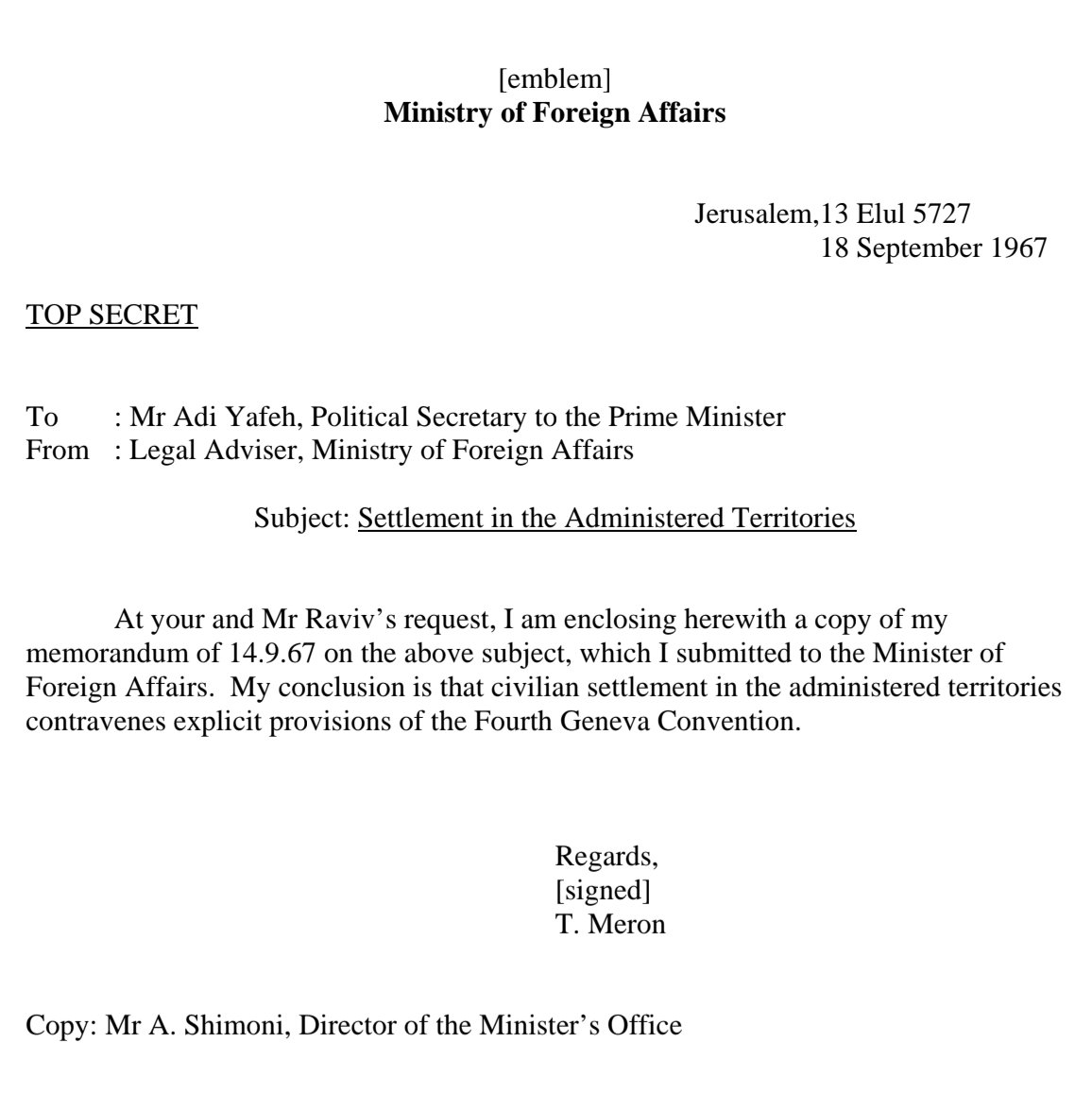
Within weeks, a young legal adviser at Israel's Foreign Ministry, Theodor Meron, set out the legal consequences with remarkable clarity. In a memorandum I recovered during archival research in 2019, he affirmed the applicability of the 1907 Hague Regulations and the Fourth Geneva Convention to the newly occupied territories, and recalled the prohibition on annexation.
Two months later, writing to Prime Minister Levi Eshkol, Meron advised that the establishment of civilian settlements in the occupied territories would be, in his words, in "contravention of explicit provisions" of international humanitarian law.
History has a habit of leaving breadcrumbs. Meron would later become President of the International Criminal Tribunal for the former Yugoslavia, and decades later advised the Prosecutor of the International Criminal Court on atrocity crimes committed by Netanyahu and others in Gaza. The legal position he articulated in 1967 has not changed. What has changed is that nearly six decades later, the warnings were ignored, the occupation entrenched and metastasized into unlawful presence, and the consequences are before us all.
13
350
544
18,277
Magnus Walan retweeted

Jun 4
Denmark's new government says it will push for EU restrictions on trade in Israeli settlement goods, further sanctions against extremist settlers and their supporters, and the "necessary consequences" from Israel's violation of the Association Agreement euractiv.com/content/uploads…
1
42
88
7,100
Magnus Walan retweeted
Now we know who in the EU is protecting even Ben-Gvir and Smotrich from sanctions.
At yesterday’s EU ambassadors meeting, according to @destandaard:
🇩🇪Germany insisted on leaving out Smotrich, limiting it to Ben-Gvir.
🇨🇿Czech Rep. alone against sanctioning even Ben-Gvir.
98
1,629
4,742
206,518
Magnus Walan retweeted
May 30
Let us be clear. The report “Laundering Propaganda” is not a bonafide assessment of humanitarian reporting in Gaza. It is an Israeli State-authored "counter-narrative," produced in the midst of ongoing proceedings before the International Court of Justice @CIJ_ICJ, mounting international scrutiny of Israel’s conduct in the occupied Palestinian territory, and unrefuted evidence of catastrophic humanitarian harm in Gaza.
Its central argument is that @UN agencies, humanitarian actors, and independent experts systematically manipulated information in service of Hamas. Yet the report fails to demonstrate the one thing required to sustain so grave an allegation: evidence of coordinated bad faith. Instead, it proceeds by insinuation, conflating the inevitable imperfections of data collection during hostilities with deliberate institutional deceit. Humanitarian agencies operating in a besieged and devastated territory will necessarily rely, at least in part, on local sources, including health authorities. That is not “laundering propaganda.” It is how humanitarian operations function in modern armed conflict. The relevant question is whether information is transparently sourced, caveated, and revised when necessary, not whether it originates from actors Israel distrusts.
More troubling is the report’s profoundly distorted understanding of neutrality in international humanitarian law. It repeatedly suggests that humanitarian actors lose neutrality when they report civilian deaths, starvation risks, attacks on civilian objects including hospitals, forcible transfer of protected persons, or restrictions on humanitarian access without simultaneously foregrounding Hamas conduct. That proposition has no basis in the law governing humanitarian action. Neutrality does not require silence in the face of human suffering, nor does impartiality require the artificial balancing of every factual statement concerning civilian harm.
The report also proceeds from an apparent assumption that Hamas violations materially dilute Israel’s own legal obligations. They do not. Even where Hamas unlawfully embeds itself among civilians or violates the customary rules of war, Israel remains fully bound by the principles of military necessity, distinction, proportionality, precautions in attack, and by its obligations as occupying Power under the Fourth Geneva Convention, including the duty to facilitate humanitarian relief.
International humanitarian law is not reciprocal. One party’s violations do not license the other’s.
The report is perhaps most revealing for what it omits. There is scarcely meaningful engagement with the International Court of Justice’s Advisory Opinions of 2024 and 2025, the Court’s provisional measures in South Africa v. Israel, the law of occupation, or the extensive ICRC commentary governing humanitarian access and relief operations. Nor does it seriously confront the preventive nature of famine warnings and IPC assessments, which are designed precisely to warn before mass mortality occurs. Instead, the document seeks to reframe humanitarian alarm itself as evidence of political hostility.
In that respect, the report does not read as a forensic examination of evidentiary standards. It reads as an attempt to delegitimize the institutions, legal frameworks, and humanitarian actors documenting the consequences of Israel’s conduct in Gaza, at the very moment those consequences have become impossible for much of the world to ignore.
The mask is off.
While Hamas raped and murdered innocent civilians, UN officials manipulated minds by unleashing an information war that echoed Hamas propaganda.
See the truth for yourself:
govextra.gov.il/mda/un-agenc…
12
79
153
12,519
Magnus Walan retweeted

May 28
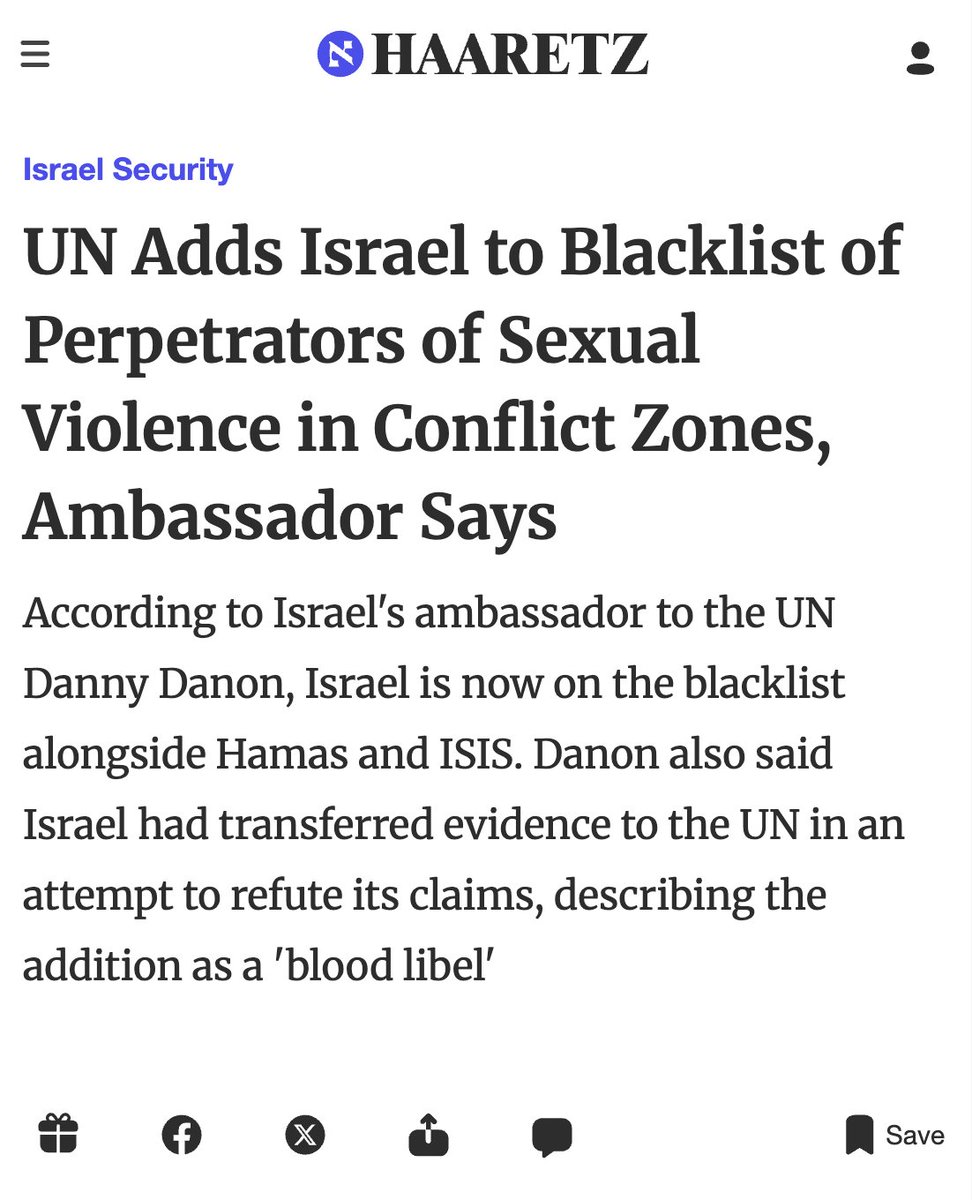
🚨Israel added to UN blacklist of perpetrators of sexual violence, a huge blow to r@pe deniers
It takes a substantial amount of evidence of systematic & widespread sexual violence for the UN Secretary General to add a gov or entity to this blacklist
Guterres has been avoiding calls to add Israel to this UN blacklist list for years, despite an abundance of cases. So the fact he accepted to add it now speaks volumes about the amount of sexual violence cases the UN has documented!
192
3,548
5,208
97,854
Magnus Walan retweeted
May 27
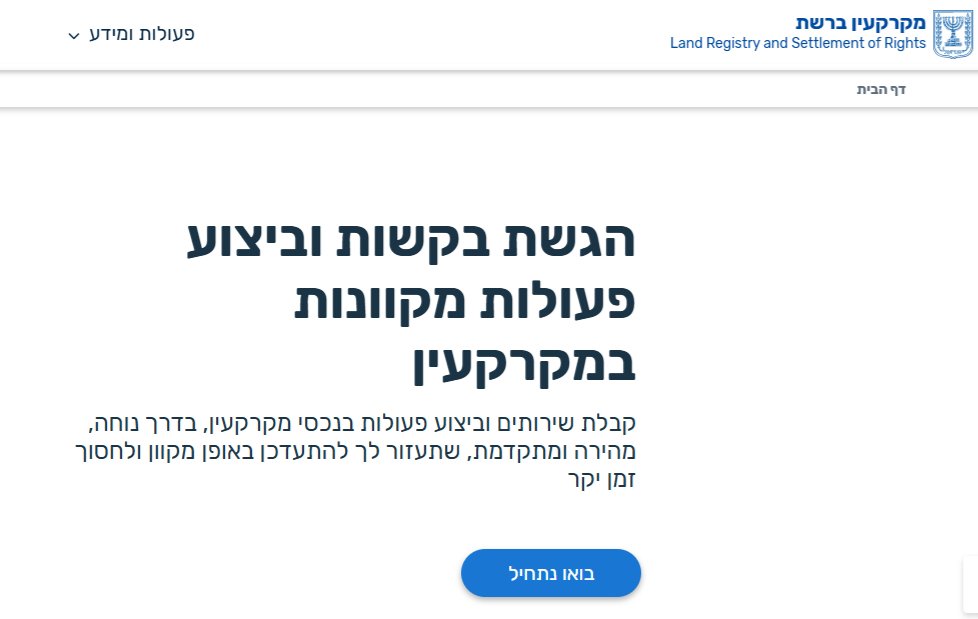
BREAKING: Israel this morning launched the “Land Registry and Settlement of Rights” online system for the occupied State of Palestine.
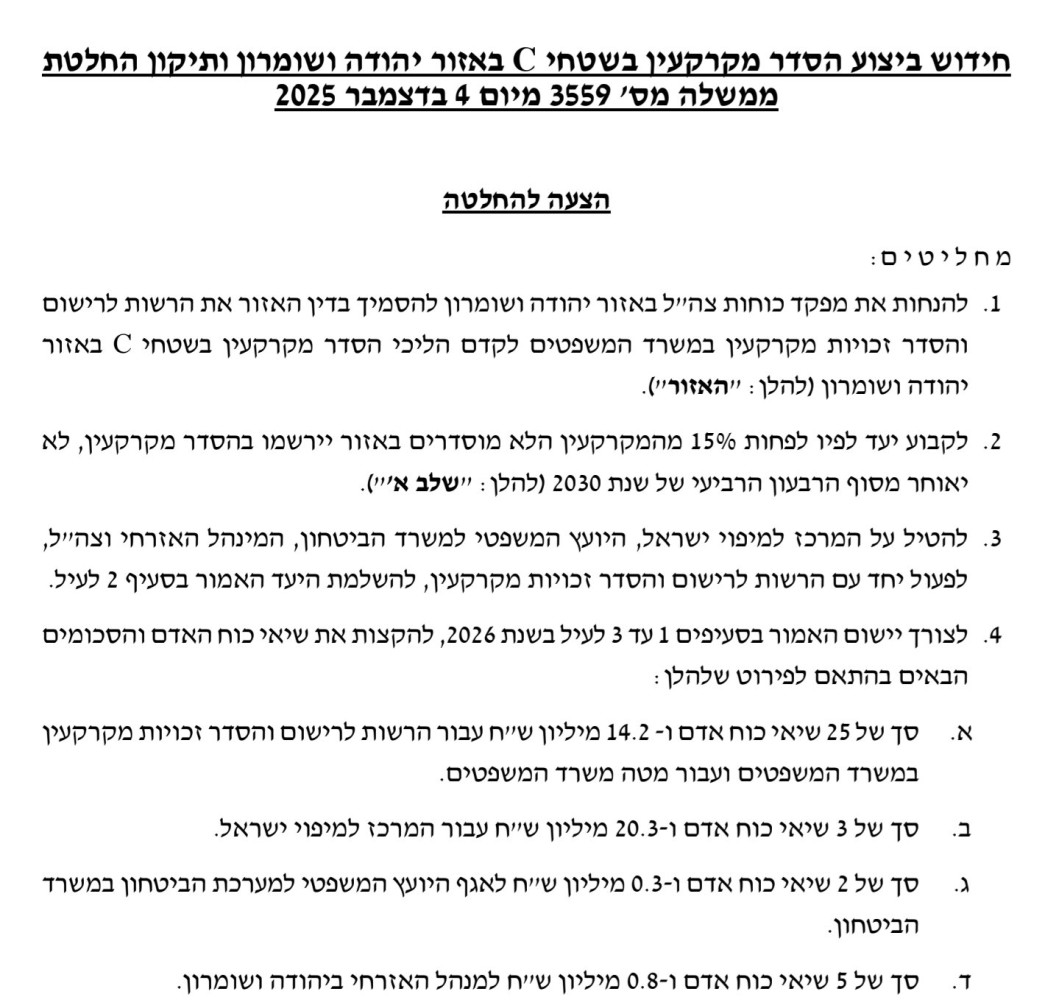
In May 2025, Israel’s Security Cabinet resolved to initiate comprehensive land title settlement across the West Bank. The objective was plain: to complete the juridical and administrative annexation of occupied territory through the wholesale registration of land under Israeli authority.
Operationalized on 15 February 2026, the scheme transferred powers to the Israeli Ministry of Justice and the Survey of Israel, allocated ILS 244 million (USD 79 million), and set in motion the permanent acquisition and registration of approximately 58 per cent of Area C, some 35 per cent of the West Bank excluding East Jerusalem.
The system, codenamed “Grenade”, was launched this morning and openly endorsed by Ministers Smotrich and Strook as “a central pillar in applying sovereignty in the territory and strengthening our hold and roots in Judea and Samaria.”
The candor is striking. What was once advanced incrementally, is now pursued through digitized cadastral engineering. A land registry presented as bureaucratic modernization is, in substance, an instrument for the consolidation of unlawful territorial acquisition.
International law is neither ambiguous nor silent. An occupying Power is prohibited from annexing occupied territory, permanently appropriating public or private property outside the strict limits of military necessity, or altering the legal status of the territory under occupation. Yet this is precisely what is now occurring, in broad daylight, through administrative and technological means designed to render unlawful presence increasingly irreversible.
37
814
915
60,086
Magnus Walan retweeted

May 25
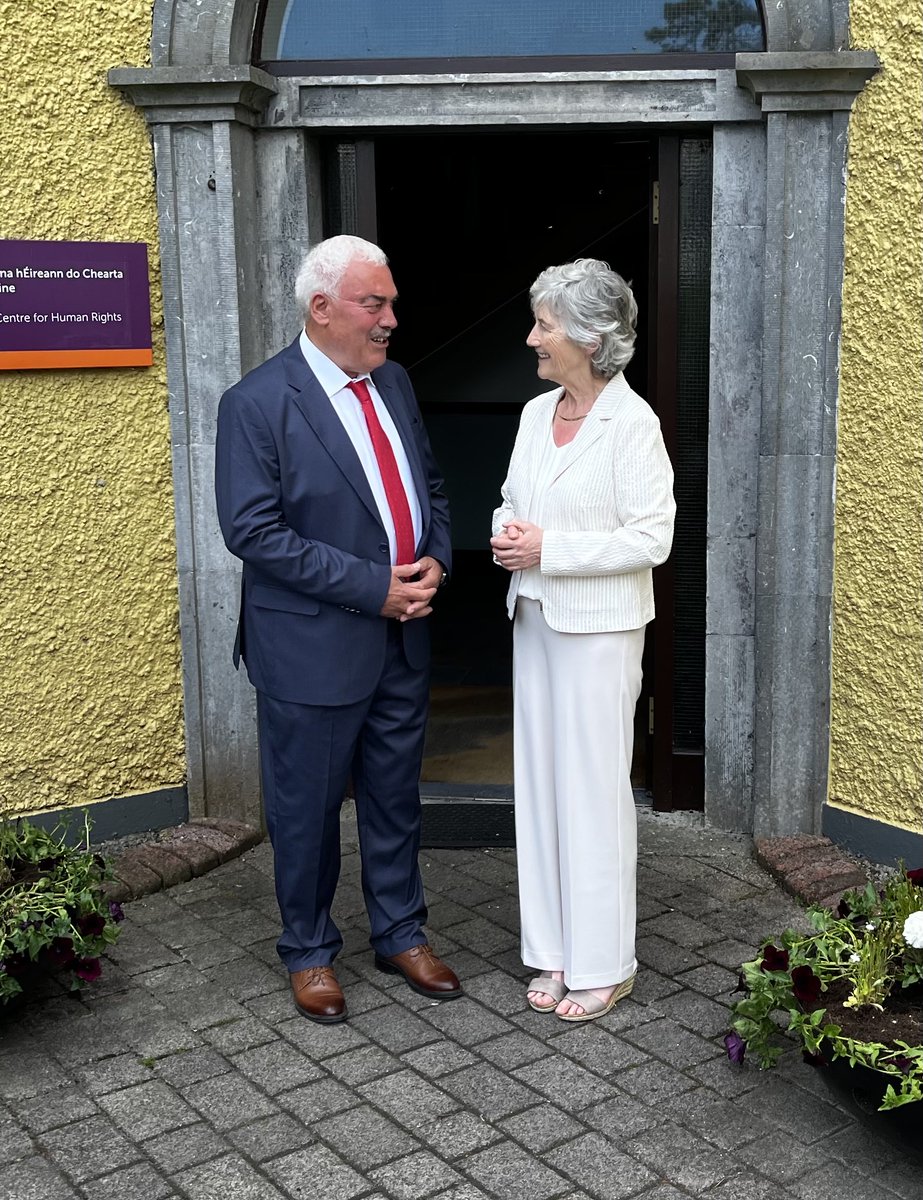
President Connolly meets Shawan Jabarin, General Secretary of Al Haq, the Palestinian human rights organisation, at the Irish Centre for Human Rights, Galway.
81
152
684
18,413
Magnus Walan retweeted
May 22
The Dutch government has just approved import ban on goods from illegal Israeli settlements.
Third EU government after Spain and Slovenia. Some more underway.
The ICJ made clear this is a legal obligation for all states under international law.
nu.nl/politiek/6396766/kabin…
98
743
1,654
245,609

May 22
RT @KatiPiri: When EU leaders can’t agree on sanctions, countries must take the lead.
Good that 🇳🇱 government (finally) presented legisla…
49
Magnus Walan retweeted

In light of the appalling circumstances of the detention and treatment of activists from the Global Sumud Flotilla, including Polish citizens, by the Israeli security services, with the consent and approval of Israel's Minister of National Security Itamar Ben-Gvir, Israel's chargé d'affaires a.i. in Warsaw has been summoned to the Polish MFA on 21 May 2026.
During the meeting, he received an official note demanding that the rights and dignity of those detained be respected and that they be treated in accordance with international standards, that an investigation be carried out into the circumstances of the incident, that the perpetrators be condemned, and that the Israeli authorities issue an apology.
Moreover, Deputy PM and FM @sikorskiradek decided to file a request with the Office for Foreigners to issue an entry ban for Israel’s Minister of National Security Itamar Ben-Gvir on the territory of the Republic of Poland due to his activity.

51
134
413
81,174