
dopamine junkie
Joined January 2021
- Tweets 454
- Following 534
- Followers 54
- Likes 5,046
9 Photos and videos











Method retweeted

18 Sep 2025
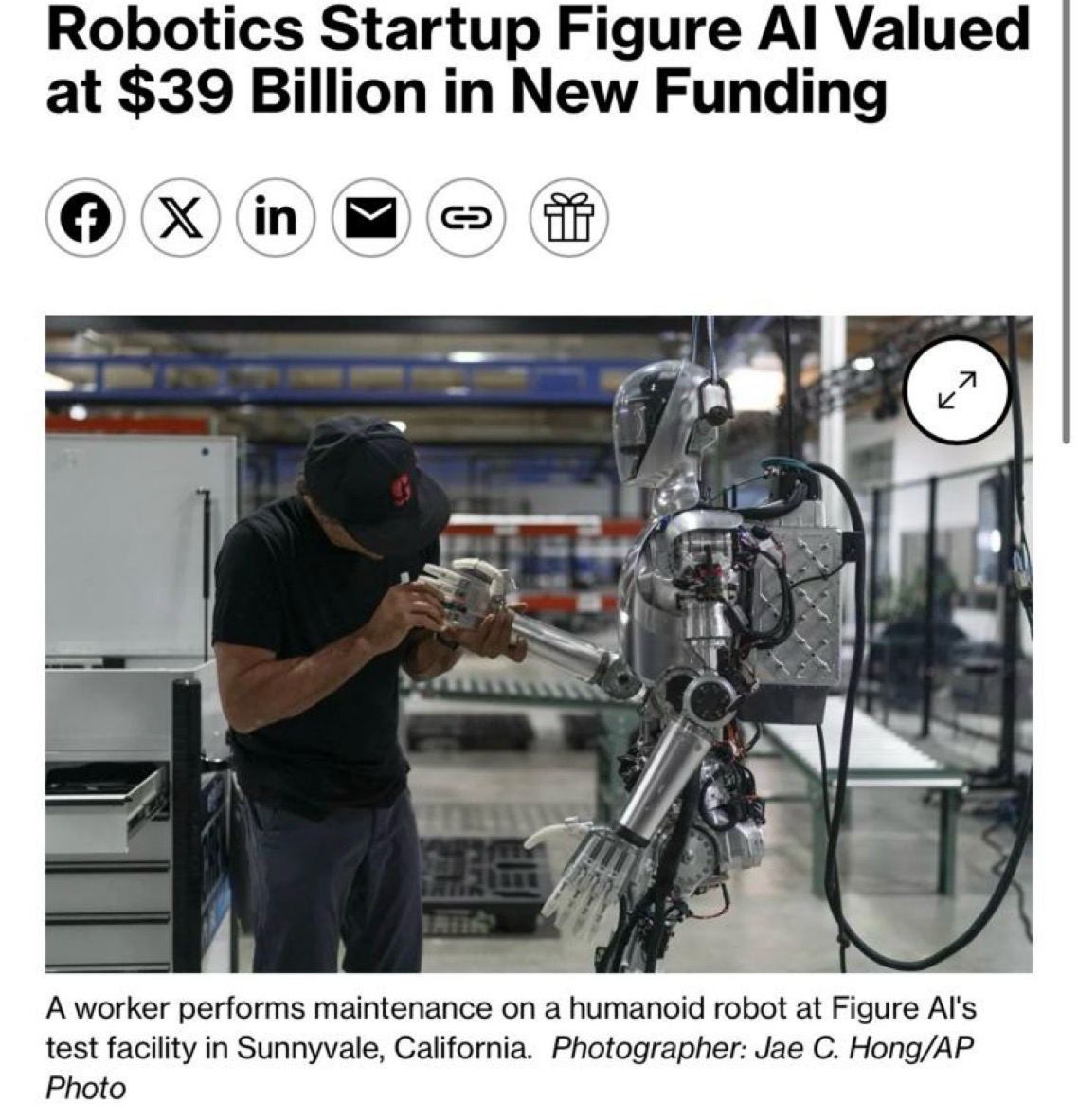
Every day we’re seeing billion dollar headlines for robotics.
Only 12 months ago, these companies and figures were 10-20x lower.
If it’s not already painstakingly obvious how successful this sector is going to become, dedicate a weekend to research so you aren’t left behind.
History shows the biggest value in tech waves often accrues to the enabling layers, Microsoft in PCs, Apple in smartphones, AWS in cloud. Robotics won’t be different, the infra layer that developers build on will capture more than any single hardware play.
One common theme I hear from friends is they’re worried about being underexposed to traditional robotics.
Yes, there are going to be insane headlines about Figure AI doing a 200x from seed valuations or the equivalent. But if you’re below mid 7 figs give or take, Web2 is not where you want to be (unless you have insane info/connections).
Time and time again, crypto has offered the most asymmetric and more importantly, accelerated upside. There’s significantly more risk, but it also comes with the luxury of not being time rugged which sometimes is worse in itself.
Nvidia is the largest stock in the world because of AI’s acceleration. Looking back, would you have preferred to punt on ai16z, Virtuals, AIXBT, GOAT in their first leg, or hunt for undervalued “fundamental AI plays” on Robinhood?
You might have kept more money in the long run, however we’re here for the sleep depriving uPNL aren’t we?
Like the early innings of AI, we’ve been given a very special moment where the pinnacle of technological innovation is staring us dead in the face. How you navigate its progression is a reflection of your understanding of market fundamentals and human greed.
Just like AI, we’re going to be met with endless vaporware as we move closer to general purpose robots. For those willing to roll the dice and catch the leaders, you’ll make outsized multiples that make Andrew Kang’s seed investments look small.
I know which game I’m playing.
34
10
101
8,474
Method retweeted
16 Sep 2025
I get asked a lot what robotics plays I’m in besides $CODEC.
Answer: none so far.
If I believe robotics is the next AI style meta with the potential to run into the billions, and if I see Codec as the ai16z/Virtuals of the ecosystem, why would I allocate capital and more importantly, conviction, to my second best idea?
My trading style is closer to Jez’s, where I full port my highest conviction plays. That means I’ve had some horrendous round trips, but I’m not here for average returns.
Full porting forces accountability, you can’t hide behind a basket of half baked bets. That mental clarity is part of your edge.
If you show up to this industry everyday, your objective is to take outsized risk and swings which can land you generational wealth if correct.
The problem is most traders “best idea” aren’t actually great. When you full port mediocrity, you blow up.
Diversification only makes sense once you’ve hit liquidity constraints in your main project. Even then, unless you own 3-4% of the supply, I don’t think it’s a real issue (you can always OTC anyway).
Over the past year, onchain has proven that rotations are getting faster and faster. Even if robotics becomes the grand narrative I’ve been calling for months, only the top projects will attract the mindshare and liquidity required to deliver life changing outcomes.
Leaders have always been the kingmaker trades and chasing betas hasn’t worked for 9 months now. There just isn’t enough active liquidity.
History shows the majority of generational returns accrue to the top 1-3 projects in a sector. Robotics won’t be different.
The fastest horse is the fastest horse.
16
9
103
8,596
Method retweeted
2 Sep 2025
Humanoids are starting to flood mindshare and run around the streets.
Every time I open TikTok there’s a “rizzbot” or another viral robot being swarmed by crowds of people.
Every single one of them with their phones out, utterly mesmerized.
What’s more encapsulating than a digital search window that can tell you anything? A physical one.
Just as ChatGPT changed how society views digital interactions, robots will change how we perceive physical interactions.
The biggest winners in technology are the ones who solve problems you didn’t realize you had.
In 2007, we didn’t realize touchscreen iPhones were a necessity. Why would you need a personal computer in your pocket when a phone's only use is to call people?
Why would you need your own personal humanoid to clean the house, do the shopping, pick the kids up from school, make dinner, all while you live out a higher quality life and spend more time doing the things you enjoy in the big 2025?
Come to think of it, this makes a lot more sense than what an iPhone did in 2007.
So much so that you have the richest man in the world in an arms race, building the most effective humanoid on the market, which he believes will become bigger than his company Tesla.
If we’re to go off history, Elon is the most followed and most engaged human in the world. If he believes his humanoid company (Optimus) will exceed the valuations of the 9th largest stock in the world, valued at $1.1 trillion, what does that mean for robotics as a whole?
We’ve seen how vocal he’s been on autonomous vehicles. So if we have physical assistants that remove multiple hours of labor from our day and give us irreplaceable time back in our lives, what kind of god tier yap fest will he go on?
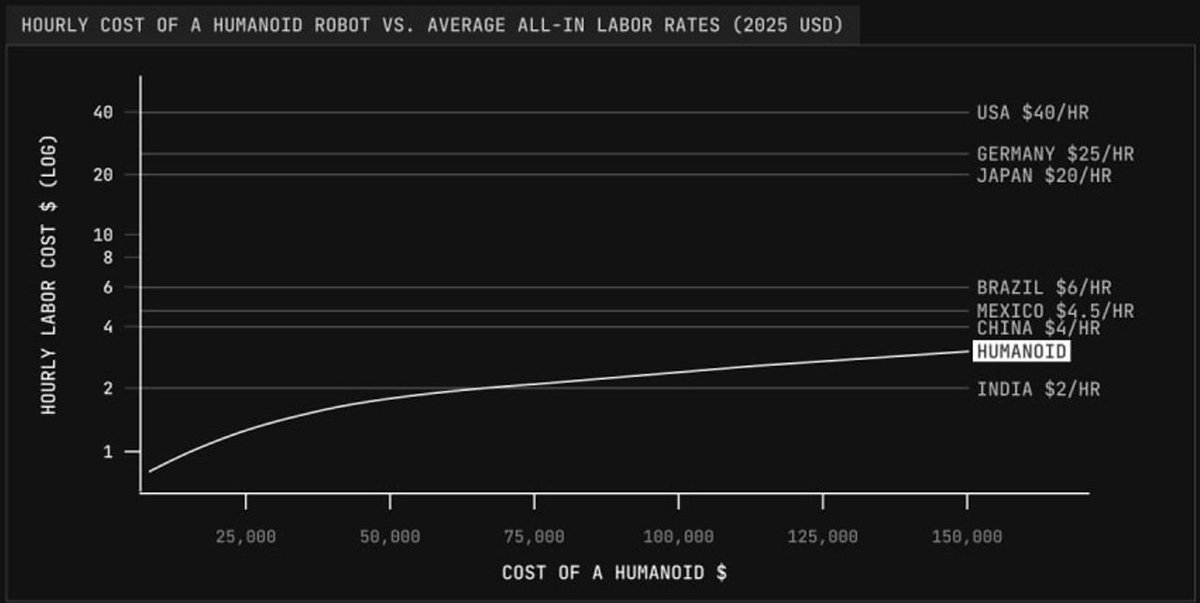
The smartest businessmen across the world are invested in this vertical for good reason. At $50k USD, a humanoid becomes cheaper than the average Indian wage while working 20 hours a day, 7 days a week.
Labor accounts for half the global GDP at $42 trillion per year. We’ve seen the impact ChatGPT and AI have had on the online workforce, so where does that leave us when the labor market is next in line?
Nvidia is leading the charge with their foundation model Isaac GR00T. We’ve already seen the benefits of them going open source: third party companies are building on top of their model with slightly fine tuned data, facilitating real world use cases.
Foundation models are the bedrock of robotics, the iOS’s and Androids of the industry. Whoever builds the easiest model to contribute to will cater to individual devs, and more importantly spark culture.
Breakfast in Silicon Valley will be a discussion of who installed the latest “golf instructor” package into their humanoid from user: swing_metal_dingz. They’re not purely for performative means but a status symbol in high societies.
Crypto is the perfect incentive model as task training marketplaces become one of the highest sought after forms of commerce in the modern era. Just as we’ve seen the rise of TikTokers and content creators, we’ll see the introduction of task trainers who earn revenue through subscription models from widely used skillsets to automate our daily lives.
As it stands, there’s only one genuine play available tackling these verticals. $CODEC is the first full stack robotics company to facilitate all the above. The first robotics company with a live working product, a highly specialized SDK now publicly available, and also live to test through a Twitter interface.
This is the first demonstration of what’s coming to their ecosystem. You might not realize it now, but world sims are going to become even more important than the data libraries powering LLMs. There’s no “internet of robotics” or physics engines to replicate human behavior and movements.
A storm is brewing for Q4 & Q1, where we’ll see many of the leading humanoid companies releasing their first models for public consumers. Attention, mindshare, and investments are going to grow exponentially when reality sets in after seeing our new companions.
The biggest winners will be those who can close the gap between physical components and effective task training, turning atoms into the most productive asset humanity has ever seen.
Betting on the fastest horse has only proven more successful as markets advance. This time is no different imo.
Robotics szn loading…
█████████▒ 90%

11
12
60
4,552
Method retweeted
23 Aug 2025
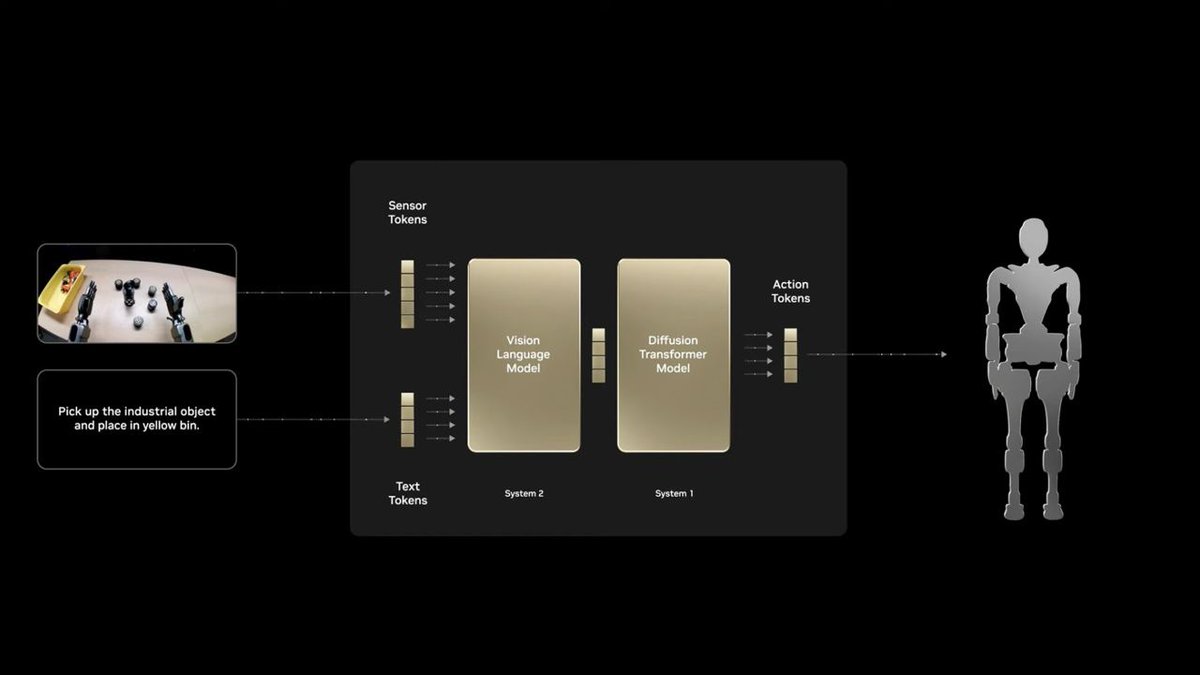
You’ll see foundation models for Humanoids continually using a System 2 System 1 style architecture which is actually inspired by human cognition.
Most vision-language-action (VLA) models today are built as centralized multimodal systems that handle perception, language, and action within a single network.
Codec’s infrastructure is perfect for this as it treats each Operator as a sandboxed module. Meaning you can spin up multiple Operators in parallel, each running its own model or task, while keeping them encapsulated and coordinated through the same architecture.
Robots and Humanoids in general typically have multiple brains, where one Operator might handle vision processing, another handling balance, another doing high level planning etc, which can all be coordinated through Codec’s system.
Nvidia’s foundation model Issac GR00T N1 uses the two module System 2 System 1 architecture. System 2 is a vision-language model (a version of PaLM or similar, multimodal) that observes the world through the robot’s cameras and listens to instructions, then makes a high level plan.
System 1 is a diffusion transformer policy that takes that plan and turns it into continuous motions in real time. You can think of System 2 as the deliberative brain and System 1 as the instinctual body controller. System 2 might output something like “move to the red cup, grasp it, then place it on the shelf,” and System 1 will generate the detailed joint trajectories for the legs and arms to execute each step smoothly.
System 1 was trained on tons of trajectory data (including human teleoperated demos and physics simulated data) to master fine motions, while System 2 was built on a transformer with internet pretraining (for semantic understanding).
This separation of reasoning vs. acting is very powerful for NVIDIA. It means GR00T can handle long horizon tasks that require planning (thanks to System 2) and also react instantly to perturbations (thanks to System 1).
If a robot is carrying a tray and someone nudges the tray, System 1 can correct the balance immediately rather than waiting for the slower System 2 to notice.
GR00T N1 was one of the first openly available robotics foundation models, and it quickly gained traction.
Out of the box, it demonstrated skill across many tasks in simulation, it could grasp and move objects with one hand or two, hand items between its hands, and perform multi step chores without any task specific programming. Because it wasn’t tied to a single embodiment, developers showed it working on different robots with minimal adjustments.
This is also true for Helix (Figure’s foundation model) which uses this type of architecture. Helix allows for two robots or multiple skills to operate, Codec could enable a multi agent brain by running several Operators that share information.
This “isolated pod” design means each component can be specialized (just like System 1 vs System 2) and even developed by different teams, yet they can work together.
It’s a one of a kind approach in the sense that Codec is building the deep software stack to support this modular, distributed intelligence, whereas most others only focus on the AI model itself.
Codec also leverages large pre trained models. If you’re building a robot application on it, you might plug in an OpenVLA or a Pi Zero foundation model as part of your Operator. Codec provides the connectors, easy access to camera feeds or robot APIs, so you don’t have to write the low level code to get images from a robot’s camera or to send velocity commands to its motors. It’s all abstracted behind a high level SDK.
One of the reasons I’m so bullish on Codec is exactly what I outlined above. They’re not chasing narratives, the architecture is built to be the glue between foundation models, and it frictionlessly supports multi brain systems, which is critical for humanoid complexity.
Because we’re so early in this trend, it’s worth studying the designs of industry leaders and understanding why they work. Robotics is hard to grasp given the layers across hardware and software, but once you learn to break each section down piece by piece, it becomes far easier to digest.
It might feel like a waste of time now, but this is the same method that gave me a head start during AI szn and why I was early on so many projects. Become disciplined and learn which components can co exist and which components don’t scale.
It’ll pay dividends over the coming months.
Deca Trillions ( $CODEC ) coded.
17
11
79
20,177
Method retweeted
22 Aug 2025
Robotics works quite similar to AI.
You need lots of high quality data to operate, except you can’t just scrape the internet for robotics data since it needs real world experience and variables.
There is no “Internet of robot actions.”
Ton’s of teams are working and throwing stupid money into humanoids as they’re the most obvious deca trillion dollar industry due to how efficient they’ll turn the labour force (more efficient than an Indian average wage at $50k USD each).
But the biggest race, like AI is:
1. Getting quality data
2. Training tasks
Foundation models are like LLMs in AI, but instead of generating text, they generate actions for robots.
There’s a couple different approaches teams are taking with task training, some using small high fidelity datasets with labelling like Figure and others are going for spray and pray with massive models.
The goal is to give robots a broad, pre trained common sense and the ability to generalize across tasks and environments.
Instead of programming a robot for each task, you train a giant model on diverse data (videos of humans, simulations, real robot demos, images with text descriptions of tasks etc), and the model learns an embodied understanding of the physical world.
You can then prompt the robot to do something (through a command or example), and the foundation model’s “knowledge” kicks in to handle it, like how you can ask ChatGPT anything.
So the big disconnect for a lot of these companies will be in the task training area, they’re currently deeply focused on the data side (world simulations, synthetic data, robot trajectories, human videos etc) as they need it to interact perfectly with the real world but there isn’t as much development with what the robots/humanoids can actually do.
Nvidia is leading one of the key foundation models (Issac GR00T) which they’ve fully open sourced. They’ve already had 3rd party teams building on top of this and significantly improving the efficiently (basically created a program for humanoids to clean up a room with minimal changes to the foundation models data).
So the big overlap with crypto x ai x robotics will mostly likely lie in this task training sector (like a robotics App Store) since the leading foundation models are already going open source and there will probably be large incentive models for indie developers to contribute and build cool programs/tasks for humanoids.
There’s a lot of progression and mainstream development coming end of year/early next year where I think robotics will have its “chatgpt” moment (Elon hard shilling his new humanoid models, viral videos of humanoids doing real world tasks, intuitional money flowing in, workforces being laid off etc).
I can promise you I’m not wrong on this idea, feels identical to AI in 2023. Matter of when, not if.
Don’t ignore one of the most innovative technological progressions to happen in our lifetime and don’t ignore $CODEC which is the only available play sitting at the overlap of this trend.
19
13
94
5,951
Method retweeted

19 Aug 2025
Another week, another research article: this time it's $CODEC
I genuinely believe this is one of the most underlooked robotics coin in crypto. Robotics is the future but there aren't a lot of bets in crypto for it.
This is one of the few, feel free to get $CODEC-pilled

$CODEC is setting up to be the best option as onchain play for Robotics
Research article about @codecopenflow is now live on epoch.biz 🤖
epoch.biz/codecflow-crypto-x…

20
28
106
18,210

Method retweeted
12 Aug 2025
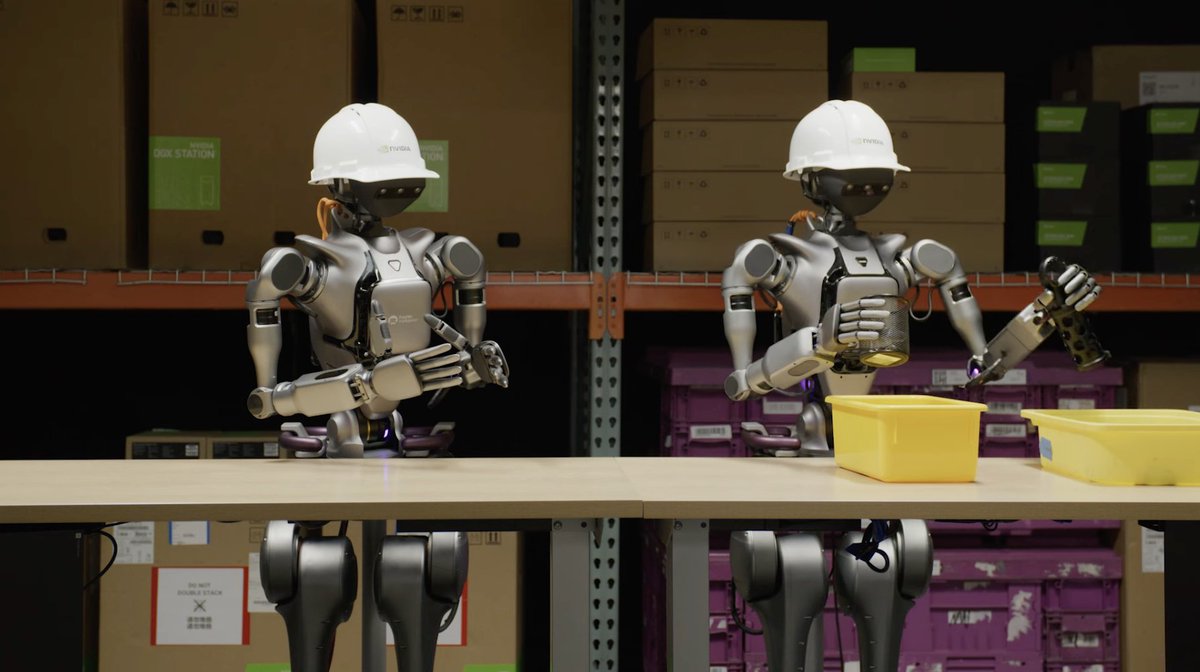
The largest company in the world has led their foundational model for robotics in an open source setting.
In doing so, they’ve had teams like @1x_tech demonstrate two of their NEO humanoids in a live environment, executed a full room tidying routine using a policy fine-tuned from NVIDIA’s GR00T N1.
1X did not need to collect millions of new training examples to make this happen. Instead, they fine-tuned GR00T N1 with only a small amount of additional data, leveraging its already existing pre-trained knowledge.
Which highlights how an open foundation model can jump start advanced robotic behaviors with relatively little extra effort.
Jensen Huang (Nvidia CEO) declared that “the age of generalist robotics is here” as GR00T N1 and new AI frameworks will let robotics developers worldwide “open the next frontier in the age of AI”.
With individual developers gaining more power and accessibility to tooling, we’re moving to an open source world where incentives will be baked into the hardest problems that companies like Nvidia will put bounties on.
In this world, hiding your IP means losing access to 99.99% of the talent that could make it better.
Robotic intelligence and software intelligence are facets of the same problem, progress will depend on an execution layer that abstracts hardware complexity, allowing developers to focus on higher level behaviors.
Those who create the glue for this ecosystem will take home the pie.
And there’s only one onchain play available for this.
13
9
68
4,039
Method retweeted
10 Aug 2025
Dear @a1lon9,
It’s been great to see Pump supporting and fuelling communities once again, as when the eco is in it’s flow state, it provides the best narratives and runners out of any platform.
I’ve been an advisor and closely working with the $CODEC team who are building really impressive architecture for Operator agents and Robotics.
With their recent success they’ve had many VC’s and liquid funds reaching out. Multiple funds have called them "unprofessional" since they’ve launched their token on pumpfun.
Even though their product and infrastructure is miles ahead of teams raising at 9 figure valuations with nothing to show, launched at 0 mcap and gave all the benefits to the community, self funded by a team who works with Hugging Face Robotics and Elixir Games (could of easily done a VC round).
Right now there’s a stigma that legitimate teams can’t launch on Pump because it labels them as extractors when launching a token at 0 with no VC’s allows for the most organic chart and community building.
Ton’s of people loved the ICM meta as it gave them fundamentals to trade off, AI szn was possibly the most fun I’ve ever had in crypto.
Due to the average holding time of new tokens, there’s a large demographic of traders who are scared to touch memes atm.
Even as someone who’s full time and very experienced at trading, I’m hesitant to trade many of these new coins with size.
I know there’s a ton of eager participants who are feeling sidelined, especially with markets being hot as they don’t have the skillset/time to trade these fast meme rotations.
I believe I speak for a large amount of CT and as @zinceth mentioned, it would be great to see some type of incentive/fund which is allocated for utility, AI, Robotics or any other team which is trying to build a genuine business moat.
If others agree, leave a comment on this post and shill your utility token that launched on Pumpfun.
Shalom,
Cryptotrissy.
86
29
199
15,671
Method retweeted
7 Aug 2025
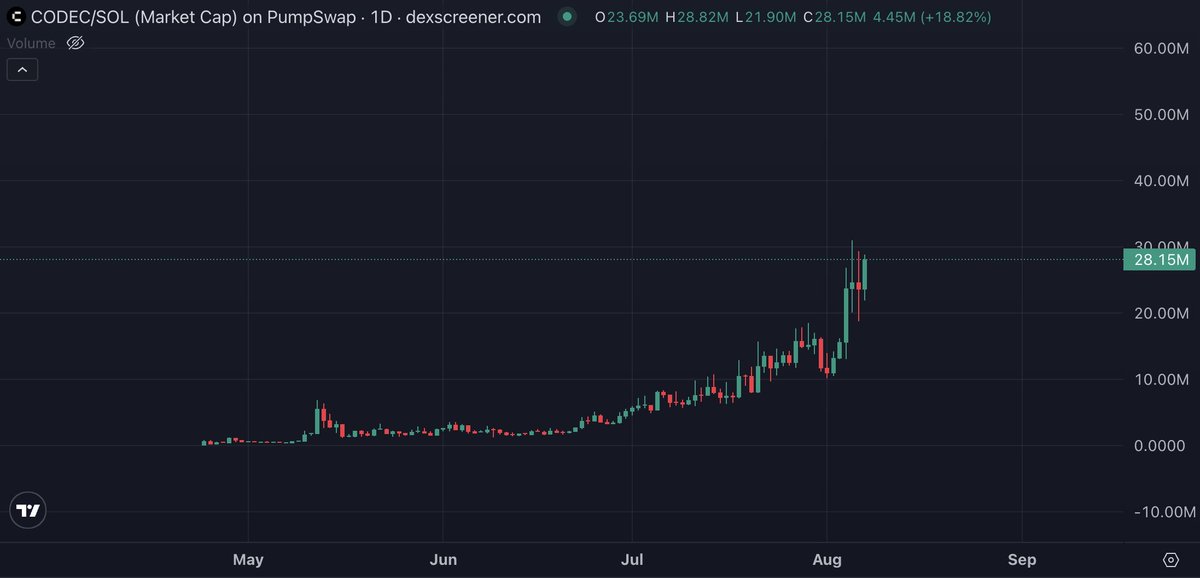
Every so often a unique project spawns which gets to run its own race.
Day by day the thesis becomes more validated. Multiple companies raising at 9 figure valuations which have half the product Codec does.
VC’s being scared of the token because it’s launched on Pumpfun and isn’t “professional”.
As someone who’s spoken with, worked with and taken investments from hundreds of VCs over the years, I can promise you 99% offer little more than money.
The biggest value add to any project has always come from the closest advisors getting their hands dirty, community members and advocates across socials. Founders and teams are scared to publicly say this because they don’t want to ruin relationships and future funding rounds.
A community member with 2k followers who relentlessly bullposts and shares updates and theses in group chats would have more net impact than most VCs in this space.
Imagine coming across an elite team which has taken an entirely new approach, not only architecturally, but tokenwise.
Instead of filling the round out with investors who have a mandate to return funds to LP’s in a set time period, they’ve said screw that and gone for a bottoms up approach.
Most teams don’t believe in their product, hence they’re scared to launch without hype and months/years of build up to TGE.
What direction do you fall when you walk off a cliff? That’s why every token launching at X valuation plummets as you’ve shown every card in the deck before you’ve even launched.
The best teams are the ones who stay conserved, put their heads down and deliver day by day. They don’t need to maintain a billion dollar hype factory from the start and can instead use that mental bandwidth to ship the correct way and run their own race. Cobie himself said this.
Fast money has turned this industry backwards. To be successful doesn’t require you to be a freak of nature, it instead requires you to have the discipline to ignore the short cuts and take the right steps.
No matter how hard you try you simply can’t fake this. Veteran traders pick up on it from a mile away.
They’ve always said an up only chart is the best form of marketing, so why wouldn’t you launch at 0 and give yourself the best starting point?
$CODEC coded.
25 Jun 2025

Every so often a unique project spawns which gets to run its own race.
AI for the most part has been nothing other than chatgpt style terminals and creative image/video gen.
We’ve been hearing for several months that we’re on the cusp of everyone losing their jobs due to AI.
Yes it’s made everyone 10x in productivity, but we haven’t fully replaced people in the workforce. Why?
The dominant AI assistants today, from chatbots in a browser to experimental “agent” frameworks are strong in conversation, but structurally limited in execution.
They typically rely on a browser or simple scripting environment to perform tasks. While this works for fetching information or basic web automation, these agents struggle with complex, multi step processes and often break when things deviate from their confined path.
Current AI agents fail because they lack persistent memory and fault tolerance, when faced with unexpected errors, they can’t recover or adapt, often stalling or looping indefinitely.
Most operate in limited browser based environments and can’t access the full range of enterprise software, leaving the routined work beyond their reach.
Which is why we haven’t seen AI replace mundane company roles like customer support and administration. Not for lack of capability in the AI models themselves, but because the frameworks around them aren’t reliable enough for critical workflows.
So what’s needed?
A reimagined system architecture. One that addresses fault tolerance, memory, access, isolation, and efficiency in a singular framework.
Rather than stalling at the first unexpected input, they should catch errors, adapt, and retry different methods, much like humans do when things go wrong.
To scale AI into real workflows, it needs persistent memory and task tracking to operate reliably over long durations.
They also require full ecosystem access, beyond browser tools to use the same software humans do, including desktop applications.
Without secure isolation, agents can't operate safely in dedicated environments, making large scale deployment risky due to potential cross system interference.
If they want their runtime to be consistent and efficient, they’ll also need smart resource management that treats computers like a live functioning body.
For those that connected the dots, @Codecopenflow recent Fabric release brings all of this together, giving AI agents reliable, fully dedicated operating systems (OS) that combine the cognitive power of advanced models with the infrastructure they need to function like dependable digital workers.
Fabric in itself could be a completely independent licensed software. It transforms agents from browser bound scripts into autonomous operators with full OS level access.
Much like a DEX aggregator routes the most efficient price to you, Fabric is the routing layer which serves Codec’s deep level architecture.
You list your CPU, GPU, memory needs and any region preferences. This means finding the most cost effective servers like AWS/google cloud or GPU resources from Render/IO net.
Codec provides clean SDKs and an API for full control of these AI operators. A company can integrate Codec agents into their existing software pipeline (for example, spin up an agent to handle a user request, then spin it down) without needing to reinvent their infrastructure.
In customer support, agents can manage entire workflows, query resolution, CRM updates, refunds, reducing labor costs by up to 90% while improving consistency and uptime.
For business operations, Codec automates repetitive administrative processes like invoice handling, HR updates, and insurance claims, especially in high volume sectors like finance and healthcare.
By focusing on a fully isolated, multi app environment for each AI operator, AI isn’t restricted by the critical issuesof reliability and integration that previous frameworks couldn’t address.
Essentially turning cloud computing infrastructure into a flexible assembly line for AI workers. Each “worker” is given the right tools (apps, OS, data access) and a safety harness (isolation fault handling) to do its job.
Every improvement in AI models (GPT-5 etc) only increases the value of Codec’s platform, because better “brains” can now be plugged into this strong “body” to accomplish even more complex jobs.
Codec is model agnostic (works with any AI model), so it stands to benefit from the general AI progress without being tied to a single provider’s fate.
We are at an inflection point similar to the early days of cloud computing. Just as the companies that provided the platforms for cloud (virtualization, AWS’s infrastructure, etc) became indispensable to enterprise IT, a company that provides the go to platform for AI agents to operate will capture a huge market.
OpenAI have already released a fully agentic cloud coding terminal called Codex. Codex will be a mini local version of Codex you can run on your computer, but more importantly Codex’s primary model will be in the cloud with it’s own computer.
The co-founder of OpenAI believes that the most successful companies in the future will be these two types of architecture merged together. Sounds familiar.
What’s next?
Instead of telling you what’s next, maybe it’s better I point to what we haven’t seen yet:
- No confirmed token utility
- No incentives
- No core roadmap
- No demos
- No marketplace
- Minimal partnerships
Considering how much is in the pipeline along with new websites, updated docs, deeper liquidity pools, community campaigns/marketing and robotics. Codec hasn’t revealed many cards yet.
Sure there might be more ready made browser based products currently on the market, although how long until they’re obsolete?
This is an investment into the direction of AI and the primary architecture that will replace human workforces.
Codec coded.

21
15
120
23,633
Method retweeted

4 Aug 2025
The real robot revolution won't just be arms and wheels. It's brains, autonomy, and coordination at scale.
What operating systems were to PCs, VLA agents will be to robots.
CodecFlow is building for this reality, not sci-fi but next.
The article by @Cryptotrissy offers a comprehensive understanding of robotics and VLAs.
4 Aug 2025
8
15
94
10,849
Method retweeted

29 Jul 2025
WAVE 3 is now open
DYM stakers, join S2 now
7 days to go
40
51
407
33,663
Method retweeted

24 Jul 2025
My prediction is in 2026 we'll get another big stock dip that everyone will actually buy. Majority have missed like 5 dips but this one people will buy, heavily. This will be the dip that dips much more violently. People will give back 2025 profits. Bear market until midterms.
181
160
2,182
151,717